Years ago, I had something of an obsession with the movie Jimi Hendrix, which was made shortly after his death, and which along with Bob Dylan’s Don’t Look Back got heavy rotation in the VCR (I had ‘em back to back on a fuzzed out VHS cassette). Once, after watching it and glowing about it and Hendrix to my girlfriend at the time, she asked me, with a sly smile, “But was he good?”
It was a bizarre and funny question, a great question. Because of course my first reaction, most people’s first reaction, to that question regarding Hendrix, would be, “Of course he was !#$*&^!! good! You can’t get more good. None. None more good.”
But, she was testing me in a good way. What she was asking, really, was did all that talent create something worthwhile? Shouldn’t received wisdom about art be less immutable than it often is? And suggesting, too, that even established (and dead) rock gods need new evaluation, continued consideration. This is why I think year’s best lists are something of a conceit and are really part of the pop world. In reflecting on my favorite records of the year, I realize: there are no “new” artists in my brief list; only two of the albums were released this year; and, one of the albums is actually over 30 years old. But ah well, nobody ever accused me of being at the cutting edge of pop. I’m always just catching up. These are the records that were new to me in 2012, would be of some relevance to the prog listener, and which answered in the affirmative the question, “But is it good?”
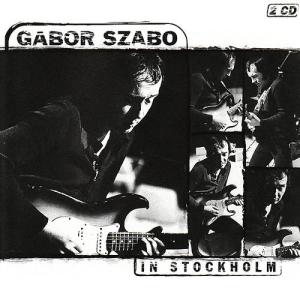 In Stockholm by Gabor Szabo (1978) – A jazz guitar master whose work with Chico Hamilton in the early 1960s landed him a solo career on the venerable Impulse! label, Szabo was at once an emblem of swingin’ 60s lounge pop and serious jazz improviser. His Eastern European gypsy roots are all over his records, which typically capture Szabo working out a handful of originals against a backdrop of covers (these can veer towards the cheesy, but his cover of Donovan’s “Three Kingfishers” is stunning, and his interpretation of Sonny and Cher’s “Bang Bang” (with vocal!) absolutely without peer. His 60s work is topped by “Gypsy Queen,” which a lot of us already know as the tail end/outro of Santana’s cover of “Black Magic Woman.” Carlos loved his Gabor. But instrumental jazz pop had a short shelf life, and the 70s saw the hits wane. Szabo went back to Europe to record, and the album In Stockholm compiles two sessions, one recorded in 1972 and one in 1978, with Janne Schaffer (best known as Abba’s guitarist!) joining Szabo on guitar. This is pure jam music, with rock and jazz getting equal voicings. Bass and drums create droning, searching backgrounds on extended versions of Szabo classics like “Mizrab” and “24 Carat.” The only distraction on the set is a nod to Szabo’s lounge-pop leanings, with the overripe chestnut “People” probably getting the best treatment it’s ever gotten but, come on, it’s “People who need people” and I personally don’t need it. The rest of the double album more than makes up for this pale first track though. This is first-rate stuff — really mindblowing.
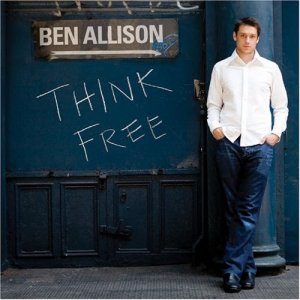 Think Free by Ben Allison (2009) – I love Ben Allison’s work. He’s one of the few modern jazz composers I keep up with, and his records always have something to say. Think Free is kind of an amalgam of older and new compositions, with “Green Al” and “Peace Pipe” getting fresh makeovers with the addition of guitar by Steve Cardenas, who’s been working with Allison the last few years. This is melody-driven jazz that never strays into smooth territory; if anything, it verges on rock (although not as much Allison’s wonderful Cowboy Justice from 2006). The recording is organic, earthy, with Jenny Scheinman’s violin contributing an almost rustic feel to some of the tracks. I caught up with Think Free late and since then Allison’s released Action Refraction as well, which is also great, but the nice thing about Think Free is that I think it stands as a great introduction to his work in general.
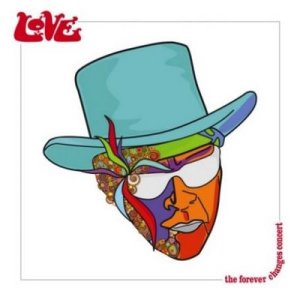 The Forever Changes Concert by Arthur Lee & Love (2003) – I may be preaching to the choir, I know, but if there is one rock album from the psychedelic era that has stood the test of time it is Love’s Forever Changes (1967). A sonically bright, lyrically dark masterpiece, Forever Changes combined rock with smooth jazz, Spanish classical music, and garage punk, forging what is in my opinion the first American progressive rock record. Arthur Lee, the cracked master behind Love, refused to tour outside of California, and never capitalized on the potential of Forever Changes or its two predecessors (both wonderful in their own way, and classics as well). Jack Holzman, head of Elektra Records, has called Lee one of the few musical geniuses he ever met and signed (these are big, big words), but Arthur Lee could never translate that genius into success. Drug problems, jail time, on-again off-again performances through the 70s, 80s, and 90s did nothing to help his legacy. Then came word that he was gigging regularly with Baby Lemonade, a West Coast psych revival band who took their name from a song by another 60s casualty, Syd Barrett. And in 2003, this band, with Lee fronting, performed the entirety of Forever Changes in London, a performance not only beautifully executed but also wonderfully recorded. In fine vocal shape, Lee delivers on the promise of what Forever Changes could have been for him had he pursued it with such ferocity 35 years earlier. That he got this down before he died is a gift to us all. I’m embarrassed to say that although I’ve long been a fan of Forever Changes (easily in my top 5 of all time), I hadn’t heard this concert until this year. So do yourself a favor….
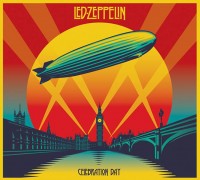 Celebration Day by Led Zeppelin (2012) – Like the Forever Changes Concert, Celebration Day captures Led Zeppelin performing one show, the Ahmet Ertegun tribute in 2007. Of course, this Zep isn’t the Zep of yore, as John Bonham’s son Jason is behind the drums, but Jason Bonham has long been the replacement of choice for his legendary father. The wonderful thing about live Led Zeppelin is that they are like they are on their records but more so. Make sense? Jimmy Page and Robert Plant always tend, intentionally, towards the unpredictable, even messy — and make no mistake, this is an Art — and sometimes it works, sometimes it doesn’t. It works here. Celebration Day finds Plant, Page, and John Paul Jones in fine trim. Robert Plant, working the lower register, has really never sounded better, and Page is, well, Page. He is a master of infusing the big hard rock riff with soul, wit, and the hammer of the gods. John Paul Jones, an absolute anchor, is in a way the real puppet master of this band. He and Bonham tie down the dirigible that is Page/Plant. This was one show, one take, with songs that speak to fans who wore out the deep cuts: “In My Time of Dying” (really??? Yippee!!), “Nobody’s Fault But Mine,” “For Your Life”…. Although the band has been well-documented now regarding its live performances during its heyday, this is the best live Zeppelin I’ve heard.
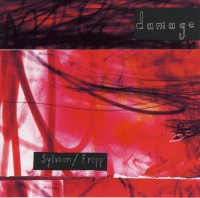 Damage by David Sylivian & Robert Fripp (2002) – A fellow Progarchist turned me onto this record and I was immediately blown away. Somewhat familiar with Sylvian’s work, and holding Fripp in high esteem for his adventurousness, my first reaction to hearing song’s like “God’s Monkey” and “Brightness Falls” was an affirmation that artists like Fripp and Sylvian do better working in pairs than strictly solo. This live set, recorded during their 1993 tour, draws songs primarily from an LP they made together, The First Day. Fripps poetics on guitar and “Frippertronics” are matched by Sylvian’s words and voice, and backed by Trey Gunn on stick (a sort of bass with a cazillion strings), drummer Pat Mastelatto, and guitarist Michael Brook, there is a confidence in delivery that comes from two artists well into the second, third, fourth phases of their careers. The sound is hard, funky, emotive, the sound of Fripp and Sylvian unmistakable. The set misses “Jean the Birdman,” which they did perform on the tour but is not included here. Otherwise this is a gem, and I’m probably going to spend 2013 tracking down more on Sylvian.
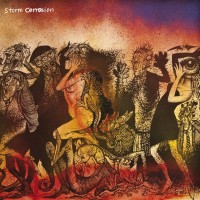 Storm Corrosion by Storm Corrosion (2012) – I reviewed Storm Corrosion on Progarchy this fall so won’t go into it in great detail, but I find it a marvelous collaboration. Like Fripp and Sylvian, Mikael Akerfeldt and Steven Wilson seem to do better working in collaboration rather than as heading groups or as strictly solo. Perhaps it’s the balance. In any case, this is a rich and wonderful album I look forward to getting even more out of in the next year.
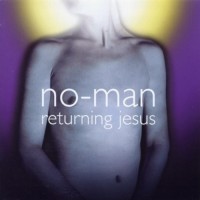 Returning Jesus by No-Man (2001) – In preparing for my Storm Corrosion review, I came across No-Man, which I had never heard before. A collaboration of Steven Wilson (instruments) and Tim Bowness (vocal), No-Man has made a lot more records than I’m comfortable thinking about because I’ve had my head in the sand this entire time. On the other hand, there appears to be much to discover. Returning Jesus is a great starting point. This is slow, crooning stuff, and is much more in the vein of David Sylvian/Bryan Ferry British vocal music. Wilson is restrained, and there is service to the song lyric here that isn’t present in all his music. Romantic, rainy-day music, this could also be comfortable next to Johnny Hartman’s early 60s recordings. Really, really prime.
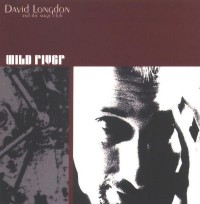 Wild River by David Longdon (2004) – I reviewed David Longdon’s Wild River on Progarchy and really would like to give it another thumbs up. Wonderful acoustic instrumentation and production accompany David’s supple vocal, on a recording that goes fairly effortlessly from British soul ala Seal to more rustic excursions reminiscent of Ronnie Lane. I’ll be listening to this record a lot in 2013.
That about wraps it up. I could say that in 2013 I’ll make more of an effort to listen to new releases, but that would be a cheap promise I wouldn’t have much interest in keeping. I’d much rather pick and choose records I haven’t heard yet, and listen because they’re good.
Happy new year!
Craig Breaden, December 29, 2013


 Progarchy