Yessongs, taken from the Close to the Edge tour, arrived in the world in 1973. Happy Birthday, Yessongs, my first prog love. And, what’s not to love? My two reasons why. Enjoy.
Tag: Yes
90125 at 30 – A Retrospective
 Thirty years ago this month, after being presumed dead in the wake of the ‘Drama’ album, Yes came roaring back into the music scene with ‘90125’. Commercially, ‘90125’ was a spectacular success, yielding their only #1 single as well as several other staples for that era of rock radio. ‘90125’ also brought in scores of new Yes fans, and became a gateway to progressive rock for many who were previously unaware. However, with established Yes fans, ‘90125’ proved to be a lighting rod of controversy.
For some established fans, myself included, it was a joy to have Yes back as an active band, even if their new album wasn’t a full-blown prog album. But to many established fans, this music simply wasn’t Yes.
At the center of the controversy was the new guitarist, Trevor Rabin, who was the only Yes rookie on the album. Rabin, while a fantastic talent in his own right, had significant stylistic differences with his predecessor, Steve Howe. As a co-writer of every song on the new album, his imprint on the new music was larger than that of any other member. And this music was a sharp departure from anything Yes had previously done. Thus, with the membership change and the change in musical direction, many older fans declared “this is not Yes”.
So was it Yes? Was it Yes save for the new guitarist? And what to make of this strange new music (in Yes terms, anyway)?
Yes, it was definitely Yes
A cursory examination of the membership makes it hard to declare the band that created ‘90125’ anything other than Yes. Four of the five members on the album were Yes veterans. Three of them – Jon Anderson, Chris Squire, and Tony Kaye – were original members of Yes. The fourth, Alan White, had originally joined Yes more than a decade prior, and was firmly established in the band. Calling the band Cinema, as they were before Anderson’s return, would have been odd, to say the least. In fact, I’m willing to bet most of the “it’s not Yes” crowd would have said “well, it’s really just Yes” had they tried to get away with calling the band Cinema. Four established Yes veterans with Jon Anderson on vocals is, for all intents and purposes, Yes. And thus an album created by such a band is, for all intents and purposes, a Yes album. When Anderson reconnected with Rick Wakeman, Steve Howe, and Bill Bruford in 1989, they may have called themselves Anderson, Bruford, Wakeman, and Howe for legal reasons, but everybody knew is was really just another incarnation of Yes. Otherwise, why call the shows on your tour ‘An Evening of Yes Music Plus’?
One person who was decidedly a fan of the new band – Rabin himself – was also against calling it Yes. I have sympathy for Rabin’s position, given that he took the brunt of the criticism from the established Yes fans. Still, there was nothing else you could call this band, with four veterans in the lineup including Anderson on vocals. It simply would not have been credible to call it anything else but Yes. With a different vocalist – or with the pre-Anderson lineup, the Cinema name would have worked. Once Anderson came on board, Yes was the only name that would do. The band that did ‘90125’ was not Cinema. It was Yes. Yes with a new guitarist? Sure. A Yes wherein the newest member had the most impact on his first recorded output with the band? Undoubtedly. But still Yes. There is simply no other credible band name for the lineup that recorded ‘90125’.
Musically?
Even with as radical a departure as this album was from its predecessors, it’s hard to think musically of ‘90125’ as anything other than a Yes album. Certainly, it had a heaviness that was rarely heard on previous Yes albums. The intro to ‘Owner of a Lonely Heart’ telegraphed early on that this was going to be a different kind of Yes music. ‘Hold On’, ‘City of Love’, and ‘Changes’ produced more power chords than had been heard in any previous Yes album. The music also had much more of a 80’s feel to it, and Tony Kaye’s description of it as sometimes being dimensionally sparse was fitting.
Still, there were more than a few common threads with previous Yes works. And despite Anderson’s late entry into the project, there is no doubt that his creative impact on the final product was second only to Rabin’s. No other song exemplifies this more than ‘It Can Happen’, in particular when the Cinema version is compared to the final Yes version. The Cinema version of ‘It Can Happen’ appears, among other places, on disc 4 of the YesYears box set. The lyrics on that version were those of a rather sappy love song. Even keeping in mind that this is more or less a demo version, the music was relatively mundane. In contrast, it is clear that Anderson had completely rewritten the lyrics by the time the final version was recorded. The rewritten lyrics have much more of the trademark cosmic mysticism that infuses so much of Anderson’s output. Moreover, the music has much more in terms of ‘Yessy’ touches to it, beginning with the sitar intro. If a Yes fan had entered a cave in 1979 and emerged in early 1984 to hear ‘It Can Happen’ on the radio, he or she might have concluded that Yes had never broken up or had gone through the turmoil of the intervening years. The final version of ‘It Can Happen’ clearly sounds like a Yes song, and, 80’s production values notwithstanding. It would not be out of place in the earlier Yes catalog.
Various vocal arrangements on the album also tie in nicely with Yes music past. In ‘Hold On’, a multi-part harmony is sung on the verse that begins with “Talk the simple smile, such platonic eyes …”. This bears a lot of similarity to the final chorus of “Does It Really Happen” (“time is the measure, before it’s begun …”) from ‘Drama’. And of course, ‘Leave It’ is a vocal tour de force that begins with a huge five-part harmony that is unmistakably Yes (this was the second song I heard off of this album, and the one that told me “Yes is back!”). In the previously mentioned ‘It Can Happen’, Anderson and Squire alternate on lead vocals, with Squire singing lead on those portions that serve as a transition from the verses to the chorus. And finally, Anderson’s delivery on the album’s finale, ‘Hearts’, is not something that sounds unusual to the experienced Yes listener.
Other notable connections to previous Yes music includes the ebb and flow of ‘Hearts’, Squire’s bass work on ‘Our Song’ and ‘Cinema’, and the keyboard intro to ‘Changes.’ Had this lineup of musicians released these same songs under the guise of Cinema, I would have scratched my head and asked “why didn’t they just call themselves Yes?”, and I doubt I’m alone in that aspect.
What Rabin Brought to the Table
As we’ve already noted, ‘90125’ represented a significant shift in direction for the band, possibly more so than any other shift in their history. And there is little doubt that much of that shift is due to the presence of Rabin. It’s one thing to bring a new member into a band. It’s quite another that the new member has such an outsized creative contribution to the finished product, and this was certainly the case on ‘90125’.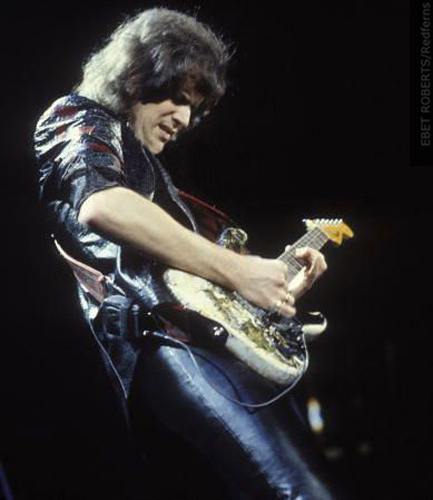
I’ll start out by saying that I like Howe’s guitar work better than Rabin’s. In his book ‘Music of Yes’, Bill Martin described this difference perfectly, noting that Rabin divided his lead and rhythm guitar work in a fairly conventional manner, as opposed to Howe, who most decidedly did not. As a prog fan, it shouldn’t be surprising that I prefer the unconventional to the conventional. But that does not change the fact that Trevor Rabin is an exceptional guitarist in his own right. Nor does it change the fact that Rabin brought certain things to the table that Howe did not.
One thing Rabin brought through his guitar playing was a much harder edge (or heaviness, if you prefer) than Howe ever did. Much of ‘90125’ flat out rocks, as Rabin had a knack for delivering a bone-crushing power chord at precisely the right moment. There were occasions on previous Yes releases where I wish Howe would have unleashed, one notable example being ‘Release, Release’ from the ‘Tormato’ album. Listen to Shadow Gallery’s version of this song on the tribute album ‘Tales from Yesterday’, and you’ll probably understand what I mean. Comparing live versions of ‘Owner of a Lonely Heart’ with Rabin to those done with Howe (sans Rabin) provide another demonstration of what I mean here.
The heaviness of Rabin’s guitar in Yes music was a good fit for its time and place. Yes was not going to survive as a band by doing the epics of the 70’s. They were going to survive by other means. And while this did pull them closer to the mainstream, they never fully jumped into it the way their prog-rock peers Genesis did in the 80’s. While Genesis largely ditched their progressive past to pursue top-40 hits, Yes under Rabin merely dipped their toes into the water a few times (with ‘Owner’ being the prime example on ‘91025’) while otherwise producing album-oriented rock that was just outside the mainstream.
Another of Rabin’s strengths was his capability as a multi-instrumentalist. Although not known by many, Rabin did most of the keyboard work for the three albums that featured what we call the Yes-West lineup. While he was no Rick Wakeman (but who is?), I am comfortable saying he was actually a better keyboard player than Kaye. This stood out to me while listening to Rabin’s piano solo on the ‘Talk’ tour, in which he demonstrated a dexterity that Kaye never did during his time in Yes. While ‘90125’ is more of a guitar-driven album to be sure, it does feature some interesting keyboard work, and the most interesting parts thereof were almost certainly played by Rabin.
However, where Rabin’s contribution to Yes really shines in comparison to Howe is in his abilities as a vocalist. Rabin was much more than a merely capable lead vocalist. With a rather smooth voice, he was indeed quite a good one. This gave Yes a previously unknown vocal versatility which was used to great affect on songs like ‘Leave It’ and ‘Changes’, where he and Anderson take turns singing lead. Rabin’s backing vocals on other songs like ‘It Can Happen’ added to the overall vocal picture in a synergistic manner. And on harmony vocals? Wow. Rabin’s voice fit with those of Anderson and Squire so perfectly it’s almost frightening. While I have no qualms saying Howe was a better guitarist, I similarly have no qualms saying that Rabin’s voice was a much better fit than Howe’s in harmonies with the voices of Anderson and Squire. From a vocal standpoint, the version of ‘I’ve Seen All Good People’ that appears on ‘9012Live’ is far and away my favorite, as the harmonies of Rabin, Anderson, and Squire are very powerful. Overall, the vocal dimension brought to Yes by Rabin infused the songs, both old and new, with an energy previously unknown to them.
When I look at the above and assess Rabin as a member of Yes, I can say two things for certain. Number one, he fit into Yes in a manner much different than that of his predecessor. Number two – he did so with virtual perfection given the time of his joining the band.
The Final Verdict
I’ll close out here by discussing two points that are seemingly contradictory. The first is that ‘90125’ is not a progressive rock album, the second being that ‘90125’ is a very important album to the overall history of progressive rock.
I described ‘90125’ earlier in this piece as a work of album-oriented rock that was just outside the mainstream. Indeed it’s hard to imagine any work which includes the creative imprint of Anderson being within the mainstream, and even the band’s big hit from this album was unconventional compared to other #1 singles. The common threads with Yes music past as noted above also keep this album out of the mainstream of rock music. In contrast, the hard rock playing of Rabin and simplification of the other instruments in the band (most notably, Squire’s bass on several songs) push ‘90125’ closer to the mainstream – and further away from prog – than any previous Yes album.
 Despite the direction of the music, ‘90125’ nevertheless earned its place as being an important album in prog history. Due to its popularity, ‘90125’ literally brought millions of new fans to Yes. Not all of these fans became progressive rockers, but many did. It is not by any means uncommon to come across a prog rock fan who first came to the genre through Yes and ‘90125’. I’ve met more than one fan who first became aware of Yes through this album, and subsequently took a liking to their back catalog. The connections to the old music within ‘90125’ certainly helped in this aspect. So too did their willingness to respect their past during their live shows by playing many of their 70’s classics, such as ‘Roundabout’, ‘Starship Trooper’, and the previously mentioned ‘I’ve Seen All Good People’, among others. Contrast this with Genesis, whose 80’s music bore virtually no resemblance to their 70’s output, and who almost dismissively reduced their progressive past to nothing more than a medley during their live shows.
It is undeniable that ‘90125’ served as a catalyst for introducing a new generation of fans to progressive rock, even if it was not itself full-blown prog. Moreover, it gave Yes a new (and rather long) lease on life. Love it, hate it, or feel somewhere in between, ‘90125’ and the Yes lineup that created it are both owed a debt of gratitude for doing their part – no small one at that – in keeping the prog flame alive. And therein lies the true, lasting impact of this controversial album.
The Best Prog Bands You’ve Never Heard Of (Part One)
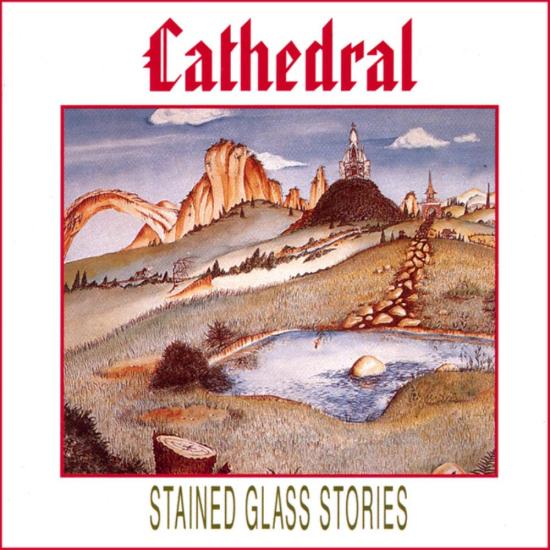
Hello Progarchy! As a new member, I’d like to start off with a series that focuses on underappreciated prog rock groups, and Cathedral will be the first. In 1978, this quintet released one of the better American prog albums, Stained Glass Stories, which took elements of Yes, Genesis, and Gentle Giant, and combined them into one beautiful symphony. The album consists of five songs, two of which (Introspect and The Search) are wonderful epic pieces reminiscent of some of Yes’s finest music. Gong is a shorter instrumental piece that hearkens back to Peter Gabriel-era Genesis. The other two songs (The Crossing and Days & Changes) also have a captivating symphonic sound that will remind listeners of Relayer-era Yes or King Crimson’s In the Court of the Crimson King.
Overall, Cathedral did a superb job creating symphonic music inspired by their more popular British contemporaries while also maintaining their own distinct sound. The musicianship is top notch (listen to the crisp sound of Fred Callan’s Rickenbacker bass and Rudy Perrone’s dexterous handling of lead guitar) and let’s not forget the great cover art. The beautiful pastoral setting (dare I say Tolkienian?) arouses a sense of awe and suits the music perfectly. I hope you enjoy this album as much as I did.
Ransom-ed Prog: Glass Hammer
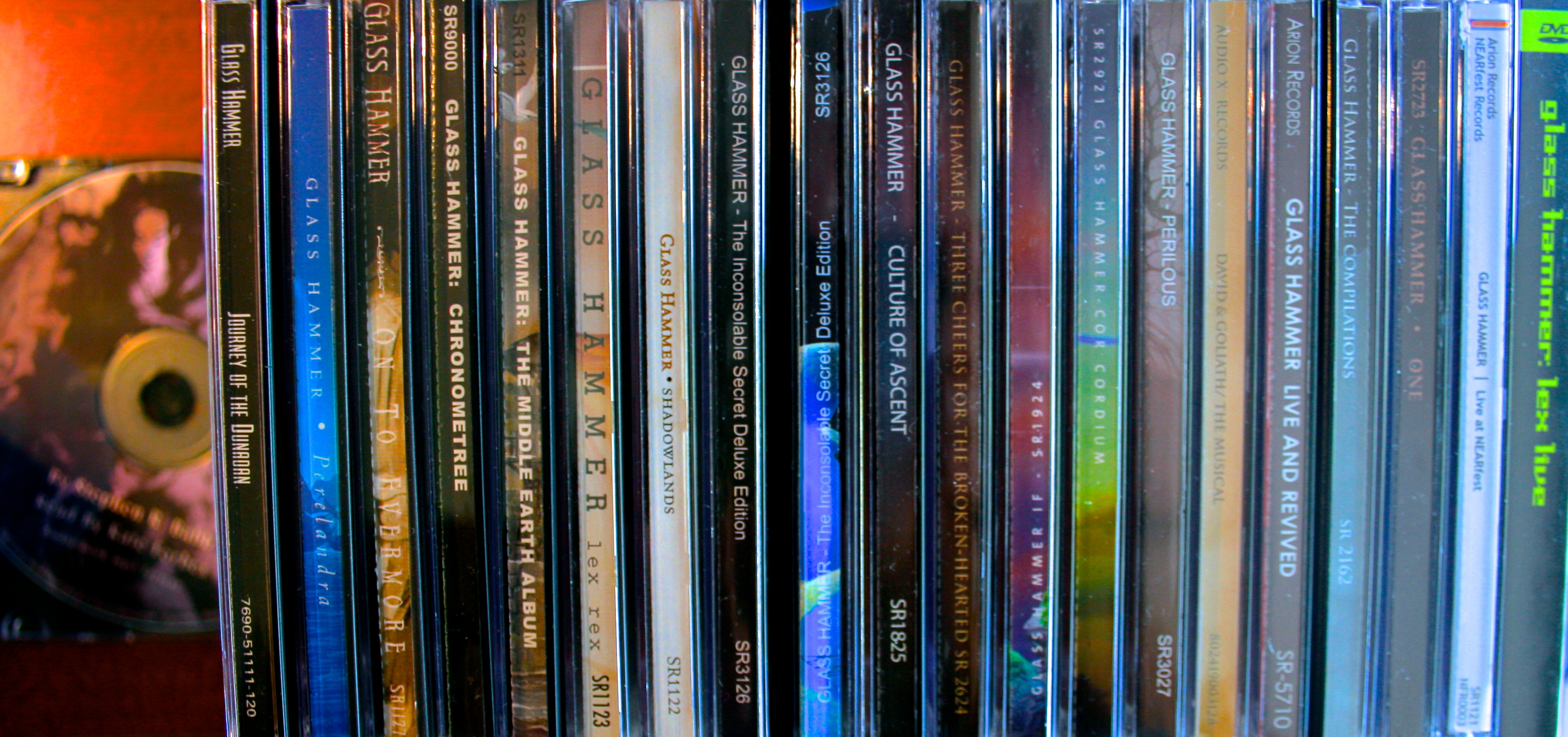
Feel free to call me a “Glass Hammer Junkie.” Steve and Fred might not approve, but it is the truth. Ever since my great friend, Amy Sturgis, introduced me to their music, days or so before LEX REX appeared in 2002, I’ve been hooked. As you can see by the accompanying photograph, I’m pretty much a completist as well. After all, why like anything halfway? Besides, Glass Hammer isn’t a “half-way” kind of love. You either love them completely, or you don’t know them.
Some reviewers have–in an almost obligatory way–compared their music to that produced during the first decade of Yes. As Babb has joked, GH admires Jon Anderson and Yes deeply, but he’s merely acknowledging the debt in his own music, not mimicking it. And, frankly, from my perspective, GH has much more of a “Leftoverature” feel than a Yes one. Regardless, Babb and Schendel are artists, pure and simple, indebted and original all at once.
There is so much I could write about GH, a book really. But, for now, let me state that there will be more much about GH at progarchy, as well as an extensive analysis and history of the band over at Carl Olson’s brilliant, Catholic World Report. Additionally, we’ll have a long interview with GH co-founder, Steve Babb.
As many of you know, I’m not a huge fan of labels, as they tend to narrow the beauty of a thing. If you forced me to label Glass Hammer’s music, though, I’d probably claim it as “Ransom Prog,” the kind of music Elwin Ransom would’ve written while on Malacandra. For one (or three, really) of the things to love about GH is the “voice” of the band. And, I don’t mean the vocalists. There are lots of vocalists for GH, and there have been since the band’s beginning, the release of their first cd back in 1993, twenty years ago. There quite good. I’m especially fond of Susie Bogdanowicz. Phew, can she sing or what? Her rendition of Yes’s “South Side of the Sky” is simply breathtaking. The vocal equivalent would be Dawn Upshaw singing Gorecki’s Third Symphony. Yes, Bogdanowicz is THAT good.
The real voice of the band, however, can be found in three very different things. Second and third, the distinctiveness of the bass and keyboards, a profound mixture of the punctuated, the soaring, and the lush. But, first and foremost, are the lyrics. Glass Hammer contains some of the best lyrics in rock history. No exaggeration. Last year, just as 2012 was winding down, I was utterly blown away by Perilous. I even held up my “best of” because of the album. It went from not being on my radar in October to being one of the top releases of the year by early December. The music is, certainly, excellent. But, the lyrics are top notch–meaningful, imagist, and philosophical.
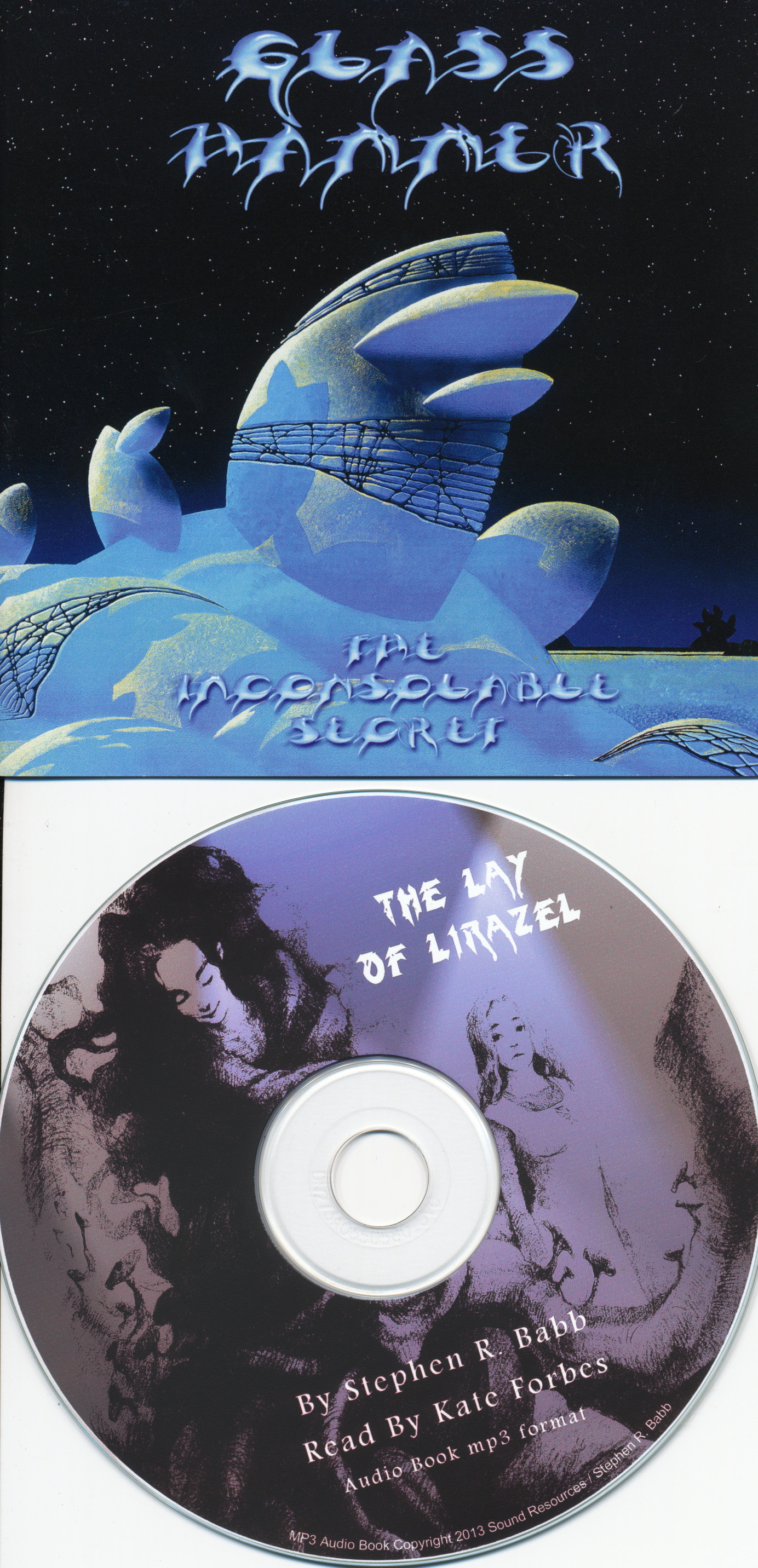 I think the lack of recognition of excellent lyric writing is one of the great faults in reviewing and assessing this third wave of prog (as our own Brian Watson labels it). After all, look at the lyrics of Spawton, Longdon, and Tillison, the lyrics of the Tin Spirits, of Gazpacho, or Ayreon (the plot of Ayreon is also mind boggling–but this is for another post), and others. The lyrics for GH are at this top. They are as good as the music, and the two–lyrics and music–serve one another. The lyrics are at once mythic and deeply moving. Here’s just one example from Inconsolable Secret:
This is where we draw the line
And here is where we make our stand
You’ll gather all our forces here for
Here we stand on hallowed ground
And here the foe will surely fall
We’ll send his army scattering for
This is where we draw the line
And here is where we make our stand
Now sound the trumpets, form the battle line
Hold the line
Babb’s lyrics reflect those of the Beowulf poet as well as the poet of the Battle of Maldon. Certainly, Babb is drawing upon these medieval sources, and, probably, a bit of Chesterton’ s Everlasting Man.
There’s a really nice review of the rereleased and remixed version of Glass Hammer’s masterful, Inconsolable Secret, over at http://www.progrocket.com. Sadly, I can’t figure out who the author is, or I’d give her or him explicit credit.
One of the quintessential modern-day symphonic progressive rock bands, Glass Hammer recently re-released their 2005 album The Inconsolable Secret. The new “deluxe edition” contains all the original material from the two-disc album, as well as a third disc featuring remixes of several of the songs, two with new vocal tracks from present lead singer Jon Davison, who is currently the lead singer for Yes. Glass Hammer is led by multi-instrumentalists Steve Babb and Fred Schendel.–Progrocket.
To keep reading this excellent review, click here.
For Glass Hammer’s official website, click here.
More BillyNews: Jon Anderson in Las Vegas
(yes, we love Billy!–Thanks to Glass Onyon for keeping Progarchy so well informed).

YES founding member and former lead vocalist Jon Anderson joins Raiding The Rock Vault At The Las Vegas Hotel Casino for five shows 9/20-24
Las Vegas, NV – Jon Anderson, founding member and former lead vocalist of the definitive progressive rock band YES, will guest star in RAIDING THE ROCK VAULT, the Ultimate Classic Rock Concert Experience, Sept. 20 – 24. The co-writer and singer of cosmic classics, including “Owner of a Lonely Heart,” “Roundabout,” “Going for the One,” and “Close to the Edge,” whose time with the band spanned five decades, will sing in the show for five special performances.
“Jon Anderson is an icon,” said RAIDING THE ROCK VAULT creator, director and producer John Payne. “He is one of the biggest names in the history of progressive rock and I’m really excited for him to lend his voice to the show.”
The story of classic rock comes to life in RAIDING THE ROCK VAULT, which takes audiences on a magical musical journey, traversing the genre’s history from the ‘60s through the ‘80s. The hard-rocking show features classic anthems from The Rolling Stones, The Who, The Doors, Led Zeppelin, Jimi Hendrix, the Eagles, Queen, Van Halen, AC/DC, Journey, Free, Bryan Adams, Supertramp, Toto, Deep Purple, and more, truly boasting “The Greatest Set List Ever.”
The show’s all-star lineup includes Howard Leese [Guitar] (Heart), Tracii Guns [Guitar] (LA Guns, Guns n’ Roses), Robin McAuley [Lead Vocals] (MSG, Survivor), John Payne [Lead Vocals and Bass] (Asia), Paul Shortino [Lead Vocals] (Rough Cutt, Quiet Riot), Jay Schellen [Drums] (Badfinger, Asia), Andrew Freeman [Lead Vocals and Guitars] (Lynch Mob, The Offspring), and Michael T. Ross [Keyboards] (Lita Ford, Hardline).
Ticket prices for RAIDING THE ROCK VAULT range from $49 to $125 (plus fees) for a special Rock Star Package (which includes tickets in first five rows, t-shirt, concert program, album, meet-and-greet and VIP pass). Special discount tickets for $39 are available for locals. For an up-to-date schedule or to purchase tickets, visit the LVH box office or log onto thelvh.com, vegas.com, or ticketmaster.com. Tickets can also be purchased by calling 702-732-5755 or 1-800-222-5361.
About LVH – Las Vegas Hotel & Casino: LVH – Las Vegas Hotel & Casino, a world-class destination, offers a unique blend of amenities and excitement with all your favorite table games, hottest slots on the market, incredible restaurants, endless entertainment, more than 200,000 square feet of meeting space and the world’s largest race and sports SuperBook®. LVH – Las Vegas Hotel & Casino provides a range of culinary adventures including exhibition-style Japanese cuisine at the world-famous Benihana, fine steaks at TJ’s Steakhouse, Pan-Asian dining at 888 Noodle Bar, authentic Japanese sushi at Teru Sushi, a traditional buffet that features tastes from around the world, and more. LVH boasts a strong entertainment schedule led by world-class headliners in the LVH Theater, as well as a variety of on-going production shows in the Shimmer Cabaret. Its proximity to the Las Vegas Convention Center and its designation as a Monorail station (connecting it to the Las Vegas Strip) makes it the ideal hotel for conventions and visitors alike. For more information or to book accommodations, call toll free at (800) 732-7117 or log on to www.thelvh.com or connect with us on our social pages www.thelvh.com/Hotel/stayconnected.
www.facebook.com/RaidingTheRockVault
https://twitter.com/Rock_Vault
Press Releases & Assets:
www.msopr.com/n/client-roster/raiding-the-rock-vault
For more information on RAIDING THE ROCK VAULT, please contact:
LANGDON FLYNN COMMUNICATIONS
Steve Flynn, steve@langdonflynn.com
Ceatta Bogataj, ceatta@langdonflynn.com
Jon Anderson official website: www.jonanderson.com
For media information regarding LVH – LAS VEGAS HOTEL & CASINO, please contact:
Melissa Healy
For media information on Jon Anderson, please contact:
Glass Onyon PR
Billy James, glassonyonpr@gmail.com
The Spiritual Vision of Dimensionaut
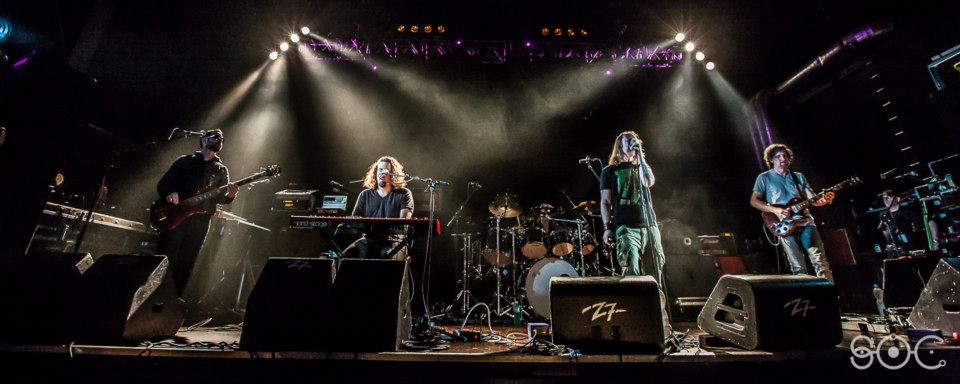
I have been contemplating the spiritual riches of Dimensionaut, the truly awesome prog masterpiece from Sound of Contact.
For me, the album does what prog does best, with that characteristically proggy ability to immerse the listener in a cosmic philosophical meditation.
To give another example: One of my absolutely favorite tracks from Big Big Train, “The Wide Open Sea,” does this sort of musical meditation stunningly well.
So, to encounter in Dimensionaut an album-length, equally successful exercise in that kind of philosophical and spiritual meditation, is a real thrill. And it’s an even more remarkable achievement if we consider that Dimensionaut is the equivalent of a vinyl double album.
Here is how I would slice it up for a deluxe vinyl gatefold edition:
SIDE 1:
01. Sound Of Contact (02:05)
02. Cosmic Distance Ladder (04:43)
03. Pale Blue Dot (04:44)
04. I Am Dimensionaut (06:25)
SIDE 2:
05. Not Coming Down (06:01)
06. Remote View (03:54)
07. Beyond Illumination (05:53)
[featuring Hannah Stobart]
SIDE 3:
08. Only Breathing Out (05:57)
09. Realm Of In-Organic Beings (02:52)
10. Closer To You (05:05)
11. Omega Point (06:30)
SIDE 4:
12. Möbius Slip (19:36)
I – In The Difference Engine
II – Perihelion Continuum
III – Salvation Found
IV – All Worlds All Times
If people approach Dimensionaut with an open mind, they will have to admit that this double album is an incredible achievement. Amazingly, it is prog that is accessible to everyone, and yet it does not shatter its integrity with any compromises.
All the negative reviews that I have read, and any reservations that I have heard expressed, stem simply from invidious comparisons, which are completely unfair.
Rather, if you clear your headspace of all preconceptions and genealogical obsessions, and just enter into the spirit of the music, the musical conclusion is inescapable:
With Dimensionaut, the Spirit ever lingers… undemanding contact in your happy solitude!
(I append below an interesting video in which Simon Collins and Dave Kerzner talk about the album’s story concept. They affirm that the musical journey explores not just dimensions of science fiction and romance, but most especially a serious spiritual dimension.)
30 years after taking “Drastic Measures”, John Elefante revisits Kansas
Any rock group that has been around for a few decades has seen its share of line-up changes. The same is true several times over for certain prog groups, some having a near legendary reputation for players coming and going, returning and re-leaving, rinsing and repeating. Yes comes to mind, along with King Crimson, Asia, and Kansas. The latter has essentially (if not precisely) had three different incarnations in the forty years since it formed in 1973: the original/current one (1973-1981; 1985-present), the one with John Elefante replacing Steve Walsh as lead singer/keyboardist (1982-84), and the line-up with Steve Morse taking the place of Kerry Livgren as lead guitarist (1985-89). Violinist Robbie Steinhardt has come and gone several times over the years; the two stalwarts have been drummer Phil Ehart and guitarist Rich Williams, who have appeared on every Kansas album. (A complete breakdown is available here)
The 1980s brought challenges stylistic, cultural, and technological in nature for most prog groups (Yes, Genesis, etc.) that tasted or enjoyed significant success in the 1970s . Much is made of the influence of punk in the demise of ambitious, complex prog albums, but other factors were in play. Those included the advance of electronic instrumentation and production values that were intertwined with the arrival of New Wave Music, something of a sophisticated, artsy cousin of punk. Also notable was the rise of Album Oriented Rock (AOR) in the mid-70s, which  eventually narrowed the focus and homogenized the content of music-oriented radio. It is rather fascinating, in considering the groups Yes, Genesis, and Kansas, how each went through big line-up changes in the late 1970s and early 1980s, and then experienced massive successes in the first part of the Eighties with songs and albums that were less complex, more commercial, and often very much in keeping with the AOR sounds of the time. Journey, the band that (arguably) best embodied the AOR “sound”—or at least approach—was originally formed in the mid-1970s as a rather “meandering jazz-rock” , prog-ish band, finally arriving on the winning formula when singer/songwriter Steve Perry joined the group in 1977. And there is no doubt that Asia was formed by four prog giants in order to produce radio-friendly music that could—and did, of course—move truckloads of units.
Kansas, meanwhile, had its biggest hit with “Dust In the Wind” (what, you’ve heard of it?), which reached #6 on the Billboard Top 100 in 1978. Yet the song was not the typical Kansas song up to that point: it was quite short—just over three minutes long)—quite simple, and quite sparse, with just vocals, acoustic guitar, violin, and a great melody line (not to mention some overtly existential lyrics shot through with palpable angst). But, having achieved remarkable success, the band began to show the wear of constant touring and being pushed to have further commercial success. In addition, band founder and primary songwriter Livgren announced during the Monolith tour in 1980 that he had converted to Christianity after years of obvious spiritual seeking (many of the lyrics on the Monolith album were influenced by The Urantia Book). Later in 1980, Livgren released his first solo album, Seeds of Change, which featured overtly Christian lyrics. With discord growing, Walsh finally left Kansas in October 1981. The year before, Walsh had released his first solo album, Schemer-Dreamer, which featured Kansas band mates Livgren, Williams and Ehart, as well as the great Steve Morse, who would eventually become the lead guitarist of Kansas when Walsh rejoined the group in 1985 (yes, keeping track of this stuff can be challenging!).
Which brings me, finally, to John Elefante.
Continue reading “30 years after taking “Drastic Measures”, John Elefante revisits Kansas”
30 years after taking “Drastic Measures”, John Elefante revisits Kansas
Any rock group that has been around for a few decades has seen its share of line-up changes. The same is true several times over for certain prog groups, some having a near legendary reputation for players coming and going, returning and re-leaving, rinsing and repeating. Yes comes to mind, along with King Crimson, Asia, and Kansas. The latter has essentially (if not precisely) had three different incarnations in the forty years since it formed in 1973: the original/current one (1973-1981; 1985-present), the one with John Elefante replacing Steve Walsh as lead singer/keyboardist (1982-84), and the line-up with Steve Morse taking the place of Kerry Livgren as lead guitarist (1985-89). Violinist Robbie Steinhardt has come and gone several times over the years; the two stalwarts have been drummer Phil Ehart and guitarist Rich Williams, who have appeared on every Kansas album. (A complete breakdown is available here)
The 1980s brought challenges stylistic, cultural, and technological in nature for most prog groups (Yes, Genesis, etc.) that tasted or enjoyed significant success in the 1970s . Much is made of the influence of punk in the demise of ambitious, complex prog albums, but other factors were in play. Those included the advance of electronic instrumentation and production values that were intertwined with the arrival of New Wave Music, something of a sophisticated, artsy cousin of punk. Also notable was the rise of Album Oriented Rock (AOR) in the mid-70s, which eventually narrowed the focus and homogenized the content of music-oriented radio. It is rather fascinating, in considering the groups Yes, Genesis, and Kansas, how each went through big line-up changes in the late 1970s and early 1980s, and then experienced massive successes in the first part of the Eighties with songs and albums that were less complex, more commercial, and often very much in keeping with the AOR sounds of the time. Journey, the band that (arguably) best embodied the AOR “sound”—or at least approach—was originally formed in the mid-1970s as a rather “meandering jazz-rock” , prog-ish band, finally arriving on the winning formula when singer/songwriter Steve Perry joined the group in 1977. And there is no doubt that Asia was formed by four prog giants in order to produce radio-friendly music that could—and did, of course—move truckloads of units.
Kansas, meanwhile, had its biggest hit with “Dust In the Wind” (what, you’ve heard of it?), which reached #6 on the Billboard Top 100 in 1978. Yet the song was not the typical Kansas song up to that point: it was quite short—just over three minutes long)—quite simple, and quite sparse, with just vocals, acoustic guitar, violin, and a great melody line (not to mention some overtly existential lyrics shot through with palpable angst). But, having achieved remarkable success, the band began to show the wear of constant touring and being pushed to have further commercial success. In addition, band founder and primary songwriter Livgren announced during the Monolith tour in 1980 that he had converted to Christianity after years of obvious spiritual seeking (many of the lyrics on the Monolith album were influenced by The Urantia Book). Later in 1980, Livgren released his first solo album, Seeds of Change, which featured overtly Christian lyrics. With discord growing, Walsh finally left Kansas in October 1981. The year before, Walsh had released his first solo album, Schemer-Dreamer, which featured Kansas band mates Livgren, Williams and Ehart, as well as the great Steve Morse, who would eventually become the lead guitarist of Kansas when Walsh rejoined the group in 1985 (yes, keeping track of this stuff can be challenging!).
Which brings me, finally, to John Elefante.
Back in late 1980, he was a young 22-year-old just getting started, along with his brother Dino (guitar), in the music business. He was also a recent convert to Evangelical Christianity and a huge fan of both Kansas, Yes, Gentle Giant, and other prog groups. In this 1992 interview, he explained how he came to be the lead singer of Kansas: he knew someone who knew someone who knew…and the rest was history. “I remember, the first thing the band wanted to do was to go over some of their early material,” he said, “They’d been off the road for a few months at that time, and I actually knew some of the songs better than they did!” The other two top candidates for the job were reportedly Warren Ham and Michael Gleason, both of whom would eventually form the group A.D. with Livgren in 1983. Kansas hit the road for one of the highest grossing tours of 1981 and then released Vinyl Confessions, which included the hit song, “Play the Game Tonight” (#17 on Billboard) and three songs penned by the Elefante brothers and one (“Play On”) co-written by Livgren and John Elefante.
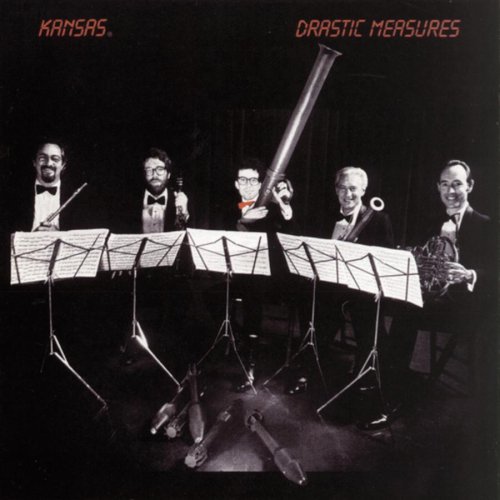
What is notable about Vinyl Confessions is the obvious move in the AOR direction; the only song that I would generally describe as “prog-gish” is the final cut, “Crossfire”, penned by Livgren. AllMusic.com is in the ball park in writing that “it was getting hard to distinguish Kansas from Foreigner and Journey.” The big difference was that while Journey and Foreigner specialized in love songs, the new Kansas material was lyrically much more in the vein of early ’80s CCM (Contemporary Christian Music). Songs such as “Borderline”, which urged listeners to make a choice between being “hot and cold”, obviously referred to the church of Laodicea, chastised in the Book of Revelation for being “lukewarm, neither hot nor cold” (Rev 3:15). The next album, Drastic Measures, which features the worst Kansas album cover of all time. was Elefante’s second and last with Kansas, and it was, to put it nicely, a mixed affair. Livgren was already moving on to A.D., and at times it is hard to believe it was produced by the same band that had, just a few years before, put out Leftoverture (1976)and Point of Know Return (1977). As Elefante would bluntly admit ten years later: “I didn’t like ‘Drastic Measures,’ and we even said to the band, ‘Guys, this is almost an Elefante Brothers album. This isn’t what Kansas is all about.’” Steinhardt had left the band at the end of 1982 and the band was now an overly AOR group, with just one song, “Mainstream”, breaking the six minute mark—and it was a Livgren-penned tune that openly skewered the direction of both the music world and his band:
It’s so predictable and everybody judges by the numbers that you’re selling,
Just crank ’em out on the assembly line and chart ’em higher (higher, higher),
Just keep it simple boys it’s gonna be alright, as long as you’re inside the Mainstream,
are we moving too far away?
Is it worth it if it doesn’t pay?
That said, the album does demonstrate that the young Elefante, in addition to being a fine vocalist, could write a great hook and a good tune. The hit, “Fight Fire with Fire” (#3 on the Billboard Mainstream Rock Chart) is a good example, but personal favorites include “Andi”, which is a precursor of sorts to songs such as Night Ranger’s “Sister Christian”, with its imploring, ruminating lyrics about a young girl trying to find her way in life (“And you’re not just anyone; don’t be ashamed”), and “Don’t Ever Take Your Love Away”, which ambiguously works as either a love song or a modern psalm: “‘Cause nothing means a thing unless you’re here/To live without your love’s my only fear/I just want to let you know/I can’t make it on my own.”
After Kansas broke up in 1984, John Elefante embarked on a prolific and award-winning career (multiple Grammy and Dove awards) in CCM as a producer, songwriter, and bandleader (Mastedon). Although he received offers that promised success in the broader music world (such as an invite to be lead singer of Toto in the late 1980s), Elefante was committed to working with Christian artists, including Guardian, Petra, Bride, and numerous others and, later, producing some of his own albums. During the 1990s, he released three solo albums, none of which I’ve listened to. In fact, I’ve not paid much attention to Elefante’s work for many years until he released his new solo album, On My Way to the Sun, his first in fourteen years, which came out on May 7th. I saw the album on amazon.com, noticed that Kansas members Williams and David Ragsdale (violin) performed on the 11-minute-long opening cut, “This Is How the Story Goes”, and I had a listen. My immediate impression was, “This is Kansas, circa 1978!” That was not entirely accurate, but similarities are obvious: the lush harmonies, the violin-driven opening, the very Kansas-esque guitar licks from Williams. In truth, the song is a near perfect marriage of mid-1970s and early 1980s Kansas, but with superior production and some frankly evangelistic lyrics:
And this is how the story goes:
You must believe it all, my friend,
from the beginning to the end.
Everyone lives forever, we just have to choose where,
Because the virgin had a son,
and the stone was rolled away,
so how can we can be terminal,
because He lives today.
Granted, those sort of direct lyrics aren’t going to attract many new listeners (I do like the line about being “terminal”; it reminds me somehow of Part IV if Eliot’s “East Coker”). But, while I’m not a big fan of overtly evangelistic rock tunes, I think “This Is How the Story Goes” is a really fine bit of prog-rock. It is perfectly produced and performed, has a killer hook, develops wonderfully, and is both rocking and thoughtful. Another plus, and a pleasant surprise, is just how great Elefante sounds. He has always been a fine singer, and he displays not only range, but an admirable combination of confidence and reserve, never over-singing or being indulgent; there isn’t an unnecessary note on the album.
The other nine songs are certainly in the AOR/”classic rock” vein, but with lots of nice twists and details. “Where Have the Old Times Gone” has some obvious tips of the hat to Led Zeppelin and Foreigner, but also features violin work that is directly from the Kansas playbook. The Foreigner influence is front and center on the title track while “All I Have to Do” could have fit nicely on Vinyl Confessions, albeit with an updated sound. “The Awakening” begins with a huge, warm wash of harmonized vocals that then leads into lush guitar-driven verse and chorus that reminds me of some of Livgren’s work with A.D. “Half the Way Home” featured more lush harmonies, over the top of a 38-Special-like guitar riff; the lead vocal, oddly enough, sounds like Doug (Dug) Pinnick of King’s X in a few spots, and there is a huge sing-a-long chorus (did I mention the album has big hooks?). “We All Fall Shorts” is a largely acoustic number that starts with a Beatles/Phil Keaggy vibe before moving into a very Yes-ish chorus. “Don’t Hide Away” returns to the Foreigner influenced sound, but with a very Styx-like chorus, along with a short section of rap (yes, that’s right). “This Time” offers a somewhat abrupt shift in tone and lyrics, a moody, minor-keyed (and quite emotional) song about a pregnant girl who decides, at the last moment, to keep her baby rather than have an abortion. The closing track, “Confess”, is, frankly, a praise-and-worship tune, but a very well done one at that: “Fall down on your knees/Praise Him/And fall to your knees/And confess with your lips/that Jesus is Lord.”
While the influences are obvious, there’s never a sense that Elefante is trying to write, say, a “Foreigner” or “Kansas” tune. Rather, this is a very cohesive-sounding album that works because Elefante is an exceptional musician, songwriter, and producer who seamlessly marries a myriad of loves and influences without losing his way or his focus. He knows prog-rock and classic rock better than most, and he does a fine, even exceptional, job of crafting songs that draw on those sources. Anyone who enjoyed the Elefante-fronted Kansas, or likes AOR/classic rock with lyrics that are unapologetically Christian will enjoy this well-crafted album. Having said that, here is the opening cut:
Pro Tip : Two great technologies that help you work on your music and videos from anywhere – Cloud Desktop and Cloud SharePoint from the best DaaS provider – http://www.apps4rent.com .
Steve Howe leaves Asia (again), talks guitar
Someone with time on their hands and prog trivia on their brains should do some careful historical research in search of the answer to this question: “Which prog group has the most line-up changes all-time?” Three groups come to mind immediately: Yes, Asia, and King Crimson. And the three are, of course, bound together by all sorts of personnel connections and such, as  well as having been around for decades, which surely is part of the ongoing drama of departing, returning, reuniting, breaking up, reforming, guesting, and so forth. Anyhow, legendary guitarist Steve Howe has announced that he is leaving Asia so he can concentrate on solo work and (it appears) his commitments to Yes. Just as (or more) interesting are his remarks on playing guitar. From the ProgRockMag.com site:
The pressures of attending to the requirements of two large-scale acts was also getting to him, he admits. “Over the last year I started to think, ‘Boy, when Yes extend a tour then Asia start a day early, I’m the guy getting squeezed.’ I couldn’t do it much longer without feeling that I was running on autopilot. I want to be in control of my musical direction and follow my calling.”
That calling will include the Cross Styles Music Retreat, during which Howe hopes to share his passion and experience of guitar with attendees. But he’s wary of the “unique” label: “It sounds like I’ve set myself up for a fall there,” he laughs. “All I’m saying is: I’m not educated, I don’t read music, I didn’t go to music school, I don’t have the theory. All I have is my experience, and presumably people want that, otherwise I wouldn’t be selling any tickets.
“I’ve done these things before. I walk in and say, ‘Don’t talk to me about demi-semiquavers. Don’t talk to me about time signatures.’ I play. Everything I do and everything I’ve learned is by ear.
“You don’t have to drive yourself mad reading dots. If you want to play classical music you should; but where I’m coming from, improvisation, composition. I’m bringing in an unschooled – I wouldn’t say rebellious, but individual – approach to guitar.
“I’m not going to pose that it’s going to be anything else. You get me, I play tunes and I talk about guitar. I’ve managed to make that interesting for myself for over 50 years, so there must be something!”
Howe states that he’s never believed in straight-out practising. “Playing scales would have driven me stark raving bonkers,” he says. “That’s not what I call music. It might be an essential part of keeping your muscles and fingers in good order and I don’t say it’s terrible. But my central thing is improvisation. Play stuff – make stuff up. That’s how I keep interested: by interacting with it, not just being a mechanical, physical observer.”
He didn’t enjoy his school days, finding London’s Holloway School “oppressive, violent, mixed with racial and religious prejudices.” But he’s never found that a lack of a “proper” musical education held him back – except when he tried to learn to play flute and discovered it was too distant from guitar to make the transfer comfortable.
As a result of being self-taught he does encounter people who are better technicians than he is. “But I don’t feel particularly threatened,” he explains. “What I feel is: ‘They’re very advanced in their technique – how advanced are they in their general view of music?’
“Guitarists can get fanatical about guitarists; but in the end we’re musicians. We make sound. It’s the sound that’s got to be pleasing – not how you made the sound. Who cares how you play it? What’s important is what comes out the other end.”
And one of the key lessons he hopes to impart at Cross Styles is: “Musicians are lucky; we can break the rules. There’s no such thing as the ‘music police’ – they’re not going to come round and say ‘You shouldn’t have played a D-flat, it should have been a D. You can do what you want – live and die by the musical sword!”
In addition to the retreat he’s planning a solo tour and a new Steve Howe Trio album and tour. “We’re just about to launch some dates. I’ve got two or three weeks of solo dates in June, which I haven’t done in a very long time due to my demanding schedule of keeping two bands happy. In September we’re doing the trio again. We should have a new recording before that.”
His desire to move away from the band environment is much more than just a whim, Howe notes. “My solo guitar work is pretty central to my musical existence. I’m not a blues, rock or jazz guitarist – I’m a guitarist, and the central thing is solo playing.
Read the entire piece. Glancing over his bio on Wikipedia (yes, I know, forgive me), I was a bit surprised to learn that Howe was the first player to be inducted into the Guitar Player Hall of Fame, and one of the few in the GP’s “Gallery of Greats”, which comes with being selected best overall guitarist at least five times (although it appears the criteria has now been modified). Howe’s playing has long intrigued me because of the obvious jazz influences; he was influenced by Wes Montgomery, as well as Chet Atkins, whose mark on Howe can be seen in Yes songs that have a country-type feel to them, quite unique within the prog realm.
Short reviews of new music from Asia, Proto-kaw, Mystery, and Godstick
I’ll skip my usual apologia attempting to explain my long absence from this fine blog and instead spend my limited, if not valuable time, remarking on four recent prog and proggy albums that have been found a home on my regular iTunes rotation. I may write longer reviews of a couple of these albums, but some short remarks are better than none.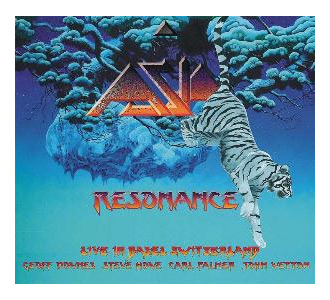
• Asia — Resonance (The Omega Tour, 2010; released 2012): After Kansas, Asia was the group that first introduced me into the world of prog, back in the early to mid-1980s, when I was an innocent small town Montana boy making my way through high school. I recall seeking out books and magazines that explained the musical pedigree of Downes, Howe, Palmer, and Wetton, and thus being introduced to early King Crimson, ELP, Yes, and more. I know that Asia has been a source of debate among prog fans, some of whom dismiss and even deride the group; I’ll just say that I really liked and still do like the first two albums, Asia and Alpha, and make no excuses for the warm and gratifying nostalgia they bring to the surface whenever I play them. And, truth be told, I’m partial to the third album, Astra, which marked the first of two billion line-up changes (Mandy Meyer took over guitar from Howe, who had departed), as it is actually a good, hook-heavy example of what might be call “arena prog” or “pop prog” or something similar. Anyhow, the original line-up has been back for a while—and getting solid to excellent reviews—and this live album documents the group’s 2010 tour. I’ve heard cuts from earlier live albums by Asia, and have found most of them disappointing, especially in the vocal department. But this album, dare I say it, is rather stunning, both in terms of the outstanding sound quality and the amazing power and clarity of Wetton’s voice. Wetton, to my ear, sounds just as good as he did on the studio cuts from the early and mid ’80s, which is saying something. The playing is excellent, of course; my only small beef is that the drums seem a bit back in the mix, although there is an extended and fine drum solo on “The Heat Goes On”. Otherwise, a great mix of cuts, with some nice acoustic-oriented variations of old hits such as “Don’t Cry” and “The Smile Has Left Your Eyes”.
• Proto-kaw: Forth (2011): Speaking of Kansas, the group Proto-kaw was the second of three early incarnations of what eventually became simply “Kansas” in 1973. The key constant in 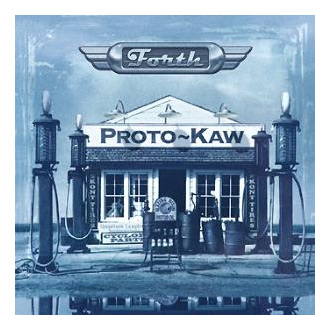 those groups was songwriter, lyricist, guitarist, and keyboardist Kerry Livgren, who conquered the world with Kansas in the 1970s (“Dust in the Wind”, anyone?), had a run of contemporary Christian rock albums in the 1980s (both solo and with the group AD), and then reformed Kansas and Proto-kaw in the 1990s. (Fun fact: metal legend Ronny James Dio sang lead on two songs on Livgren’s first solo album, “Seeds of Change”, in 1980.) All three of the newer Proto-kaw albums are worth checking out, and that is especially true of Forth, the most cohesive and fully realized album yet by the group. What strikes me, as a longtime fan of Kansas, is how much classical influence there is in Livgren’s writing, as his songs often have a suite-like quality that builds on either strings or keyboards/guitars that act as a strings section. Proto-kaw, like all Livgren-led bands, has dual lead singers (yes, Steve Walsh was a the primary singer in Kansas, but Robby Steinhardt sang lead or co-lead on numerous songs), and features excellent and often complex harmonies, masterfully constructed arrangements, and strong songwriting. One distinctive element is the presence of saxophone and flute (John Bolton), used to great affect in song such as “Pilgrim’s Wake”, one of my favorite cuts on Forth. A must listen for anyone with a soft spot for 1970s Kansas. And, speaking of Kansas (again!), this year marks the 40th anniversary of the group’s founding; I plan a couple of posts about the group and some of my favorite Kansas albums and songs.
• Mystery: The World Is a Game (2012): How embarrassing it is to admit that prior to the Yes album, Fly From Here (2011), I had no idea who Benoît David was. Having replaced Jon Anderson and toured with Yes—and then having himself been replaced due to his own respiratory issues—the talented vocalist worked on his third album with veteran Canadian proggers 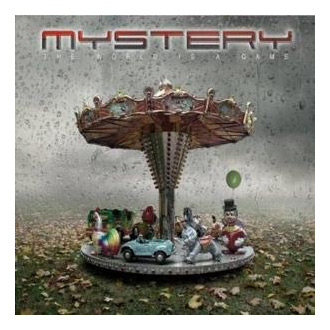 Mystery, a group he had joined in 1999. Having not heard any of his work with Mystery (which my iTunes annoyingly tagged as “The Mystery”), I was surprised—in a good way—that David did not sound like Anderson and that the group does not sound much like Yes, although the influence is present. In fact, at times David sounds more like another great Canadian singer, Geddy Lee. The two words that keep coming to mind after repeated listens of this exceptional album are “melodic” and “soaring”. The vocals soar, the guitars (by band founder, guitarist, lyricist, and producer Michel St-Père) soar, and the songs soar with a wonderful sense of discovery, melancholy, joy, and introspection, a not-so-easy mixture to navigate. And then there is the drumming of Nick D’Virgilio, who is rightly revered as one of the finest drummers in the prog/rock world. His drumming is, in a word, orchestral, and it is reason alone for buying this fine release. But, for me (a vocalist junkie), it is David who is the revelation here, especially after hearing his solid but rather emotionless performance on Fly From Here. In the words of a reviewer on ProgArchives.com, “Finally vocalist Benoit David proves what a versatile and commanding singer he is, a million miles away from the Yes/Jon Anderson clone dismissals. It’s also great to hear his voice so full of human feeling and compassion again after being so over-produced and rendered mostly lifeless on the Yes album `Fly From Here’!” Exactly right.
• Godsticks: The Envisage Conundrum (2013): Here is a group (from South Wales) I knew nothing about a week ago, but has captured my attention in a way that only a few groups have on first listen. Explaining why is a bit difficult; the difficulty arises, in part, from the most enjoyable fact this is a group that is very hard to describe or label or situate in the universe of 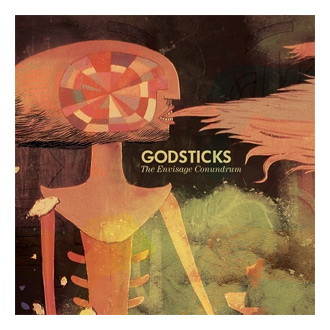 prog/rock music. Nearly every review I’ve read says the same, and rightly so. One of those reviews, by Adrian Bloxham, puts it well: ” The world of Godsticks is not straightforward; they seem to have baffled other reviewers trying to pigeon hole them. They make their own brand of what they describe as ‘progressive rock/pop, but it is very much their own take on the sound. You get the idea that this is exactly the music they have inside their heads trying to get out and if you like it they will be pleased but that’s not why they do what they do.” The one influence I hear is later King Crimson, but even that is hard to pinpoint, although the angular, often astonishing guitar work by guitarist/singer Darran Charles brings it to mind in several places. None of the songs are longer than seven minutes in length, but some of them pack in more twists, turns, veers, swerves, and surprises in five or six minutes than many bands can pack into songs three times as long. The title cut is a perfect example. It begins with a chugging, almost “boogie” riff out of which emerges a spider-like flurry of notes, leading into a wall of harmonized vocals over a heavy, grunge-like riff backed by the tight, slightly funky, never quite straight forward rhythm section of Steve Roberts (drums, keys) and Dan Nelson (bass). Charles’ voice is part of the mystery here, a strong, clear instrument that manages to be intense, detached, soulful, and slyly humorous (and occasionally darkly smirking) all at once. There is an abundance of odd chords, meters, notes, and harmonies, sometimes, to my ear, sounding like a Robert Fripp-inspired space alien sibling of Soundgarden. And did I mention the album features a 3:49 piano solo by Roberts that could easily have made it onto one of Keith Jarrett’s solo albums? Followed by a three-part suite—”Borderstomp”, parts 1-3—that sometimes calls to mind Steve Vai? Not straightforward, indeed!
 Progarchy