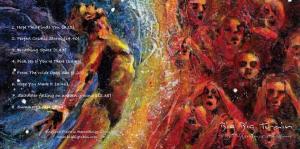
 [An outrageously and somewhat circuitous review of “The Difference Machine” by Big Big Train (original release: 2007; reissued 2010).]
To see a little further/down below a mist hung over the fields/and the stars are falling away like raindrops on glass/further apart/slowing spinning dark–Greg Spawton/BBT, 2007
Being a Kansas Anglophile
For as long as I can remember, I’ve been an Anglophile. And, I use this term inclusively: I’m fascinated by the history, cultures, and languages of the British Isles, and all of its inhabitants—from the Celts and Picts to the Angles and the Saxons and even the barbaric, invading Danes (and many others, of course). I’m sure much of my love of all things English (and British) comes from my earliest readings of Tolkien and his vast mythology, all of which [ ]. I’m also married to a McDonald, who happens to be more German and Swedish than Irish, but the name . . . that blessed Celtic name.
But, I’m taken with so many other persons as well, some real and some fictitious and some a bit of both in larger British history: Bran the Blessed, Arthur, St. Patrick, St. Augustine of Canterbury, St. Bede, St. Boniface, Alcuin, Alfred the Great, Harold of Hastings, the nobles, temporal and spiritual who challenged King John at Runnymede, Sir Thomas More, Edmund Burke, William Pitt, Winston Churchill, C.S. Lewis, Owen Barfield, T.S. Eliot, etc., etc. And, this is just the short list.
Despite this noble lineage of great men, the British people have somewhat paradoxically chosen Arthur, not the much more victorious Alfred the Great, as “the central figure of national heroic legend. So wrote the nearly forgotten British (himself half Welsh, half English) historian, Christopher Dawson, in 1936. After all, he believed, the British loved lost causes, especially if the loss came in the face of extreme opposition while defending what is right, good, and just. Indeed, he argued, giving one’s all for the good of British society remains a fundamental part of the British character, as proven in the last several centuries by figures such as the Irishman Edmund Burke and Anglo-American Winston Churchill.
Such a fascination with lost causes gives the British a properly melancholic and, simultaneously, noble national character.
All of this played to my Kansas upbringing, staring across the wheat fields and sandhills, wandering what might exist beyond.
Big Big Train
When I bask in the music of the very, very English progressive rock band, Big Big Train, I feel—at the deepest possible levels—each of these quintessentially British traits: perseverance for the good no matter the cost; and a singular melancholic intensity.
The Difference Machine flies/you can see stars right through it/your mum or your dad or your kids; or the love of your life/bring light to the dark spaces between us/Stars bu8rn through the coins on my eyes.”–Greg Spawton/BBT, 2007
Though I do not fully understand all of the lyrics (and this is good, mystery is a fundamental part of art, to my mind), I can’t help but think English nobility and melancholic intensity as I listen to my most recent BBT purchase, the 2007 The Difference Machine, reissued last year.
Indeed, I first bought it as an mp3 download. I was so taken with the subtlety of the music, the instrumentation, and the lyrics, I happily reordered the full CD version. I’m glad to have done so, as the quality, not surprisingly, is so much higher. I’ve now listened to the “The Difference Machine” multiple times and in a variety of different situations: on my iPod while out for exercise; through my car stereo while driving; and on my kitchen stereo while baking (one of my loves—yesterday, I was baking English oat bread while listening to the CD). Frankly, there’s no bad place to listen to BBT music—as long as it’s not as mere background. It would be shame and a slap at real art to listen to this as anything other than what it is and how it was recorded—to enjoy it fully, to immerse oneself in it.
As with every other BBT release, this one simply stuns me, and it does so even more with each new listen. I treasure each new listening, for I keep discovering new things, more beauty, more sadness, and more creativity.
While there exist a number of bands and musicians I follow—and I’ve been listening to progressive rock since 1972, when I was four—there are only a couple of bands that totally absorb my interest. Those bands have been (in order encountered):
Yes (especially, “Fragile” through “90125”); Rush (especially, “Permanent Waves” through “Power Windows”; “Vapor Trails” to present); Talk Talk (especially, the last three albums); and The Cure (especially, “Faith” through “Wish”).
To these four groups, I also include the music of Kevin McCormick. But, while I can objectively state his music is as good as anything I’ve ever heard, I also must admit, he’s been one of my closest friends since 1986, so a bias toward him rather strongly exists.
I would also include Gazpacho, the music of Matt Stevens, Roine Stolt, Arjen Lucassen, and Neal Morse in their many forms, and anything Matt Stevens does.
Back to my claims. So, I’ve been listening to prog consistently since the earlier 70s, when my older brothers introduced me (probably unintentionally). Not only have I listened, collected, and analyzed prog for much of my life, I’ve also been a radio DJ, having my own prog show in college. I write this only to suggest that I’ve given this all a lot of thought—in between, around, above, and under academic projects, teaching, and family obligations.
So, with all of this explanation to the above nearly forty-year old list, I add a fifth band of excellence: Big Big Train.
If Yes’s “Close to the Edge” and Genesis’s “Selling England by the Pound” best represented the 1970s; if Talk Talk’s “Spirit of Eden” best represented the 1980s, then, BBT’s last full LP, “The Underfall Yard” best represents the last decade of music. [Yes, I know I left out the 1990s, I’m still thinking about this one]
A huge claim, I know, but I very much believe it true. And, for my good friends reading this, you know if I equate anything to “Spirit of Eden” (an album I’ve obsessed over way too much), I’m serious.
To me, Big Big Train—its history, its perseverance, its openness to its listeners and followers through the internet, especially, its musicianship, its desire for reaching perfection, its poetic and imagist lyrics—represents the very best of what exists in music today. This is far from feint praise, for there’s a considerable amount of competition out there—some almost equally fine music from groups as diverse as Porcupine Tree, Gazpacho, and others.
BBT only increases my love of things English.
Going back through the reviews and history, I see that Big Big Train almost broke up after the recording of “Bard.” Thank God, they didn’t. While Bard is the only album of BBT’s I’ve not heard, I’m quite positive—given where they’ve gone since Bard—BBT was just catching its stride around the making of that album. Though I have a feeling—and I don’t know any of what I’m about to write this from personal knowledge, only from the interviews, lyrics, etc.—the current members of BBT must have gone through some very powerful trials and shakeups. Like the best of those who came before them, Greg Spawton and Andy Poole, original band members, persevered. Where they’ve gone—especially with “The Underfall Yard”—is almost certainly not something they could’ve expected a decade or so ago. Instead, “The Underfall Yard” is a product of long struggle, experience, and craftsmanship; one of those unbought graces—but one that can’t arrive without extreme dedication to an artform.
Signals fail/A moment of time/lost, home/salt water, silence.–Greg Spawton/BBT, 2007
The Difference Machine
As noted earlier, my version of “The Difference Machine” came out last year. In his own description of the album, Spawton writes:
The Difference Machine received significant critical acclaim and, at the time of writing, is our best-selling CD. After the release of Gathering Speed, we invested the proceeds in our studio to ensure we could record music at the highest possible quality for an independent band. Furthermore, Andy had gained considerable experience as an engineer and we felt much more confident in our ability to get the most out of our studio. The Difference Machine is a concept album – a ‘small’ story; the loss of loved ones as life progresses, set against a ‘big’ story; the death of a distant star. The songs for the album were written quickly. The prog rock / post-rock crossover thing was now fully formed and everything flowed very smoothly. Indeed, a number of other songs which didn’t make it onto the album also came out of the writing sessions (Brambling, Hope You Made It and a 17 minute track – The Wide Open Sea.) The main musical motif for the album is set out early on in the opening track – an instrumental called Hope This Finds You. Played on viola by Becca King, the theme is restated briefly in Pick Up If You’re There before returning at the end of the album in the closing section of Summer’s Lease. Other musical motifs abound, some buried deeply in the music, some combining with others to form new themes. For example, the main album theme on the playout of Summer’s Lease is intertwined with a motif from Perfect Cosmic Storm which is initially set out in an understated manner on electric piano, before returning as the grand closing section of the song. There’s a lot of this on The Difference Machine – it is an album which is intended to pay repeated listenings with new discoveries.
After having given this beautiful album innumerable listenings, I can confirm Spawton’s own description of it.
There are eight tracks on the 2010 version of “The Difference Machine.”
The opening track, “Hope this finds you”—a short but powerful instrumental, captures the essence of the entire album, setting out the themes of wide open space, and vast emptiness, but, with the entrance of the viola, a deep and abiding sorrow appears, thus closing the space into something intensely personal, even intimate.
“Perfect Cosmic Storm” begins with a strange signal and some dissonance. A disembodied voice beckons: “signals go to ground” and then, circling the listener, cries “For me there is not hope at all.” From what I can tell, immersed in this man’s longing and despair, he believes he has either died or is on the edge of death. His life flashes before his eyes, and “before I go to ground,” he catches a glimpse of some of the happiest things of his existence: kids, parents, and all good that connects one good thing to another, allowing us to transcend this overwhelmingly dark life.
At over fourteen minutes, “Perfect Cosmic Storm” is a masterpiece in every way. Every voice and every instrument finds its exact place, and while much of the music is chaotic, there is an order to it all (especially beginning at 5:47 into the song, when the sax (itself, used here as an instrument of despair)), just as there is for the man (in the lyrics) dying. When, at 6:30, the singer comes back in with “Signals go to ground,” the listener breaths a sigh of relief. No relief remains permanent, though—as dissonance and counter harmonies continue throughout the track. Musically, the listener is left with the feeling that the protagonist has some massive choice still confronting him.
Spawton’s lyrics make this a truly great song. But, of course, a number of other things also make this song one of near perfection. Nick d’Virgilio’s drums and Dave Meros (of Marillion)’s bass are some of the best of each I’ve ever heard. Though he can play anything, D’Virgilio was made to play the music of Spawton and Poole. Phew.
The third track, “Breathing Space,” is exactly what it seems. A profound openness emerges during this song, and one feels as though the protagonist has realized either that he’s not quite dead or that he has some kind of redemption and permanent happiness awaiting him. It must be early evening, though, as crickets chirp, and space signals continue to emanate from somewhere.
In track four, “Pick Up if You’re There,” the protagonist, now realizing that the abyss is not all that confronts him, searches for signs of life. He climbs a hill, but only sees a mist below him and, when looking up, sees stars falling. Spawton offers some of his best poetic moments in lyrics to this song. The drums, bass, and organ are especially strong on this track, driving the protagonist toward some thing, whether that some thing be good or ill, a purgation of the worst or the best. “You can almost taste the pain/you can almost touch it.” And, again, D’Virgilio’s drums and, this time time (especially beginning around 4:39 into the song), Pete Trewavas’s bass is nothing less than breathtaking, as is Tony Wright’s flute at 8:40 into the track. But, the jam (especially the interplay of drums, bass, and Greg’s organ) beginning around 10:05 is my favorite part of the album. That protagonist is heading somewhere and fast. I still not quite sure where, but I know he’s moving at an outrageous speed. “One by one the signal’s fail/the sky is full of comet’s tails/–pick up if you’re there.”
“From the Wide Open Sea,” a track foreshadowing, in title and theme, the final track of BBT’s 2010 ep, “Far Skies Deep Time,” serves the same function as track three. The listener can relax, at least momentarily, as the spacey keyboards swirl.
Track six, “Hope you made it,” is another short song. Despite it’s relative brevity, the song’s lyrics cast much doubt on the fate of the protagonist. Life seems to break this man, and the best escapes him. “Mercury falling over the snow fields/the passage of time/as the notes in the margins/the last day of summer/the last day you loved her.” Is all of life nothing more than sporadic marginalia?
“Saltwater (falls on uneven ground)” is my favorite track. After a hauntingly false introduction, the song quickly changes direction, and we have an Eliot-esque man, a “hollow man” unable to keep some centricity to his life. And yet, as typical with BBT, a brief hope emerges. The sky brightens, and though the ground is frozen, the protagonist hears his love—or what he thinks is his love—walking behind him. From my perspective, lyrically, this song serves as the most important moment of the album. The protagonist, as close to death as possible without actually crossing into the shadow realm, sees before him the cold and relentless grasp of winter. As he does, voices of men and beasts (a cat that sounds strangely Pink Floyd-esque) as well as the signals from space swirl around him. BBT offers several minutes of a really laid-back jam (ok, I have no other way of explaining this). At 8:41, the protagonist, surrounded by a cold winter death, suddenly remembers the glories of summer, “days without end/exploding with fire.” If without end, the man only has to claim these as his true eternity. “Extraordinary again,” the lyrics conclude.
The final track, “Summer’s Lease,” gives us no settled answer. Summer conquers winter, and love rears its profound head among the prevalent pain of the world. But, the protagonist still seems somewhat lost. At 3:14, the song becomes relentless, frantic. “Where did you come from/where will you go to?/Don’t go away (repeated several times),” the protagonist cries. Every instrument seems to explode here. At around 4:56, the song becomes simple again—a rhythmic return to the rather melancholic themes of the album as a whole.
“Signals fail/a moment of time/lost home/salt water, silence/where did you come from /where will you go to?/Don’t go away.” And with these lyrics, backed by Spawton’s best keyboard work of the album as well as that pursuing viola of Becca King and sax of Tony Wright, the story ends as the piano fades out. “Summer’s lease” seems to have run out.
Again, I’m not quite sure where I’m left. I, Brad, am deeply satisfied, musically. But, what of the protagonist of the album? Did he make it to eternal happiness, eternal damnation, or just simply nothingness?
Summation
Well, if it’s not clear by now, I think the world of this lp. If “The Difference Machine” is not a part of your collection, it should be by the time you finished this outrageously long review.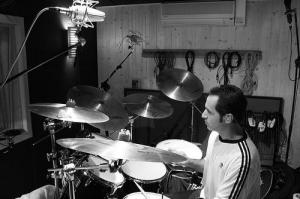
Overall, while I consider “The Underfall Yard” to be the gold standard of our time (hence, on my professorial scale, earning an A+), I would award The Difference Machine a solid A. Its sins, such as they are, are sins of omission, not commission. After so many listens to The Underfall Yard, I’ve come to expect the guitar work of Dave Gregory, the vocals of David Longdon, and the drum work of Nick d’Virgilio on every song. While Spawton and Poole have offered us everything they have (and, if this is as good as it gets—which is spectacular–but those of us who know BBT know that they only get better) on The Difference Machine, The Underfall Yard has all of the best of its predecessor with the permanent addition of Gregory and d’Virgilio and with the hypnotic voice of David Longdon.

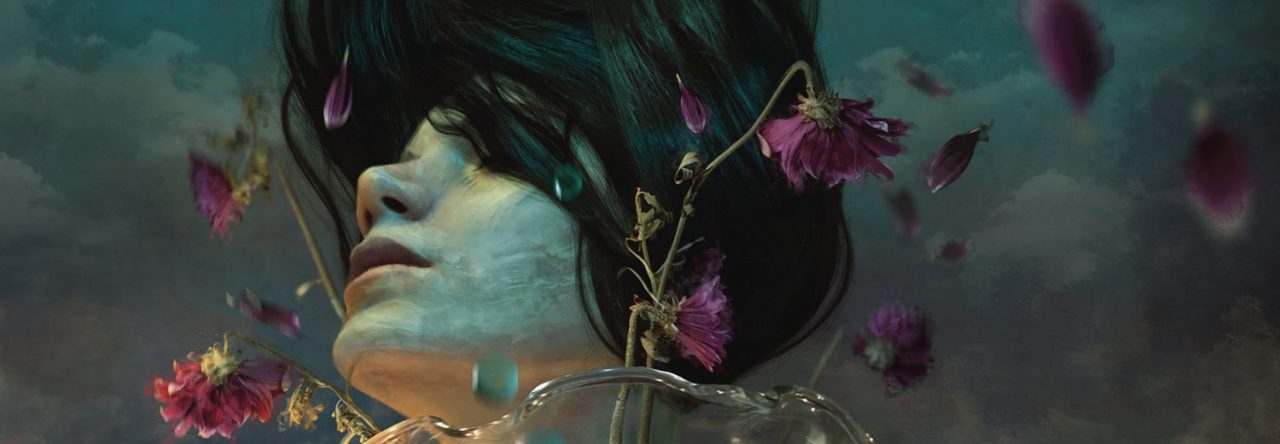
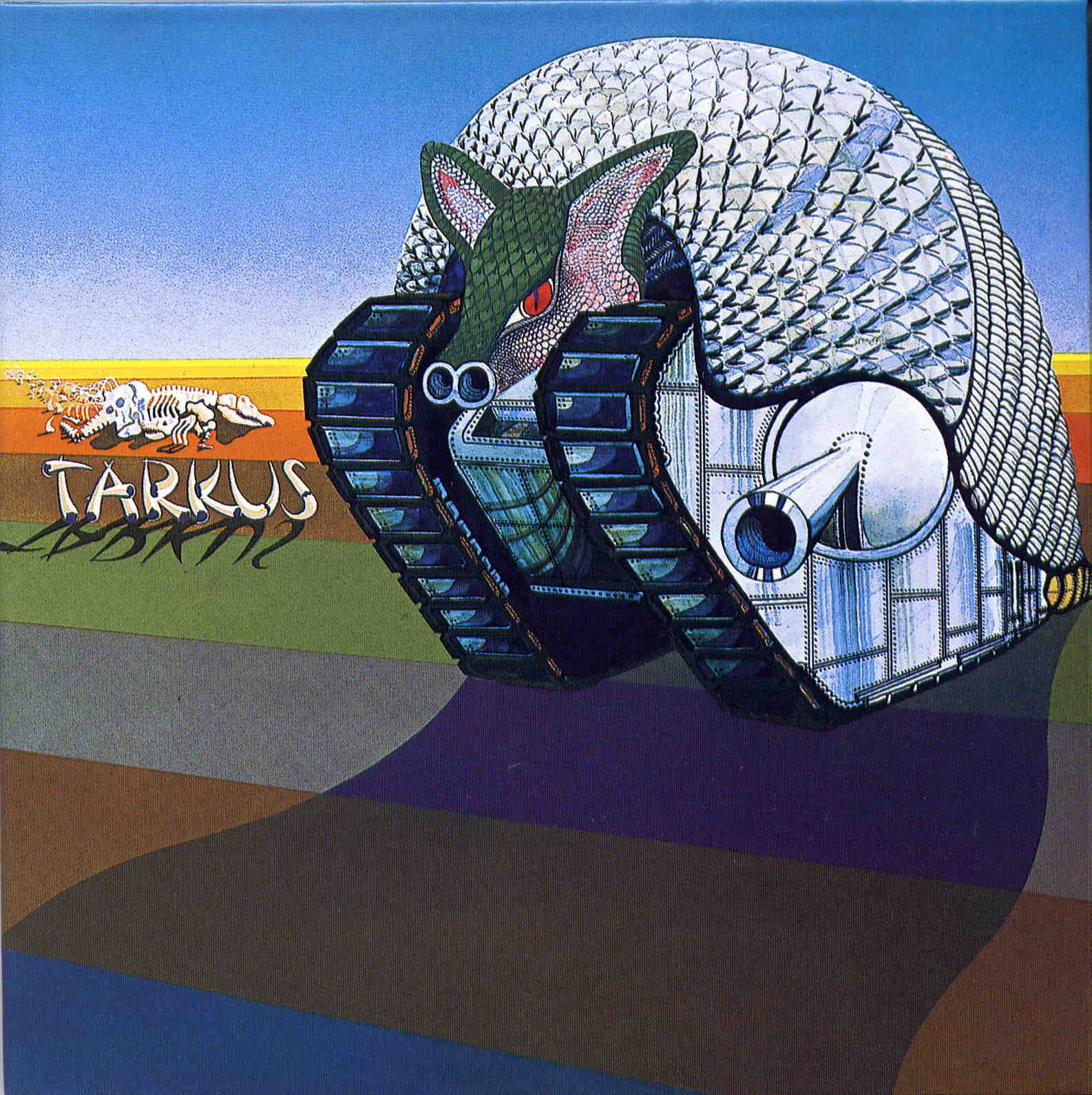
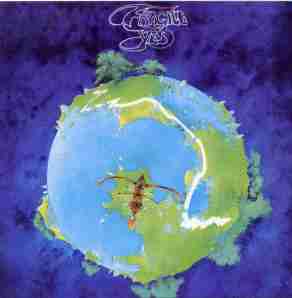 But it wasn’t just “artwork.” The images on these album covers (by William Neal and Roger Dean, respectively) were fantastic, in the root sense of that term. They violently insinuated themselves into my perception as essentially interstitial things. What I mean is that they had a “between” feel to them that was jarring, piercing, disconcerting, but also deeply attractive. It was not simply that I did not have a category for them; they both seemed to shine with some sort of resistance to categorization. Both immediately suggested a narrative that unfolded in some world or time or dimension that both was and was not this one.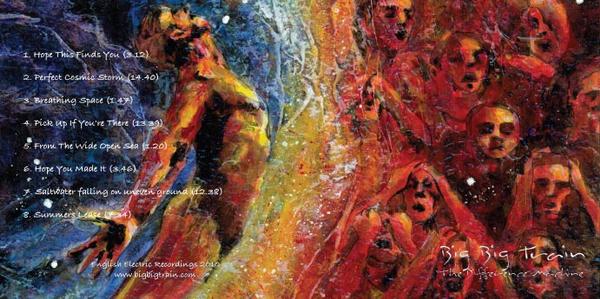

 Progarchy