Mike Portnoy is the Best

So far, I have revealed that Mike Portnoy is on two items of my “Best of 2012” album list.

You know, I agree with what Mike frequently says: there is no “best”; only “favorite”.

I agree that this is a great way to keep the peace when people are being obnoxious and unreasonable.

And it’s also a fine way to habitually cultivate humility on a personal level.

So okay, Mike, you got it. You’re one of my favorite drummers, and you are on many of my favorite albums this year!

But surely something only becomes a favorite because we consider it the best.

And the real reason we share “best of” lists, is not because we claim omniscience, but because we want to share what we know and love, so that others will do the same for us.

If they do, we can thereby learn from them, and thus grow in our love…

We don’t want to merely win musical arguments. We want to learn from the musical experiences of others, and to expand our own experiences, and to enlarge the way we think about music.

But still, when it comes to aesthetic argument, Roger Scruton gets it right:

Perhaps the most persistent error in aesthetics is that contained in the Latin tag that de gustibus non est disputandum— that there is no disputing tastes. On the contrary, tastes are the things that are most vigorously disputed, precisely because this is the one area of human life where dispute is the whole point of it. As Kant argued, in matters of aesthetic judgement we are “suitors for agreement” with our fellows; we are inviting others to endorse our preferences and also exposing those preferences to criticism. And when we debate the point we do not merely rest our judgement in a bare “I like it” or “It looks fine to me”; we search our moral horizons for the considerations that can be brought to judgement’s aid. Just consider the debates over modernism in architecture. When Le Corbusier proposed his solution to the problem of Paris, which was to demolish the city and replace it with a park of scattered glass towers and raised walkways, with the proletariat neatly stacked in their boxes and encouraged to take restorative walks from time to time on the trampled grass below, he was expressing a judgement of taste. But he was not just saying, “I like it that way.” He was telling us that that is how it ought to be: he was conveying a vision of human life and its fulfilment, and proposing the forms that gave the best and most lucid expression to that vision. And it is because the city council of Paris was rightly repelled by that vision, on grounds as much moral and spiritual as purely formal, that Le Corbusier’s aesthetic was rejected and Paris saved.

Check out this great issue (#14) of iDrum, with Mike Portnoy as the cover story: http://bit.ly/iDrum_Issue_14

Lots of interactive goodies in that one!

Stay tuned for more Mike Portnoy on my Best of 2012 list.
The catholicity of jazz (with an idiosyncratic list of jazz albums for people who don’t like jazz)

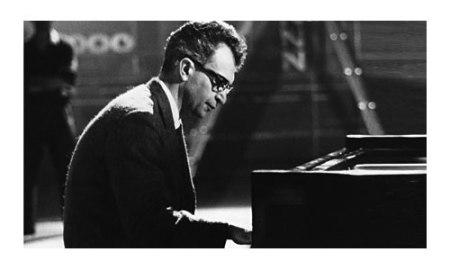
davebrubeck_progarchyThe following was originally written in May 2011 for the Insight Scoop blog. I’ve decided to share it here as a very modest homage to Dave Brubeck, who died this morning, one day shy of being 92 years young. It sounds like Brad has more about Brubeck on the way. Anyhow, here goes!

I just read a fun post, “The Catholic Roots of Jazz?”, by Joe Trabbic on the “End of the Modern World” blog, and wanted to blather about it for a bit. Joe writes:

Jelly Roll Morton was a key figure in the early development of jazz. Some people even regard him as the first real jazz musician, the man who brought together various musical forms into the new thing that we now know as jazz. Jelly Roll’s real name was Ferdinand Joseph LaMothe and he was raised Catholic, but the dissolute life that he began leading as a teenager, when he secretly took a job as a piano player in a New Orleans brothel, quickly made his Catholicism unrecognizable. But who knows the hearts of men save their Maker?

He goes on to mention early jazz giants Dominic “Nick” LaRocca and Louis Armstrong, and then remarks upon Dave Brubeck, one of the finest (and longest-performing) jazz pianists, saying, “Well, if jazz didn’t have anything Catholic about it, why did one of the greats of later jazz, Dave Brubeck, decide to enter the Church of Rome?”

He admits he is having fun with it, but the two questions are interesting: “Does jazz have Catholic roots?” and “Is jazz Catholic?” The first one, it seems to me, is bound up to a large degree with the history of jazz, which is a complicated matter. But it is pretty evident that jazz, to put it rather simplistically, has roots in both the European cIassical tradition and very American forms of music—ragtime, blues, early country, spirituals, gospel, dance music, etc.—harkening back not only to New Orleans, but Chicago, New York, Texas, and a variety of other places, especially throughout the southeastern United States. Elijah Wald’s How The Beatles Destroyed Rock ‘n’ Roll: An Alternative History of American Popular Music (Oxford University Press, 2009), offers a fascinating and slightly iconoclastic version of that history, especially in the first seven chapters. Jazz was, in the beginning, very much dance music, and was usually associated with a less than upstanding life-style. And that image was hardly helped in the 1940s and ’50s when many jazz musicians came under the spell of heroin and other drugs.

One of my heroes, G. K. Chesterton, had nothing good to say about the jazz of the 1920s and 1930s. I beg to differ with him, but I’m sure it was an unusual and even jarring thing for the Englishman to hear. It was a music filled with great energy, imbued with a beguiling combination of rawness (sometimes sexual in nature) and sophistication (often classical in origin), being both very rhythmic and melodic, with an ever-increasing harmonic complexity. I own dozens of books on jazz (and close to 11,000 songs classified as “jazz” on my iTunes), and they all agree that defining “jazz” is a very difficult matter. Barry Ulanov was one of the first great jazz critics (he was also a Catholic scholar—more on that in a moment), the author of A History of Jazz in America (Viking Press, 1954) and A Handbook of Jazz (Viking, 1960). He wrote, in the latter book, “The harder one listens to jazz, the more one hears European rather than African influences—the folk songs of England, Scotland, and Ireland, of France and Germany and even the Balkans, rather than the music of the jungle and the coast settlements from which the slave ships came.” Continue reading “The catholicity of jazz (with an idiosyncratic list of jazz albums for people who don’t like jazz)”

Dave Brubeck, RIP

ImageWell, I’ve been working on a piece on Dave Brubeck–focusing on Time Out and Time Further Out–for over a month now, and it’s still not ready.  Today, he passed away.  Amazingly, he would have been 92 tomorrow.  What a brilliant artist.  Rest in Peace, Mr. Brubeck.  How many minds did you boggle during your life?  Thank you.

Roger O’Donnell and the making of The Cure’s Disintegration

A huge thanks to my friend, Pablo Daniel Bujan Matas, for posting this on Facebook.

People often ask me what I remember about making Disintegration, it’s over twenty years since it was released in April 1989 and perhaps now is a good time to put my thoughts and memories into words. I know that this record is important to a lot of people for many reasons and in many ways it has had a big effect on my life.

The whole process of Disintegration started for me while on tour in 1987. I had joined The Cure on the basis that I would just tour in support of the Kiss Me album, I was hired as a musician for just the period of the tour and that was it. I really didn’t know very much about the band at that time and was on tour with the Psychedelic Furs, all I knew about the Cure was that one of my best friends was the drummer Boris Williams. When there was talk of adding a keyboard player he asked me if I was interested and initially I wasn’t until I heard KMKMKM and realised what an amazing band this was aside from all the weird hair and make up! After about a week of the tour in a hotel room sitting on the floor next to Robert he said to me “I want you to be a part of the group, I want you to play on the next record and be a member of The Cure.”

For the full recollection, go here: http://www.rogerodonnell.com/disintegration/

Beardfish: Destined Solitaire…. a brief review

Destined Solitude

Beardfish are another of the wave of Scandinavian bands to grace us with their music in the last decade or so. Heralding from Sweden they have been around since 2001.

I had heard of the band but never listened to their music. Various people had recommended their latest album ‘The Void’ but I first got hold of one of their earlier albums ‘Destined Solitaire’, released in 2009.

What can I say other than, for me, this has the ‘Wow’ Factor.

Perusing Wikipedia (dangerous I know), they are likened to Genesis and Yes…..mmmmm, not so sure about that………..yes, they are labelled as ‘Prog’ but they are light years away from these Classic Prog bands.  Avant-garde certainly, their imaginations run riot through this album. To me the music conjures up a meeting between Frank Zappa and The Marx Brothers, it’s that zany and madcap. There are an incredible amount of different influences prevalent, from prog through jazz with even some ‘growling’ metal. They are refreshingly unique in a genre where that’s very difficult to be.

These Swedish guys are certainly talented and incredibly inventive. They are the spawn of the Mothers of Invention!

This album is complex and long but rewards perseverance. It took me three listens just to begin to appreciate it and I’m sure that with repeat listening more of its treasures will be revealed.

If you like eccentric,  surreal 70s style music (with a lot of Hammond organ),  I heartily recommended this album.

My journey has just started with this unusual band. Their latest album is winging its way through the Christmas post.  I wait with anticipation.

Coralspin Interview

One of my favorite CDs to make an appearance this year comes from a band with a big Trevor Rabin or Trevor Horn kind of feel to it: Coralspin’s Honey and Lava.  Very graciously, band leader Blake McQueen allowed me to take up his valuable time to interview him.  This is the first of what I hope will be many such interviews at Progarchy.  Here’s my review of Honey and Lava.

On to the interview.

1350332246_Coralspin_web1-Oct2012Progarchy: Blake, thanks so much for taking the time to talk to us.  I’m sure you’re incredibly busy.  So, again, thank you.  As you know, I’m a huge fan of your first CD, and I think while you guys have already gotten a lot of notice, there’s much, much more to come.  Would you mind telling our readers a bit about yourself–especially our North and Latin American readers who aren’t as familiar with the U.K. prog scene. 

Blake: We come from the melodic, more song-orientated end of the prog spectrum. Ellie, the singer and keyboardist and myself, also a keyboard player, are classically trained. Ellie is also a classically-trained oboeist, although we haven’t yet put that to use! Jake had a Dad who liked to play jazz piano, and as a result Jake can play jazz piano pretty well himself, but he taught himself guitar as his main instrument. Both the guys in our new rhythm section can play piano as well, so we are an all-piano-playing band!

Speaking of the new rhythm section, this is something we want to announce, we’re very excited about it. We’ve got Mick Wilson on bass, and Ed Gorrod on drums, they’ve both joined us on a ‘session’ basis for gigging next year and for the recording of the second album. They are absolutely awesome players and the band sounds phenomenal. Mick comes from an instrumental prog band who are friends of ours called Red Bazar, we have gigged with them previously. Ed’s also in a prog band called Stuntmen.

Prog magazine recently described as like ‘Brian May and Rick Wakeman’s prog child’, which is not a bad description, although on Honey and Lava I perhaps sound more like Tony Banks than Rick Wakeman as I don’t do many whizzy keyboard bits (more of that on the next album, though).

Continue reading “Coralspin Interview”

Flying Colors (Best of 2012 — Part 4)

Flying Colors

Another one of the albums in my Top Ten for 2012 is Flying Colors.

The sad fact is that so many “supergroup” collaborations end up being less than the sum of their parts.

But this collaboration is a glorious exception. Everything has gone right here.

Neal Morse (and Mike Portnoy) teaming up with Steve Morse (and Dave LaRue)?

Continue reading “Flying Colors (Best of 2012 — Part 4)”

Now THAT’S a Prog Guitar!

In 1985, my wife and I had the privilege of seeing Michael Hedges live. I still can’t believe one man alone on stage could produce so much music. Aerial Boundaries is one of those genre-transcending albums that is an immediate classic and redefines the possibilities of what can be done on a guitar . Yesterday, December 2, was the 15th anniversary of his passing. What a terrible loss for us all when he was killed in an automobile accident in California. Here’s a video of him playing “Because It’s There” on a “harp-guitar” (the music begins at 2:30 if you want to skip the intro):

Genesis Revisited II/Kompendium: Looking Forwards and Backwards

By Alison Henderson

Two albums have been released in the past month, which have presented an interesting fork in the prog road, so far as I am concerned. They have a great deal in common in terms of where their roots lie and the musicians which appear collectively on both. And both may succeed in their own ways in bringing more listeners into the proverbial prog fold.


Genesis Revisited II

hckttGenesis Revisited II is Steve Hackett’s continuing project to rearrange and revitalise some of the vast Genesis canon, a task he started 16 years ago with the first volume, Watcher of the Skies. As currently one of the busiest and most sought after prog artists in the business, this has been a huge undertaking for him. The cast of musicians he has picked this time reflects the crème de la crème of prog with his trusty inner circle of Nick Beggs, Lee Pomeroy, Roger King, Gary O’Toole, Amanda Lehmann, Rob Townsend, Phil Mulford along with special guests that include Steven Wilson, Francis Dunnery, Nik Kershaw, Mikael Åkerfeldt, Steve Rothery, Nad Sylvan, Jakko Jakszyk, Neal Morse and Roine Stolt plus John Wetton, Nick Magnus and his brother John Hackett who appeared on volume one.

Continue reading “Genesis Revisited II/Kompendium: Looking Forwards and Backwards”

Genesis Revisited II

Reinterpreting the much-loved classics of one of the seminal 70s prog bands is a sensitive business, even if you are one of those responsible for creating said classics in the first place. Tinker too much and you risk losing the essence of what made those classic songs so good; change too little and people will question the point of the exercise.

The former criticism was levelled at Steve Hackett in some quarters when he released the first of his Genesis retrospectives, back in 1998. Fourteen years on, he charts a safer and more successful course with this follow-up album, opting for a more subtle treatment of seventeen Genesis songs across the 2 hours 23 minutes of a double CD. He also find space to revisit four songs from his lengthy solo career.

Continue reading “Genesis Revisited II”