The annual Summers End/Winters End festivals held at Chepstow in Wales are always a celebration of Prog.
Each one of them showcases some of the hottest names on the circuit, some high profile international names like Discipline, Wobbler and Moon Safari, and also lesser-known bands which organisers Stephen Lambe and Huw Lloyd-Jones have meticulously curated. Their Roladex of Prog must be absolutely bursting at the seams.
In October 2017, the Summers End Sunday afternoon openers caught everyone by surprise, delivering one of the most upbeat, quirky sets of the entire weekend, punctuated by elaborate time signatures and virtuoso playing.
Even more pleasing was the fact Half Past Four are Canadian, a country not renowned for producing well-known proggers beyond Rush, Saga, Mystery and Voivod, plus more recently Crown Lands.
The Toronto-based band are one of those hidden gems who have used their time together to hone their unique sound that tips its hat to the likes of KingCrimson, Frank Zappa and Kate Bush. It infuses traditional prog-rock music with folk, heavy metal, jazz and classical genres, among others.
Their fourth studio album Finding Time is released on 30th May. Keyboards player Igor Kurtzman says the band thinks it’s their best so far, and it would be hard to disagree.
From the rhythmic tango like opening of Tomorrowless, there’s never a dull moment from then on, the song shifting tempo and mood as vocalist Kyree Vibrant, who, using the analogy of organisms in the soil, explores the notion of what would happen if you found you did not have a tomorrow to look forward to. Bold, sassy and downright bonkers in places with lots of swishy percussion from drummer Roberto Bitti, staccato choruses and a shimmering guitar break from Boris Kalantyr, it’s one of the most ear popping introduction songs to be heard on many an album.
A stunning keyboards groove launches the jazzy Far Away Here, which skates along at a rapid rate, Vibrant’s voice hitting some heady heights over some delicious instrumental textures.
Slower and more studied with Dmitry Lesov’s bass guitar coming to the fore, Shake Your Head has a mystical quality reflected in the lyrics which Vibrant delivers with innate power and sensitivity. At its core is a dynamic instrumental section where intricate guitar work meets throaty keyboards and later plaintive piano.
Returning to the quirky, Igguana is all about mythical creatures living up trees, recounted in storytelling mode with some fantastic backing vocal harmonies that scale some dizzy Queen-like highs in places. There’s a lovely understated synth solo in the mix and some elaborate Crimson-like instrumental breaks.
Branches has Vibrant singing a lilting Kate Bush-like melody that rise and falls before the rest of the band ratchets up the tempo, Lesov’s bass acquiring a voice of its own intermittently and Kurtzman delivering a dazzling piano solo, while Kalantyr’s guitar solo has a touch of Andy Glass from Solstice with its soulful, fluid delivery.
Closer Underbelly has a much gutsier, bluesy feel to it, musing about there being a darker side to life in any given situation. Kurtzman’s stabbing keyboards and Bitti’s forceful beats give it a decidedly menacing feel.
Here’s a band who obviously love working and growing their distinctive sound together.
It’s time to discover Half Past Four. Find out more about them here and see them talking about Finding Timehere.
While proggers on Cruise to the Edge were taking advantage of some shore leave in Puerto Plata, something was stirring a 12 hour flight away in one of London’s most perpetually hip and happening quarters.
Camden has long been famous for its eclectic, diverse music clubs and venues, as well as its ever-packed market by the Regents Canal. Its most famous venue is the legendary Roundhouse, a former railway engine shed, where, once upon a time, The Doors made of one of their only two British appearances.
Opposite this iconic edifice is the smaller, intimate Camden Club, which is gaining momentum as a regular haunt for capital-based Prog fans.
The gatherings are organised by London Prog Gigs, a hard-working, dedicated group of volunteers who put on regular concerts and festivals at a handful of venues in north London, as well as organising the annual Prog Walk. This is when a group of seasoned music fans enjoy a leisurely afternoon stroll along a section of the nine mile long Regents Canal, which winds through north London. Without this group, it would be hard to imagine Prog finding a regular presence in the Metropolis.
Speaking of afternoons, this particular gig at the Camden Club is a matinee, designed to attract prog fans not just from London but also further afield so they do not struggle home late evening having missed either the final song or the last train.
This matinee concept is also ideal for some of the regular bands on the British circuit to showcase their music, especially when there’s a new album to promote.
Musically, the bands complement each other beautifully. GOTM occupy the dramatic, darker chambers as exemplified by their second album, the cinematic concept-driven Empires Must Fall.
It’s fair to say HOGIA are the Prog equivalent of The Big Bang Theory. Edgy, eloquent, articulate and often eccentric, the new album The Uncertainty Principle is named after German quantum physicist Werner Heisenberg’s existential theory that the position and the velocity of an object cannot both be measured exactly, at the same time. They apply this principle to interpersonal uncertainty in some of their songs.
Debut
Making their London debut, GOTM comprise five seasoned former members of This Winter Machine who are fronted by the very lively, personable cherubic faced vocalist/flautist Charlie Bramald. Charlie is a fast emerging new star who has already appeared on as many other people’s albums as he has with his own band.
With a background in drama as well as music, he is not adverse to donning a cape and throwing some shapes when the parts absolutely demand it.
Primer
Today, Bramald is more sombrely attired but in ebullient mood when he and HOGIA’s multi-instrumentalist/composer Malcolm Galloway start the matinee with a light-hearted Q&A session. The iconic venue across the street is mentioned in passing and questions touch on their respective songwriting processes. With around 120 Prog fans present, it’s a great primer for what’s to come.
GOTM take the stage first and literally gallop through the new album, the follow-up to their 2022 debut Scissorgames that carries on the main theme of tyranny and ultimately, redemption.
Beginning with the punchy, hard-hitting opener Keepers of the Light, GOTM are indeed a well-oiled machine, at the band’s heart, the muscular rhythm section comprising the metronomic drummer Andy Milner and the behatted bassist Stuart McAuley.
Over this, dual lead guitarists Scott Owens and Graham Garbett, together with keyboards player Mark Hagan weave the instrumental magic and intrigue, leaving Bramald to relay the compelling stories.
Most intriguing is the swirling Panopticon, (a circular prison) one of the central songs, its intro section Real Eyes seeing Hagan coming to the fore. Bramald’s thoughtful lyrics include the line: “It’s only in the dark where we truly see ourselves”.
There’s an air of uncertainty and reflection exuding throughout Falling Through Time, heightened by its choppy staccato beat.
Gem
The shortest song The One, the first single released not surprisingly on 1st January 2025 is a little prog gem into which so much is packed into under five minutes, from the compulsive rhythm and Bramald’s stream of consciousness singing to the soaring synth solo and rapier-sharp riffs.
They end with the epic After The War, a magnum opus comprising six movements including the resonant guitars of the instrumental sections The Bells and later Sorrow In The Silence. Again, Bramald shows himself to be the consummate storyteller.
Accessible, enjoyable and entertaining, they really should be considered for a future Cruise to the Edge, Bramald’s engaging, expressive personality guaranteed to win over many new followers as he leads the line in one of the UK’s current “must see (and hear)” bands.
HOGIA occupy a unique space in the Prog universe, Galloway and Mark Gatland, his long time friend, musical collaborator and ever-animate, sometimes leaping bassist, conjuring up some compelling soundscapes that hint at Porcupine Tree, Radiohead, Pink Floyd and King Crimson.
Majestic
However, from the outset with the album’s often bleak opener Certainty, they’re a band who happily defy comparisons, making their own majestic, multi-layered sound.
The convergence of history and outcomes is brilliantly expressed in One Word That Means The World, inspired by the refusal of Soviet naval officer Vasily Arkhipov to agree to an action during the Cuban missile crisis that could have led to nuclear war. Galloway’s plaintive questioning voice rings out especially during the lines: “I didn’t know what was inside, I found out when I said no.”
And you thought The Hunt For Red October was purely a work of fiction!
In complete contrast, the brief instrumental The Ultraviolet Catastrophe races along before Copenhagen hits the sweet spot of the album’s concept, inspired by a meeting between quantum physicist Niels Bohr and Heisenberg, his friend and former student in September 1941 in Copenhagen.
Galloway’s haunted vocals offers insights into the uncertain nature of this meeting and what outcome was reached during their discussions.
Meditation
Between Two Worlds is their most beautiful song this afternoon, Galloway’s emotional vocals and piano offer a meditation on those he knows and loves living with cancer and the MRI scans they have undergone to discover if the disease has spread. Galloway, a retired neuropathologist, has also been candid about his ongoing health issues and you feel some of his personal uncertainty is embedded in here.
The Light of Ancient Mistakes has them in ambient, languid Floydian mood, this the title track of their previous album, again with a very intricate theme about artificial intelligence and preventing atrocities from taking place before they actually happen.
Nuclear
Returning to the current album, The Think Tank recounts another true story relating to Daniel Ellsberg. He was key figure in US military strategy and this relates to The Doomsday Machine. In it, he talks about working for the eponymous think tank Rand Corporation in the 1950s, especially the setting of the nuclear codes to 00000 for the destruction of both Russia and China. This was just in case the codes got mislaid!
For the album’s title track, they are joined by Galloway’s wife Kathryn Thomas on flute. Again, there’s a massive story behind this song about professional baseball catcher Moe Berg, who became a World War 2 spy sent to Italy to find out about the German nuclear research programme. His orders included attending a public lecture by Heisenberg and shooting him if Berg thought he was close to developing a nuclear weapon.
It’s a dramatic explosive way to end an impactful set, all performed against a backdrop of images from the album’s cover art. The concepts and machinations of their sound are more than enough to absorb the enormity of their mind-blowing themes.
Their encore is the atmospheric Century Rain from their album Nostalgia For Infinity, dedicated to an audience member who had travelled from mainland Europe to attend this matinee.
As I write, there’s another Sunday matinee currently taking place in the same club, this time featuring IAmTheMorning
It looks as though these Sundays of Prog heaven are here to stay.
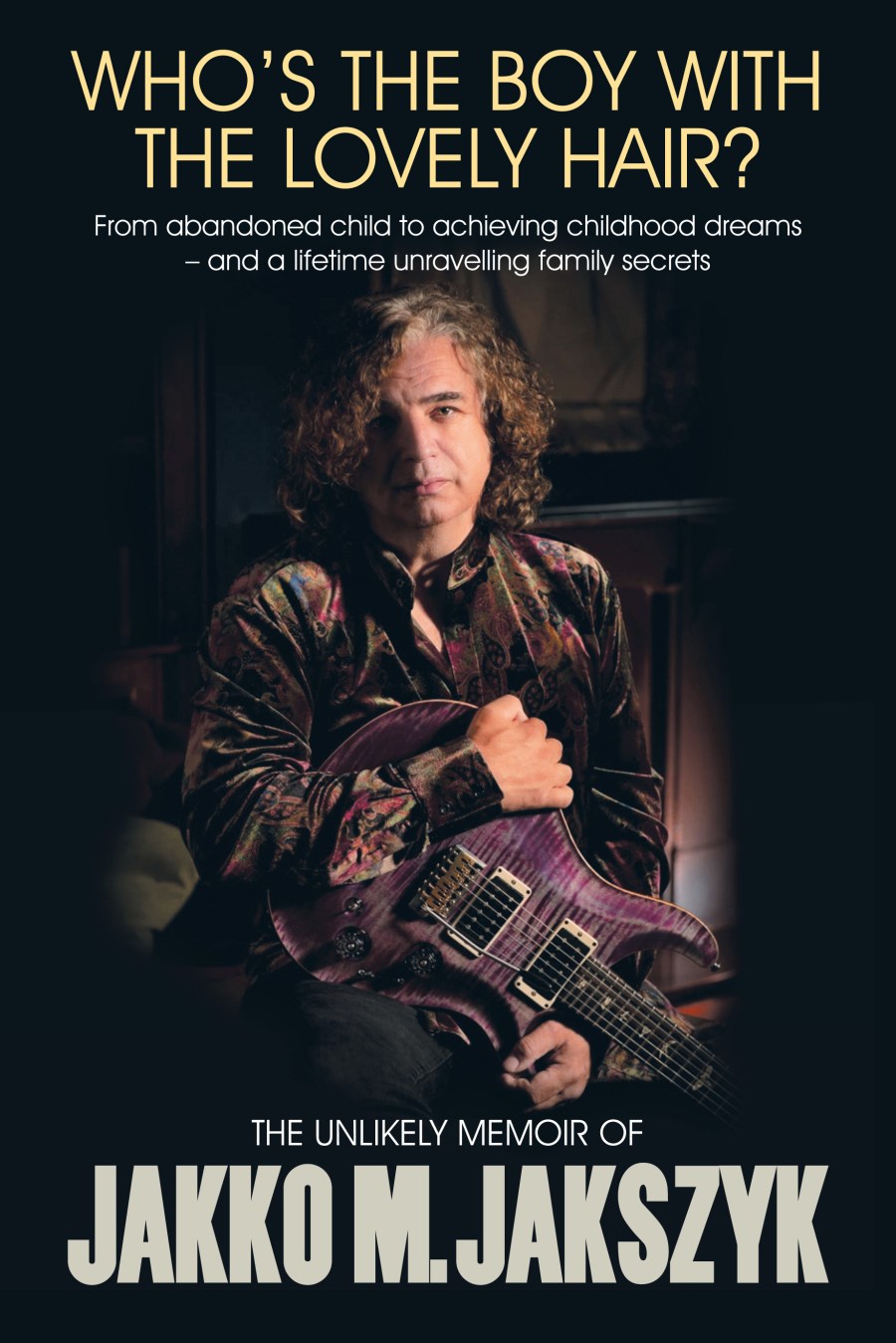
Musical memoirs embrace many styles and formats, but it’s probably fair to say there has never been a story quite like that of King Crimson alumnus, Jakko M. Jakszyk.
For starters, that’s not his birth name, a fact he is keen to point out from the very beginning and provides a key to the essence of his story.
The book’s overriding theme is his personal quest to establish his true identity against the backdrop of an extraordinary musical career, crowned by fulfilling a personal dream of becoming a member of his teenage heroes, King Crimson.
That he has been able to carve out a successful career as a musician, vocalist, songwriter, composer, documentary maker, producer and sound engineer, as well as one time actor – and once, almost a promising soccer player – is testament to his extraordinary talent, superhuman determination and unwavering tenacity. To write this story is to try and make some sense of it all.
But what is clear is that his existential journey towards finding himself has been the driver for informing a greater part of his creative life.
There are so many facets to his story, but as his “public” name would otherwise suggest, Jakko, a nickname given to him instead of his birthname Michael, of Irish/America parentage, but was adopted by a Polish/French couple when he was a babe in arms whose surname he took.
Norbert, his adopted father, came to England after World War Two. He had been spared action on the Russian front due to an accident which damaged his hand, but ended up fighting with the Allies for the Polish Free Army in Italy. However, his wartime experiences left indelible internal scars. He met his wife Camille when she came to England and worked for an American family close to where he had settled.
Royal Albert Hall
Jakko’s childhood proved difficult and oppressive. His adoptive father was a strict disciplinarian who never really appreciated what Jakko did, even when given the VIP treatment at the prestigious Royal Albert Hall in London to see him perform many years later.
Discovering bands like Henry Cow, Matching Mole and ultimately King Crimson, drew him towards the flame of music and the creative arts when he was still at school. “There was a huge hole inside me; I was just desperately trying to fill it up,” Jakko recalls.
An overheard conversation finally paved the way to him finding his birth mother, an Irish woman, Peggy Curran, a singer in a 50s band, and the reality that his father was in probability a US airman stationed in the UK in the 50s.
As he served his musical apprenticeship in various bands, he finally found his mother, calling her at her then home in Arkansas but from the outset, she would not reveal his father’s identity.
What he did discover then was that she had married again, had three sons, also a daughter Debbie who was Jakko’s full sibling. He and Debbie finally met up in New York in an attempt to put together some more pieces of the very fractured family jigsaw.
His solo career was thwarted several times, promised album releases never materialising. However, when Geffen Records showed an interest in his work, Jakko had a chance to go to LA where he met soon to be lifelong friends, the songwriter, Jon Lind and Larry Williams, sax player with the influential Seawindhorn section, that was featuring on two of his latest solo album’s tracks.
Finally, he met his mother and extended family in Little Rock, Arkansas. It proved a difficult and uncomfortable meeting because of her never-ending manipulation of the truth and her continual self-denial.
Michael Jackson
Other Stateside meetings brought him into contact, accidental or otherwise, with David Bowie, Jeff “Skunk” Baxter and Gene Simmons.
However, it was his encounter with Michael Jackson at Westlake Audio in LA which left, not surprisingly, something of a lasting bizarre impression. Laying down some of the tracks for Bad with Quincy Jones, Jackson told Jakko he liked his shoes, which led into a surreal conversation about shoe shops in London’s famous shopping area, Oxford Street.
Meanwhile, his family situation got even more complicated when he found he had another full brother, Darren, who was living in Florida but they eventually met in England.
On the musical front, Jakko’s star continued to rise when he joined the ranks of the 21st Century SchizoidBand comprised four alumni from King Crimson who made albums and toured This led to him making the highly acclaimed Scarcity of Miracles with Robert Fripp and Mel Collins release in 2011.
An invitation to sing Entangled with Amanda Lehman on Steve Hackett’s Genesis Revisited II thrust him even further in the Prog limelight. Then came the call he had been waiting for all his life – from Fripp, asking him if he would accept the challenge of being Crimson’s second guitarist and lead singer. As his friend Nick Beggs would quip: “Well that’s the longest audition in rock history!”
Joining King Crimson would be the pinnacle in Jakko’s remarkable career. However, his personal situations was far from resolution. His adopted parents both died (and provide the most heart-breaking of reasons for the naming of this book). More revelations from the USA emerged, his mother dying, taking even more secrets with her including the possibility of there being a further offspring
And finally, reaching the age of 64, Jakko learned the identity of his father, but having died in violent circumstances at a very young age, there’s no knowing if he was ever aware of Jakko’s existence after he returned to the States and married his childhood sweetheart.
Genesis
What is more, following the storming of the Capitol Building on 6th January 2021, Facebook posts showed that one of his Arkansas half-brothers is a white supremacist with views that are a total anathema to Jakko and the creative world which he has inhabited most of his life.
This summary only scratches the surface of this remarkable, heart-wrenching and utterly compelling story, which stuns, confounds, delights, astounds, amazes and horrifies in equal measures.
As well as the constant deeply affecting quest for identity, there are plenty of lighter moments too, one of them being a “lost” weekend he spent in Amsterdam with his son Django, which takes father/son bonding to a new “high”!
Who is Jakko Jakszyk? With the constant shifting sands that still underpin his life, he fears he will never ever know. Even at the end of his story, he remarks: “The answers themselves just manifest more questions. And then there are no answers anymore.”
While Prog’s old guard still continue to defy the ages with a continuing stream of exceptional music, we must look ahead to identify the stars of tomorrow.
In the UK, we’ve seen a steady stream of younger bands breaking through the ranks and making their mark.
One such band is Azure, who initially caught everyone’s imagination when they brought their brand of complex, fantasy-based, metallic edged Prog to wider audiences notably through relatively low key llive appearances and a fascinating second album, Of Brine and Angel’s Beaks, together with a full-on single Mistress.
Topping the Readers’ Poll for Prog Magazine’s Best Unsigned Band in 2021, the band began 2022 working on their third studio album, which they declared would be an ambitious and far-reaching concept. And they weren’t kidding!
At their heart is the creative duo of vocalist/guitarist Christopher Sampson and guitarist Galen Stapley, who met while both were studying music at the University of Sussex in their now home city of Brighton.
Their mutual love of bands such as Dream Theater, Animals as Leaders and Yes brought them together to start creating their own brand of Prog. Its Unique Selling Point is very much the fantasy stories that Sampson writes, having published their first novel Path of the Adzinist: LU in December last year.
Many of the characters Sampson has created have found their way onto the album whose simplistic title Fym belies the extraordinary, spellbinding 78 minute journey on which Azure take their listeners.
But it’s not just Sampson’s incredible imagination that dominates this album. It’s also the extraordinary way in which Sampson and Stapley fuse their musical ideas, creating a vast but always accessible cinematic soundscape. Many long walks were taken along the south coast by Sampson and Stapley during the course of the album’s evolution as they spent countless hours refining the story and its soundtrack.
It also helps that Sampson is the possessor of a unique multi-octave, sometimes theatrical voice that can soar higher than Geddy Lee’s and evokes a kaleidoscope of emotions. Stapley is the perfect foil, their laser-like guitar runs that can so brilliantly illustrate the epic story, bringing other-worldly textures to the 12 shape-shifting tracks.
One can only guess the reaction when their regular bandmates Shaz D on keyboards and bassist Alex Miles, plus guest drummer Andrew Scott, when they saw the scale of Fym’s incredibly complex musical score. Whatever they might have thought, their contributions are key to interpreting the myriad nuances within the overall sound.
It’s not just the music, it is also the storyline which is centred on the centuries-spanning travails of introverted, jungle-dwelling historian Fym Sallow, whose mission is to retrieve the shards of a glass blade called Umbra.
Introducing characters from the book and previous albums including the aforementioned Mistress, Fym’s journey is fraught with danger as she is accompanied by The Lavender Fox, which has its own song and “voice”.
Each track has its own particular theme, depicting a specific sequence of the story.
One of the most memorable is the three track continuous sequence of Sky Sailing/Beyond the Bloom/Wilt, the central piece being the most vivid descriptive piece about a natural, but dangerous landscape in which the oboe of guest player Camille De Carvalhomakes an appearance.
Perhaps the most accessible song is the album’s single Weight of the Blade, a mid-paced deliciously energetic rocker on which Shaz D shines on grand piano. Its accompanying video (see link) shows the band performing on a deserted shoreline, whilw giving tantalising insights into the storyline.
The climax comes with a huge battle in Trench of Nalu, that explodes with drama and turmoil, Fym facing her biggest and potentially deadliest conflict in the bowels of an alternative Earth.
No spoilers on how it all ends, but the conclusion, the ridiculously beautiful Moonrise sees Sampson in melancholic mood, accompanied only by a gentle, soothing bass melody from Miles.
The double album’s cover is as striking as its contents, Felix La Mer, depicting many of the characters and scenes from within. The accompanying booklet telling the story also features a map and Sampson’s unique lyrical symbols.
It’s an outstanding achievement from the band, who pour every ounce of their emotional energy into layering the all-enveloping sound then producing it to an exemplary standard.
The band’s live performances are as dramatic as their music: they are currently regrouping to ensure they take their stage show to a different level to reflect the quality of their music.
Fym is one of the best Prog albums of recent years that you probably have never heard of. It’s a dazzling, head-spinning musical journey that I recommend everyone experiences.
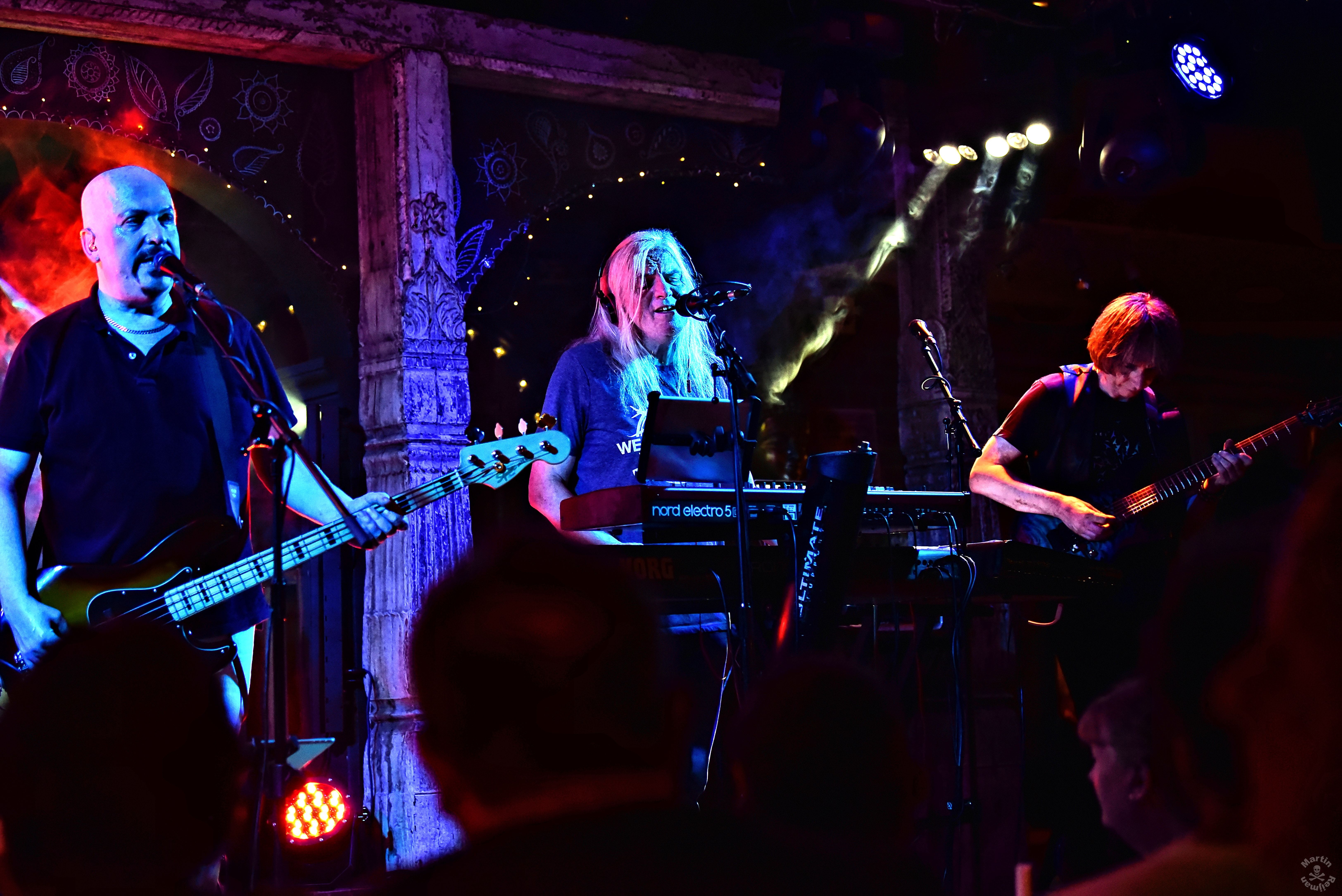
Jon Poole, John Young and David Bainbridge among the carved pillars of Trading Boundaries
The UK is renowned for its panoply of music venues ranging from the regal Victorian magnificence of the Royal Albert Hall and the cavernous expanses of the 02 in London to its wealth of small pubs and subterranean clubs, sadly some of which are now either closed or threatened with extinction.
However, there’s one venue which defies any conventional description because, well, there’s nowhere else like it, and to summarise, where else can you wine, dine and prog at the same time?
Music fans travel considerable distances to go to gigs at Trading Boundaries, which is nestled away in the south eastern English county of East Sussex and whose nearest hotels include those serving London’s Gatwick Airport.
Housed in a Grade 2 Georgian coaching inn, by day, it’s a shopping emporium specialising in high desirable imported antique Indian furniture and handicrafts, its courtyard full of specialist shops and boutiques.
Its prog credentials are heightened by the fact it is where legendary prog artist RogerDean holds an exhibition of his legendary works every year, this being the closest venue to his home.
However, at the centre of the complex is the Elephant Café-Bar, which, on gig evenings, transforms into a magical Arabian nights music venue full of lush satins and silks, and lit by twinkling lights. In this exotic splendour and as part of the ticket package, gig-goers also enjoy a two-course meal and drinks ahead of the performance.
Over the years, regular visitors have included prog luminaries such as Steve Hackett, Rick Wakeman, Steve Howe, Carl Palmer, Focus, Caravan, Jon Hiseman and Colosseum and Damian Wilson.
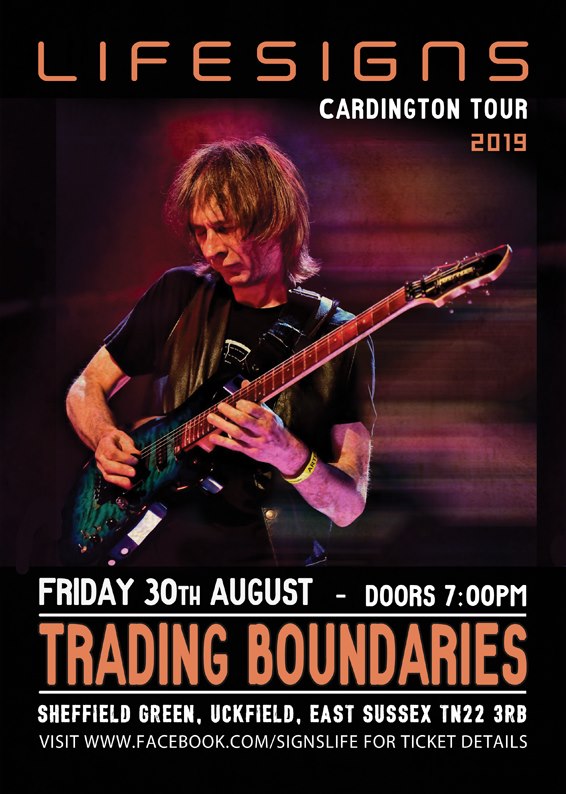
However, on this particular night, it’s that most English of contemporary prog bands, Lifesigns, who are treading the polished boards in deepest Sussex. A birthday treat to my husband Martin Reijman, whose photographs have graced many of their promotional posters, it’s a chance to enjoy a band, who, for many people, currently appears to be the most popular entry point into modern prog.
There are many possible reasons for this, notwithstanding the inherent warmth and rich melodies within the music, the exceptional artistry of each of Lifesigns’ players past and present, and the all-embracing geniality and modest genius of the band’s founder JohnYoung, who has previously played with Asia, the Scorpions and Greenslade. His day job is currently as Bonnie Tyler’s concert keyboards player.
As he later reveals between songs, Lifesigns began as a bet in a pub when someone challenged him to create some fresh, original prog music.
He also remembers his last visit to Trading Boundaries when the audience comprised a man and his dog. Tonight, the venue is packed to capacity – a sell-out of more than 100 people seated and dining, and an additional circle of around 40 standing fans.
The burgeoning popularity may also be due to the band’s continuing organic evolution, from when the original core team of Young with stalwart drummer Martin “Frosty”Beedle (ex-Cutting Crew), prog bass player and demi-god Nick Beggs and sound engineer Steve Rispin began to develop the songs, melodies and themes running through Young’s head.
To achieve the desired result, they called upon the services of illustrious friends such as Thijs Van Leer (Focus), Robin Boult (Fish’s guitarist), Jakko Jakszyk (King Crimson) and Steve Hackett to augment the Lifesigns sound and help to create its individual marque.
This evolution started on record through the exquisite eponymous debut album released in 2013 and its equally laudable follow-up Cardington in 2017. For the live performances that started in 2014, the highly animate and extrovert Jon Poole (ex-Cardiacs) became the resident bass player, and following the departure of guitarist NikoTsonev late in 2017, Dave Bainbridge (Iona, the Strawbs) who played on Cardington, joined as guitarist and occasional keyboards player in time for the early gigs in 2018 including Cruise to the Edge.
Dave Bainbridge, poster boy for the gig
This night’s performance is again a wonderfully balanced set, comprising songs from both albums – and one which will appear on the forthcoming album, but more about that later.
The set is of a slightly different construct to the previous tour and starts with Lighthouse, the cosmically charged opener from their first album, and to my mind, the song which literally set the tone for everything else that has since followed.
It’s one of those classic prog songs, full of delightful twists and turns, delicious melodic hook-lines, some beautifully evocative lyrics and whose pulsating climactic ending is all about bass pedals, crashing waves and the cry of the seagulls. It will always remain a song in which I feel both lost and found.
Young, with his flowing silver locks and cans clamped to his ears, remains the focal point behind his bank of keys, his resonant clear voice one of the band’s greatest assets.
It’s obvious the band has benefited from its recent break as there’s a renewed vigour and enthusiasm in the way they are playing, especially from Beedle who is visibly loving every moment, attacking his drums with palpable joy and exhilaration.
Poole is the joker in the pack, but the message on his bass “Destroy all genres” shows where his convictions lie. Always animate, bouncy and alternatively “duetting” with Beedle and Young, he injects a funky, chunky vibe that beefs up the song-lines.
Bainbridge, since joining the band, is a revelation, his shy, retiring but always expressive persona belying the brilliance of his lyrical, fluid guitar runs and solos. His presence has indeed taken the band to another level live, because he and Young are like twin souls in the way that between them, they elicit every nuance of melody from every song.
It’s a classic canon of songs tonight drawn from both albums, including the hypnotically lovely Voice In My Head; Young’s broadside to radio mediocrity Touch; Different; Impossible; Open Skies (about aliens and Manchester United), the ever-uplifting Cardington about an airship service that never took off; the commercial and potentially radio-friendly Chasing Rainbows and the very prophetic, upbeat End Of The World.
All these are spread over two sets, and they end with the extraordinary Carousel, the closing track on the debut album, which, despite a technical keyboard glitch immediately after Bainbridge’s frenzied opening, always hits the personal “set to stun” button due in no small part to the personal poignancy of some of the lyrics and that particular line “Let me be, Don’t turn the light out.”
It’s a heavenly evening, one of exuberant energy, majestic music and a hugely engaged and enthusiastic audience, which mirrors exactly what is happening on stage. And there’s dancing during three of the numbers!
Back they come for the encore, the aptly titled Last One Home, written by Young, which originally appeared on Live In The Hood, the only album released by the short-lived band Qango.
Hidden then on an album full of Asia and ELP covers, this moving ballad about those in peril on the sea will appear on the much anticipated third album and already, we can safely say this will be viewed as a Lifesigns’ classic if only for the ethereally beautiful and emotional guitar solo from Bainbridge. Even after the fourth time experiencing it live, it still has all the qualities to make grown women – and hopefully men – weep.
The acoustics at Trading Boundaries provide both intimacy and clarity, both crucial factors in the Lifesigns’ sound that Rispin, who has recently been on tour in the USA with Yes, always brings out to best effect.
As an aside, I ought to mention that the band also played a little birthday tribute to Martin in the form of a most off-beat version of TheBeatles’ When I’m 64 which Poole sings the opening line in different variations of the lyrics and Bainbridge plays piano, followed by getting everyone to sing him Happy Birthday.
It also helps that the owners of this unique venue are avid music fans and the sight of one of the co-owners, Michael Clifford, introducing them wearing a Lifesigns’ tee-shirt tells its own story.
There will be more prog here this autumn, including two acoustic sets by Steve Hackett, the return of Focus, an evening of music based on the albums of Ant Phillips, Genesis’ original guitarist and Mike Rutherford, a visit from Italian wizards Barock Project and a fascinating double bill featuring the U.S’s District 97 and English prog metal merchants Maschine.
There is also a performance from Yes tribute band Yes Please to coincide with the launch of Roger Dean’s new exhibition there in October.
This is definitely one the UK’s best kept secrets. Hopefully, after you read this, it won’t be much longer.
And Lifesigns are still continuing to delight on their current tour and will be visiting Eleven in Stoke on Trent on Wednesday 4th September; Bannermans Bar in Glasgow on Thursday 5th September and Ivory Blacks in Glasgow on Friday 6th September.
It’s five o’clock on an atypical Saturday in London, a day during which one million people have taken to the central city streets to protest about a political and democratic decision which threatens the entire nation, its relationship with Europe and indeed the whole world.
Discarded placards are stacked up against railings in Trafalgar Square, symbolic to a degree because of the history of the place. There, on top of his high plinth, stands the British naval hero Vice-Admiral Horatio Nelson, who was partly responsible for curtailing the expansive ambitions of French emperor, Napoleon Buonaparte.
So much has changed in the ensuing 214 years after the Battle of Trafalgar, the country now totally at war with itself over the European referendum, the deadlock in the differing political ideologies causing fear, anxiety and confusion.
But tonight, in the city, there’s a far more discreet French invasion taking place in a subterranean corner of Soho, adjacent to the massive earthworks of the Crossrail train engineering project.
Jokingly, the band in question, the Gallic fivesome Lazuli think this incredible turn-out on the streets on London is for them. In a saner world, Lazuli would indeed be filling huge auditoriums. In these extraordinary circumstances however, it has taken them nearly four hours to navigate their way around motorways and roads into London to get to the venue.
With one of their staunchest fans, who took part in the day’s protest, in possession of a European Union flag, they are fully aware that they are among friends here at the Borderline, a popular if slightly claustrophobic music venue/nightclub, which has undergone a significant facelift since they were last here two years ago.
There’s around 160 in the venue tonight, a very healthy number considering a sizeable new prog festival is happening about a two and a half hour’s drive away and there are a couple of major gigs in town the following evening (Lifesigns and the Neal Morse Band).
This London date has been rescheduled from the previous autumn when the band embarked on a mini-tour of the UK, culminating in a triumphant third headlining appearance at the British flagship prog festival, Summer’s End.
Back under the tender loving care of tour manager, Nellie Pitts, a second show has been added the following night at Level III , another fascinating basement music venue located in the south-west English railway town of Swindon.
But tonight’s is a completely different show to the ones delivered last autumn to promote their thoughtful, achingly lovely album Saison 8 (to reflect this being their eighth album). This is a two and a half hour celebration of their finest and most popular songs.
But first for those unfamiliar with Lazuli, this band is very much a family-centric enterprise, which began with brothers, the elvish Dominique and Claude Leonetti, whose base is just outside the southern French city of Nîmes.
Claude was the guitarist in the early incarnation of the band, but a motorcycle accident in the 1980s robbed him of the use of his left arm, rendering guitar playing impossible.
Prophetic
However, he had a prophetic dream about an instrument which would allow him to continue playing. And behold, the unique Léode (a combination of his second and first names) was created, a box of sonic programmable tricks – a cross between a guitar, synthesiser and musical saw – from which he can produce the most extraordinary effects, which gives the band their iconic original sound.
The present line-up has been together nearly a decade and represents a steady ascent in their popularity across Europe, notably Belgium, the Netherlands and Germany, with, alas, less recognition in their native France. The UK has also embraced them especially after they toured with one of their heroes, Fish, in the autumn of 2015, when the crowd reaction seemed to be along the lines of “What on earth was that!?”
An understandable reaction indeed to a band, influenced among others by the Beatles, Peter Gabriel and the inimitable Fish, who also appears on one of their albums. It might also be down to the exquisite sound and visual experience they provide so spectacularly.
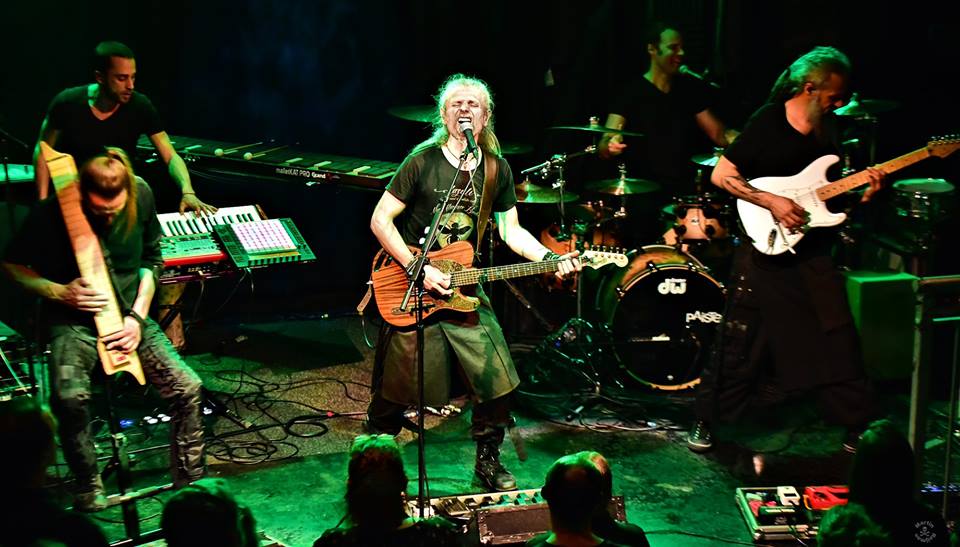
Along with Claude’s Léode, Domi plays electric and acoustic guitars, one of which has been custom made by his son Elliot, again underlining the family connections. Domi’s distinct clear high register voice is effectively another instrument especially to the ears of non-French speakers who can concentrate on and marvel at his incredible perfect pitch.
The unique Léode and French horn.
You can find the expressive, animate multi-instrumentalist Romain Thorel on keyboards with added bass (there is no bass player in the band), drums and French horn, while the solidly reliable ‘timekeeper’ Vincent Barnavol takes care of drums, djembe and marimba. As for the flamboyantly dreadlocked Gédéric Byar, his guitar does all the talking with a little help from a screwdriver and a veritable battery of effects pedals.
Visually, the front three resemble the cast of an unwritten Lord of the Rings chapter, their extravagant hair tied up or braided, Domi sporting his customary plaited beard, costumes sombrely black with ‘aprons’ and bondage trousers included somewhere in the mix, while the clean-shaven, ever-smiling duo of Thorel and Barnavol make up the back line.
However, together, their live show pulsates with a transcendental energy seldom encountered on the world’s stages and the love they feel when they perform transmits directly to the audience. As I have said previously, they simply gather you up and take you on a magic carpet ride to their own musical universe.
Translation
Admittedly, the meanings of the songs probably get lost in translation, but as Domi once declared, “I have the soul of a Frenchman, so it would be very difficult to sing in English.” Their songs are full of imagery and metaphors which would not flow if imagined in English. But such is their humanistic view of the world, they are not afraid of tackling big subjects such as the environment, climate change, immigration, injustice and male violence against women.
For tonight’s show, it’s a walk-through Lazuli time (literally) to revisit some of their most popular songs from the past including the sublimely beautiful Cassiopée and the volcanic L’Abîme (The Abyss).
However, for your humble reviewer, two other “old” songs provide the highlights, one being the fabulously evocative 15 hr 40 (Twenty to Four) in which they perfectly capture the sound of a ticking clock locked in the moment of the hour. The following evening in Swindon, they meet the fan who originally asked them to put the song back in the show and duly dedicates it to him.
The other is Naif, a song from their first album Amnésie, which struck a chord when we first saw and fell in love with them in 2011 at the Summer’s End festival, but which Domi explains that he wrote when he was an idealistic youth, and probably still is. This is a particularly clever acoustically driven song on which Thorel crafts a regimented pattern of beats on a snare drum while Barnavol taps out the song’s underlying rhythm on his beat box. It still resonates as strongly as it did nearly eight years.
Despite his halting English, Domi has rehearsed his lines well enough to crack jokes about his recent bout of flu, which, unlike the true tenor tuning made his voice sound like Barry White – which he then changes topically to British Prime Minister Theresa May when she lost her voice during a Brexit debate in Parliament.
He also sounds a more serious note when introducing Les Côtes, a song about the thousands of refugees fleeing conflict and seeking a better life arriving on the southern shores of Europe. “Without immigration, this stage would be empty”, Domi declares, he and brother Claude having Italian ancestry along with Byar’s North African roots.
There’s also an element of gravity to the haunting Les Sutures, a song all about finding each other and relating to one another “under all the sutures of our wounded souls”, whose drama comes when Barnavol begins a military drum beat that is then taken up by Domi and Thorel on a single snare drum mid-stage.
Les Malveillants is another show-stopping favourite, an angry song about malicious people and their evil intentions, which is the nearest they get to prog-metal, this being a full-on, no holds barred barrage of riffage from both guitars and Léode. It comes to a climax when Domi and Byar bravely jump off the stage into the audience and go walkabouts.
Head to head during Les Malveillants.
Bringing the show to a close, Les Courants Ascendants(The Updrafts) is one of those slow burning songs which suddenly ignites, Thorel going full throttle on the French horn as Byar’s fizzing fretwork suddenly morphs into a ringing, melodic riff, bringing the song to a rousing climax.
Conductors
As the band leaves the stage, the audience, who know this is far from the end, start singing back the riff and that’s the cue for Lazuli to return as crowd conductors, while Thorel on keyboards and Barnavol on drums duet on some jazzy impro work.
With the passing of this beautiful evening comes the passing of the seasons, Domi launching into the gorgeous Un Automne from Amnésie then brings their story right up to date with J’Attends Un Printemps (I Am Waiting For A Spring) from their Saison 8 album – very apt for a late day in March.
Finally, they regroup for their jaw-dropping finale, Nine Hands Around A Marimba – basically, the five of them playing together on just the one instrument, in which they improvise several familiar tunes, which, tonight include Solsbury Hill and Michelle – all delivered with some knockabout humour.
Nine Hands Around A Marimba.
It’s another phenomenal show from a band who are musical joy bringers. Their fraternal love and respect for each other as musicians and friends (there’s a song in the show called Mes amis, mes frères – My Friends, My Brothers – which sums this all up) is writ large throughout their shows.
Sadly, with the current political situation in the United Kingdom, there’s great uncertainty for bands like Lazuli and other foreign favourites such as the Franck Carducci Band as to how it will impact on future tours to these shores. Already, it is a huge logistical operation to bring their show across the Channel from the south of France and any subsequent red tape as a result of Britain’s drawn-out departure from the European Union could exacerbate this.
As Lazuli’s new tee-shirt slogan so perfectly says, “Music flies over borders”. For now, we can only wait with anticipation for the upcoming new album later this year, which Domi says is a very special one. Let’s hope they will be able to bring it to us live next year.
All photographs by Martin Reijman taken at Level III, Swindon, 24 March 2019.
“Where have all the great showmen gone?” I opined in Prog magazine earlier this year. In other words, who are the artistes that are taking that step beyond playing to offer a performance that also offers theatre, circus – and even a touch of Vaudeville?
The artiste who inspired this question has just been on vacation in New York – and I cannot think of a better place for him to experience a whiff of the greasepaint lingering close by on Broadway.
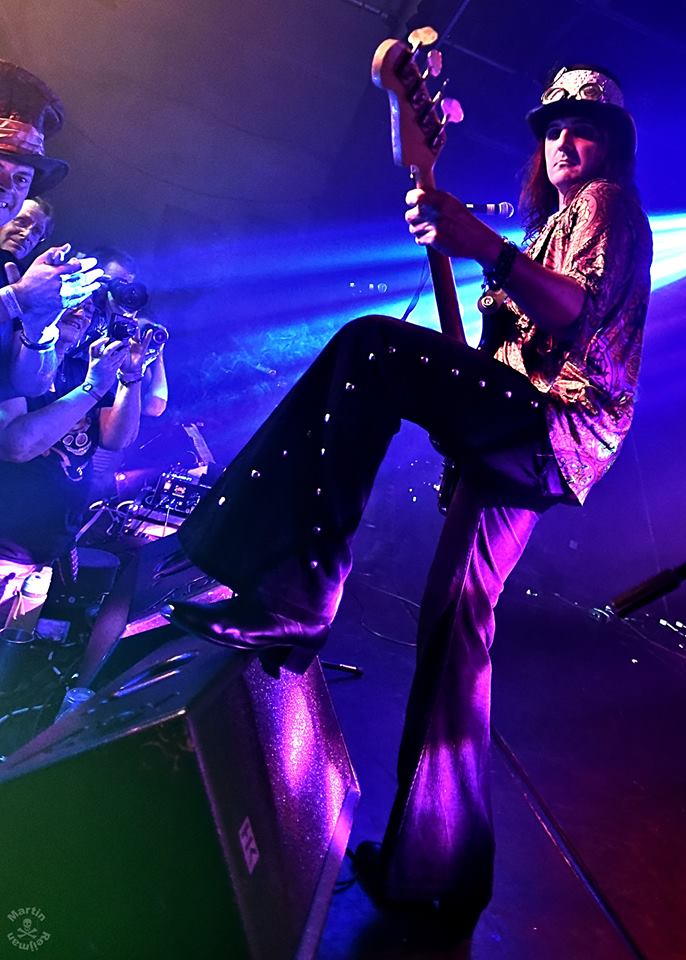
Before he goes to the Crescendo Festival in France on 21st August then plays further dates in France and the Netherlands next month to wow more audiences, ladies and gentlemen, let’s give a huge cheer for Franck Carducci, the Superstar Mad Hatter, whose musical stock is slowly but surely rising as he continues to conquer Europe in his own inimitable but never understated way.
Frenchman Franck has spent his career drawing on a range of musical and literary influences that now shape his music and, more importantly, his show. A prog muso friend summed it up perfectly when he remarked at a recent show at how well Franck and his trusty band of musical adventurers have managed to devise a big show from relatively small but nevertheless dramatic components.
And there’s the secret of their success. There is no huge Roger Waters “everything but the kitchen sink” theatricals involved. Instead, there are cleverly designed costumes and a couple of randomly unusual instruments involved in their concert set pieces. The rest is down to an innate talent that blends elements of psychedelia, classic rock, prog and even six-part harmonies into a finely tuned and utterly compelling two hours.
Having first encountered Franck a couple of years ago in Southampton, his cheery, warm, friendly demeanour and total belief in what he does were both refreshing and highly contagious.
His influences include classical literature and history (he is big on the Ancient Greeks), classic rock, (one of his ambitions is to support AliceCooper) as well as the prog classics, especially Genesis. In fact, one of his most memorable moments was supporting Steve Hackett, who told him not to give up on his dream then guested on his second album Torn Apart in 2015.
More significant breakthroughs came last year, firstly when he and the band were greeted to a standing ovation at the legendary Loreley prog festival in Germany. This was quickly followed up in the United Kingdom, when, after the Saturday night headliners at the British prog festival, Summers End, elected to go on early evening, several of us “in the know” implored everyone to stay to watch Franck and company.
The magnificent performance they subsequently delivered nearly blew the roof off the modest Drill Hall in Chepstow and prompted my Prog piece. Further endorsement of their burgeoning popularity came earlier this year when they were voted Classic Rock Society’s Overseas Act of the Year.
So what’s the alchemy here? Well, Franck is primarily the band’s bassist and singer, but his onstage persona is that of Master of Ceremonies – with a twist. His opening number, Superstar, sets the tone as he arrives on stage in shades, cowboy hat and outrageously hairy waistcoat, having to use his personal “security” man to fend off the advances of an amorous lady admirer.
The admirer is one of the many roles assumed by the very talented and beautiful Mary Reynaud. She is traditionally the band’s support act as well as being an integral part of the show, especially her seductive dancing seldom seen elsewhere in prog. Her solo work – just her and her trusty acoustic guitar – demonstrates her song writing skills and unique voice which is sweet and powerful in equal measure.
Included in the line-up is Franck’s long time friend and collaborator, guitarist ChristopheObadia, who is one of prog’s more eccentric personalities, acting as a great foil for Steve Marsala, who is the quieter and more sensible of the band’s guitarists.
Keyboard player and Franck’s “security guard”, Olivier Castan and drummer AntoninoReina (“he comes from Sicily”) complete the line-up.
The show simply could not work if there was not a great affection and empathy between the members of the all-star cast. For example, a mutual love of classic rock riffs sees Obadia and Marsala trading licks on some of the legends such as Smoke on the Water and Sweet Child of Mine.
The music is pure rock, fantastically infused with psychedelia and some delicious curios, for example, the use of a theremin without which Good Vibrations would never have vibrated. Mary’s invocation of its extraordinary sounds involves provocatively using certain parts of her body while Obadia’s oscillations are more shock horror than X rated!
Obadia oscillates
As well as her belly dancing solo on stage, Mary also has very differing starring roles in two of their most memorable songs. The recently introduced beautiful, bluesy ballad, The Angel, is a show stopper, Mary arriving on stage in her angel wings, lit by LED lights, which, when she spins, whirls into extraordinary patterns of colour.
The Angel Mary
Then there is Alice’s Eerie Dream, and where to start with this epic? As Franck in his Mad Hatter attire explains, this is the true story of Alice in Wonderland, when her adventures caused her to become a lady of the night. It’s a long and compelling tale, Mary becoming Alice in her fabulous corseted dress and mask, trying to seduce the band members in turn. But it is left to Obadia to finally fend her off, using the throaty strains of an enormous didgeridoo. Yes, you did read that correctly!
As well as classic rock, the band can also stun with their vocal dexterity in the brilliant six-part harmony of On The Road To Nowhere with just Franck strumming acoustic guitar as occasional accompaniment.
Their love of prog classics stretches to them delivering their own interpretations, Pink Floyd’sEclipse giving a chance for audiences to exercise their vocal chords and more recently, they have introduced their own interpretation of Supertramp’sSchool with other members of the band taking their lead on vocals.
Well, that’s being perfectly Franck. He’s an entertainer, a showman, a musician, an actor and above all, a real star.
Twelfth Night was one of the most influential and respected British neo-prog bands. Though the band’s career was interrupted by various changes in the dramatis personae, many view Fact or Fiction, released in 1982, as their finest album. This was a commentary on the double speak and mind control beginning to permeate society, arriving two years ahead of the year of reckoning as predicted in George Orwell’s1984.
The album represented the band at their zenith which also saw them playing the Reading Festival for the second time, a tour across the UK and a live album recorded at London’s legendary Marquee Club, at which vocalist Geoff Mann was to make his final appearances with the band.
Now here’s an interesting thought to ponder. Out there in the home studios – namely the studies, spare rooms and sheds of the Western world and beyond, a legion of creatively inclined souls are currently working hard, writing, playing and developing compositions and songs, which, they hope, will be subsequently released to a wider audience.
Because of the miracles of modern technology and the close camaraderie that exists in the greater prog community, this initial concept can be taken a step further so that as well as making your own music, you can invite other artistes to provide their own contributions. I have seen countless examples of this taking place where the global village concept of music is now a reality rather than prophetic line from MarshallMcLuhan in the early 60s.
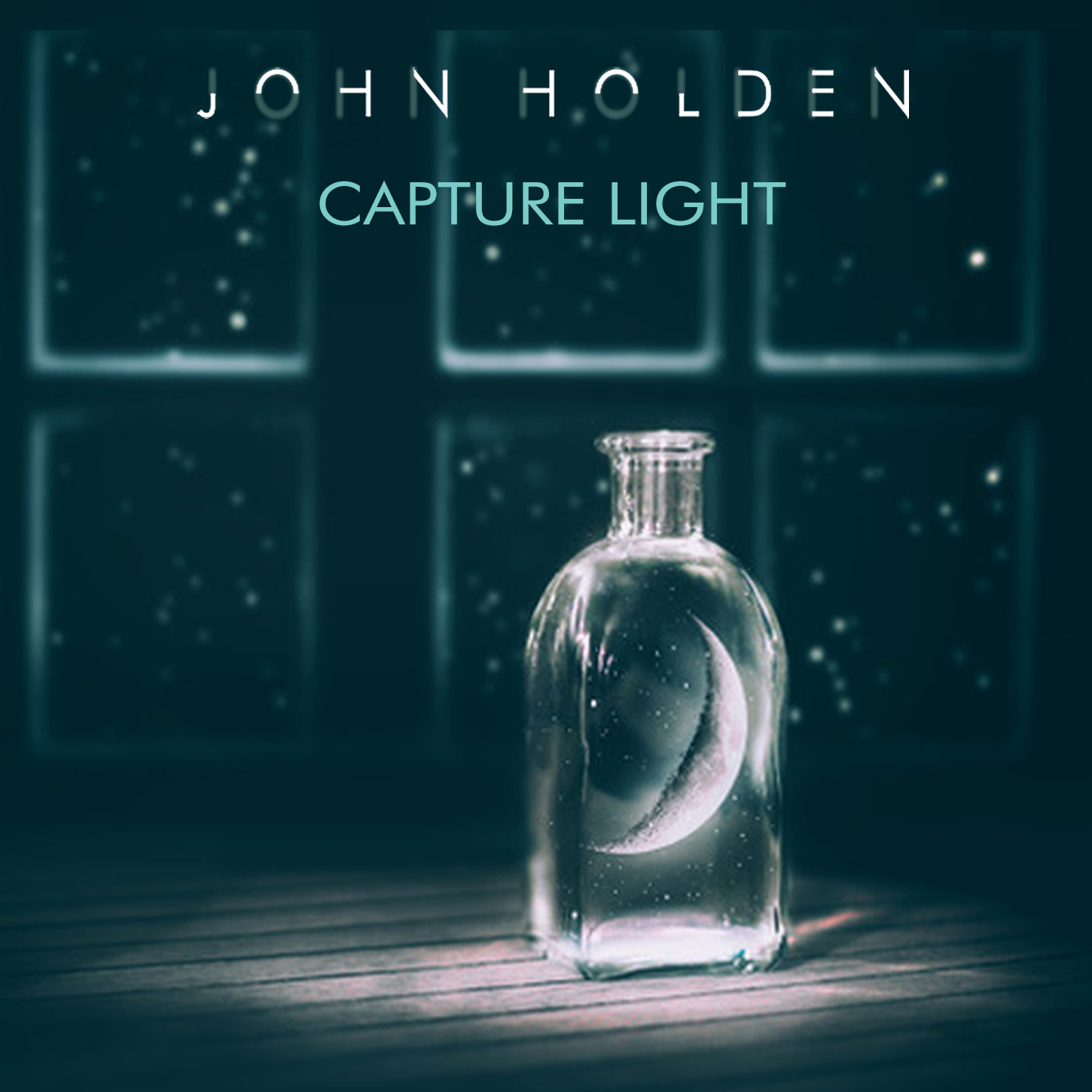
This ease of connection has been key to John Holden, a multi-instrumentalist and composer from the north of England, following his star and capturing light for a musical project, which, in terms of dramatis personae, is right up there with any line-up Alan Parsons ever assembled.
Based in the same county in southern England as Big Big Train, the backstory of Galahad could be a prog prototype for Spinal Tap. In the 30 plus years the band has been together, there has been more than a fair share of drama – multiple personnel changes, mayhem on the road and alas, tragedy.
But this is a band which lives up to its name by being bold and courageous, not afraid to take a few risks and break taboos along the way.
Central to all the band activities is Stu Nicholson, the band’s vocalist, lyric writer and spokesperson, who is the only original member and who once auditioned for the vacant singer’s berth in Genesis.
Stu has seen it all and, despite the band going through so many changes, he has kept his focus throughout – and his sense of humour. He is also a very shrewd observer of life as his lyrics and many personal conversations I have had with him have revealed.






 “Where have all the great showmen gone?” I opined in Prog magazine earlier this year. In other words, who are the artistes that are taking that step beyond playing to offer a performance that also offers theatre, circus – and even a touch of Vaudeville?


 Progarchy