By day, I'm a father of seven and husband of one. By night, I'm an author, a biographer, and a prog rocker. Interests: Rush, progressive rock, cultural criticisms, the Rocky Mountains, individual liberty, history, hiking, and science fiction.
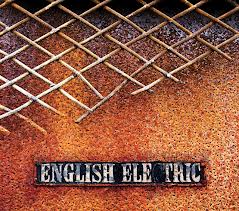
[And so it begins. . . the reviews of the latest release from Big Big Train, English Electric Vol. 2. You can pre-order now, as the official release date is March 4, 2013. BBT is already shipping. Our Progarchists will be reviewing the new release intensively and extensively between today and March 4, 2013. Indeed, let us declare the four days of BBT an official holiday of leisure, truth, and beauty in our little Republic of Progarchy–Brad, ed.]
***
“English Electric Pt 2 – Pictures at an Exhibition”
by Alison Henderson
I like to think that listening to English Electric Pt 2 is like visiting a rather exclusive sonic picture exhibition. You walk into the gallery and you are instantly surrounded by seven exquisite works of art, each with its own character, telling a different story, but somehow all inextricably linked. As the album begins to play, you are drawn to each of them individually, especially the detail and care that has been taken into bringing them to life and you are filled with admiration for their creators, and with awe for the effect they have on you.
East Coast Racer is a tour de force of the collection, big and certainly epic enough to cover a whole wall because of the detail and precision that has gone into its making. At its centre, you see this legendary steam locomotive the Mallard taking shape through Danny Manners’ intricate piano lines that start and end the piece, introducing us to its sleek lines and curves, before it bursts out of the canvas at breakneck speed, David Longdon’s voice soulfully expressing the pride and passion felt by the men who crafted and engineered this beautiful mechanical masterpiece. Ever changing, ever evolving, this work shifts up and down the gears several times, the attention to detail paid through the painstaking instrumentation, adding texture to the Turneresque picture evolving in the music.
DPRP.net prog reviewer extraordinaire, Brian Watson, will be exhibiting his art this Saturday, March 2, 2013, beginning at 10am.
The exhibition will be at The Old Grammar School Gallery in Otley (England). If you live in the area, please support our friend and inspiration, Brian!
Gazpacho, one of my all-time favorite bands, posted this (below) today at FACEBOOK. I assume they won’t mind me reposting it here at Progarchy–Brad, ed.
*****
Hi there and greeting from us lazybones. It has been a special year with happy and sad events as life thunders on. We can definitely confirm that we havent been.
However, being who we are, it has been very difficult to suspend the need to make more of our particular brand of music. Last album Mog was written in a frenzied weekend session where most of the original demos were kept and polished over the year it took to make the final album.
This time we set our standards much higher and as the months have gone by we have written about an hours worth of music which will be whittled down and added to over the year. We have committed to a concept album in the true meaning of the word and where our last four albums have been intended as films without pictures the new one feels a lot more like a novel. A novel written by a confused and crazy man but still a novel!
The ideas we are toying with are based around the concept of evil and its different shapes and incarnations. The malevolent force that mankind has dressed up as the will of God or the misdeeds of demons depending on the circumstance. Is it possible to catch the feel and the impact of this in music? Well we think so, and the demos are dark but strangely engaging.
Its still early days and as soon as we have a release date we’ll keep you posted.
My favorite Rush album has been, at least going back to April 1984, Grace Under Pressure. I realize that among Rush fans and among prog fans, this might serve as a contentious choice. My praise of GUP is not in any way meant to denigrate any other Rush albums. Frankly, I love them all. Rush has offered us an outrageous wealth of blessings, and I won’t even pretend objectivity.
I love Rush. I love Grace Under Pressure.
I still remember opening Grace Under Pressure for the first time. Gently knifing the cellophane so as not to crease the cardboard, slowly pulling out the vinyl wrapped in a paper sleeve, the hues of gray, pink, blue, and granite and that egg caught in a vicegrip, the distinctive smell of a brand new album. . . . the crackle as the needle hit . . . .
I was sixteen.
From the opening wind-blown notes, sound effects, and men, I was hooked, completely. I had loved Moving Pictures and Signals–each giving me great comfort personally, perhaps even saving my life during some pretty horrific junior high and early high school moments.
But this Grace Under Pressure. This was something else.
If Moving Pictures and Signals taught me to be myself and pursue excellence, Grace Under Pressure taught me that once I knew myself, I had the high duty to go into the world and fight for what’s good and right, no matter the cost. At sixteen, I desperately needed to believe that, and I thank God that Peart provided that lesson. There are so many other lessons a young energetic boy could have picked up from the rather fragile culture of the time and the incredibly dysfunctional home in which I was raised. With Grace Under Pressure, though, I was certainly ready to follow Peart into Hell and back for the right cause. Peart certainly became one of the most foundational influences on my life, along with other authors I was reading at the time, such as Orwell and Bradbury.
Though I’m sure that Peart did not intend for the album to have any kind of overriding story such as the first sides of 2112 or Hemispheres had told, GUP holds together as a concept album brilliantly.
The opening calls to us: beware! Wake up! Shake off your slumbers! The world is near its doom.
Or so it seems.
Geddy’s voice, strong with anxiety, begins: “An ill wind comes arising. . .” In the pressures of chaos, Pearts suggests, we so easily see the world fall apart, ourselves not only caught in the maelstrom, but possibly aggravating it. “Red Alert” ends with possibly the most desperate cry of the Old Testament: “Absalom, Absalom!” Certainly, there is no hope merely in the self. Again, so it seems.
The second song, gut wrenching to the extreme, deals with the loss of a person, his imprint is all that remains after bodily removed from this existence. Yet, despite the topic, there is more hope in this song than in the first. Despite loss, memory allows life to continue, to “feel the way you would.” I had recently lost my maternal grandfather–the finest man I ever knew–before first hearing this album. His image will always be my “Afterimage.”
It seems, though, that more than one have died. The third song takes us to the inside of a prison camp. Whether a Holocaust camp or a Gulag, it’s unclear. Frankly, it’s probably not important if the owners of the camp are Communists or Fascists. Either way, those inside are most likely doomed. Not only had I been reading lots of dystopian literature in 1984 (appropriate, I suppose, given the date), but I was reading everything I could find by and about Solzhenitzyn. This made the Gulag even more real and more terrifying.
Just when the brooding might become unbearable, the three men of Rush seem to offer a Gothic, not quite hellish, smile as the fourth song, “The Enemy Within” begins. Part One of “Fear,” the fourth track offers a psychological insight into the paranoia of a person. Perhaps we should first look at our own problems before we place them whole cloth upon the world.
Pick needle up, turn album over, clean with dust sponge, and drop needle. . . .
Funk. Sci-fi funk emerges after the needle has crackled and founds its groove. A robot has escaped, perhaps yearning for or even having attained sentience. I could never count how many hours of conversation these lyrics prompted, as Kevin McCormick and I discussed the nature of free will. It’s the stuff of Philip K. Dick, the liberal arts, and the best of theology.
More bass funk for track six and a return to psychological introspection, “Kid Gloves.” But, we move out quickly into the larger world again with the seventh track, “Red Lenses,” taking the listener back to the themes of paranoia. When the man emerges for action, will he do so in reaction to the personal pain he has experienced, or will he do so with an objective truth set to enliven the common good?
In the end, this is the choice for those who do not lose themselves to the cathode rays. Is man fighting for what should be or he is reacting merely to what has happened, “to live between a rock and a hardplace.”
Unlike the previous albums which end with narrative certainty, Grace Under Pressure leaves the listener with more questions than it does answers, though tellingly it harkens to Hemingway and to T.S. Eliot.
Given the album as a whole, one might take this as Stoic resignation–merely accepting the flaws of the world. “Can you spare another war? Another waste land?”
Wheels can take you around
Wheels can cut you down. . . .
We’ve all got to try and fill the void.
But, this doesn’t fit Peart. We all know whatever blows life has dealt Peart, he has stood back up, practiced twenty times harder, and read 20 more books. That man does not go down for long. And, neither should we.
In the spring of 1987, much to my surprise, one of my humanities professors allowed me to write on the ideas of Peart. I can no longer find that essay (swallowed up and now painfully lonely on some primitive MacPlus harddrive or 3.5 floppy disk most likely rotting in a landfill in central Kansas), but it was the kind of writing and thinking that opened up whole new worlds to me. My only quotes were from “Grace Under Pressure,” drawing a distinction between nature of the liberal arts and the loss of humanity through the mechanizing of the human person. It dealt, understandably, with environmental and cultural degradation, the dangers of conformist thinking, and the brutal inhumanity of ideologies. It was probably the smartest thing I’d written up to that point in my life, and even my professor liked it.
Of course, the ideas were all Peart’s, and I once again fondly imagined him as that really great older brother–the one who knows what an annoying pain I am, but who sees promise in me anyway, giving me just enough space to find my own way.
I’m forty five, and I still want Neil to be my older brother.
Make sure to download David “Amazing Wilf” Elliott’s latest podcast, an interview with Master of Time and Chronometers, Robin Armstrong. An excellent insight into the making of a truly stunning work of art, The Man Left in Space.
Symphonic Modern Progressive Rock (we will skip the word Neo) with rich, dense instrumentation and melancholy lyrics/melodies for fans of Marillion-Brave Era, PG, Radiohead, Porcupine Tree (SD, LBS Era), Bowie, Floyd, VDGG.
Recommendation:Highly Recommended
Art is a bitch, and so is literature – and music. They always present us worlds well out of reach – pipedream kingdoms of epic journeys, heroism, boundless yearning and lots of all the things we are, well, let’s face it, not. Art is, insofar, simply destructive for your everyday middle class John Doe. It makes him long for things he neither really wants or needs: danger, uncertainty, lovesickness, bleeding hearts, je ne sais quoi. – t on anti-matter poetry.
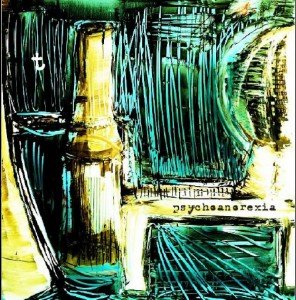
2013 is looking to be another great year for progressive music with Steve Wilson, Lifesigns, BBT, Riverside and Cosmograf all released by mid-March. The sheer volume of quality releases makes it easy to overlook an artist who cannot easily be googled ( t ), has long gaps between releases and does little or no touring. t /Thomas is classically educated in piano and voice, but switched to guitar early in childhood when he realized that ‘most girls in his class fancied guitar players’. Psychoanorexia is his fourth solo CD since leaving German art rock band Scythe, and he plays all instruments, sings, arranges, produces and mixes his work. His two most recent CDs, Voices and Anti-Matter Poetry, each about 3 years in the making, received critical acclaim in some quarters but failed to achieve the overall recognition they deserved. This is likely a result of two factors:
t music is not always an easy listen, but as Kinesis said, ‘t takes the listener into an alternate musical reality, and after the album concludes, you may need to pause and take several deep breaths before returning to waking reality’. The music is sometimes dark and moody, offset by beautiful, melancholy melodies often delivered through heavily processed vocals and dense instrumentation so it is not a easy casual listen.
t is a deep thinker and a poet. He focuses on the alienation we experience as society and technology advance, the impact on our relationships and our ability to stay linked and loved. Lost loves, disconnected lovers, feeling alone and alienated while being with someone, the multiple influences that affect our everyday lives and therefore our relationships is not always happy stuff.
From t:
“This is the time when ringtone applicability equals musical quality. This is the place where the greed of being a pop star has replaced the sublime experience of creativity. This is the era in which democracy means mass phenomena, not choices. When we have become too lazy even for subterfuges. And too busy to feel the loss.”
Psychoanorexia consists of only 4 songs, three epics and one shorter track. His lyrics –which fill several pages of the CD insert, are complex and interesting but not always easy to understand due to the amount of vocal processing. The opening track, the three-part The Aftermath of Silence, is a beautiful seventeen minute love story with very accessible melodies. Aftermath begins with a long and haunting instrumental passage leading to the refrain
‘ So this is the day, the sky too blue.’
Slow and sad, the opening moves through an interesting set of musical progressions reminiscent of Marillion, concluding with:
‘We came back, but we never recovered
We always reminded ourselves of each other’.
Kryptonite Monologues, the most complex and challenging track, continues the theme of love lost by abandoning the mood of the previous track with a frantic opening section named ‘Breakfast Cataclysm’. This is the most symphonic track, with hints of Yes, Van Der Graaf Generator and Crimson. After a soaring instrumental section with some pounding drums and heavy guitar lead t moves to a bombastic operatic interlude he describes as part comedy (Monty Python), hinting at the absurdity of it all, collapsing into a lovely classical section named ‘Borrowed Time ‘with soaring strings. Driving percussion builds to the haunting climax ‘The End of the World’ with echoes again of Marillion’s Brave.
The third track, The Irrelevant Lovesong could be a lost track from somewhere between Peter Gabriel’s Scratch and Us periods, and is a short, moving poem describing the growing gulf between two people:
‘All through the nights
Though cold and blind
I hold you here
But no, I love you not
No, I love you not’.
The CD concludes with Psychoanorexia in two movements, ‘Bedhalf Exiles ‘and ‘The Stand’. The music again alternates between attack and reflect, the gates are locked and defenses up in an effort to save all that is worth saving.
‘Save our souls
And guard all the doors we closed
And promise to stake our hearts
Lest one of our oaths could last’.
The song ends with a barrage of frantic drums and a vocal chant reminiscent of mid-70’s Genesis in tone. The journey is tiring but rewarding, challenging but gratifying. I thought that his previous were highly personal stories, but here t seems to be more of an observer, reporting on the irony of our (or his) existence, the decay that comes with progress.
Psychoanorexia is modern symphonic rock at its finest, rich, inventive and always interesting. I love the dense instrumentation, vocal effects and overall presentation. t’s biography mentions his obsession with sound and he is obviously proficient at all instruments, but it is his keyboard prowess and engineering skills are what enables him to deliver on his vision. t also uses electronic drums more effectively than most, and in many cases you are hard pressed to recognize them as electronic except the cymbals, which at times sound too separated (crash cymbals should not be left or right speaker only) and a minor quibble, sound a bit ‘spitty’. Psychoanorexia is an obvious labor of love by a unique musical poet and this outstanding effort by t is one I highly recommend.
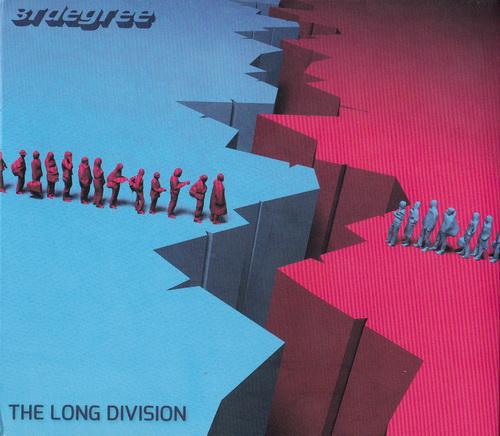
Sometime right after Christmas, I had the great joy of receiving a package addressed to Progarchy from New Jersey. A nice note accompanied the very intriguingly-packaged CD, “The Long Division” by 3rdegree.
Lots of great CDs have come in for review, but I’m always surprised when they’re not accompanied by some explanation. Or, it would be better to write: I love getting notes from the artists themselves. Even the short “Hey, let us know what you think” offers a personal connection. Maybe it’s just my Kansas upbringing regarding such things as “thank you notes.” But, I digress.
Suffice it to write, the note from Robert of 3rdegree said: love what you’re doing; please check us out when you have a moment.
Absolutely!
And, for the last month, I’ve been thoroughly enjoying my time with 3rdegree’s 2012 release, “The Long Division.” Imagine Steely Dan, Echolyn, and Tears for Fears in the studio together. Maybe throw in just a touch of the more complex aspects of some 70s harder rock. Prog it all up and throw some New Jersey attitude in. Finally, mix in some really bitter populist–true and righteous (in the best sense)–lyrics, and you start to approach the wonder that is 3rdegree.
And, I should mention, this is really, really American. How can I state this? I’m frankly not entirely sure. But, the whole cd certainly feels very American.
As with much of prog, there’s a real perfectionism here, too. The keyboards (especially the piano), the bass, the drums, and the guitars sound very sharp. The mix is simply excellent, and the group feels tight. My guess is they like each other very much. I don’t think it would be possible to play like this without a real sense of perfectionism and sympathy with and respect for one another.
My favorite part, though, are the vocals. The closest comparison I could make–in terms of vocals–is to the best of Spock’s Beard, Gentile Giant, and early Echolyn. I can’t imagine the vocal arrangements here ever getting boring or rote in any way. Outstanding. Truly outstanding.
This leads me, naturally, to the lyrics. When Carl, Chris, and I started Progarchy, we decided to make music the focus and avoid–wherever possible–the subject of religion and politics. The three of us already do that fervently elsewhere on the web. Progarchy is meant to be a music site, open to all.
That said, I don’t think it would be possible to review this cd without at least a mention of the politics presented here. Never dumbed down (thank you, 3rdegree), the lyrics reflect a real anger at the state of American political culture. Whether that anger stems from a Left or a Right–a liberal/Democratic or conservative/Republican–position, I just can’t tell, despite my numerous readings of the lyrics. My guess is that these guys are simply too smart to be either left or right. Clearly, they’re not fans of corporate welfare. But, they don’t seem thrilled with eco-freaks either. Here’s their own statement on their website:
“You’re Fooling Yourselves!”, wails 3RDegree lead singer/keyboardist George Dobbs on the band’s lead-off single from the new CD THE LONG DIVISION-their first since 2008. This song-as well as a few others on the first half of the album-flesh out the band’s 2012 political treatise: that America’s political parties (and probably those in other countries) have long divided it’s populous on the basis of color, salary, sex, age and much else, have played on their fears, and have used their accumulated powers to build up largesse to keep their supporters in the fold. Ok, it’s not always that heavy, but the album was penned in the shadow of the 2008 economic collapse that was happening right as 3RDegree were releasing their first album in 12 years: NARROW-CASTER. While that third album was a combination of fresh songs and resurrected ideas from the period just before the band’s original breakup in 1997, THE LONG DIVISION is in the shared vintage of Tea Parties, Occupy Movements, shovel-ready jobs and banks and car companies “too big to fail”.
Well, from whatever position, I like it.
I can’t give enough praise to this CD. It’s the kind of cd that makes you increasingly enthusiastic with each new track. One track is utterly brilliant, and just when you think there’s no way the band can top track one, track two starts, and you’re blown away. Then, track three, four, five. . . . It just keeps being increasingly mind boggling.
Whatever the state of civil liberties, the economy, or government in the U.S., 3rdegree dramatically affirms my belief that American prog is alive and well.
To learn more about 3rdegree, check out their outstanding website (the perfect model of a website for any band–a fan’s dream; lots and lots of information): http://3rdegreeonline.com/3RDegree/Home.html. I also want to note that one of our favorite American proggers, Mark Ptak of The Advent, plays on “The Long Division” as well. Additionally, the band supports good beer.
I’ve offered my “Talk Talk” testimony so many times, it’s probably getting a bit ridiculous. To sum up, I really, really, really, really, really (well you get the idea) like Talk Talk, and I have since the spring of 1987, when I first encountered them by chance. Further, I would have to rank “Spirit of Eden” as one of my two or three rock albums of all time.
Phew.
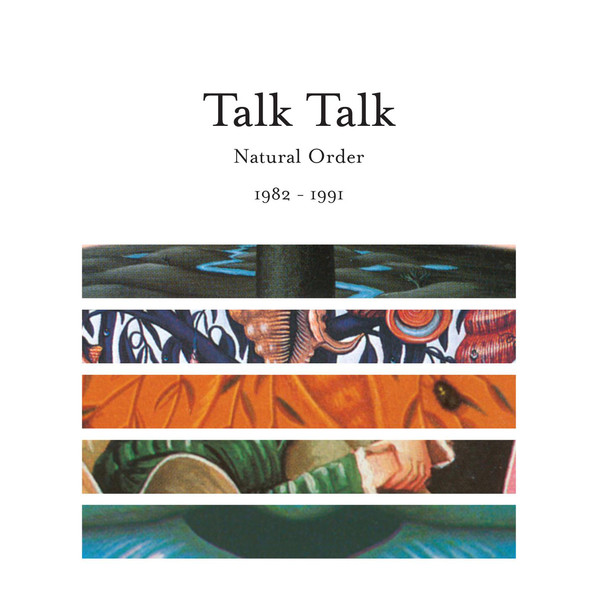
So, much to my surprise the other day, I saw that Mark Hollis had emerged from his seemingly J.D. Salinger like-life (may Salinger rest in peace) to release, under his official direction, a Talk Talk compilation. It’s entitled “Natural Order,” and it just arrived.
Most of the others, frankly, from “Natural History” to the remixes to . . . . Well, let’s face it, Talk Talk just can’t be broken into parts. The albums come as a whole. I don’t just plop “Colour of Spring” or “Spirit of Eden” or “Laughing Stock” into the CD player when dropping the kids off at school or running to the supermarket to get milk. No, these last three albums require attention and love. Listening to them casually would like roller skating through the Field Museum in Chicago or jogging through the Nelson Museum of Art in Kansas City. Continue reading “Nascent, Nascent: The Natural Order of Talk Talk”→
N.B. AP is Andy Poole, DG is Dave Gregory, DM is Danny Manners, GS is Greg Spawton. Progarchy interview conducted by Brad.
***
Progarchy (BB):When you put EE1 and EE2 together, how do you expect the listeners to see the whole EE? Say, 20 years from now, few will have had the experience of getting one, then the other. It will most likely be just EE. Do you expect your listeners–me, for example, or anyone else–interpreting EE1 differently in light of EE2? In particular, I think about a track like Hedgerow. As you probably know, Greg, I consider this the single finest conclusion to any album. Ever. Period. Even better than Abbey Road, which had that position for me prior to hearing EE1. But, when I do get to hear EE2, I will now see Hedgerow as the middle song.
GS: You’ve put your finger on something that has caused us a fair bit of soul-searching Brad. At first, we had a fairly straightforward view on this which was simply: ‘it’s a double album, but we’ll split it into two separate releases’. Our reasoning was that 2 hours of music is a lot for the listener to get their head around which can initially cause under-appreciation of the double album in question. We were also aware that if you release so much music at one time, you get one round of publicity then the world moves on. If you split the release into two, the band is in the spotlight for a longer period of time. The only downside to this release strategy is that English Electric becomes seen as two separate pieces of work and so we always planned to release a special double edition bringing it all together. The thing is though, and as your question makes clear, it’s not as simple as we thought it would be. If you’re splitting an album into two you do have to try to make two satisfying separate halves, which is what we have tried to do. And that isn’t the same as sequencing a whole double album. So, the question we began to ask is: what do we do when we prepare the double Full Power edition? Do we simply stick Part One and Two together or do we start from scratch and re-sequence it as a double album? You mention Hedgerow as being a strong concluding track but we’ve also got Curator of Butterflies which is, we think, another strong end-piece. Which one of those takes precedence and gets to close the double album? And what happens with the three extra tracks we’re including? Where do they fit in? What we now think we’ll do is to start again from scratch and re-sequence Full Power as a double album without any reference to the orders on EE1 and EE2. It may be that we find some of the sequencing on EE1 and EE2 also works for EEFP and if it does, it does. Or it may be that the sequencing is completely different. In any case, the additional tracks will inevitably change the feel of things. The other question you raise is what happens when EEFP is released? Does that mean that EE1 and EE2 should go out of print? If not, will any new listeners buy them or will they go straight to EEFP? This is, I think, something we’ll have to keep under review. If EEFP turns out to feel like a very different listening experience to EE1 and EE2, then it makes sense to keep them all in print. Of course, the extra tracks will also be available on an EP and as downloads to make sure listeners don’t feel obligated to buy a double album just to hear three new songs. So, for many people their experience of English Electric will be as three separate releases.
Progarchy (BB):Tell me about the additional songs added to the full package? Will there be much new artwork?
GS: There are three strong new songs. They are not leftovers from the original sessions but have been recorded specifically for EE Full Power. One of them is a sort of bookend love song to go with Leopards. Another builds on the main album themes of working communities and the English landscape. And the final one is something very different for us.
AP: As regards the artwork, I’m working on a lavish design with a comprehensive booklet telling the stories behind the songs and behind the album.
Progarchy (BB):After EE2, you’ve announced plans to release Station Masters. Can you give us some details about this? Will it be reworked older tunes? Are there some new tunes?
NDV by Willem Klopper.
GS: It’s a triple CD which aims to tell the story of the band. All recordings will be with the new line-up so songs from albums prior to The Underfall Yard will be entirely re-recorded. Some of these are radically re-worked, others are fairly close to the originals but with the strong performances that the current line-up is capable of. Even more recent material may be reworked to some extent. For example, I always wanted to feature violin in The Underfall Yard but we didn’t have a violinist at the time. Rachel Hall will feature on the updated version. Wherever we look back and think something could have been better, we’ll make it better.
Progarchy (BB):Will anything else come with the CDs? Any kind of BBT timeline or a poster? Concert DVD?
AP: There may be some video or other visual material. We haven’t made any final decisions on that yet.
Progarchy (BB):Where do you see BBT’s place the history of rock and the history of prog rock?
GS: I think it’s too early to make an assessment. There are many drafts of history. I hope we’ll find ourselves as more than just a footnote when later drafts are written. However, progressive rock is a fairly contained world and we’re a long way away from making any sort of breakthrough in the broader rock and pop worlds.
Progarchy (BB):You have an immensely large and loyal fanbase. How does this affect you or the band’s approach to music and the music world?
GS: We’re really lucky with our fanbase. They seem to us in all of our interactions to be a thoroughly decent and likeable bunch. The feedback we’ve had over the years has been really important. To hear that what we like to write about resonates with others and particularly that we’ve moved people with our music makes a huge difference.
Progarchy (BB):What is your view on packaging the material? You sell lots of downloads, and we live in a download world (for better and worse), but you also put a lot into the packaging of your CDs. Which I love. As you might remember, after I downloaded all of your albums up to The Underfall Yard, I contacted you because I wanted to purchase physical copies. And, it was worth the investment. Why do you consider it so important for BBT to have such beautiful packaging, especially in day and age? And, would you say such quality packaging should be important for all bands?
Andy Poole by Willem Klopper.
AP: The ideal package for us is a presentation of the words, music & images. The artwork is integral and we have been very fortunate over the years to have teamed-up with Michael Griffiths, Jim Trainer and Matthew Sefton who have each provided inspiring works that both complement & advance the sensory delivery of our albums.
Growing up with vinyl in the 70’s, you had an ingrained sense of interacting physically with an album … the touch, feel & smell of a new gatefold release was savored and an essential part of the experience … quite apart from placing a stylus in the groove and being aurally transformed to a progressive world of music where none of the old rules applied.
The initial advent of hurriedly released compact discs in their horrid plastic jewel cases and Lilliputian inserts amounted to instantly inferior packaging largely forgiven by consumers for the promise of digital sound.
We migrated to digipaks for the enhanced tactile experience, albeit in miniature compared to vinyl, and greater flexibility to represent the visual artists who collaborate with Big Big Train.
Although it is tempting to suggest and hope that other bands disregard the importance of physical product packaging to our advantage, I actually believe that it behooves us all to raise the quality bar up high and to the reasonable limits of affordability.
DG: It was certainly a very important factor with XTC. Andy Partridge claimed that every time he finished writing a song, he’d design a sleeve for it just in case it was chosen as a single! But then, he’s a very talented artist and can’t help himself. I’m certain sales of many of our releases were multiplied as a result of the packaging, as well as boosting the band’s ‘arty’ credentials.
Progarchy (BB):I’m always amazed at what a community BBT is. That is, it’s clear–from the music as well as things such as FB posts, etc.–that you each really like one another. There’s no sense of brilliant radical individuals working next to each other (such as in certain early Yes albums), but a true sense of group brilliance, an organic whole. What do you think accounts for this?
GS: From my point of view I come back to something I’ve said before – surround yourselves with talented people and things start to happen. There is something else as well though, and that is that the guys in the band are all thoroughly good chaps. We’ll all hold strong positions from time-to-time and we say what we think but good manners are important. Speaking of Manners, you’re the new boy, Danny, do you have any observations?
DM: Some of it is simply that there are no huge egos in the band, whether by luck or by conscious or unconscious choice. (Medium sized, maybe, but not huge!) However, one musical thing that strikes me is that the band members aren’t over-specialized – BBT doesn’t consist of “the singer”, “the drummer”, “the guitarist”, etc., all vying for the spotlight. Everyone is a multi-instrumentalist to at least some extent, and everyone also has writing and/or arranging experience, so there’s much more focus on making the music work as a whole.
DG: Don’t forget also that we’re grown men, not ambitious youngsters. We are focused on the music at all times, because we love it. Both Greg and David, as writers, are extremely accommodating in terms of accepting ideas and contributions from all of us; they have yet to display any serious proprietorial tendencies when it comes to protecting their original vision. Which is not to suggest that it’s an open free-for-all; we live with the songs for months, plenty of time to assimilate their essence, so we’re generally united in the common aim, ultimately.
Progarchy (BB):And, how do you see the role of Rob as engineer or any guest musicians you bring in? That is, how integral are they to a BBT sound, if such a particular thing exists.
The Seventh Train and Phill Brown of our age: Rob Aubrey. Photo by Amy Mumford.
GS: It’s an evolving sound and it will continue to develop. We have some really important collaborators at the moment and I envisage we will continue to work with many of them in the long-term. Certainly, Dave Desmond (who plays trombone and arranges the brass band) and violinist Rachel Hall will have significant input into Station Masters. As for Rob, he’s the seventh Train and our dear friend.
Progarchy (BB):Where do you see BBT after Station Masters?
GS: I’d like us to be playing some shows at some stage. It would be good to do something around the time of Station Masters and then something around each release after that. As mentioned earlier, we have another album well underway and have started recording it so that is likely to come out in 2015.
Progarchy (BB):Any final thoughts on the current and future state of rock?
GS: In Britain, the last of the high-street record stores has gone into administration. I guess there are similar issues in other countries. The supermarkets have stepped into the breach and will only really sell music in the pop charts, so the route through traditional music-distribution is closing down to most progressive bands. However, online, the choice is very broad and the issue there is getting noticed amongst all of the competition. Making a living out of music is going to get harder still but it’s been a labour of love for most folk and jazz musicians for years and I don’t see why it should be different for rock bands.
[Well, what does one say after such amazing interview, except—thank you. Thank you to BBT for giving us so much time for this interview. An even bigger thank you for making the world just a little bit brighter.—Ed.]


 “English Electric Pt 2 – Pictures at an Exhibition”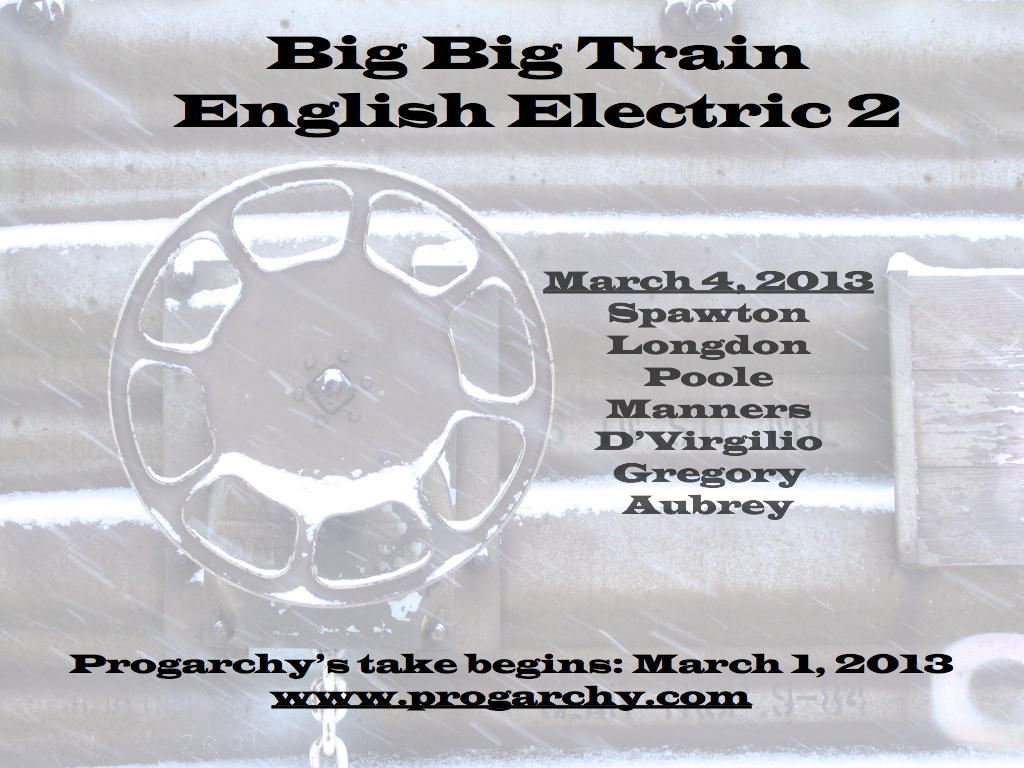






 Progarchy