Progarchy would like to wish a slightly belated happy birthday (April 20) to the king of cool, the god of the drums, the one, the only, MIKE PORTNOY! Mike, thank you so much for your contributions to music over the years. Your music is incredible, and we anxiously await your future releases. You truly are the best!
So, Muse released another single. Umm. Well… the lyrics don’t suck as much as the last single, so that’s a plus. Sorry, I’m just trying to get the disturbing images from the lyric video for the new song, “Dead Inside,” out of my head. I won’t share the link with you because Progarchy is a family friendly site, and the video is, well, suggestive, at best. Think painted goldfinger Bond woman. Think 70s drug trip at a hippie concert with a lot of high, naked women. On second thought, maybe don’t think about that too much.
I will share with you a few live videos taken with cell phones at concerts, however. Musically, “Dead Inside” sounds rather 80s, but in a good way. I like the simple 80s drum sound, and Matt Bellamy’s voice is perfect, as always. I still need to hear the song in the context of the whole album, but the lyrics aren’t nearly as repetitive and annoying as those from “Psycho.”
There are also videos floating around the Tube of You of a song called “Reapers” that is on the album track list, but hasn’t been released yet. I can’t really understand the lyrics because the audio quality of the videos is so poor, but musically it sounds like a return to a more classic Muse sound. I also didn’t seem to hear overly obnoxious repetition either, and the guitar work is pretty freakin’ good. Bellamy is a vocal and guitar god. Overall, I think “Reapers” is the best song I have heard from the new album (out of the three I have heard), but, as of now, you can only see/hear the live versions. Watch, and see what you think.
Tracks: 1. The Game of Ouroboros, 2. The Blood That Floats My Throne, 3. Creatures of Our Comfort, 4. These are the Simple Days, 5. Idle Worship, 6. Exile
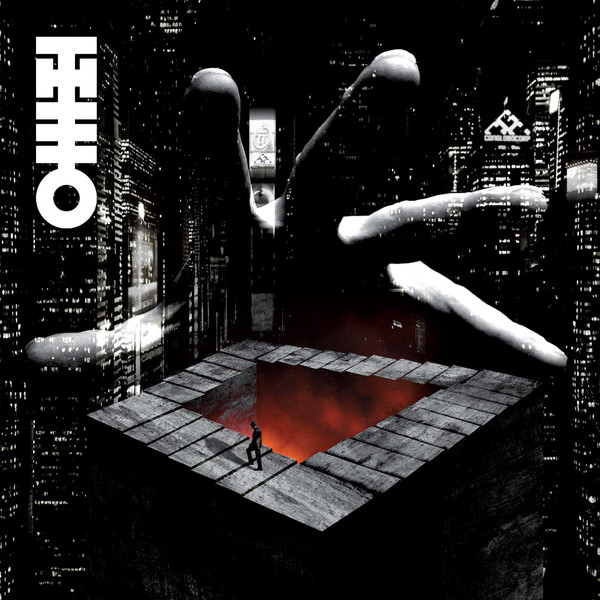
I love discovering new bands that are absolutely amazing! I just found out about THEO a few days ago, and the more I am learning about the music and the band the more I like it. THEO’s The Game of Ouroboros offers so much to the listener. It is a keyboard driven album in a very traditionally “prog” sense, yet it does not allow itself to be tied to that [rather loose] definition. THEO find themselves sailing anywhere from prog metal (in an almost Haken fashion, just not quite as chaotic) to straight-up classic prog, to jazz, to an almost funk sound. Their exploration of different sounds, especially through the keyboards, is brilliant. Apart from The Tangent, it seems that there are very few third wave prog bands that center around the keyboards as much as THEO do, yet it is never overdone. Think ELP or Yes keyboards – always just the right amount.
So who are THEO?
Jim Alfredson: keyboards, lead vocals
Gary Davenport: bass
Kevin DePree: drums, backing vocals
Jack Reichbart: guitars
Specials guests: Greg Nagy and Zach Zunis on guitars for the title song
The album itself is actually a bit of a dystopian concept album, but you wouldn’t know that from a passive listen. The music is not depressing in a Floydian Animals or The Wall sense, but rather it is quite upbeat. Thematically, however, the album gets off to a rather dark start. “The Game of Ouroboros” starts with a computerized phone answering machine reading Theo’s personal RFID chip, which contains all of his personal information. To be honest, the idea of chipping humans scares the crap out of me. Once the music begins, Jim Alfredson’s distinct vocals take over and shortly deliver this cheery line: “Bow to the corporations, concede your very life.” There’s a happy thought. Here’s another one, from the second song, “The Blood that Floats my Throne”: “a passive citizen is a happy citizen.” Yikes. THEO are very upfront with their concept, and they are not afraid to hide it.
(Random fun fact. The ouroboros is an ancient symbol of a serpent eating its own tail. Interesting to have this circular idea so prominent in a progressive rock album, considering the word progress is in the name of the genre.)
So, while there are clear dystopian elements to be found here, the music itself does not follow the traditional depressing dystopian themes so often heard in “dystopian” albums. The first song has an almost jazzy element to it, in parts, because it jumps around to different instrument solos, and the vocal section almost acts as an instrumental solo, as opposed to being layered over the music. I can’t honestly remember hearing any other band attempt to use vocalization in that manner, but I think it works really well, especially with Jim’s voice, which is unlike most traditional “prog” singers. The jazz sounds will give way to prog metal in other places, and even to a funky type of prog in the fifth song, “Idle Worship.”
My favorite aspect of this album is definitely the keyboards, although all the instrumentation is quite good. There is heavy bass, great guitar riffs, and great drums. But those keyboards. Man are they good. At some points it sounds like an actual pipe organ, and then I found out that it actually is a real pipe organ, the one at Hope College’s chapel in Holland, Michigan, to be precise. I’m not a big fan of organ music in church, mainly because I have grown up in churches that wouldn’t dream of purchasing an organ, and the few times I have heard organs in church, the music has been atrocious. Prog keyboardists should be playing and writing those hymns, and I’d be willing to bet that more pews would be full on Sundays. This particular organ sounds amazing. At other places, the keyboards take on a Dennis DeYoung Styx sound, and in even other places, we have traditional piano. It truly is wonderful to a keyboard lover like me.
I highly recommend THEO’s The Game of Ouroboros. It is a wonderful combination of many different styles of music, and it keeps the listener entertained throughout. The lyrics are strong, and the instrumentation is even stronger. To any fans of Keith Emerson or Rick Wakemen, this album is a must listen. To everyone else, listen to it as well. You won’t be disappointed.
Muse has announced the release of their new album, Drones, due out in early June. They have also released a music video to the song, “Psycho.” It sounds as if they have gone back to their earlier, heavier style, which the band said they would do on this upcoming album. Gone (from this particular song) are the synth-poppy sounds featured so heavily on The 2nd Law. In my opinion, the heavier, more basic rock sound is a good thing.
“Psycho” sounds, lyrically, like it could have been written by Roger Waters. Very much about mind control and being ordered around by those in authority (you’ll see what I mean in the video). Muse continues their long string of anti-big government and anti-oppression themes with this album. The album title, Drones, is fitting. I look forward to hearing the whole album. A word of warning about the music video – the song is marked as explicit on iTunes, for language (pervasive use of the F-word).
The Dutch Progressive Rock Page has released the results of the 2014 reader poll. Unfortunately, DPRP saw a decline in the number of voters over previous years, especially in the younger demographics. But, Mike Portnoy won best drummer by a wide margin. Is anybody really surprised about that, though? Congratulations Mike, and to all of the fantastic prog artists of 2014!
I’ve been thinking a lot lately about the amount of new music I’ve listened to since joining Progarchy, and I’ve been wondering how I managed to get along without much of the music I listen to on an almost daily basis now! I’ve also been thinking about my first exposure to what I now understand to be progressive rock. At the time, I would have just called it classic rock.
I was a little kid. Maybe 6th grade, but for some reason I think it was a few years earlier. Let’s go with 2004 or 2005. I remember sitting in my brother’s bedroom as my Dad plugged his 40 gig iPod classic (remember those, black and white screen, weighed a couple pounds) into my brother’s stereo to relive the glory days with his college roommate who was in town and over for dinner. My first experience hearing Rush was the high pitched Geddy Lee saying, “We’d like to play for you side one from our latest album. This is called 2112.” Those last few words stuck in my mind for years as being so incredibly cool. And I felt cool for listening to it. Even though I didn’t remember the music at all for the next few years after that, I did remember, “This is called 2112,” and those words seemed to constantly run through my head.
Fast forward a couple of years. I’m sitting in the car with my Dad (in a church parking lot, of all places), and my Dad says, “Here’s a song I think you’ll like.” He must have known even back then that I would come to have a profound love of history. He played “Bastille Day” from All the World’s a Stage. He played a few other songs from that album, but I can’t remember which. All I remember is not being able to understand Geddy Lee’s vocals, and my Dad saying that maybe that was a good thing. A few days later, I remember bragging to my friend’s Dad that I had listened to classic rock. I felt so cool. (I probably sounded like a little loser, but hey, I felt cool.)
Fast forward again (maybe seventh grade?). I’m in my brother’s room again helping him move furniture or something. He blasts “Tom Sawyer” over his stereo. I feel cool yet again, something I didn’t often get to feel being bullied at school as a kid. Such is life. Soon after that, I got a copy of The Spirit of Radio: Greatest Hits 1974-1987 from the local library and put it on my computer and iPod. Admittedly, I only listened to about half that album, the 70s stuff through “Tom Sawyer,” but I loved it. I would blast that stuff whenever I could.
Backtrack back to 6th grade, when my brother downloads some Muse albums onto my iPod during a family vacation. I started listening to that on a regular basis as well. Fast forward again to sometime in high school, when I get to see both Dennis Deyoung and Kansas live at our town’s annual 4th of July festival. Needless to say, I quickly acquired some of their music as well.
Fast forward again to the first week of my freshman year of college (September, 2012). I’ve since acquired several more Rush albums, my favorite being A Farewell to Kings. I’m sitting in my dorm room listening to Rush on my speakers, and Connor Mullin, my dorm room neighbor, asks from the hall, “Is that Rush?” That began a series of conversations over the ensuing weeks about “progressive rock,” a term I had never heard before. I had always thought of it as classic rock. Connor and I spent hours over the next few months watching different live videos of classic prog bands from the 70s, and, in the beginning of November, the two of us drove to Detroit to see Ian Anderson perform Thick as a Brick and Thick as a Brick 2.
I was sold on Prog. The next fall, two tools (Connor and I) walk up to Dr. Birzer’s office to talk to him about our shared enjoyment of prog. Despite this being the first time we had ever met him, he, out of the graciousness of his heart, invited both of us to join Progarchy! And the rest is rock n’ roll history.
And it all began with my Dad, Rush, and “2112.” I think I’ll go give that another listen.
[PS: I just talked to my Dad after he read this article, and he told me that a friend of his introduced him to “2112” when he was in fourth or fifth grade. It seems we all discover it around the same age. May Rush long live on in our hearts and stereos.]
[This is a review I wrote for the Hillsdale Collegian, my college’s newspaper. The website says somebody else wrote it (presumably whoever posted it to their website), but it was yours truly. This is part of my failing attempt to progify Hillsdale College.]
It truly is the end of an era. This past November, Pink Floyd released their final studio album, “The Endless River.” Pink Floyd is one of the most iconic bands in rock history, and they are one of the greatest progressive rock bands ever. They have influenced countless budding musicians over the years, and many of their album covers are easily recognizable pieces of pop culture. To see such an important band release their final album is bittersweet. It is, however, a fitting farewell.
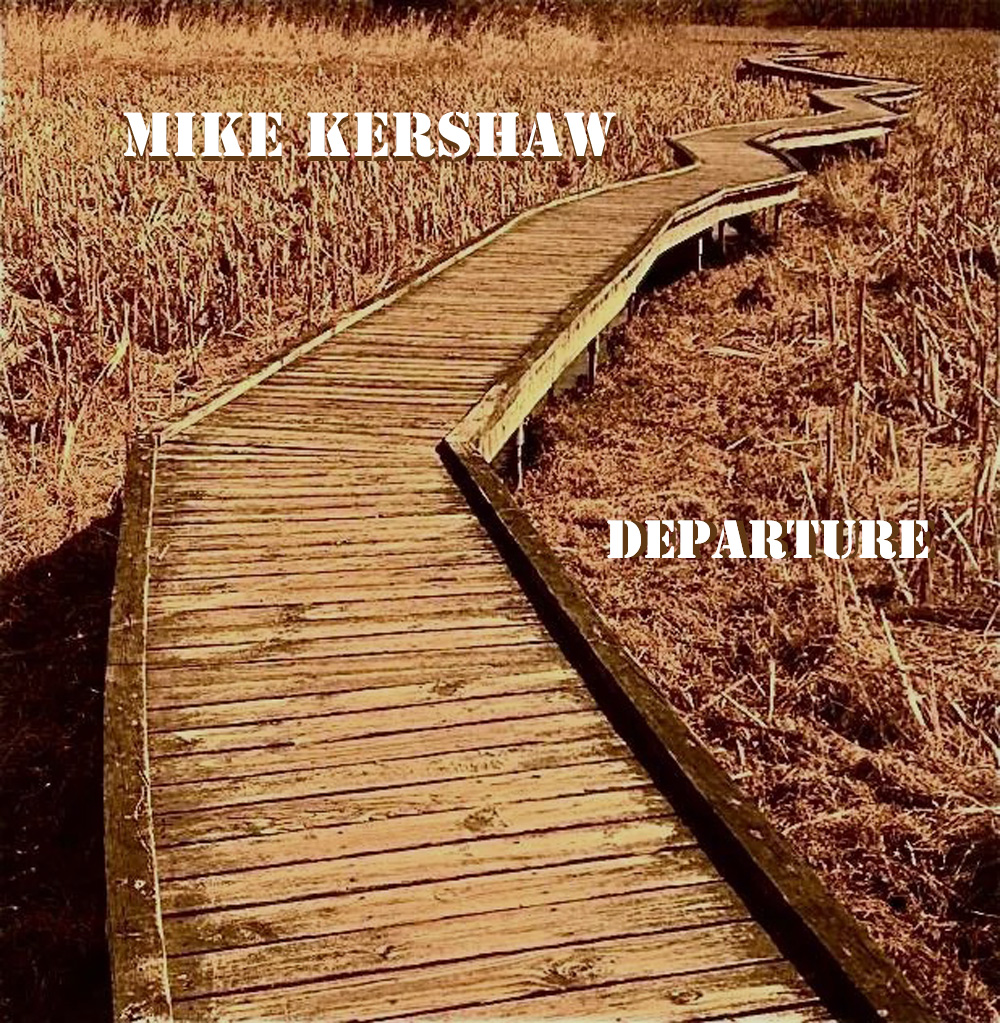
Way back at the end of August, in my review of Mike Kershaw’s Ice Age, I said I was looking forward to future releases from Mike. Well, here we are! And Departure is even better than Ice Age!
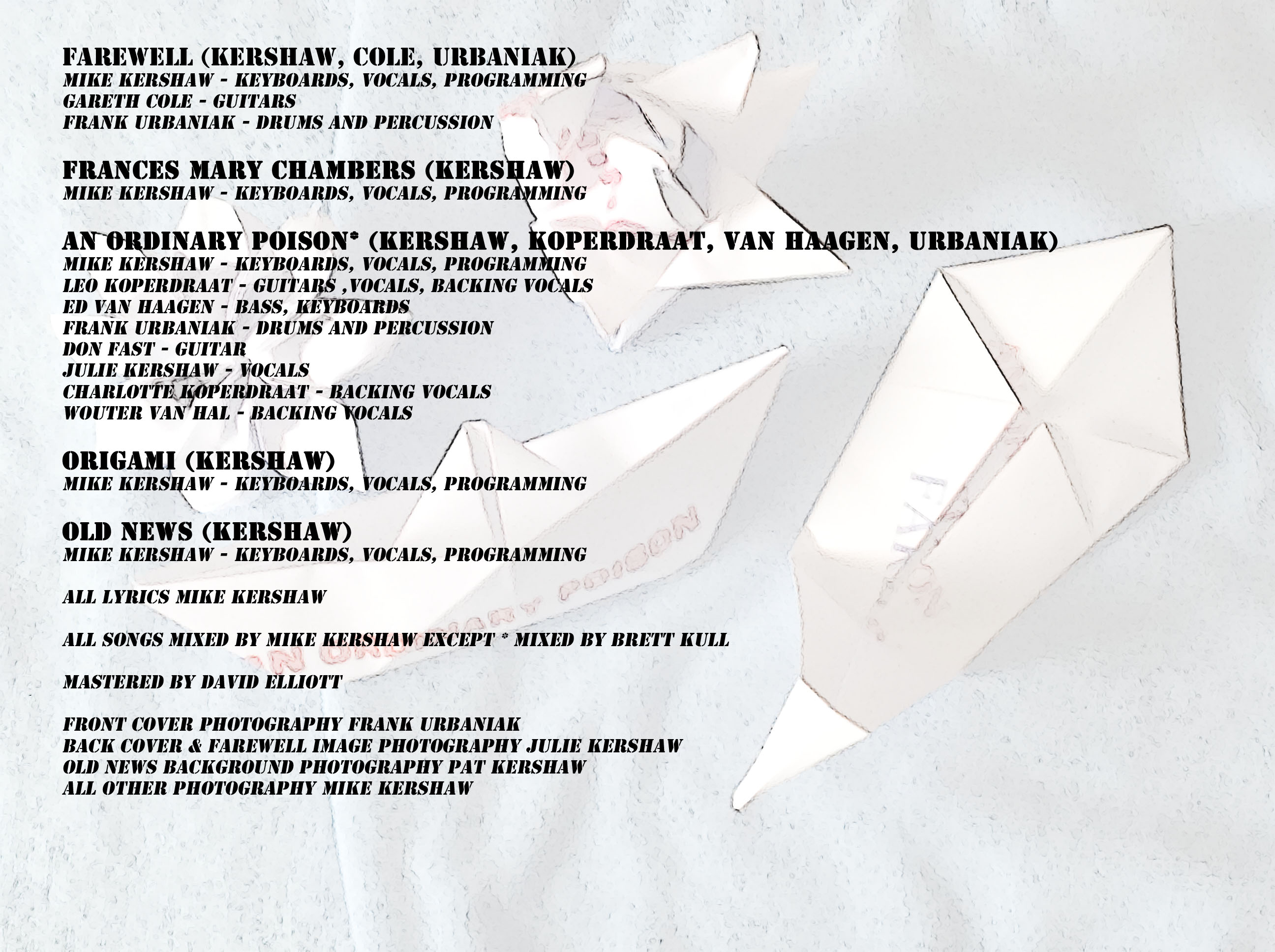
Departure basically picks up where Ice Age left off. The first track, “Farewell,” is a goodbye to the long winter spoken of at length in the previous album (sounds great right about now in the frozen tundra of southern Michigan). This song is my favorite on the album. It is very upbeat, and it features Progarchy’s very own Frank Urbaniak (Fractal Mirror) on drums, as well as Gareth Cole on guitar. I believe the collaboration took Mike Kershaw’s musical ideas to the next level. The song is reminds me very much of Fractal Mirror. Interestingly enough, when I first heard Fractal Mirror, it reminded me of Mike Kershaw’s music. I was really excited when I saw that Mike collaborated with them on this EP.
Thematically, Departure is not as structured as Ice Age, presumably because it is a shorter EP, and because not every song here is new. The song “Origami” was recorded during the Ice Age sessions, and “An Ordinary Poison,” which was recorded with Fractal Mirror, is a re-recording of an older song Mike Kershaw made. This is also especially good. Overall, the EP is heavily synth driven, just like Mike’s earlier work. It seems like there is a little more guitar work here as well, which I think is a nice improvement. Frank Urbaniak’s drums are fantastic, bringing a smooth rhythm and driving beat to the music. The added vocals from Fractal Mirror’s Leo Koperdraat, among others, was a nice added touch. As always, Mike’s deep, quiet vocals add a wonderful sense of contemplation to the music.
The songs on Departure do a wonderful job of combining Mike’s creative talent with his collaborations. The songs that are strictly Mike Kershaw are more like his older work, with a darker, brooding sense to them. The collaborated pieces have a more upbeat and fuller sound to them. Overall, there is a good balance of styles on this EP. For those that couldn’t quite get into Ice Age, I’m sure you will find Departure to be more accessible. I believe that this EP marks a definite step forward for Mr. Kershaw, and I am excited to see what else he has forthcoming in the months ahead.
Metal band System of a Down are gearing up for a short tour in remembrance of the 100th anniversary of the genocide in Armenia, their native country. While not a “prog” band by any means, SOAD is well known for their anarchist, anti-government, anti-crony capitalist, and especially anti-war cries. They are also known for rather offensive lyrics, at times. Of all the bands of the early 2000s (their last album came out in 2005), System of a Down is probably the best at being up front about what they believe, and I can respect that and can even agree with them on some issues. Serj Tankian, the lead singer of the band, is, in his own right, an excellent poet, both in his music and as an author. He is a multi-faceted musician and composer, even writing and releasing an orchestral Symphony in 2013. Needless to say, the band knows music and cultural criticism.
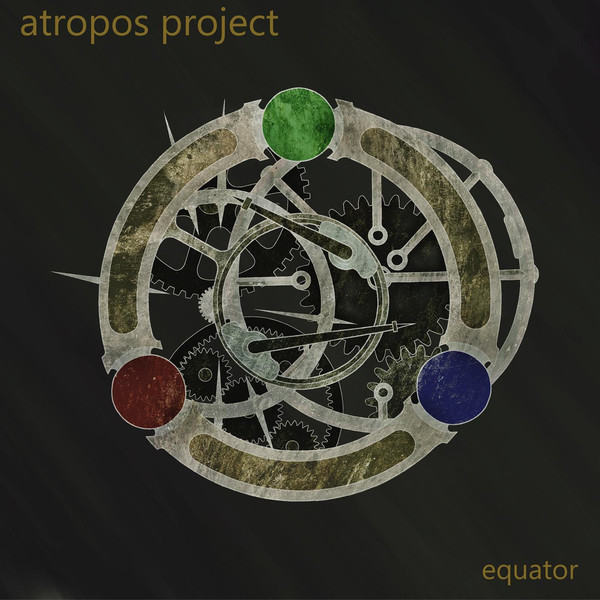
“Dead String Scrolls. Bring your own lyrics.” This is how New York musician John Quarles describes his creation, Atropos Project. While purely instrumental “prog,” John draws upon a variety of influences and experiences for his album, Equator. The beauty of this album is that it cannot be pigeonholed into one specific genre or sub-genre of rock. Musically, Atropos Project explores many different aspects of progressive rock.
John began his musical journey when he was in high school, playing drums for a variety of local metal bands. As he grew older, he began trying out different instruments, eventually settling on the guitar as his weapon of choice. Over the course of the last decade or so, through collaborating with other musicians, John began to pick up other instruments as well, including the keyboards. Equator is the product of those experiences. John cites bands such as Rush, Queen, Boston, and Kiss as his early influences, and he cites Opeth, Porcupine Tree, and Radiohead as his more recent influences.
The album itself is strictly instrumental, with all instrumentation performed by John. There have been several good instrumental prog albums the last few years, including Antoine Fafard’s Occultus Tramitis (2013) and The Fierce and the Dead’s Spooky Action (2013). Equator belongs right up there with those two excellent albums. I guess 2013 was the year for great instrumental music.
Across the album, I can hear many different influences, especially, to my ears, Rush. Specifically, more recent Rush. Alex Lifeson has adopted a much heavier style of playing on their last three albums, and much of the guitar work on Equator is reminiscent of that. However, the music shifts stylistically a lot over the album, so it is hard to generalize the album. There are hints of traditional jazz, classic prog, and even new age throughout the album. The beginning of the fifth song on the album, “A Curious Trip,” reminded me instantly of some of the piano work from Mannheim Steamroller’s Fresh Aire I, which is my favorite instrumental album. The seventh song, “Suspiria,” reminded me of the song “Faithless” from Rush’s Snakes and Arrows. The guitar riff is very similar, but you have to “bring your own lyrics.”
If it seems like I’m being rather random in my review of the actual music, it’s because I am. The brilliance of Atropos Project is the music jumps around stylistically, which leaves the listener wondering what is next, eliminating the threat of boredom that can often come with strictly instrumental music. One second you are listening to what approaches metal, and the next second you are in a completely different genre, one that explores acoustics and keyboards. I found the eeriness of the keyboards overplayed with a heavier, steady rock beat in the fourth song on the album, “Spiraling,” to be exceptionally enchanting. Atropos Project does a great job of creating a repeating rhythm, and then completely changing the time signature and style of music right in the middle of the song. It doesn’t get much more prog than that. The overall effect is one that keeps the listener interested and curious about what comes next in the album.
For music that was created entirely by one man, Atropos Project offers an astounding array of styles and influences. Furthermore, John Quarles is an extremely talented musician with every instrument that he plays. Fans of everything from jazz, to Mannheim Steamroller, to Rush should find Equator an excellent album to relax to. If you are a fan of Antoine Fafard’s latest album or The Fierce and the Dead, then definitely add Atropos Project to your listening list.
I had the opportunity to contact John the other day, and he told me that recording is underway for his next album, which is tentatively due out sometime this year. He says that, sonically, it will be a darker album than Equator. I read that as heavier, but I could be completely off on that. Either way, I’m sure it will be good, and I look forward to listening to it.




 Progarchy