Grateful for my beloved wife, son, daughter-in-law, grandchildren and siblings. Also a lover of theology, music, history, philosophy, classic novels, science fiction, fantasy and Looney Tunes.
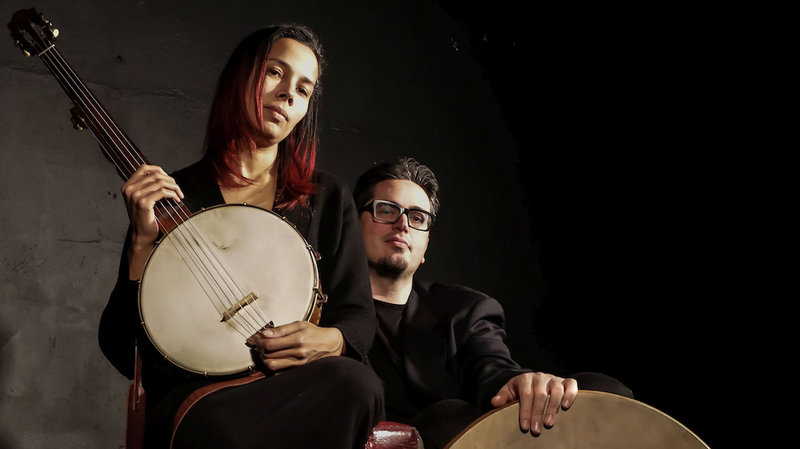
Gifted with a glorious, classically trained voice plus extraordinary skills on banjo and fiddle, equally at home with African-American spirituals, Celtic “mouth music” and opera, Giddens is the kind of protean musician that comes along once in a generation.
Founding “postmodern string band” the Carolina Chocolate Drops, writing music for Bob Dylan’s words on The New Basement Tapes, winning a MacArthur Genius fellowship, acting in CMT’s Nashville series — Giddens has gone from strength to strength in a remarkably short time, earning every step up in her meteoric rise. Seeing her live in the summer of 2015, I walked away giddy, as she and her band effortlessly filled a Cape Cod town hall with irresistible rhythms, utterly committed performances that ran the gamut from a tear-inducing take on Dolly Parton to funked-up Appalachian folk tunes — and that powerful, powerful voice.
For her third solo album (after 2015’s Tomorrow Is My Turn and 2017’s Freedom Highway), Giddens has teamed with Italian pianist/percussionist Francesco Turrisi, who filters early Mediterranean folk music through the prism of jazz. Recorded in Dublin, Ireland in five days with minimal preparation and few overdubs, There Is No Other soars, sears and astonishes — breaking your heart one instant, healing it and setting off fireworks of exhilaration the next, commanding your attention throughout.
Words can only approximate the sweep of traditions and times woven together here. Folk ballads from Appalachia, Italy and England, jazz via Hermeto Pascoal (a Brazilian collaborator with Miles Davis) and vocalese pioneer Oscar Brown, classical arias by Carlisle Floyd and Samuel Barber — they’re all subsumed into the spell that Giddens (on banjo, violin and viola) and Turrisi (on piano, accordion, lute, banjo, and percussion) conjure up. This music is warm, determined, melancholy, driven and delighted by turns, seamlessly flowing from one track to track, each its own thing, each part of a greater unity.
And Giddens’ singing — again, gorgeous beyond words. On “Gonna Write Me A Letter” and her own “I’m On My Way”, she’s an unstoppable force of nature; on “Pizzica di San Vito” and “Briggs’ Forro”, a rippling vocal breeze above dancing beds of rhythm; on “Wayfaring Stranger” and “The Trees on the Mountains”, the cry of a broken heart devastated by life and love; on “Brown Baby” and her gospel-tinged “He Will See You Through”, the voice of maturity, determination and hard-won belief. Nothing human is foreign to her — the wisdom of generations and the optimism of youth come together to devastating effect.
I recommend There Is No Other without hesitation — it’s one of those albums that Duke Ellington might have termed “beyond category”, resonating deeply with the core of our shared humanity. As Giddens and Turrisi put in in their liner notes,
From the beginning of our musical partnership we have been struck with the commonality of the human experience through music; how instruments, modes, and the very functions of songs and tunes are universal from culture to culture. There are very real and documented yet unheralded historical links between many of the instruments we play; and yet others of the connections we have here arise solely from our artistic instinct; but either way, the overwhelming feeling we have is that there is no Other.
Rhiannon Giddens and Francesco Turrisi tour North America from September to November; tour dates are here. In the meantime, listen to There Is No Other for yourself:
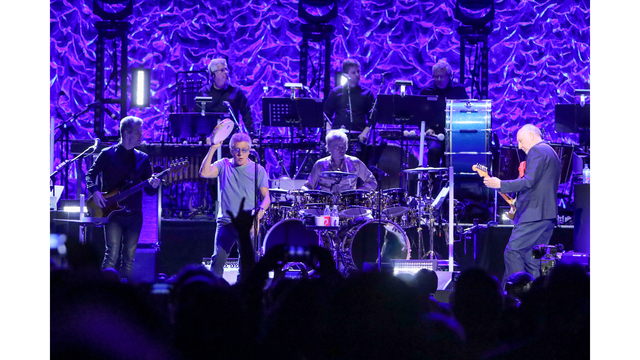
The Who, Van Andel Arena, Grand Rapids Michigan, May 7, 2019.
Taking the mike as The Who casually took the stage, surrounded by a 49-piece orchestra, Pete Townshend saluted my adopted hometown. “Grand Rapids — on the Grand River — a grand occasion!”
As I’ve noted before, Michigan has played an outsized part in The Who’s history — the site of their first US hit single (“I Can’t Explain”, in Detroit) their first US gig outside New York (the Fifth Dimension Club, in Ann Arbor), their first car driven into a swimming pool (at Flint’s Holiday Inn). Tuesday night brought a new “first” — the opening night of an ambitious band-plus-symphony tour. Would it be a brave triumph? A crazy experiment? An baffling failure? A cynical cash grab? We would get to find out — first!
What we got was a mix of the first two possibilities — thoroughly intriguing and pretty gripping, worth some shaky moments and rough pacing for the sheer, audacious impact of the whole package. The evening was by no means a smooth ride or a safe play to a sold-out sports arena crowd; parachuting into unfamiliar sonic terrain, The Who had to blaze new trails forward. They stumbled at times, but when they found their feet, the musical vistas they discovered could be downright glorious.
What prog rock does is to free artists from some of the limitations of pop, rock and folk music whilst incorporating their best elements e.g. memorable melodies or story-telling. The sweet spot is where high-quality songwriting and interesting music collide.
— Greg Spawton, “What is Prog?” (from Big Big Train’s 2017 concert program)
A sweet collision indeed. On the new album Grand Tour, the members of Big Big Train extend and refine their sonic vocabulary, and broaden their topical reach from the seminal Albion cycle (The Underfall Yard, English Electric, Folklore, Grimspound and various offshoots) to explore a wider, sometimes wilder world. As fans have come to expect, it’s both instantly appealing and bracingly challenging — richly melodic, spikily rhythmic music, continually reaching toward symphonic scope; words that reflect on, rejoice in and ruminate about the wonders of the past and present, this time breaking out beyond Britain to Europe and to farther shores.
Admittedly, Grand Tour starts more tentatively than some previous albums: setting the scene and foreshadowing what’s in store, “Novum Organum” (the first of drummer Nick D’Virgilio’s composing credits, with bassist Greg Spawton) is a gently hypnotic prologue for patterned percussion and keyboards. It eases us out of the dock into the harbor, with David Longdon sounding the album’s themes at low tide, setting sail “for science and for art.”
But before we can drift off, Longdon’s “Alive” slams in — a rocking kick-off that urges listeners to “Find your wings/Dare to fly/Find your feet/Then run for dear life”. Straightforward rock with a lighter, contrapuntal bridge, it’s a powerful, limber groove with lots of nifty textural touches (backing vocals at the octave, poppy handclaps, Spawton’s bass pedals under the driving rhythm, Danny Manners’ defining Mellotron riff and in-your-face synth solo, spiffy keyboard and guitar filigree at unexpected moments). And Longdon is having the time of his life, reveling in the new day to seize and the beauty awaiting him. He’s raring to go — and the invitation to come along is irresistible.
“Big Big Train’s David Longdon and Greg Spawton and BBT artist Sarah Louise Ewing in conversation with Nick Shilton of Prog Magazine. Filmed at the Royal Astronomical Society, London in 2019.” Topics covered: the new album Grand Tour, live shows, artwork and much more. 90 minutes!
Nick Mason’s Saucerful of Secrets, The Chicago Theatre, April 4, 2019.
“After twenty years, I got tired of waiting for the phone to ring.”
Always quick with a quip, drummer Nick Mason tossed off that one during the first lull in his new band’s voyage through Pink Floyd’s early catalog. Dryly diplomatic and subtly duplicitous (it’s actually been 25 years since Mason last played in North America, 14 since the Live 8 Floyd reunion), it was nonetheless revealing.
In recent years, Roger Waters has trotted his favorite era of Floyd (first The Wall, then a Dark Side of the Moon through Animals-based set) around the globe; David Gilmour toured his solo album Rattle That Lock,then decided to auction off his guitar collection for charity, keeping the door firmly shut on nostalgia following Rick Wright’s passing. Mason, on the other hand, has dug deep into the history of the band he co-founded — prepping the massive box set The Early Years with Gilmour, then working on the touring memorabilia exhibition Their Mortal Remains. So when Blockheads guitarist Lee Harris and post-Waters Floyd bassist Guy Pratt suggested a group focusing on the pre-stardom Floyd repertoire, Mason was itching to give it a whirl.
It’s a great idea. Freed from the expectation of playing the hits, Saucerful of Secrets dives headlong into a rich stream of psychedelia, prog and pastoral balladry, setting back the clock to when Pink Floyd’s audience had no idea what was coming next. And there’s something for everybody here: trippy blues barrages “Interstellar Overdrive”, “Astronomy Domine” and “One of These Days”; the whimsical Syd Barrett-led singles “Arnold Layne” and “See Emily Play”, along with Barrett’s later, profoundly disturbing “Bike” and “Vegetable Man”; hushed, acoustic post-Barrett meditations like “If” and “Green Is the Colour”; the bludgeoning rock of “The Nile Song” and “Childhood’s End”; and extended free-form explorations of “Atom Heart Mother”, “Let There Be More Light” and “Set the Controls for the Heart of the Sun”.
Tackling this wide range of material, the quintet was tight enough to keep the audience engaged, but loose enough to veer into clamorous group improvisation as the mood (frequently) struck them. Pratt and rhythm guitarist Gary Kemp (best known as the main songwriter for Spandau Ballet) divvied up the lead vocals and drove the tunes forward, with Pratt cracking occasional jokes about absent Floyds during breaks; Harris spun off one obliquely creative solo after another on a bevy of guitars; Dom Beken captured Rick Wright’s spectrum of tasty keyboard colors and open chord voicings to perfection.
But ultimately, it was Mason’s show. Sometimes damned with faint praise like “the best drummer for Pink Floyd,” his fine playing reminded me of Ringo Starr (another criminally underrated drummer) onstage. Self-deprecating about his lack of technique in interviews, Mason turns any limitations into assets by laying down an immovably solid beat, leaving plenty of space for his fellow players, and embellishing the grooves in simple, ear-catching ways (his malletwork on tom toms being the most famous example). His reward? Finally getting to play the gong on “Set The Controls for the Heart of the Sun” for this tour. (Mason’s spoken intro: “Roger Waters is one of my best friends, a brilliant musician, a brilliant songwriter — and not good at sharing.”)
So unlike later Pink Floyd tours, including The Division Bell outing I saw in 1994, Nick Mason’s Saucerful of Secrets isn’t about the spectacle (though the light show was fabulous), or the star power. Rather, it’s about the music — and about the accomplished crew of players that bring these neglected Floyd gems alive in the moment, headed by the drummer who’s somehow become the most stalwart conservator of his band’s legacy. For the 3,000 appreciative fans that rewarded Mason and his compatriots with a tumultuous standing ovation, that was enough.
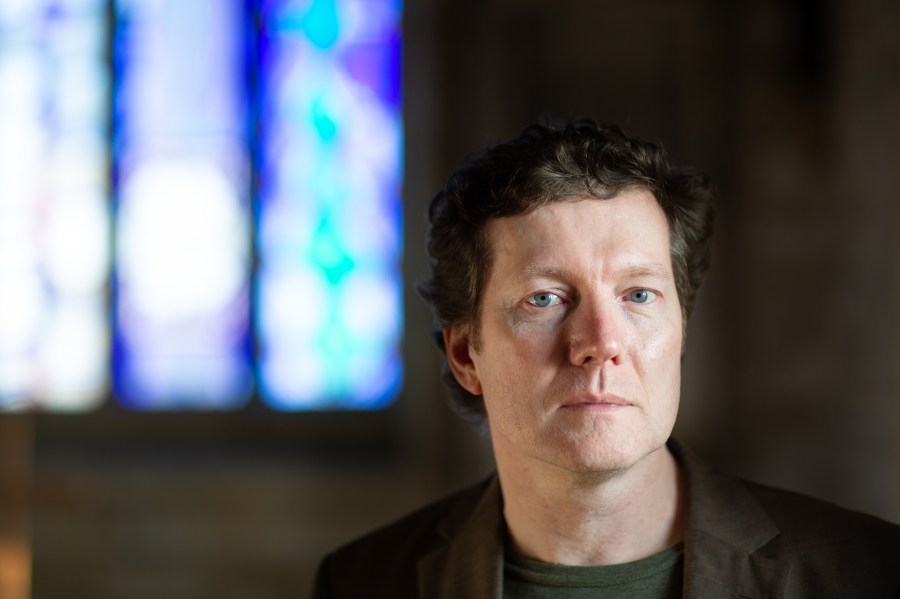
The latest in the acclaimed series of King Crimson boxed sets is now available for pre-order. Heaven and Earth is a 24 disc – 18 x CD, 4 x Blu-Ray and 2 x DVD-A – set and represents the most comprehensive collection in the series to date and covers the period from December 1997 to August 2008.
The box, to be released on May 31st, will include:
A comprehensive look at Crimson’s experimental ProjeKcts (1, 2, 3, 4, 6 & X): 1 CD each of ProjeKcts 1, 2, 3 and 4; every single concert by every ProjeKct plus all studio albums and other releases on 2 Blu-Rays! This was an incredibly rich period — more “research and development” than anything else — with sundry configurations of Crims improvising like mad onstage, spraying sonic fireworks in all directions as they devised and refined new material. What I’ve heard from this era is utterly thrilling, and this material should be worth the hefty price of the box all by itself.
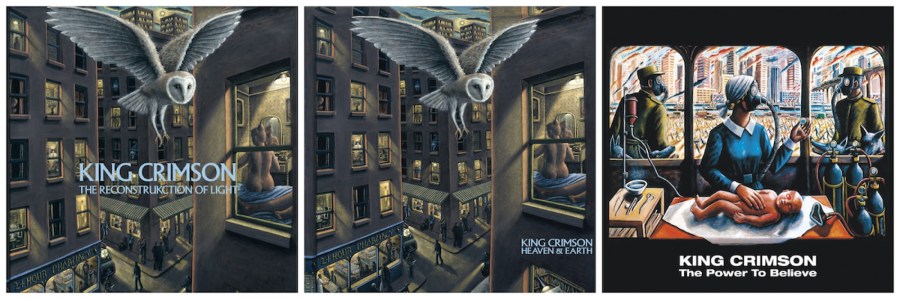
A re-imagining of 2000’s The ConstruKction of Light, on CD, DVD & Blu-Ray. To quote the press release, “The loss of the original recordings of the electronic drums allowed Pat Mastelotto to completely rerecord the material on his current acoustic/electric kit making for a virtually completely new album of familiar material,” remixed by Don Gunn. On DVD: the remix, a 5.1 surround mix, the original mix in hi-res stereo and ProjeKct X’s Heaven and Earth. On Blu-Ray: all of the above plus over 10 hours of live video from the 2000 European tour, audio of the 2000 London show (released on video as part of Eyes Wide Open), the Level 5 mini-album and more. On additional CDs: live concerts from the 2000 and 2001 tours.
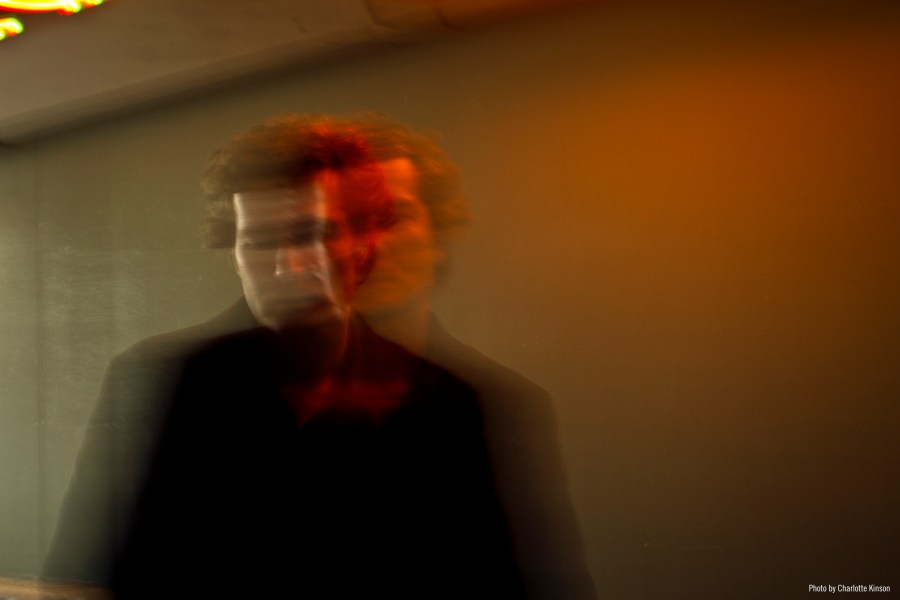
An extended/enhanced edition of 2003’s The Power to Believe, remixed by David Singleton. On DVD: the remix, a 5.1 surround mix, the original mix in hi-res stereo and the Happy With What You Have to Be Happy With mini-album. On Blu-Ray: all of the above plus the live Elektrik album and more. On additional CDs: live concerts from the 2003 tour.
To top it all off, two live CDs of the short-lived 2008 quintet Crimson (which introduced Gavin Harrison to the line-up), recorded in concert in New York.
Quite frankly, what’s included on Heaven and Earth is beyond my wildest dreams — it should keep me in Crimson hog-heaven at least until I see their 50th anniversary tour in September. If it sounds like too much at one go for you, the 40th Anniversary Editions of The ReconstruKction of Light and The Power to Believe (including the relevant CDs and DVDs listed above) are available separately, to be released on the same date. Pre-orders for all these releases are live now at Inner Knot for the US and Burning Shed for the rest of the world.
One of Robert Fripp’s “devil bugs” caught up with the Krueger household on February 24 — the same day a “bomb cyclone” hit West Michigan, causing a 30-degree temperature drop in 24 hours, along with whiteout snowstorms. It’s taken this long for us (and the region) to emerge from hibernation — but through the depths of winter to the cusp of spring, music has taken sad songs and made them better.
That very day late last month, I trekked across the state to catch The Neal Morse Band’s Great Adventour stop in suburban Detroit; Neal and his merry crew (including son Will and daughter Jayda at the merch table) didn’t disappoint. As I anticipated, The NMB’s live take on The Great Adventurewas even tighter, more driven and more finely honed than the fine studio album (first half glitches to Morse’s keyboard rig notwithstanding).
Hearing all of TGA in one go brought home how thoroughly integrated the new effort is. The key musical themes (as well as flashbacks to The Similitude of A Dream) aren’t just repeated, they’re developed in near-symphonic ways: transposed, transformed rhythmically and harmonically, recapped in unexpected contexts throughout the work. Kaleidoscopic contrasts of rhythm, instrumental color, vocal textures (mainly from Morse, guitarist Eric Gillette, keyboardist Bill Hubauer) and tonality meshed smoothly with drummer Mike Portnoy and bassist Randy’s George’s badass forward propulsion, ably mirroring the lyrical highs and lows of another journey to the Celestial City.
In sum, TGA is a genuinely impressive concept work, marked by ambition, intelligence, technique and sentiment in just the right proportions. The result at the end of each set (and the encore medley that covered Morse’s entire solo career, ending the night where it began) was sustained, extended, unforced ecstasy in the audience — a feeling that, I believe, couldn’t have been manufactured or manipulated into existence. I couldn’t help think that, consciously or not, Morse’s recent work fully embodies the ongoing ideal of American revivalist religion — an ideal, whatever its flaws, that’s been a cultural constant from the Puritan theologizing of Jonathan Edwards to the rough-hewn democratic juggernaut of today’s Pentecostalism.
And, in the inspired, paradoxically complex simplicity of its drive to the finish, The Great Adventure live reminded me of nothing so much as Gustav Mahler’s massive Resurrection Symphony. Like Mahler, Morse and band embraced everything that came to hand, running the risk of grandiosity to shape a new musical world — a payoff acknowledged by the heartfelt, fervent applause of the 300 souls in attendance.
In Part 1 of Tim Bowness’ latest Progarchy interview, Tim discussed his previous solo albums, working again with his first band Plenty, reuniting with Steven Wilson for fresh No-Man music, and how it all feeds into his new album Flowers At The Scene (released March 1 on Inside Out Music). Part 2 was an in-depth look at the new album’s music and players. To finish up, the conversation branches off into the process of writing, the genesis of Tim’s label/online shop Burning Shed, the state of the music business and more! Note that [brackets] below indicate editorial insertions.
I’ve always found your lyrics very, again, distinctive and appealing. The words for your songs, if you read them on the page, they look very sparse; they’re epigrammatic, or they’re almost like a hymn text. But they convey a lot of emotion and meaning when you sing them – It’s like you hear what’s behind them, kind of like a minimalist take on lyrics. Was there anyone who particularly influenced how you write lyrics – or melodies, for that matter? Where do the words come from for you?
I think the words in some ways came before the singing, because I used to like poetry, before I ever really was in a band. So I’d always loved reading, and still am a fairly avid reader of novels and poetry. There were a lot of lyricists I adore, so, I think … Joni Mitchell is an absolutely fantastic lyricist. But I can’t say there’s any lyricists I’ve been particularly influenced by.
I think that, in terms of that pared down style, I guess I always quite liked people like Samuel Beckett and Harold Pinter and Raymond Carver. Certain writers like that. And, although I don’t think I’m anything like them, that might be the core influence. And there’s also, there’s an English poet called Ian Hamilton, who has a very sparse approach, and I always used to like his work.
And so in some ways, it’s kind of closer to that; it’s closer to the poetry that I grew up reading, without being particularly like it. And as I said, I’m a fan of many singers, many lyricists. Again, Roger Waters, fantastic lyricist, fantastic concepts, but I can’t say it’s particularly influenced me. So maybe it comes from outside of music, the lyrical element of what I do.
Plus, I also think it comes, of course, from my own experiences, my own obsessions, my own emotions. So that’s thrown into the mix.
Would Philip Larkin be in the mix? It just occurred to me that was another person that kind of worked in that epigrammatic, lyric style?
Yeah, very much so, yes indeed! The Collected Works of Philip Larkin are on my shelf.
Well, it’s amazing how busy you are, because along with all of what you do – your solo work, No-Man — you also co-direct one of my very favorite online shops! And it’s certainly a favorite of all of us at Progarchy. Burning Shed is just a wonderful place to buy music from, even across the pond. You’re listed as a co-director; what does your role there involve?
Well, I still – the newsletters you receive, I write them.
Oh, OK!
The text that goes on the site, I write it. So I suppose, in a sense, Burning Shed was my idea of a company. So I started burningshed.com as an idea of doing cost-effective, experimental solo albums. And so initially, we released three CD-Rs. So the idea was originally in 2001, online, on demand, cost-effective solo albums that labels wouldn’t be interested in. So Steven [Wilson] gave us a Bass Communion album; I gave a Samuel Smiles live album; Roger Eno gave an ambient album. And almost from the off, it did better than we thought it would do.
In Part 1 of Tim Bowness’ latest Progarchy interview, Tim discussed his previous solo albums, working again with his first band Plenty, reuniting with Steven Wilson for new No-Man music, and how all this feeds into his new album Flowers At The Scene (released March 1 on Inside Out Music). We dig into the new album in depth below! Note that [brackets] below indicate editorial insertions.
Pulling it back to Flowers At The Scene, it’s interesting what you said about how really, there are some [pieces] that you’re producing, there’s some that you and Brian [Hulse] are working on, there’s some that you and Brian and Steven [Wilson] are working on. It all feels like a unity when I listen to it. Despite the variety of colors, it’s, as you say, it feeds on what you’ve done before, but it goes in really interesting, different directions. Are there any particular songs that you feel are at the core of the album?
I would say you’re right, it does feel like an album. One thing that’s important to me is, I know in this age of streaming and Spotify it’s not particularly fashionable, but I love the album. I’ve always loved the album as a statement. And in some ways, although this album is different from the other albums – I mean, the previous three albums had themes to a degree. Lost In The Ghost Light was a narrative concept album. Stupid Things That Mean The World and Abandoned Dancehall Dreams had linking lyrical themes in a way. This is different in the sense that it’s eleven very separate moods, very separate lyrics, very separate songs. And yet it fits together, I think, in a kind of classic 43-minute album format. And in some ways, I think it’s the album that flows best of all four. There’s something about it that it kind of moves from one mood to another. And yet it holds together.
I suppose the key songs would have been when “Flowers At The Scene” and “Not Married Anymore” were written. And I just felt that Brian and I had been coming up with material that had its own distinct identity. And I also had a certain idea of how I wanted them to sound – and suddenly that was it! And I guess that there’s this [Robert] Fripp line, he would always say that a new direction presented itself. And I think that it’s true, because I’d continued writing material on my own, and I’d continued writing material with Stephen Bennett while I was recording the Plenty album. And although the material was good, it felt like it was gonna be a continuation of Lost In The Ghost Light or Stupid Things That Mean The World.
And I think that it was when I’d written the fifth song with no purpose really – Brian and I just kept on writing together because we were excited by what we were doing. And I think it would have been “Flowers At The Scene”, the title track itself, and I thought, “this is the new direction; it’s presented itself.” And from that moment on, it became a very exciting and immersive project and I said to Brian, “I think this is the basis of a new solo album. And it feels like a fresh direction after the other albums.” And you’re right that, what’s kind of interesting for me is it’s fresh, it’s a reset, but perhaps because of the mood of some of the music and because of my voice, there’s also a sense of continuation.
And certainly one of the things that contributes to it being fresh is this cast of musicians that you gathered, which is really genuinely impressive. So many great names with great work that have fed into this. I was wondering if I could just toss out names and, in a few words, you could try to describe what each of these guys have brought to the music for the album. Starting with Jim Matheos.
Well, Jim’s somebody I’ve known for a few years. He asked me to guest on an OSI album [Blood], probably about nine years ago now. And I really enjoyed it. So the track, which is called “No Celebrations”, felt very different for me; it was very much in that OSI art-metal style, but it accommodated my singing as well. And after that, we carried on communicating together. So occasionally he’s asked me for advice about things, and also we had co-written a couple of tracks that had never been released.
And when I was doing this album, I thought I’d love to get him involved. Because one of the tracks I’d been developing had him on anyway, and he’s an incredibly versatile guitarist. Very, very nice guy, but what people I don’t think are aware of is how versatile his talent is. So his own music can be anything from sort of ambient experimental to metal to classical acoustic guitar. And I knew how good he was as a soloist, and so I got him – really, he was my stunt guitarist on the album on a few tracks. And he did some fantastic work on it.
Peter Hammill. What a legend!
Yeah! Well, Peter’s somebody who when I was growing up, when I was in my teens, he was one of my favorite singers. And as I’ve said to people, what’s interesting with this album is that, probably my five favorite singers when I was 13 would have been David Bowie, Peter Hammill, Peter Gabriel, Kate Bush and Kevin Godley. And I’ve two of them on the album, and it’s an incredible thrill to have that!
Over the years, Peter’s become a friend. We ended up playing on lots of the same albums in Italy, and we got to know one another. And over the years, he’s guested on my work; and we even live in the same small town in England! And so he’s probably my sort of coffee and chat companion, where we’ve put the political and the musical world to rights once a month. And as I always say about Peter, he’s as nice, generous and decent as his music is frightening!
[Laughs] Oh, that’s a great summary!
[Laughs] Absolutely! Cause, you know, you wouldn’t want him to be as frightening as [Van der Graaf Generator’s] Pawn Hearts really, would you?
[Laughs] No, not in the slightest!
It is true; you’d be coughing your coffee up. It’s not good! [Both laugh] So yeah, lovely guy, and we’ve worked on a few things. And the thing about Peter is he is very honest about his opinion. So interestingly enough, I’d asked him to work on Lost in the Ghost Light, but he wasn’t as much a fan of that material. So basically, he works on what he likes. And he’d worked on the Stupid Things That Mean the World album, and I’d played him this album in progress. He’d mixed an album for me as well. There’s a Bowness/[Peter] Chilvers album that’s been unreleased that Peter’s mixed, which is quite an interesting project in itself.
And while I was making the new album I said, “ah, you know, a couple of Hammill-shaped holes here!” And he heard it, and he heard exactly what I wanted, and he really liked the material. One of the tracks he put a great deal into it, there’s a track on it called “It’s The World”. I’d played it to him, and initially I wanted his bite – there’s a real sort of bite in his voice, I wanted this in the chorus. And he said, “Yep, I know exactly what you want; I’ll get it to you. But I tell you what else I’ll give you; I’ll give you guitars, because the guitars on this aren’t working!” And so he completely re-recorded the chorus guitars, and almost went into sort of Rikki Nadir [from Hammill’s proto-punk solo album Nadir’s Big Chance] mode, and did a fantastic job.
So on the track “It’s The World” he’s on kind of backing and lead vocals, and also adds some really ferocious guitar parts. And he made the piece work. So that was an interesting case, where the piece I think was pretty good as it was, but he gave it an extra edge and an extra looseness.
Got it! One of the newer singers on the album is David Longdon. I know you collaborated with Big Big Train on a b-side [“Seen Better Days (the brass band’s last piece)”]. What did David bring?
Well, I suppose I asked him to be on the piece [“Borderline”] and I’d suggested a particular approach to backing vocal which he used. I almost wanted this kind of rich, Michael McDonald/Steely Dan approach. That’s something I wanted: a comfortable bed of David Longdon voice, really, and he gave that. And then he added some flute as a means of contrasting with the trumpet. And he did a beautiful job in both cases, really. So I suppose what he gave was himself, so he kind of knew the places where I wanted him to play, and where I wanted him to be, and with the backing vocal he was effectively re-singing the melody that I’d already sung on the demo.
But with the flute, he performed a really beautiful solo, and it was great! Because although the trumpet was recorded in the outback in Australia – I used a jazz musician, a guy called Ian Dixon, who’s worked with No-Man, he was on Returning Jesus, several tracks on that, and he’s a wonderful sort of jazz trumpet player. And his studio is a tin shack in the outback in Australia! And he said when he recorded it, it was in the middle of the rainy season. So he’s recording that with crashing rain on the tin roof – which I thought was very romantic! And David really beautifully worked with Ian’s trumpet. And to me, it sounds as if the two could be in the room together playing! So they worked very nicely together, and I suppose in that case, I knew what I wanted, and I got what I wanted. But it was still different, the playing, the expression that the two of them had given was entirely their own.



 Progarchy