Progtoberfest III: Closing Thoughts

by Rick Krueger

A week after the final notes stopped ringing, I’m still gently buzzing about Progtoberfest III; it was easily the most immersive three days I’ve ever spent as a listener.  Not all of the nineteen (!) bands I heard hit my sweet spot, but every single one belonged on the stages of Reggie’s Rock Club & Music Joint, and at least three sets (by Dave Kerzner, Discipline and Moulder, Gray & Wertico) were right up there with the finest live rock and jazz I’ve heard in nearly 40 years of concert-going.

So in closing, a few shout-outs to people who richly deserve them:

Continue reading “Progtoberfest III: Closing Thoughts”

Progtoberfest: Day 3 Report

by Rick Krueger

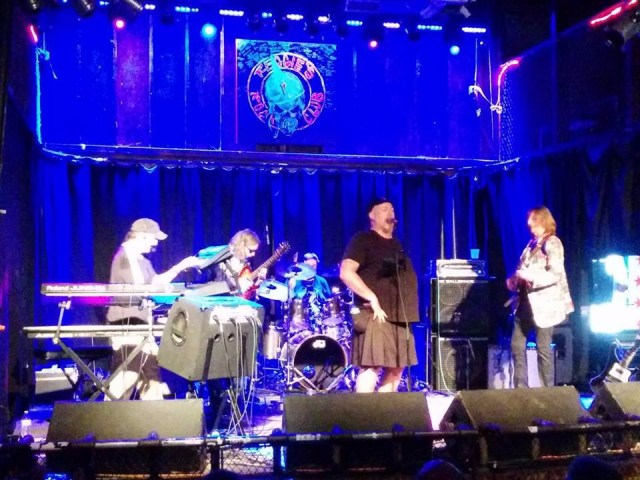
As I entered Reggie’s Rock Club on the final day of Progtoberfest, the Virginia band Kinetic Element were winding up their set.  From the merch stand (where Discipline’s Matthew Parmenter was kind enough to make change for me as I bought CDs), their take on classic prog, spearheaded by keyboardist Mike Visaggio, sounded accomplished and intriguing; I wished I could have arrived earlier and heard more.  Plus, you gotta love a band with a lead singer in a kilt!  (Props to Progtoberfest’s Facebook group admin Kris McCoy for the picture below.)

Kinetic Element

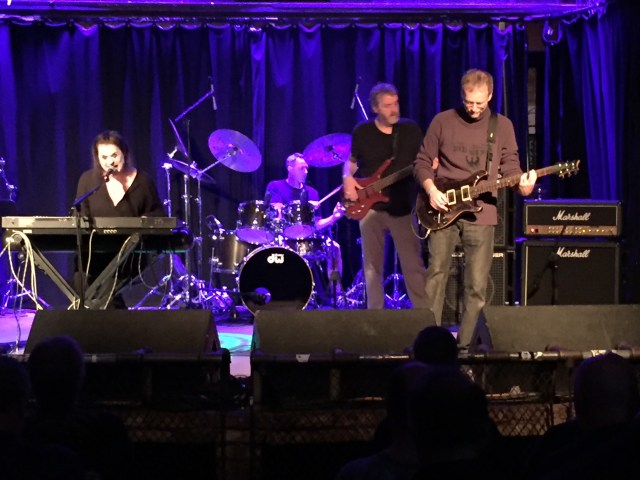
The second high point of the festival for me followed, as fellow Detroiters Discipline held the Rock Club spellbound with their baleful, epic-length psychodramas. Matthew Parmenter reeled in the crowd with his declamatory vocals and emotional range; from there, the quartet’s mesmerizing instrumental interplay kept them riveted. The well-earned standing ovation at the end felt oddly cathartic, as if the audience was waking from a clinging nightmare, blinking at the newly-rediscovered daylight — even while rain clouds and colder temperatures rolled in outside.

IMG_4264

Continue reading “Progtoberfest: Day 3 Report”

Progtoberfest: Day 2 Report

by Rick Krueger

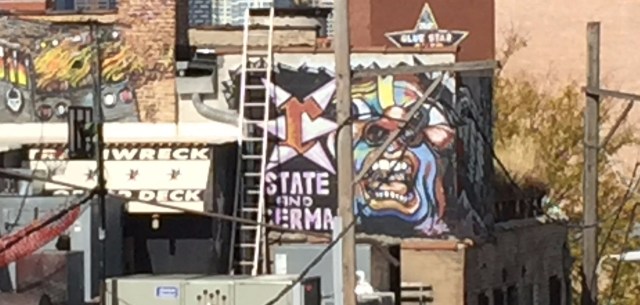
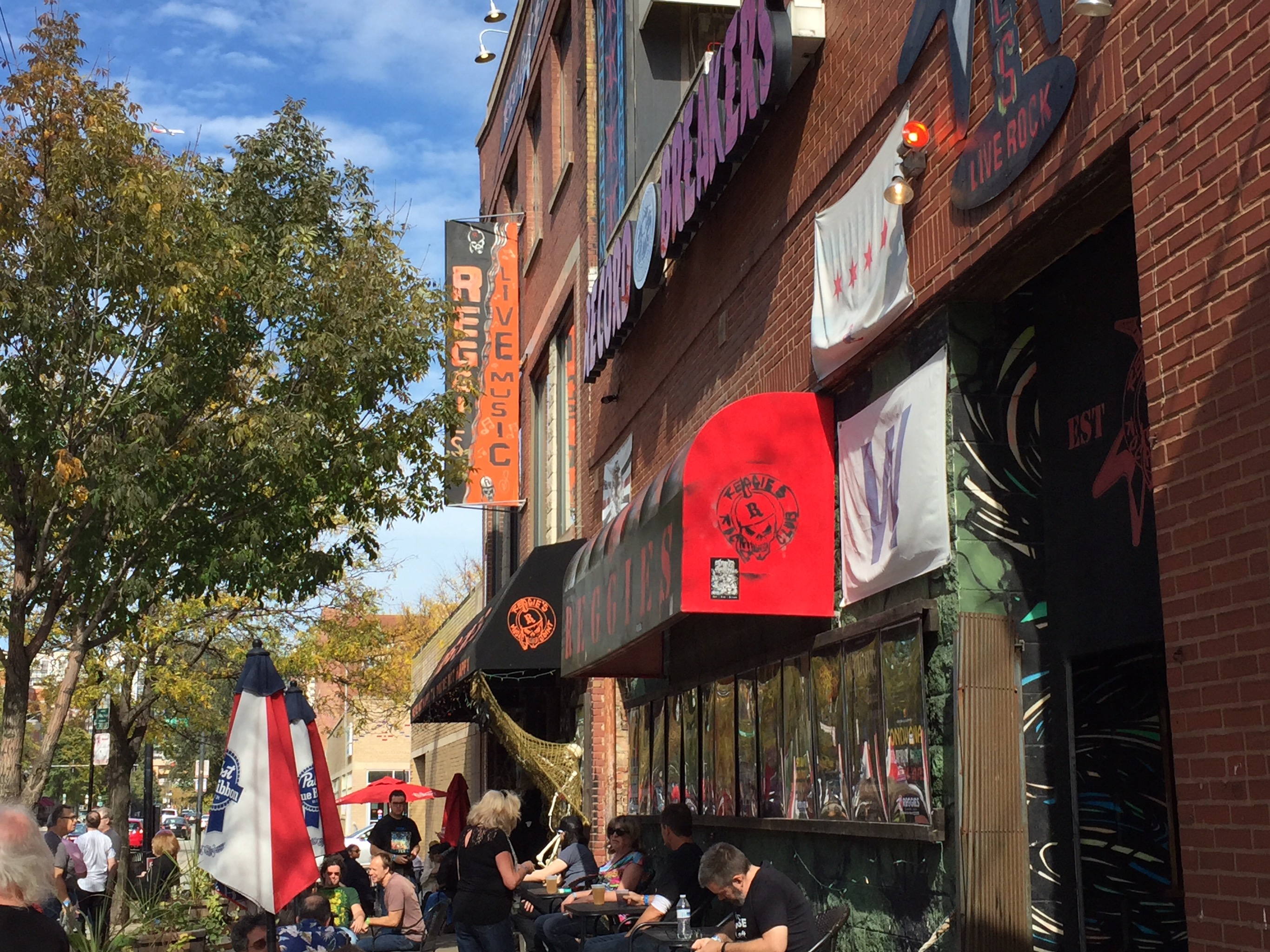
The sun shone warmly again on the south side of Chicago as Progtoberfest III kicked off its second day.  Taking in the view as I exited the ‘L’, it was amusing and welcoming to see a familiar screaming face painted on the exterior of Reggie’s:

IMG_4097

Hoping to get Alphonso Johnson’s and Chester Thompson’s autographs in the VIP Lounge the night before, I’d struck up a delightful conversation with members of the North Carolina Genesis tribute band ABACAB.  In 2016, festival organizer Kevin Pollack had given them “homework” for this year: to play all of Genesis’ live album Seconds Out on the 40th anniversary of its release.  You could tell the band was nervous (they focus on 1980s Genesis to get bookings, so they had to learn half the album in the past year) but also absolutely thrilled to bring it to the Rock Club stage.  And on Saturday afternoon, they nailed it, to the joy of an enthusiastic, supportive crowd and rave reviews from other acts.  They’re already planning to return to Reggie’s in April as a headliner, and for Progtoberfest IV next October.  Check out why below:

Continue reading “Progtoberfest: Day 2 Report”

Progtoberfest: Day 1 Report

by Rick Krueger

On Friday, October 20, hundreds of dedicated proggers converged on Chicago from around the country — and even from across the globe.  The location: Reggie’s Rock Club & Music Joint on the Near South Side, only two blocks away from the former Chess Records, the birthplace of great discs by Muddy Waters, Chuck Berry, The Rolling Stones and countless others.

Reggie’s has two main rooms, both dedicated to Progtoberfest this weekend.  The Rock Club is designed for concerts, with a raised stage, a main floor, an upper level mezzanine —and a wire fence decor motif throughout.  The Music Joint has a tinier stage tucked into the back of a narrow bar and grill.  This weekend, merch tables were crammed into every inch remaining on the main floor, and patrons less interested in the music (or needing a break from the density of the sound) took advantage of Friday and Saturday’s warm weather to eat and drink at sidewalk tables.  An upstairs space that held a record store until recently was turned into the VIP/Meet and Greet lounge for the duration.


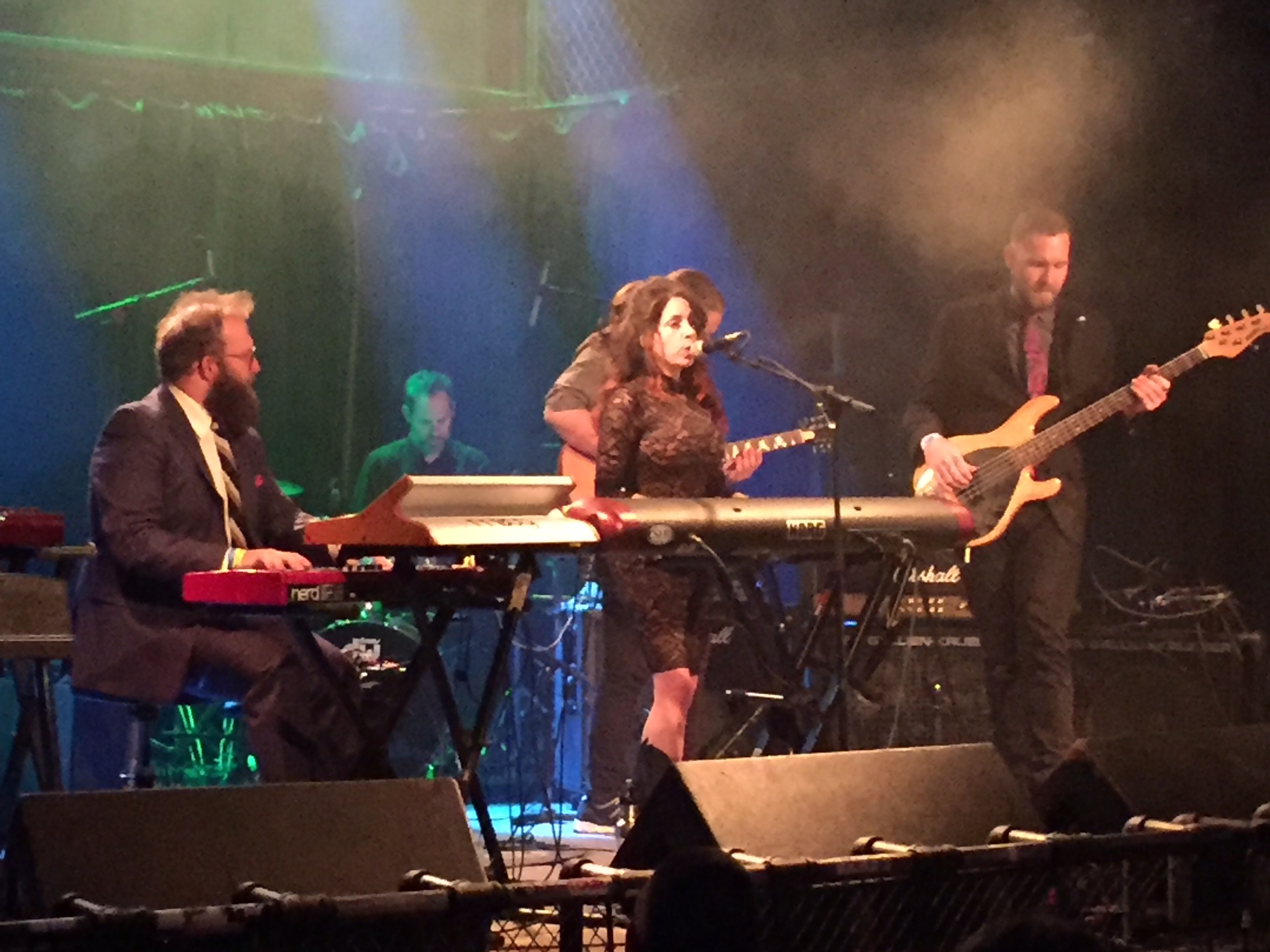
Due to the usual complications of traveling to and around Chicago as the weekend starts, I got to my spot in the Rock Club just as Schooltree was taking the stage.  With only an hour on the schedule, they powered through highlights of their Heterotopia album, condensing the narrative to zoom in on its main character Suzi.  The set left no doubt that Lainey Schooltree is a major talent; her songwriting chops, keyboard skills and vocal versatility all came through loud and clear, grabbing and holding the audience’s attention.  The rest of the band bopped along brilliantly too, with the ebullient energy of Peter Danilchuk on organ and synth leading the way.


The crowd for Schooltree was solid, but hometown heroes District 97 were the first group to pack the place, filling both seats and standing room on the main floor.   The band took no prisoners, blasting right into riff-heavy highlights from their three albums that showed off every player’s monster chops.  Soaring above the din, Leslie Hunt pulled in the crowd with her astonishing vocal power and range.  New songs were mixed in that sent the audience head-banging and prog-pogoing with abandon.

Continue reading “Progtoberfest: Day 1 Report”

The Albums that Changed My Life: #6, Songs of Travel & On Wenlock Edge by Ralph Vaughan Williams

by Rick Krueger

In our casually audiophile age of 96 kHz/24 bit BluRays and 180-gram virgin vinyl, it may be hard to comprehend what a difference digital recording made when it came of age in the late 1970s.   I remember cueing up Keith Jarrett’s Concerts: Bregenz, München and being blown away as much by the background silence, the clarity and depth of the piano sound, and the extended dynamic range as by Jarrett’s freewheeling improvisations.  The compact disc was still in the future — but at that point, after suffering through muddy, distorted mass-produced pressings of way too many albums, it seemed like that future was all upside.

Classical record companies were the most fervent backers of digital recording from the beginning; the prospect of “perfect sound forever” made both corporate executives and their target demographic (single men with money or credit to burn — surprise!) salivate in anticipated ecstasy.  Certainly, as I built a classical collection during graduate school, the word “Digital” on the front cover of a record always counted in its favor.

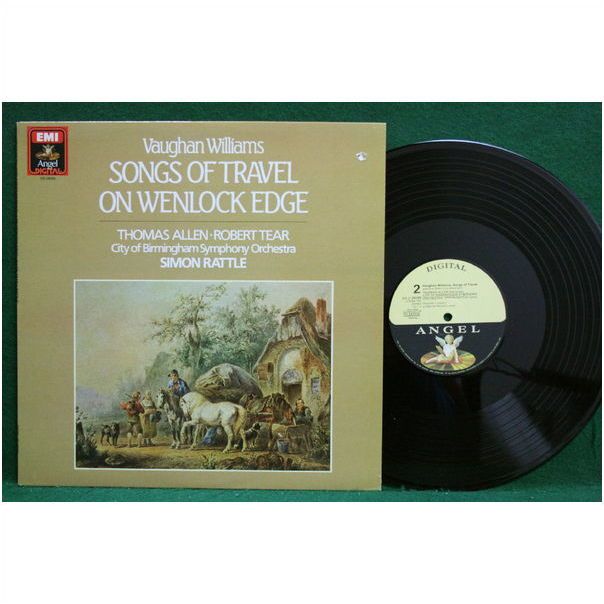
That’s one reason I picked up the album pictured above.  Another reason: I’d already heard some fine Mahler recordings by the young conductor Simon Rattle, precociously helming the scrappy City of Birmingham Symphony Orchestra.  And there was one more burning question: was Benjamin Britten right about Ralph Vaughan Williams?

Continue reading “The Albums that Changed My Life: #6, Songs of Travel & On Wenlock Edge by Ralph Vaughan Williams”

Gord Downie, 1964-2017

by Rick Krueger

In August of 2016, my wife and I vacationed in Stratford, Ontario — one of our favorite places to visit, due to its internationally acclaimed theater festival and its lovely riverside parks.  Picking up local classic rock stations as we crossed into Canada, I noticed lots of talk about The Tragically Hip’s upcoming concerts in London and Toronto.

I’d heard of The Hip, but never got into them — partially because I’d moved away from metro Detroit, where good Canadian bands could easily score airplay and well-attended shows.   I was surprised at the amount of hubbub around this tour; it was only after we returned to the States that I learned the reason for the buzz.

The Hip’s lead singer and lyricist, Gord Downie, had been diagnosed with glioblastoma multiforme, the worst kind of brain cancer, late in 2015.  After finishing the 2016 album Man Machine Poem, the band decided on one last go-round of Canada’s hockey rinks, winding up in their Ontario hometown of Kingston in front of 6,700 fans in the local arena, thousands more on the surrounding streets, and a national audience on CBC.

Honestly, the music of The Tragically Hip is little more than well-executed, basic rock — lots of Rolling Stones and John Mellencamp grooves ranging from competently shambolic to tightly locked in.  The secret sauce was Downie’s surreal, shamanistic lyrics.  Stirring together a underdog outlook, the perspective of Canadians from the “great wide open” and random streams of consciousness (sometimes improvised live as the band rocked on — sperm whales were a recurring theme), they were fascinating precisely because they were sharp yet ambiguous, complex — even openly, defiantly confused.  At their best (in my view, on the album Fully Completely and the compilation Yer Favourites) the group was pretty compelling.

Gord Downie passed away last night at the age of 53.  To say he leaves behind a grateful nation is not an exaggeration.  You can see and hear what Geddy Lee had to say about The Hip last year as the farewell tour wound down here, and read a well-wrought appreciation of Downie’s take on Canadian identity here.  Banger Films (the folks responsible for the Rush documentary Beyond the Lighted Stage) have completed a film about The Hip’s final days, Long Time Running; it’ll be streamed on Netflix starting November 26.  And check out the Yer Favourites compilation below.  I especially recommend “Fiddler’s Green,” Fifty-Mission Cap,” “Courage (for Hugh MacLennan),” “Fireworks” — and if you only have time for one track, the fierce “At the Hundredth Meridian.” 

“If I die of Vanity, promise me, promise me
That if they bury me some place I don’t want to be
That you’ll dig me up and transport me
Unceremoniously away from the swollen city breeze, garbage bag trees
Whispers of disease, and acts of enormity
And lower me slowly, sadly, and properly
Get Ry Cooder to sing my eulogy …”


Rick’s Retroarchy: Tom Petty & the Heartbreakers, The Live Anthology

by Rick Krueger

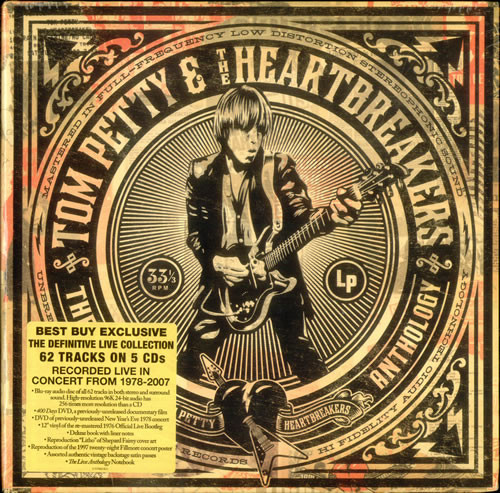
When I heard that Tom Petty had died, I dug into my Closet Full of Box Sets and pulled out this baby.  Released in 2009, it came in two versions: a four-CD set with 48 tracks (still available at a super-bargain price) and the Best Buy-only version with an extra CD, one of the first 96K/24 bit audio Blu-rays that included all the songs, two DVDs (a 1978 concert and a 1994 documentary), a replica of a 4-song vinyl promo EP from 1976, various and sundry tchotchkes, and a ludicrous price tag.  Guess which one I bought?

Listening to The Live Anthology again over the past week, Petty’s songwriting struck me again as solid, unpretentious and down to earth; it hasn’t resonated that strongly in my life, but that doesn’t mean it isn’t worthwhile and well done.  A lot of my favorite moments on the set come when TP quiets down and pours himself into the forms of classic country and folk.  Songs like “Wildflowers” (which feels like an obscure Carter Family tune), the beautiful, hushed lullaby “Alright for Now” (the closer for the four-CD set), and the agrarian hymn “Southern Accents” skip overblown, Springsteen-style myth-making and just communicate — plain-spoken, deeply felt, lovely.

And then there are the Heartbreakers.  Back in my college days, I used to read Stereo Review regularly, mostly for Steve Simels’ rock reviews — agree or disagree, they were always opinionated and entertaining.  Truer words may have never been written than Simels’ New Jersey-style summation of TP & the HBs’ work on Damn the Torpedoes: “Dese guys is good.”  On the evidence of The Live Anthology, they stayed that way for more than 30 years.  Always in sync, almost telepathic at times, Petty, guitarist Mike Campbell and keyboardist Benmont Tench weave elegant, immersive webs of rock, blues, and R & B over a variety of unflappable, grooving rhythm sections.  Whether it’s the Byrdsy power pop of “I Need to Know,” “Even the Losers” and “The Waiting,” mega-hits a la “Refugee,” “Runnin’ Down a Dream” and “Free Fallin’,”  extended jams like “It’s Good to Be King” and the previously unreleased “Melinda,” or a head-spinning range of cover tunes (a surf instrumental version of “Goldfinger”?  Booker T & the MGs’ “Green Onions”?  Van Morrison, Conway Twitty and the Grateful Dead?), the band always sounds lean and soulful, consistently in the moment, listening for the inherent magic and then doing what’s needed to make it happen.

For a while in the late 1990s and early 2000s, Petty rented out our local arena to get ready for his US tours.  Now I kind of regret that the closest I got to hearing him live was serving beer at one of the concession stands for his 2008 Grand Rapids show.  (There are soundproofed plastic flaps over the arena entrances; plus, I served a lot of beer that night.)   For people like me who missed the chance, The Live Anthology is an eloquent testimony to what the man and his band could do at their best.  Listen to the complete deluxe version here:


Concert Review: Carl Palmer and ELP’s Legacy

Carl Palmer’s ELP Legacy, live at the Park Theatre, Holland, Michigan, September 30, 2017.

by Rick Krueger

What does it feel like to be the last man standing?  Other than a few heartfelt but brief words between pieces, Carl Palmer didn’t say much about his late bandmates Keith Emerson and Greg Lake last night.  Instead, he let the music do the talking, digging deeper into the unique way he’s presented the work of ELP for the last 15 years, revealing just how audacious this repertoire really is.

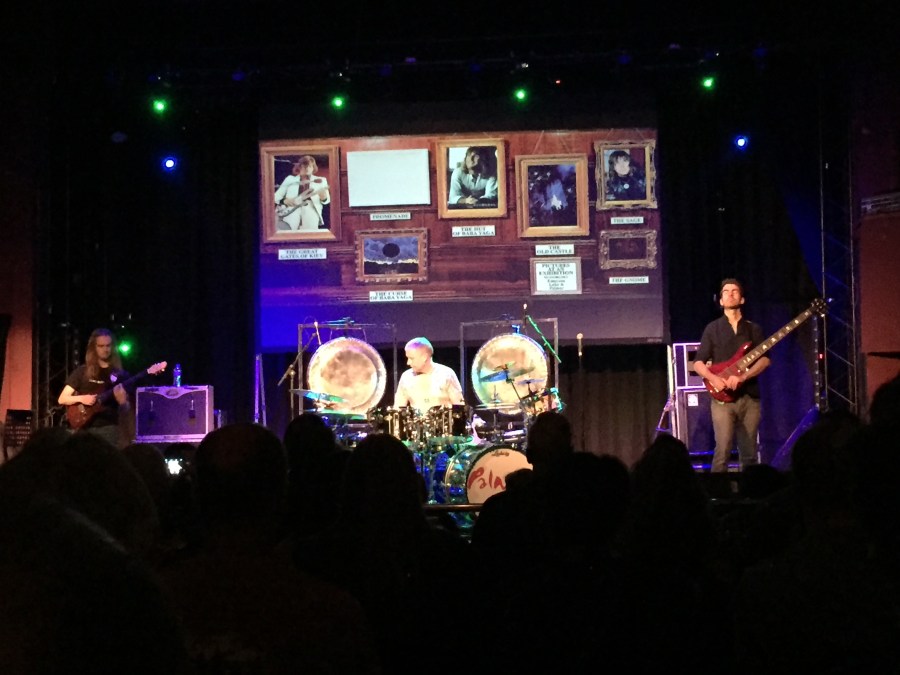
Palmer, guitarist Paul Bielatowicz and bass/Stick player Simon Fitzpatrick crammed the stage of this tiny 130-year-old theater, knocking back the 200-strong audience with their opening take on Aaron Copland’s “Hoedown.”   All the strong points of ELP’s barnstorming arrangement were note-perfect — the wailing synth glides, the driven organ flourishes, the burbling low-end work, the tongue-in-cheek folk-tune quotes — stylishly reshaped into fretboard fireworks, delightedly sailing over Palmer’s busy, irresistible drive.  Given that neoclassical shredmeisters like Yngwie Malmsteen acknowledged their debt to Emerson & Palmer’s virtuosity back in the 1980s, the approach makes an odd kind of sense — defiantly different than expectations, but coming from an intriguing angle that made for some cool surprises.

The biggest surprise was how adaptable so much of the ELP catalog turned out to be.  Focusing on music from the debut album, Trilogy and Brain Salad Surgery, along with tributes to Emerson’s work in the Nice and Lake’s contribution to King Crimson, the first set ran a broad gamut of moods.  It certainly helped to have players of Bielatowicz & Fitzpatrick’s caliber — for example, as the guitarist took the lyrical piano licks of “Trilogy’s” opening, the bassist “sang” Lake’s vocal lines on his high strings with precision and passion.  “Jerusalem” flipped their roles, Bielatowicz grabbing the vocal and organ parts, Fitzpatrick simultaneously laying down bass lines and synthesizer flourishes on his Stick.  Each of them also got a chance to shine by themselves: Fitzpatrick duetted with Palmer on a stirring “Take A Pebble;” Bielatowicz closed the first half with a meditative solo version of Debussy’s “Clair de lune.”  Palmer matched the mood throughout, always attentive and focused whether banging out intense grooves or making his cymbals sing.

For the second half Palmer & company wheeled out the big guns: the full-length ELP arrangement of Mussorgsky’s Pictures at an Exhibition, with the trio obviously fired up by the stop and start rhythms of “Promenade” and “The Gnome,” the muted menace of “The Sage” (illustrated by video screen photos of Rasputin?), the rollercoaster moods of “The Old Castle/Blues Variation” (complete with Bill Evans/Jim Hall quotes) & “The Hut/Curse of Baba Yaga,” and the grandeur of “The Great Gate of Kiev.”  “Fanfare for the Common Man” followed, climaxed by Palmer’s exploding into his long-awaited epic-length solo.
IMG_3888

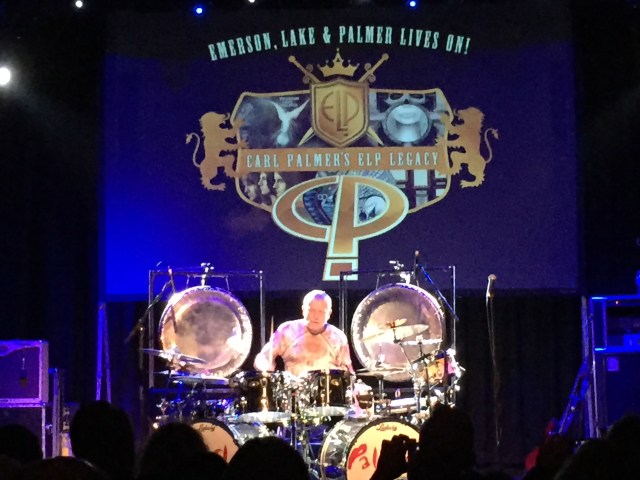
At 67, the man is still overwhelming on his instrument, a monster technician and an unstoppable force of nature, moving from brain-melting polyrhythms to playful showmanship on his ride cymbal to giving his twin gongs the whacking of their lives.  With Neil Peart and Bill Bruford in retirement, I’d argue there is no more amazing and impressive rock drummer onstage today (though Gavin Harrison is right up there).   With a speedy, whimsically crazed encore of “Nutrocker,” Palmer and his sidekicks took their bows, promptly retiring to the merch table for greetings, autographs and fist bumps (pre-concert announcement: “Please do not shake Carl’s hand or give him a high five”).  All in all, great value for money, an unmissable chance to see a legend from 50 feet away, and an evening of serious fun.
IMG_3896

Setlist:

Hoedown
Peter Gunn
Karn Evil 9, First Impression, Part Two
The Barbarian
Trilogy
America
Knife-Edge
21st Century Schizoid Man
Jerusalem
Take a Pebble (Fitzpatrick/Palmer duet)
Lucky Man
Clair de lune (Bielatowicz solo)

Carmina Burana/Rondo
Pictures at an Exhibition
Fanfare for the Common Man with drum solo

Nutrocker


Marillion Live in the USA February 2018

by Rick Krueger

Hot on the heels of next year’s Cruise to the Edge on February 3-8, Marillion will mount the second United States leg of their ongoing FEAR tour.  This time around, they’ll play towns and cities in the South, Northeast and Midwest they haven’t visited for a while.  Dates are as follows:


Friday 9 February               The Plaza Live Orlando, FL
Saturday 10 February         Variety Playhouse Atlanta, GA
Monday 12 February          Carolina Theatre Durham, NC
Tuesday 13 February          Palace Theatre Greensburg, PA
Thursday 15 February        Town Ballroom Buffalo, NY

Friday 16 February             Royal Oak Music Theatre, Royal Oak, MI

Sunday 18 February           20 Monroe Live Grand Rapids, MI
Monday 19 February         The Arcada Theatre St Charles, IL
Wednesday 21 February   Granada Theater Dallas, TX


I can vouch for the Royal Oak Music Theatre in metro Detroit (where I’ve seen Todd Rundgren and Steve Hackett) and the Arcada Theatre in west Chicagoland (where I’ve seen Neal Morse with District 97 opening) as fine, welcoming places for this kind of show.  But I’m especially jazzed that the boys are coming to the sleek new venue 20 Monroe Live in Grand Rapids, my home town.  Steve Hackett brought his terrific Genesis Revisited with Hackett Classics tour there this past February; it turned out to be a great spot for a prog show.  And this booking answers the fervent wishes and prayers of more Marillionaires than you might think!

Owing to a long-standing communal love of prog and the dedicated advocacy of local radio legend Aris Hampers, there’s been an eager Marillion fanbase here ever since they opened for Utopia at the Lowell Showboat, touring Script for A Jester’s Tear.  By the late 1980s, the band was regularly filling DeVos Hall, Grand Rapids’ mid-size auditorium.  When I moved here in 1990, I was pleasantly shocked to hear “Kayleigh,” “Lavender” and even “Incommunicado” regularly on drive-time rock radio!  And the enthusiasm continued after Steve Hogarth replaced Fish; his The Invisible Man: Diaries 1991-1997 recounts a memorable GR weekend of packed in-store appearances, dinner and entertainment with Hampers, and a sold-out club show (yep, I was there) while touring Holidays in Eden.

As Marillion’s profile faded in the US, their visits here petered out as well; the last time the boys played Grand Rapids was on the crowd-funded tour for This Strange Engine.  From the buzz on the band’s North American Fan page on Facebook, already building since this morning’s announcement, GR fans will be more than ready to give the band (along with fans from all over the country, the continent and the world) a warm, grateful welcome.  If Marillion isn’t playing near you on this tour, feel free to come visit us next February!  (Yes, it’ll probably be cold — but between the indoor skywalks that run for nearly a mile and the unbelievable density of craft breweries, brewpubs & craft distilleries downtown, there will be ways for everyone to stay warm.)

Tickets for the tour go on sale to the general public on Friday, October 6.  Venue presales may start before then; the Facebook page will be the best place to get info, presale codes, etc.


Bob Dylan, The Bootleg Series: Trouble No More, Volume 13 / 1979-1981

by Rick Krueger

I’m not a hardcore Bob Dylan fan, but I admire quite a bit of his work: the early folk music, leading into the groundbreaking electric stuff (basically what’s in The Original Mono Recordings box set); Blood on the Tracks and Desire; the recent run of “old guy plays the blues” albums that started with Time Out of Mind.  I’m also grateful that Dylan’s music has midwifed some of the most resonant work by highbrow rock writers like Greil Marcus, Clinton Heylin and Michael Gray, along with poet Christopher Ricks’ masterful Dylan’s Visions of Sin.

To top all that off, Dylan’s Bootleg Series is, in my mind, one of the best-curated rarities/reissue series from a major artist.  Every volume has been at least an interesting listen for me, and I consider the last two releases, The Basement Tapes Complete and The Cutting Edge 1965-1966 (as well as Volume 4, The ‘Royal Albert Hall’ Concert) downright essential.

I also remember, as a college freshman, reading Jann Wenner’s review of Dylan’s Slow Train Coming in Rolling Stone.  Wenner knotted himself into a human pretzel trying to reconcile the free-spirited, hippie picture of Dylan he had built up for himself with a new album of — shudder — “born-again Christian” music.  It was unintentionally hilarious.

I’d argue that Slow Train Coming was really more of an “lost Old Testament prophet” kind of record — and thus in line with Dylan’s long-term aesthetic.  It wasn’t a masterpiece, but it was quite good — and there were occasional fine songs on the other “Christian” albums, especially “Every Grain of Sand” from Shot of Love.

Thus, Trouble No More: The Bootleg Series, Volume 13 /1979-1981 is definitely on my want list.  8 CDs plus 1 DVD of live and unreleased studio material, to be issued (like King Crimson’s Sailor’s Tales) on my birthday, November 3.  I really need to find some long-lost rich relatives!

More info here.