Rick’s Quick Takes for May

If there’s a theme this month, it might be “musicians going for it” — whatever the era, whatever the wisdom they assimilate along the way. Another common factor: all of these are strong contenders for my end of the year favorites list! As usual, purchasing links are embedded in each artist/title listing; where available, album playlists or samples follow each review.

Bill Bruford, Making a Song and Dance: completists may go pale, but this isn’t another massive “collect ’em all” box a la Bruford: Seems Like A Lifetime Ago or Earthworks Complete. Rather, it’s a judiciously curated, career-spanning set targeted at a wider market and chosen by the man himself. Organized to reflect the creative roles Bruford posited for expert drummers in his doctoral dissertation Uncharted, discs 1 and 2 cover his years as a “collaborator” in ongoing bands, (mostly Yes and King Crimson), while discs 3 and 4 lay out his qualifications as a jazz-oriented “composing leader” in the above bands and other occasional combos. But if your listening experience is like mine, discs 5 (“The Special Guest”) and 6 (“The Improviser”) will provide the freshest material and perhaps the niftiest surprises; Bruford sits in with everyone from folk-rock iconoclast Roy Harper to speed-fusion guitarist Al DiMeola to the Buddy Rich Big Band, then contributes equal amounts of chops and space to music conjured from thin air with (among others) daringly lateral pianists Patrick Moraz and Michael Borstlap. When the man said he retired from performance because he couldn’t think of anything more to play, he wasn’t kidding — based on the evidence collected here, he’d already done it all. Not only does Making A Song and Dance give an ample picture of Bruford’s stylistic range, it brilliantly charts the growth of an essential artist down the decades.

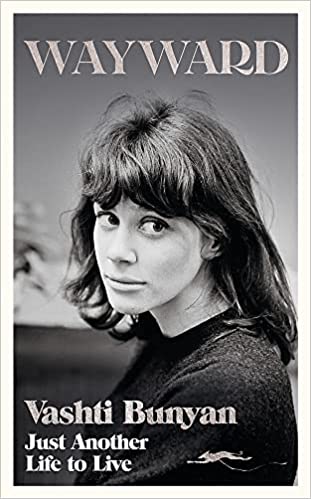
Vashti Bunyan, Wayward – Just Another Life to Live: indirectly named after a Biblical queen, Vashti Bunyan’s thirst for meaning led from a middle-class childhood through Oxford art school to a London fling as a wannabe pop chanteuse (her debut single was a Mick Jagger/Keith Richards offcut). Adrift in the aftermath, Bunyan seized what seemed a golden opportunity: a journey with her paramour from the Big Smoke to a new life in the Hebrides, undertaken by horse-drawn wagon. That unlikely odyssey forms the heart of this evocative, compelling narrative; laboriously heading north through the heart of England, Bunyan gains understanding of the natural world, of the extremes of human kindness and cruelty — and of her own animating passions, her sturdy inner core. She also writes the deceptively simple, uncommonly rich songs that became her lovely 1970 album Just Another Diamond Day. The fulfillment (and dissolution) of Bunyan’s quest, her immersion in “lookaftering” children and stepchildren, and her artistry’s rebirth when the Internet rediscovered her music in the early 2000s provide the epilogue to this tale of a wandering soul’s coming to terms with the beauty and the beastliness of life. Highly recommended.

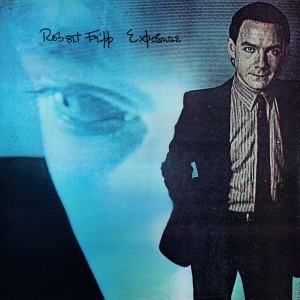
Robert Fripp, Exposure: After King Crimson “ceased to exist” in 1974, Fripp withdrew from the music industry, pursuing a spiritual sabbatical. Reinvigorated, he dipped his toe back in the water via guest shots with David Bowie and Blondie, then moved to New York City to get serious about returning to active service. Exposure was Fripp’s calling card for his “Drive to 1981,” self-described as research and development for what might come next; along with nods to his current production work with Peter Gabriel and Daryl Hall, ghosts of Crimson past (the metallic “Breathless”) and future (“NY3,” with ‘found vocals’ from Fripp’s argumentative neighbors draped over cyclical odd-time riffs) haunt the album. But there’s also New Wave 12-bar blues (“You Burn Me Up I’m A Cigarette,” with tongue-twister lyrics gamely tackled by Hall), furious punk energy (“Disengage,” featuring Peter Hammill’s improvised, gleefully atonal vocals cutting across Fripp’s proto-shred guitar and Phil Collins’ blunt, brutal drumming), and surprising amounts of gentle lyricism (Hall on “North Star”, Terre Roche on “Mary”, Gabriel on a gorgeous solo piano “Here Comes the Flood”). What binds these disparate tracks together is the innovation of Frippertronics — the solo guitar looping set-up that Fripp then took to concert halls, dance clubs, restaurants and record stores on a low-budget promotional tour — weaving in, out, between and behind it all to unify the album and give it a futuristic impetus. As strange and compelling a beast as any Fripp has brought us over the years, Exposure is a wild, worthwhile listen in and of itself, while providing distinctive previews of coming attractions. The new “Fourth Edition” features a discreetly energizing remix by Steven Wilson, plus previous versions (including an unreleased master with Hall as the primary vocalist) on a bonus DVD. For those with deeper pockets, the 32-disc box set Exposures exhaustively archives Fripp’s studio and live work from 1979-1981 — including the Frippertronics concert at Peaches Records in Detroit that completely exploded my own musical boundaries. (More of this boundary-breaking beauty can be found on the new release of 1981 Frippertronics, Washington Square Church.)

Continue reading “Rick’s Quick Takes for May”

Andy Tillison: The Progarchy Interview

The latest album from that stalwart institution The Tangent, Songs from the Hard Shoulder, will be released — or perhaps I should say unleashed — on June 10th. Boasting three extended tracks (“The Changes,” “GPS Vultures” and “The Lady Tied to the Lamp Post”), the short, sharp retro-anthem “Wasted Soul” and a head-turning cover of UK’s “In the Dead of Night”, it’s a brilliant collection from a first-class band at the peak of its powers. And beyond the formidable talents of guitarist Luke Machin, woodwind specialist Theo Travis, bassist Jonas Reingold and drummer Steve Roberts, the group’s remarkable collaborative chemistry is firmly rooted in the eclectic musical appetite and deeply humane vision of its founder, keyboardist and singer Andy Tillison.

It was serious fun for me to spend an hour talking with Andy, going into detail about the album — including some of the real life experiences behind the songs — and heading down other delightful rabbit trails besides: why he goes out of his way to hear other groups at prog festivals, our respective experiences of radio in our formative days, his favorite band (which may surprise you), and much, much more! Throughout, Andy answered every question candidly and put up with my schoolboy goofs/fanatical excesses, exuding his wonderfully unique mixture of curiosity, passionate commitment and dry humor. I hope you enjoy the experience as much as I did! The video is immediately below, with a complete transcript of the interview following (and continuing over the jump). But why were we both looking to our right??

Alright!  Well, first of all, congratulations on the new Tangent album!    I’ve heard it and I really enjoy it.  I’ve been a fan since the Le Sacre [du Travail] album, and have very much enjoyed – I saw you live in 2017 actually, in Chicago.

Right, yeah!  That was a great night; really enjoyed that one!  Some good experiences that night for me; I’ll never forget that one.

And that was a great weekend overall.

It was, yes.

To put you on the spot right away, if you had to describe Songs from the Hard Shoulder to someone who had never heard The Tangent, what kind of a pitch would you make?  

[Laughs] I would say it’s a difficult album, actually!  We haven’t made this as an easy sort of pigeonhole-able album.  Obviously, we do make albums where we try to put our case and make a beautifully constructed record.  But on this one – we just did what we wanted to do.  And we do that from time to time, you know?  We don’t always try to write to fit the need; we sometimes write from the point of view of what we want to write!  And we ended up with this slightly imbalanced record; it’s got three epic tracks and one short one! [Laughs]  How many other albums are quite like that?

And of course, the fact that all the three main tracks are completely different from one another!  I’ve been saying in other interviews that it’s almost like three different bands made three different tracks! [Both laugh].  The first one being very much like The Tangent, the second being a jazz-fusion band, the third one being dark and electronica influenced.  And then a Tamla-Motown song! 

I think it’s probably best to understand what the band have been doing before!  This is not necessarily a first album to hear by a band; it’s one of a sequence.

It works better in context is what you’re saying.

I think it’s a contextual album.  To be fair, if you’re looking at classic progressive bands of the past, most people who came into the world of Yes did not enter from the point of view of Tales from Topographic Oceans.  They came in with Fragile or The Yes Album or maybe even Close to the Edge is where they came in.  I say “maybe even Close to the Edge” cause that’s where I came in!

And the same with Genesis: most people who came in didn’t arrive with The Lamb Lies Down on Broadway; they came in at some other point.  And the sort of deeper albums are the ones they go back to and help develop their relationship with a group.

OK!  I think that what I heard in your pitch is that it’s very much “you guys” – the band that you are right now.

Yeah!

So, definitely not a snapshot, more like a short video at least!  [Both laugh]

I think that being in a progressive rock band, if you’re serious about it, and this is more than just a commercial label you use to make things more convenient for markets – you have to be able to make the developments, to take the risks, to do the non-commercial things!  Because that’s what the audience wants of us!  Sure, everybody likes Asia, for example, but they always want something more meaty than that, if you get what I’m saying.  They want something that’s a bit more out there, more adventurous.

So, the fact is that this great progressive arc can take in everything from pop songs, rock songs, pop-rock songs if you like, through to massive great big sinfonias!  Everything from an acoustic guitar being bashed on the stage by Peter Hammill right through to massive symphony orchestras.  There’s so much available to us in the power – every so often you have to use it!  And this means on this occasion, we didn’t write much short-form material for this record.

So that kind of answers my next question, because as you mentioned, three of the four tracks on the main album plus the bonus track are all over 15 minutes; they’re definitely what you would call “of epic length.”  Did you feel like, in terms of the songs with lyrics, that the subject matter demanded that?  How do you develop these longer pieces?

I think that it’s just something that happened.  To me, I grew up listening to rock music, but the first rock music I heard was long! [Laughs] 

OK!

I was listening to Yes age 12, Van der Graaf Generator age 12, Genesis 14 perhaps.  Picking up on Pink Floyd and finding that, because of my history in classical music, I tended to be more interested in the longer pieces.  Because the classical upbringing I’d had – and I’m talking about classical listening, because there was so much music in my house when I was a boy.  And so, I’d get to hear all this stuff!

Consequently, when I first heard things like the Beatles, I always used to be disappointed that the songs were over so quickly.  I thought, “I was just getting into it, what’s happened?”  [Both laugh]  So it just seemed a natural way.  In me it’s writing to how I always like listening to music!  I like music that goes on for a bit.

[Laughs] As I’ve said, many times, “this music is not epic at all!”  20 minutes is not epic at all; it’s an episode of Friends!

Continue reading “Andy Tillison: The Progarchy Interview”

Steve Hackett in Concert: From Spectral Surrender to Seconds Out

Steve Hackett — Seconds Out + More, GLC Live at 20 Monroe, Grand Rapids, Michigan, May 4, 2022

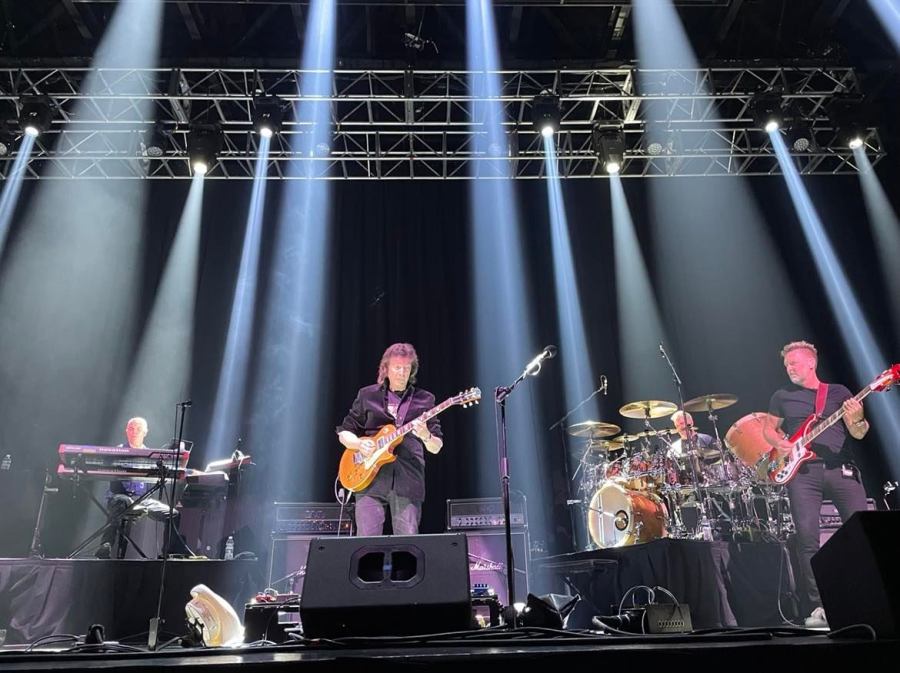
Once again, Bryan Morey has beaten me to the punch with a live review of Steve Hackett. (My excuse this time: he had ten days head start on me.) Like Bryan, I was impressed with the energy and delight Hackett and his merry band projected as he returned to my hometown venue for the third time. “The weekend starts here!” he crowed to the capacity crowd (quoting the classic BBC-TV pop show Ready Steady Go) and boy, did he make good on that pitch! Hopefully without repeating Bryan’s many excellent points, a few more comments follow . . .

While I was delighted when I heard that Seconds Out would be the focus of Hackett’s show, I wondered how well it would work in concert — because Genesis never played this exact setlist in 1977! The original live album is a construct, with the music re-sequenced for maximum impact over four sides of vinyl (that year’s encore, “The Lamb Lies Down on Broadway/The Musical Box” was moved forward to the end of side two), excerpted from onstage medleys (“Afterglow” immediately followed “In That Quiet Earth” back then, the way I heard Hackett perform it in 2013) and even flown in from the previous tour (“Cinema Show” had been recorded in 1976 and shelved).

But arguably, those interventions are part of why this album made such an impact on both Genesis fans and the broader public over the years; as it’s endured, it’s gained stature as a balanced, thorough survey of the band’s proggiest era, with an unhurried pace and flow that gradually gains in both momentum and excitement. Which explains why the whole thing did work live, this time as a multi-course banquet of Hackett’s finest hours in his defining group. And in that light, the whirlwind trawl of Hackett’s solo career that kicked things off, informed by both the poised classicism of 1979’s Spectral Mornings and the manic energy of two tracks from last fall’s Surrender to Silence, served as the perfect appetizer.

But all that’s conceptual; what about the execution? Briefly, this was the most free and most daring that Hackett and his supporting cast have been in the four times I’ve seen him. Rather than reverentially presenting the material as if fixed in stone, the players took this music by storm; throughout the night the band consistently pushed Hackett musically — and he consistently delivered.

Continue reading “Steve Hackett in Concert: From Spectral Surrender to Seconds Out”

Rick’s Quick Takes for April

Short, sharp shocks this month: all albums and EPs reviewed below come in under the old school LP limit of 45 minutes! Purchasing links are embedded in each artist/title listing; album playlists or samples follow each review.

Entransient, Ghosts in the Halls: My hometown’s very own prog-metal band lays out the cards for all to see on their Facebook page: “Melodic neo/post-prog rock from Michigan. Influenced by Anathema, Alcest, and Porcupine Tree.” The good news is that guitarists Matt Schrauben & Doug Murray, bassist Nick Hagen, drummer Jeremy Hyde and vocalist/keyboardist Scott Murray refine those influences into a distinctive blend, marked by rich atmosphere and a towering core sound. The opening epic “Parasite” grabs hold immediately with its games of acoustic/electric musical chairs; “Synergize” and “Last Strawman” drive forward without mercy, as Murray testifies fiercely over bare grooves and fuzzed chords alike. More reflective moments like the title track, “Misplaced” and “Where the Shadows Lie” dial down the tempos and the lyrical angst while keeping the edge intact as the band prowls lush, more aerated soundscapes. (Kudos for Hagen’s mixing and engineering, as well as for the mastering work of The Pineapple Thief’s Steve Kitch; the band’s dynamic and textural range is captured with crystalline clarity throughout.) Entransient has an open, readily appealing touch to their music; as they blaze a fresh trail in a style that easily collapses into cliché, they’re well worth a listen.

Envy of None: No, this sounds nothing like Rush, even with Alex Lifeson’s guitar work in the mix. (If that’s what you want, the new anniversary edition of Moving Pictures is now available — and getting glowing reviews from unlikely sources like Pitchfork, for pete’s sake.) Lifeson does provide satisfying crunch, acoustic contrast, and creative lead work in spades, bedding in seamlessly with fellow core players Andy Curran (bass & guitar) and Alfio Annibalini (guitar and keys). They weave a darkly enticing aural mesh that cradles the understated, seductive singing of Maiah Wynne; her breathily fragile volleys, playing off the sticky minimalist hooks embedded in EoN’s web, are what might really ensnare you. Musically, this is all about basic song forms deployed in ambient/industrial/goth/post-rock styles; the seasoned instrumental interplay and Wynne’s preternaturally mature vocal work are what elevate the album above the obvious genre markers. So it’s old-fashioned chemistry and star quality, from veterans and newcomer alike, that turn out to be key to Envy of None’s appeal. Try it on that basis and see if it grabs you.

Continue reading “Rick’s Quick Takes for April”

Keith Emerson – The Official Illustrated Story

The big, big news just keeps on coming this week. From progressive rock-friendly publishers Rocket 88, via The Prog Report:

KEITH EMERSON is a new lavish and fully illustrated book in which family, friends, colleagues, and fans talk to author Chris Welch about the life, work, and legacy of Keith Emerson from before The Nice and ELP through 3 to The Keith Emerson Band. Illustrated throughout with previously unseen photos from family, friends, and professional photographers, this official celebration will tell the remarkable tale of Keith’s musical evolution, his personal relationships, and the creation of his astounding musical legacy. Includes new interviews with Keith’s children, ex-wife, close personal friends, Mari Kawaguchi, Carl Palmer, Rick Wakeman, Lee Jackson, Jeff ‘Skunk’ Baxter, Alan White, Dave Kilminster, Marc Bonilla, Rachel Flowers, Darius Brubeck, Geoff Downes, and others.

The book draws on the private Emerson family archives for photographs of Keith at home, at work and play. Close family and friends share memories and stories from throughout his life, revealing the true man, while fellow musicians from the worlds of prog, rock and classical attest to Keith’s talent and dedication, while others who worked with him tell of his spirit, generosity and sense of humour.

Keith Emerson celebrates the life and legacy of the man who first played the Hammond organ like a lead guitarist, introduced the European classical music tradition to rock fans with The Nice and helped create the template for prog rock with the very first Moog synthesizers with ELP. He also wrote movie soundtracks, performed with world-renowned jazz musicians, and toured the world as a solo artist. All of that and more is explored in this deluxe book.

As a happy owner of last year’s “in their own words” ELP book from Rocket 88, I’m excited about this project. Keith Emerson is one of my two great progressive rock heroes (Robert Fripp is the other), who influenced not just my listening, but also my ultimate vocation as a musician. So I’ve already registered at www.keithemersonbook.com (which gets you a special discount when pre-orders begins, allows you to have a name printed in the book, and puts you first in line for receiving your copy).

— Rick Krueger

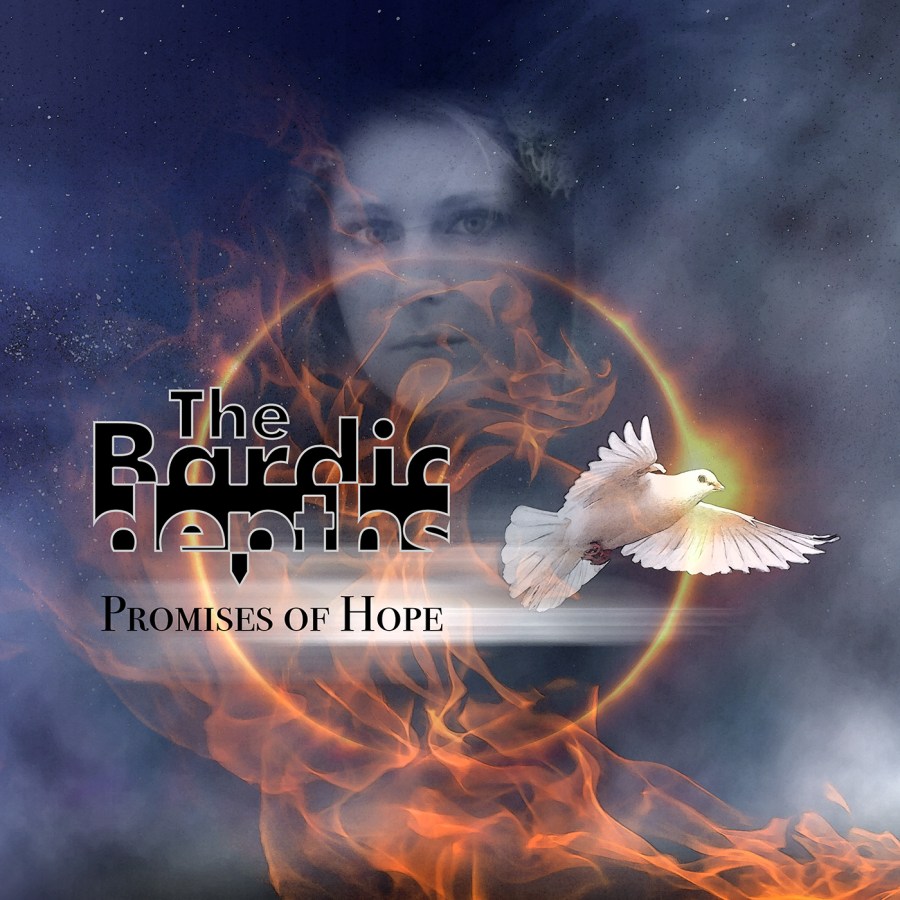
The Bardic Depths “Promises of Hope” out June 24th

From Prog Magazine:

Melodic prog rock outfit The Bardic Depths have unveiled a new-look line-up as they announce they will release their second album, Promises Of Hope, through Gravity Dream Music in June 24. You can watch a video teaser for the new album below.

The band, led by multi-instrumentalist Dave Bandana also originally featured noted US historian Brad Birzer, who many here will know from the respected Progarchy website. Birzer once again has devised the concept for the new album, which centres around the horrors of suicide and the possibilities of redemption.

The new line-up sees Tiger Moth Tales/Camel man Pete Jones join the band, who were the very first signing to Gravity Dream Music last year, alongside Gareth Cole (Paul Menel/ Fractal Mirror) and Tim Gehrt (The Streets/ Steve Walsh). As previously the core band are ably supported by a number of guest performances including Robin Armstrong (Cosmograf) who also co-produces the album.

Our two Bards this time are Virgil and C.S Lewis who both wrote about the complexities of suicide,” says Bandana. “However, our story is simple in that a young queen tries to kill herself but Heaven will not allow it and instead offers redemption. The listener can decide the outcome.”

“Working with everyone again was a joy. Gareth, Peter and Tim contributed to every track and it was a logical conclusion to ask them to become The Bardic Depths band. I didn’t want this album to sound the same as the first. Essentially it is a prog album but with a few surprises. I let the music flow where it wanted as the guys contributions were added to the palette and I think we have created a diverse and absorbing album.”

Preorder Promises of Hope from Gravity Dream Music. The CD will also be available through The Band Wagon USA.

— Rick Krueger

Rick’s Quick Takes for March

Lots of great music has crossed the metaphorical Progarchy transom this month! Purchasing links are embedded in each artist/title listing; album playlists or samples follow each review.

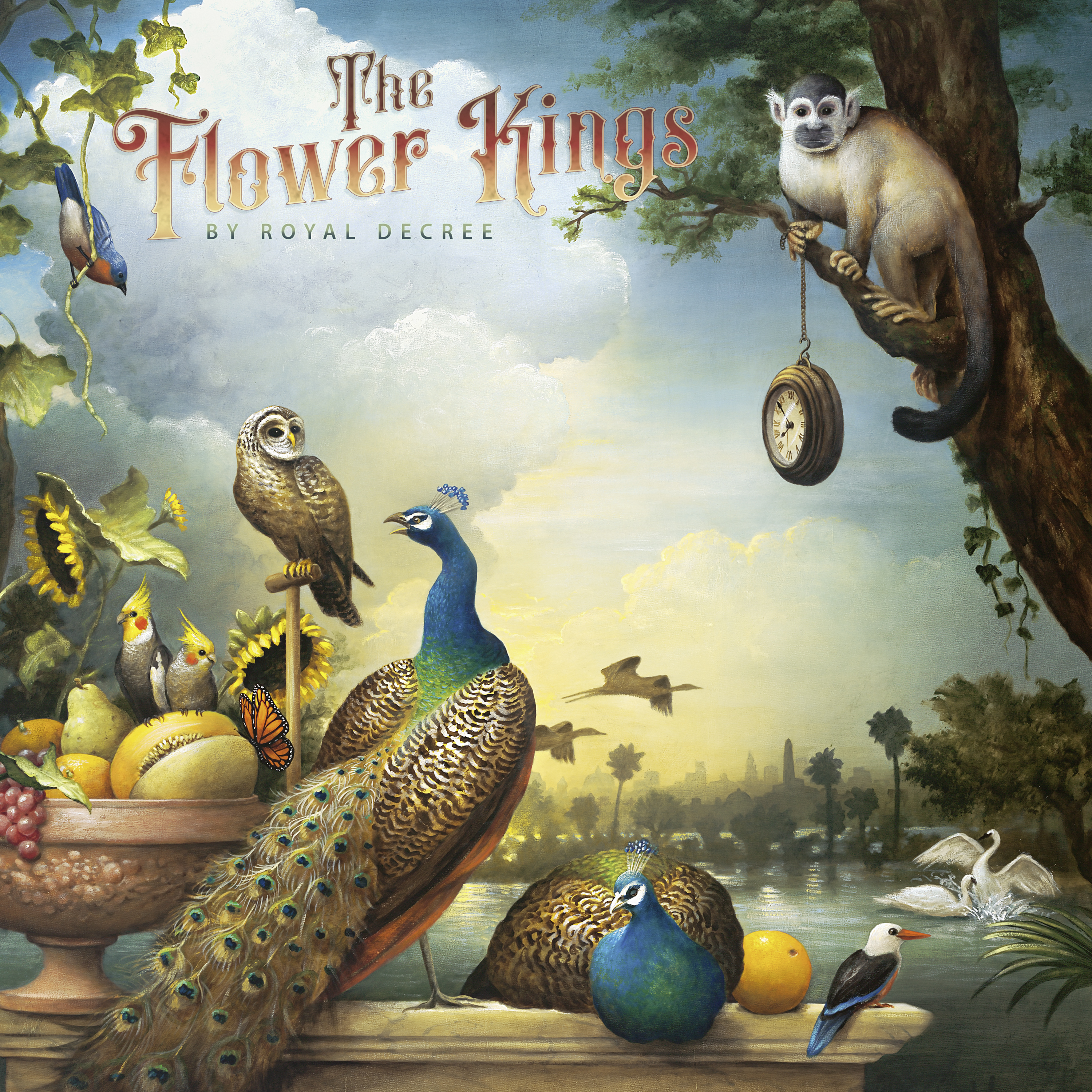
The Flower Kings, By Royal Decree: Fun fact: this is the third double album in a row from king of Kings Roine Stolt and his merry band. And like 2019’s Waiting for Miracles (which started the streak) it’s compulsively listenable from start to finish. Fresh out of lockdown, Stolt, singer Hasse Fröberg, keyboardist Zach Kamins, drummer Mirko deMaio and alternating bassists Jonas Reingold & Michael Stolt laid down 18 songs in the studio, negotiating the twists and turns of wildly varied material (some of which dates back to the early 1990s) with energy, precision and evident delight. Not a trace of metal here, and I hear much more psychedelia, fusion and Eurofunk in the mix than stereotypical “prog” — but to my ears, that’s what makes goodies like the unpredictable opener “The Great Pretender”, the ravishing ballads “A Million Stars” and “Silent Ways”, and the off-kilter eccentricity “Letter” so fresh and fun. There are plenty of serious lyrical moments too, as in “The Soldier” and “Revolution”; but, by and large, By Royal Decree is the sound of Stolt and company refreshed and revisiting their optimistic roots, soaring on the wings of one marvelous melody after another. It’s as much a joy to hear as it must have been to create.

Continue reading “Rick’s Quick Takes for March”

Rick’s Quick Takes for February

Brought to you (mostly) by the letter B! Purchasing links are embedded in the artist/title listing; a sample follows each review.

Dave Bainbridge, To The Far Away: put simply, a thrilling, ravishingly beautiful album. Separated from his fiancée on the eve of their wedding by the COVID pandemic, guitarist/keyboardist Bainbridge focused on the essentials — love and the longing it stirs, the beauty of the world and the changing seasons, the desire for hope and a future. Poet Lynn Caldwell’s words (movingly sung by Sally Minnear and Iain Hornal) capture these themes with rich simplicity, cradled in a lush orchestral blend of rock, prog and Celtic folk. Often evoking the palette of his breakthrough band Iona, Bainbridge and a stellar group of collaborators grab your attention and your heartstrings again and again, whether on the dramatic instrumental “Rain and Sun”, the epic paean to the creative spirit “Ghost Light”, the classically-tinged rhapsody “Infinitude (Region of the Stars)” or the yearning sprint of “Speed Your Journey”. Already one of my favorites of 2022, and recommended without hesitation. (And check out our extensive interview with Dave here.)

Continue reading “Rick’s Quick Takes for February”

Ian McDonald, Progressive Rock Pioneer, 1946-2022

From Rolling Stone:

“Ian McDonald, a multi-instrumentalist and songwriter best known for his co-founding roles in both King Crimson and Foreigner, died Wednesday at the age of 75. A rep for McDonald confirmed the musician’s death, adding that McDonald “passed away peacefully on February 9, 2022 in his home in New York City, surrounded by his family.” His son reported on Facebook that the cause was cancer.

” McDonald was known as one of the key architects of progressive rock, playing both saxophone and keyboards in King Crimson and co-writing its iconic 1969 debut, In the Court of the Crimson King. The record’s opening track, “21st Century Schizoid Man,” featured McDonald’s wild double-tracked alto-sax solo, which he performed the same year at a famous concert in London’s Hyde Park. He left King Crimson before the year was over, moving on to a duo project with Crimson drummer Michael Giles. He would also appear as a session musician on King Crimson’s 1975 classic, Red.”

“Later, McDonald co-founded rock outfit Foreigner with guitarist Mick Jones, playing various instruments and singing on their first three LPs — all of which cracked the Top 10.”

Our condolences go out to McDonald’s colleagues, friends and family.

— Rick Krueger

A Statement from Big Big Train Manager Nick Shilton

“As the promotional campaign for the Welcome To The Planet album approaches an end, we feel that the time is right to address the question of the future of Big Big Train following David Longdon’s death.

“Several years ago David expressed the clear wish that if ever he were not around, he would want Big Big Train to continue. Of course none of us foresaw the tragic situation that happened in November last year.

“After careful consideration, and with the active encouragement of David’s partner Sarah, we have decided to honour David’s wishes.

“Big Big Train will therefore seek to continue as a band and will perform live and release new music in due course. More specific details of the band’s line-up and planned activities will follow in further announcements, including an opportunity for fans to celebrate David’s life and musical legacy.”

Nick Shilton

Manager

Big Big Train