Stream of Consciousness

Rocco Pendola announces that iTunes is dead:

Digital downloads are dead. As reported by Billboard, digital music sales decreased — for the first time ever — by 5.7% in 2013. …

Apple wins no matter what happens. The record industry cannot hang its hat on the still-breathing iTunes Store. That’s a ticket to certain death. Put another way, iTunes will not be the sole long-term survivor, as digital sales go the way of the compact disc. That’s why Timothy D. Cook hedged his bets with streaming service iTunes Radio.

Seen Better Days

Pop culture is forever stuck in its past.

Dan Flynn nails it over at The American Spectator:

We use our futuristic devices to play ancient music. Starting sometime in 2012, catalog albums outsold new releases (eighteen-months old or younger) for the first time since Soundscan began tracking sales. When stale tastes better than fresh, something’s gone terribly wrong with the market where you shop.  

What do we bequeath in 2014’s time capsule? The dearth of truly popular and remotely cultural pop culture is enough to make one feel sorry for posterity employing postmodern technology to relive the early 21st century.

The past regarded nostalgia as a mental illness. We experience it as a normal aspect of contemporary life. What does this say of our collective health?

Our preference for Fleetwood Mac’s “Rumours” over Frank Turner’s “Tape Deck Heart” isn’t an indication of the superiority of the past to the present. It merely demonstrates the choke that memory lane holds over current creativity. Great is out there. But you have to look in spots that are really out there.

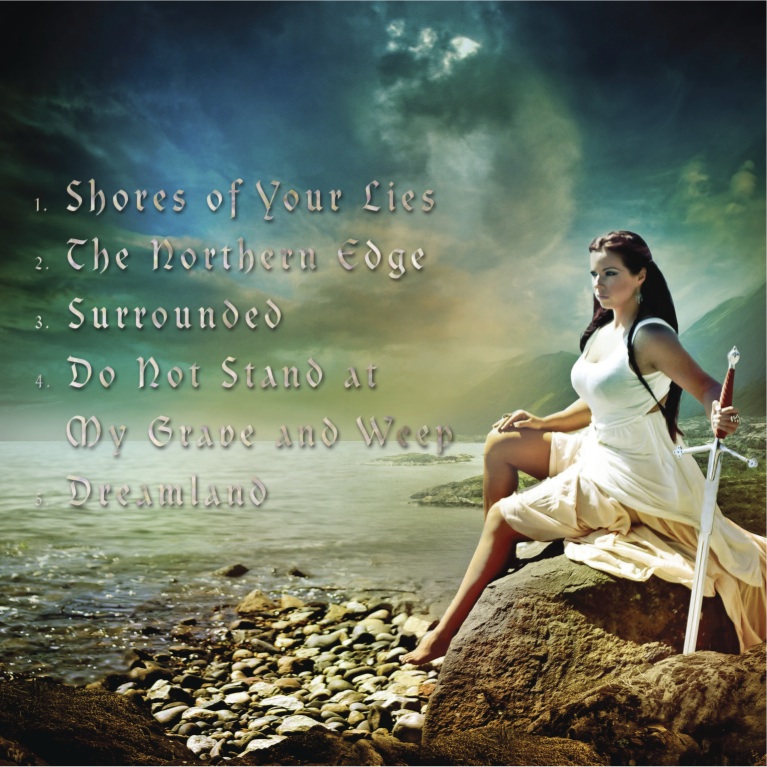
Leah — Otherworld (Best EP of 2013)

leah-otherworld

My favorite EP of 2013 came from Canada’s Leah, who has transported us again to the Otherworld.

A lot of artists don’t feel constrained by the old “singles and album” format. Because this new era of technology enables and encourages it, we see more and more EPs happening.

There were a lot of great EPs released in 2013, as artists shared their gifts in small bursts of creativity. For example, I really enjoyed the EP releases from Sean KellyHalestorm, Chasing Dragons, Anthrax, and Adrenaline Mob.

Leah released Otherworld on All Hallow’s Eve. I know that Brad and Carl are big fans; so too are Socrates and Count Floyd, who had an interesting discussion about the new EP on Halloween, and here’s a brief excerpt from their dialogue:

Socrates: Thank you for playing your music so loud, Floyd. I am glad that it attracted me inside to your studio, so that I could learn about this amazing Canadian songstress. This EP is one that I will recommend to Plato, and to all my other young friends who enjoy beautiful poetry and inspired artistic craft. I really do love how this EP tells a musical story by moving through five stages, in five tracks. Remarkable!

Count Floyd: What story is that, Socrates? Is it scaaaary?

Socrates: The story of Otherworld, as I understand it, is this:

[1] Being challenged by the difficulties of life (“Shores of Your Lies”);

[2] trying to fight back (“Northern Edge”);

[3] then, after the battle is done, surrendering spiritually to a Higher Power (“Surrounded”), thereby turning the physical defeat into a spiritual victory (hence, the title has a lovely twofold meaning);

[4] then, from this higher vantage point, singing from beyond the grave — to those still alive — about the “Otherworld” — the hope of the resurrection of the dead (“Do Not Stand At My Grave And Weep”); and, finally,

[5] a “saving tale” of the sort that Plato tells — a myth that just might shock your soul into taking your life seriously (“Dreamland”).

Days Are Gone (Best of 2013 — Part 13)

With this post, I now conclude my Top Thirteen Albums of 2013. Maybe, because earlier on I had invoked Black Sabbath, you were expecting me to nominate their album “13” for my #13 slot. (Melinda Selmys, after all, noted of their video for “God Is Dead?” that it is “the most Christian music video of the year.”) Well, if that is what you were expecting, then I have successfully faked you out. Because here is my twist ending…

In my final #13 slot, I give you, not heavy metal, but the pop perfection of:

Haim

I choose Haim’s pop masterpiece “Days Gone By” (which iTunes currently has on sale for a limited time) because I never want to become complacent as a citizen of the republic of Progarchy. Sure, we listen to prog because we are able to get, from prog, so much more than we usually get from the mainstream musical venues.

But sometimes the big record companies actually do get things right. (I mean, The Beatles weren’t so bad, were they?) So, it behooves Progarchy to recognize excellence wherever it may arise. (For me, that is the true spirit of prog. Devotion and dedication to excellence, in all forms. Which will, of course, take you in time towards all our favorite prog bands.)

Therefore, since this is the last day of the year, why not crank up “Days Are Gone” and send out the year on a happy note? There is nothing quite like genuine pop perfection, and anyone with a smile and a sweet tooth has got to love Haim.

2013 has been a great year for music! A big thank you to all my fellow Progarchists for sharing their musical experiences here, thereby expanding my own.

I’ll see you back here on New Year’s Day, when I will reveal the name of my fave EP from 2013 — since EPs do not count towards my Top Ten lists, which (in good prog fashion) I always dedicate to the recognition of the best contributions towards the keeping alive of The Art of the Album.

Time and Space (Best of 2013 — Part 12)

Continuing with the final three albums of my Top Thirteen of 2013, I now reveal that the #12 slot is reserved for:

Lobate Scarp

Their excellent “Time and Space” disc was actually released on December 12, 2012 (12-12-12) and although it is therefore technically ineligible for a Best of 2013 list, just as I found a loophole to get Chasing Dragons into the #11 slot for 2013, I have found a place at #12 for Lobate Scarp in my Top Thirteen of 2013.

In addition to my riffing on the band’s harmonious use of the number 12 by placing them at #12, my logic of inclusion is that I actually did not get this album until 2013, when somehow the band found a way to make the CD magically appear at home in a bundle of my snail mail. Captivated by the beautiful packaging and lyric booklet, I soon learned that what Carl concluded earlier on this year is absolutely true: this album is a first-rate achievement that deserves wider recognition.

The first track is the title track, “Time and Space.” While other bands will save their longest and most epic prog track for last (two examples from 2013’s best would be Dream Theater’s “Illumination Theory” and Sound of Contact’s “Mobius Slip”), Lobate Scarp instead kicks things off by putting their most epic track first! Wow. It’s a great way to establish their prog bona fides right from the get-go. Nicely done!

Next up is “Jacob’s Ladder,” the only track that is shorter than five minutes long. But it’s really catchy and gives us a chance to catch our breath after the epic opening.

The third track is the excellent “Beginning of Us,” which has an enchanting melody that hooks you in slowly. Then the excitement builds and soon you find yourself either singing or humming along. By the time we hit the second verse, things have gotten so funky, and the tasty synth is so perfect, we hardly expect the stratospheric guitar launch of the instrumental section that soon ensues. But off we go! Again, wow. This is a magnificent song that takes us on quite an interstellar journey in just under seven minutes.

The fourth track, “The Contradiction,” is also a supremely interesting musical journey that showcases the astonishing abilities of these fabulous musicians. These folks have supreme jazz sensibilities that really distinguish them as musicians and that mark their compositions with a peculiar brand of proggy individuality.

My favorite track on the album turns out to be the fifth track, “Save My Soul,” which starts out with an awesome heavy riff before pulling back and then slowly building up to yet more excitement. The track then goes on to have so many interesting changes and contrasts, including an epic horn freakout, that you want to stand up and cheer at the end of the thing. Amazing!

Track six, “Moment,” slows things down, but only for the first few minutes. Pretty soon Lobate Scarp finds their way into yet another one of their trademark grooves, and we get to go on another exhilarating ride with them. Zoom!

The concluding seventh track, “The Mirror,” is an ambitious musical extravaganza that even includes a gigantic choir singing in Latin. Whoa! Man, you have got to give this band kudos. They do not shy away from any sort of daring musical enterprise. Instead, propelled by their wonderful grooves, they boldly go… where no prog has gone before.

Do yourself a huge favor and buy a copy of this album. It is lovingly crafted by people who are obviously musicians’ musicians. Only rarely do ambitious projects like this succeed. But Lobate Scarp has made the jump to hyperspace and you are invited to come along for the ride to the higher musical dimensions of this upper-echelon labor of love.

Chasing Dragons (Best of 2013 — Part 11)

I discovered this band purely by chance. Instigated mainly by my nephew (but also by others), I was attempting a Web search on “Imagine Dragons,” that overrated and overhyped band. But, as I tried to recall the name of that band I was searching for, I accidentally typed in the wrong name. Instead, I typed in “Chasing Dragons,” which is — let’s face it — a much cooler name for a band. But as I realized my mistake, I was nevertheless pleasantly surprised. For I had just discovered a much better band that was playing much more interesting music. I had discovered Chasing Dragons, the under-estimated and under-appreciated hard rock band from Leeds.

Two string-meisters, Mitch and Ant, handle the mayhem on guitar and bass. At the other two ends of this quadrilateral, on vocals and drums, we find the incredible Tank and the mighty Kate. All four of these outstanding musicians demonstrate an exceptional degree of talent.

I am very impressed with the way that Chasing Dragons stands out from the crowd. In addition to being riveted by their uncommon energy and passion, I am also very impressed by the careful artistry and consummate craftsmanship that they put into every aspect of their songwriting.

This band is so tight and generates such dramatic musical excitement that I could not believe my luck when I stumbled across them in their current relative obscurity. Who knew that hidden away in Leeds is such great musical talent, about to take the world by storm! I am hoping that they develop their fan base further and thus gain the wider recognition that they deserve. (It will be fun to follow their career as their future records take shape.)

Therefore, by the powers vested in me as a citizen of the republic of Progarchy, I am creating a special 11th spot on my traditional end-of-year, “Top Ten” list… for Chasing Dragons, my #11 for this year. I am taking this extraordinary action because it is in 2013 that I discovered this band, an epochal event which I want to commemorate somehow.

Luckily, I have a loophole: Chasing Dragons released a first-class single in 2013. By combining it with the material from their 2012 EP, “Take Flight for a Firefight,” I argue that Chasing Dragons has, as of this year, released enough music that, in composite, forms what I consider to be a solid LP of very impressive material.

The following is the playlist — the “virtual LP” — that I have fashioned for myself. I have been listening to it repeatedly. I argue that this playlist showcases a “Virtual LP” that constitutes, from beginning to end, a first-rate achievement. In my own mind, I christen this “Virtual LP” with the name “Seeds of Tomorrow,” because that Chasing Dragons song is arguably what should be considered their signature track:

Chasing Dragons — “Seeds of Tomorrow” (Virtual LP created from EP & Single):
1. Into the Pit
2. Under the Earth
3. Spawn of the Succubus
4. Mirror’s Edge
5. Black Velvet
6. Seeds of Tomorrow
7. City of Steel
8. Hindsight’s a Bitch
9. Let Sleeping Lions Lay

“Unplugged” Bonus Tracks:
10. It’s Bravery, Honestly
11. Spawn of the Succubus (Live Acoustic)
12. Into the Pit (Live Acoustic)

The first nine tracks as above form a solid 40 minutes of excellent female-fronted metal music. The last three tracks are 12 minutes of acoustic bonus tracks that prove the band’s remarkable musical versatility, thus pointing towards a promising future. By the way, “Black Velvet” is a cover of the tune by 1990 Grammy winner Alannah Myles, and it is even better than the original. So, I say that, any way you look at it, Chasing Dragons have shown themselves capable of producing not just the cumulative output of an LP’s worth of material, but of astoundingly upper-echelon material.

I myself think of the LP-sized slice of nine tracks above as forming a showcase of “Past” (“Into the Pit,” “Under the Earth,” and “Spawn of the Succubus”), “Present” (“Mirror’s Edge,” “Black Velvet,” and “Seeds of Tomorrow”), and “Future” (“City of Steel,” “Hindsight’s a Bitch,” and “Let Sleeping Lions Lay”). What I mean is that the band shows their “Past” first by singing songs with themes that are genre-bound in lyrical inspiration; then they showcase in the “Present” the fact of their undeniable ability as a band to write truly superb original songs and the fact that they are so talented themselves that even their covers can transcend the original inspirations and showcase the band’s unique personality; and finally they give some exciting indications of the directions in which their “Future” work might head. In short, this is a very dynamic band moving quickly, rapidly developing before our very ears, hurtling from one excellent achievement to another. The Virtual LP captures that truth in a musical snapshot.

If I had to pick favorite tracks by Chasing Dragons they would probably be “Mirror’s Edge,” “Seeds of Tomorrow,” and “City of Steel,” because of Tank’s great lyrics in them. But really, all the band’s tracks are excellent. Sample them all, and please notice how there are nice bursts of creative genius from all four corners of this band. As just one example, take this great line from the chorus to their 2013 single, their ode to hindsight:

If regrets were made of bullets
then we’d all be dead inside

Keep your ear on this band. If you like female-fronted metal, then be sure to try out all the tracks. As I have said, I find they all work exceedingly well together as a solid unit in the playlist order that I have invented and listed above.

Make sure you always buy music from and support the promising artists in our midst like Chasing Dragons. Indeed, this young band arguably has within them the “Seeds of Tomorrow.” Therefore, let me end my review here with a quote from their own song of that name. This song could be considered their musical signature. Arguably, its lyrics, paired with the powerful music, sum up how we should best construe the meaning of the band’s formidable name, Chasing Dragons:

Chase the demons away
Show them where the trouble’s at
Take up arms and fight
Show them that you won’t hold back

Chase your demons away
Show them you’re not here to play games
Take your life in your hands
Tomorrow’s ours
So let’s take it back

Top Ten… or Top Thirteen?

For my personal Best of 2013 list, I have just posted (over the last few days) an alphabetical listing of my Top Ten:

Big Big Train: English Electric Part Two

Deep Purple: NOW What?!

Dream Theater: Dream Theater

Haken: The Mountain

Holy Grail: Ride the Void

Kingbathmat: Overcoming the Monster

Sound of Contact: Dimensionaut

Spock’s Beard: Brief Nocturnes and Dreamless Sleep

Steven Wilson: The Raven That Refused to Sing and other stories

The Winery Dogs: The Winery Dogs

But, as promised, I am now going to add three more to the list, as three bonus additions, and thus make this a Top Thirteen list.

Why? Well, because this is the year 2013, and also because Black Sabbath released 13 this year (which also happened to be one of Mike Portnoy‘s favorites).

So, stay tuned for #11 on my Top Thirteen of 2013…

Mike Portnoy’s Top Ten

From MikePortnoy.com:

MP’s Top 10 Albums of 2013
(in no particular order):

1. Steven Wilson – The Raven That Refused To Sing
2. Haken – The Mountain
3. Queens Of The Stone Age – …Like Clockwork
4. Biffy Clyro – Opposites
5. Black Sabbath – 13
6. The Ocean – Pelagial
7. Megadeth – Super Collider
8. Fates Warning – Darkness In A Different Light
9. Spock’s Beard – Brief Nocturnes And Dreamless Sleep
10. Stryper – No More Hell To Pay

Mike is right about the Stryper album being awesome metal!

And, in case you missed it, Stryper also released a nicely done retrospective album of re-recordings in  2013.

The Winery Dogs (Best of 2013 — Part 10)

Coming in the #10 slot (in alphabetical order) on my Best of 2013 list is this supergroup’s eponymous bolt of lightning:

The Winery Dogs

Wow. This album blew me away.

One of my all-time favorite prog drummers, Mike Portnoy, teamed up with Richie Kotzen and Billy Sheehan this year, and they demonstrate to us all the unbeatable power of the power trio when it is done right.

The thrill of listening to these catchy songs, and to the virtuoso musical chops on display in them, evoked a lot of happy musical memories of musical “first encounters” for me.

First, there is the rush of listening to Rush. Like I say, there is nothing quite as exciting as the hard rock power of the power trio when it is done right. The Winery Dogs evoke for me the musical joy I experienced when first listening to Rush in high school. Of course, the greatness of Rush is still there to be savored with every listen. But there is nothing quite like the first ten times that you listen to a truly great album. With this release from The Winery Dogs, we get to experience that kind of magic again, as for the first time.

Second, there is the sonic adrenaline that I love to tap into by listening to Chris Cornell and Audioslave. Therefore I am dedicating my Winery Dogs nomination here for the Best of 2013 to Carl, my fellow Soundgarden aficionado in the republic of Progarchy, in case he has not heard it yet. It’s remarkably satisfying, for those of us who can’t get enough of such upper-echelon vocal stylings, how well Richie Kotzen can recreate the thrill of listening to Chris Cornell.

Third, there is the undefinable excitement that skilled musicianship can bring to enhance and elevate any genre’s tropes. Suddenly, as you round what seems to be a familiar musical corner, you are blindsided and pleasantly surprised by an unexpected display of virtuosity that showers you with musical grace. When Billy Sheehan works his otherworldly magic here on bass guitar, or when Richie Kotzen transports us into ordinarily inaccessible dimensions of guitarcraft, or when Mike Portnoy muscles his way out of the speakers and right into the room next to you, I am reminded of those magical younger days when my friends and I first began listening to all those great, lesser-known albums by “musicians’ musicians.” Those discs opened up musical pathways that most of our schoolmates were missing out on. For some reason, when listening to The Winery Dogs, memories of listening to The Steve Morse Band come to mind for me. But each of you will find that your own personal memories of your first listens to “the greats” will be evoked by this album’s dazzling display of virtuosity.

Best of all, this album is a perfect cure for the dragon sickness of any nascent prog tendency to become a tribal, self-enclosed musical world. It makes the joy of music available to anyone with the ears to listen.

This disc is a perfect illustration of how musical men with prog chops can quite simply put their musical skills in the noble service of simply rocking out. Anyone with a heart can relate to this cause. I invite you to happily endorse it with the simplest of gestures, like a fist pump or an air guitar solo.

Rock on, gentlemen.

The Raven That Refused to Sing and other stories (Best of 2013 — Part 9)

Coming in the #9 slot (in alphabetical order) on my Best of 2013 list is the masterpiece from:

Steven Wilson

Also known as “Mr. Prog” — but that title for Mr. Wilson is currently up for debate here at Progarchy.com.

My two cents: A title like “Mr. Prog” should only be bestowed based on an objective standard of measurement: e.g., the sheer quantity of artistic output in a year; i.e., count up all the releases, the remixes, the live gigs, the collaborations, etc. Then, whoever has the biggest total, is “Mr. Prog” — whether you like his stuff the best or not.

Well, I haven’t done the math, so somebody else can tell me who the winner of the title is. (Maybe we will have to make a shortlist: Steven, Neal, Mike, et al.)

By the way, the winner of the math for each year should be called “Mr. Prog” for that year. So it should be an annual award, and not a one-time decision.

And then, if a long-term pattern does emerge (e.g., we have the same “Mr. Prog” year-after-year), that individual can be designated (after years of distinguished service to prog) as “The Godfather of Prog.”

Now that we have that out of the way, let me talk about “The Raven That Refused to Sing and other stories.

I don’t get it when people talk about this album as “cold,” or whatever. Go put on a sweater!

I don’t know what you’re talking about! Because this is the first album by Steven Wilson that has really elicited a deep emotional response from me.

All his previous work has received intellectual engagement from me, and I have noted and admired it all. But this magnificent Wilson disc is the first one that causes my heart to leap at the musical excitement that it generates.

Right from the beginning, “Luminol” elicits a response of joy. As in: Omigosh! Is that Chris Squire running around my living room playing bass? It sure sounds like it! Woo-hoo. We’re having a prog party! Hey, here he comes again…

And the album does not let up from there. It’s just layer after layer of beauty and complexity. For me, this album stands out from all of Wilson’s other work as going above and beyond, as a truly distinguished musical masterpiece.

After all, it ends with the title track, “The Raven That Refused to Sing,” which is simply the most gorgeous and moving song on the album. It possesses a rare quality of unusual beauty that transcends mere musical virtuosity (which is the usual stock-in-trade of prog), and rightly marks this album with the distinction of being an inspired, otherworldly product. How fitting that this gift of the Muses is memorialized in the album title!

Let me end on a controversial note. Brad has slagged this album as “The Tangent lite,” a remark which I shall myself reinterpret as a compliment: i.e., where The Tangent’s “Le Sacre du Travail” may err with the defect of pretentious satirical excess, Steven Wilson’s “The Raven That Refused to Sing” achieves the right aesthetic balance of the golden mean (a sober restraint that some may mistake for “coldness”).

Perhaps the comparison is also apt in other ways. Wilson’s “sad sack” vocals in the past have prevented me from placing his releases in the annual Top Ten upper echelons. I have a similar obstacle with The Tangent presently; the vocals are too histrionic, à la Roger Waters, for my taste. But now, with “The Raven That Refused to Sing,” I find that Wilson’s vocals have been honed to work to perfection, especially on the haunting final track of this distinguished work.

In conclusion, then, because The Tangent is Big Big Train’s evil twin, I must place The Tangent on my Best of 2013 list… but only in the mirror universe.

In this universe, the award goes to Steven Wilson’s “The Raven That Refused to Sing.”

Postscript:

Hey, I may be wrong about all this. I will have to keep listening to all these fine 2013 albums for years to come! Perhaps minds will change. In any event, the conversation at Progarchy will continue. After all, de gustibus est disputandum:

Perhaps the most persistent error in aesthetics is that contained in the Latin tag that de gustibus non est disputandum— that there is no disputing tastes. On the contrary, tastes are the things that are most vigorously disputed, precisely because this is the one area of human life where dispute is the whole point of it. As Kant argued, in matters of aesthetic judgement we are “suitors for agreement” with our fellows; we are inviting others to endorse our preferences and also exposing those preferences to criticism. And when we debate the point we do not merely rest our judgement in a bare “I like it” or “It looks fine to me”; we search our moral horizons for the considerations that can be brought to judgement’s aid. Just consider the debates over modernism in architecture. When Le Corbusier proposed his solution to the problem of Paris, which was to demolish the city and replace it with a park of scattered glass towers and raised walkways, with the proletariat neatly stacked in their boxes and encouraged to take restorative walks from time to time on the trampled grass below, he was expressing a judgement of taste. But he was not just saying, “I like it that way.” He was telling us that that is how it ought to be: he was conveying a vision of human life and its fulfilment, and proposing the forms that gave the best and most lucid expression to that vision. And it is because the city council of Paris was rightly repelled by that vision, on grounds as much moral and spiritual as purely formal, that Le Corbusier’s aesthetic was rejected and Paris saved.

Likewise, when I dispute with my leftist friends about the Dutch and Danish windmills— windmills whose blank and spectral faces are now beginning to stare across my native English woods and fields—we don’t just exchange likes and dislikes, as though discussing the rival merits of Cuban and Dominican cigars. We discuss the visual transformation of the countryside, the disruption, as I see it, of a long established experience of home, and what this means in the life of the farmer, and the presence, as my leftist friends see it, of the real symbols of modern life, which now stand on the horizon of the farmer’s world, summoning him to the realities which he has avoided for far too long. By disputing tastes in this way we are not just striving for agreement. We are working our way towards a consensual solution to long term problems of settlement: we are discovering the terms on which we might live side by side in a shared environment, and how that environment should look in order that we can put down roots in it. Conceived in this way aesthetic judgement is the primary form of environmental reasoning: it is the way in which human beings incorporate into their present decisions the long-term environmental impact of what they do.