
Sid Smith has some interesting things to say about his approach to reviewing albums on his blog, Postcards From The Yellow Room.
Definitely worth a read if you have a few minutes to spare.

Sid Smith has some interesting things to say about his approach to reviewing albums on his blog, Postcards From The Yellow Room.
Definitely worth a read if you have a few minutes to spare.
Sad news tonight from organiser Kris Hudson-Lee of the cancellation of the weekend part of Y-Prog here in the UK, intended to be Yorkshire’s first progressive rock festival.
Saturday 15 March was to feature Dec Burke, Also Eden, IOEarth and The Enid; Sunday 16 March had Crimson Sky, Knifeworld, Manning and It Bites on the bill. Thankfully, the Friday night show featuring the mighty Riverside goes ahead.
I have no further information on the reasons for cancellation, but I presume poor ticket sales are at the heart of it. Y-Prog may have been hit by the subsequent announcement of HRH Prog, a bigger festival at a more glamorous venue a few miles away, just three weeks later.
It’s a salutary reminder that, despite prog’s resurgence, the audience remains finite. Too many events in too short a span of time and some are going to struggle.
 Steven Wilson’s journey as a solo artist from debut Insurgentes to his new release The Raven That Refused To Sing (And Other Stories) has been a fascinating one. That first album has dark introspection and desolate beauty in equal measure. Follow-up Grace For Drowning is a different beast, with more shades of light and dark to it and with a more expansive and organic feel. Raven puts that work into context as a transitional piece, for here Wilson’s vision seems, at last, to be fully realised.
The influences that shaped Grace – the improvisational aspects of jazz, and Wilson’s involvement in remixing King Crimson’s early work – are once again evident, but this release can boast greater coherence than Grace, due in part to its unifying ‘ghost stories’ theme. It also benefits from a rather different approach to production. Wilson is settled and comfortable enough with this group of musicians to gamble on live recording in preference to meticulous overdubbing, emulating the methods used on those 1970s prog masterpieces that he has been remixing so successfully. The gamble has paid off and the music frequently builds to a thrilling intensity as the players feed off of each other. Having the legendary Alan Parsons at the controls is the icing on the cake, guaranteeing a recording of superb quality.
Luminol kicks off proceedings in a suitably explosive manner, with frenetic bass and percussion plus vocal harmonies that call to mind Tempus Fugit from the 1980 Yes album Drama. The pace and energy are high in the early and closing stages of this twelve-minute piece, with all players getting the chance to show what they can do, but it is perhaps Adam Holzman’s piano during the quieter middle section that impresses most.
The album really pivots around the twin epics of The Holy Drinker and The Watchmaker. Both are as good as anything Wilson has ever done. Drinker is moody, powerful and intense, the perfect showcase for the staggering virtuosity of the musicians that he has assembled as his band. Theo Travis particularly shines here. Watchmaker is more delicate in tone and really quite beautiful for the opening four minutes before opening out into some spectacular interplay between Guthrie Govan’s guitar and Travis’ saxophone. Piano, vocals and bass all take their turn at the front of the sound stage before a closing section laden with heavy power chords.
There are nods to Wilson’s other projects. Drive Home feels almost like a Porcupine Tree song before it expands into a closing section with a stunning Guthrie Govan guitar solo that quite simply takes the breath away. The title track is sparse, mysterious and moving; it probably wouldn’t look out of place on Wilson’s recent Storm Corrosion collaboration with Opeth’s Mikael Åkerfeldt.
Verdict? Steven Wilson’s best work to date.
I wonder if any fellow Progarchists have been taking an interest in the Poltergeist project over at PledgeMusic?
This involves Will Sergeant and Les Pattinson, the original guitarist and bassist, respectively, of Echo & The Bunnymen. They’ve ‘gone prog’ (or prog/post-rock, from what I’ve heard) and are recording an album called Your Mind Is A Box (Let Us Fill It With Wonder).
Will has just posted some interesting reflections on his prog/punk roots – although you’ll need to pledge to read them, I’m afraid!

They like their prog in Poland.
Europe’s ninth largest country is an essential touring destination for the likes of Anathema, Marillion, Pendragon and many other well-established acts, and it is the source of much home-grown talent, chief amongst which must surely be the excellent Riverside.
If you want to know just how good these accomplished purveyors of heavy prog are, perhaps a die-hard Rush fan like me can simply point out that I saw them play live in the same week as Rush on the Time Machine tour in 2011 and was hard-pressed to pick the better of the two gigs!
Starting with 2003’s Out Of Myself, the band have released a new album every couple of years to ever-increasing acclaim, culminating in the highly successful Anno Domini High Definition back in 2009. Since then, though, things have been comparatively quiet. A three-track EP, Memories In My Head, appeared in June 2011, but we’ve had to wait until the start of 2013 for a new full-length work. It’s here now, it’s called Shrine Of New Generation Slaves, and it’s absolutely stunning.
 Shrine builds on its predecessor and develops the Riverside sound in a number of respects. Its carefully-chosen title is a coded signal of the band’s intent to produce better crafted songs (look at the initial letters!) and in this respect, they have largely succeeded. The band have historically been more prog than metal whilst embracing elements of both traditions, but this release sees them flirting with more straightforward hard rock and blues-tinged sounds in places. There is even a certain jazzy looseness to parts of the album. They wear these new influences well. Above all, what they’ve produced here is something that is more cohesive conceptually and more interesting musically than any of their previous work.
The variations of pace and atmosphere on display here are a delight. Fans of the harder, heavier aspects of the Riverside sound will particularly enjoy opener New Generation Slave, which turns into a real up-tempo rocker after a slow-burn beginning of plucked acoustic guitar, ponderous power chords and treated vocals. Celebrity Touch is equally powerful and even more straightforward in its approach but is marred slightly for me by overuse of distortion effects on Mariusz Duda’s voice. Lyrically, though, it’s an effective stab at the absurdities of celebrity culture: “What matters is to be in view / I am seen therefore I am”. A similar urgency pervades Feel Like Falling thanks to its pulsing synthesiser and staccato rhythm. It’s an undoubted earworm, almost a pop song, and an obvious choice for another single.
The rockier tracks are interleaved with quieter, more reflective pieces, as is common on Riverside albums. The melancholic, piano-driven We Got Used To Us mourns a failing relationship in which the participants “started to keep ourselves at a distance we could control, not too close, not too far” and “pretend we’re OK by filling up our inner space with little hates and so-called love”. Longer tracks The Depth Of Self-Delusion and Deprived (Irretrievably Lost Imagination) are typical of the melodic, effortlessly flowing songs that this band do so well. The former boasts a very Opeth-like minor key acoustic guitar motif and the latter’s 8 minutes and 26 seconds give ample time for some understated but excellent keyboard work by Michał Łapaj and a wonderful jazz-infused closing section featuring Marcin Odyniec on saxophone. Deprived is, in fact, one of the album’s highlights, with a vibe not dissimilar from recent solo material by Steven Wilson.
Penultimate track Escalator Shrine is the longest on the album and can reasonably claim to be its musical climax. It starts in low-key fashion with a melody picked out by Duda’s bass guitar and some bluesy electric piano, before building to a crescendo just before the five-minute mark with Hammond organ that recalls first Floyd’s Echoes and then the late Jon Lord’s work with Deep Purple. The frenetic pace lets up half way through and the last few minutes are more measured but no less epic in feel. The lyrics denounce the superficiality of a modern consumerist lifestyle: “Buying reduced price illusions / Floating into another light / Melting into another lonely crowd”.
Despite its brevity, final track Coda is anything but an afterthought; rather, this delicate acoustic piece lends conceptual integrity to the whole album by reprising the verses of Feel Like Falling – although this time the tone is more hopeful, the “Day outside grows black … Squeeze my eyes shut” lyric changing to “Night outside grows white … Open my eyes, don’t feel like falling into blank space”.
By the way, if you are planning to buy this, let me recommend to you the two-disc limited edition. Disc 2 of the set, entitled Night Sessions, consists of over 22 minutes of instrumental music, split into two parts. Part 1 is reminiscent of Mariusz Duda’s solo project, Lunatic Soul, and features sequencer patterns that bring to mind early 80s Tangerine Dream; Part 2 is more minimalist and boasts some haunting saxophone playing. It’s very different in tone from Disc 1, but it’s very good!

In the run-up to the March release of Big Big Train’s hotly-anticipated English Electric Pt 2, Greg Spawton is delighting us once more with insights into the origins of each track on the album.
Check out the BBT blog for more on opening track East Coast Racer – the story of Mallard, legendary holder of the world speed record for steam trains.

Steve Howe has quit Asia to concentrate on Yes and other projects.
Prog magazine has more on this story.
Jem Godfrey has just dropped a couple of Frost* bombshells on his blog.
First, they’ve just finished working with Magenta’s Rob Reed at Rockfield Studios in Wales on a DVD. The disc features five Frost* songs taken from Milliontown and Experiments In Mass Appeal plus a new song, Heartstrings. Proceeds will be used to fund production of the new album.
Actually, that should be albumS, plural. Jem’s second bombshell is that the band’s new work will be released as two albums, six months apart – the first later this year, the second by Spring of 2014. Apparently, “it’s too big a story to be told over a single hour”!
The core line-up for both albums will be Jem, John Mitchell, Craig Blundell and Nathan King. Various guest appearances are planned, including one from Dream Theater’s Jordan Rudess.
And finally, after my ‘Top 5 Contenders‘, we have (drum roll please!) my Top 5 of 2012:
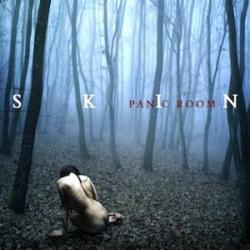
A real surprise, this. I like Panic Room well enough; I admire their previous release, Satellite, both for its fine production values and for the two or three stand-out tracks on it. It is a good album, but not a great album. So I wasn’t expecting them to have raised their game quite so much with the follow-up. Production-wise, Skin sounds every bit as good as its predecessor, but the quality of the songwriting is higher and more consistent. The rockier tracks, Song For Tomorrow and Hiding The World, are as good as anything they have done, but it is the slower, quieter songs that really shine. There’s a wonderful mellow, chilled vibe to these quieter songs, and the liberal use of strings adds a degree of sophistication. Anne-Marie Helder’s voice is simply heavenly. This isn’t music that will challenge you, unlike some of the albums in my Best of 2012 list; rather, it is the sonic equivalent of a silk shirt or satin sheets: smooth, elegant and luxurious.

Another surprise entry. Being a fan of Magenta, I pre-ordered this purely on the strength of Rob Reed’s involvement and he hasn’t disappointed. Magenta’s distinctive take on prog pervades Beneath The Waves, but this is an altogether more epic piece than anything done by that band, bigger in scope and bigger in its production. A ‘cast of thousands’ has been involved over the album’s three-year gestation period: Steve Hackett, Francis Dunnery, John Mitchell, Nick Barrett and Jakko Jakszyk on guitar; Gavin Harrison and Nick Beggs providing the rhythm section; Mel Collins, Troy Donockley and Barry Kerr on sax, pipes and whistles; Dave Stewart and the London Session Orchestra; The English Chamber Choir; Tina Booth, Shan Cothi, Rhys Meirion, Angharad Brinn and Steve Balsamo providing solo vocals.
The result of all this labour is a lush and richly atmospheric album, successfully blending classic prog with symphonic and celtic/folk elements. At times, it sounds uncannily like something Mike Oldfield might have produced in his heyday – a most welcome resemblance to an Oldfield fan like me! In places, it has the feel of a film score, in others the drama and impact of musical theatre or opera – and the vocal and choral work is quite stunning. The packaging of the album, in a mini-gatefold sleeve with an 18-page colour booklet on the inside, also deserves praise.

I have to admit that I idolise this band, but if they had produced another Snakes & Arrows, they wouldn’t be featuring in my Top 5. Not that there’s anything particularly wrong with S&A; it is undoubtedly a good album, but there’s a certain ‘sameness’ to the tone and texture of the individual tracks. It feels densely-layered rather than loose and free-flowing, safe rather than adventurous. Clockwork Angels addresses these issues head-on. For starters, it’s a full concept album – their first, shockingly (the concept pieces on Caress Of Steel, 2112 and Hemispheres being one side of an LP only). And what a concept! The familiar dystopian themes beloved by Neil Peart, but set in a Steampunk universe, and tied into a novel by Kevin J Anderson and Peart.
The music is also a delight. The concept lends it a greater sense of urgency and purpose. The sound is a bit more stripped down than on S&A and there are subtle nods to classic 70s Rush – such as the Bastille Day bass riff that creeps into the opening of Headlong Flight. The latter is a beast of a track, one of several real rockers on this album – the title track and The Anarchist being the other prime examples. Changes in tone and pace come from a delightfully loose section of the title track featuring slide guitar and from a couple of slower, more reflective numbers: Halo Effect and The Garden. The latter ends the album in uncharacteristically emotive fashion. Could the subtext really be a farewell to fans? Let’s hope not, but if this is their last bow then they have taken it in fine style.

Even the most hardened Marillion fan would probably admit that the band’s muse has proved elusive since they basked in well-deserved acclaim for 2004’s masterful Marbles. Sure, they have served up some memorable music for us in the eight years since then – musicians with their talent, dedication and integrity could hardly fail to do so – but somehow it hasn’t had quite the same spark or level of consistent brilliance found on Marbles. With Sounds That Can’t Be Made, however, I feel that the magic is back. STCBM doesn’t quite scale the heights achieved by Marbles – which may well prove to be their career-defining highlight – but it comes close.
Album opener Gaza is a brooding monster of a track that courts controversy with its position on the conflict between Israel and Palestine. Whether you agree with Hogarth’s take on the issue or not, you have to admire the band’s boldness here. The album’s other ‘epic’, Montreal, is less successful, feeling to me like a collection of music ideas that don’t quite gel. The quirky Invisible Ink is likewise not really my cup of tea, but everything else is wonderful: the synth pop and soaring Rothery solo of the title track, the cool sophistication of Pour My Love, the laid-back groove of Power, the painful honesty in the tale of relationship break-up that is The Sky Above The Rain. This is Marillion doing what they do best: always reinventing themselves but always finding that intellectual and emotional connection, making you think but also making you feel.
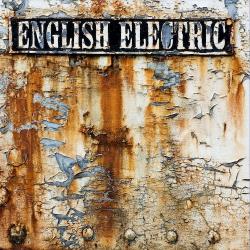
Yes, another Progarchist with English Electric Part 1 as his No. 1 of 2012, I’m afraid! And the fact that a self-confessed Marillion and Rush fanboy like me has placed this ahead of great albums by those bands tells you just how good this is. I can’t do better than the erudite and rather beautiful analysis of EE1 by Progarchy’s very own Brad Birzer (which I urge you to read), so I’ll simply say that it stunned me from the very first listen. As you’d expect from Big Big Train, this is an album suffused with a love of the English landscape, its rich history and its industrial heritage. It is less classically proggy than its excellent predecessor The Underfall Yard, leaning instead towards pop and folk music influences – there’s more of XTC in here than there is of Yes. Don’t let that put you off (not that it should), because the result is utterly sublime.
It’s difficult to pick out highlights when so much of the music is exquisite, but at the moment I’m particularly fond of joyous opener The First Rebreather, the elegaic Summoned By Bells and the dramatic A Boy In Darkness. Judas Unrepentant is wonderfully uplifting as well. And Uncle Jack is just so lovely, light and summery… Damn it, it’s all brilliant! And the cover artwork is rather special too. Could Part 2 possibly match, or even exceed, this? We will know soon enough!
Following on from my list of ‘Highly Commended’ albums, we have my ‘Top 5 Contenders’.
The following five albums have missed out on a Top 5 placing by the slimmest of margins. Once again, they are listed alphabetically, not in order of preference.
 Anathema – Weather Systems
For quite a while, this was a strong contender for my album of the year. That it doesn’t make my final Top 5 is testimony to the amazing quality of this year’s releases. The music here grabs you and stirs the soul just as effectively as 2010’s wonderful We’re Here Because We’re Here. but Weather Systems benefits from the more prominent role given to Lee Douglas, particularly on the haunting Untouchable Part 2 and Lightning Song.
 echolyn – echolyn
A late entrant into my Top Ten of 2012. It’s a multifaceted, multilayered work and I’m still digesting it – else it might have crept into my Top 5. I love the variety here, encompassing classic prog complexity but also a much more contemporary sound. Different parts remind me fleetingly of Radiohead, The Pineapple Thief, Amplifier (circa The Octopus) and even Elbow, but the net result is something completely original. Stand-out tracks for me are Some Memorial and the languid Past Gravity.
 It Bites – Map Of The Past
Reforming with John Mitchell at the helm was a masterstroke, resulting in the excellent The Tall Ships in 2008 – but Map Of The Past is even better than its predecessor. It’s one of those albums that you simply can’t help singing along to and it never fails to put a smile on my face. Highlights include the lovely ballad Clocks, the thrilling prog of Meadow And The Stream and the deeply moving The Last Escape. Prog-pop at its finest.
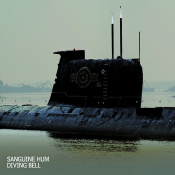 Sanguine Hum – Diving Bell
I’ll confess I’m cheating slightly here, as this album appeared on Bandcamp in late 2010, but the CD from Esoteric is a 2012 release, so it qualifies as far as I’m concerned! It’s an album of strange but beautiful sounds, unusual melodies and odd rhythms. At times it calls to mind Porcupine Tree in their more reflective moments, at others a less layered, less electronic North Atlantic Oscillation. On top of this it has the acoustic feel and vocal style of Turin Brakes. Fascinating stuff.
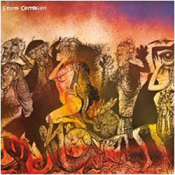 Storm Corrosion – Storm Corrosion
This collaboration between Steven Wilson and Mikael Åkerfeldt caused consternation amongst some fans of these artists when they discovered that it didn’t sound like the expected blend of Wilson/Porcupine Tree and Opeth. Personally, I love it. I certainly can’t do better than Alison Henderson’s pithy description of it as sounding like “Simon and Garfunkel on magic mushrooms”. A subtle and mysterious album, best listened to late at night.
 Progarchy