For those of us who are “old-timers,” still somewhat stuck in the 1970’s, band personnel changes can be among the most significant events in music-making. Perhaps this is still true, but my sense is that it has become much more taken-for-granted as part of the “prog” landscape. I’ve been taking it slow with my forays into Spock’s beard, and singing the praises of patience, of not being hasty. I haven’t yet commented on X, though I have listened once, and the post will come.
But a quick “first impression” moment for the newest release, number eleven, Brief Nocturnes and Dreamless Sleep (2013), is too hard to resist. While I will need another careful listen to decide completely exactly what I think of the addition of Ted Leonard’s vocal stylings to the mix, the impression there is by no means a seriously negative one. And more importantly, everything else seems to point to the ongoing vitality of SB’s musical ethos. That ethos pulsates here with an entrancing blend of hard-edged rocking and soundscape sculpting, with what seems just the right amount of fealty to the “tradition” (a weighty word that I hope is not too burdensome) of progressive rock. Both composition and lyric-writing come across, on my first listen, as quite consistent with the high standards set by (sorry for the persona-centric specificity of historical reference) the “NdV era” Beard.
I will listen again. But that first listen was no disappointment. If you have had that nagging, subtle fear of change, as I have in this case, and if you’ve found value in the judgements that I’ve rendered so far, then you should definitely listen. The Beard still grows. These guys still rock!
Landmark album/CD releases – whether landmark in positive or negative ways – gather layers of lore as each one rolls across the terrain that is its “public,” or its “audience.” That audience is no static landscape, of course. It changes, and is changed by such albums. Such albums seem to settle over time into the status of “signposts,” marking ways through the landscape, though they are also partly responsible for blazing the very trails that they mark.
If we stop at a crossroads where one of these markers is now set, if we look closely at the ways in which the marker has weathered, eroded, and perhaps even been defaced by other passersby, don’t we always love to see the cleavages, the conflicts, the signs of fragmentation or disintegration that we have been told are there? Don’t we often look for them with a sort of sadomasochistic nostalgia? We listen to the Beatles’ “White Album,” and we “hear” the disruptive, threatening presence of Yoko, the creative divergences that are opening between the four discernible musical personae. For many progressive rock fans, Yes’ Tales from Topographic Oceans (1973) has this feel. Whether hated or cherished, the music captured on its four vinyl faces embodied deepening tensions that we know were lurking just beneath its surface, manifest soon after most clearly in Wakeman’s departure.
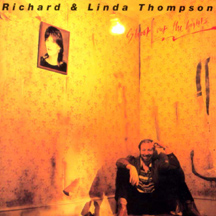
To consider a non-prog example, I remember my introduction to the album, Shoot Out the Lights (1982) by Richard and Linda Thompson, several years after its release. Via Rolling Stone‘s enshrinement of that album as #1 of its release year and in its top 500 of all time, I learned the mythology regarding how the album amounts to documentation of the disintegration of the Thompsons’ marriage, and how it was followed by “The Divorce Tour.” I bring up the example of the Thompsons’ exquisitely painful album precisely because “mythology” is the appropriate term in that case. While it is clear that the Thompson’s marriage was a tempestuous one, the idea that one can literally hear the demise of the marriage taking place in the recordings for SOTL has been disputed by a number of commentators, who have claimed that their relationship was relatively good at the time of the recordings, and did not actually fall apart until after they were completed. Whatever the truth of the matter, the fact that there is dispute about events serves to underline the mythological character of the common narrative, “myth” here meaning precisely narrative that has solidified into a tradition, a tale that is passed on much more for its poignancy and its authentic “ring” than for its truth in the sense of historical accuracy.
There can be a properly “mythic” ring to an album more in connection with its critical drubbing (as with Tales), or more for its acclaim (as with SOTL). The reason why I bring up all of this, of course, is in order to bring it to bear in the service of this second look at The Lamb Lies Down on Broadway. We have all heard the stories of diverging visions, of deep tension, of a near-split during recordings, all leading to Peter Gabriel’s actual departure after the tour. One may take the divergence, tension, and dissension as directly connected to how absolutely awful the album is (reportedly helping to push at least one of my Progarchy colleagues, in disgust, in the direction of punk), or one may take the same as the key to its sublime character, its poetic and musical superiority to most other “concept albums” of the time (the latter often being my own temptation).
But here is what I most want to suggest to you here as a regard, as a possible “gaze” upon The Lamb: Is it possible to put aside myth, to bracket the normative narrative, and listen to the album as if none of that is what really matters? I believe that it is possible, because it is how I first heard the album. I’ve already noted how The Lamb is the first Genesis album to which I paid careful and sustained attention, and at the time I had almost no clue regarding the band’s history or contemporary situation. I was largely unaware of the dramatic shift from prior cooperative writing to Gabriel’s emphatic assertion of narrative and lyrical dominance. I first encountered The Lamb as the Gesamtkunstwerk that it presented itself as being. It was only later that I learned about the negative press regarding the album, and even more regarding the supposedly disastrous tour.
When I encounter listeners who otherwise appreciate Genesis, but who despise (or at least mostly ignore) The Lamb, I often wonder whether any of these listeners have had the chance to experience the album without being encumbered by the mythology. Perhaps some of them have. But I expect that there are many who have not. My recommendation today is that you at least attempt such a look at The Lamb (admittedly difficult, but surely not simply impossible). Listen to the way in which the band melds together like a single complicated voice, having its own “feel,” its own musical texture that can be attended to without insistently comparing it to prior recordings by the same players. This is an auditory parallel to the sort of impact that I hoped to evoke before with regard to the packaging
My own sense is that listening to The Lamb as a singularity (rather than as an instance of…) gives little ground for the standard sorts of disparagement of the “self-indulgence” of its scope, or of the “incomprehensibility” of its story. I may be asking the impossible, which was only possible in my case because of my idiosyncratic listening history. But surely there are times when it is possible largely to “bracket” context for the sake of one particular look (or in this case, listen). Can’t we sometimes briefly “forget” what an artist’s other paintings look like, how her style developed, etc., and allow ourselves to be struck anew by what this particular painting looks like? Doesn’t the religious believer sometimes deliberately try to see a scriptural text as strange, even though it is familiar?
Try (if you’re willing to indulge me) to listen to The Lamb again in this way. It’s the debut album by an unknown band. Rael has nothing to do with the man who will portray him onstage in a tour to follow. There is no genre into which either the music or the story must fit. There are no such things as “concept albums” or “rock operas.”
“Don’t be alarmed at what you see…”
It may not work, naturally, but I invite you to try.
The lights by which we often hear (to mix metaphors with way too much boldness) are the lights that shine before and after an album in the output stream of an artist. And it is often the case that it is precisely those bright lights that we want to see. But can we sometimes shoot out those lights, and try listening again, as if for the first time?
Contextual considerations will loom large in most of the looks to follow. (Coming soon, for example, is an explicit consideration of how The Lamb may be seen/heard “religiously,” especially as it is served after “Supper.”) But don’t neglect kinds of looking/listening that resist contextualization, that try to hear a well-aged and myth-laden message as fresh and new.
If it’s going to be a “look,” then it’s always going to be personal to some extent. It may vary to what extent. But this first look feels very intensely personal. My first experience of The Lamb Lies Down on Broadway was not yet of its music, but of its packaging.
“Keep your fingers out of my eye.”
I read that sentence after having stared for several minutes (if I’m remembering correctly, which is always iffy) at those amazing pictures on the front and back of that Hipgnosis jacket. The largely black-and-white design ushered me into a kind of solemnity and grave expectation, which set me up to feel as though something cold and sharp was pressing into the side of my mind when I began reading the story. It wouldn’t even be until much later that I saw the connection of that first sentence to the way in which I was physically holding the cover. If I may rather lamely borrow from the album itself, I was the fly on the windshield.
The personal element here lies in the timing of my introduction to the album, relative to my general familiarity with prog. I don’t remember exactly when it was, especially in relation to other major albums to which I was introduced in the middle 70’s. But here’s the most significant thing: I was not really familiar with Genesis’ work in general yet. A friend had talked about them, and I had seen a couple of the other album covers, but The Lamb was the first one that I looked at closely, and listened to attentively.
This element of personal history is important because of how I would like this look to come across to you, how I hope it “hits” you if you’re willing to think about it. Imagine knowing nothing at all about the history of the band. Imagine being unaware of the tensions that haunt them at this point in their career, of the hesitations other members may have had about the direction that Gabriel’s vision was taking them. Imagine being oblivious to any expectations that might have been fed by the band’s earlier work, or by Gabriel’s onstage antics. Imagine not even knowing who these guys are at all, aside from knowing that they are an important exemplar of a newly discovered world of genre-defying beauty.
I’ve been noticing how much my entire life has been rather like this, discovering things in medias res, often experiencing them in a kind of synchronic clearing in an otherwise dense wood, with little (if any) awareness at the time of what came before, or what will come after. As I think about this first look, a look at “packaging,” including not only the graphic design but also the whole story, the liner notes, the printed lyrics, etc., I emphasize this personal element not only to make you aware of it, but also to recommend it.
It would be tempting to think that ignorance of the whole Sitz im Leben of the album would make that first look bereft of context, and hence, lifeless. (The first song title that jumped out at me at an affective level was “The Grand Parade of Lifeless Packaging.”) Whether or not my memory of this first look is partly a function of subsequent layering-on of meaningful associations is an open question. But what comes back to me is the way in which that packaging was so emphatically not lifeless. Perhaps it was precisely my lack of context that allowed the packaging of the album to cast its own contextual aura. I didn’t even have any idea what Peter Gabriel looked like, so the images of Rael on the cover gave me my first encounter with a visual figure, an embodiment that would (for a while) be the embodiment that accompanied Gabriel’s voice when I listened.
The first time I read (was absorbed by) Rael’s story, I had not yet seriously encountered the earlier work that in so many ways foreshadowed its narrative and musical gestures. It now seems especially important to me that I was not familiar at that time with “Supper’s Ready” from Foxtrot. My primary reference points in prog at the time were ELP and Yes, and I was still only beginning the voyage beyond the coolness of synthesizers and Mellotrons into the wonders of musical creativity that would refuse to be contained by a category.
The packaging pulsated and breathed with life. A living context for the sounds I would hear was already radiated around me as I opened and perused, drinking in a rich trajectory for which I had some literary benchmarks (maybe most prominantly some of the science fiction and fantasy that I had read), but even those benchmarks were only vaguely understood then. But I encountered the opening of that context without context as an invitation. Even before I had read through the story, I think that some part of me understood that this was a tale that I could inhabit, that I could live rather than just following it like a spectator.
Yes, of course, packaging can be lifeless. It’s tempting to say that it usually is so. And when it is not lifeless, I cannot assure you that this is a matter of the packaging itself, as opposed to a personal, “subjective” response to it.
But I do recommend that you look. And if you can, I recommend that you try to look for the context that the work itself radiates, by way of its packaging.
I’d like to share these words regarding music, from a rather underappreciated philosopher/social and political theorist/psychoanalyst named Cornelius Castoriadis (1922-1997). Castoriadis, for whom the idea of creation was of central importance, was greatly admired by Ornette Coleman, among other musicians.
In truth, the ground against which the musical figure rises up, its proper ground, is a silence such as would not exist in its absence, and which it creates by its being: a silence which is, for the first time perhaps in the history of the world, Nothingness. Everything which surrounds music, conditions it, everything which it presupposes, remains laughably exterior to it. Even if, as is almost inevitable, we only ever listen to it ‘impurely’, still the musical figure rises up through an abolition of the world. Its only ground is nothingness, silence — a silence which it does not even bring into existence as its background, for it annexes it without violence and makes it be as its own part. And, listening, we can have only one wish: that this should never end or that everything else should end, that the world should never be anything other or that it should be this very Nothingness.
Cornelius Castoriadis, Crossroads in the Labyrinth (MIT Press, 1984), p. xxvi.
My favorite work by composer Olivier Messiaen is Vingt regards sur l’enfant-Jésus, which translates as something like “twenty looks at the infant (or child) Jesus.” “Regard” in French suggests a way of looking, a perspective, a “gaze,” as it has been rendered in some philosophical translations from the French. Messiaen ‘s work consists of twenty pieces for solo piano, each of which is a musical regard (gaze, contemplation, way of looking) of a devoted Catholic Christian directed toward Jesus Christ. The entire work requires a couple of hours for a full performance. It was written for Pianist Yvonne Loriod, Messiaen’s second wife.
What I wish to begin here could seem rather sacrilegious or blasphemous to some, or perhaps overly loaded with religious baggage to others, but I’ve decided to try it anyway. Inspired in part by Messiean’s approach, I want to direct twenty regards toward the album, The Lamb Lies Down on Broadway (1974) by Genesis, which is probably my very favorite album that gets classified as “prog.” I’ve found that it’s an album to which few listeners are indifferent. It seems to be one of those albums that is loved by a great many, but also dismissed or even vilified by significantly more than a few. For some (including me, I believe) it is the pinnacle, for others it is a paradigm case of narcissistic excess, or perhaps just a “dud” after the sometimes-preferred pinnacle of Selling England by the Pound (1973). I hope to show (performatively, so to speak) that it is worth at least twenty looks.
One of the ways in which the French word ‘regard‘ has gained prominence in philosophy has been through its usage by “existentialist” thinkers, especially by Jean-Paul Sartre. Sartre famously writes about “the look” of the Other that falls upon me (in his book, Being and Nothingness). In that discussion, the suggestion is that what I see is not just the Other, who then sees me. Rather, I see the Other’s seeing of me. A regard, in this sense, for some philosophers and social theorists, is part of what makes it possible for me to see myself, or to be in any sense an object of my own gaze. In that context, the idea of a regard includes not just a “beholding” or a mere “looking-on,” but a seeing-as… It implies judgement, valuation, potential accusation, potential responsibility. A regard is not the occurrence of physiological vision; it is a seeing that is pregnant with significance. The more recent French thinker, Michel Foucault, titled one of his books Naissance de la clinique: une archéologie du regard medical, which is rendered by the English translator as The Birth of the Clinic: An Archaeology of Medical Perception. Regard is “perception” not in a narrow physiological or psychological sense, but in the sense of a wholistic sense-making perspective, a whole framework from which, within which, or in terms of which one sees.
It is in this rich sense that I believe Messiaen “gazed” musically, and that I wish to “gaze” at a double album’s worth of music. I share the beginning of this “essay” (attempt) before actually composing its twenty movements. I’m not sure why it seems important to me to stick to that format of twenty movements, but it does. It will be a kind of discipline, helping me to think rather carefully as I go along about how my regards should be individuated, and how they should be distinguished from each other. The object of all of the gazes will be a work of art (Genesis’ album), but I want to give free reign to the problematic way in which the writing that I do is also a work of art. (I’m dancing about architecture, as the saying goes.)
I’ll number the looks as I present them, though of course it might become clear later that they should be placed in a different order, assuming that the order matters at all. I recognize that a lot will be at stake, for some others as well as for myself. I recognize that what will be at stake may be positive or negative, or may sometimes be difficult or impossible to fix as positive or negative.
I hope that readers who are not as favorably disposed to “religious” or “spiritual” matters (however you define those overused terms) can be patient with me in this endeavor, or at least that you are able to ignore me if you wish. There is no ulterior motive here either to subtly coerce or to argumentatively convince you to embrace anything in particular of a “religious” or “spiritual” sort. But I can no more prevent my regards from being saturated by struggles with faith than could Messiaen (or, I am inclined to think, Peter Gabriel).
I invite you to accompany me, but only if you want to. Let us look.
The following is contributed by the Columbus Ohio area organist, drummer, educator, and recording artist Linda Dachtyl. Thanks from the bloggers at Progarchy for her willingness to share it here! (Pete)
====================
I was saddened to learn of Peter Banks’ passing when I read fellow eSkip bandmate Larry Smith’s Facebook entry this morning. While I can’t say I have everything Peter ever recorded, I was always inspired and impressed with his playing, his contributions to the first two Yes LP’s, later with Flash, and the various solo works I had heard over the years.
I am most familiar with his work with Yes as far as any “drop the needle” test is concerned. I became a fan of Yes and progressive music in general from hearing some radio hits and then being introduced to various other progressive bands by my grade school friend and fellow prog rock enthusiast, Pete Blum, who invited me to share some thoughts on Peter Banks.
Fragile was my first introduction to Yes, and to pieces developed beyond the single, or in the case of “Roundabout”, the “single edit”. The purchase of The Yes Album soon followed, and then came the waiting for the release of Close to the Edge. I immersed myself in these three LP’s and couldn’t wait to hear more.
I recall seeing a couple of earlier Yes albums, which I was not familiar with at all, in various record stores. On a lark, I bought both and thus learned of the fine guitar work of Peter Banks, the original guitarist of Yes and originator of the group name.
One of Peter’s greatest strengths was his skilled improvisation, deeply influenced by jazz in his choice of timbre and linear playing. This was first evident to me on the creatively reworked cover of The Byrds “I See You” from the first Yes LP. Banks and Bill Bruford’s sensitive interplay put me in mind of a Wes Montgomery/Elvin Jones meeting, and opened my ears to free jazz improvisation.
He added many tasteful guitar leads, accompaniments, and vocal harmonies to the first two Yes LPs. I can’t think of any more easily recognizable use of the minor 6th chord than in the opening of “Astral Traveller” from the Time and a Word LP. There a single chord becomes the hook of the song, much like the opening chord to The Beatles “A Hard Day’s Night”. I also always enjoyed his tasteful use of volume swells throughout both albums, and particularly on “Survival”.
The tremendously innovative cover of “Every Little Thing” shows genius. While these were group efforts in terms of finished product, I cannot imagine these tunes without Banks’ original innovative contributions.
Over the years, it’s been nice to see video of his earliest documented work with Yes live, especially on the selections from Time and Word without the orchestral layering. While enjoyable to listen to on the studio recording, the layering was not necessary to complete any of the arrangements or compositions.
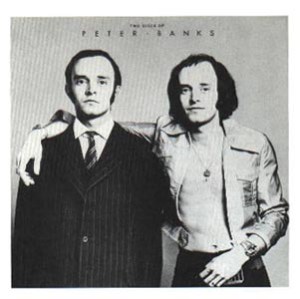
My collection of Banks’ works beyond his time with Yes is a bit spotty, but I enjoy Flash’s “Lifetime” in particular, again looking to the innovative musical arrangement. Peter’s acoustic work on “The White House Vale” is a favorite of mine from Two Sides of Peter Banks.
While I am not a guitarist myself, it was easy to appreciate the tasteful approach Peter had to his music, and he will be missed.
====================
Chicken Coup recording artist, Hammond B3 organist and drummer Linda Dachtyl is a member of the faculty of Kenyon College, teaching jazz piano and percussion. She is a graduate of the Conservatory of Music at Capital University (B.M. in Jazz Performance) and The Ohio State University (M.A in Percussion Pedagogy).
Currently she leads a traditional soul/jazz B3 quartet along with her husband, drummer Cary Dachtyl. She is a member of the eclectic rock group eSkip, drummer for the psychedelic power trio, The Walt James Band, and has appeared on festival dates as a Hammond B3 organist with saxophonist “Blue” Lou Marini, the late B3 organists Trudy Pitts and Gloria Coleman, and on studio recordings and festival appearances with blues singer Teeny Tucker.
As I’ve listened to NdV-era Spock’s Beard, I’ve been reflecting on words, meaning, their problematic relationship, and how music swirls around that relationship, clarifying but never really clarifying. Some things begin to come together as I listen again to the opening of the eponymous album (2006). “Perfect Day” in the song title reminds me of Lou Reed, which in turn reminds me of a viscerality in rock music without which… I guess I’d say: without which not. That’s all.
And that viscerality is here, as much as on its predecessors. Sure, I can hear the proggishness, but damn, it’s wonderful rock music. Alan’s guitar leads on this album as much as Nick’s vocal, with a confidence that breathes. I can feel the respiration, like I might notice the breathing of a companion, reminding me forcibly in a needed moment of the companionship even though nothing is said
But as I’ve been noticing, there are things that are said. The words, I’m hearing here, are for another time. YES! Of course they are for another time. A more “perfect” day, whatever that might mean. Their meaning is deferred, but is not any less meaning for that. It’s as though I do have the meaning, even though I don’t really have it, and may never have it. Still, I have it.
And now I can read back the viscerality more clearly, read it back into the respiration that was Feel Euphoria and Octane. Yes, I have to admit it, though I hate to… There’s a profundity and an ecstatic cohesion to those two prior efforts that has retreated a bit here. I lean in the direction of disappointment, but I’m surprised by how slight is that leaning. Why? Because, damn, this is wonderful rock music! One of the things I remember about my seventies-self is the expectation I developed that there should be something sustained over the course of a whole album. It became such a strong expectation that even the albums coming closest to perfection in this regard (many of which were NOT “concept” albums) were not without a pinch of that disappointment, a little of that leaning.
If there is something that the eponymous album does for me at a deep level, it is reinforce the viscerality, the album-long sustenance, of which these guys seem so consistently capable. It makes the previous two discs shine even brighter across the current landscape of my listening.
“So, you’re saying it’s not quite as good as the last two, then?”
You could take that to be what I’m saying, I guess, and you wouldn’t really be wrong. But I have to say it again…
Damn, this is wonderful rock music!
(Special mentions: That exquisite transition, all piano, from the fading dischord at the end of “Wherever You Stand” into “Hereafter.” And the very much up-to-snuff suite, where the textural high points of the album seem especially to lurk, beginning with the irresistible “Dreaming in the Age of Answers.”)
And this brings me to a scary place in the journey with SB. One more studio effort with NdV (whom I’ve already shyly followed onto his next Train). What will I think of that? Yes, there’s the latest release too, and I WILL do SB the service soon of getting all the way to that place. My resolve is still strong to remain something of a heretic, and wait a while yet before I go back to a serious sojourn with the earlier recordings with Neal. I will get there, but I will risk irritating the true believers by refusing to hurry.
With Spock’s Beard, I very much recommend avoidance of hurry.
All those discoveries, all those revelations. The heady seventies seemed, to this newly addicted progger, a time when music was becoming something very important, and something very Other than whatever it had been before. It was as though my listening knew a simple filing system reflected in the arrangement of bins in the store where I bought most of my records. Classical, Jazz, and something like “Pop/Rock,” where the prog seemed mostly to fall back then. January of 1973 had not yet been shaken by Oldfield’s Tubular Bells (coming later that same year), which would bash against the sides of the existing bins even more forcefully.
But then there was Wakeman’s The Six Wives of Henry VIII. The historical record now seems to show that marketers and critics often didn’t have much of a clue what to make of it. I remember the first time I saw it at the store, displayed prominently among “recently released” titles. I thought of myself as being hooked on almost anything that involved synthesizers, and being very much under the spell of Fragile, I bought it without hesitation. I knew that Henry VIII had been a King, but not much more than that.
I remember listening multiple times, and being convinced that I liked what I was hearing. In retrospect, however, I think it was a fairly long time before I had anything that would qualify as an understanding of what I was hearing. The continuities with Yes were palpable enough to confirm my favor immediately, but I know that I first heard them as something like isolated moments. It was as though I had to wait between them, and I didn’t notice for a while how impatient and superficial was that waiting. I also didn’t notice until later how momentous an impression was growing within me of that music through which I initially “waited.”
Keyboards! KEYBOARDS!!
I cradled the album cover so reverently in my lap, poring over that center picture of Rick looking so cool and so totally at home in that nest of keyboards. I’m quite sure that I had looked at it more times than I could count before I really noticed one day that there, so dominant in that nest, was the keyboard of a grand piano, the most-emphatically-NOT-a-synthesizer presence once I had really perceived it there. Indeed, it may not have been until after a few spins of Tubular Bells (with that very British voice, announcing: “Grand Piano!”) that I went back and really saw it.
I now see my belated noticing of the grand piano as a sort of marker for my beginning to notice just how rich was the instrumentation, how complex and layered were ALL of those keyboards, and how they were layered with ALL of the other instruments.
I’ve already alluded here a number of times to the “between” character of what we were then calling “progressive.” It was with Six Wives, its completely unapologetic thematic immersion in the grandeur and tradition of British monarchy, and its continuity with Fragile‘s explicit embrace of “classical,” that I really began to find my feet in what became a lifelong love of what anthropologist Clifford Geertz called “blurred genres.”
Yeah, I was just as taken with Journey to the Centre of the Earth when it came out in 1974. But now I would say that Six Wives has held up much better with the passage of time. Compared to Journey, it seems not to have aged. In fact, if anything sounds a bit dated now, it’s those synthesizer moments that first stood out to me, for which I found myself “waded” at first.
Wakeman’s output has been huge, and I’ll confess to not having heard ALL of it. But it’s difficult for me to imagine him ever really topping this masterpiece. When I saw Wakeman live with Yes in 2004, and they played that wonderful acoustic “shuffle” version of “Roundabout,” I felt like I was back in Henry’s court.
After leaving Genesis, Peter Gabriel released four solo albums (1977, 1978, 1980, and 1982), all originally simply entitled Peter Gabriel. The first three earned nicknames based on their covers, and the fourth was dubbed Security when it was released in the U. S. (I remember thinking at the time that this album-titling strategy, surely frustrating to marketers, was one of the coolest things imaginable.)
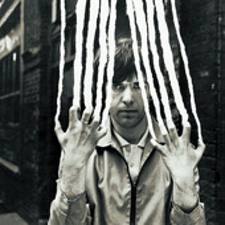
Ever since its release in 1978, the second Peter Gabriel (“Scratch”) has been one of my very favorite albums. It would make my top 25 list not only of “prog” albums, but of any albums of any genre. I’ve often been strongly tempted to think that this was due to those idiosyncratic associations we all have with some of the albums from youth. But I’ve both listened to and thought about it again lately, and I’ve decided that I will still boldly proclaim that it is, as an album, the best of the four.
This feels like a strange judgment to make. While about as critically successful as its companions at the time, generally speaking, it now sometimes seems to be the least enduringly “visible” of the four. I have certainly run into a lot of folks who know Gabriel’s work generally but who do not remember “Scratch” well. (Perhaps this is different across the pond?) And my judgement does not negate the high points of the other three, arguably higher in some ways than any particular moment on “Scratch.” But “Scratch” is not about high points as much as it is about a compelling sort of quasi-operatic profundity, sustained with remarkable consistency all the way through both sides of the original vinyl.
Now, putting it that way, in terms of the “operatic,” may make it sound “over-the-top,” but that is precisely what “Scratch” is not. The profundity has always sounded, and still does sound, wholly genuine to me. It has a remarkable textural subtlety that, as far as I can tell, has a lot to do with the way in which Robert Fripp’s production places just the right amount of restraint on Gabriel’s 70’s envelope-pushing ethos. (If you know the album, but haven’t done it recently, listen to it again alongside the other two albums in the Fripp “trilogy,” Fripp’s Exposure and Daryl Hall’s Sacred Songs.)
With Fripp’s production and the marvelous synergy of the musicians (yes, I have to use that word, and not just because of Larry Fast), Gabriel’s voice on this album (sometimes treated, sometimes multiplied, sometimes fragile, sometimes exquisitely abrasive) is at its most Genesis-glory-days “Gabrielesque.” I tend to see it as the last truly great whole-album surge of the “early” Gabriel. Again, this is not to cast particular aspersions upon the “later” Gabriel. (I think the last single-song surge may have been “Shock the Monkey,” but that judgment may be clouded by its delightful music video.) So (1986) is amazing in completely different ways.
I haven’t yet been able to bring myself to discuss the individual songs. Do you remember them? If so, I’m guessing you remember some more than others, but I’ll surrender to the impulse and not go there. I’ll stick with my focus on the album as album. Listen again to the whole thing. Listen to it as a sustained, single work.
To my ears, it holds up as well as anything Gabriel has ever done.
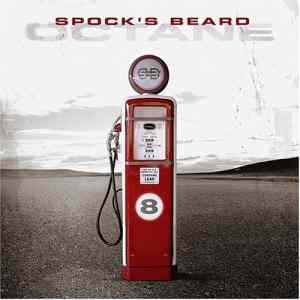
The large lighted sign sports the huge initials, “S. B.” I think it stands for “Standard British” or some such thing, but what I know is that my tank is low, so I pull into the station and stop near the pumps. Once I stop, it’s suddenly the late 1960’s, my driver’s license is still new, and I’m in an Impala, of all things.
The guy who rushes out to the pumps from the office is clean and official-looking, but has a beer gut. He also has a beard. “Yessir! Fillerup?”
Still getting my bearings from the crossover, I just shut off the car and nod.
Spock’s Beard – Octane (2005)
“Regular or high octane?”
“Octane.” He nods again as if my reply were not strange in the least.
He takes off my gas cap, sticks the nozzle of the old-looking (even allowing for the time-shift) gas pump in, and begins pumping.
Pumping.
And it’s like another crossover, but this time its all coming from an unbelievable sound system. I look at the dashboard and see an AM radio, pushbuttons and all. I try the volume control, and sure enough, that’s where it’s coming from. Except that it’s not, really. It’s not coming from a speaker in the dash, or any speakers in the car that I can see. It pervades both the car and my body.
“Check the oil, sir?” In a normal tone of voice, though I can hear him well enough above the music. I don’t think that he hears it.
“Nah, it’s OK.”
He nods and begins spritzing and wiping the windshield.
The music is what is filling the tank. The tank? It’s filling me, isn’t it?
A flash before my eyes… The town I’m in is that town where I lived during my childhood and adolescence.
Yeah, it’s music. I’m listening to music. Wasn’t I just listening to music? Wasn’t I just walking with my ear buds in, when suddenly I was jerked sideways into this “review”?
Review! I forgot that’s what it was supposed to be. It seems so much like a gas station. I don’t think it will succeed at being a review, but I’ll at least give it a little effort.


 For those of us who are “old-timers,” still somewhat stuck in the 1970’s, band personnel changes can be among the most significant events in music-making. Perhaps this is still true, but my sense is that it has become much more taken-for-granted as part of the “prog” landscape. I’ve been taking it slow with my forays into Spock’s beard, and singing the praises of patience, of not being hasty. I haven’t yet commented on X, though I have listened once, and the post will come.






 Progarchy