Tim Bowness: The 2022 Progarchy Interview

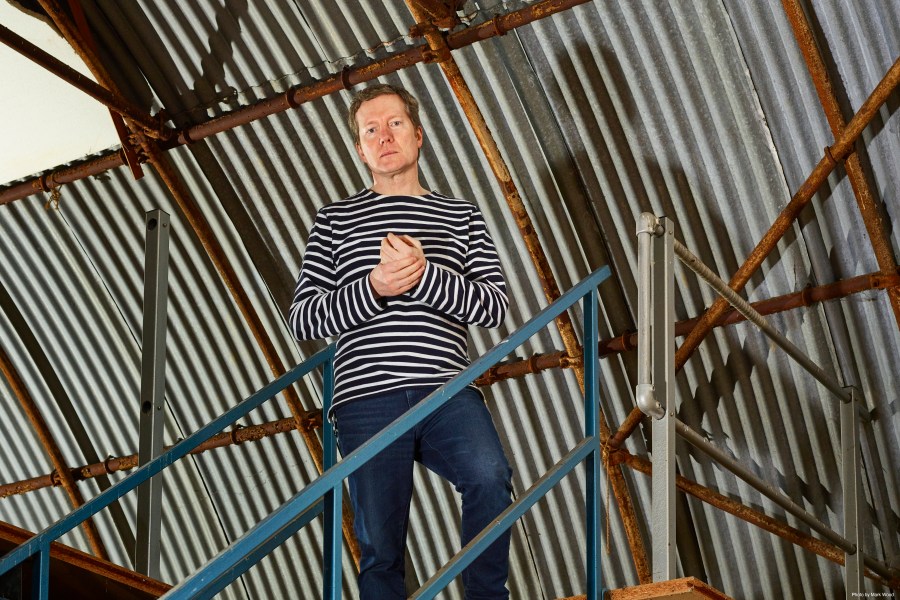
Tim Bowness’ sterling new album Butterfly Mind — to be released after last-minute supply delays on August 5th — isn’t just his latest for InsideOut Music/Sony, it’s also his 40th anniversary release! Since 1982, Tim has made his mark in the music industry as a contributor to bands such as Plenty (2 albums of recently re-recorded material from their 1980s heyday) and No-Man (7 albums, including 2019’s comeback Love You to Bits), as the co-founder of the record label and online music shop Burning Shed, and as co-host of the podcast The Album Years with No-Man collaborator and long-time friend Steven Wilson. Oh, and he’s also released five of his six previous solo albums on InsideOut since 2014, all chock-full of thoughtful, provocative art-rock brought to life by the cream of today’s progressive musicians. Butterfly Mind continues Bowness’ hot streak while striking out in fresh, arresting directions.

This is also at least Tim’s fifth interview with us at Progarchy. This time around, as well as revealing how “shed envy”, George Orwell, and flavored milk drinks played into the creation of Butterfly Mind, Tim unpacks his philosophy of lyric writing, reacts to Steven Wilson’s memoir and brings us up to date on the latest challenges of running Burning Shed. A complete transcription follows the video below!

So, when last we spoke, and I think that was in 2020, you joked about doing nothing and emptying out your Hard Drive of Doom over the next couple years.  But here we are, in the run-up to yet another new album.  So, what was the impetus behind the songs that have become your new album, Butterfly Mind?

Well, I did actually have nine months of not writing anything; the same before Late Night Laments as well.  Basically, I didn’t write for about eight and nine months, and then I suddenly felt compelled to write.  Because before Late Night Laments, I’d been working on No-Man’s Love You to Bits, and that had taken us about a year.  That was a case of rewriting an existing piece and adding to it.  And Late Night Laments came out very much as an album in opposition to Love You to Bits, cause Love You to Bits had been this quite electronic, pummeling, beat-oriented work.  And I desperately wanted to do something quieter, more reflective.

And when I’d finished Late Night Laments, I really did have no ideas!  All I did for about nine months was record cover versions of songs for fun.  As you say, I got my Hard Drive of Doom out, I re-recorded some very old Plenty songs, and about nine months after that, I wrote a piece called “Lost Player”.  And the floodgates opened once again! 

So, within about four months, I’d written four or five pieces, several of which didn’t end up on the album.  Two were with Richard Barbieri, who is in Porcupine Tree, as I’m sure many of you might know.  And another was a track with [Plenty member] Brian [Hulse], which is ending up on the Japanese version of the album.  But it really kickstarted again, sort of October 2020, and I just suddenly felt the desire to write.  And if there was any motivation, it was again to do something different from what I’d done.

So, whereas Late Night Laments as an atmospheric album and it was quite consistently quiet, with this album I wanted to surprise myself and surprise the listener.

And I think you did!  Because it’s true; when I heard Butterfly Mind, it immediately seemed harder-edged – there’s experimental sonics; you’ve got some songs with multiple sections; there’s almost a sort of muted hysteria in terms of the subject matter.  But we can get to that in a bit.

On this album, instead of using that variety of players that you used on Flowers at The Scene and Late Night Laments, you’re building out from this core band – Brian Hulse on guitars and keys, Nick Beggs on bass and Stick, and Richard Jupp on drums.  How did that unit come together?

It came together in a variety of ways, really.  With Richard Jupp, I’d long been a fan of Elbow, and with him it was a case of shed envy!  I’d seen an article on him and his home studio, and he had this magnificent shed and home studio.  So, I contacted him, and obviously mentioned how much I liked his drumming as well.  I particularly liked it on the first couple of Elbow albums, where he’s a very versatile player who can do dynamic, and he can do quiet.  And luckily his teenage son, it turned out, was a fan of No-Man, Porcupine Tree and The Album Years, so he knew my work. 

So that’s how Richard got involved; I said, “would you be interested in playing with me?”  The session with Richard was great, because it was the first session after all the lockdowns in the UK.  And so we were in the studio together, working in real time on the music.  So, it’s very exciting!  And he definitely went above and beyond what I’d expected.  Because originally, he was planned to be on maybe half the album.  But he heard certain tracks like “Always the Stranger” and said, “I’ve got to play on this; let me play on this!”  So, it was really good!

Nick Beggs came about because as much as I love the players I’d been using on my previous albums — Colin Edwin, John Jowett, they’re both incredibly gifted.  And I’ll continue to work with them; in fact, I’ve worked with Colin since I completed this album.  I wanted something different; I wanted a different kind of energy.  I mentioned this to Steven Wilson and he said, “Nick Beggs would be my choice.”  So, then I approached Nick Beggs, and luckily he agreed. 

So, yeah, it comes from a core group working on the song, then finding the right solo instrumentalists.  People like Ian Anderson and Dave Formula, who are on the album.

Yes, and I noticed that here are plenty of cameos – you mentioned Ian Anderson; Peter Hammill comes in on guitar and vocals for a couple of tracks again; Greg Spawton plays bass pedals that don’t sound like bass pedals, so that’s kind of fun. 

[Laughs] Yeah, it’s true!

But the biggest news that I saw in terms of guest shots was Ben Coleman playing some violin.    What led the two of you to team up again?  As I understand it, it’s the first time you’ve been in the studio together since No-Man’s initial heyday.

Yeah, it’s the first time since 1993, so 29 years!   I think in the case with a lot of the players, such as Ian Anderson, it’s because I felt like it required that flute solo voice.  And Ian plays on three tracks; one of them isn’t on the album, it’s on the outtakes CD, which is the second disc of the CD version.

And so really, it was finding the players I thought were appropriate for the piece.  And Dave Formula is somebody whose music I’ve loved for many years.  He was in a band called Magazine, who were very big when I was at school, and then he was also in a band Visage, who were also very big as well.  But he’s a tremendous Hammond organ and synth player, who has been around actually since the mid-60s.  He’s the same age as Ian Anderson, even though his heyday was in the early 1980s, with people like Visage and Magazine!

So generally speaking, I found people whose music I felt resonated with mine, and I felt they’d be able to bring something out of the material.  And the same goes for younger artists.   Like Martha Goddard, who sings backing vocals on three tracks, and Mark Tranmer, who is a wonderful guitarist who’s in a band called The Montgolfier Brothers.

And with Ben Coleman, it was because I could hear violin on two of the track; I could suddenly hear that classic No-Man sound!  I just got in touch with him, and luckily, he was interested.  He contributed to three or four of the tracks on the album in the end.  And it was glorious – as soon as he started playing, it was that sound!

Yes, yes it is!  It’s absolutely unmistakable!  So let’s dig into subject matter a little bit more.  The first time I heard “We Feel” and “Only A Fool” they were genuinely scary to me!  And I also know that you never want to connect all the dots for us; you want us to take away our own meaning.  Or our own perception of what you’re trying to say in these songs.  But what clues are you leaving for us to decipher?

Continue reading “Tim Bowness: The 2022 Progarchy Interview”
Rick’s Quick Takes for June

Six months in, 2022 is already shaping up as a banner year for new music. My own positive bias prevents me from objectively reviewing The Bardic Depths’ brand new album (though modesty doesn’t seem to prevent me mentioning it; I’m still stoked that I got to participate) — but there are still plenty of fresh releases to cover this time around! As usual, purchasing links are embedded in each artist/title listing; where available, album playlists or samples follow each review. But first, the latest installment in what’s becoming Progarchy’s Book of the Month Club . . .

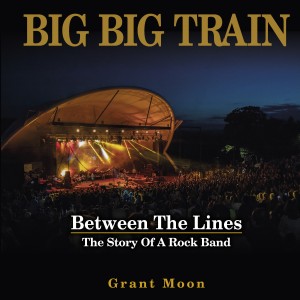
Big Big Train – Between The Lines: The Story Of A Rock Band: when Greg Spawton and Andy Poole started a band, it didn’t stand out at first; one early concert promoter called the nascent Big Big Train “fairly mediocre” in retrospect. How BBT became a prog powerhouse — through sheer bloody-mindedness, growth in their craft and a keen ear for what world class musicians like Nick D’Virgilio, David Longdon and so many others could contribute — is the tale at the core of this passionately detailed band bio/coffee table book. Standout features include lavish design, with a overflow of revelatory photos; fully rounded portraits of major and minor participants, mostly unfolded through Grant Moon’s thorough interview work; and remarkable candor, especially in a self-published effort, about the human costs of BBT’s rise to genre prominence and mainstream media attention. (Moon’s portrayal of Spawton and Poole’s gradual estrangement, even as their joint project finally gathers speed, is both sensitive and haunting.) Between The Lines covers all of Big Big Train’s great leaps forward and forced backtracks through Longdon’s untimely death, leaving the reader with Spawton and his fellow survivors determined as ever to continue. Not shy about celebrating the beauty and ambition of the music the group has made, on record and in person, it also doesn’t flinch from portraying the price paid to scale those heights.

The Pineapple Thief, Give It Back: on which Gavin Harrison gives his new band’s vintage repertoire a kick up the backside with his stylish stick work, and Bruce Soord willingly “rewires” his own songs with new sections, verses and narrative closures. The results probe further into the moody motherlode that new-era TPT mines and refines: dramatic vignettes simmering with emotional turmoil; lean, mean guitar riffs arching over roiling keyboard textures; and always, those simultaneously airy and propulsive grooves. But while Soord and Harrison take the creative lead, this is a marvelously tight unit at work; Steve Kitch (keys) and Jon Sykes (bass and backing vocals) are indispensable contributors throughout. All of which makes Give It Back another enticing entry in the Thief’s discography — deceptively low-key on first impression, it blossoms into a compelling combination of tenderness and grit. (With plenty of headroom in the mastering to pump up the volume!)

Porcupine Tree, Closure/Continuation: The big news is that this is recognizably a Porcupine Tree album — that’s why, over repeated listens, it works so well. Steven Wilson is as happy and carefree as ever, cutting loose about fraught relationships (“Harridan”), nihilism in high places (“Rats Return”, “Walk the Plank”) and, of course, the inevitability of death (“Chimera Wreck”); plus there’s a spooky take on a Lovecraftian invasion (“Herd Culling”), a compassionate portrait of a man with nothing (“Dignity”) and a drop-dead gorgeous ballad that looks forward in hope and back in regret at the same time (“Of the New Day”). Still, it’s the reconstituted band, mostly writing the music in team formation, that gives the record its core integrity and guts. Wilson’s angular guitar and bass work, seemingly effortless songcraft and vocals that often climb to a wordless falsetto (a legacy of The Future Bites?) are perfectly swaddled in Richard Barbieri’s squelchy sound design and ineffably eerie synth solos, then hurtled forward by Gavin Harrison’s consummate percussive drive — whether he’s cruising the straightaways or leaning into jaw-dropping polyrhythmic curves. Of a piece if not conceptual, Closure/Continuation is never less than well-wrought and frequently awesome, worthy to stand alongside Porcupine Tree’s catalog as either a next or a final chapter in their saga. Now floating like a butterfly, now stinging like a bee, with commitment evident in every note, it may well knock you out.

Continue reading “Rick’s Quick Takes for June”

Celebrating Kate Bush!

Stranger things are happening again! This time, the benefit doesn’t go to Weezer (or even Toto), but one of Progarchy’s long-time faves, the utterly unique Kate Bush. From her website:

“Running Up That Hill has just gone to No 2 in the UK charts and No. 1 in Australia, New Zealand, Switzerland, Sweden…. How utterly brilliant! It’s hard to take in the speed at which this has all been happening since the release of the first part of the Stranger Things new series. So many young people who love the show, discovering the song for the first time. The response to Running Up That Hill is something that has had its own energy and volition. A direct relationship between the shows and their audience and one that has stood completely outside of the music business. We’ve all been astounded to watch the track explode! Thanks so much to everyone who has supported the song and a really special thank you to the Duffer Brothers for creating something with such heart . All best wishes, Kate

In addition, “Running Up That Hill” has re-entered the Billboard Magazine Hot 100 at number 8 –Bush’s first Top 10 placement ever in the US. Slate Magazine breaks down how she got there:

It Took More Than Stranger Things to Make Kate Bush’s First Top 10 Hit

All this has provided the perfect excuse for me to break out my Kate Bush box sets and revel in her breathtaking creativity. My fave albums – The Kick Inside, Hounds of Love and the 1986 compilation The Whole Story — remain the same. Though I’ve always been a fan of 2005’s Aerial, 2016’s live Before the Dawn is thoroughly stunning, and the 2018 remasters unveiled the charms of Never For Ever and the wonderfully bonkers The Dreaming for me. As summer listening projects go, this one’s a winner! (I’m also re-reading Graeme Thomson’s fine biography of Ms. Bush , Under the Ivy.)

Or, I might just check out “Running Up That Hill” one more time:

— Rick Krueger

A Tribute to Kings: Primus and Battles in Concert

Primus: A Tribute to Kings with Battles, GLC Live at 20 Monroe, Grand Rapids, Michigan, May 31, 2022

Having been sucked in to seeing this show by the sheer audacity of the concept — Primus covering Rush’ complete album A Farewell to Kings — I wasn’t sure what to expect in terms of the audience. On the night, GLC Live hosted what was by no means a typical “progressive rock” crowd. With all the restrooms equally busy at the usual break points, I saw pierced youth, middle-aged mullet wearers, date night couples, Gen X parents with their Millennial kids and the occasional fan in costume (from silk kimonos to the hat pictured here, depicting the album cover of Primus’ Sailing the Seas of Cheese) packing the standing-room-only main floor. So I got as close to the soundboard as I could and awaited the night’s developments.

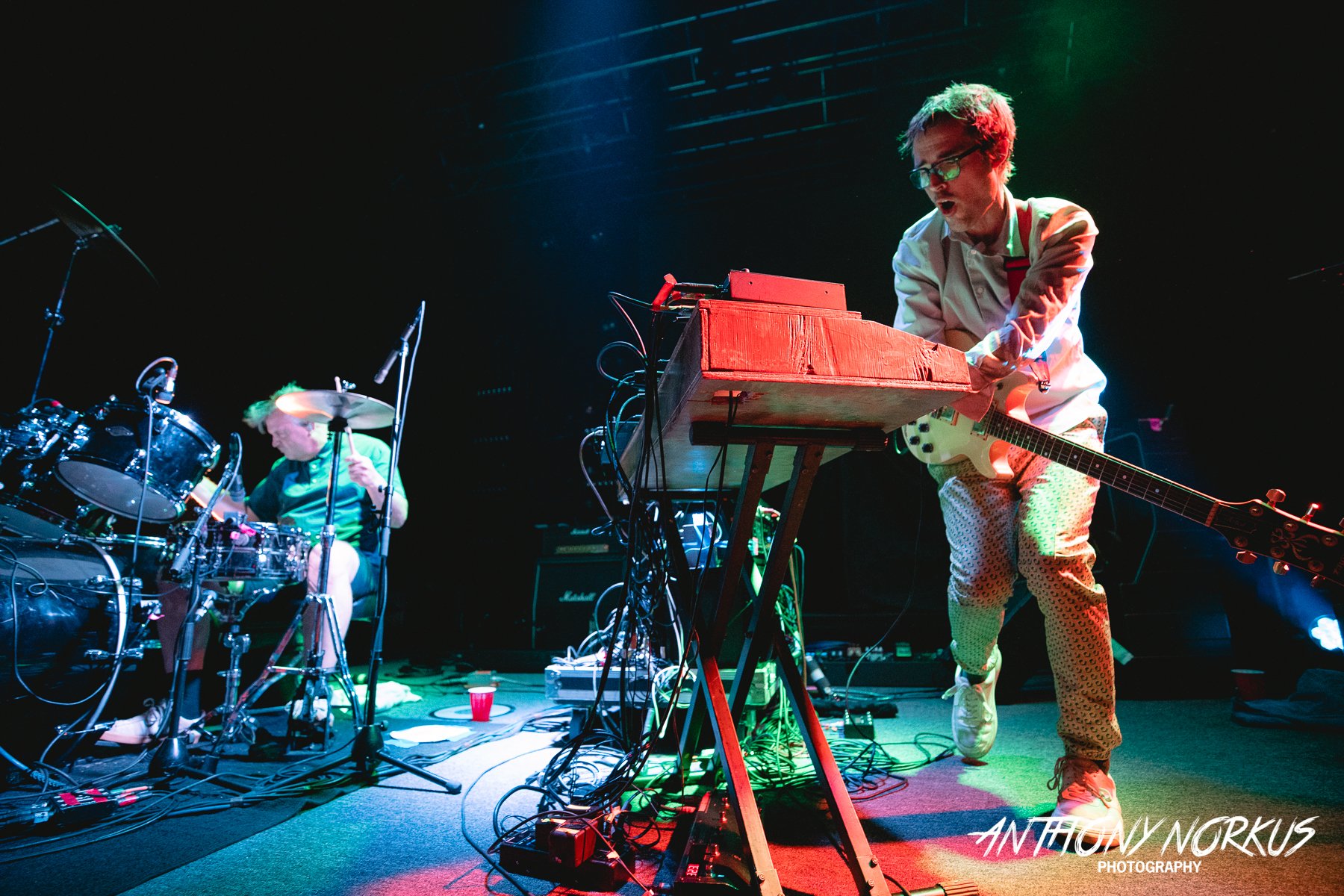
Making their Grand Rapids debut, New York City’s Battles got the crowd moving with a ecstatic blend of electronica, funk and rock, mostly from 2019’s stellar Juice B Crypts album. Ian Williams set the mood with his genial dad-dancing — triggering loops and laying down riffs on synth, garnishing the resulting blend with effects-laden guitar riffs and the odd solo in the moment. John Stanier, a hard-hitting drummer in the John Bonham vein, drove the tunes and cued one whiplash rhythm change after another, triggering new beats and repeatedly bashing his elevated crash cymbal along the way. The grooves were relentless but refreshingly unpredictable and airy; the interlocking melodic lines ranged from punky ferocity to video-game-soundtrack campiness; and the occasional pre-recorded guest vocal (like Jon Anderson adding some Yes-style sunshine to “Sugar Foot”) always seemed to furnish a cherry on top the sweet sonic sundae. Williams and Stanier have forged an impressively interactive relationship with their electronics in real time, bringing an artsy asymmetry and freshness to their music that gathered thrilling momentum as the set progressed. After 45 minutes of Battles, I felt like I’d already got my money’s worth. (And I can’t recommend their recorded catalog highly enough — if there’s such a thing as dance music for prog heads, this is it!)

Battles onstage at GLC Live: L to R, John Stanier and Ian Williams.

Following the openers’ clean lines and summery vibe, the headliners’ full-on first set was initially bewildering to a newbie like me. Bypassing their long-ago radio hits for the most part, Primus conjured up a thick, hypnotic pulse to jam on extended, deep catalog tracks like opener “Harold of the Rocks” and “American Life”, as well as new music from their Conspiranoid EP. While that approach grabbed the already-primed crowd from the start, I had to get my bearings. Still, it was quickly evident that Les Claypool’s circular, polyphonic bass riffs are the heart of Primus’ sound (with his outsider sensibility every bit as evident instrumentally as in his carnival barker voice and Zappaesque lyrics); that drummer Tim “Herb” Alexander not only locks in with Claypool’s grooves, but that he pretty much fills the remaining space in the soundfield; and that their tight connection allows Larry “Ler” LaLonde the freedom to play guitar in a completely lateral fashion, with blindingly off-angle solos that seem to defy not only the laws of tradition, but possibly the laws of physics. Add in a full-on light show and quirkily-cued screen projections, and you had an undeniably appealing set, connecting with the audience via its eccentricities, not despite them. But one question remained for me: how well could Primus, who opened for Rush back in their own early days, possibly recreate the operatic metal sound of their heroes in the 1970s?

Primus onstage at GLC Live: left to right, Larry LaLonde, Tim Alexander (behind drums), Les Claypool)

The answer: better than anyone had a right to expect. Primus had unquestionably done their homework; “A Farewell to Kings'” chiming classical intro and lumbering riffs plus “Xanadu’s” double-neck duet and bell tree accents proved the opening shots of an awe-inspiring re-creation, with all of Rush’s instrumental bells and whistles delightfully present and correct. All three players were stretching themselves to hit their marks, and you could tell how the effort had strengthened their overall bond as a band. And I’ll give the kimono-clad Claypool full credit for giving Geddy Lee’s utterly impossible vocals his best shot; generally sticking to a lower octave, occasionally letting loose with appropriate Plant-y screams, inviting the obvious singalong on “Closer to the Heart”, he was obviously having the time of his life nearly a year into this tour. By the time “Cygnus X-1, Book 1: The Voyage” (complete with Captain Smiler onboard the good ship Rocinante onscreen) gathered speed and dove into its climactic black hole, I was sold — even though my aching back meant I didn’t stay for what turned out to be an extended encore. Along with Battles’ marvelous opening set, my introduction to Primus’ weird world of pure imagination and their well-done “tribute to kings” proved to be an appropriately titled evening: a first-rate, full-on musical experience. If the above strikes your fancy and you get the chance, this tour is well worth your time and cash!

— Rick Krueger

Battles Setlist:

  • The Yabba
  • Hiro 3
  • IPT-2
  • Summer Simmer/Ice Cream (featuring Matias Aguayo)
  • A Loop So Nice . . .
  • Titanium 2 Step (featuring Sal Principato)
  • Fort Greene Park
  • Sugar Foot (featuring Jon Anderson and Prairie WWWW)
  • TRAS
  • Ambulance
  • Atlas

Primus Setlist:

  • Harold of the Rocks
  • Fisticuffs
  • The Pressman (quickly abandoned because, to quote Claypool, “I can’t remember the words. We’ll play something else!”)
  • American Life
  • Conspiranoia
  • Professor Nutterbutter’s House of Treats
  • Del Davis Tree Farm
  • Erin on the Side of Caution
  • Welcome to This World
  • Jerry Was a Race-Car Driver
  • A Farewell to Kings
  • Xanadu
  • Closer to the Heart
  • Cinderella Man
  • Madrigal
  • Cygnus X-1, Book 1: The Voyage
  • Too Many Puppies/Sgt. Baker/Too Many Puppies
  • Follow the Fool
  • Southbound Pachyderm

Album Review – Fairy Tale’s “That Is The Question”

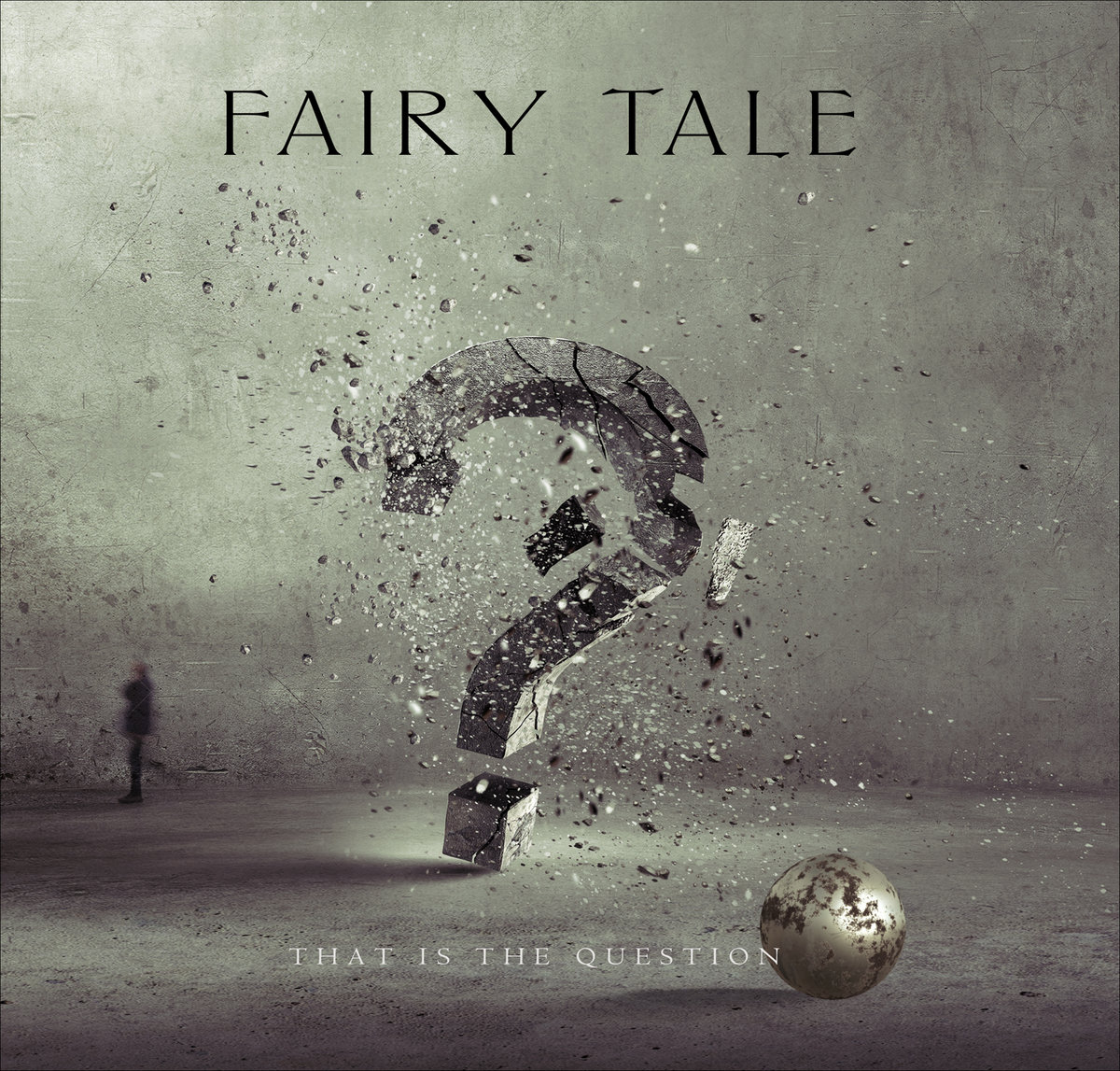
a0043426731_10Fairy Tale, That Is The Question, 2021

Tracks:
Wasting The Sound 1 (1:36), That Is The Question (3:48), Time Heals Nothing (4:37), Wasting The Sound 2 (1:42), Wake Up (4:13), Girl Of The Opera (3:24), Wise Men Keep Silent (5:00), Wasting The Sound 3 (1:14), Sophie (11:19), Dot (0:24)

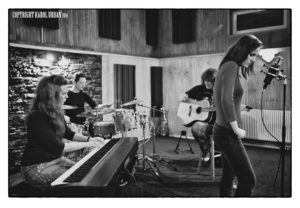
While Slovakia’s Fairy Tale may be a new band to Progarchy, the group has a long history making music dating back to the mid 1990s. The longtime project of Peter Kravec has seen a couple iterations, but the current version was created in 2003 when Kravec met singer Barbora Koláriková. They have since made five albums, including this one, released at the end of October 2021. Kravec plays guitars and produced the record, and Koláriková plays bass guitar in addition to handling all the vocals. They are joined by drummer L’ubomír Pavelka, and Marek Škvarenin and Adam Lukáč play keyboards on various tracks. 

The album ranges in tone from ambient and electronic sounds to a harder progressive rock edge. The band describes themselves as art rock and prog with elements of ambient. At under forty minutes, it’s a short record, which means the disparate sounds of ambient music with heavier rock sometimes clash, although I don’t think the album is necessarily meant to be a concept album. 

2014APR05-20-300x208

The heavier parts of this record, such as the title track, have a very upbeat tempo, which contrasts with the more ambient elements. With that said, even the title track has a deeper moment with heavy bass and an overlay of Fripp-Like guitar. This smoothly blends into “Time Heals Nothing,” which opens with quieter keyboards and clean electric guitar. 

The strongest part of the record comes in the second half of “Time Heals Nothing,” which features a seriousness and an intensity in the music and the lyrical delivery that is more pronounced than on other songs. The song gradually builds towards the end into a wonderful “wall of sound” effect, which blends the ambient with the rock in a seamless way. I also think this song also has the best lyrics of the album. It deals with themes of joy and suffering, forgiveness and grace. There is an element of nihilism in the second half of the song, which can be gleaned from the title. For example:

Souls are burning
And we are boring
Time heals nothing

Souls are burning
Knowledge is boring
Time heals nothing

The electric guitar opening to “Wise Men Keep Silent” has a soothing atmospheric quality that reflects the shorter instrumental tracks, although these more ambient qualities are not tied in throughout as well as they could be. “Wise Men Keep Silent” demonstrates what Fairy Tale does best: ambient and atmospheric music sprinkled with rock influences. The instrumental track includes Barbora using her voice as an instrument, which adds a calming sensation. As I’ve been listening to Devin Townsend’s late 2021 ambient record, Snuggles (which I really should review at some point) recently, I’ll add that I hear similar elements in this song, as well as in other parts of That Is The Question.

At just over eleven minutes in length, “Sophie” is the epic of the album. It has a more electronic influence to it, and it allows the varying musical influences to dance with each other more so than on many of the other songs. There are moments where it feels disjointed, particularly in the transitions, but overall it works well. 

If the artwork looks familiar, that’s because it’s by the great Hugh Syme, who is perhaps most well known for his work with Rush. The artwork throughout the CD digipack is characteristic of his work, and it is quite good. It adds an extra layer of professionalism to the overall packaging. 

While the individual musical elements on the album are all quite good, I think the album could use a bit more focus, or a longer running time with extended songs that tie the various musical elements together better. The shorter songs help serve that purpose, but I’m not entirely convinced that their style of upbeat rock works with more melancholic ambient tones, apart from the ending of “Time Heals Nothing,” which addresses this concern very well. My concerns may be a matter of taste, however, and you should be the judge of that for yourself. Overall I still say the music is very good and worth checking out.

https://fairytaleartrock.bandcamp.com/album/that-is-the-question
https://fairytale.peterkravec.com
https://www.instagram.com/fairytale_artrock/
https://twitter.com/FairyT_artrock

Rick’s Quick Takes for March

Lots of great music has crossed the metaphorical Progarchy transom this month! Purchasing links are embedded in each artist/title listing; album playlists or samples follow each review.

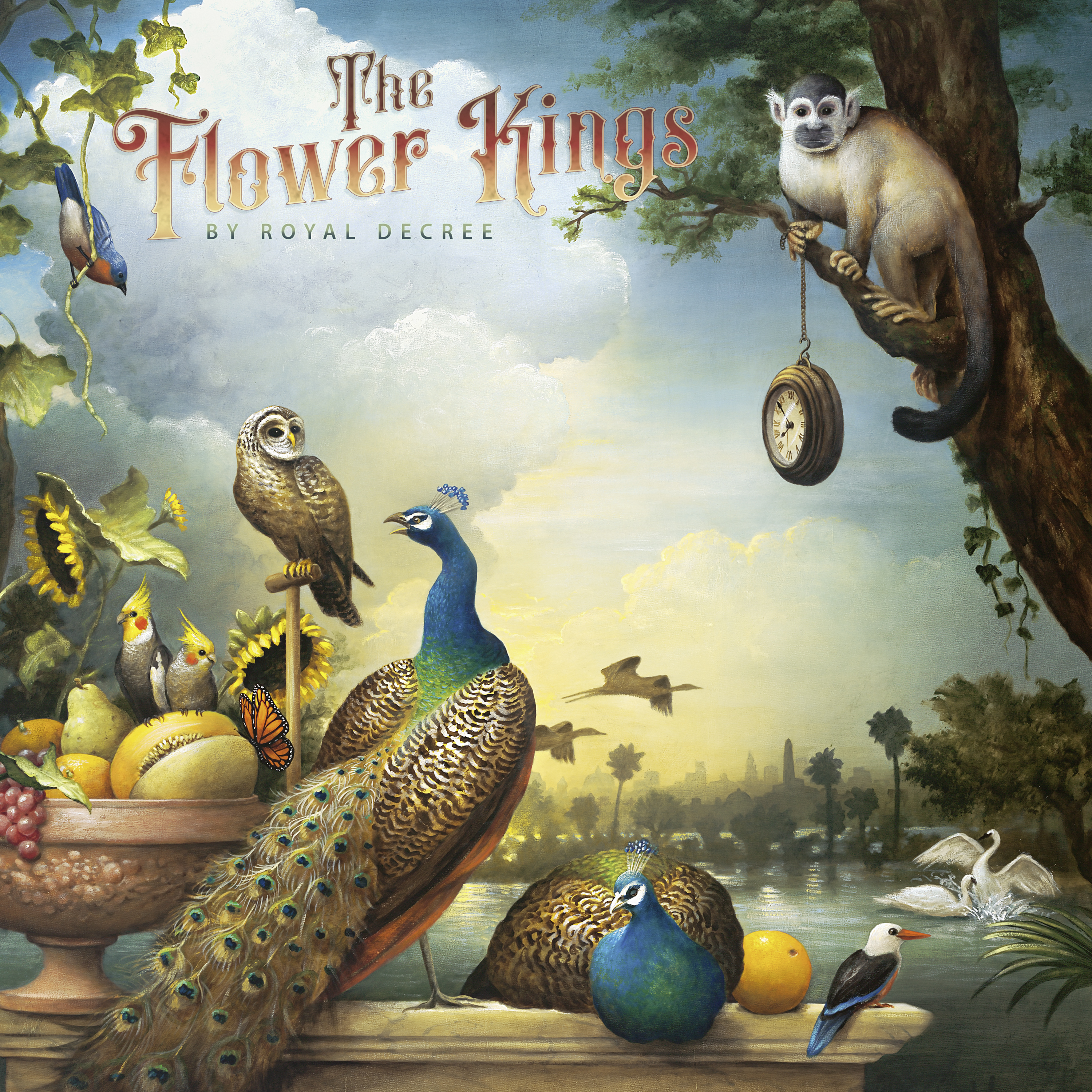
The Flower Kings, By Royal Decree: Fun fact: this is the third double album in a row from king of Kings Roine Stolt and his merry band. And like 2019’s Waiting for Miracles (which started the streak) it’s compulsively listenable from start to finish. Fresh out of lockdown, Stolt, singer Hasse Fröberg, keyboardist Zach Kamins, drummer Mirko deMaio and alternating bassists Jonas Reingold & Michael Stolt laid down 18 songs in the studio, negotiating the twists and turns of wildly varied material (some of which dates back to the early 1990s) with energy, precision and evident delight. Not a trace of metal here, and I hear much more psychedelia, fusion and Eurofunk in the mix than stereotypical “prog” — but to my ears, that’s what makes goodies like the unpredictable opener “The Great Pretender”, the ravishing ballads “A Million Stars” and “Silent Ways”, and the off-kilter eccentricity “Letter” so fresh and fun. There are plenty of serious lyrical moments too, as in “The Soldier” and “Revolution”; but, by and large, By Royal Decree is the sound of Stolt and company refreshed and revisiting their optimistic roots, soaring on the wings of one marvelous melody after another. It’s as much a joy to hear as it must have been to create.

Continue reading “Rick’s Quick Takes for March”

Bjørn Riis Releases Music Video Off Upcoming Album

Bjørn Riis is one of the most criminally underrated guitarists and artists out there. I have been consistently returning to his solo albums over the past few years, and they never disappoint. He’s a brilliant guitarist, and he manages to make so much out of the sparsest sounds. Where it would lack in other artists’ music, a simple drum beat creates the perfect mood and textures in Riis’ work. He is a master of a spacey atmospheric sound that is hauntingly beautiful.

Today he released a music video for his song, “The Siren,” told from the perspective of someone watching a dancer. The song is off his upcoming album, Everything to Everyone. The track features piano from Simen Valldal Johannessen of Oak, one of my favorite bands of the last several years. Riis has also provided guest guitars on a few Oak tracks.

The album is out April 7, and it can be ordered at various sites at the following link from Karisma Records: https://link.karismarecords.no/Bjorn-Riis_Everything-To-Everyone_Album

Bjørn Riis – The Siren – YouTube

Rick’s Quick Takes for February

Brought to you (mostly) by the letter B! Purchasing links are embedded in the artist/title listing; a sample follows each review.

Dave Bainbridge, To The Far Away: put simply, a thrilling, ravishingly beautiful album. Separated from his fiancée on the eve of their wedding by the COVID pandemic, guitarist/keyboardist Bainbridge focused on the essentials — love and the longing it stirs, the beauty of the world and the changing seasons, the desire for hope and a future. Poet Lynn Caldwell’s words (movingly sung by Sally Minnear and Iain Hornal) capture these themes with rich simplicity, cradled in a lush orchestral blend of rock, prog and Celtic folk. Often evoking the palette of his breakthrough band Iona, Bainbridge and a stellar group of collaborators grab your attention and your heartstrings again and again, whether on the dramatic instrumental “Rain and Sun”, the epic paean to the creative spirit “Ghost Light”, the classically-tinged rhapsody “Infinitude (Region of the Stars)” or the yearning sprint of “Speed Your Journey”. Already one of my favorites of 2022, and recommended without hesitation. (And check out our extensive interview with Dave here.)

Continue reading “Rick’s Quick Takes for February”

Kruekutt’s 2021 Favorites!

I thought I didn’t have a big list of favorites from this year’s listening — until I revisited my six-month survey from back in June and added in the good stuff I’ve heard since then! The listing below incorporates links to full or capsule reviews, or other relevant pieces on Progarchy and elsewhere; albums I haven’t written about yet get brief comments, along with my Top Favorites of the year. Most of these are available to check out online in some form; if you find yourself especially enjoying something, use that Christmas cash and support your choice with a purchase! And the winners are . . .

Continue reading “Kruekutt’s 2021 Favorites!”

In Concert: Genesis’ Last Domino Falls?

Genesis, United Center, Chicago, November 15, 2021

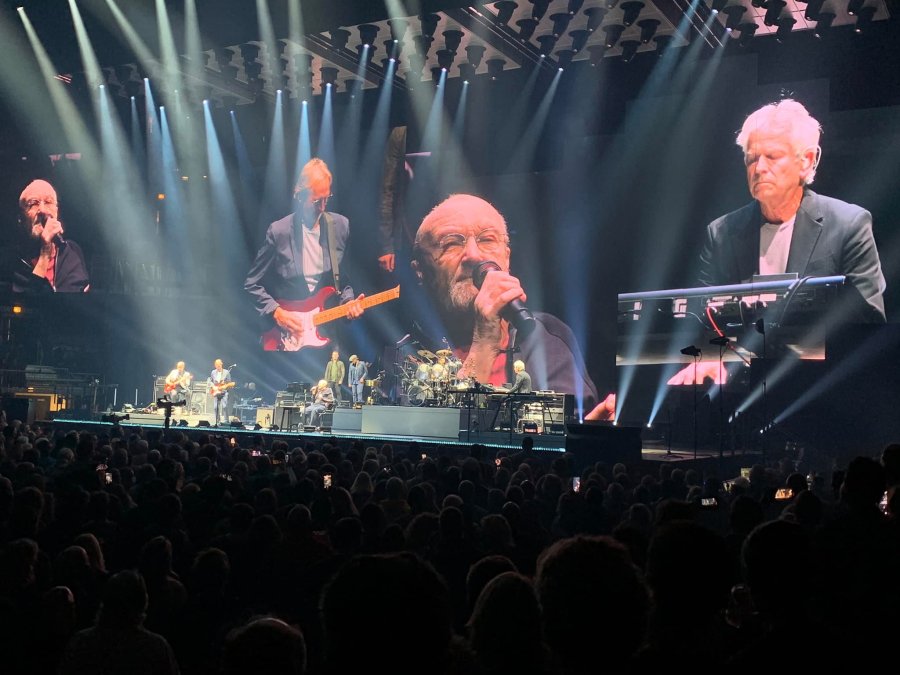
The moment was perfect.  In a blaze of white light recalling their iconic Seconds Out album cover, Genesis kicked off opening night of their North American tour with a rampaging “Duke’s Intro”, the instrumental beginning and end of 1980’s Duke.  And boy, did that one bring back memories as it rampaged.

The impact of hearing 1978’s And Then There Were Three and the ensuing deep dive into Genesis’ back catalog.  Hearing the band live the same year (my first rock concert ever) and being thoroughly blown away by their precision and power.  Seeing them again in 1980 — when, with live guitarist Daryl Steurmer ill, Genesis still put on a great show as a quartet — then in 1981, when they opened with that same arresting fanfare.

Forty years on, I was happy that Genesis still meant business; the players — Tony Banks, Mike Rutherford, Daryl Steurmer & Nic Collins — were firing on all cylinders from the word go, a tight ensemble that already promised each player choice turns in the limelight.

And already sitting at center stage, surveying the scene with a satisfaction that was obvious even to those five rows from the top of Chicago’s United Center, Phil Collins was getting ready to sing.

Continue reading “In Concert: Genesis’ Last Domino Falls?”