When Beck walked a talking blues over a sample of Johnny Jenkins’s cover of Dr. John’s “I Walk on Gilded Splinters” for “Loser,” his giant 1994 hit, there was an aesthetic purpose lurking underneath its vibe of off-the-cuff spontaneity that, 25 years later, continues to infuse his work with vitality. While “Loser” itself is marked by the wild west feel of early 90s indie rock, with all its many faces, Beck’s subsequent work shapes that freedom into something beyond any particular rock and roll era — his catalog reflects possible trajectories across time rather than a simple series of destinations.
Morning Phase, released in 2014, is Beck’s ninth, an “acoustic” record that ran away with a clutch of awards and praise from critics. All deserved. He makes a pallet on the floor in support of his considerable vocal power and melodic finesse (things he’s not always interested in showing off), rich strings and rolling rhythms stacked beneath a lyrical prowess speaking of a talent well-nurtured: if he’s not always successful in his endeavors, Beck is an active creator not inclined to coast.
In its length, in its lyrics, “Wave” appears a slight, slip of a thing. But in its undertow it is a song of deep release, a beautiful orchestration of removal, isolation, perspective; and so reminds me of King Crimson’s Starless and John Wetton’s treating the lyric as if he’s singing an emotionally interior “Jerusalem” — the land falls away, and you are at sea.
soundstreamsunday presents one song or live set by an artist each week, and in theory wants to be an infinite linear mix tape where the songs relate and progress as a whole. For the complete playlist, go here:soundstreamsunday archive and playlist, or check related articles by clicking on”soundstreamsunday” in the tags section.
King Crimson appeared in 1969 as an island, on the far side of the bridge joining a tiring psychedelic scene to a studied, if no less freaky (for its age), “progressive” rock. In its nearly fifty years the group’s membership has drifted in and out through orbits around guitarist Robert Fripp, his steady hand and heart dissolving and reforming Crimson as there is music for it to play. As Fripp assembled the band’s third incarnation, Crimson was riding a wave of popularity the rewards of which didn’t settle entirely well with him, and in promising a more difficult, rockier terrain he was able to lure drummer Bill Bruford, looking for a similar fresh start, from megaprog juggernaut Yes. With violinist David Cross and bassist/vocalist John Wetton, the band created three albums in quick succession, ranking among their diverse best. 1974’s Red, the last of the trio, is an able summation of Crimson to that point, before Fripp forcibly retired the band (he would let Crimson lie dormant until a brilliant, left-field return in 1981). The music is a metallic, abrasive take on contemplating the dying of the light, its mood no doubt reflecting Fripp’s, and his band’s, growing uneasiness.
In its lyric, “Starless” is an extension of the previous album’s title, Starless and Bible Black, but the resemblance more-or-less ends there. It has more in common with the grandeur of Crimson’s first record, In the Court of the Crimson King, mellotrons drifting into Fripp’s signature sustained tones, with Wetton’s vocal part an overtly dramatic (such was Wetton’s m.o., but here it works) preamble to a long instrumental passage as heavy a piece of jazz metal fusion as has ever been created. For all his professorial demeanor and seriousness, Fripp loves a good stoner riff, and the tension he can build around such beasts — harmonic, exploratory — separates him from the pack. Brainy, yes, but beguiling, gorgeous, devastating.
soundstreamsunday presents one song or live set by an artist each week, and in theory wants to be an infinite linear mix tape where the songs relate and progress as a whole. For the complete playlist, go here:soundstreamsunday archive and playlist, or check related articles by clicking on”soundstreamsunday” in the tags section.
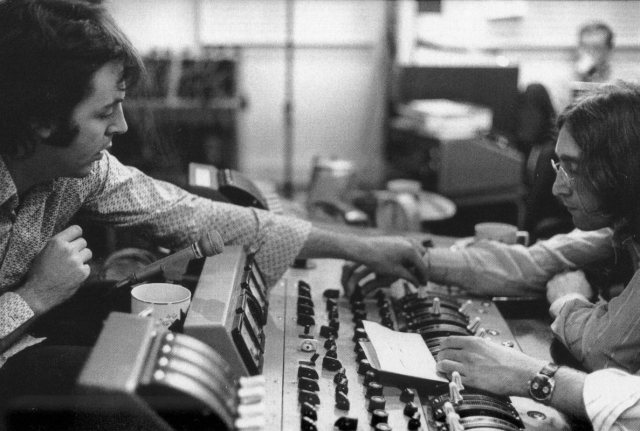
Released in November 1968, the White Album did a Pollock on all the principles of freedom the Beatles had been shaping since 1965’s Rubber Soul kicked off their long, disciplined freakout, and splattered the canvas with every elementary Beatle colour: rock and roll, British music hall, folk-and-pop, country, novelty songs, in no apparent order or thematic unfolding. In its elemental, revelatory mess and as a rock double album it bears resemblance to Dylan’s Blonde on Blonde (1966) or even Hendrix’sElectric Ladyland (released just the month before), and if you took the long view you could, I suppose, think of it as part of the strengthening trend in the late 1960s towards the belief in rock music as art. While The White Album may not be a lot of things to otherwise die-hard Beatles fans, it is very definitely Art. Self-conscious Pop collage. If the grinning nods-and-winks of yore are replaced by the dour four studiously not having a good time together during these last years of their existence (or perhaps merely shrugging the veil of idolatry), the music gives the lie to this not being good for the rest of us and for popular music in general across the timeline of centuries. That Abbey Road and its blueprint for rock’s next steps was still in their future is almost impossible to believe.
“I’m So Tired” is a late Beatles-era Lennon masterpiece, a song of yearning and uncertainty. Its central line, “I’d give you everything I’ve got for a little peace of mind” is both a call of desire for Yoko Ono and, in its cultural context, maybe the expression of the need to cool off for a bit, get some bearings amidst the drugs and money and politics and war and bullshit. This is what makes great songs. And of course it doesn’t hurt that there’s a lazy kind of rhythm to it, torch ballad sway giving way to hard rock march in the B section. Twice through and out, nothing to it really, but in its barely 2-minute glory it contains in its molecules everything the Beatles were and would be.
soundstreamsunday presents one song or live set by an artist each week, and in theory wants to be an infinite linear mix tape where the songs relate and progress as a whole. For the complete playlist, go here:soundstreamsunday archive and playlist, or check related articles by clicking on”soundstreamsunday” in the tags section.
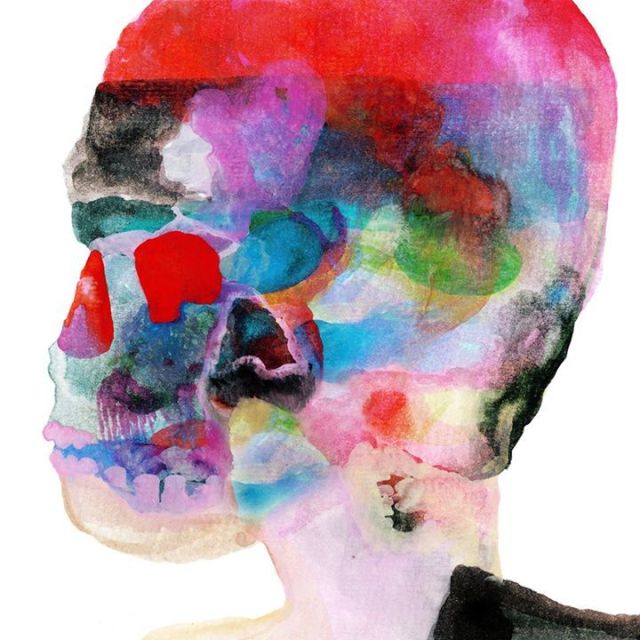
The connections are clear, right? Michael Karoli’s cousin and girlfriend were the cover models for Roxy Music‘s album Country Life(1974); Spoon names itself after a song by Karoli’s band Can; and if Spoon isn’t America’s Roxy Music then I’m buying a ticket to Cologne and getting this all figured out for good. Spoon is the rock art band of the moment and of many previous moments, their career now in its twenty-somethingth year. Released this spring, the band’s latest, Hot Thoughts, along with LCD Soundsystem’s American Dream, gives the lie to what is otherwise a general truism: rock bands are a young person’s game. A killer set of songs with a sustained, youthful definition, Hot Thoughts makes me search my brain for other great rock records made by folks who are my age. A real, original rock record. With guts and balls and great songwriting and absolutely no fat. Not something worthy of elder statesmen or something celebrated by NPR for the maturity of its grizzled veterans, but damn, something that makes you want to dance and call out its lyrics without having much of a history with the band (and I don’t).
When Britt Daniel sings “I’ve been working on a plan, yeah” on “Can I Sit Next To You” he makes it feel like the most important words ever uttered. Part of this is his voice, which as rock vocals go is, as my 10-year-old would say, “savage, yo” (really). A mix of John Lennon, Iggy Pop, and Lee Mavers, Daniel can do falsetto soul back-to-back with a nasal/glottal/punky growl. This was the territory of the giants of early 70s British rock as it morphed into pub and punk, the White Album (yeah and maybe some Marvin Gaye…and Can…) in one hand and a lager in the other. So, everything is a hook but all the hooks have a Martin-esque depth of detail, flourish, and care, and a slightly shifted off-ness that makes it a slow, satisfying grower. When in the middle of the song the bulbs pop and the keyboards go eastern psychedelic, it opens the horizon and we’re getting a thumbnail funk view of the Arabian Peninsula. Sick — maybe the Cure would have thought of this but wouldn’t have been so economical, and there is whiff of “Fascination Street” lingering in the background. Jim Eno’s boss kick drum brings it back to old school, and if you’re like me you’re waiting for that crazy keyboard bit one more time, and it does come, hallelujah. With all it makes me think about, still…this is a conjuring music, an act of devotion not imitation. Song ’bout kicks and the lengths you might go to.
soundstreamsunday presents one song or live set by an artist each week, and in theory wants to be an infinite linear mix tape where the songs relate and progress as a whole. For the complete playlist, go here:soundstreamsunday archive and playlist, or check related articles by clicking on”soundstreamsunday” in the tags section.
The next David Bowie box set, A New Career in a New Town, is coming on September 29. This one covers 1977-1982 (Bowie’s last years on the RCA label), including the “Berlin Trilogy” and other notable collaborations with prog rockers. Contents on 11 CDs or 13 LPs:
Low (with Brian Eno)
Heroes (with Eno and Robert Fripp). A EP of foreign-language versions of the title track is also included.
Stage (with the pre-King Crimson Adrian Belew and Roger Powell of Utopia in Bowie’s live band) in 2 versions: the original album and the 2005 version (with songs in the concert running order & bonus tracks, including 2 new ones).
Lodger (with Eno, Belew and Powell ) in 2 versions: the original album and a new remix by Tony Visconti (exclusive to the box).
Scary Monsters (with Fripp).
A new exclusive compilation, Re:Call 3, which includes singles, B-sides, extended versions, and Bowie’s collaborations with Bing Crosby and Queen.
This is my favorite period of Bowie, so I’m genuinely excited for this release. Lots more details and a price tracker at Paul Sinclair’s marvelous Super Deluxe Edition website.
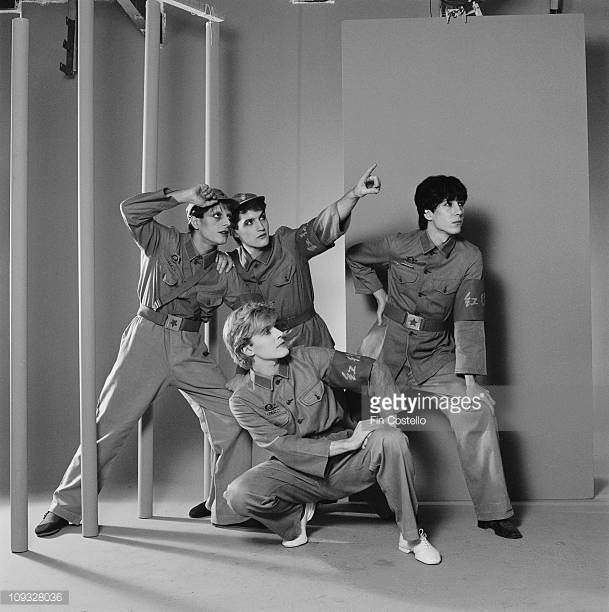
A British post-punk band could grow into just about anything in that fertile ground of the late seventies, and Japan proves the point, as over its short record-releasing career (1978-1981) the band moved from a funk punk glitz unit to new pioneers of progressive art rock. You can see the steam rising off the entire five-album catalogue, the creative engines driving full tilt, inevitably towards early breakdown. If the end came too soon there’s one more record, 1991’s self-titled Rain Tree Crow, that seals the deal: together, Mick Karn, Richard Barbieri, and brothers David Sylvian and Steve Jansen were among the most unique musical collaborators of their era, and should be in any discussion of Talking Heads or King Crimson from this same period, as bands who pushed forward and influenced all musical directions. In its progression of fashion and music, Japan functioned as an interlocutor, a not-so-missing link, between New York Dolls-style punk and Tears for Fears-style new wave, a Roxy turned Crimson, an achieving Guns’n’Roses cum Duran Duran.
“Sons of pioneers are hungry men,” intones Sylvian in the nuanced Ferry-esque croon he’d been developing since 1979’s Quiet Life, the band’s third album. I have no idea what this lyric means. But…I like it and its pure sonics and the way Sylvian so naturally handled a lyric as a shaped sound. “Sons of Pioneers” comes from their last work as Japan, Tin Drum, an album charged with atmospherics, and further demonstrating the contributions and importance of each member, although Mick Karn’s gorgeous playing is a particular show stopper. His expressive command of the fretless bass pushes and pulls “Sons of Pioneers” across its landscape, as the song takes its time unfolding, enjoying its own groove. I’m including the live (from the posthumous live record, 1983’s Oil on Canvas) and studio versions because they both kick ass in their own spacious and patient ways, although there is an urgent edge to the live performance. The concept-y concert footage shows a superlative Japan in its swansong, Jansen with his world beat and Barbieri sino-spacing out the proceedings on keyboards, Karn transporting himself magically sideways and Sylvian, dapper glam hand ever in pocket, delivering the riddles.
soundstreamsunday presents one song or live set by an artist each week, and in theory wants to be an infinite linear mix tape where the songs relate and progress as a whole. For the complete playlist, go here:soundstreamsunday archive and playlist, or check related articles by clicking on”soundstreamsunday” in the tags section above.
The only White Willow album I’d heard before their new effort was 2011’s doomy Terminal Twilight. Gorgeous, Gothic stuff, but it didn’t leap out at me as anything special. Future Hopes, however, is a gripping album, unpretentious in presentation (Roger Dean cover notwithstanding) but wonderfully ambitious in scope and sonics. It starts in darkness, then doggedly journeys toward the light — and it carried me along from beginning to end. Continue reading “White Willow, Future Hopes”→
Reviewing Slowdive’s eponymous new album, their first in 22 years, Clash’sRobin Murray made a statement bound to pique the interest of progarchists:
“It feels at times like early King Crimson, or Pink Floyd’s post-Syd/pre-Dark Side nexus. It’s the sound of a band forgetting who they were, and embracing who they could become.”
That second statement is undeniably true. Slowdive (released May 5 on the Dead Oceans label) is unmistakably the work of the same quintet that disbanded between 1995 to 2014. But it’s not a reunion record of rehashed old ideas. It would also be correct to say the band’s music has more in common with Floyd than, say, punk rock. Among their signature showpieces is a majestic, slow-burning cover of Syd Barrett’s “Golden Hair.” But Lark’s Tongue in Aspic? Other listeners can judge.
Guitarist/songwriter Neil Halstead grew up in a home where orchestral music was preferred to pop, and that influence is strongly apparent in tracks like the stirring “Catch the Breeze” (1991). While Slowdive can’t be classified as prog, their body of work has occupied spaces progarchists can appreciate: ambient, avant-garde, dream pop, and experimental, all under the broader classification of shoe-gazing. In this vein no other band sounds like Slowdive.
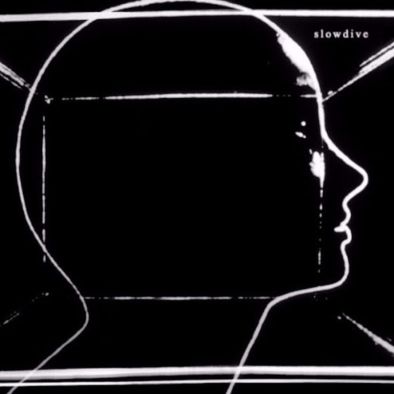
The cover art for Slowdive features a frame from Harry Smith’s 1957 avant-garde animated film, Heaven and Earth Magic. Composed of cut-out figures set in motion, the narrative includes a sequence involving a female patient sedated for a dental procedure. The darkened profile depicts her state of semi-consciousness, or perhaps heightened awareness. Or both.
Shoe-gazing refers not to the contemplative state of the listener (though it could) but rather the guitarists staring down at the array of effects pedals used to achieve other-worldly sounds. None are better at this than Slowdive’s Halstead and Christian Savill. On the new record that prowess is everywhere present.
But Slowdive also contains a refined attention to detail and form. The pace of the songs is faster. Nick Chaplin’s bass and Simon Scott’s drums thunder out front instead of being obscured by clouds of guitar effects, e.g. “No Longer Making Time.” And instead of a metronomic build-up common in earlier work there are tempo and time changes, e.g. “Don’t Know Why” and “Go Get It.” But as on previous records Rachel Goswell’s voice moves through the mix and around Halstead’s vocals like a spirit, e.g. “Sugar for the Pill,” the album’s emotional epicenter.
The closer, “Fallen Ashes,” may be a preview of things to come. Showcasing Scott’s abilities with laptop software, it embellishes and pushes a hypnotic piano riff to sublimity à la Jonny Greenwood.
Overall, Slowdive is familiar but with more sculpted contours and sharper pin pricks than in times past — a welcomed development.
All of this works from a context of two-decades’ old material still very much in view, still relevant, still captivating. I had the great fortune to catch Slowdive in Carrboro, NC at the next-to-last date on the North American leg of their current tour. Blending half the new album with old material, Slowdive overwhelmed the audience with canyons of sound.
I spotted a few fellow 50-somethings in the music hall. But more than a few of the audience weren’t even born when this Thames Valley gang first started making music as teenagers. Having fallen quickly out of fashion years ago with a press enamored to Britpop and cool Britannia, then beckoned back to life by an emerging cult following, Slowdive have a word for souls fearing rejection without redemption: No, this is what we do, and done well time will vindicate it.
After opening with “Slomo” from the new album the band followed with “Catch the Breeze,” with Savill, Goswell, and Halstead leaning toward the floor, wailing guitars swelling to orchestral heights.
The breeze it blows, it blows everything
And I, I want the world to pass
And I, I want the sun to shine
You can believe in everything
You can believe it all…
During the rapturous finale I glanced to my left. A couple of people were actually weeping. Heaven and earth magic, indeed.
Slowdive at Cat’s Cradle, Carrboro, NC, May 10, 2017. Photo by the author.
The past is the push of you, me, all, precisely the same,
And what is yet untried and afterward is for you, me, all, precisely the same.
I do not know what is untried and afterward,
But I know it will in its turn prove sufficient, and cannot fail.
~ Walt Whitman, from Song of Myself, Section 43.
Unlike bluegrass, where one can point to Bill Monroe’s “Mule Skinner Blues” (1940) as the discrete start of a new musical genre, progressive rock’s emergence was gradual. With Revolver and “Eight Miles High” the boundaries of pop music were expanded; 1967 would see the arrival of free-form or fusionist jam tracks likes Pink Floyd’s “Interstellar Overdrive,” Buffalo Springield’s “Bluebird” (the hard to find long version), and Jefferson Airplane’s 24 minute epic “Spare Chaynge” (pared down to its last 9-1/2 minutes for After Bathing at Baxter’s).
Fifty years ago this month Country Joe & The Fish entered the studio in San Francisco to record their first LP. The last track of side one may be the most proto-prog recording of the ’60s. “Section 43” reminds us that prog rock got its biggest push from the counter-culture’s psychedelia and acid rock. Whereas the aforementioned jam pieces are largely improvisational, this multi-part mini-epic displays as much attention to form as freak out.
Now, I have a confession to make. I had never heard “Section 43” until a few weeks ago. In 1967 I was a first-grader, and the greatest rock band in the world was The Monkees. When I later watched the Woodstock documentary I associated Country Joe with the Vietnam war gallows humor of “I Feel Like I’m Fixing to Die Rag.” I didn’t look into the band further. It wasn’t until I watched Jack O’Donnell’s documentary on the Summer of Love, Revolution, that I caught the music on the soundtrack and went on a quest to know who performed it. Thankfully, the person who posted a print of the film on YouTube was ready with the answer.
Watching the film I thought I might be hearing some previously uncovered Floyd track. The Farfisa organ and bass line put me in mind of Rick Wright and Roger Waters. Upon learning it was Country Joe & The Fish my mind was blown — and impressed.
The piece follows a verse-chorus-verse-verse-chorus structure. The choruses build tension waltzing slowly through minor and dissonant chords. The first and third verses showcase interplay between Barry “The Fish” Melton’s Gibson SG and David Bennett Cohen’s keyboard. The middle verses are bisected by what Richie Unterberger calls “an unexpected, almost circus-like atonal passage.” Up to that jarring break our ears are treated to a bracing harmonica solo from bassist Bruce Barthol, as salient on that instrument as with the heavy strings, while Gary “Chicken” Hirsh’s cymbals crash and tom-tom’s dance all around.
But it’s Melton’s note-bending, Near Eastern inflection on the second guitar solo that’s the highlight of this track. Country Joe McDonald? Why, he wrote the thing, and his ringing hollow-bodied Gibson keeps the whole contraption aloft.
The band opened with “Section 43” on the final morning of the 1967 Monterey Pop festival, an event memorable for Pete Townshend smashing his guitar and Jimi Hendrix setting fire to his. But Rolling Stone rated “Section 43” among the 15 greatest musical moments captured on film. Not so much for the shots of the band themselves (though Melton’s army jacket and blue jean combo would be a look emulated on school buses for years to come). It was the yawning, scratching youth summoned from slumber by Country Joe’s yell, and stumbling to the stage front that were the real stars of the clip.
Barthol’s harmonica solo isn’t present in this version. Country Joe blows the last dying notes on the harp as the camera cuts to the tapping feet of a sleepy and spacey young woman, too tired or too high or perhaps too deeply moved to clap, but whose bleary-eyed, Mona Lisa smile tells us that we have might have just passed a key signpost on the road to Proghalla.

 When Beck walked a talking blues over a sample of Johnny Jenkins’s cover of Dr. John’s “I Walk on Gilded Splinters” for “Loser,” his giant 1994 hit, there was an aesthetic purpose lurking underneath its vibe of off-the-cuff spontaneity that, 25 years later, continues to infuse his work with vitality. While “Loser” itself is marked by the wild west feel of early 90s indie rock, with all its many faces, Beck’s subsequent work shapes that freedom into something beyond any particular rock and roll era — his catalog reflects possible trajectories across time rather than a simple series of destinations.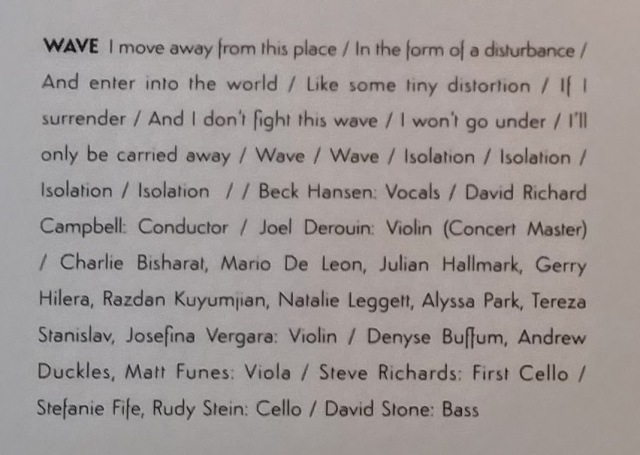
 King Crimson appeared in 1969 as an island, on the far side of the bridge joining a tiring psychedelic scene to a studied, if no less freaky (for its age), “progressive” rock. In its nearly fifty years the group’s membership has drifted in and out through orbits around guitarist
  Released in November 1968, the White Album did a Pollock on all the principles of freedom the Beatles had been shaping since 1965’s Rubber Soul kicked off their long, disciplined freakout, and splattered the canvas with every elementary Beatle colour: rock and roll, British music hall, folk-and-pop, country, novelty songs, in no apparent order or thematic unfolding. In its elemental, revelatory mess and as a rock double album it bears resemblance to
  The connections are clear, right? Michael Karoli’s cousin and girlfriend were the cover models for
 A British post-punk band could grow into just about anything in that fertile ground of the late seventies, and Japan proves the point, as over its short record-releasing career (1978-1981) the band moved from a funk punk glitz unit to new pioneers of progressive art rock. You can see the steam rising off the entire five-album catalogue, the creative engines driving full tilt, inevitably towards early breakdown. If the end came too soon there’s one more record, 1991’s self-titled Rain Tree Crow, that seals the deal: together, Mick Karn, Richard Barbieri, and brothers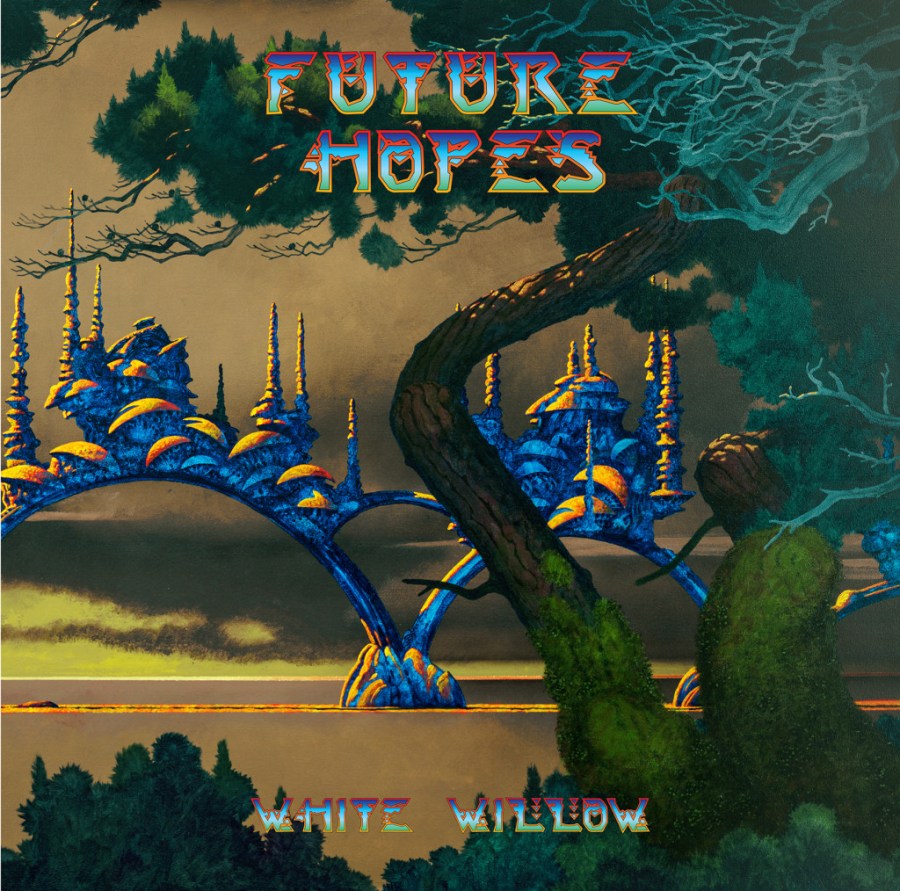

 Reviewing Slowdive’s eponymous new album, their first in 22 years, Clash’s Robin Murray made a statement bound to pique the interest of progarchists:


