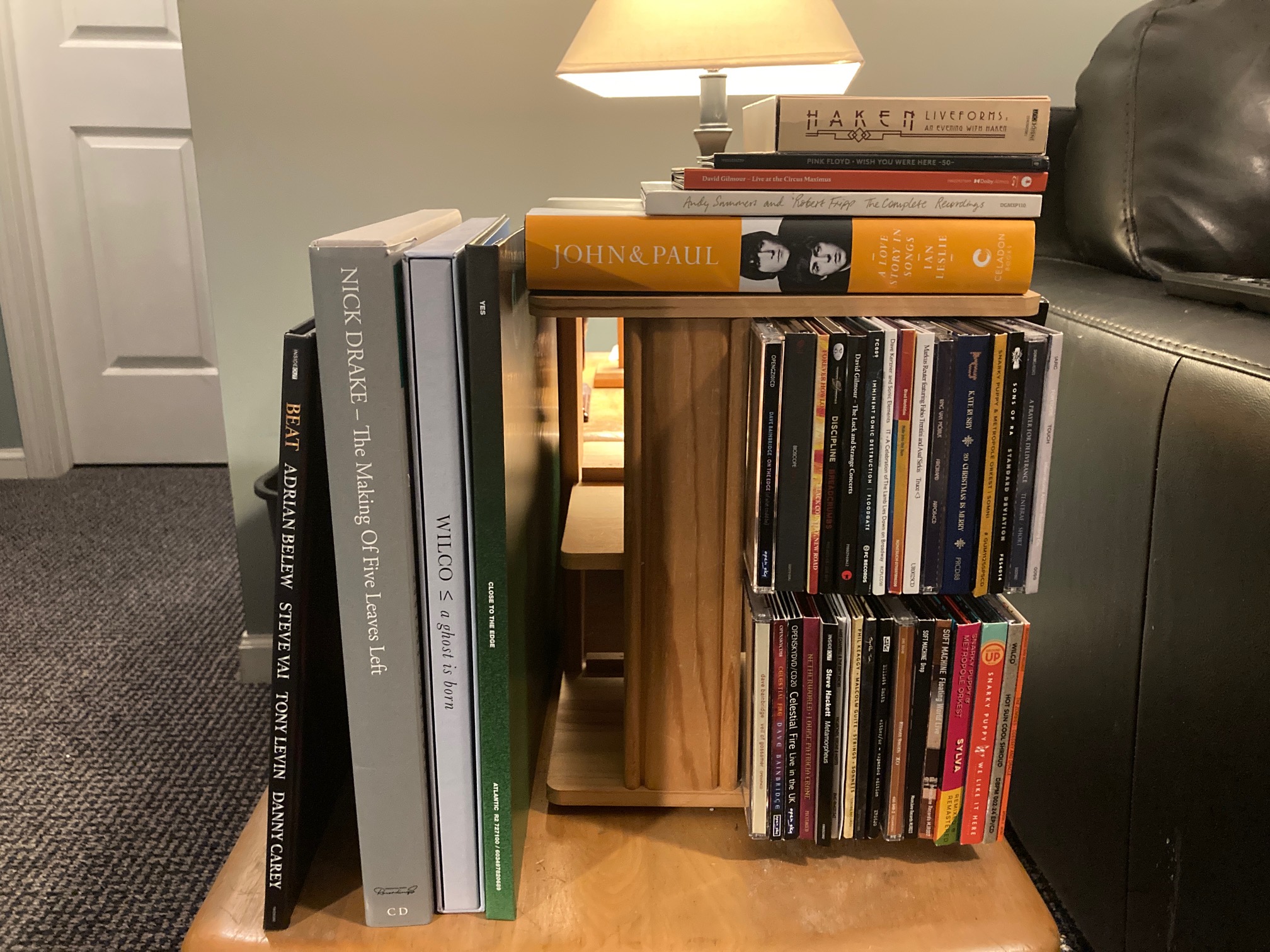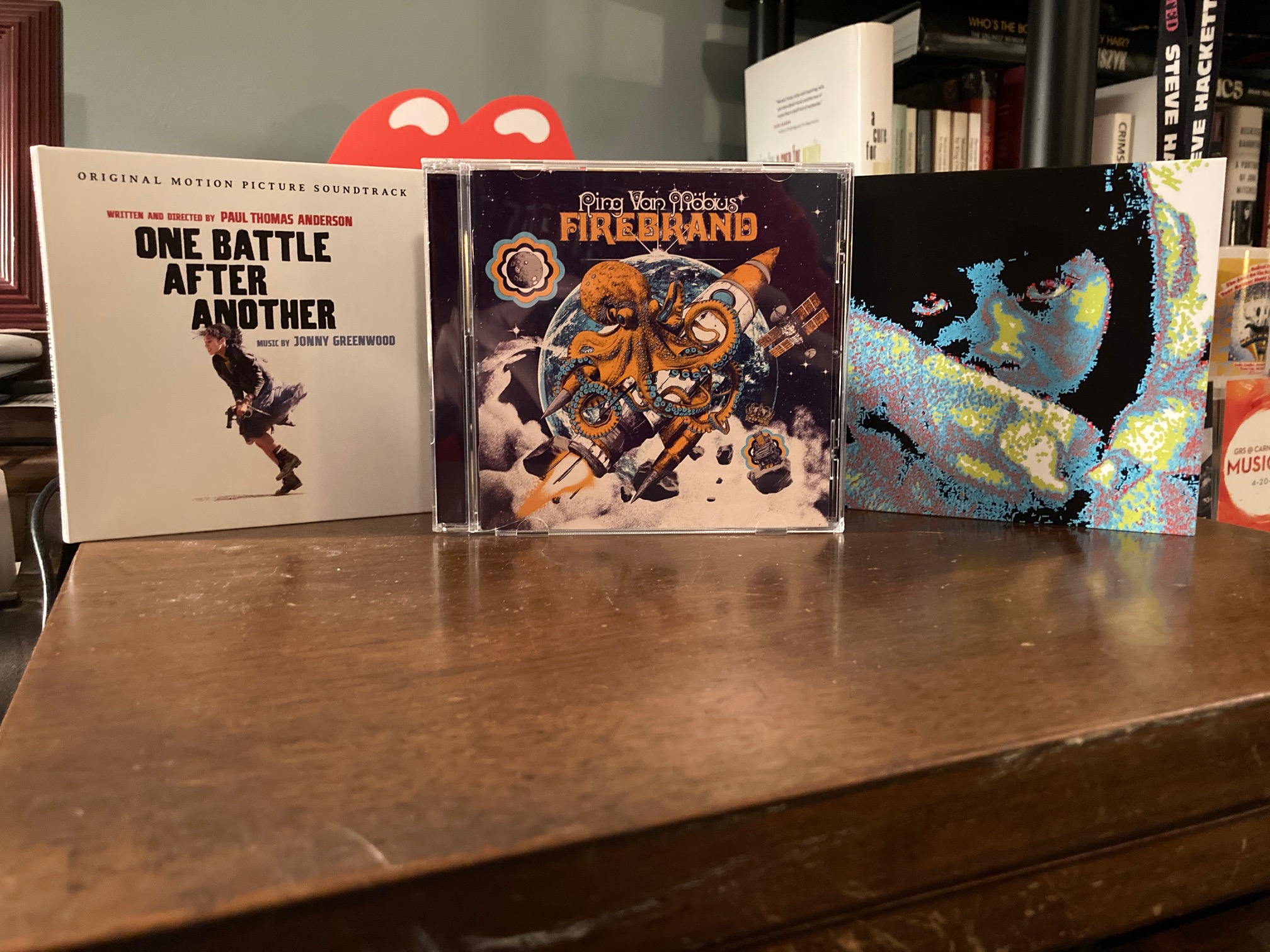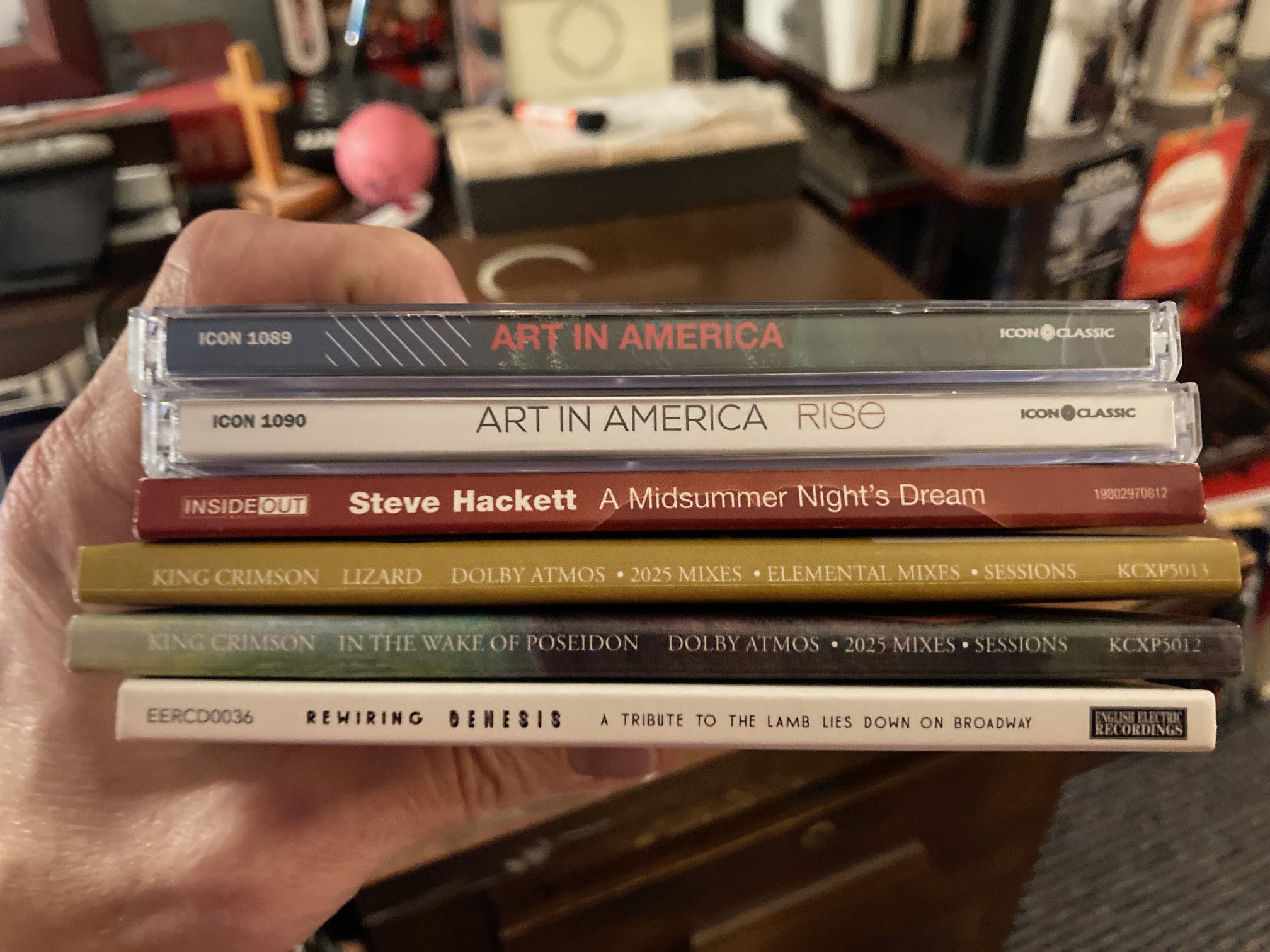
Rick’s Quick Takes for June

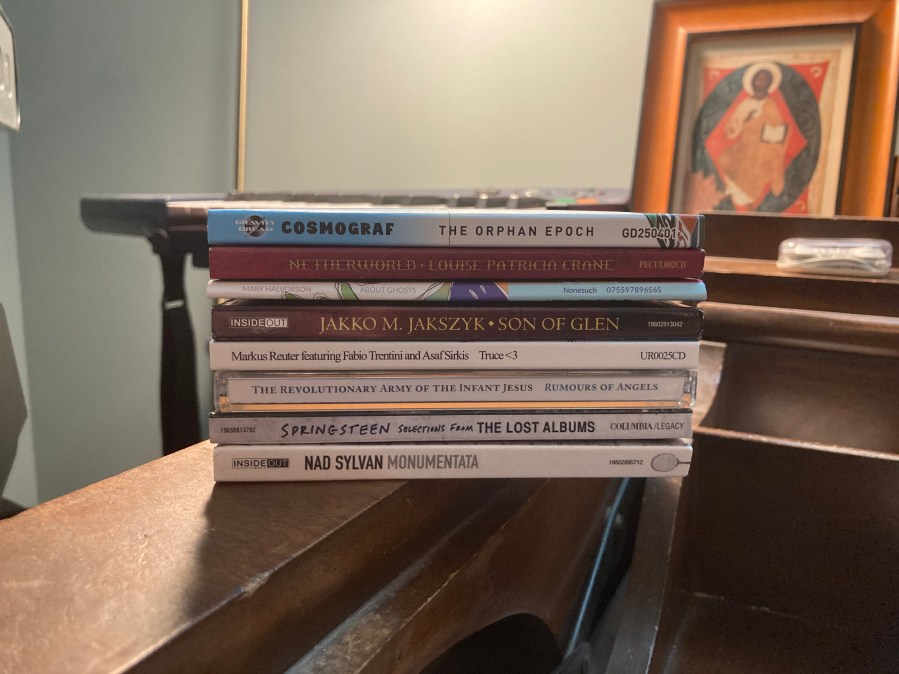
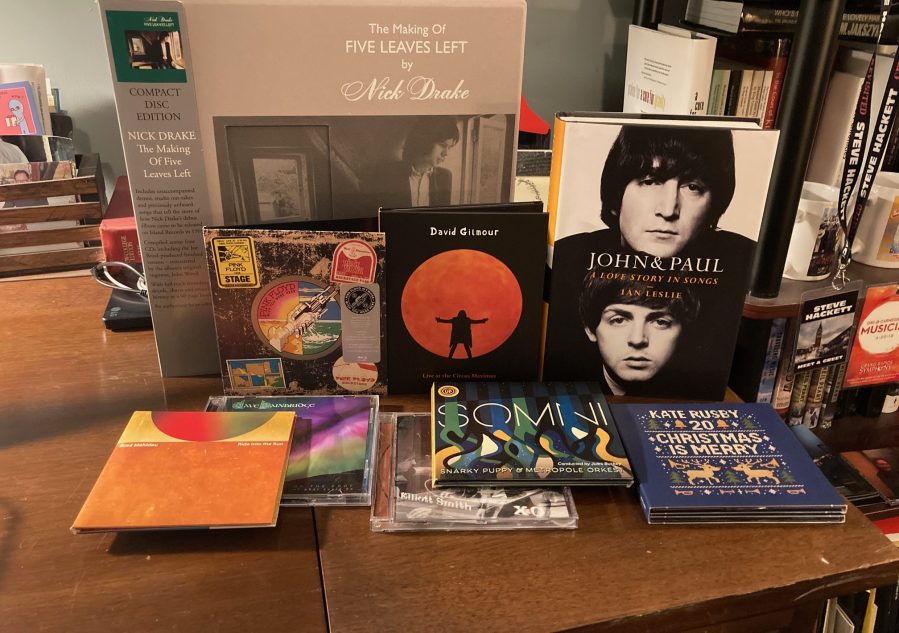
It’s been an hugely enjoyable month for out-of-the-box music! Along with the alluring, elegant wallop of Nad Sylvan’s Monumentata (listen here) and the mesmeric slow burn of Jakko Jakszyk’s ruminative Son of Glen (listen here), three impressive new releases, a compilation taken from one of this year’s most-anticipated box sets, an utterly unexpected reissue — plus one from last year that got away — have crossed my desk. As usual, purchasing links are embedded in the artist/title listing, with streaming options after the review.

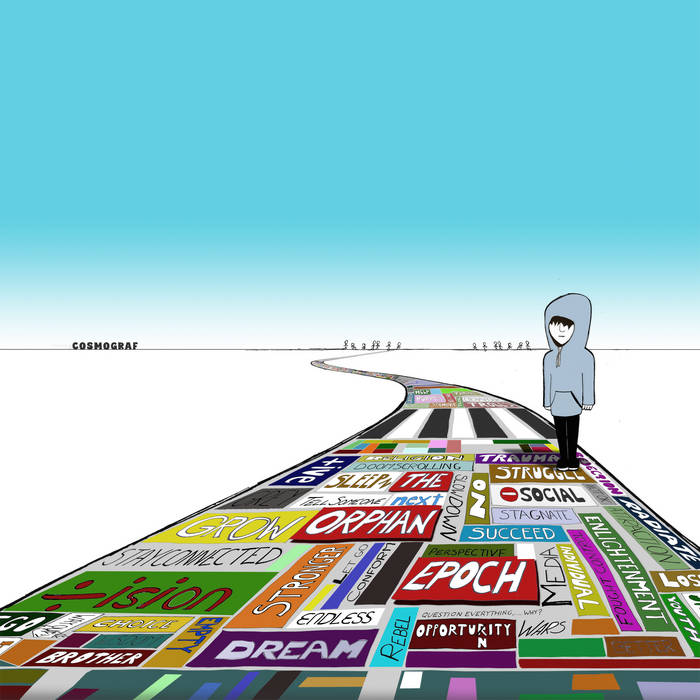
Cosmograf, The Orphan Epoch: Another winning set from Robin Armstrong! More thematic than conceptual this time around, The Orphan Epoch focuses on today’s younger generation and their search for a valid path, confronted by conformity and control like never before. “Division Warning” unfurls from fetching piano filigree to steamroller guitar supporting a dramatic, emotionally ripe chorus; elegance and savagery bob and weave, then fly in formation for “We Are the Young.” There’s gorgeous sax commentary from Peter Jones on the foreboding “Seraphim Reels”; big riffs, gang chanting and blustery organ workouts on “Kings and Lords”; a quiet, menacing synth pulse that, with Kyle Fenton’s skittering drums, propels the encroaching darkness of “You Didn’t See the Thief”; the loose yet inevitable build of “Empty Box.” It all coalesces along “The Road of Endless Miles,” as strong, hard power chording pushes Armstrong’s overdriven vocals to a striking crest, then ebbs away into dead silence. Impeccable, punchy, dynamic sound throughout brings out so much fine-grained detail, all in the service of Armstrong’s bleak yet beautiful, thoroughly humanistic vision. Moving and gutsy, this impressive record deserves the widest possible audience.

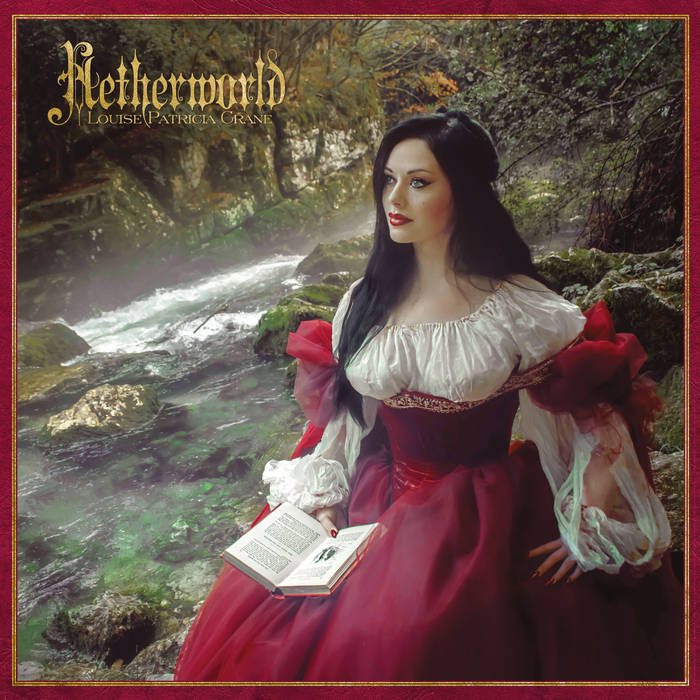
Louise Patricia Crane, Netherworld: Both in his recent Progarchy interview and in the liner notes for his latest, Son of Glen, Jakko M. Jakszyk has been beating the drums for this 2024 album – and he’s right to do it! Crane brings vaulting artistic ambition, assured worldbuilding and mad skills at singing, playing and production to bear on Netherworld; the result is an utterly absorbing song-cycle that pulls you in with the initial “Dance with the Devil” and refuses to let go until the last strains of “Japanese Doll” have died away. Wisps of early Genesis and Tull give “Tiny Bard” and “The Lady Peregrine’s Falcon” a folk-prog tinge, while a trace of vintage Kate Bush lingers in Crane’s resonant vocals, but the sweep of her archetypal lyrics and the variety of settings (from subtly psychedelic “The Red Room” to the overcast jazz of “Bete Noire”) dispel any hint of tired pastiche. Rather, Jakszyk joins an imposing crew of modern prog titans (hailing from King Crimson, Marillion, and points beyond), all dedicated to bringing Crane’s singular point of view to life. These classic ingredients come together in a heady, winningly original brew on an atmospheric soundstage that breathes; Nick Drake’s catalog and the rumbling calm of Talk Talk’s post-rock years are the closest parallels I can call to mind. Netherworld is a brilliant album, thoroughly deserving of your time, attention — and even love. It went on my Belated Favorites list like a shot!

Mary Halvorson, About Ghosts: More kaleidoscopic ensemble jazz from Halvorson’s Amaryllis sextet plus guests (including youthful sax giant Immanuel Wilkins). The warm, glittering sound of opener “Full of Neon” is typical here; launching a pointillistic riff, the ensemble builds through brass smears and a convoluted unison head to perfectly judged solos from trombonist Jacob Garchik and guest tenor Brian Settles. Trumpeter Adam O’Farrill, vibist Patricia Brennan and Wilkins get their licks in as well, while the rhythm section of Nick Dunston and Tomas Fujiwara kick up plenty of dust and swing like mad. And while Halvorson generally lays back as a soloist here (“Carved From”, also a spotlight moment for Wilkins, is an enjoyable exception), her pointed guitar tone laced with congenial digital wobbles consistently pokes through at just the right moments. From “Absinthian’s” uptempo tick-tock through the graceful Ellingtonia of the title track to the sleek glide of “Polyhedral” and “Endmost’s” smooth, richly chorded bossa, Halvorson and her players are always inventive and inviting, conjuring sunny textures from the knottiest material. A great way to either discover this fine composer/performer’s unique voice, or to check out her continuing growth.

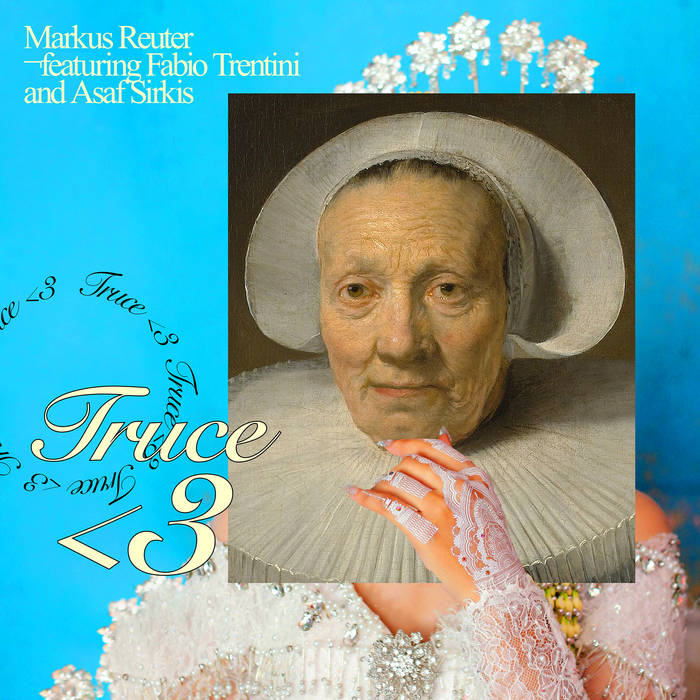
Markus Reuter – featuring Fabio Trentini and Asaf Sirkis, Truce <3: Full-on instrumental rock from three undersung players who know their stuff — including the magic that can happen when the red light comes on with nothing prepared! Reuter’s touch guitar conjures up hanging sonic clouds, cycling loops, piledriving licks and rich melodic spirals; Trentini’s bass lines ground the evolving excursions with a tasty mix of repetition and variation, plus fat, enticing tone; on drums, Sirkis is endlessly, subtly inventive within rock-solid grooves. Slinky kickoff “Not Alone,” the driven, stuttering funk of “It’s Not in the Cards,” the bubbling, smoldering interplay of “Crooked” and “Guardian Shadow,” with its stinging elegiac lament that morphs into a total wig-out, are just the highlights; every improvisatory leap here is inspired. Completely whipped up from scratch like the first two entries in this stunning series, Truce<3 catches music as it’s made on the fly, irresistibly setting body, mind and heart in motion. Already on the Favorites list for this year.

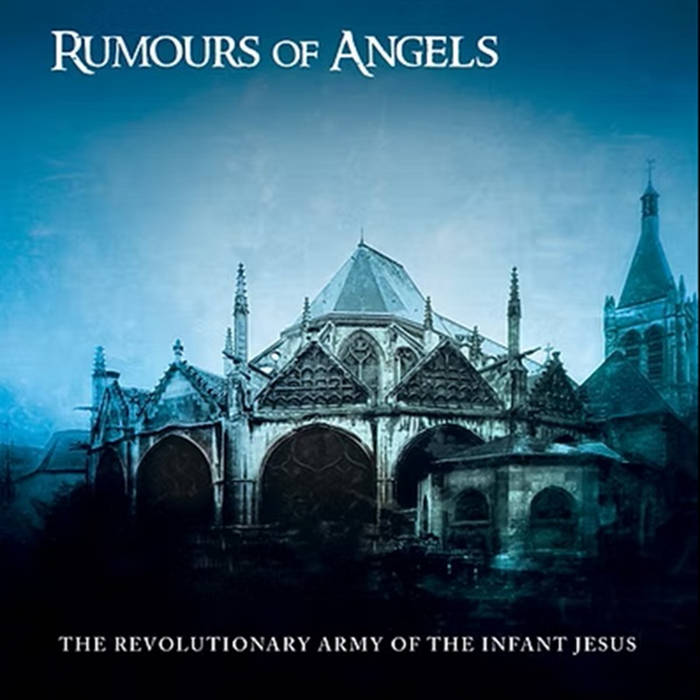
The Revolutionary Army of the Infant Jesus, Rumours of Angels: Originally part of 2013 French boxset After the End, this set compiles two EPs from the end of RAIJ’s 20th-century run and two previously uncollected tracks. As such, you can hear the gleeful clash of opposites — floating folk melodies, chant and spoken word colliding with low drones, tribal rhythms and bruising industrial noise, all drenched in thick, wet echo — that marked the Liverpool collective’s initial, headlong assault on modernity. If tracks like “Cantata Sacra” and “Dies Irae” feel like desperate attempts to call down the Holy Spirit through sheer, strenuous force, moments in “The Parable (of the Singing Ringing Tree)” and “Suspended on a Cross” point toward the mix of ambient stillness and randomized sound collage that permeate later, more considered classics Beauty Will Save the World and Songs of Yearning (my album of 2020). For those who’ve already taken the plunge, Rumours of Angels is an unexpected gift, a vital signpost on RAIJ’s road toward their current, more meditative (yet still earthy) incarnation. If you’re new to it all, don’t let me dissuade you from trying this one out — but be sure to buckle up!

Bruce Springsteen, Lost and Found – Selections from the Lost Albums: I’d argue there are at least three facets to Springsteen’s artistic persona: the unstoppable Boss, barnstorming the globe with the E Street Band; the compulsive singer/songwriter, forever panning his psyche for creative gold; and most evident here, the obsessional auteur, agonizing time after time over the content of his next release. This sampler from Tracks II, an expansive (and exorbitantly priced) box of 7 unreleased albums, startles with the scope of Springsteen’s musical inspirations — though your mileage may vary as to how convincing the various genre exercises are. Chilled-out trip-hop Bruce (“Blind Spot”), spiritual-but-not-religious Bruce (“Faithless”) and country/rockabilly Bruce (“Repo Man”) click best for me; and even tejano Bruce (“Adelita”) and saloon crooner Bruce (“Sunday Love”) have their arresting moments. If anything, the straight-up rockers might be the weakest element here; “You Lifted Me Up” reminds me of nothing so much as a third-string praise and worship chorus. Still, it’s hard to beat Lost and Found’s value — 1/4th of the box set’s tracks for 1/20th of the price, and it certainly lets you know what you’re in for from Springsteen’s latest raid on his vaults. If you’re intrigued like I am, check out the sampler, maybe listen to the complete set online — then hope for a Black Friday price drop.

— Rick Krueger
Rick’s Quick Takes: Box Set Report, Q1

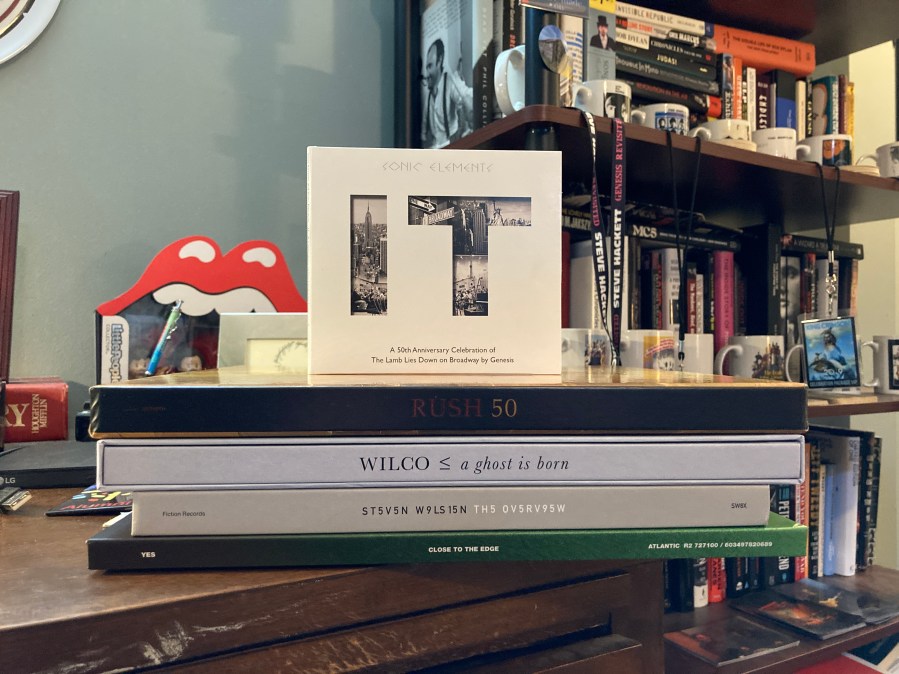
By January 31st of this year, I had already ordered a ridiculous number of multiple-CD box sets since Christmas. With three delayed in the production process, five have already landed on my doorstep (OK, one was small enough to fit in the mailbox). Reviews follow in the order that I tripped over them on the porch coming home from work. As usual, order links are embedded in the Artist/Title listing and streaming options follow whenever available.

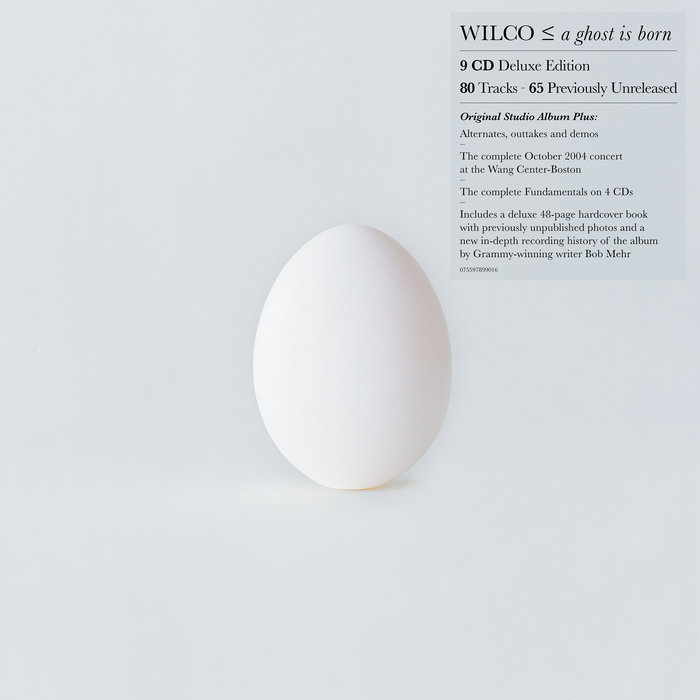
Wilco, A Ghost Is Born Deluxe Edition: springing from entangled hardcore and Americana roots, Jeff Tweedy had steered Wilco through band tumult and record company rejection to plant a left-field cultural marker with 2001’s freak-folk classic Yankee Hotel Foxtrot. The band’s 2004 follow-up A Ghost Is Born went to further extremes, a sputtering tornado of punky guitar thrash, electronic noise, avant-garde improvisational systems and lyrical grapplings with personal vulnerability, mental dysfunction and substance abuse. Heavy? Yep. But never offputting or boring; Glenn Kotche and John Stirratt lay down lateral yet accessible beats that float (“Muzzle of Bees”, “Wishful Thinking”) crackle (the hypnotic “Spiders (Kidsmoke)”) shuffle (“Handshake Drugs”, “Theologians”, “I’m A Wheel”) and stomp (“At Least That’s What You Said”, “The Late Greats”) while Leroy Bach and Mikael Jorgenson add spicy, soulful accents and colors. All the while Tweedy waxes deadpan yet primal, ripping holes in the fabric of his personal time and space, searching out both tender and torturous byways to catharsis and healing. If that kind of quest sounds up your alley, this reissue gives it up in excelsis: the finished album plus 4 discs of jammed “Fundamentals”, 2 discs of outtakes and alternates, and a double-disc live show with then-new members Pat Sansone and Nels Cline fleshing out Tweedy’s unique, unlikely Hero’s Journey. Great, extensive liner notes by Replacements biographer Bob Mehr as well. Already on my Favorites list for the year.

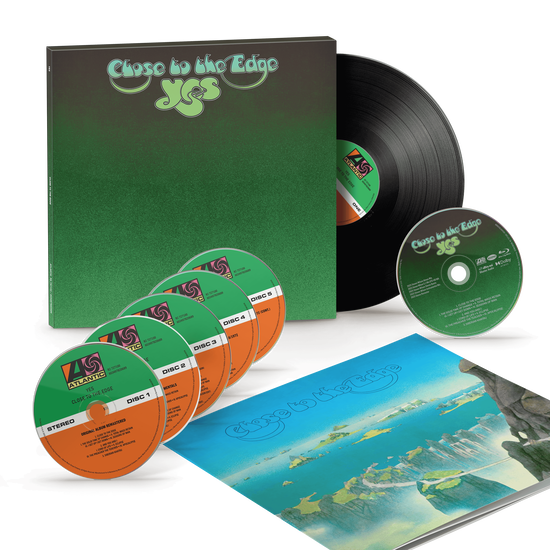
Yes, Close to the Edge Super Deluxe Edition: Well, I did ask for this — and Rhino delivered! The third in the series of SD Yes reissues, this captures what might be the quintessential prog band’s quintessential album in pristine, high-impact sound (both the original mix remastered and Steven Wilson’s latest remixes). It all comes down to the three original tunes from 1972 — the side-long title track, the majestic “And You and I” and the remarkably funky “Siberian Khatru” — with Jon Anderson’s wailing word games, Steve Howe’s lacerating guitar licks, Rick Wakeman’s extravagantly classical keys, and the simmering, bubbling rhythm work of Chris Squire and Bill Bruford all battling for space yet somehow fusing into a triumphant whole. Bonuses include plenty of rarities and alternates (including both versions of Yes’ classic take on Paul Simon’s “America”) and a complete live show from the tour that followed, with Alan White’s beefy thwack on drums replacing Bruford’s loose, limber dance. Well worth hearing and picking up, even if you have previous reissues; another instant Favorite.

Steven Wilson, The Overview: If Wilson has never realized his dream of broad pop stardom, he’s entranced the mainstream rock press this time around — both usual (Prog Magazine) and unusual (MOJO named it album of the month) suspects have hailed The Overview as a return to prog that doubles as a conceptual tour de force. For once, though, I’m underwhelmed; while intermittently galvanizing, the two-track album stubbornly refuses to coalesce in my ears. Is Wilson’s musical material stretched too thin? (Side One’s 23-minute suite “Objects Outlive Us” is ultimately a set of variations on one six-chord sequence.) Are his influences, for once, undigested? (The Dark Side of the Moon, Tangerine Dream and “Space Oddity” are practically italicized and bracketed on Side Two’s title suite.) Or is it more likely that I’m bouncing off Wilson’s main conceit (admittedly snarky paraphrase: “the universe is big, cold, and dead, so loosen up in your petty day-to-day lives and find your own existential purpose in the face of meaninglessness”)? As stunning as its high points can be, for me The Overview feels like Wilson’s chilliest, least empathetic effort since his 2008 solo debut Insurgentes. Still, I wouldn’t be surprised if hearing SW live this fall, backed by the players responsible for the instrumental highlights here (Randy McStine and Adam Holzman absolutely bring the goods) shifts my perspective. After all, I wound up advocating for The Future Bites . . . Bonuses of the sold-out deluxe edition include an orchestrated version of Side One and the complete take of album closer “Permanence”, with saxophonist Theo Travis lighting up Wilson’s ambient aural nebulas.

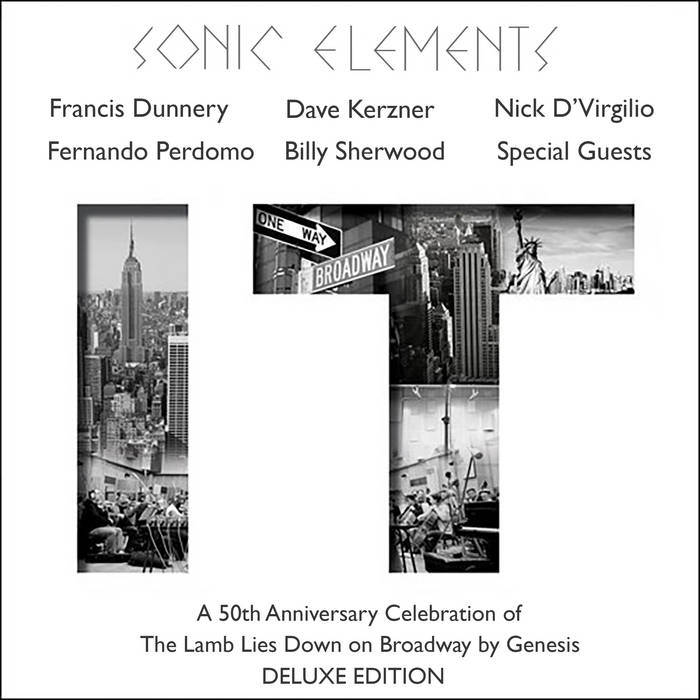
Sonic Elements, IT – A 50th Anniversary Celebration of The Lamb Lies Down on Broadway by Genesis: Genesis’ first entry into the superdeluxe marketplace, a 50th-anniversary remaster of their 1974 rock opera, wound up being delayed until June. In meantime, we have to content ourselves with this remake, masterminded by keyboardist/conceptualist extraordinaire Dave Kerzner. But never fear; there’s contentment — indeed, satisfaction — aplenty to be found! An all-star team of contemporary American giants (Kerzner, Fernando Perdomo on guitar, Billy Sherwood on bass) have the time of their lives rewiring The Lamb as a lushly upholstered, dynamic film score, complete with Nick D’Virgilio’s drums and orchestrations repurposed from a similar 2009 project. But the secret sauce here is vocalist Francis Dunnery (whose credits range from original lead singer for Brit neo-proggers It Bites to guitarist for Robert Plant); his magnificent, dramatic singing echoes Peter Gabriel’s originals while avoiding the safety of imitation. Dunnery absolutely inhabits Genesis’ Puerto Rican punk pilgrim Rael on his journey from the streets of New York through realms of embodied myth to absorption into Jung’s collective unconscious (I think). It’s all done with love, gusto and plenty of polish, and it’s absolutely thrilling. Available as a basic double-disc set, a Deluxe triple set with alternate versions of multiple tracks, or a hi-res download with even more alternate takes. Well worth every penny, whichever version you opt for, and in the running for the Favorites list.

Rush 50, Deluxe Edition: So how do you put together yet another Rush anniversary compilation — especially the first since the passing of Neil Peart? Rush 50 turns out to be a pretty ingenious solution to the problem — not just one of marketing, but of producing genuine value. Yes, it’s organized around the career arc of everyone’s favorite Canadian hard-prog power trio as usual; yes, there’s at least one song from every album, with career high points from Fly By Night to Clockwork Angels given extra representation. But more than half the 50 tracks are live versions — spanning the decades from an early TV appearance recorded at an Ontario secondary school to the encore from the final gig of the R40 tour, taken from the canonical All the World’s A Stage, the bonus concerts on recent 40th-anniversary reissues, later live video/audio packages, and the vaults. If some of the fledgling band’s material seems woefully unfashionable now — the Beatles’ “Bad Boy” spun into a psychedelic workout a la Cream, for example — we still get the privilege of eavesdropping as Alex Lifeson, Geddy Lee and Peart grow in muscularity, depth and confidence, building an audience with their audacity and prowess, while time stands still before our ears. The mouthwatering physical package, with sympathetic, well-reported overviews of the band’s first and final decades plus mouthwatering new art by the stalwart Hugh Syme, is the icing on the cake here. Even if most of this material is familiar to longtime fans, having it all in one box turns out to be a genuine pleasure.

— Rick Krueger
BEAT In Concert: Elephant Talk for the 21st Century

BEAT, Copernicus Center, Chicago, Illinois, Friday, November 1st, 2024

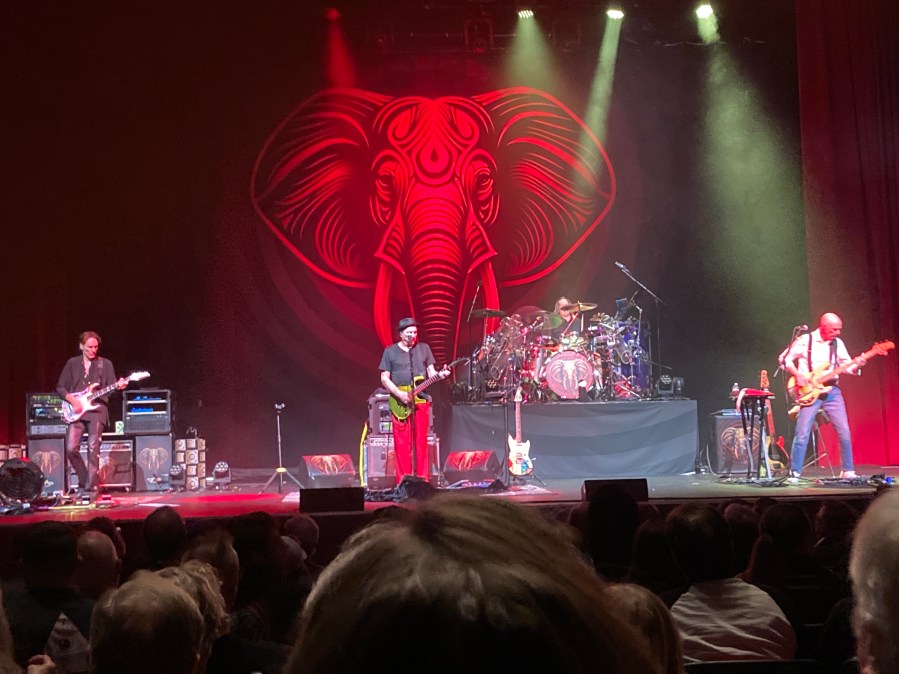
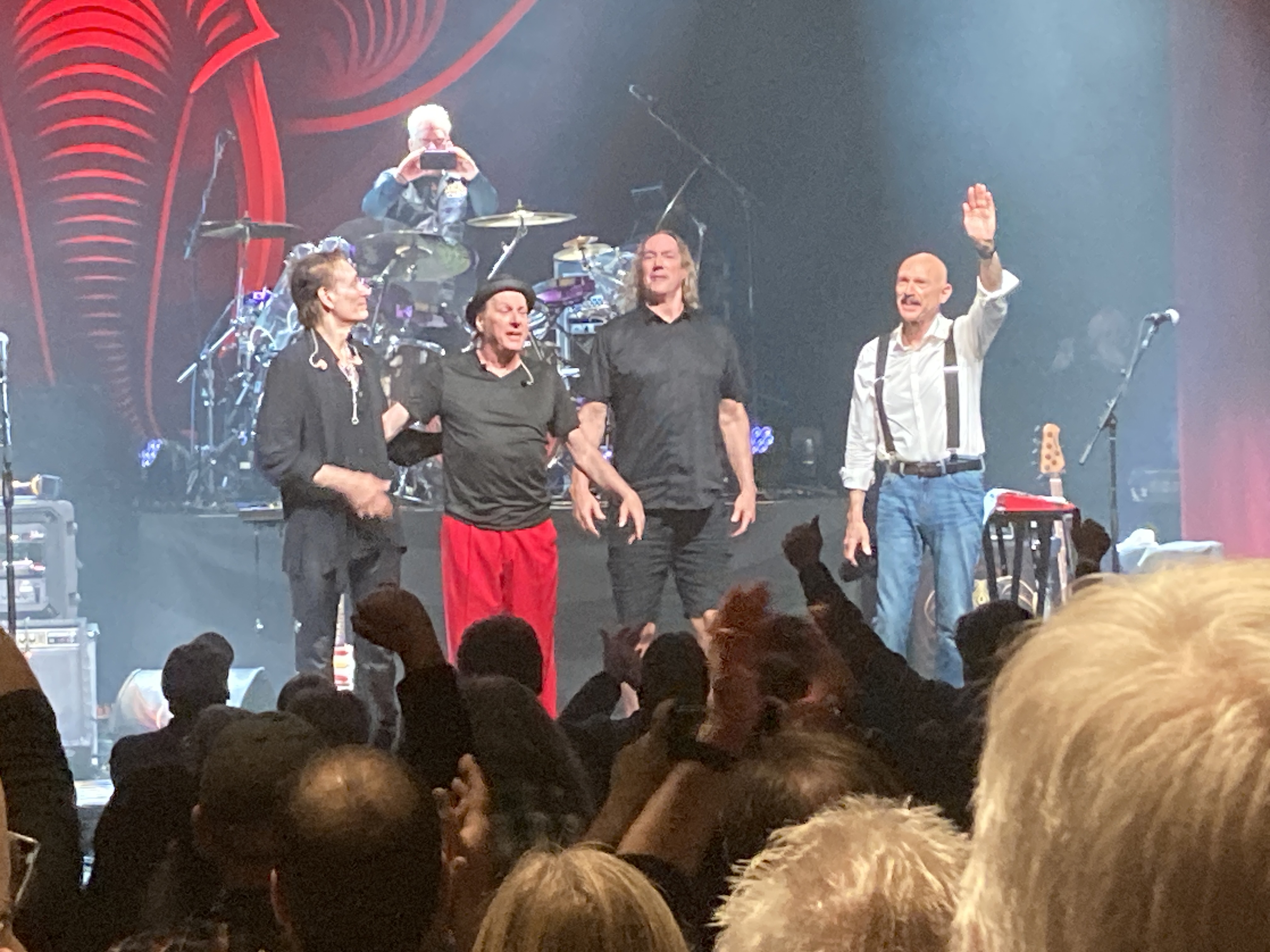
Halfway through a three-month North American tour, Adrian Belew and Tony Levin’s 40th anniversary remount of 1980s King Crimson readily commanded the stage of this vintage Art Deco theater, slamming into the ecstatic audience like a truckful of bricks spontaneously rearranged as abstract sculpture. BEAT’s reinvention of this cutting-edge music offers much more than fresh trim on a classic chassis; with virtuosi Steve Vai and Danny Carey at the stations originally manned by Robert Fripp and Bill Bruford, there was power to spare under the hood, and the edgy thrill of exploration that Belew and Levin’s previous celebration (first known as Two of a Perfect Trio, then as the Crimson ProjeKct) only mustered intermittently back in the early 2010s.

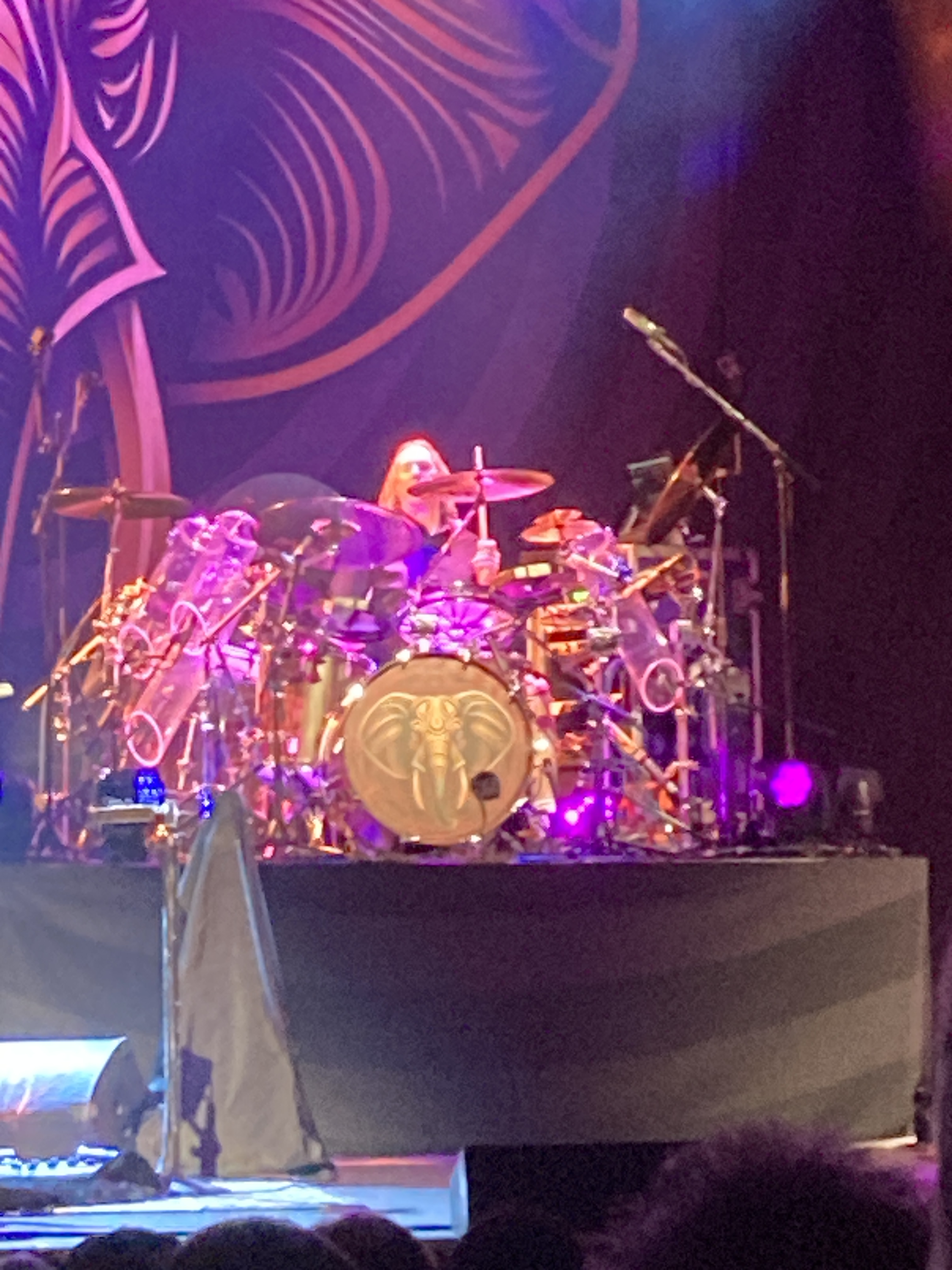
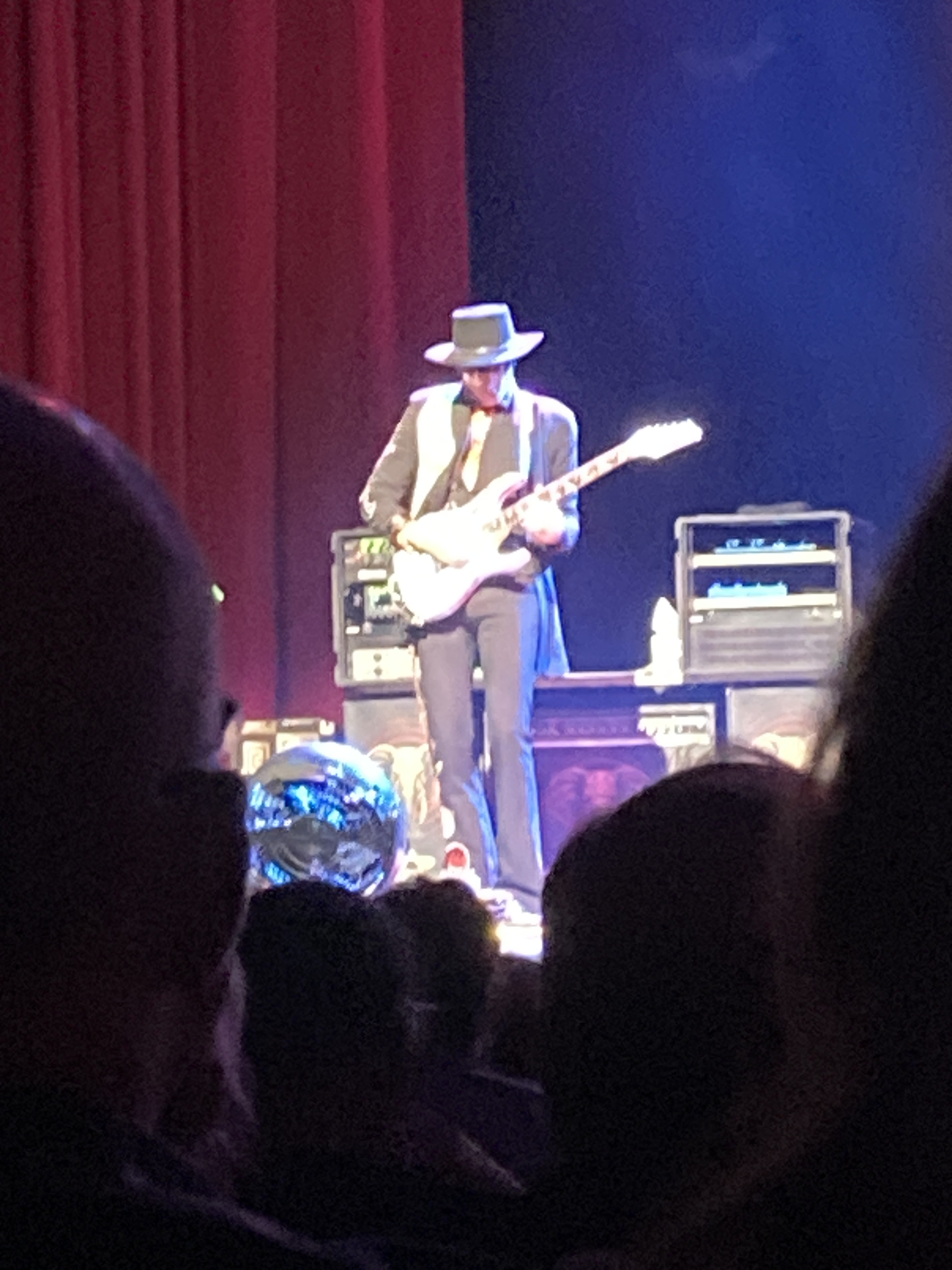
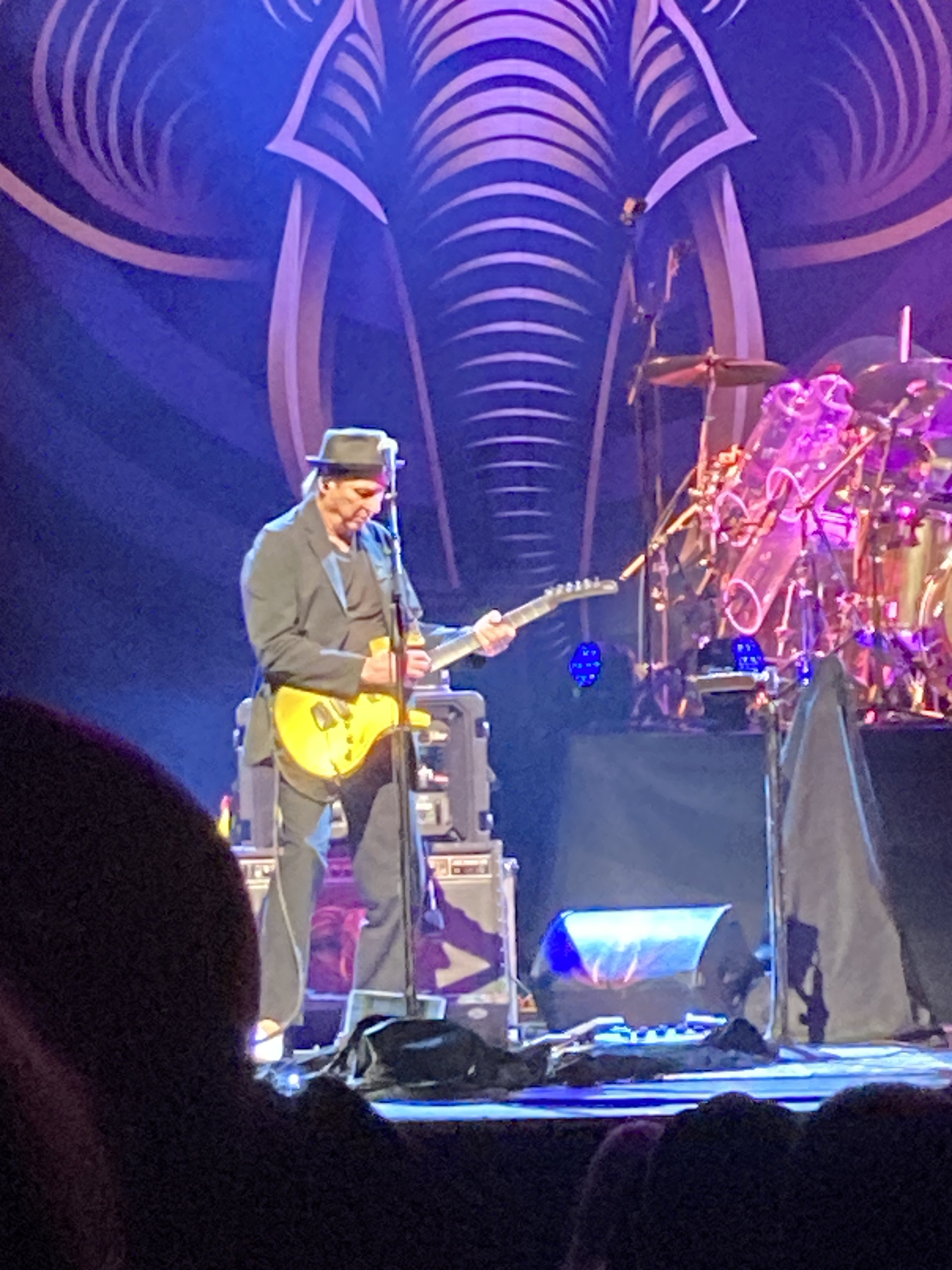
With both Fripp and Bruford retired from Crimson (and publicly supporting this venture), the new recruits leapt into their roles with gleeful abandon. At stage left, Carey straddled his monolithic drum set, cutting loose with both the confident drive he brings to Tool and the innovative riot of percussive colors Bruford brought to bear. The overall effect was devastating: electronic drums, boo-bams, rototoms, and more danced in head-spinning polyrhythmic patterns above rock-solid odd-time grooves. To Carey’s right, Vai’s stage presence couldn’t have been more different than Fripp’s buttoned up demeanor — leaning into the riffs with an easygoing strut, taking the original finger-busting licks to the next level, topping ferocious solos with distinctive, showy flourishes beloved by fans since his days with Frank Zappa. For all its fearsome complexity, the music was remarkably free and exceptionally fiery — to the extent that the newbies even accelerated a bit ahead of Belew and Levin on a few occasions!

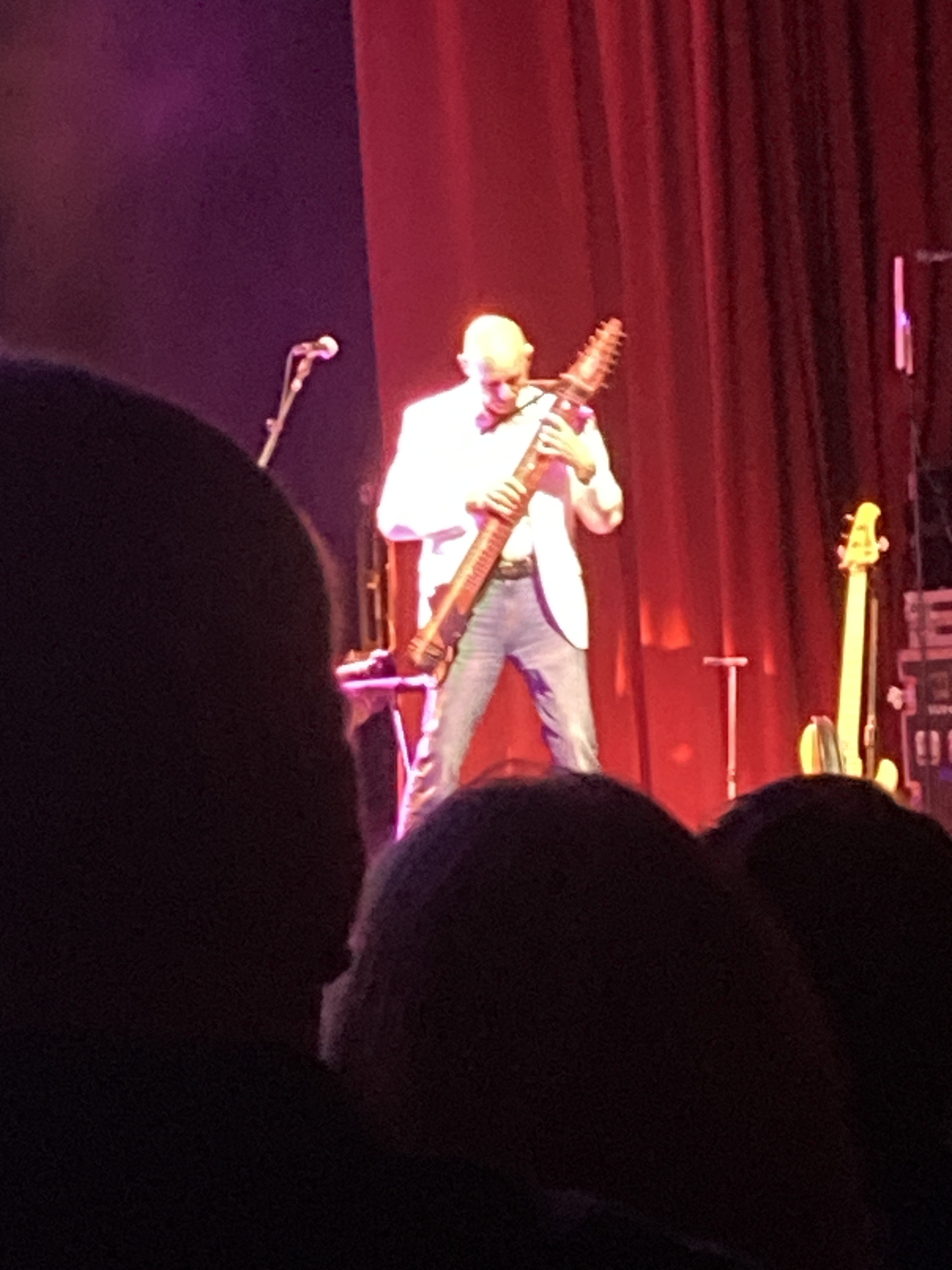
But if the Crimson veterans were surprised by occasional mess-ups, they really didn’t seem to mind, grinning and bopping away as they caught up, Carey and Vai decelerated, and everyone locked in to the mesmerizing weave once again. I’d argue that Levin’s role in 80s Crimson was both essential and underrated, and this show offered fresh evidence for my case; alternating between Chapman Stick and bass, he simultaneously dished up both the low-end foundation and the hypnotic rhythm figures that give these pieces shape and harmonic direction. And with the beautiful noise of the other three players to carry him along, Belew was in his element. Duetting with Vai on fiendish bursts of counterpoint, wrestling every possible noise made by animal or power tool from his cubist array of guitars, yelping out proto-rap or firing off riveting arcs of vocal melody, the man was eager and energetic throughout the night, obviously delighted to do his thing, committed to keep the fun going.

When I saw King Crimson live for the first time back in 1984, “fun” would not necessarily have been the descriptor that sprang to mind; Fripp and Bruford were publicly feuding in the music press, Levin had programmed a click track to keep everyone in sync onstage, and Belew was doing tour publicity pretty much on his own. It was no surprise when Fripp declared that innovative incarnation finished at the end of the run, so I’ve always considered the subsequent regroupings across the decades unpredictable bonuses. And in the same way that the “chamber ensemble plus drum corps” Crimson of the 2010s gave Fripp a final run at the band’s entire history with a simpatico crew of colleagues (including Levin), I’d argue that BEAT gives Adrian Belew the version of Crimson that suits him best, focused on the slice of repertoire he values most. Belew, Levin, Vai and Carey are far from uptight or perfectionist, yet they’re unquestionably up to the demands this mighty music presents them, and absolutely dedicated to giving its fans their due. The results in Chicago were every bit as satisfying to me (now a 12-timer in catching KC’s various versions) as they were for long-time fans who’d never got to see the 1980s team in action (like my eloquent concert buddy Cedric Hendrix – check out his take here). If you’re ready to have your face melted, mind blown and heart stirred, catch BEAT while you can!

BEAT is on tour through December; click here for tour dates. Click here to rent a stream of BEAT’s November 10 concert, recorded live in Los Angeles.

— Rick Krueger
Setlist:

  • Neurotica
  • Neal and Jack and Me
  • Heartbeat
  • Sartori in Tangier
  • Dig Me
  • Model Man
  • Man with an Open Heart
  • Industry
  • Larks’ Tongues in Aspic Part III
  • Waiting Man
  • The Sheltering Sky
  • Sleepless
  • Frame by Frame
  • Matte Kudasai
  • Elephant Talk
  • Three of a Perfect Pair
  • Indiscipline (including drum solo)
  • Red
  • Thela Hun Ginjeet

Rick’s Quick Takes: Come On, Feel the Noise!

This time around, a cross-section of mostly new, mostly instrumental albums that may start in one genre but willfully refuse to stay there — with frequently bracing results. Purchase links are embedded in the artist/title listings, with any additional purchase links for physical media at the end of a review and streaming access following.

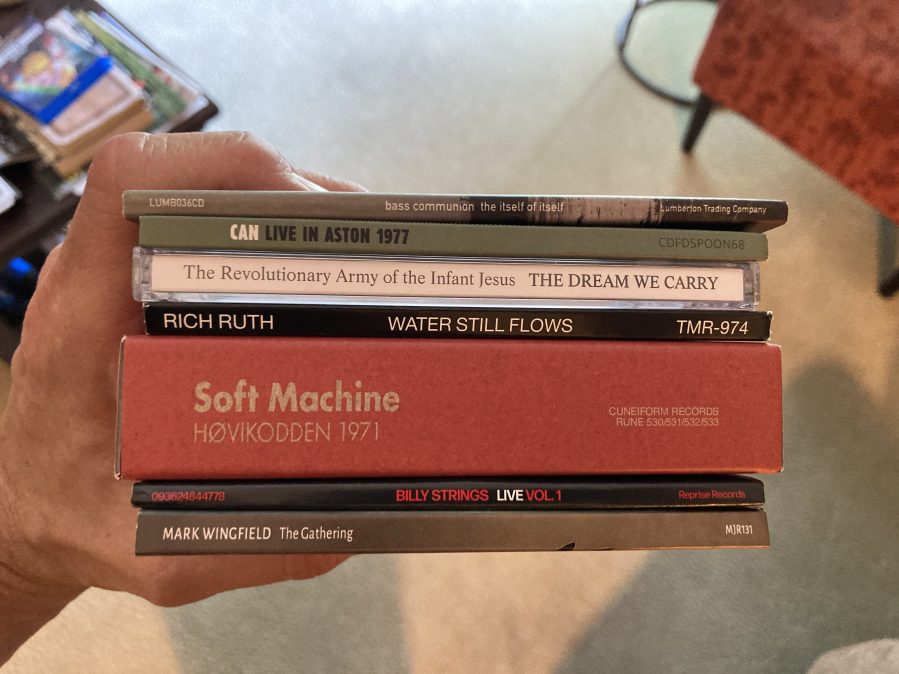
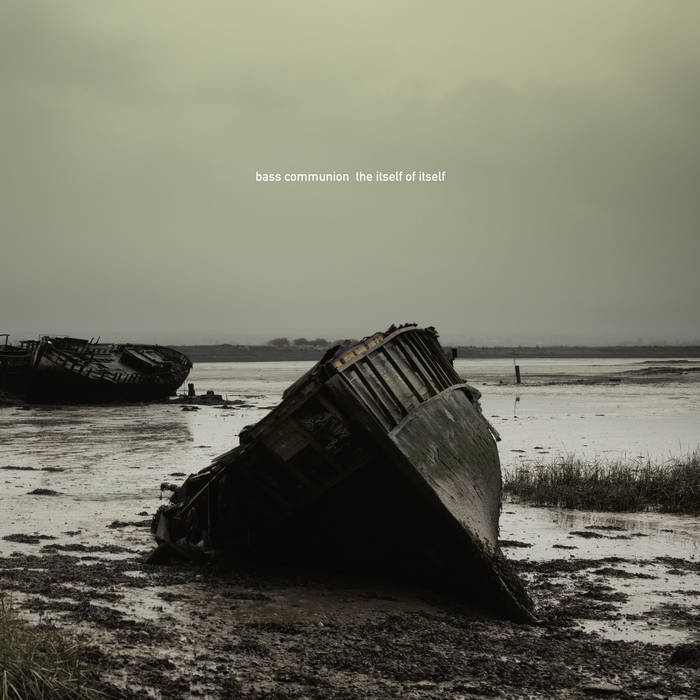
Bass Communion, The Itself of Itself: We can’t say Steven Wilson doesn’t warn us on the album sleeve: “audio artefacts and noise such as tape hiss, wow and flutter, vinyl crackle, distortion and earth hum are (probably) deliberate.” Delving into his longstanding experimental/electronic doom-drone persona, Wilson once again abandons melody and rhythm to slap down raw sonic textures and grind them together across extended time spans. The results range from arresting (the relentless build of horror-soundtrack opener “Unperson”, the uneasy, alarming stasis of the title piece) to utterly forgettable (when my dehumidifier kicked in during “Study for Tape Hiss and Other Artefacts”, I really thought it was part of the track). Am I finally sussing out (as some have theorized) Wilson’s extended con of the prog world? Getting a sneak peek of his 2025 solo album The Overview? Or hearing the latest from an artist who just does whatever he wants and doesn’t particularly care how possessive fans get about him? I’m a diehard Wilson fan, but when it comes to Bass Communion, your guess as to his motivation is probably as good as mine. (Order the CD from Burning Shed here.)

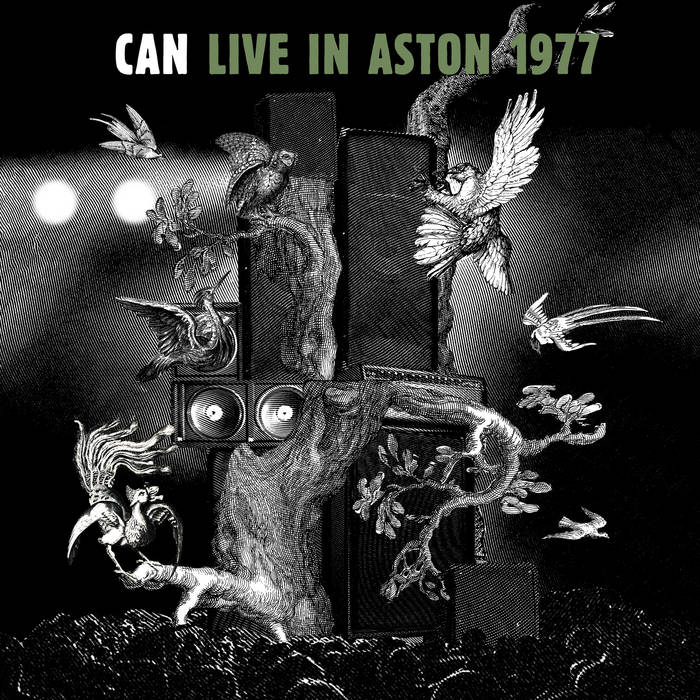
Can, Live in Aston 1977: Krautrock’s most thoroughly improvisational outfit got thoroughly funky in the late ’70s, courtesy of Rosko Gee, Jamaican bassist of no mean ability. With Gee powering the beat and previous bassist Holger Czukay dialing up snippets from shortwave radio and tape libraries, this version of Can is rhythmically tighter and tonally looser at the same time. That means Michael Karoli has more room to howl on guitar, Irmin Schmidt can conjure thicker clouds and launch edgier thunderbolts from his keyboards, and drummer Jaki Liebezeit can drill down into his unstoppable, drily metronomic groove. The clangorous solo section of “Drei” (enticing in its ambiguity – who’s playing this crazy thing that sounds like a bell choir in hyperdrive?) and the insistent, stonking, organ-led groove of “Vier” are high points. A solid addition to this fine archival series of vintage concerts.

The Revolutionary Army of the Infant Jesus, The Dream We Carry: RAIJ’s 2020 effort Songs of Yearning was my Top Favorite album of that strange year; I called it “a sacramental transmission from, then to, the heart of creation.” The Liverpool “experimental arthouse collective” has reduced its core personnel and pared back its weirdness ever so slightly, but their inviting mélange of reflection and insistence, sacred and profane persist. Jesse Main’s vocals and Eliza Carew’s cello gracefully arc over Paul Boyce and Leslie Hampson’s lush instrumental backing; on multi-track suites like “Les Fils des Etoiles” through “Object of Desire”, fragments of multilingual poems, songs and spoken word rise from nowhere, become incarnate, declare their tidings, then disappear into a wistful bed of chamber and orchestral tone color. Like RAIJ’s entire catalog, The Dream We Carry testifies to mystery tucked within the mundane, exemplified by album ender “The Song of Wandering Aengus”; it’s an eloquent yet elusive invitation to encounter the Spirit active at the heart of the fields we know.

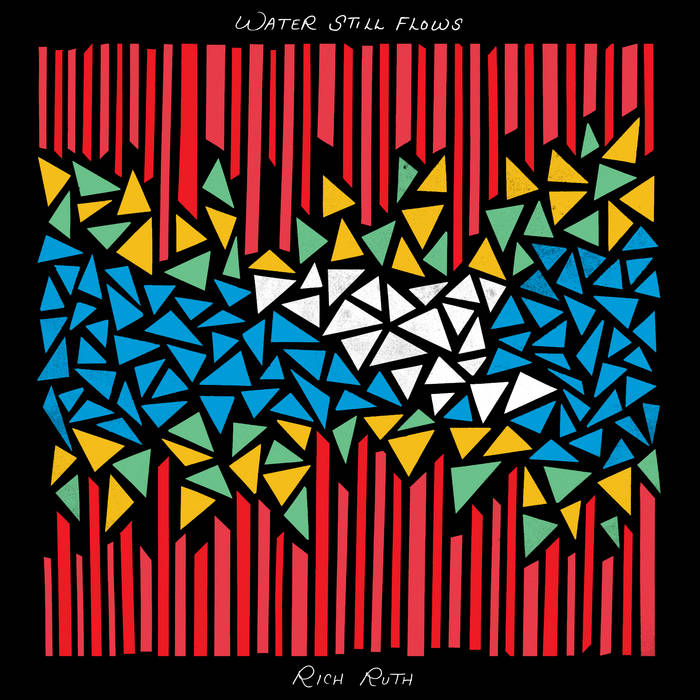
Rich Ruth, Water Still Flows: Reviewing 2022’s I Survived, It’s Over, my thumbnail sketch of Nashville guitarist Rich Ruth pointed to him as RAIJ’s American counterpart — but on the evidence of his latest, that assessment sells him short. For Water Still Flows, Ruth adds massive slabs of dark metal riffage to his already potent mix of cosmic ambience, celebratory spiritual jazz, and slow-crawling post-rock. Opener “Action at a Distance” feels like a heftier “Won’t Get Fooled Again”; marauding power chords choke off the luxuriant strings of “God Won’t Speak”; the blissful comedown of “Somewhere in Time” sticks a soft landing after the devastating climax of “Aspiring to the Sky”. With an eclectic ensemble of sax, harp, and pedal steel plus Ruth’s frenetic axework anchored by Reuben Gingrich’s crashing drums, this album is a mighty, impeccably shaped tone poem that once again journeys through pain and catastrophe to refreshment and renewal. (Order the LP or CD from Third Man Records here.)

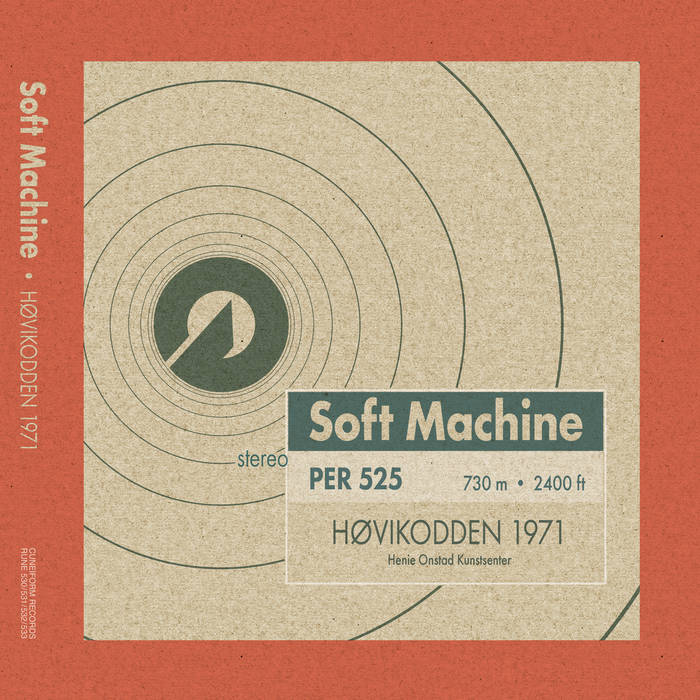
Soft Machine, H​ø​vikodden 1971: The seminal British jazz-rock band at its creative peak, recorded over two nights at a Norwegian arts center. At each show, Mike Ratledge’s inimitable fuzz organ takes command; multi-saxist Elton Dean lets loose with an unending stream of raucous Coltrane licks; Hugh Hopper’s bass swarms, clambers and climbs, refusing to stay on the low end; Robert Wyatt’s limber drumming seethes, weaving through the tonal murk at will. Sometimes locking together in breathtaking unison, sometimes scattering to widely separated corners, the Softs approach classic material like “Facelift”, “Fletcher’s Blend” and “Out-Bloody-Rageous” from vastly different perspectives at different shows; the first night is a anarchic fireworks display, gobsmacking in its sweep, while the second night channels the quartet’s energy into a thrilling, thrusting sense of unified drive (albeit with laid back interludes). There’s tons of live Soft Machine available, but this newly released box set is a genuine high point of their already formidable discography.

Billy Strings, Live Vol. 1: I’ve gotta admit, I’m late to the party here; before a recent sojourn in Nashville and a resulting reacquaintance with all things Americana, I had missed out on the mightiest musician to hail from Michigan in a long, long time. Strings is, without a doubt, the real deal: a virtuoso guitarist, a first-rate singer and a songwriter who’s already shown signs of true, durable greatness. On his first live release, he and his band turn gritty evocations of small-town vice (“Dust in a Baggie,” “Turmoil and Tinfoil”) and poetic contemplations of the bigger picture (“Long Forgotten Dream”, “Fire Line/Reuben’s Train”) into unabashed, dynamic bluegrass brilliance, stirring in proggy interplay and psychedelic seasoning, stretching out their jams for maximum tension and impact, but with nary a wasted note or a thoughtless lick. This is an absolutely smashing major label debut, a snapshot of a phenomenon in perpetual motion, the music grounded in Strings’ heart as well as his fearsome chops, and already on my Favorites list for this year. (Strings’ next studio album, Highway Prayers, has just been announced for a September 27 release.)

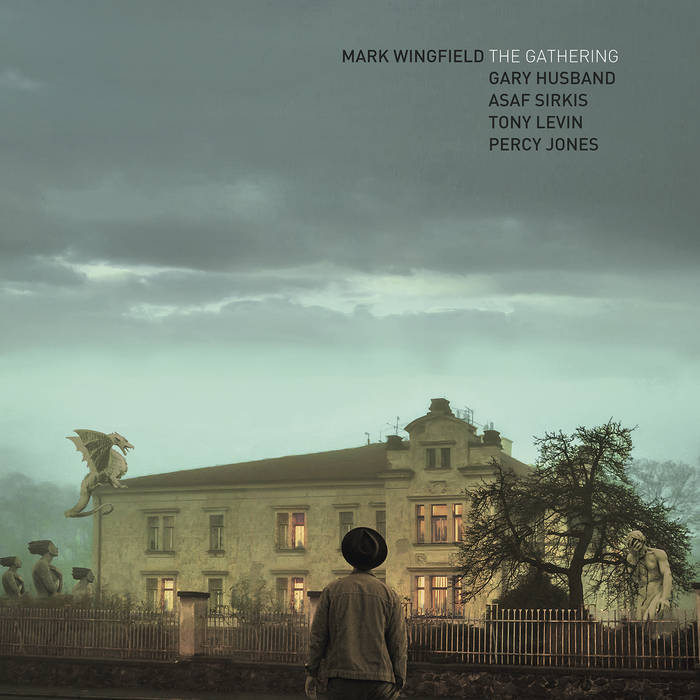
Mark Wingfield, The Gathering: Nightmarish complications severely curtailed MoonJune Records’ ability to sell this beauty on CD — which is a shame, because it may be British fusionist Wingfield’s most accomplished and focused effort to date. Languorous, enticing compositions like “Apparition in the Vaults”, “A Fleeting Glance” and “Cinnamon Bird” consistently take flight here: Wingfield’s guitar traces ecstatic melodic parabolas and sparse changes; Gary Husband colors the soundscape with juicy pads, inspired atmospheres and choice accents on piano and synth; Asaf Sirkis lays down a spacious, unshakeable polyrhythmic grid to propel things forward. What makes this even more of a killer session is the overdubbed bass contributions of King Crimson’s Tony Levin (focusing on active, rich-toned counterpoint) and Brand X’s Percy Jones (bubbling under with his unique tone and angular comping). It’s daring and delightful from start to finish, as an all-star lineup of truly great players work with total concentration and dedication, and make this sophisticated yet accessible music their own.

— Rick Krueger
Rick’s Quick Takes for February ( Levels, Likes, Loves, Leads – and Nightwhales?)

2024 is out of the gate hot — three of the albums below are already on my Year-End Favorites list, and there are no duds in this bunch! As usual, purchase links are embedded in the artist/title listing, with a partial or complete streaming preview below the review.

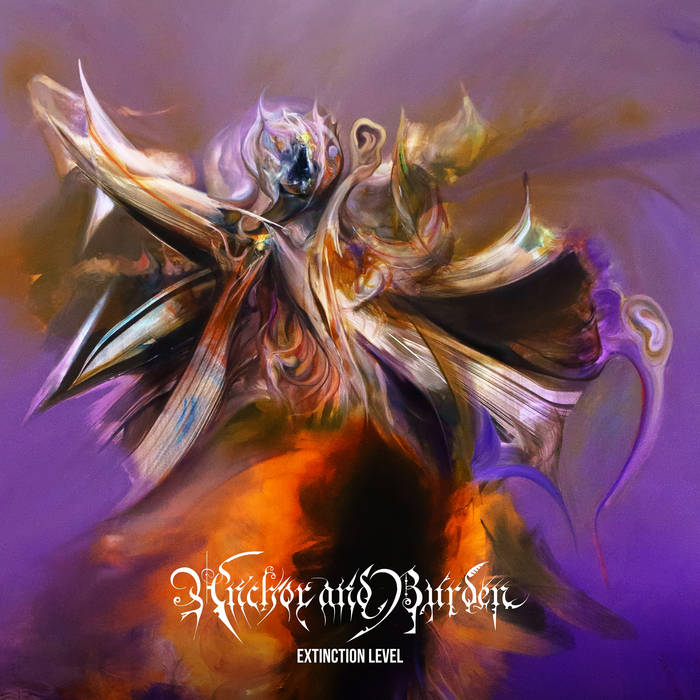
Anchor and Burden, Extinction Level: MoonJune Music mainman Leonardo Pavkovic has labelled this brutal beauty “uncompromising progressive avantgarde doom-jazz post-metal”. That pretty much covers it! Kicking off with opener “Fractured Self” and “Body Expansion”, touch guitarists Markus Reuter and Alexander Dowerk spend the next hour launching knife-edged slabs of sonic concrete into sub-orbit; drummer Asaf Sirkis pulverizes any semblance of a steady beat into terrifying quick marches (“Mutual Assured Destruction”), hyperactive polyrhythms (“Nine Gates to Dominion”), or just lethal, unanticipated deadfalls; and electronics wizard Bernhard Wöstheinrich provides both breathing space for a comedown, as on the closing “The Crust of This Earth”, and crash pads for droning, sludgy guitar plunges throughout the extended title track. Absolutely bonkers, already a favorite; you may have to be in the right mood for it, but Extinction Level’s free-for-all improv (not far removed from King Crimson’s outer limits) turns out to be a heady, head-banging good time.

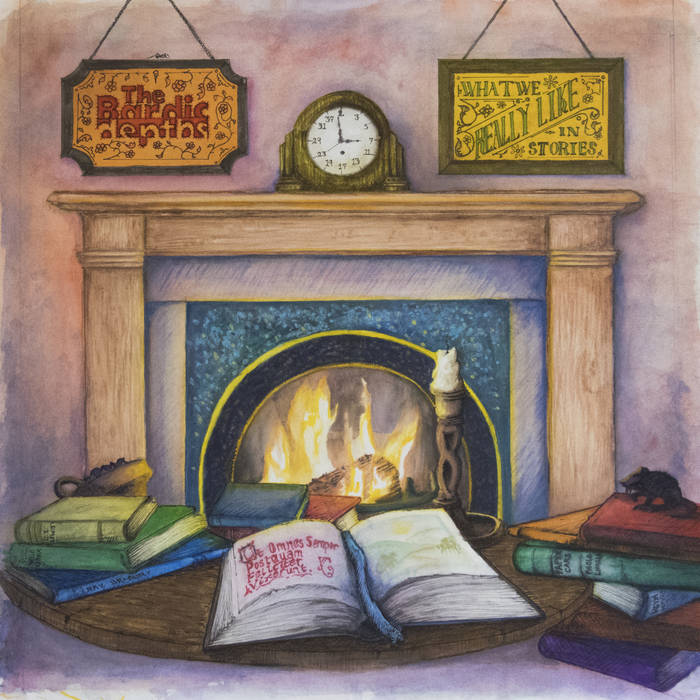
The Bardic Depths, What We Really Like in Stories (released March 7): both more direct and more varied than their previous releases, TBD’s third is a first-class album that delivers generously on its title’s promises. Brad Birzer’s graceful lyrics effortlessly transport us into the minds of creators as diverse as Ray Bradbury (“You’ve Written Poetry, My Boy”), Willa Cather (“Old Delights”) and Robert E. Howard (“The Feast Is Over”) — then into the creations themselves (the Orwellian dystopia of “Vendetta”, the postapocalyptic “Stillpoint”, the high adventure of “Whispers in Space”). In turn, Dave Bandana and Gareth Cole’s compositions are appealingly streamlined, giving Cole’s guitars, Bandana’s guitars & synths and Peter Jones’ keys & saxophones plenty of room to shine but never straying into aimless jams. Add a warm vocal blend from the quartet (with Jones and Bandana at the forefront) to Tim Gehrt’s steady, sparkling grooves, and you have a prog album that’s accessible without compromise, thought-provoking without pretension. This one’s charms might sneak up on you, but repeated listens will thoroughly repay your kind attention. (Check out our Bardic Depths roundtable here.)

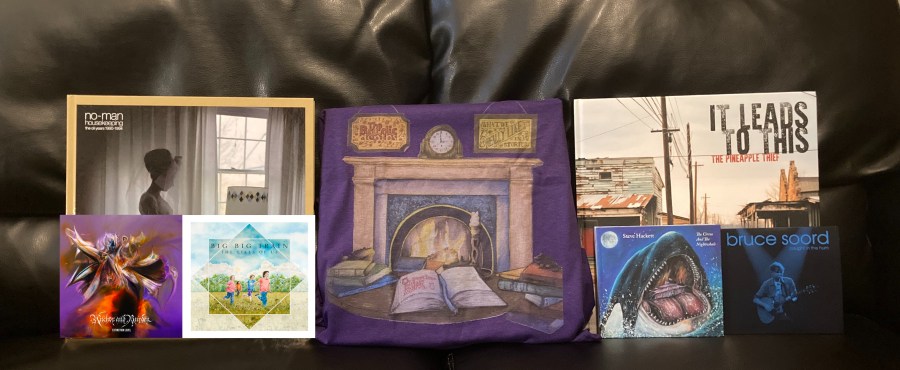
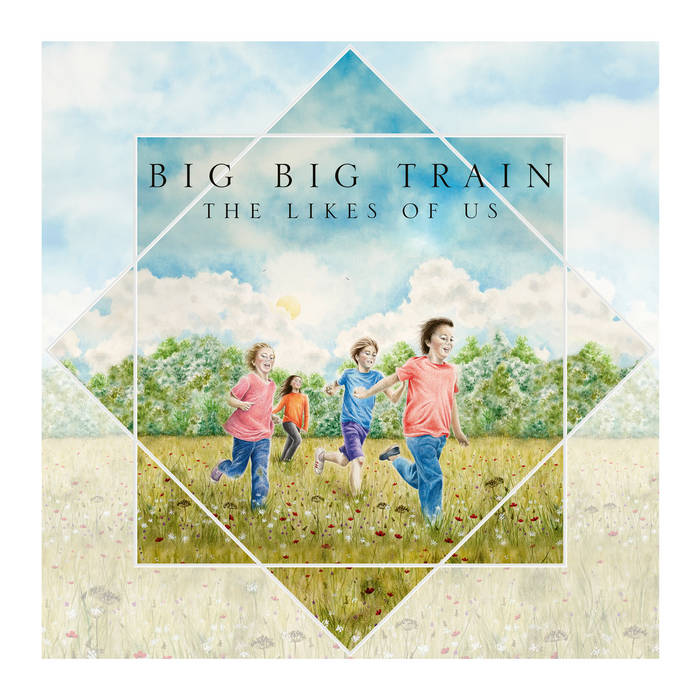
Big Big Train, The Likes of Us (released March 1): the wonder here isn’t that indefatigable founder Greg Spawton and his international crew have regrouped with such power and panache; it’s that they’ve tackled the struggles and sorrows of recent years head-on, forging them into the band’s most direct, integrated album since Grimspound. From mission statement/overture “Light Left in the Day” through epics “Between the Masts” and “Miramare” to killer ballad “Love’s Light” and finale “Last Eleven”, new singer Alberto Bravin fares forward into the unknown, summoning the essence of friendship and the pain of loss, calling on all in earshot to seize the day. There’s tons of musical variety, too, from the hard-rocking “Oblivion” to the playful “Skates On” and the 12-string weave of “Bookmarks”, with all seven players (five of whom sing) each getting their time to shine. And yes, that brass section pops in at just the right moments, to bring a tear to the eye or lift the spirit as required. Familiar yet fresh, and destined for that year-end faves list, BBT fans can be well satisfied with this latest excursion – and The Likes of Us is well turned out to welcome new Passengers onboard as well! (Check out our interview with Alberto Bravin here.)

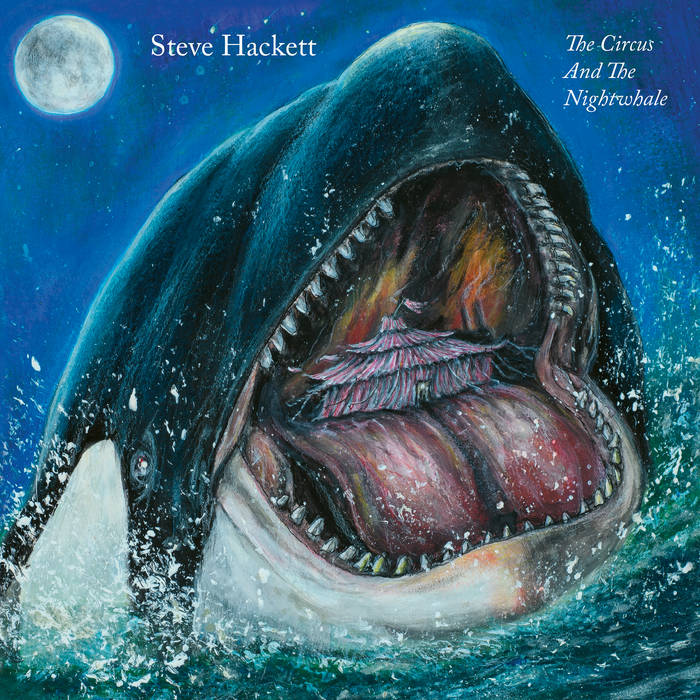
Steve Hackett, The Circus and the Nightwhale: Prepare to have your ears pinned back here: Hackett leaps out of the gate with freshly energized songwriting and ferocious guitar work and doesn’t let up throughout this compact, compellingly listenable concept album. The restless opening sprint of “People of the Smoke”, the “Squonk”-like stomp of “Taking You Down” (with standout lead vocal by Nad Sylvan and towering sax from Rob Townsend), the lush orchestral interlude “These Passing Clouds” are all full to bursting with devastatingly melodic, wildly spraying six-string excursions from Steve; even lighter tracks like the harmonious “Enter the Ring” and luxuriant 12-string centerpiece “Ghost Moon and Living Love” overflow with prime solo licks, mind-melting and heart-gripping in equal measure. Add Roger King’s richly scenic keyboards to a succession of marvelously eclectic tunes that waste no time and a coming-of-age narrative that climbs from the gutter to the stars (braced with a dose of the marvelous — there’s that Nightwhale, after all). And voila! You’ve got a Hackett opus that immediately goes to the 2024 favorites list, ranking right up there with Spectral Mornings, At the Edge of Light or whichever of his 30 solo efforts you prefer best.

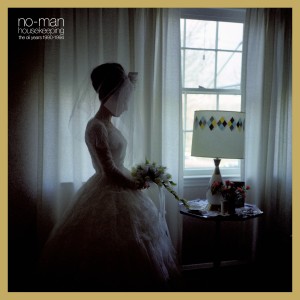
No-Man, Housekeeping – The OLI Years, 1990-1994: Ben Coleman, Tim Bowness and Steven Wilson’s earliest singles for One Little Indian (oops, Independent), “Days in the Trees” and Donovan’s “Colours”, are the perfect sneak peek/summation of this compilation’s garishly romantic delights. Just as you start thinking “ho hum, fey indie Nineties dance-pop”, the heavens – or are they the abysses? – open, accompanied by lush squalls of immaculately recorded dissonance. As if Roxy Music and ABC had somehow wound up co-headlining a vaudeville show, Bowness’ desperate vocals and Coleman’s slashing violin work match up swoon for swoon, while Wilson toughens the grooves and hoists ambitious synthesized backdrops, colorful splatters of guitar punctuating the aching pantomimes all the while. Containing the first two No-Man albums (the singles-oriented Loveblows and Lovecries and the ravishing, guest-heavy Flowermouth) plus the early EP Lovesighs, a singles disc and radio sessions, Housekeeping is a generously filled, beautifully designed boxset that points unerringly toward Bowness and Wilson’s more mature achievements (whether together or apart), but is also thoroughly listenable and intriguing in its own right.

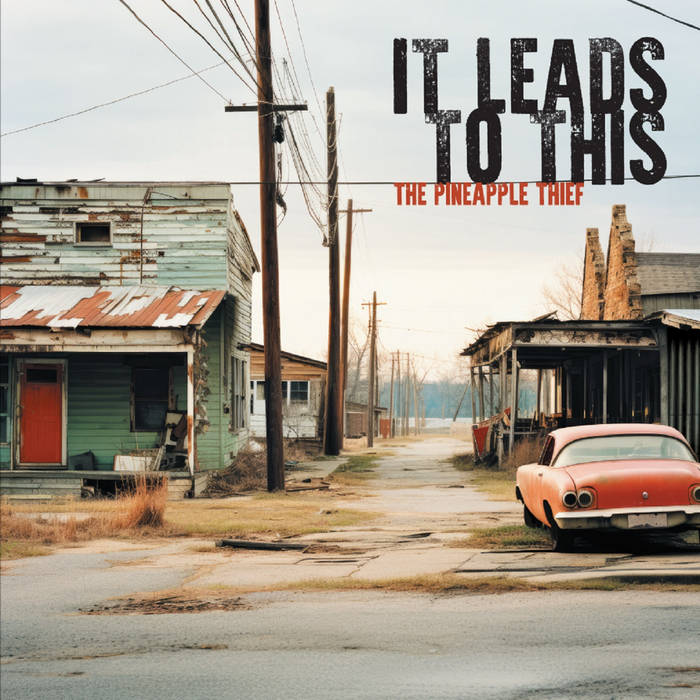
The Pineapple Thief, It Leads to This: more badass guitar loops and riffs (spaghetti westerns and surf music entwined in a Steve Reich soundscape); more bleak musings on our pervasive inability to connect, crooned with Bruce Soord’s trademark tenderness and fury; more moments of tasty, laterally-inflected drumming from Gavin Harrison. The current edition of the Thief’s fourth studio album is its own self-contained world, set in motion by the Soord/Harrison team’s moody interplay and rotating on Jon Sykes and Steve Kitch’s steady axis; undeniably of a piece with their recent catalog, and all the better for it. If none of the eight songs particularly stand out, they’re all honed to sleek perfection, building through seductive, bracing miasmas of dread and determined pursuits of flickering light to the knockout punch of the last two tracks. Whatever nightmare Soord is sleepwalking through, his eyes and heart are wide open as he edges forward, with Sykes, Kitch and Harrison urging him on all the while. (Soord’s recent “unplugged” solo CD/DVD, the already out-of-print Caught in the Hum, is an even more distilled example of this melancholy, coolly yearning aesthetic.)

— Rick Krueger
Rick’s Quick Takes for January (In the Bleak Midwinter)

Note: Artist/title links go to purchase options; streaming previews follow reviews.

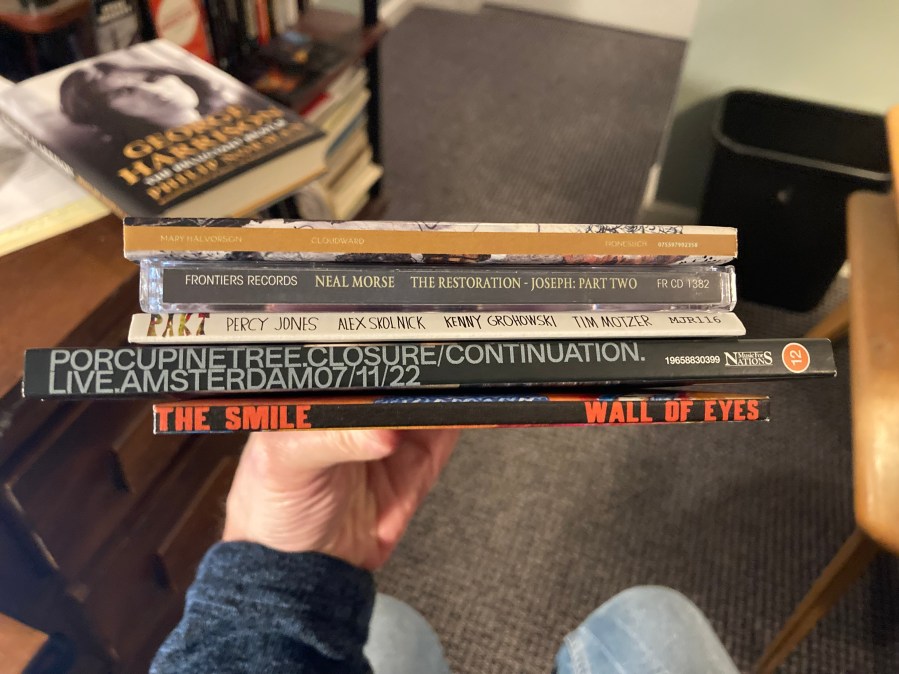
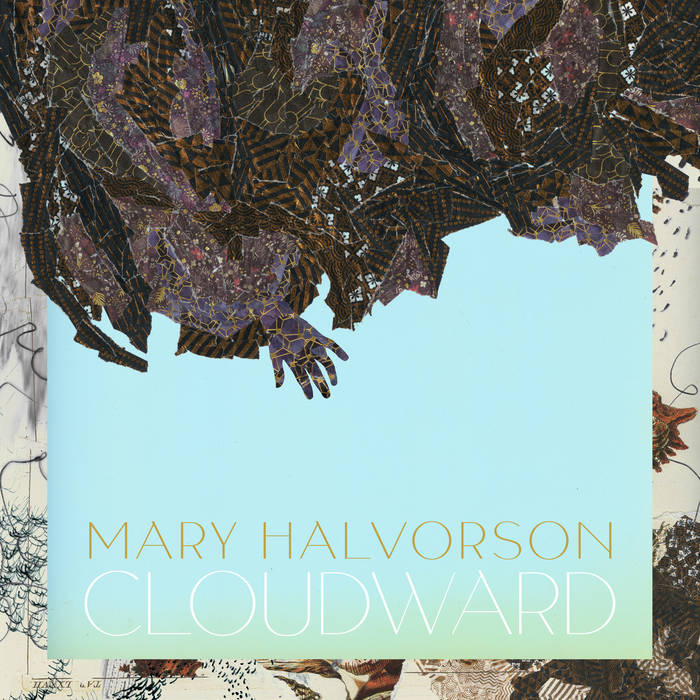
Mary Halvorson, Cloudward: Trailblazing guitarist Halvorson gathers the sextet from her 2022 classic Amaryllis around eight new avant-jazz compositions. Trumpeter Adam O’Farrill and trombonist Jacob Garchik sizzle on opener “The Gate”; Patricia Brennan’s vibraphone lends a rich shimmer to “The Tower”; Nick Dunston launches an epic bass solo to kick off the closing “Ultramarine”. And Tomas Fujiwara? He’s everything you could imagine in one drummer — meditatively punctuating “Unscrolling”, driving the riff-fest “Tailhead” and covering all points in-between. Set these folks loose on their leader’s sinewy, elegant concoctions of yearning and abstraction, and you never know what will happen next. All the while, Halvorson sets the pace on her instrument, with a woody, delay-laced sound and a skittering, percussive style all her own. Whether Halvorson’s and company are swinging like mad on “Collapsing Mouth” or coalescing like electrical static around Laurie Anderson’s guest violin on “Incarnadine”, Cloudward is another head-spinning, laugh-out-loud delight.

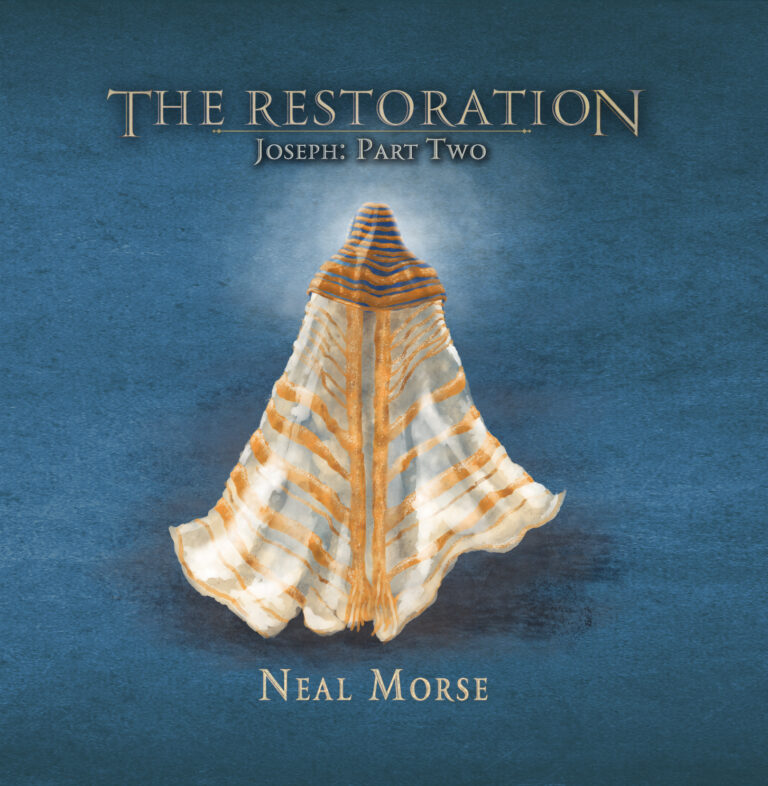
Neal Morse, The Restoration — Joseph, Part Two: The conclusion of Morse’s latest rock opera takes Part One’s rough and ready swagger and turns it up to 11, with grit even in the proggiest moments (Jacob’s sons’ vocal fugue a la Gentle Giant on “The Argument”) and fresh muscle propelling the Latin groove “Everlasting”. There’s heft to the lyrics too, as the showdown between a newly-powerful Joseph and his off-balance brothers displaces Neal’s usual conversion narrative. (Don’t worry, though; reconciliation and revival are just a title track away.) With tight melodic/thematic connections to The Dreamer and a beefy sound recalling George Harrison’s All Things Must Pass and Joe Cocker’s Mad Dogs and Englishmen, The Restoration is also a spectacular vocal showcase; ensemble highlights include Ted Leonard’s emotive Judah and the Nick D’Virgilio/Ross Jennings cameos as Pharaoh’s butler and baker, and Morse puts his newly darkened tone to thrilling use at dramatic highpoints like “I Hate My Brothers”. Together, the Joseph albums are easily my favorite Morse-related releases since The Similitude of a Dream and The Great Adventure, and The Restoration goes straight to my Official Faves List for the new year.

PAKT, No Steps Left to Trace: Another year, another heaping helping of cutting-edge free improvisation from MoonJune Records, courtesy of indefatigable impresario Leonardo Pavkovic! Now in their third year as a collective, bassist Percy Jones, guitarist Alex Skolnick, drummer Kenny Grohowski and guitarist/electronicist Tim Motzer unleash their first double album, created entirely from scratch both in the studio and live. It’s a genuinely explosive set, especially when Jones (best known from Phil Collins’ 1970s fusion band Brand X) ramps up the double-time grooves and his compatriots lock on! But the intensity doesn’t slacken when the music spaces out, either; listening hard and leaning into their deep, uncanny sense of interplay, PAKT also conjures some of the most arresting ambient jams I’ve come across recently. Bursting every genre boundary you can think of, No Steps Left to Trace isn’t for the musically faint of heart — but, for those with ears to hear, it’s a trip well worth taking.

Porcupine Tree, Closure/Continuation. Live Amsterdam 7/11/22: The show I saw in Chicago a couple of months before but bigger, scaled up for packed European arenas instead of partially-filled Stateside auditoriums and rush-released on video before Christmas. The sum of all the prog-metal parts here is flat-out engaging: Gavin Harrison’s percussive impossibilities and Richard Barbieri’s synth squelches ground Steven Wilson’s driven singing and sardonic patter, while utility players supreme Randy McStine and Nate Navarro slam the songs home. Newer material stacks up well against PT’s classics, with pensive slowburns “Dignity”, “Chimera’s Wreck” and “Buying New Soul” nicely offsetting thrashy frequency-eaters “Blackest Eyes”, “Herd Culling” and “Anesthetize”. A solid introduction for anyone who missed the Tree’s initial, spiky flowering, this one will probably resonate deeper with longtime fans (like me) who took Wilson’s long-term “never again” PR onslaught at face value – until we no longer had to.

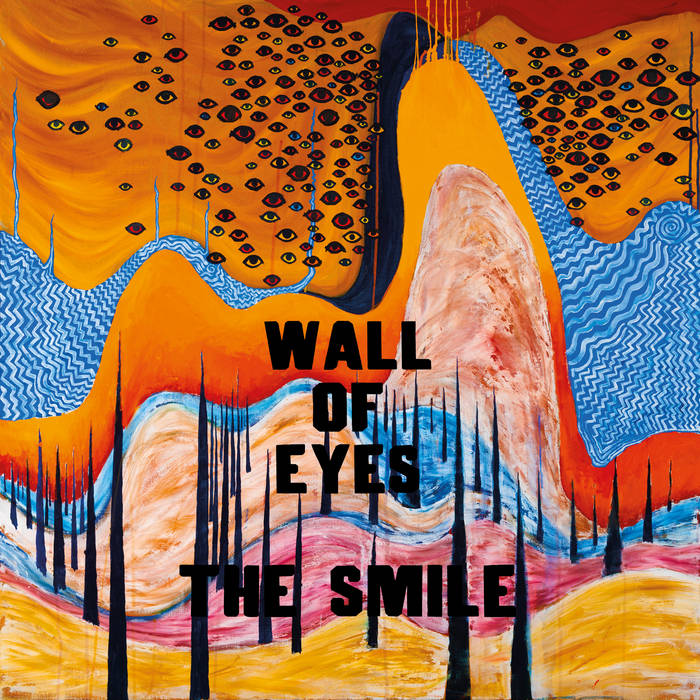
The Smile, Wall of Eyes: Admit it: does Stanley Donwood’s latest album cover look like a psychedelic Lord of the Rings paperback cover from the 1960s or what? And the title track kick-off of this Radiohead-facing project is every bit as disorienting: a understated bossa nova from Tom Skinner to which a balefully depressive Thom Yorke lyric, tightly wound orchestral smears and Jonny Greenwood’s arhythmic guitar plinks attach themselves like disfiguring barnacles. No forthright kicks to the head in the style of A Light for Attracting Attention here; The Smile beckon us toward dystopia ever so gently — odd-time licks over the ominous vamp “Read the Room”, Greenwood and Skinner gouging a trench below Yorke’s mewling protests on “Under Our Pillows”; the Beatlesque ballad “Friend of a Friend” delicately dissolving the boundary between courage and despair in less than five minutes. In the face of lives ever more trapped onscreen, are the only options self-destruction (as “Bending Hectic’s” dissonant strings erupting into unmistakable Greenwood power chords) or resignation to Technopoly’s embrace (the closing “You Know Me!”)? Whatever our take, Yorke, Greenwood and Skinner once again prove brutally honest guides to the expanse of beauty and abyss of horrors lying before us. 

— Rick Krueger 
Rick’s Quick Takes: The (Belated) September Report

Unless otherwise noted, title links are typically to Spotify or Bandcamp for streaming, with a purchase link following the review.

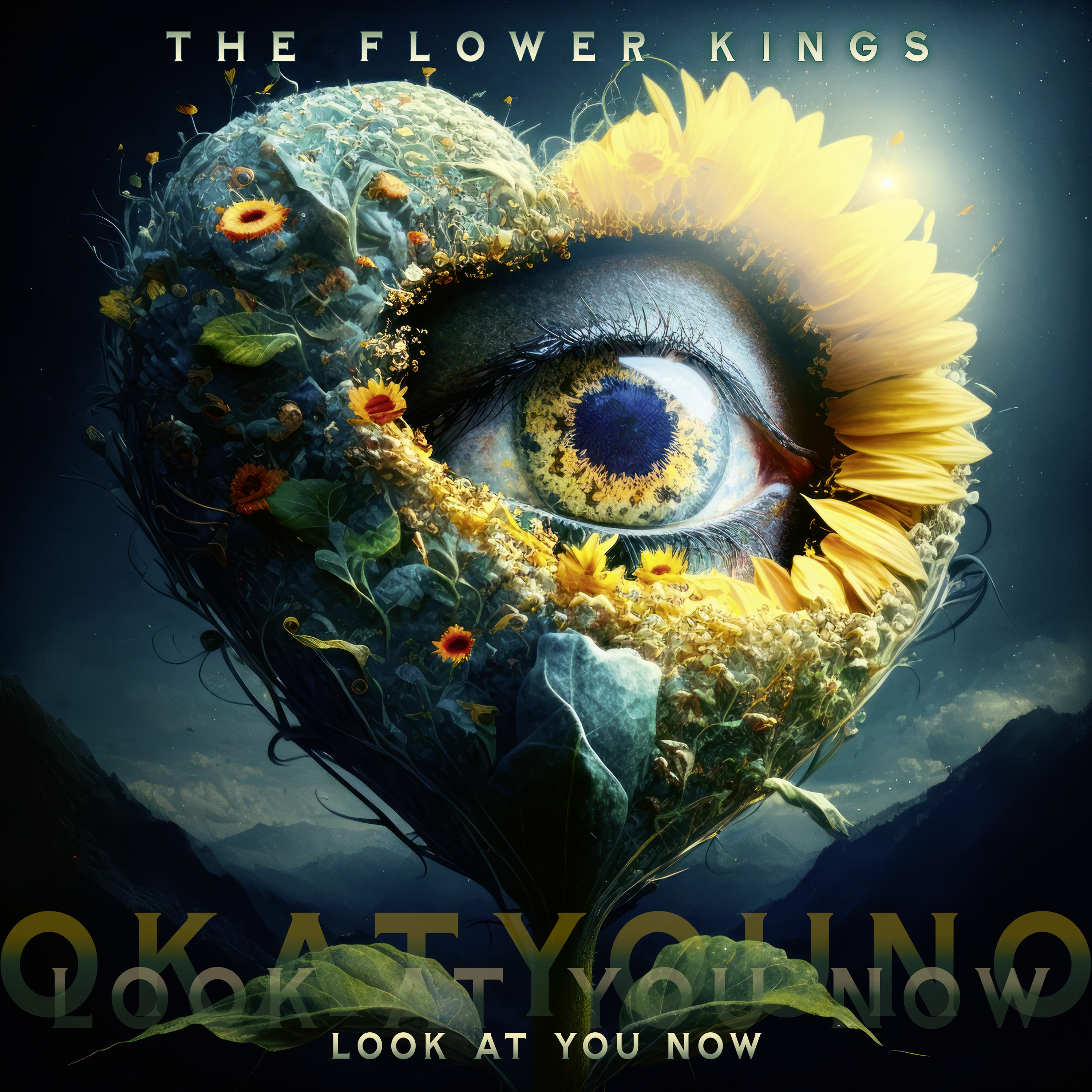
The Flower Kings, Look At You Now: The Stolt brothers — Michael on bass, Roine on almost everything else — vocalist Hasse Fröberg and drummer Mirko DeMaio crank up that progressive-psychedelic roundabout, and what comes out the chute is yet another spellbinding album-length suite. Snippets from the past and fresh in-studio invention lock together seamlessly; from the merry-go-round kickoff “Beginners Eyes” and the Beatleish “Hollow Men” through renaissance pastoral “The Queen” and blues-edged workout “Scars”, to the closing workout (cinema showoff vamp “Father Sky” into bolero build “Day for Peace” into the closing title epic), TFK don’t miss a trick, evoking vintage Yes and Genesis while always leaning into their own unique, up-to-the-minute spin. This is easily the equal of recent double-disc standouts 2020’s Waiting for America and last year’s By Royal Decree, on track to be one of my favorites at the end of the year. Order from Burning Shed here.

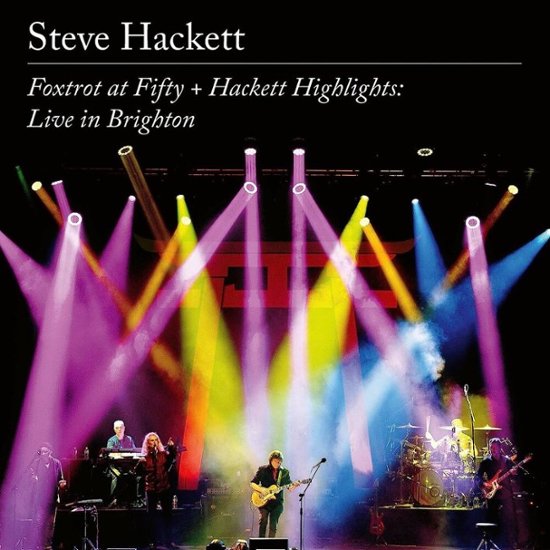
Steve Hackett, Foxtrot at Fifty + Hackett Highlights – Live in Brighton: Yep, this is Hackett’s eighth live album since he made “Genesis Revisited” a regular feature of his live set and rejuvenated his international touring career. But doggone it if he doesn’t make this latest set make worth our while yet again! Leading off with a refreshed solo repertoire (blending in vintage throwbacks “A Tower Struck Down” and “Camino Royale”) that provides new showcases for his talented band (Rob Townsend and Roger King’s wind/keys duet on “Ace of Wands”, Jonas Reingold’s fleet-fingered solo spot “Basic Instincts”), Hackett proceeds to blow out Brighton’s doors with an inspired romp through Genesis’ 1972 breakout album. Especially noteworthy: singer Nad Sylvan, at his personal best on “The Devil’s Cathedral”, “Watcher of the Skies” and a taut, compelling “Supper’s Ready” — well, really all through the night. I thought I might have actually seen Hackett enough (four times!) in the last decade, but this release has me eager to catch this show when he returns to the States next spring. Order from Burning Shed here.

Bruce Soord, Luminescence: Just a songwriter and his gear (plus the occasional electronica and orchestral seasonings); on break from The Pineapple Thief, Soord descends into the postmodern maelstrom, in search of an evasive inner tranquility. A placid, brooding first half of string swells (“Dear Life”), slinky acoustic funk (“Lie Flat”) and pensive melodic sketches (“So Simple”) gathers momentum, only to hit a stalled-out sense of desolation (“Instant Flash of Light”, “Stranded Here”) — which gives Soord’s concluding pleas for human connection (“Read to Me” and “Find Peace”) a vulnerability that chills to the bone, even as it cracks open all the feels. Spacious, shimmering and seductive (kudos to Soord and mastering engineer/TPT bandmate Steve Kitch), Luminescence’s stoic gaze into the heart of darkness packs a serious emotional depth charge. Order from Burning Shed here.

The Who, Who’s Next / Life House (Super Deluxe Edition): Who’s Next is an album that changed my life, and over the decades, it’s developed a reputation as one of rock’s finest moments. But Pete Townshend remains haunted by his original, unrealized post-Tommy concept of The Life House — a gathering place for the outcasts of a nightmarish virtual reality, with rock music as the saving sacrament of a splintered counterculture. Thus, this behemoth box: two discs of impeccable Townshend demos; three discs of session outtakes and singles; two complete, ferocious live sets; and an immaculate spatial audio remix of the final product by (of course) Steven Wilson. Even with exhaustive liner notes and a graphic novel version included, the Life House storyline simply refuses to cohere. But listening to The Who as they wrestle with the throughline, then pitch it away and just slam into “Baba O’Riley”, “Behind Blue Eyes” and “Won’t Get Fooled Again”, you hear the fragments of one man’s overweening ambition transmuted into a furious, majestic rush of sheer hard rock glory. Order from The Who online store.

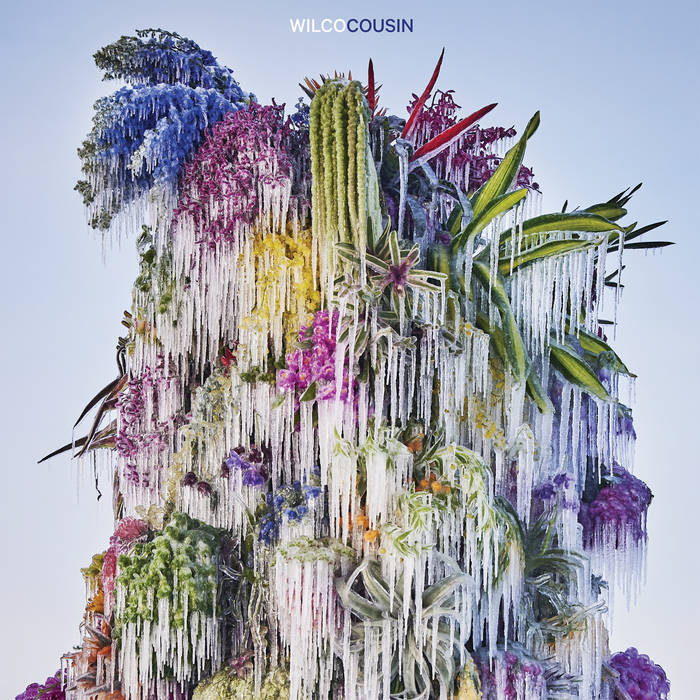
Wilco, Cousin: 2022’s Cruel Country (my top favorite album of last year) interrupted Wilco’s work on this excursion back into art-pop, made with Welsh multi-instrumentalist/co-producer Cate Le Bon as sidekick. Here Jeff Tweedy’s elusive, folky reflections are splattered with spectral atmospherics and thick blobs of tonal texture; workouts like technicolor opener “Infinite Surprise”, the sunnily chaotic title track and the Wild West gallop of “Meant to Be” sit side by side with morose elegy “Ten Dead”, baroque/dance crosscut “A Bowl And A Pudding” and the compelling meander “Pittsburgh”. The proceedings here lean a bit to the downtempo side, but it’s great to hear Tweedy and his merry crew of cutting-edge players revisit the experimental approach of their Yankee Hotel Foxtrot/A Ghost Is Born era, with the gains of the decades since then thoroughly integrated. Few American bands offer such solid work on such a consistent basis. Order from Wilco’s online store.

Steven Wilson, The Harmony Codex: On which Wilson decides not to pay homage to one particular musical style, bringing his magpie/studio boffin tendencies fully to the fore. Digging into the resources of vintage synthesizers, SW leans on mood more than movement, warming up the temperature from the glacial electronics of The Future Bites a bit, spinning trippy webs of sound braced with a percussive snap. As he flicks through a dizzying array of genres, there are plenty of hypnotic moments (the 1970s spiritual jazz/fusion of “Inclination” and “Invisible Tightrope”, pop nugget “What Life Brings”, imaginary Bond theme “Rock Bottom” with Ninet Tayeb, the langorous switched-on Bach/spoken-word melodrama of the title track), but it can also feel like Wilson is channel-surfing for its own sake; the focus of his best work is only intermittently there, and shorter tracks sometimes peter out instead of paying off. Still, as far and wide as The Harmony Codex wanders, there’s lots to catch the ear as it rambles, and it’s already rewarded repeated listens for me; Wilson remains an artist well worth checking out and reacting to. (So, yeah, Time Lord and I have very different opinions here. And, in line with de gustibus non est disputantum, I’m down with that.) Order from Burning Shed here. (BTW, thanks to the Burning Shed crew & the Royal Mail for getting my copy across the pond to my mailbox in 6 days!)

— Rick Krueger
Rick’s Quick Takes from March

“Delays, delays!”

Marvin the Martian, “Hare-Way to the Stars”

(A quick note: for new releases, order links are embedded in album titles; online playlists/previews/etc. follow reviews when available. For catalog albums, playlists are linked with titles.)

Once again, I get to second a positive review from Bryan — this time of Fauna, the new release from prog-metallers Haken. Wildly creative, I found this to be the British sextet’s most appealing effort since 2016’s Affinity, stirring in flavors of fusion, postmodern pop, funk, reggae, electronica and even opera alongside one heavy yet tuneful chorus after another. Whether on the short, sharp shocks of “Taurus” and “Lovebite” or the extended journeys of “Sempiternal Beings” and “Elephants Never Forget”, Ross Jennings’ vocals soar, Charlie Griffiths and Richard Henshall’s guitars crunch, Peter Jones’ keys fill what few sonic crevices remain, and rhythm section Conner Green and Raymond Hearne thunder. Play it loud — but look out for multiple, exciting curveballs on every track!

Last month also saw the release of two live albums from veteran bands who’ve made it through the pandemic back to the stage:

Van der Graaf Generator’s The Bath Forum Concert (a CD/DVD/BluRay set) documents the venerable trio’s 2022 return to action; tackling an ambitious setlist that spans their entire career, guitarist/pianist/singer Peter Hammill is as declamatory and vehement as ever, organist Hugh Banton covers the aural spectrum between cathedral and crypt, and drummer Guy Evans locks into or disrupts the grinding soundscapes as the spirit moves him. The beautifully filmed video shows VDGG working hard and watching each other, opting for the flow as they feel it rather than relying on clinical precision; warts and all, this is refreshingly in the moment, a strong show that captures the band’s existential angst and humanistic idealism in full.

Two years after their 2020 Far Eastern tour collapsed around them, King Crimson satellite band Stick Men returned to Japan and blew away any cobwebs that might have accumulated at Osaka’s BB Live venue. The resulting album Umeda showcases avant guitarist Markus Reuter, multi-bassist Tony Levin and percussionist Pat Mastelotto at their aggressive, angular best; whether on long-standing improvisational frameworks “Cusp”, “Schattenhaft” and “Swimming in Tea”, newer compositions “Ringtone”, “Tentacles” and “Danger in the Workplace” or Crimson classics “Red”, “Larks’ Tongues in Aspic Pt. II” or “The Sheltering Sky”, these guys are frighteningly good, whether working up a hair-raising din or backing off for spacey, unexpectedly lush interludes. A great introduction for newbies and a must for fans.

Plus, in February and March the recorded music industry resumed cranking out deluxe box set reissues and compilations — apparently the market of Boomers (like me) with more money than sense isn’t tapped out yet:

Continue reading “Rick’s Quick Takes from March”

Rick’s Quick Takes for February

Transatlantic’s The Final Flight: Live at L’Olympia is a worthy souvenir of the latest — and last? — tour by our favorite “more never is enough” classic-prog supergroup. Over three hours, Neal Morse, Roine Stolt, Pete Trewavas, Mike Portnoy and sidekick Ted Leonard play every possible note of their ultra-epic The Absolute Universe, plus generous chunks of the band’s first three albums (sorry, Kaleidoscope fans). You might notice some rough edges in Morse’s singing despite a few preemptive downward key shifts, but Transatlantic still delivers the goods without fail — the jaw-dropping ensemble work, knockout solos, choral counterpoint, head-spinning transitions and heart-stopping climaxes just keep coming. And if this is their swan song, thanks for 20+ years of over-the-top thrills and spills are well past due!

Rick Wakeman’s latest album, A Gallery of the Imagination, is less a conceptual effort (like The Six Wives of Henry VIII or even the recent The Red Planet) than an impressionist suite based on a overall musical approach (as on his Piano Portraits releases). As such, Wakeman’s strong suit — spacious melodies decorated with arpeggios aplenty, then rocked up via finger-busting solo work — is here in abundance, with appropriately sturdy backing by The English Rock Ensemble. But be prepared — the line between prog and middle-of-the-road pop is remarkably thin at times, especially when sentimental lyrics like “A Day Spent on the Pier” are declaimed with stagey brio by vocalist Hayley Sanderson. If you can deal with that, there’s plenty to enjoy here.

Simon Collins and Kelly Nordstrom (best known in the prog world for the Sound of Contact album Dimensionaut with Dave Kerzner and Matt Dorsey) veer in a heavier direction with their new project, eMolecule’s The Architect. The initial blasts of electronica-laced prog-metal, amped up with gusto by Nordstrom, slot in beautifully with the dystopian sci-fi narrative, but it takes a while for Collins’ trademark vocal inflections to peek through the robotic audio processing. Ultimately, the light and shade of “Beyond Belief” and “Awaken” (a ballad in the Phil-to-Simon family tradition) and a building sense of Floydian atmospherics provide the contrast needed for eMolecule’s well-executed sound and fury to fully connect.

I stumbled across the British post-rockers Plank via 2014’s excellent Hivemind. After tackling animals and insects as their previous subjects, the trio widen their horizons here, returning after 9 years for their new concept opus The Future of the Sea. This is a stunning set of limpid, gorgeous instrumentals, weaving elements of psychedelia, prog and math-rock into textures of massive breadth and heft (whether the big guns are being held in reserve or out on parade at any given moment). The closing 6-part suite “Breaking Waves” is a full-on, monolithic delight that mounts to a shattering, satisfying climax. Give this one a try!

The ongoing passing of rock legends tends to direct me toward their most recent releases, especially if I’d dismissed them on initial notice. Thus, when David Crosby died in January, I bit the bullet and picked up his Lighthouse Band’s CD/DVD Live at the Capitol Theatre. Ignoring this beauty, released late last year, was a mistake; it’s a thoroughly enjoyable, even moving document of Crosby’s late career renaissance, here shown in collaboration with Snarky Puppy bassist Michael League and singer/songwriters Becca Stevens and Michelle Willis. Yes, the man’s voice is a shadow of its former self here — but so is his legendary ego; this lovely set may be more of a team effort than Crosby, Stills and Nash (& Young) ever was. The jazz-inflected songwriting, the hushed vocal blend, the lovely sense of understatement and space all make this delicate music blossom and take root in the heart. This tour came to West Michigan on Thanksgiving weekend of 2018; hearing this set, I’m sorry I missed the show! Yes, it’s that good.

I wish I could say the same about 18, the collaboration with Johnny Depp that turned out to be guitar legend Jeff Beck’s swan song; even putting aside Depp’s recent notoriety, there’s a mismatch of tone that makes the album a puzzling listen. Though Beck’s rich melodicism is as compelling as ever, his soaring aesthetic keeps bouncing off the consistently lugubrious song selection and morose vocals from Depp. Usually I’d be all over an album that ricochets from Motown and the Everly Brothers to Killing Joke and The Velvet Underground, but the eclectic selection simply refuses to cohere. Some glorious moments (instrumental takes on the Beach Boys’ “Don’t Talk” and “Caroline, No”, the John Lennon cover “Isolation” that closes the album on a solid footing), but Beck’s light and Depp’s dark cancel each other out far too often for the music to take wing.

In the meantime, the past month has seen multiple first-rate releases in the jazz (and jazz-related) world:

From out of left field, Lake Street Dive singer Rachael Price teams with guitarist/songwriter Vilray Blair Bolles for I Love A Love Song! This second duo effort pairs Price’s well-honed jazz and pop sensibilities with whimsical Vilray originals in the Great American Songbook tradition. Well-upholstered arrangements from a finely tuned large combo and a boxy yet lush recorded sound set up the retro feel; but ultimately it’s Price’s subtle, in-the-pocket sense of swing that sells the music, often breezy and melancholy at the same time.

Piano legend Brad Mehldau has never hesitated to incorporate rock songs into the jazz canon; with Your Mother Should Know, he makes a program of Beatles tunes (plus David Bowie’s “Life on Mars” — it originally featured Rick Wakeman on piano!) sound not just obvious, but inevitable in the idiom. Above all, this is fun, albeit often of a serious stripe; from the headlong boogie woogie of “I Saw Her Standing There” through the thickened harmonies of “I Am the Walrus” and hovering balladry of “Here There and Everywhere” to the stretched-out gospel of “Baby’s in Black” and the ecstatic extended solo of “Golden Slumbers”, Mehldau’s instincts for where to take these songs by Lennon, McCartney and Harrison are unerring, his invention refreshing and often astonishing, his technique impeccable. Absolutely worth a listen, whether you’re a Fabs fan or not.

Are improvisational Australian trio The Necks “jazz”? Hard to say; but while their music resists categorization (or even description), their latest release Travel is as attractive a summation of what they do as anything. Four pieces of music, each one made from scratch at the start of a day in the studio, building from a minimal idea that gains momentum, complexity and impact through repetition and variation of ideas, dynamics and sounds. “Signal” rambles, “Forming” smolders, “Imprinting” shimmers and “Bloodstream” flares up for a riveting double-album journey. Is it world-inflected rock? Ambient jazz? Something else? I frankly don’t care; I just know that after an online listen, I had to buy it. (And kudos to Vertigo Music of Grand Rapids for having it in stock!)

P.S. In the “blast from the past” department, I’ve spent a surprising amount of time reveling in the swagger of Cheap Trick’s Dream Police, a widescreen slab of power-pop brilliance from 1979. And sticking my toe in the deep waters of Guided by Voices last month led me to their slam-bang “best of” compilation from 2003, Human Amusements at Hourly Rates. Both highly recommended if you wanna rock!

— Rick Krueger
Rick’s Quick Takes for January

Starting out with a burner from 2022 that just arrived due to the ongoing vagaries of overseas shipping: Norwegian guitarist Hedvig Mollestad connects with the Trondheim Jazz Orchestra for the conceptual Maternity Beat. As on her previous collaborative jazz-rock projects Ekhidna and Tempest Revisited, Mollestad’s writing runs the gamut, from thrusting dash through tribal fusion getdowns and chamber interplay to a glorious finale that ratchets up to a blazing climax. And her playing is as creative and involving as ever, ranging from the gutbucket blues and skronky feedback of “Do Re Mi Ma Ma” to the gliding, Jeff Beck-ish boogie of “All Flights Cancelled” and beyond. Another winner from this impressive musician that grows more immersive the more you listen.

Even with his relocation from New York City to Toledo, Spain this year, impresario Leonardo Pavkovic has kept MoonJune Records churning out first rate albums that consistently ride the cutting edge of possible musics. In the most recent batch of MoonJune releases, Sonar guitarist Stephan Thelen returns with Fractal Guitar 3, another winning album of intriguing compositions that create harmony and structure via the interaction of cyclic time and minimalist melodies; touch guitarist Markus Reuter teams with multi-instrumentalist Tim Motzer and drummer Kenny Growhoski for Bleed, a bold, grungy set of abstract pieces drawn from free improvisation; Anchor & Burden (Reuter’s “European supergroup” featuring drummer extraordinaire Asaf Sirkis) weighs in with Kosmonautik Pilgrimage, monumentally turbulent full improv with Lovecraftian artwork and titles to match its swirling, heavy vibe; and Duo Atanatovski (a Slovenian father and son on guitar/cello and winds) team with a rhythm section for the radiant Liberté Toujours, an album of soaring, propulsive jazz that I guarantee will lift your spirits. The best way to catch all the action on MoonJune is a yearly subscription at Bandcamp.

On a whim (admittedly nudged by a recommendation from allmusic.com), I checked out Guided by Voices’ brand new La La Land and was instantly captivated. The brainchild and main musical vehicle of Dayton Ohio guitarist and singer Robert Pollard, the band is known for its insanely prolific output (the current lineup has released 14 albums in the last 5 years), slamming home musical earworms laced with whimsical, elusive lyrics aplenty in a devil-may-care blend of the British invasion, low-fi punk-pop and just the right amount of psych-prog garnish. In the past, GbV’s releases lacked a certain quality control, but recent albums seem to be all killer, no filler: here the air-tight riffs lodge directly in your pleasure centers; Pollard reels off irresistible chorus after irresistible chorus in a delightfully mannered, indeterminate accent; and expansive efforts like the pretty acoustic tune “Queen of Spaces” and the off-kilter, multi-part build of “Slowly On the Wheel” offset the short, sharp shocks of the opening “Another Day to Heal” and the Beatlesque “Ballroom Etiquette”. Well worth exploring, but mind stepping too far into the whirlpool …
I’ve got to agree with Bryan that Riverside’s latest, ID.Entity, is a strong contender for “best of the year” status, even this early in the game. This is hooky, hard art-rock (metallic around the edges) with a compelling sense of ebb and flow — not to mention plenty of high-power guitar and keyboard heroics. What makes the blend especially savory here is Mariusz Duda’s vocals; wistfully edgy, drily sardonic and bluntly dismissive by turns, his melancholy meditations on a divided world with no place left to hide grab and shake you, whether you want to see the pictures he’s painting or not. Definitely up to Progarchy’s favorite Polish proggers’ high standards, with the potential to rope in fans of a recent vintage — like me — as well. (Need to catch up on Duda and company? The 2021 online compilation 20 – The Shorts and the Longs might be your ticket.)

Always ready to bring a bit of reconfigured retro flash into here and now, Andy Tillison has opened wide The Tangent’s vaults for an old-school “triple-live” album, Pyramids, Stars and Other Stories. The release kicks off with a soul-stirring 2004 set, as the original lineup (including Roine Stolt) powers through early classics like “The World That We Drive Through” and “The Music That Died Alone”. Add a substantial serving of later songs and instrumentals performed by equally gifted lineups on the 2012 UK and the 2017 US tours (the last of which I was privileged to see at Chicago’s Progtoberfest), and you have 2 1/2 hours of back-catalog gems delivered in grand style. I gleefully gulped down the whole thing in one sitting; Tillison’s non-stop compositional eclecticism and his unquenchable penchant for speaking (well, singing) his mind delight from beginning to end, and his compatriots step up to match his commitment throughout. On their game, The Tangent’s devotion to music and their appeal to our consciences point us to the best of what we are and what we can be; here, they hit peak form throughout, with any rough edges only adding to their appeal. This generous set is both a first-rate introduction for new listeners and an essential item for hard core fans. In addition to purchasing the album through the usual outlets, you can still support the band directly and pre-order a limited number of signed copies here.

— Rick Krueger