
The debut album for Killing Kenny may be a bit on the fringes of what we do here at Progarchy, since there’s a strong country influence in the music. Going way back to our founding, the joke was our unwritten rule was no country allowed, but fortunately Killing Kenny’s music draws from atmospheric, electronic, and rock music more than it does from country. The result is rather stunning. UK-based journalist Chloe Mogg has more below:
By Chloe Mogg
Exactly Different is exactly what it says on the tin, a unique blend of 11-tracks transcending the boundaries of genre. Killing Kenny’s Exactly Different ventures into the world of Rock, Country, Indie and beyond, all whilst maintaining his signature of magical melodies and power packed lyricism.
Killing Kenny’s debut album features a host of polished original songs, along with two stand-out cover versions of Soft Cell classic “Say Hello, Wave Goodbye” and Bruce Springsteen’s infamous “Land of Hope and Dreams.” Killing Kenny comments on “Say Hello, Wave Goodbye,”
I remember this song from school in 1981, when the start of the 1980’s sound began to kick in. Always liked the tune and it brings back great memories of very happy times for me growing up. I wanted to keep the sound still very 1980’s with an uncluttered version of the tune.
Kenny is no stranger to the scene, having been playing in bands since the late 80s he has a wealth of experience and hard-earned skill under his belt. Yet latest project Exactly Different is perhaps his most authentic work yet.
Returning to the scene after a solid three decades absence, Kenny is once again at the helm and taking charge of his musical career. Exactly Different has been a journey of self-discovery and reflection, a chance to hone his sound and experiment with style. Kenny explains-
It feels strange at the age of 53 to be talking about a debut album, however, this collection of songs entitled “Exactly Different” is “exactly” that. A collection of 9 original songs each designed to reflect a style of music and drawn from a period in my life from the age of 13, when I first started playing music, to today. The album also includes two cover versions as a homage to artists I admire and times I enjoyed.
The making of this album has been all things. An opportunity to meet and work with some new very talented and established people, all of whom have been incredibly helpful, supportive and encouraging. A great therapy by immersing myself back into writing and recording new music. Above all a great sense of joy and inspiration to never stop doing what you enjoy and to always pursue what you love to do”.
Killing Kenny pours heart and soul into his sound, infusing his musicality with a raw passion for songwriting and love for his instruments.
With a love for sound that’s infectious to audiences, it will come as no surprise that Killing Kenny has already found himself on radio waves across the globe, and featured in publications such as The Daily Record and Sunday Post.
Album ‘Exactly Different’ will soon have you falling in love with Killing Kenny too.
https://www.killingkenny.co.uk
https://www.facebook.com/Killingkenny…
https://twitter.com/SunterKen
https://www.instagram.com/killingkenn…

 Successful Americana music hews a particularly demanding line. It’s a “post” genre, looking to blues and oldtime musics as a starting point rather than an end, as a shared story for the getting-on-with of the next chapter. To say the least, there’s a large margin for failure. The masters of the form, like
 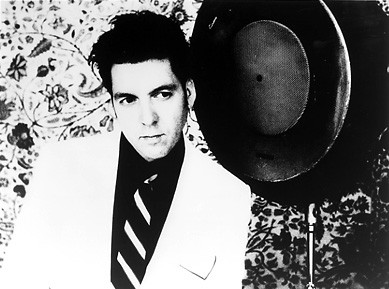 Joe Henry always tells it like it is. What this “it” is depends on his song or object of the moment, but if artistry is about honesty then here’s a man who can be a W. Eugene Smith one minute and a Romare Bearden the next. His is an Americana in context, wrought with a realism that has to, must, consider the world beyond the borders of his song. And yet his skill at creating a complexity of life within the three- or four-minute lengths typical of his work belies this, so that his portraits are breathtaking and you are standing next to him, watching and hearing him compose a complete picture.
 Free and blue and beautiful, those moorings Leyla McCalla holds to in her music sway and pitch like the gulf waters from Hispaniola to Lousiana, rolling through her cello and voice and coursing through her songs, lifeblood to an American music heart. In the weaving lines of the music she plays — a snaking, sliding creole so suited to, and perhaps partly a consequence of, the playing of fretless instruments — is the sound of an America taking shape as its many diasporas meet and mix and move, intersecting lines on a map that triangulate on New Orleans. Like the best Americana musicians, McCalla achieves something at once utterly contemporary but steeped in an authenticity of sound that says so much about the heart that makes the music. There’s no affected vocal, no hokum on the one hand or academic archness on the other. And there could have been, so easily. McCalla’s classically trained; she jumped from a New Jersey upbringing to a New Orleans residency; she’s an American born to Haitian rights activists in the thick of a struggle for democracy; she was an important member of the last incarnation of the much-loved Carolina Chocolate Drops. Her road was ripe for opportunity to leave the music behind in bringing a message that might not have resonated as strongly as it does. But instead she chose on her first solo record, Vari-Colored Songs (2014), to artfully adapt poetry by Langston Hughes and punctuate it with Haitian folk songs. Her second record, A Day for the Hunter, A Day for the Prey, is also cloaked in a music-first approach that makes the underlying messages — because they are indeed there, as they were in her curation of Hughes’s work — so much more compelling.
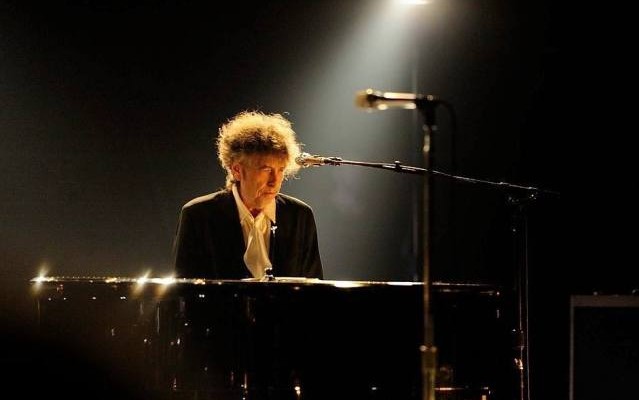 Bob Dylan is the rare artist who, at 75, retains the power, energy, and restlessness that distinguished his early work. As both a recording and performing artist, his electricity is unabated, and he continues to make vibrant contributions to the post-folk culture he virtually created. That he has achieved this is astounding; for those of us who have followed his career and know something of its roots and evolution, it is not surprising. He constantly recasts his song catalogue, the depth of which by 1965 (let alone 2016) was unrivaled in the rock/folk/singer-songwriter genre he invented, to match his current sound, and commands a fluidity of vision in his writing that sees beyond the trees and perhaps the forest as well. Witness “High Water,” a tribute to Charley Patton (whose “High Water Everywhere” is a stone cold delta blues barking, howling, classic), from 2001’s Love and Theft. This is a blues about love and the water that rises, that has picked up some oldtime, some drone, shaking and breaking and name-checking muscle cars and evolutionary philosophers. The thing is that it works because when Dylan sings “the cuckoo is a pretty bird” that’s a kind of referenced code that he’s hollering back to Patton. He’s writing a blank check to freely associate (find and listen to a version of “The Cuckoo” and you’ll get what I mean), to make the rhyme work and throw meaning to the wind and to the listener. Harder than it sounds because it’s about the sound, what music is, what makes its power inexplicable. To make that warble on the 5th day of July, and trace your absurd and beautiful melody: it takes courage and a resolution that comes at a price only Dylan, and maybe Patton, knows.
 “Outlaw country” is an ironic descriptor at best, applied to a music that, without the modifier, began as a lucrative embarrassment to the phonograph salesmen of the 1920s, their newly-minted “hillbilly” record catalogs doing surprisingly well next to the more respectable stacks of whatever maudlin tenor was the operatic toast of the day. Country music’s cornpone reputation grew as its burgeoning industry began to trade on an image based in white southern poverty; but if the marketing suggested the music was as impoverished as its people (a patent falsehood), this achieved for the proponents of such thinking a comfortable outsider-ism, a romantic us-versus-them rewind and replay of Reconstruction that survives in other place in the South as well, through for instance a protracted and continuing — and, unfortunately, necessary — civil rights movement, to this day. So then, what’s this Outlaw business? The term attached to Willie Nelson, Waylon Jennings, and a handful of other country writers and singers who, starting in the late 1960s, were drawn away from the industrial strength, smooth country music produced by “Nashville,” that Tennessee town’s small oligarchy of producers and record labels who held sway over any music distributed under the category of country, and pointedly avoided shifting their audience’s gaze towards the rockier issues or musical themes of the times. Jennings, like Nelson, bucked at this, knew what it meant for their art, and went back to Texas; he turned up the rock’n’roll rhythms he’d played with Buddy Holly, sang what he wanted, and called Nashville out on its phony conservatism. In so doing, Waylon and the country outlaws — and the new southern bands like the Allman Brothers and Lynyrd Skynyrd — found a younger, national country audience, and also reminded rockers that their favorite music was as much country as blues.
