Bank Holiday Beats

paperweight

Every genre has a holy trinity, for prog it’s Yes, King Crimson and Pink Floyd, metal is Led Zep, Deep Purple, Black Sabbath, NWOBH is Iron Maiden, Saxon, Def Leppard, neo prog has IQ, Marillion and Pallas and now Rushdenbeat has it’s trinity, you have the Fierce and the Dead, Orange Clocks and now presenting their debut EP, The Paperweight Array, the third leg to the mighty sound that is Rushdenbeat, which is, to my mind the defining sound of 2017.

After my review for Progarchy about Orange Clocks, I inadvertently coined the phrase ‘Rushdenbeat’ and suddenly it took a life of it’s own on, with a Facebook group and a # as well!

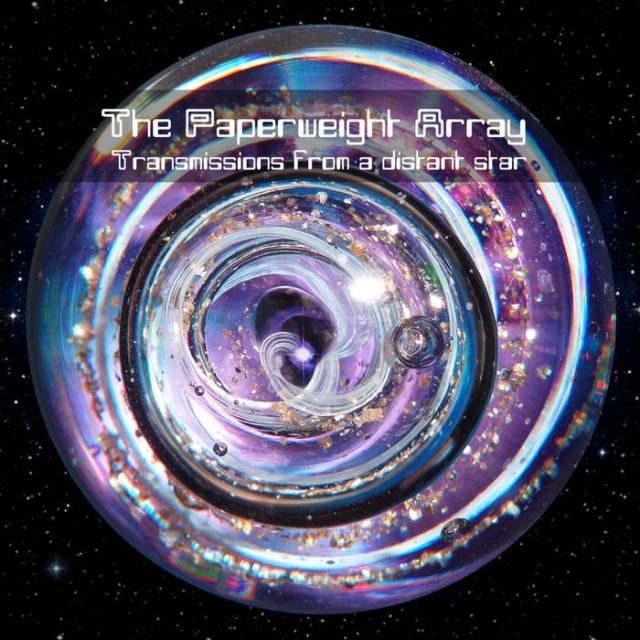
Following this Aaron Hemmington got in touch and sent me a copy of the bands debut EP Transmissions from a Distant Star, a three-track introduction to their psychedelic world.

For those who aren’t aware Rushden (as per our good friend Professor Wikipedia) is part of the county of Northamptonshire, and was home to such luminaries as H E Bates, darts player James Richardson, and of course (although Wikipedia needs updating) Matt Stevens.

What is it about small English towns that can be the epicentre of something new and exciting?

I grew up in Rotherham, where the best thing going for it was the road to Sheffield where all the decent record stores were, and yet from 1991 onwards Rotherham had been home to the Classic Rock Society, and a Northern pulse for progressive rock, handy if you happened to be 17, into prog and on a bus route into town!

It seems as Matt Stevens himself has questioned on Facebook, that pre-internet, when you were in a small town, certain things either passed you by, or you found yourself in a particular group of friends where certain locations and musical tastes influenced you.

I remember saving all my money from my summer job for a trip down to London because the record stores there would have far more rare and esoteric albums, and I wasn’t able to just log in using my smart phone, search them and then buy them.

I think the mid 90’s were the golden days of record collecting, where finding music was much more of a hunt, more of a chase, and you appreciated listening to it more because you had put so much more effort into it.

That is the same with bands from smaller towns, Rushden I would imagine, like Rotherham would be bypassed by all the big names, and so if you wanted to hear the music you liked, then the only way to do it would be to form a band and play it yourself.

That is the ethos that runs through Rushdenbeat and so many other small town bands making a big noise.

Transmissions from a Distant Star, starts with the title track, some fantastic spiky guitar work and then a wonderfully spacey chorus that brings to mind a whole mix of sounds, there’s elements of XTC, some Canterbury scene and a whole summer of ’67 vibe carrying through the sound.

A perfect way to introduce yourself and it makes a massive impact as you listen to it.

Going Back, showcases how the band works with each other, the Paperweight Array being an old school power trio, with Aaron on guitar, vocals and keys, Just on bass and keys and Dunc on drums and percussion.

Listening to the mighty sound they make you wouldn’t think there were only three of them!

Again there is a lot of power in the riffs and the interplay between all three of them is one of the EP’s strengths, you can tell these guys know how to play, and more importantly know how to play with each other to bring the best out of them.

Corporal Cameo is a neo gothic old school psychedelic story, with some fantastic lyrics, and some wonderfully trippy keyboard sounds, and another one of those brilliant guitar riffs.

Listening to their sound and performance on this one, and you’d think Corporal Cameo was a lost 60’s psych classic that Stuart Maconie had dug up for his Freak Zone on BBC Radio 6.

This is a fantastic introduction to where the band are coming from, and it has to be said encapsulates in the most positive way the small town atmosphere that has led to the creation of some of the most exciting music in the UK, and indeed probably throughout the world. Whilst it’s wonderful in this digital all connected age to be able to see beyond your horizons at the touch of a button, I wonder how much of an impact that will make on all the small town musicians sat in their bedrooms, using music as an escape?

Transmissions from a Distant Star is available here

https://thepaperweightarray.bandcamp.com/releases


soundstreamsunday: “Isolation” by Joy Division

ian-curtis- joy-division-wendy-winder-obskur-magazineMusic critics tend to dismiss Joy Division’s posthumous Still as a hit-and-miss collection of studio scraps paired with a lackluster recording of their last show.  And in a specific context — compared to the brilliant Unknown Pleasures and Closer, it seems a bit of a rush job with less-than-pure motivations — this holds some weight, although I’d argue as its own thing Still may be more representative of the band as a whole, and that the live half of the double album contains fiery performances wildly joining hard rock, punk, and synth-y goth music.  My first exposure to Joy Division, over thirty years ago now, was hearing “Shadowplay” from Still, and it gave me the metal thunder frights.  It sounded as if Peter Hook, Bernard Sumner, Ian Curtis, and Stephen Morris channeled the essence of Fleetwood Mac’s “Green Manalishi” through a punk filter, as they sped to the center of the city in the night.  Even as they rode their wave of goth punk popularity their songs betrayed the band’s primary strength: their music was as much about making connections as alienation, masked and revealed in turns by Curtis’s not-waving-but-drowning lyrics and delivery.
When Curtis made good on the promise of his lyrics a few days after the show, the band pivoted into New Order and went on to define electronic dance music in the 1980s.  It’s a remarkable story of artistic continuity in the wake of tragic change, but the strength of the group’s trajectory even before Curtis’s death can be found on Still and on “Isolation” in particular.  Stripped of producer Martin Hannett’s carnivalesque studio tweaks, the song’s live incarnation has a punch lacking on Closer, with Sumner’s keyboards threatening to submerge Curtis’s plaintive singing, and Hook’s and Morris’s stripped bass-and-beat backbone out-crafting Kraftwerk.  The big guitars so much a part of their origins were yielding to distilled, synth-led rhythmic and melodic lines.  While “Isolation” would sit comfortably next to its future cousin, the New Order calling card “Blue Monday,” it remains a place of passage rather than a destination, a liminal space aglow with potential.

soundstreamsunday presents one song or live set by an artist each week, and in theory wants to be an infinite linear mix tape where the songs relate and progress as a whole. For the complete playlist, go here: soundstreamsunday archive and playlist, or check related articles by clicking on”soundstreamsunday” in the tags section above.

soundstreamsunday: “Wardenclyffe” by S U R V I V E

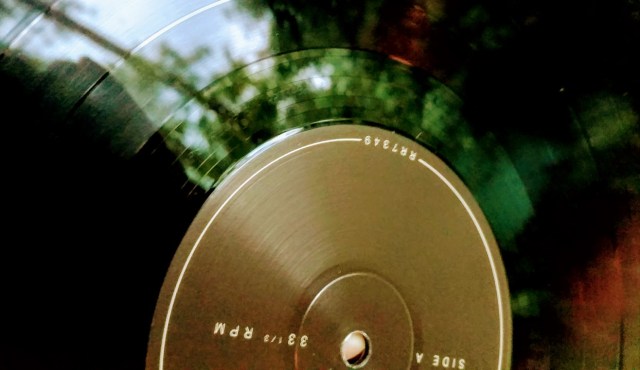
rr7349Scored by S U R V I V E’s Kyle Dixon and Michael Stein, the Netflix show Stranger Things can at times seem written around the music, such is the importance of its soundtrack.  The duo’s band creates very similar music but in longer form, developed stories in contrast to Stranger Things’ vignette accompaniments.  If they recall the European progressive synth work of Jean Michel Jarre and Tangerine Dream, as instrumental narrative S U R V I V E’s tropes, fresh as they are, are the well-heeled scions of horror and suspense soundtracks of the 1970s and 80s — those coveted analog burblings so influencing rock archetypes that today a band like S U R V I V E can be embraced by a culture that may not have looked so warmly on the be-caped japes of synth lords in their keyboarded cathedrals of yore.  This is a good thing, as is S U R V I V E’s 2016 album RR7349.  The punky, catalog number-as-title approach is embedded in the band’s music, in its wordlessness plain spoken, symbolic of itself, its images so strong — or perhaps its ability to conjure notions and memories of images we’ve grown used to associating with such music — that there’s an enjoyable lack of heavy lifting here.  As instrumental albums go, it’s a seamless ride through the horrorshow.
“Wardenclyffe” is the heart of RR7349; it is an opus of classic thrash metal rhythm, a slow burn, slow bleed psychedelic nod off, an American folk opera circa 2016.  It is everyman music, an electronic field holler to the collective national iThumb and Assemblage of the Hallowed Streaming Box.  Like its mothership album, it is so woven into the now that it’s a blip on the screen; but mark it, for when the future civs recreate our campfire dances, this is the soundtrack.

soundstreamsunday presents one song or live set by an artist each week, and in theory wants to be an infinite linear mix tape where the songs relate and progress as a whole. For the complete playlist, go here: soundstreamsunday archive and playlist, or check related articles by clicking on”soundstreamsunday” in the tags section above.

Ulver – The Assassination Of Julius Caesar

New music from Norwegian experimentalists Ulver is always something to savour, and its diversity might surprise you. 2016’s cryptically-titled ATGCLVLSSCAP was mostly instrumental and partly-improvised, veering from ambient to intensely atmospheric post rock and back again. Their latest release is a quite different proposition, however.

The Assassination Of Julius Caesar channels progressive, pop and electronica influences to utterly glorious effect. Repeated listens variously bring to mind Pure Reason Revolution, Anathema, New Order, Propaganda, early Simple Minds and Massive Attack, amongst others (a list of musical reference points that will have a few Progarchy readers salivating, I’m sure).

It’s difficult to pick out highlights in an album of such consistently high quality, but right now I’m particularly enamoured by the expansive dark groove of Rolling Stone (at over 9 minutes, the album’s longest track), the elegant pop of Southern Gothic and the achingly beautiful chorus in Transverberation.

I’m calling it now. One of the best albums of 2017.

Richard Barbieri’s Prog-Electronica Genius

richardbarbieriI was first exposed to that exotic, amorphous musical genre called “electronica” in junior high by a friend who listened to what we called “weird stuff”. I’m not even sure what it was; some of it was from Japan. It made a dent in my memory banks, however, because until then my musical interests had been confined to some classical (Brahms! Mozart! Good!), Top 40 rock (Queen! Also good!), and lots of mediocre CCM (Not good!). During my high school years I listened to a good deal of The Alan Parsons Project, in part because of the huge hit “Eye In the Sky”; I eventually collected all of the APP albums. Parsons, of course, has straddled the worlds of progressive rock and mainstream pop/rock with his production prowess, writing, and work with keyboards and Fairlight programming. In hindsight, his music opened the door in various ways to music that was more overtly electronic.

(A quick, semi-related aside: A good friend in high school, who spent a lot of money on a fabulous car stereo system, liked to alternate between playing—very loudly—the raunchy rap of 2 Live Crew and the muzak of Yanni: the first to demonstrate his system’s bass; the latter to show off it’s high end. I’m not sure which music scarred me more.)

In the late Eighties and early Nineties there was an explosion of so-called “New Age” music (which had been around since the Sixties and whose identity has been hotly debated for decades), much of which was ambient or involved whales bellowing, birds chirping, and flowers clapping their petals. I mostly  ignored it, but did eventually latch onto the music of Patrick O’Hearn, whose solo albums on the Private Music label were lush, complex, mysterious, evocative, and never boring, even at their most sedate. O’Hearn, like all of the finest electronica artists, is the master of tone and mood; the music is rarely about virtuosity—unlike wide swaths of prog rock—but about constructing layers and movements. I liken it to a painter who builds layers of luminosity into his work through patient precision (more on the visual arts parallel in a moment).

Not surprisingly, there was a lot of cross-pollination going on between some “New Age” artists and various progressive rock groups and musicians. O’Hearn, who has legit jazz chops—he studied with jazz giant and bassist Gary Peacock—played with Frank Zappa as a youngster, and then with the new-wave band Missing Persons; the Private Music label featured a number of musicians with deep ties to progressive rock. (Another good example of this relationship can be found in Jon Anderson’s albums with Kitaro and Vangelis.) In the 1990s I bought several albums by Moby, Portishead, Björk, Aphex Twin, and Massive Attack, even while I ignored (for whatever reason) other key artists (Brian Eno, for instance).

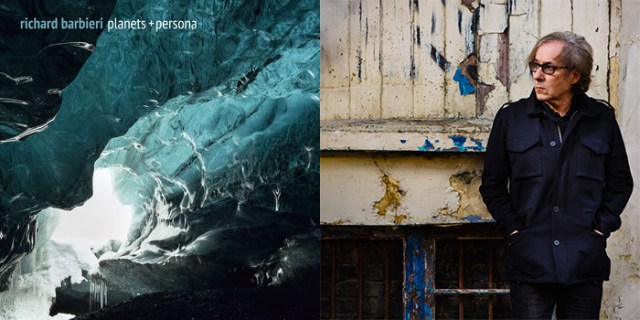
Richard Barbieri is, of course, no stranger to prog fans, being a key member of Japan and Porcupine Tree and having worked in a number of other settings. His new album “Planets + Persona” [Kscope Music] is his third solo album, following 2005’s “Things Buried” and 2008’s “Stranger Inside”, both of which I enjoyed quite a bit. The three albums are similar in many ways, but this new album seems, to me, to be warmer, more organic (or acoustic), and more contemplative. Geno Thackara, at AllAboutJazz.com, explains it so: Continue reading “Richard Barbieri’s Prog-Electronica Genius”

soundstreamsunday: “Sowiesoso” by Cluster

cluster2Keith Jarrett‘s success in his tours of Germany in the early 70s owed some debt to the burgeoning, radical art scenes taking over that country’s larger cities.  German audiences supported a fiercely independent free rock culture that drew heavily from American jazz — particularly the extended, disciplined jams of In a Silent Way-era Miles Davis — and that pushed Hendrix‘s electric sorcery into giant drifting icebergs of sound (Tangerine Dream) on the one hand or an infinitely dissected, atomized funk (Can) on the other.  In between lay the devotional music of Popol Vuh, the blues-less Zep power of Amon Duul II, the world jazz of Embryo, the enormously influential “motorik” tic-tic-tic of Kraftwerk, and the organic electronic excursions of Cluster.  With its origins in the Zodiak Free Arts Lab, Hans-Joachim Roedelius’s and Dieter Moebius’s Cluster shared roots with Berlin’s Tangerine Dream and Ash Ra Tempel, but, in collaborating with guitarist Michael Rother in the group Harmonia in the mid-70s, also had close ties with Dusseldorf bands Kraftwerk and Neu!.  Cluster wore these associations — along with very fruitful collaborations with Brian Eno — meaningfully but lightly, maintaining in its mid-period albums a distinctly warm electronic-ism flush with melody.

With 1976’s Sowiesoso, Cluster hit its stride, creating in its sunny, languorous intimacy a 37-minute treatise on laid-back ambient techno whose mood echoes across the work of Penguin Cafe Orchestra, Air, Tortoise, and most recently Schnauss and Munk.  The title track’s soft pulse and gently looping themes conjure in music the album’s cover: Moebius, Roedelius, dog, countryside, sprays of sunlight.  Where Kraftwerk consciously and brilliantly used electronic music to cast in relief the human/technology divide, Cluster on “Sowiesoso” shows that separation to be meaningless.  Electronic music of the heart.

https://youtu.be/GAVFQ2gaf8k

soundstreamsunday presents one song or live set by an artist each week, and in theory wants to be an infinite linear mix tape where the songs relate and progress as a whole. For the complete playlist, go here: soundstreamsunday archive and playlist, or check related articles by clicking on”soundstreamsunday” in the tags section above.

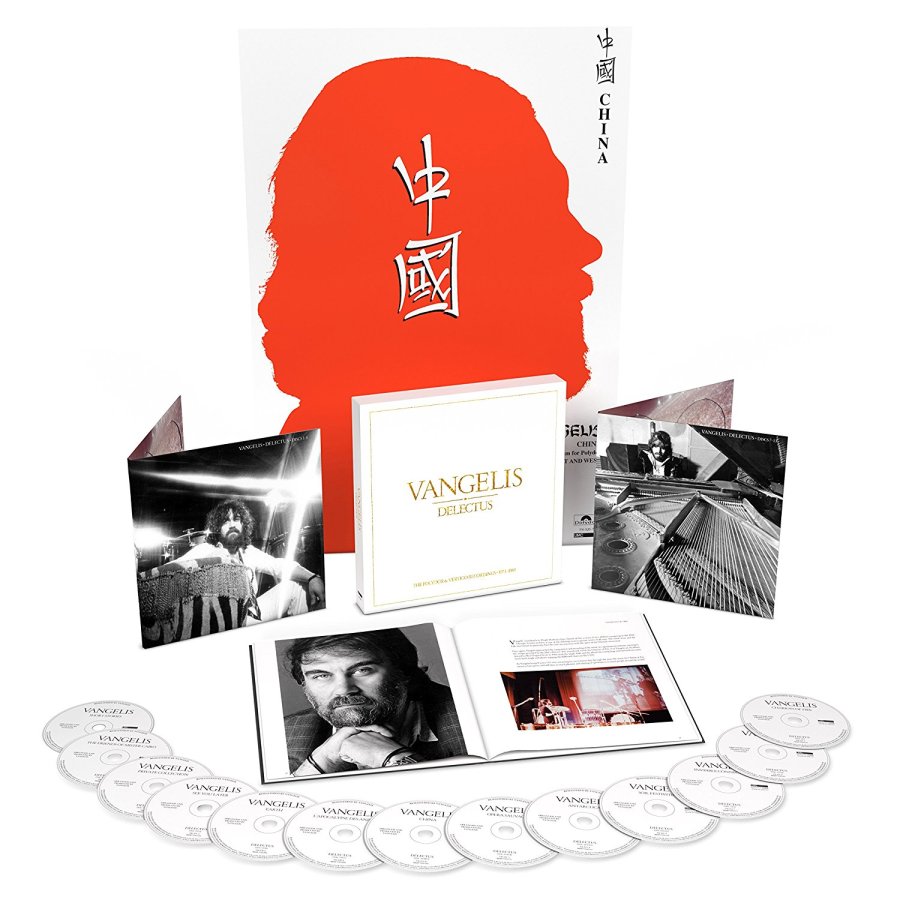
Vangelis Delectus

Delectus: A book of passages from Greek or Latin authors used for study.

When you hear the name Vangelis, depending on your age and musical affinity, you think of different things.

You think of the keyboard player of Aphrodite’s Child whose astonishing album 666 has to be heard to be believed, you think of the pioneer of electronic music whose albums were all groundbreaking in their own way, you think of the soundtrack king, in particular the unforgettable Chariots of Fire, or you think of the fact he was once invited to join Yes, and then produced three fantastic albums with Jon Anderson.

Continue reading “Vangelis Delectus”

Two more from the Elephant


Finally I have unpacked the trunk of album reviews that backed up last year, and this reviews catches up on two albums Bad Elephant released back in October last year, and which are worth having a listen to, before they unleash the new Tom Slatter album on the unsuspecting world.

bem035-album-cover

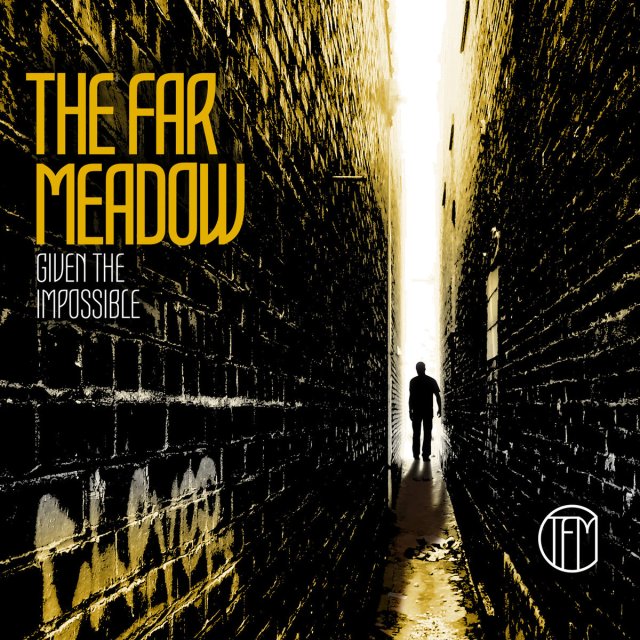
The Far Meadow: Given the Impossible


Formed back in 2014 this is the first album on Bad Elephant from London based 5 piece, The Far Meadow and was released back in October last year.

As is common with so many of the wonderful artists signed to Bad Elephant, the band defy categorisation, veering from traditional progressive sounds to folk and back with a dazzling array of performances and sounds that make this an excellent album to listen to.

Continue reading “Two more from the Elephant”

Threeviews

Afternoon Progarchists, as someone who writes for a variety of different sites I find myself getting sent diverse and eclectic albums to listen to, all of which roughly fall into the margins of the progressive genre, and today I have three radically different releases, all of which have been bouncing round my brain as I ride the mean streets of Bristol on the bus to and from work. Two are freshly minted (one so fresh it’s not even officially released yet – but it’s one hell of a pre-order!) and one EP which has been out for a while, so without further ado, lets introduce today’s picks.

verity

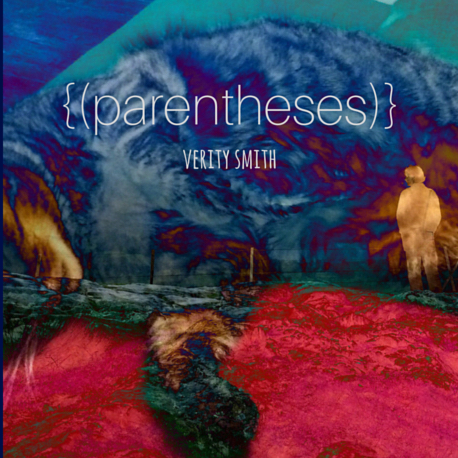
Verity Smith – Parenthesis

http://www.veritysmith.net

I first encountered Verity at the Classic Rock Society Awards back in 2014 where she was performing as part of Clive Nolan’s Alchemy musical, where she played the parts of Jane Muncey and Jessamine and was truck by her vocal prowess and stage presence.

Continue reading “Threeviews”

soundstreamsunday: “If There Is Something” by Roxy Music

ROXY-2If in May 1972 the Rolling Stones defined and deified rock and roll (and themselves) with the release of Exile on Main Street, one month later Roxy Music’s debut album made splatter art of such ideas.  A galvanizing, glammed-out, punked-up masterpiece, Roxy Music is the first of a series of four albums (including For Your Pleasure, Stranded, and Country Life) that artfully engage a European, distinctly non-bluesy, approach to rock. Where a mere three years later Roxy would hit the disco with “Love is the Drug” and a decade on would make one of the great, soulful, chilled-out new wave records with Avalon, in 1972 the band was pushing in every direction, its self-defined non-musician Brian Eno creating on-the-fly soundscapes that turned Andy Mackay’s reeds into guitars and Phil Manzanera’s guitars into sirens, while Bryan Ferry ululated — more in the style of Roger Chapman than the smooth crooner he would become — loose, even free associative, lyrics rendered on a spectrum from oddball to heartbreaking. While their image and aesthetic fit into the cutting edge of the British glam music scene at the time (Bowie’s Rise and Fall of Ziggy Stardust was released just the week before), and their creation myth is inseparable from their influential visual audacity (for who could look more creepy in a feather boa and leopard skin than the be-rouged Eno?), it was the band’s intense musicianship and penchant for the melodic that was the core of its success and influence, and why you can hear this first album in everything from The Rocky Horror Picture Show to Talking Heads. The sound is richly subversive, hooks are everywhere, songs use shifting dynamics to create emotional peaks. They challenge convention, but are fully wrought, they are all surface, but go deep.

Roxy Music on Amazon

soundstreamsunday archive