

by Rick Krueger
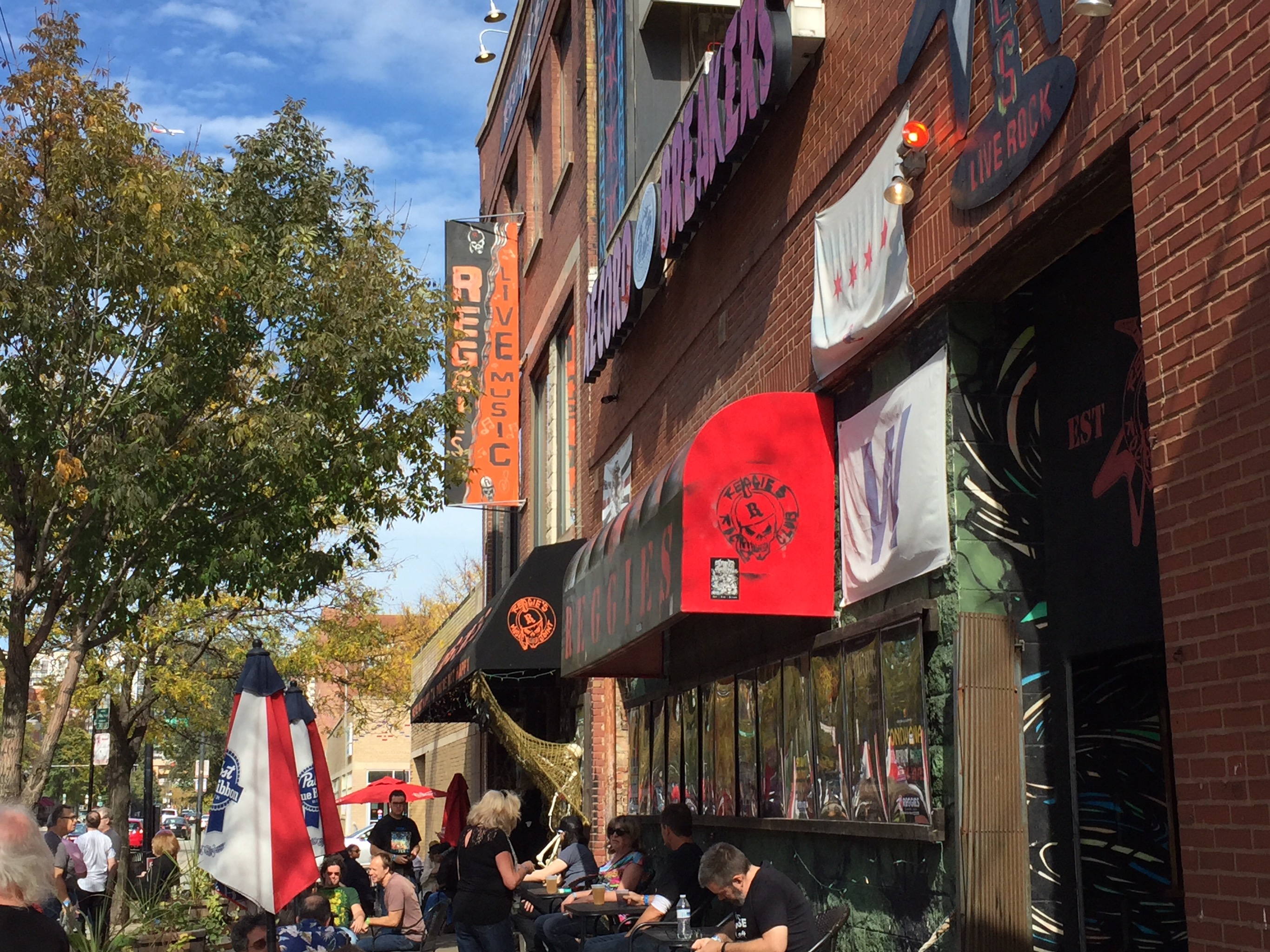
On Friday, October 20, hundreds of dedicated proggers converged on Chicago from around the country — and even from across the globe. The location: Reggie’s Rock Club & Music Joint on the Near South Side, only two blocks away from the former Chess Records, the birthplace of great discs by Muddy Waters, Chuck Berry, The Rolling Stones and countless others.
Reggie’s has two main rooms, both dedicated to Progtoberfest this weekend. The Rock Club is designed for concerts, with a raised stage, a main floor, an upper level mezzanine —and a wire fence decor motif throughout. The Music Joint has a tinier stage tucked into the back of a narrow bar and grill. This weekend, merch tables were crammed into every inch remaining on the main floor, and patrons less interested in the music (or needing a break from the density of the sound) took advantage of Friday and Saturday’s warm weather to eat and drink at sidewalk tables. An upstairs space that held a record store until recently was turned into the VIP/Meet and Greet lounge for the duration.
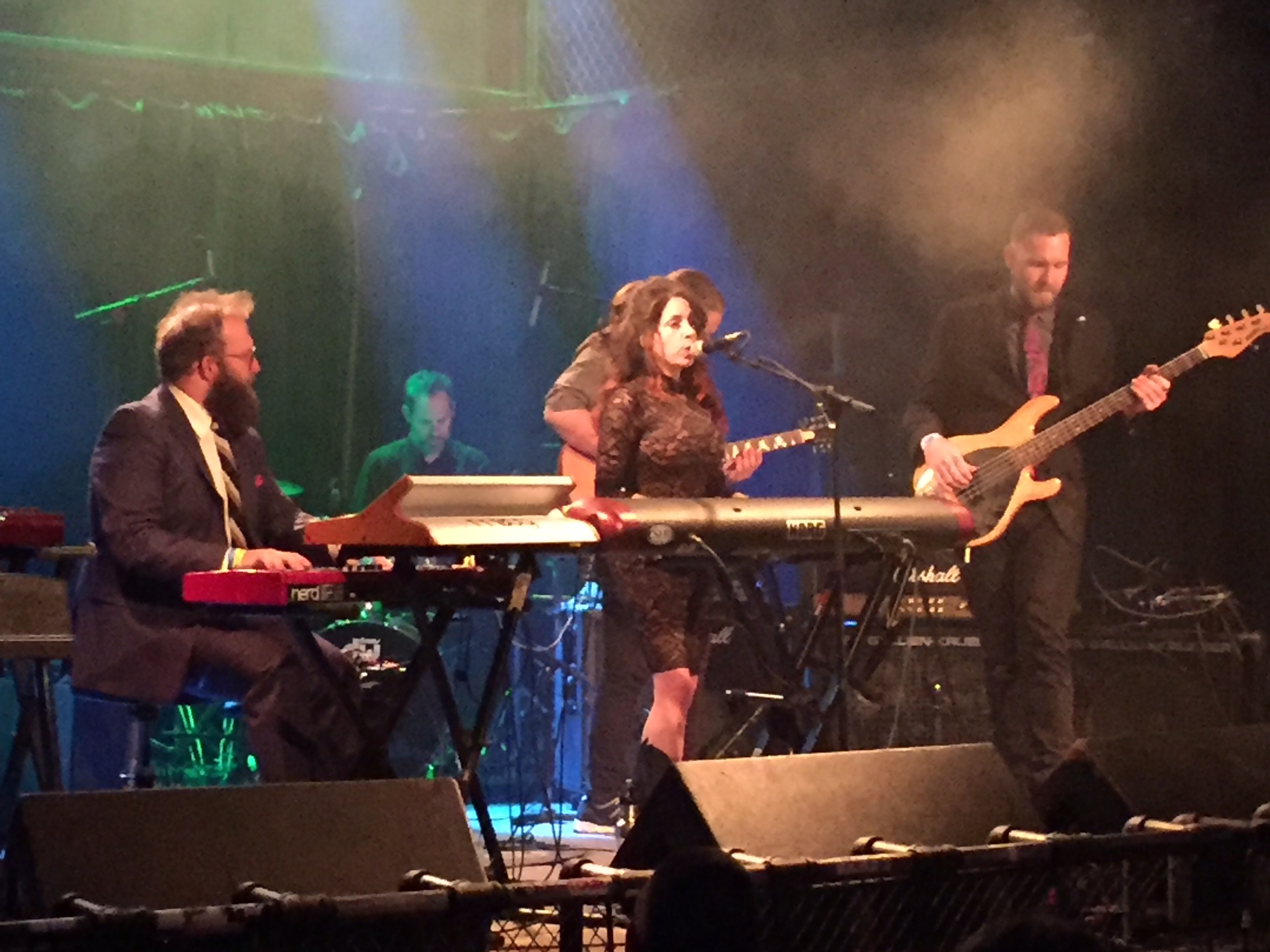
Due to the usual complications of traveling to and around Chicago as the weekend starts, I got to my spot in the Rock Club just as Schooltree was taking the stage. With only an hour on the schedule, they powered through highlights of their Heterotopia album, condensing the narrative to zoom in on its main character Suzi. The set left no doubt that Lainey Schooltree is a major talent; her songwriting chops, keyboard skills and vocal versatility all came through loud and clear, grabbing and holding the audience’s attention. The rest of the band bopped along brilliantly too, with the ebullient energy of Peter Danilchuk on organ and synth leading the way.
The crowd for Schooltree was solid, but hometown heroes District 97 were the first group to pack the place, filling both seats and standing room on the main floor. The band took no prisoners, blasting right into riff-heavy highlights from their three albums that showed off every player’s monster chops. Soaring above the din, Leslie Hunt pulled in the crowd with her astonishing vocal power and range. New songs were mixed in that sent the audience head-banging and prog-pogoing with abandon.
 King Crimson appeared in 1969 as an island, on the far side of the bridge joining a tiring psychedelic scene to a studied, if no less freaky (for its age), “progressive” rock. In its nearly fifty years the group’s membership has drifted in and out through orbits around guitarist

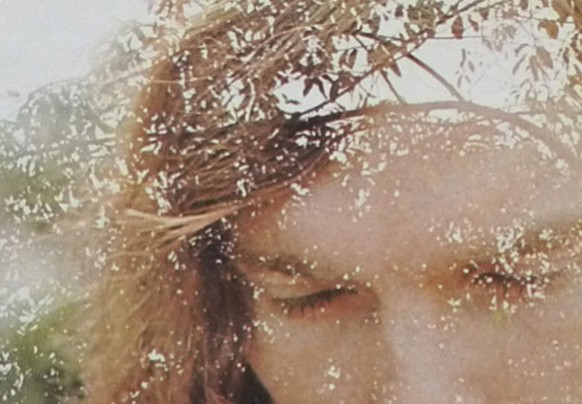 The art gallery of rock and roll is a rich and welcoming place, with room upon room spinning off into many-directioned distances. There is no entrance fee or warnings to stand back, please, from the piece. And, like at all great museums, any pretense to surface comportment is, if meaningful at all, only a nod of respect to the spark of human creativity. A sign that we don’t stand in willful ignorance. Before the work, within the work, we are all children. It is in rock’s nature to empower its listeners to create, and within this space there is no genre, no boogie no punk no progressive no pop no indie no folk, just an honoring of the empty canvas and the unrestrained fire banked down in humanity. It’s what I love about rock, and it’s what made Van Morrison’s Astral Weeks happen.
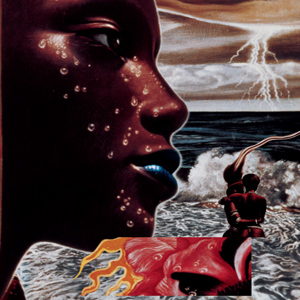 It’s unavoidable. It is impossible to speak of modern music, regardless of genre, and not take note of the critical importance of Miles Davis. Call him what you will or what he called himself — a genius of composition, a dazzling trumpeter/performer and band leader/manipulator, an agent provocateur, a counter-racist, coke fiend, pimp, misogynist — Miles Davis was to musical art what Pablo Picasso was to visual art in the 20th century. It’s so true it’s not even up for debate, and there’s about a kazillion hours of recorded, generous, lovely, dark, funky, bopping proof. By natural extension Davis was the incarnation of what
  Put a couple of decades on the protagonist of
  There may be too much to say about and too much going on in Esperanza Spalding’s new album, Emily’s D+Evolution, to relate anything meaningful in writing here. “Live at BRIC,” a performance of songs from the album, was recorded by NPR in March, and it shines brightly, landing it’s Parliament-like Mothership on planets traveled by Joni Mitchell, King Crimson, Zappa. Importantly, it throws down the gauntlet in terms of prog rock performance, making more out of less. It’s not just a bunch of musos looking at the floor in their noodle space, but the simple theatricality complements the music without getting in the way — it’s emotional, engaged, a pure and honest expression.
 Progarchy