Hierophantic Hackett

Hwaet!  The Genesis in days gone by

and the guitarist who ruled them had courage and greatness.

We have heard of that guitarist’s heroic campaigns.


A comfort sent by God to the peoples of the world.

He knew what they had tholed,

the long times and troubles they’d come through

without a leader; so the Lord of Life,

the glorious Almighty, made this Hackett renowned.

–With apologies to the Beowulf poet.


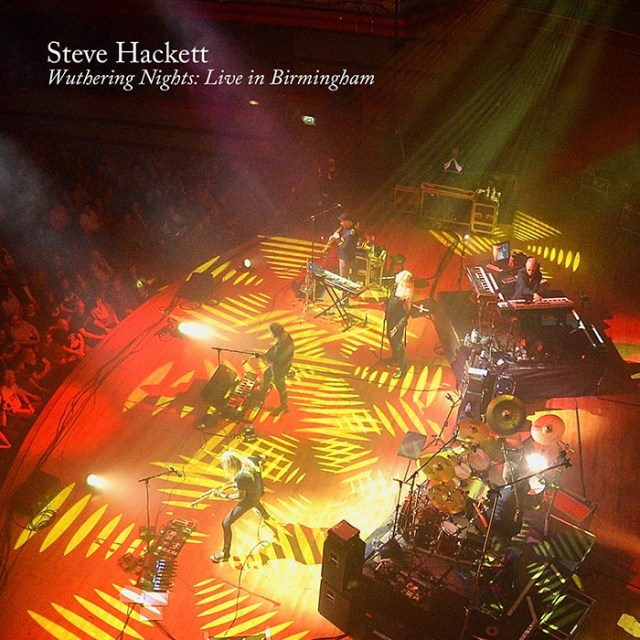
Steve Hackett - Wuthering Nights_ Live in Birmingham
InsideOut Music.  Released today in the United States.

Hackett is back, and, of course, he’s greater than before.  He has already conquered Grendel and Grendel’s mother.  Now, he returns to fulfill the prophecy of the Hierophant.

If you’ve not guessed, my copy of Hackett’s latest live offering, WUTHERING NIGHTS: LIVE IN BIRMINGHAM, arrived in my post box today.  And, oh, what a joy it is.  I’ve listened through it all, and, now, I’m rather stuck on this version of “Shadow of the Hierophant.”

As I listen and watch it repeatedly, I am reminded what first brought me to prog rock, oh so many years ago.  It is this, most certainly, this.  The build, the lingering, the apex, the mystery, and the certainty.

I’ve always considered VOYAGE OF THE ACOLYTE the lost Genesis album of 1975, much like Squire’s FISH OUT OF WATER is the lost Yes album of the same year.  “Shadow of the Hierophant” was stunning in 1975.  It’s even better in 2018.

Hackett’s recent outings and return to the beloved prog of the 1970s only makes me realize how alive this music remains. Watching Hackett, King, O’Toole, Townsend, Beggs, and Lehmann perform “Shadow of the Hierophant” reminds me that even in this world of sorrows, heroes arise, called forth by the God to remind us of what beauty still remains.


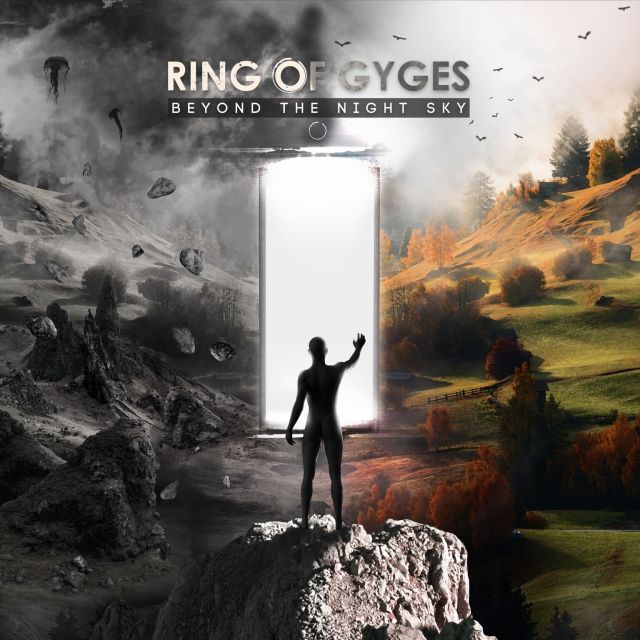
Review: Ring of Gyges – Beyond the Night Sky

Ring of Gyges

With the amount of records being released in the present era, ranging from the bedroom to high-class studio productions, it is quite a challenge to satisfy my hunger for music lately. Most of this has to do with the fact that the music being released today lacks sincerity. Maybe I am stuck badly to the old-school understanding of rock music, but even though I try so hard, it happens quite a lot that I cannot understand and enjoy the modern music. The sound of 1970s is my comfort zone.

Ring of Gyges from Reykyavik, Iceland could be described as a true progressive rock/metal band with touches of metal here and there, offering well-thought melodies, interesting vocal arrangements, and passages that connect the dots that are quite enjoyable. Helgi Jónsson and Guðjón Sveinsson, who are the key persons for this band, both handle vocals and guitars on the the band’s debut album, and they absolutely shine here. Although their voices tell the story, both do a great work with their guitars — backing up the vocal melodies most of times.

Beyond the Night Sky

The album opens with a short atmospheric piece “Ascend,” which shows that Beyond the Night Sky has a lot to offer. With often changes, Ring of Gyges distance themselves from delivering just a pure, lifeless showcase of technical proficiency, something that these guys definitely have, but rather present the work that is alive, dynamic and above all, interesting.

References to various stylistically different artists can be heard in Ring of Gyges’ music. Their explorations within Anathema’s or Porcupine Tree’s melancholia speak of that, but the band is not afraid to delve deeper and expand their horizons. As Beyond the Night Sky flows by, a listener is taken to a sound-trip that gets more metal-esque. Each of the songs on the album has its own personality, and labelling this record under a single genre would do this band a lot of injustice.

To summarise, Beyond the Night the Sky is a record largely based on the progressive rock genre channelling many different elements. This is a true epic, both in length and amount of quality material, which requires quite a few listens to get into it. How far Ring of Gyges are ready to go? Time will tell. But for now they are on the right path.

Get a copy of Beyond the Night Sky from this location.

New Releases: From Heavy Metal Overload

The wait is finally over! It’s the return of the weekly New Release posts. Every Friday, I’ll be taking a look at the day’s new releases and new reissues. But this will be a new remastered version of the New Release posts. In other words, totally compressed! I’m going to be thoroughly selfish and utterly […]

via New Releases – 26th January 2018 — HEAVY METAL OVERLOAD

20 Looks at The Lamb, 18: Layers and Distance

lamb_cover2Are you still with me?

Well, I don’t really mean with me, and I don’t really mean me.

[Have you been listening?  (No, I don’t mean to me.)]

Has it been a long time?  Wondering this reminds me of the saying (I forget by whom) that life seems short only because you’re dead for so long.

My experience of The Lamb is that it is still with me, even after so long.  But ‘with,’ ‘me,’ and ‘long’ constantly threaten to dissolve, even if they’ve been spray-painted on some New York City wall.  I’m reminded of this again when I think of cultural references.  The Lamb itself is itself a piece of culture, of course.  And that means that it is embedded in a web of cultural references.  In a sense, that’s what culture is.  It was so when it was first written, and as is normally the course of things, it becomes more and more so over time (however long).

six-layersIf there are references there in The Lamb, and if I refer to them because they are in The Lamb, a strange distancing effect enters the field again.  (We have seen it before.)  There are layers, aren’t there?  Layers not just in these references, but in everything (if you’re listening).

The distance between New York and the where of most of Rael’s adventures is not a measurable distance, but a distance of layers.  These layers both are and are not contiguous.  They must come near to each other if there is to be any leaping between, but how could they be near?  They are as far apart as mind and body in old Descartes’ Meditations.  Joined, yet disjoined enough to feed two to three centuries of philosophical struggle.  The references are always proximate, since they could hardly be discernable references otherwise.  Yet they are always at a distance, for otherwise why would a reference be necessary?

The-Broadway-Melody-1929-MGM-theatrical-release-poster-302x400“Broadway Melody of 1974” is especially rich with cultural references, though most parts of The Lamb rely on them at least subtly.  Current events, some of which we readily remember, others of which we may not, set a kind of schema, or a sort of temporal locus for the development of Rael’s character (in several senses) and situation.  The mis en scène resides much more in the references than in any mundane description of locale, surroundings, etc.  Lenny Bruce, Marshall McLuhan, Groucho Marx, “In the Mood,” Caryl Chessman, Howard Hughes, blue suede shoes, Winston cigarettes, “Needles and Pins” (The Searchers?).

Get the picture?  It is a picture of sorts, though not seen.  Are you listening?  Late episodes of Mad Men might help.

Sometimes a reference is fairly obvious, as in that moment in season 1 of Westworld, when you get a very brief but very clear glimpse in the background of Yul Brynner’s cowboy from the 1973 film.  Sometimes it is more subtle, as are a good number of the references in Buffy the Vampire Slayer.  Sometimes it is too far (or too near?), and the reference fails.  But if it’s a reference, isn’t there always a potential (ideal?) listener who will see…  I mean hear…  no, I mean listen?

If I’ve got you thinking (in a loose sense, admittedly) about the distance of references, then I have two requests.  First, think about the idea that meaning (in The Lamb and elsewhere) is “held together” by these references.  Things are not contiguous; there are cracks.  (Leonard says that’s how the light gets in, and he’s right even though it’s now repeated too damned often.)  But things are “held together.”  Their Zuzammenhang is by references.  That’s why we can “get it,” and why “getting it” begins with a verb.  Are you listening?  Will you listen again now?

groucho

And second, let’s go back to the “beginning”:  Are you still with me?  Allow the ‘with’ to involve the entire distance that the meaning must travel.  And allow the ‘me’ to be (for you) references.  That’s what I am to you, really, isn’t it?  But if so, that’s not bad, because that’s what everything is to everything else.

Yup, this is still about The Lamb (since The Lamb is probably about everything, in a sense).  And my goal is always to encourage you to listen again.

<—- Previous Look     Prologue     Next Look —->

Cosmograf – new beginnings

WAHDID

I first came across Robin Armstrong and his musical project Cosmograf back in 2011 when one of his songs was featured on a Prog magazine sampler.

It was the stand-out track on that particular compilation as it had that certain something which usually draws me in: interesting  instrumental and sound effects, thoughtful lyrics and astonishing emotion. The track was called Into This World and into Armstrong’s bucolic, wistful world of past memories I was duly enticed. This was beautiful, soul-stirring and thoughtful.

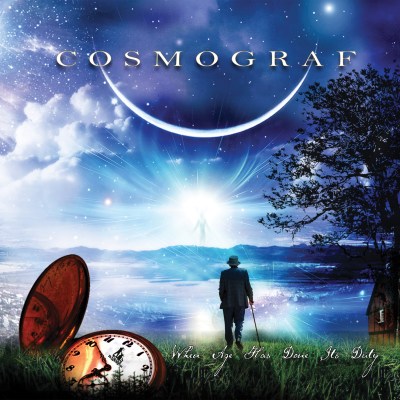
The song opened his third self-made Cosmograf release,  When Age Has Done Its Dutyfor which he had enlisted some top talent to help him tell his very personal and poignant story.

Now, nearly seven years later, the perfectionist that he is, Armstrong has made some significant “improvements” to the album and has reissued it as as 2018 remix edition.

For my part, this is great news because along the passage of his subsequent superlative four albums (The Man Left In Space, Capacitor, The Unreasonable Silence and last year’s The Hay-Man Dreams), Armstrong has attracted legions of new fans and many may not have managed to get hold of a copy of  “Duty”.

The opportunity to re-issue the album came after all the original physical versions sold out. Armstrong left his record company, he went independent and the album rights returned to him.

Robin Armstrong

As Armstrong explains on his website:  “It’s considered by many to be a seminal work in the Cosmograf catalogue, so rather than just re-issuing it I thought it would be better to completely remix and master it and address some of the issues that were less than perfect on the original recording.

“Many of the original guitar, bass and vocal parts have been re-recorded, new string arrangements added, and a more dynamic low volume level master produced. I’m really pleased with how it’s now sounding.”

And so he should because the new features have only enhanced what is a truly remarkable album.

What marked out this album was the way Armstrong took his own very personal story and, using some of his musical influences, shaped a collection of diverse songs into a memory board of observations and emotions.

Central to these are his childhood memories of staying with his Uncle Harry and Auntie Mollie in the rural English county of Shropshire, an area of the country which lies between Wales and the industrial West Midlands, renowned for its unspoiled natural beauty.

What he delivers is a cradle to grave concept. which goes way beyond those childhood memories and delivers his own testimony to life and. in particular, growing old, a journey which he depicts with great tenderness and sorrow.

Going back to the beginning, Into This World is still an astonishing opener, the ticking clock and telephone ringing bringing about the anticipation of new life into this world that comes through the sound of a baby crying.

The song is given as a meditation on the meaning of life through a series of  homespun truths.  To the new mother, “Your life will change to the sound of an infant voice” and to the new arrival, “The years will soon pass, the seasons will change, follow your heart, explore your own range.

For musical style, look no further than Steven Wilson, one of Armstrong’s heroes, another artiste who looks at the complexities of seemingly simple strands of life and makes them extraordinary.  There’s a melancholic piano and searing guitar solo in there too to heighten the poignancy.

Those childhood memories reach an early peak on the acoustic loveliness of Blacksmith’s Hammer, starting with the physical sound of eponymous hammer (which I always thought had the lightness of touch as found on ELP’s Lucky Man).  This is further uplifted by light and airy electric guitar passages, gorgeous vocal harmonies and Steve Dunn’s underpinning bass lines.

Armstrong has re-recorded the acoustic guitar in the haunting  On Which We Stand, co-written with guitarist Simon Rogers  (Also Eden, Ghost Community). It features a church-like organ and more close vocal harmonies. Roger’s soaring guitar and a huge ELP-like synthesiser further heighten the rural picture it paints.

For pure retro nostalgia, Bakelite Switch has it all. That recurring clock-ticking motif reappears, along with the sound of a brass band, as Armstrong recalls some of his memories of childhood. Bob Dalton of It Bites provides the heavy duty drums as the song begins to gather momentum.

However, there’s a darker side to this song as Armstrong begins to drill down into the realities of getting older through lyrics such as:

“Your busy life will lead you to forget, where your life came from, what is right and wrong.”

There’s also a blistering guitar solo from Luke Machin. It’s hard to believe he was delivering such fantastic fretwork seven years ago as he began his apprenticeship with The Tangent, his own band Concrete Lake/Maschine and, later, Kiama. 

Armstrong’s music influences appear in a countdown sequence reminiscent of David Bowie’s Space Oddity,  the lyrics taking on a Floydian turn at one juncture with a mention of  “The lunatic is on the grass,” followed by a Beatles’ reference,  the brass band re-emerging to bring it all to a close.

The recurring clock and a short speech in the manner of Prof Stephen Hawking do little to prepare you for the heart-wrenching anguish of Memory Lost. It features, to my mind, one of the greatest single vocal performances from Huw Lloyd-Jones (Midnight Sun, Unto Us, Also Eden) which will tear the fabric of your soul. It’s a song which will move anyone who witnesses the onset of age and its challenges in either their nearest and dearest or their friends. As Armstrong explains, it is about his Aunt battling on with life after the passing of his Uncle when all she has left to sustain her is her memories of their time together. It’s will simply break your heart as it does mine every time I hear it.

The wonderfully named Tom O’Bedlam recites Matthew Arnold’s poem “On Growing Old” to start the title track When Age Has Done Its Dutybefore the understated melody line, comprising piano and mellotron, gives space to the extraordinary voice of Steve Thorne who all but delivers last rites in the song:

Prised from her home, in a poor state of health, The time had come to face her death.

But the Farrier (Uncle Harry) is there waiting by her bed. The moment of passing comes, depicted by a church organ and followed by a searing guitar solo from Armstrong.

Changing the mood again, Armstrong introduces an electro-synthesiser and an insidious beat, together with the heavy guitar riffs of Lee Abraham (Galahad), for White Light Awaits, his voice taking on a seriously sinister edge as he menacingly asks:”How do you feel, does the light hurt your eyes, is the change a big surprise?

Finally, the tranquillity and peace returns on the beautifully chilled  Dog On The Clee, in which Armstrong refers to himself as “the boy from down south.”

I love this album now as I loved the album then. It is Armstrong’s voice you hear throughout, musically, lyrically and above all, vocally and what a voice it is. Some may cite the likes of Messrs David Longdon, Steve Hogarth and John Young as the outstanding contemporary prog vocalists but listen to Armstrong and he deserves to be mentioned in the same breath. He is a consummate story teller, able to inject pathos, drama, nostalgia and pain into his intonation and delivery.

The 16 page accompanying booklet, including the stunning original artwork from Graeme Bell, provides the stories behind the songs, some of which I have touched on here.

I looked up my original review of this album, written for another music website, and it alluded to him sounding like Van Der Graaf Generator and Pink Floyd. Listening to it now, yes, the influences are in there but this was the album which shaped the unique Cosmograf sound, so no comparisons are required: only compliments on how Armstrong has created his own special place in the current prog landscape.

Copies of the album are available from the Cosmograf website  here.


soundstreamsunday #96: “Huey Newton” by St. Vincent

stvincent1It’s no real surprise that “Huey Newton” is not about Huey Newton but rather the rabbit holes of internet searches and the semi-free association that can result.  St. Vincent’s self-titled fourth album (2014) is full of these tricky ‘scapes, it’s second single, “Digital Witness,” a frugging Beefheartian horn romp through the minefield of social media and probably the catchiest song you’ll ever hear about our accursed blessings.  Annie Clark’s musical and lyrical smarts match the task of knotty commentary, so even as she obliquely declaims she does so riding a wicked beat, multiplexing fluid melodies with giant, nasty riffs shooting distorto-style from her guitar in subtle nods to Hendrix, Fripp/Belew, and other noise monsters of yore.  She is a musical polymath, a pop loving prog rocker with, importantly, a penchant for the editorial process, and as such working with hitmaker Jack Antonoff on her latest record, Masseduction (2017), is a supreme act of sincere irony.  It is a gauntlet waiting to be picked up by the Taylor Swifts of this world, for certainly St. Vincent has no need for the pop audience but, eventually, many of today’s iHeart radio stars may yearn for the legacy Annie Clark has already built.

HueyNewtonLyrics

“Huey Newton” is part cool-down dance nugget and part ZZ Top riff rocker, a product of an Ambien fever dream, where synthesizers are really guitars and basses are really synthesizers.  It all comes off sounding as if it and the entirety of the album was the most exciting of adventures to undertake, a feeling reinforced by a 2014 interview Clark did with Marc Maron, where she acknowledges her guitar skills but seems grateful that she’s “not so masterful that the magic is gone.”  Imagine, that there should be magic and not just mastery, allowing in the dark wilds….  In producer and fellow Texan John Congleton, who also produced Strange Mercy (2011), St. Vincent has an able partner (the ZZ Top reference is for real — Congleton’s a big Top fan).

Two performances of the song here: from the album and from an appearance on Letterman in the wake of the record’s release.  Both are devastating in their way, and recall for me, more than anything, early Roxy Music, with its skewering adoration of pop, the best kind of love letter to the muse.

soundstreamsunday presents one song or live set by an artist each week, and in theory wants to be an infinite linear mix tape where the songs relate and progress as a whole. For the complete playlist, go here: soundstreamsunday archive and playlist, or check related articles by clicking on”soundstreamsunday” in the tags section.

Steve Hackett Makes Everything Better – Even Things That Are Already Awesome! Orphaned Land’s Latest

You gotta love Prog Magazine. They are always introducing me to new things. Orphaned Land, a band of which I was completely unaware fifteen minutes ago, just released a new album yesterday entitled Unsung Prophets and Dead Messiahs. Steve Hackett features prominently on the track “Chains Fall to Gravity.” The song loosely reminds me of Hackett’s recent solo output before he even begins playing his guitar solo. The entire song is magnificently epic.

Here’s to hoping that the prog gods shine upon Progarchy and send us a review copy!

PROG Should Always Be About DRAMA

drama
1980.  The ultimate New Wave Prog album.

Following in the footsteps of the mighty Sean Tonar and magnificent James Turner, I want to continue the DRAMA.

DRAMA is one of the finest albums ever produced by Yes, and, by this claim, I certainly mean no disrespect to my heroes, Jon Anderson and Rick Wakeman.

DRAMA is, however, exactly what the band needed and exactly what the prog world needed in 1980.

DRAMA fits into a very narrow category of prog rock.  As such, it is, at least to my mind, one of a few exceptional New Wave Prog albums that appeared between 1980 and 1982.  I would also include Rush’s MOVING PICTURES and SIGNALS; The Fixx’s REACH THE BEACH; and maybe a few others such as GHOST IN THE MACHINE by the Police.

Continue reading “PROG Should Always Be About DRAMA”

Life shouldn’t be about the Drama

220px-Yes_-_Topographic_Drama_-_Live_Across_America_cover

Yes: Topographic Drama – Live Across America

Now does the world really need another Yes album? The past few years have seen the current incarnation of the band tour, bringing to life full album shows, and the albums that have been played in their entirety have been Fragile, Close to the Edge, The Yes Album, Going for the One and on their latest jaunt Drama and excerpts from Tales from Topographic Oceans, and with the shows have come several double disc sets Likie it is Bristol Colston hall & Like it is at the Meza Arts Centre.

I have to admit some bias here, as I saw this incarnation of Yes (The Howe, White, Downes, Davison, Sherwood) at Colston Hall on their UK leg, where they played Drama in it’s entirety on stage and thoroughly enjoyed it.

So, before I get into the nitty gritty and I certainly don’t want to stir up a hornets nest but…..I will broker no arguments as to whether or not this is Yes, it says Yes on the tin, it has Steve Howe and Alan White who have been mainstays longer than they haven’t, Geoff Downes credentials are beyond reproach, and Billy Sherwood and Yes have had intertwining careers for over 20 years, and he was handpicked by Chris Squire to stand in (and sadly replace) him in Yes, with Jon Davison fitting in perfectly, this to me is Yes in spirit, and even though there’s no original members left, does that matter? No, no it doesn’t. I am sure some people miss Jon Anderson, but as he’s concurrently touring with Trevor Rabin and Rick Wakeman, then brilliant news. Two bands playing Yes music, fantastic for the fans and it means different songs get an airing.

The music is spiritually uplifting and moving, (and Yes have a special place in my heart being the first prog band I really got into) and so I don’t really think that we should sully the music and the memories by getting into petty discussions as to whether a band is a band or not. This is Yes, and that’s my final word on that subject.

Now this album is a game of two halves for me, containing as it does my favourite Yes album, and one of my least favourite of the 70’s Yes albums.

Drama, is the definitive Yes album for me, it is so sharp, so crisp, everything is so right about this record, that hearing it live is a dream come true for a Yes fan.

From the opening Machine Messiah, the brilliant Man in a White Car, the pounding Does it Really Happen with the thundering bass of Billy Sherwood more than deftly stepping into the great mans shows, and with Into the Lens and the stunning Tempur Fugit, this line up Yes (3/5ths of the band that made Drama BTW) have picked up where it left off and given it the rebirth and reinvigoration it needs. Geoff Downes is all over those keyboard sounds, whilst Steve Howe plays like a man half his age, Alan White is still the mainstay on the drums. Drama is like a neglected jewel in the attic, and this line up have polished it and brought it back to where it should be, at the heart of the bands set.

Topographic Oceans meanwhile, left me under whelmed when I first heard it, and sadly nothing has changed, the band do their best, and there is nothing at all wrong with the bands performance and again Billy Sherwood comes in for huge praise as to how he steps into the band, his bass rumbling and thundering, you get distracted and listen and think it’s the great man himself. (Having seen him live Billy really does own the stage, and seems genuinely overwhelmed by the positive reaction his performance gets).

I enjoyed it enough to listen to once, but then, that’s why there are skip buttons on the CD player.

The additional tracks from other albums including a rousing Heart of the Sunrise, a brilliant Roundabout and then, the old warhorse itself Starship Trooper, dusted off and brought out for its umpteenth live release.

Don’t get me wrong, I love the song, I think this version is as good as any of the other live ones, I just think maybe they could throw something into the mix from albums like The Ladder, Fly From Here or Subway Walls from Heaven and Earth to truly reflect the bands history. I especially think anything from Fly From Here would be perfect due to its close relationship with the Drama material.

In other words, to answer my original question, does the world need another Yes live album? As it’s got Drama on, performed in it’s entirety, or course it does, you’d be mad not to want to listen to Drama live.


Ave, Karisma

karisma_600

Norway’s Karisma Records is one of my favorite labels.  For those of us who run part-time, non-professional websites dedicated to music, dealing with companies is the LEAST joyous part of it all.  They remember us one day, but forget us the next.  There are days in which I feel I do nothing but remind companies that we exist!

Not so with Karisma.

Not only has Karisma treated us professionally and wonderfully from its beginning, but it, more importantly, produces amazing music.  Not the cookie-cutter prog, but the real stuff.  Thus, ave, Karisma!

If everyone in this world acted as professionally as Karisma . . .