

Ivanka is standing in between the “Larks’ Tongues in Aspic” cover and the word “prog.” I don’t know what this means, but Fripp should hide. pic.twitter.com/eXnCTeQG5S
— King Kremlin (@neurasthenya) July 8, 2017

Ivanka is standing in between the “Larks’ Tongues in Aspic” cover and the word “prog.” I don’t know what this means, but Fripp should hide. pic.twitter.com/eXnCTeQG5S
— King Kremlin (@neurasthenya) July 8, 2017
I turn fifty in two months. I’m about six months younger than SGT. PEPPER’s.
As almost all of you surely know, Apple/Parlophone/EMI/Capitol/Universal has released a new stereo mix of the uber-famous 1967 album. Just as the convoluted name of the company suggests, the new album comes in a variety of packages from one disk to innumerable ones.
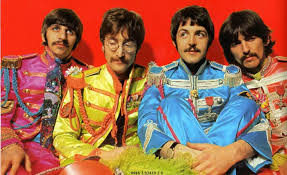
Growing up in a family that loved music of all types and genres, I’ve had the Beatles running through my head from my earliest memories. No one in the house was a fanatic, but we certainly appreciated the music. My two older brothers tended to like the pre-REVOLVER Beatles best, but I always loved REVOLVER through ABBEY ROAD the best. For about a six-to seven-year period in my life—mostly in college and early graduate school–I was obsessed with the band. I bought and read all of the books about the band, and I knew every song and every lyric from REVOLVER through ABBEY ROAD. I knew the most minute details about the recordings, the controversies. . . well, everything.

There are few things in the world of music more pleasurable to me than listening to the philosophical-art-drone-wall of sound-innovations of Poland’s newspaperflyhunting. The band is probably the greatest unknown band in the world.
Yet, they do nothing if not without utter and complete excellence. So very prog.
To my shame (and business), I have had their latest album, WASTELANDS, for a few months now without formally reviewing it. Admittedly, I’ve been a bit selfish, hoarding this grand and glorious music all to myself.
Continue reading “Do Hours Pass? The Timelessness of Newspaperflyhunting’s WASTELANDS”

by Rick Krueger
As a Detroit native, it’s a bit embarrassing that most of my Motor City progressive rock knowledge has come from — you guessed it — Prog Magazine. That’s where I first came across Tiles and their fluent, anthemic take on mid-career Rush and 1980s neo-prog. From Tiles, it’s been just a hop, skip and jump to their darker, more Gothic peers, Discipline.
There’s definitely an edge to this band, springing directly from Matthew Parmenter’s lyrical “Magic Acid Mime” vision, honed by music that channels and modernizes the gloomy flair of Peter Hammill & Van Der Graaf Generator, the plummy drama of Gabriel-era Genesis, and the hypnotic counterpoint of 1980s King Crimson. Stirring in just enough alt-rock crunch resulted in two minor classics, 1997’s Unfolded Like Staircase and 2012’s To Shatter All Accord; Parmenter’s fatalistic narrative drive and the band’s inexorable momentum shake you up and sweep you along — usually toward an unavoidable crash landing.
For Captives of the Wine Dark Sea, Tiles’ guitarist Chris Herin joins the veteran roster of Parmenter on vocals and keys, Matthew Kennedy on bass and Paul Drendzel on drums; Terry Brown (yes, he of “Broon’s Bane” fame from Rush’s Exit Stage Left) produces. Clocking in at just over 45 minutes, the new album doesn’t waste time or motion, as Parmenter fires off sardonic verbal volleys at the futilities of aging (“The Body Yearns”), the white collar working world (“Here There Is No Soul”), desire (“Love Songs”) — even creativity itself (“Life Imitates Art”). The music, subtly powerful and accomplished, carries the words with an appropriate gravity. Herin’s licks and tone provide plenty of style and color, Parmenter weaves enticing, compelling keyboard webs, and the rhythm section is rock solid.
Building from lullaby to anthem to fiery guitar/synth playout, the 15-minute finale “Burn the Fire Upon the Rocks” aptly sums up Discipline’s aesthetic: rage against the dying of the light — but keep moving as you do it, and find comfort where you can. Not exactly fun or even contented, but triumphant on its own stubborn terms. On Captives of the Wine Dark Sea, Matthew Parmenter and company stoically look failure and frustration in the face, leaning into the understated strength of their music to make it through.
You can listen to (and buy) Captives of the Wine Dark Sea at Bandcamp: https://lasersedge.bandcamp.com/album/captives-of-the-wine-dark-sea
 Norway-based Soup has been around since 2005 and has released 6 albums since then. Their last full length CD released in 2013, “The Beauty of Our Youth” really grabbed me at the time with the overwhelming sense of melancholy in the songs, accented by fragile vocals offset by understated instrumentation. With the number of new releases since then I must admit they have not been in my listening rotation in a few years, which is pretty typical of most of my collection.
This makes the release of their new CD Remedies such a pleasant surprise. Their indie post-rock sound has grown tremendously and has a much more progressive feel with a new drummer and production by Paul Savage ( who mixed their last and has produced Mogwai, Franz Ferdinand). Lasse Hoile, Steven Wilson’s visual collaborator, has been a long-time fan and friend of the band and provides some stunning visuals.
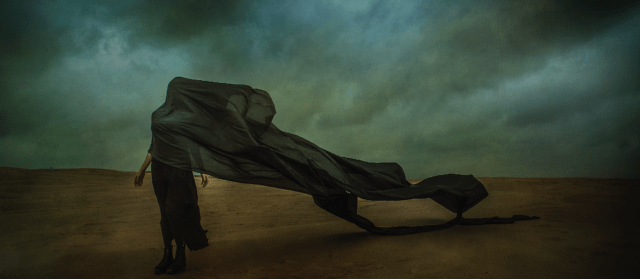 Remedies is short-three songs are 8, 11, and 13 minutes, with two shorter numbers totaling just over 40 minutes. The music typically begins softly-the melancholy remains, and builds to a wall of sound over repeating themes building to heart-wrenching finales. The vocals remind me of Grandaddy (Jed the Humanoid on the Sophtware Slump) and The Flaming Lips (Yoshima Battles the Pink Robots) overlaying their sound which has hints of God Speed You Black Emperor, Snow Patrol, Mogwai and Porcupine Tree.
The three longer songs-Going Somewhere , The Boy and the Snow and Sleepers are the highlights, while the shorter tunes Audion and Nothing Like Home , allow the listener to decompress after the intensity of the extended tunes . Sleeper and The Boy and the Snow really showcase the power of the new rhythm section, adding to the ‘progressive’ feel of Remedies.
The music is a collection of ear worms that make you want to hit repeat as soon as it ends. Highly recommended.
Click on the link for the Youtube video-at about 3 minutes the band really kicks in.
Soup is signed to Crispin Glover Records distributed by Stick-Man Records.
 The DPRP has just released a new Facebook page to replace their old FB Group. For those of you so inclined to participate in the book of face, check it out, like, and follow to keep up-to-date on everything that great website is doing.

by Rick Krueger
When it comes to Pink Floyd, I usually prefer the atmospheric to the polemic: i.e. “Echoes,” Wish You Were Here, and even A Momentary Lapse of Reason to Animals, The Wall and The Final Cut. True, Roger Waters’ growing desire to beat the listener over the head with his irascible critiques of modern life brought the Floyd to new heights of popularity — but they also helped poison relationships with his collaborators and blow up the band, leading to a solo career with much lower impact. Until, that is, he pulled out the vintage Floyd warhorses and started touring them again, to deserved acclaim.
For me, Is This the Life We Really Want? strikes a welcome new balance between the prototypical Floyd sound and Waters’ ongoing preoccupations. It’s the most listenable and perhaps the most effective of his solo albums, harking back to Dark Side of the Moon in its precision and its muted (but undampened) fury.
Nigel Godrich’s lean, colorful production helps immensely here, keeping the musical tension on the boil throughout. Ironically, it also helps that Waters’ voice has aged; no longer able to bellow with his previous venom, he insinuates and rasps instead. Especially when his singing is paired with acoustic guitar or piano, you can more easily hear the blunt, direct expressiveness he admires in his heroes — early Dylan, Neil Young, John Lennon circa Plastic Ono Band and Imagine. Funnily, lowering the volume of his complaints makes them more compelling.
Another surprise: Waters owns the culpability he so thoroughly excoriates in the world around him (notice the pronoun in the album title). The songs still take plenty of scabrous, deeply profane potshots, earned and unearned, at Stuff Roger Thinks is Bad and at People He Utterly Despises. But he’s also quick to call himself out, and to stand in solidarity with the masses, even if he believes they’re dead wrong. “Broken Bones” and the title track are the best examples; they pull no punches, but Waters makes no excuses for himself, laying out his own neglect and indifference, calling himself to accountability along with everyone else. (The judgmentalism is diminished; the ambition, not so much.)
In sum, Is This The Life We Really Want? comes from a Roger Waters who seems more vulnerable and less inclined to condemn humanity wholesale — but not soft by any means. After 25 years without an album of new rock material, it’s good to know that there’s life in the old boy yet.

Germany-based collective Art Against Agony announce today their new EP titled Russian Talesscheduled for the release on July 22nd. The ensemble of musicians and artists combine different elements; their instrumental music evolves around progressive metal, experimental rock, jazz fusion and avant-garde.
Speaking about the forthcoming EP, the band commented: “The ‘Russian Tales’ EP gathers all of our experiences from our tour through Russia during the Siberian winter of 2016: Driving 12000km and playing 20 shows in 3 weeks was heaven and hell, with wonderful hospitality & delicious food, marvellous nature & wild animals, but also including insomnia, anxiety & social break ups.”
To coincide with the release of the Russian Tales EP, Art Against Agony will embark on a tour across Russia in late July, followed by dates in Brazil in August. For the full list of dates see below.
Russian Tales is available for pre-order from Bandcamp (downloads) and Bigcartel (CDs). A video trailer for the EP can be seen below, and “Coffee for the Queen” single can be heard on Bandcamp here.

Russian Tales EP Track Listing:
1. Königsberg Präludium
2. Nothing to declare?
3. Tea for the Dragon
4. Coffee for the Queen
5. Saratov Incident
Art Against Agony – “Against All Odds Tour 2017” live dates:
29.07. Back Luny Festival, Russia
30.07. Kaluga, Russia
01.08. Yelets, Russia
02.08. Voronezh, Russia
03.08. Tula, Russia
04.08. Zelenograd, Russia
05.08. Saint Petersburg, Russia
08.08. Sao Paulo, Brazil
09.08. Sao Jose dos Campos, Brazil
10.08. Rio de Janeiro – Botafogo, Brazil
11.08. Petropolis, Brazil
12.08. Rio de Janeiro – Barra, Brazil
13.08. Sao Joao de Meriti, Brazil
Art Against Agony line-up:
the_sorcerer (lead_guitar, philosophy)
the_machinist (rhythm_guitar)
the_surgeon (piano)
the_heretic (bass)
the_malkavian (drums)
the_maximalist (mridangam)
the_architect (photography)
the_switch (live_visuals)
the_harlequin (merch)
the_glasses (japan_supervisor)
Art Against Agony online:
There’s an excellent discussion up online today (“The chills we get from listening to music are a biological reaction to surprise“) about how music can give us the “chills” (wherein we learn that, actually, the technical scientific term is “frisson”). The whole thing is great, but especially the example the author (Katherine Foley) uses to illustrate her discussion. The example comes from Lake Street Dive, also a perennial favorite over here at Progarchy amongst the editors. Here it is:
Take this version of “What I’m Doing Here,” a song by Lake Street Dive, sung by Rachael Price.
This blues piece was written by Price herself, who is a trained jazz singer. Right around 2:06, she sings at comparatively lower notes, followed by a crescendo where she hits an extremely high note before dropping back down immediately afterward. The quick turnaround between the high and low notes, combined with the build-up in between, is climactic, surprising, and resembles wailing in a way. And if all that weren’t enough, there’s a key change a few seconds later (around 2:50) that offers another unexpected treat for the ears.
It’s more than enough to give me chills, and sometimes a lump in the back of my throat. That said, this song resonated with me during an emotionally charged time in my life; those memories undoubtedly enhance my listening experience.
If you’re looking to learn more about the innovative excellence of Lake Street Dive, in addition to buying all their albums, you should read this extremely well written musicological piece on them: “Lake Street Dive: Searching for the Unexpected Chord” (H/T: Progarchy editor Carl E. Olson).
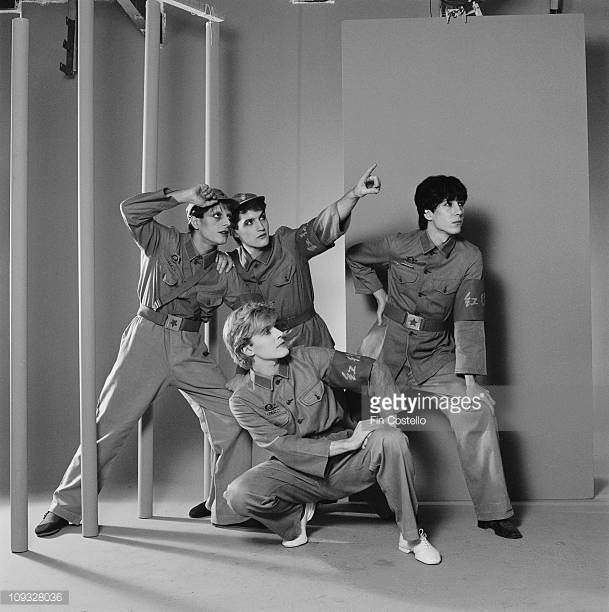 A British post-punk band could grow into just about anything in that fertile ground of the late seventies, and Japan proves the point, as over its short record-releasing career (1978-1981) the band moved from a funk punk glitz unit to new pioneers of progressive art rock. You can see the steam rising off the entire five-album catalogue, the creative engines driving full tilt, inevitably towards early breakdown. If the end came too soon there’s one more record, 1991’s self-titled Rain Tree Crow, that seals the deal: together, Mick Karn, Richard Barbieri, and brothers David Sylvian and Steve Jansen were among the most unique musical collaborators of their era, and should be in any discussion of Talking Heads or King Crimson from this same period, as bands who pushed forward and influenced all musical directions. In its progression of fashion and music, Japan functioned as an interlocutor, a not-so-missing link, between New York Dolls-style punk and Tears for Fears-style new wave, a Roxy turned Crimson, an achieving Guns’n’Roses cum Duran Duran.
“Sons of pioneers are hungry men,” intones Sylvian in the nuanced Ferry-esque croon he’d been developing since 1979’s Quiet Life, the band’s third album. I have no idea what this lyric means. But…I like it and its pure sonics and the way Sylvian so naturally handled a lyric as a shaped sound. “Sons of Pioneers” comes from their last work as Japan, Tin Drum, an album charged with atmospherics, and further demonstrating the contributions and importance of each member, although Mick Karn’s gorgeous playing is a particular show stopper. His expressive command of the fretless bass pushes and pulls “Sons of Pioneers” across its landscape, as the song takes its time unfolding, enjoying its own groove. I’m including the live (from the posthumous live record, 1983’s Oil on Canvas) and studio versions because they both kick ass in their own spacious and patient ways, although there is an urgent edge to the live performance. The concept-y concert footage shows a superlative Japan in its swansong, Jansen with his world beat and Barbieri sino-spacing out the proceedings on keyboards, Karn transporting himself magically sideways and Sylvian, dapper glam hand ever in pocket, delivering the riddles.
soundstreamsunday presents one song or live set by an artist each week, and in theory wants to be an infinite linear mix tape where the songs relate and progress as a whole. For the complete playlist, go here: soundstreamsunday archive and playlist, or check related articles by clicking on”soundstreamsunday” in the tags section above.
 Progarchy