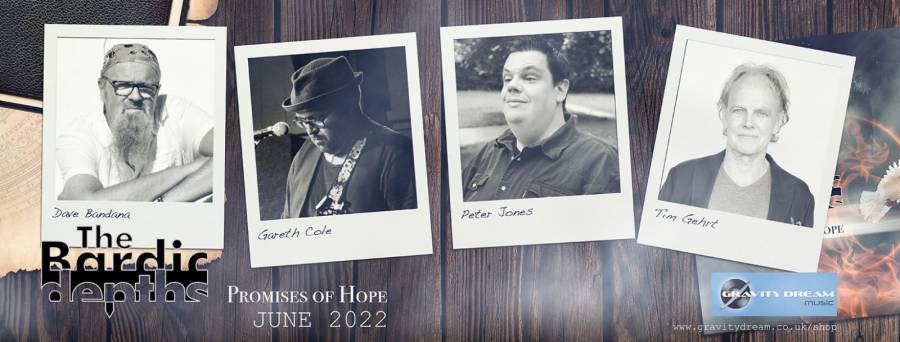
The Bardic Depths’ Dave Bandana: The Progarchy Interview

Full disclosure: I PLAY ON THE NEW BARDIC DEPTHS ALBUM!!!!!

Now that I’ve got that out of my system . . . oh, wait. You want details?

Having gotten to know Dave Bandana through this website and the Big Big Train group on Facebook, I was one of the folks who contributed spoken words (“This! Is! War!”) for The Bardic Depths’ 2020 debut. I had mentioned to Dave that, if he ever needed a church organ part for an album, he should get in touch. Which didn’t lessen my surprise when, in that strange summer of 2020, he did! And so, I wound playing not only church organ for Promises of Hope’s closing track “Imagine” (no, not that “Imagine”), but a Hammond organ solo on the opener “And She Appeared.” Being listed in the album booklet as a “special guest” has turned out to be more of a kick than I ever would have anticipated.

With all that as backstory, Dave agreed to join me for a chat about the new album, released worldwide on June 24th! We cover its genesis and the integral contributions of lyricist/conceptualizer Brad Birzer, producer Robin Armstrong, the new core band that plays on every track, and other collaborators. (And yeah, there are a few minutes devoted to a goofy volunteer keyboardist.) The video of our conversation is below, with a complete transcription following.

So, brand new Bardic Depths album!  I’ve been looking forward to it, for reasons we will probably get into – but I know a lot of people are as well!   But what was the initial impetus for returning to the world of The Bardic Depths?

The success of the first one, and the actual joy of recording the first one and bringing it all together.  Especially as, when we originally had done the first album, we didn’t know how it was gonna finish off.  It was just gonna be a little home studio thing with me and Brad [Birzer] and a few friends.  But then as more friends got involved in it, and then Peter Jones got involved and Robin [Armstrong] got involved, and the thing turned into a fully-fledged proper album.  And just the joy of doing that and seeing the fruition from that, we couldn’t not do a second album!

And to be honest, I was straight on writing even before the first one was released.  So that was the major impetus for wanting to do a second album.  And, hopefully the same thing’s gonna happen for a third one as well!

So, you were so excited that you already had material going for this?

I didn’t have material going.  I knew that I wanted to write again and started writing straight away from when that first one came out.  I can’t even remember how much of that initial burst of enthusiasm got used on Promises of Hope.  Probably a few snippets of it, but the writing certainly started as the first one was completed.

OK.  So, where did the concept that drives this album – the overall, the lyrical concept — emerge from?  I’m assuming Brad Birzer had a great deal to do with that.  But where did that come from?

Yeah, he had a lot to do with it!  Brad had sent me a little novelette thing that he’d written, a story.  I’d suggested to him a while back, “you’re a great writer.  Have you ever written a novel?”  He said, “well actually, I started on one, but I never got it finished.”  So, he sent that to me, and I said, “this would be a great idea for a concept album.”  So, he then carried on and took it — he didn’t actually complete the story; what he did was, he took it as far as he’d gone with it and elaborated around it a little bit more.  So, Brad was the guy that came up with the story for the second one.

And in the publicity, you mention that Virgil and C.S. Lewis are the two bards here.  And it seems to me that the Virgil, if I’m reading the story right, it’s the story of Dido and Aeneas from the Aeneid.

Yep!

Got that one right!  I can’t place the C.S. Lewis part of it, but I’m sure I’ll figure it out as time goes by.

Brad’s the person to speak to for this.  I think the actual C.S. Lewis part is actually in the booklet.  In the booklet Brad’s written a whole page, basically detailing what the story’s all about.  [Searching his memory] I can’t remember the complete title of the book. [A later message from Dave stated that the book is The Horse and His Boy from The Chronicles of Narnia.]  Anyway, Brad’s actually quoted from that book, so we’ll see it in there, so we’ll know which one it is.

I left the story to Brad; it’s a tricky sort of subject.  But I think it’s one that we dealt with in a not-complex way, in quite a simplistic way.  But it told the story that we wanted to tell; it didn’t go into too much detail, but it gives the listener something to think about.

Uh-huh.  So why Promises of Hope as the title?

The original title was gonna be Hope, Not Victory.  But as an album title, that was possibly a little bit more difficult to explain away.  And I liked Promises of Hope; it appears a lot in the lyrics – “with promises of hope, but never of victory” is a line that comes up quite a lot.  And I think to have a promise of hope is something to look forward to, rather than the other way around.  So, I changed it to make it a little more joyous, for want of a better word, yeah?

Got it!  So, as you were recording this, how did the core band that you wound up with at the end of this album take shape as you were making this album?

Continue reading “The Bardic Depths’ Dave Bandana: The Progarchy Interview”
Fractal Mirror’s “Beyond Borders”

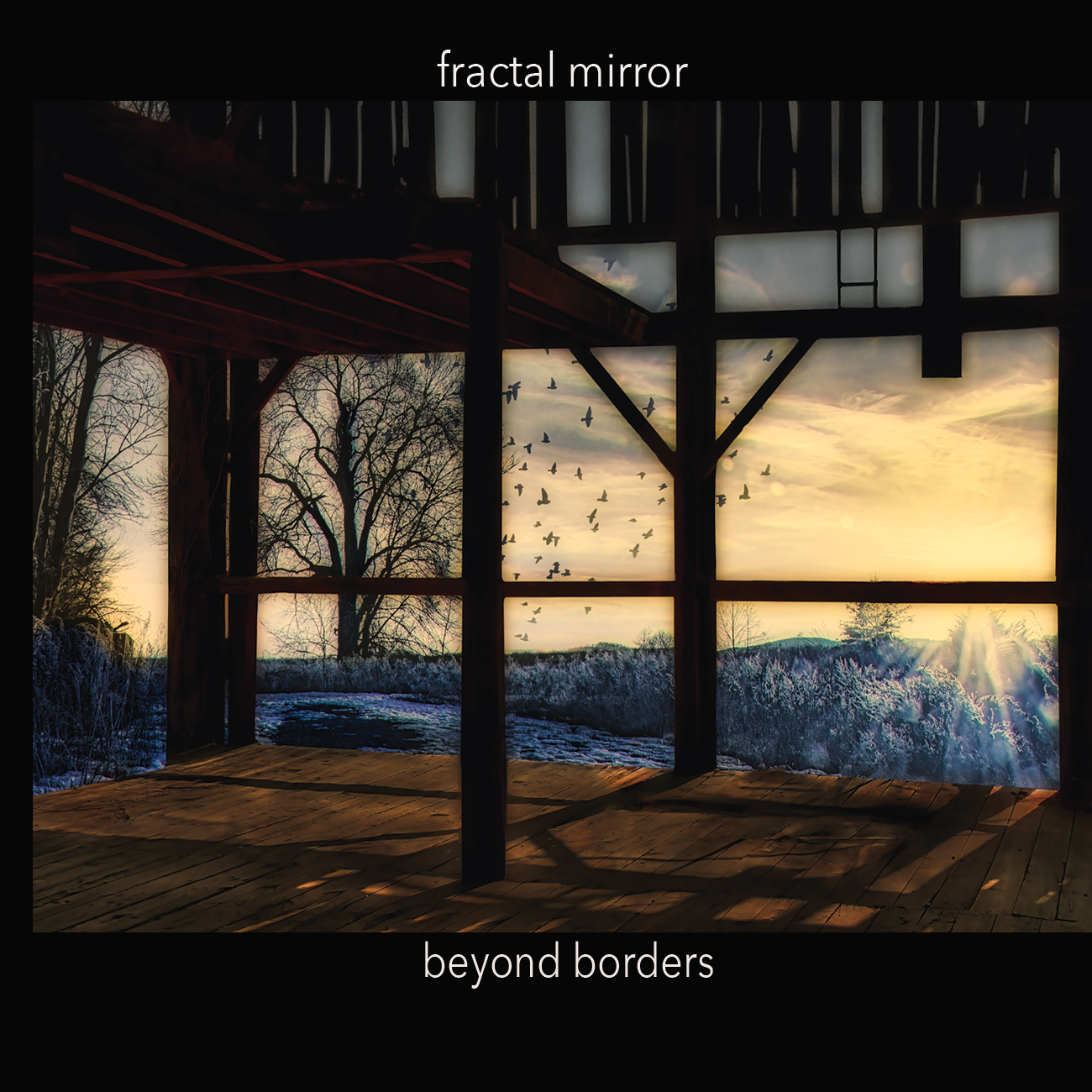
Fractal Mirror Beyond BordersFractal Mirror, Beyond Borders, Bad Elephant Music, October 15, 2021
Tracks: Beyond (4:28), Ashes (17:12), Slip Away (4:18), Shadow Man (5:46), Kingdom of the Lost (4:18), Borders (12:46)

Ok, so I’m almost 8 months late to the party on this one, but better late than never. We’ve been covering Fractal Mirror for a long time here at Progarchy, and I didn’t want that to stop. The international (The Netherlands, UK, USA) group has an eclectic blend of styles that can easily be called progressive and melodic, yet they’ve always had a bit of a pop influence.

For those not in the know, Fractal Mirror is signed to Bad Elephant Music and features Leo Koperdraat on vocals, keyboards, and mellotron; Frank Urbaniak on drums; Ed Van Haagen on bass, and Gareth Cole on guitars and backing vocals. Like many of their records, Brett Kull (who I had the great pleasure of interviewing a few years ago) mixed Beyond Borders, and he also provides some backing vocals. Marking a change, Frank Urbaniak created the artwork this time around after Brian Watson had done their album art in the past. Urbaniak’s skill as a photographer is remarkable, as some of his work on the band’s facebook page will attest to.

Their latest record, Beyond Borders, marks a bit of a directional change, not so much in sound, but in the long-form nature of two of the tracks. In past albums most of the songs were on the shorter side, with 8 minutes being a long song for them and the albums having 10 or 11 tracks. Beyond Borders has a stronger instrumental side, allowing the 17-minute “Ashes” and nearly 13-minute “Borders” to grow and breath. The other songs are shorter, but with only six tracks, its the longer ones that really stand out. The opening song, “Beyond” acts as a nice little instrumental prologue or overture.

The mellotron creates a moody soundscape throughout the record, as it has on their past albums. The keyboards in general create walls of sound. Cole’s guitars really stand out to me on this album. They steal the show, as he does in the other bands with which he’s involved. Urbaniak’s drums and Haagen’s bass create a groovy rhythm section. I love Urbaniak’s playful cymbal work, which makes a pleasant foil to the more melancholic mellotron and keyboards, as well as the deeper tone to Koperdraat’s haunting vocals. Said vocals have always been a hallmark of Fractal Mirror’s sound, for me anyways, with its unique tone and mournful quality. The resulting sound on the record is beautifully balanced.

Another element I love about this record is the vocal harmonies and layering of the backing vocals. The melodies often have pop hooks that work quite well, but then again that’s always been one of Fractal Mirror’s strong points.

Lyrically there’s a lot to digest. I wish I had a printed or digital version of the CD booklet to dive into, but from what I’ve absorbed, the lyrics have a contemplative feel. What are they contemplating? Seems to be the ills of today, but they’re digging deep below the surface. They aren’t commenting on politics or events. They’re using images to paint pictures that are colored in by the instrumentation.

Beyond Borders may very well be Fractal Mirror’s best album to date. Their melodic prog sound has grown and matured with each passing record. I appreciate the longer songs on this album, which really allow their musical and lyrical ideas to develop. Definitely not an album to be overlooked.

https://fractalmirror.bandcamp.com/album/beyond-borders
https://www.facebook.com/Fractalmirrormusic/

A Tribute to Kings: Primus and Battles in Concert

Primus: A Tribute to Kings with Battles, GLC Live at 20 Monroe, Grand Rapids, Michigan, May 31, 2022

Having been sucked in to seeing this show by the sheer audacity of the concept — Primus covering Rush’ complete album A Farewell to Kings — I wasn’t sure what to expect in terms of the audience. On the night, GLC Live hosted what was by no means a typical “progressive rock” crowd. With all the restrooms equally busy at the usual break points, I saw pierced youth, middle-aged mullet wearers, date night couples, Gen X parents with their Millennial kids and the occasional fan in costume (from silk kimonos to the hat pictured here, depicting the album cover of Primus’ Sailing the Seas of Cheese) packing the standing-room-only main floor. So I got as close to the soundboard as I could and awaited the night’s developments.

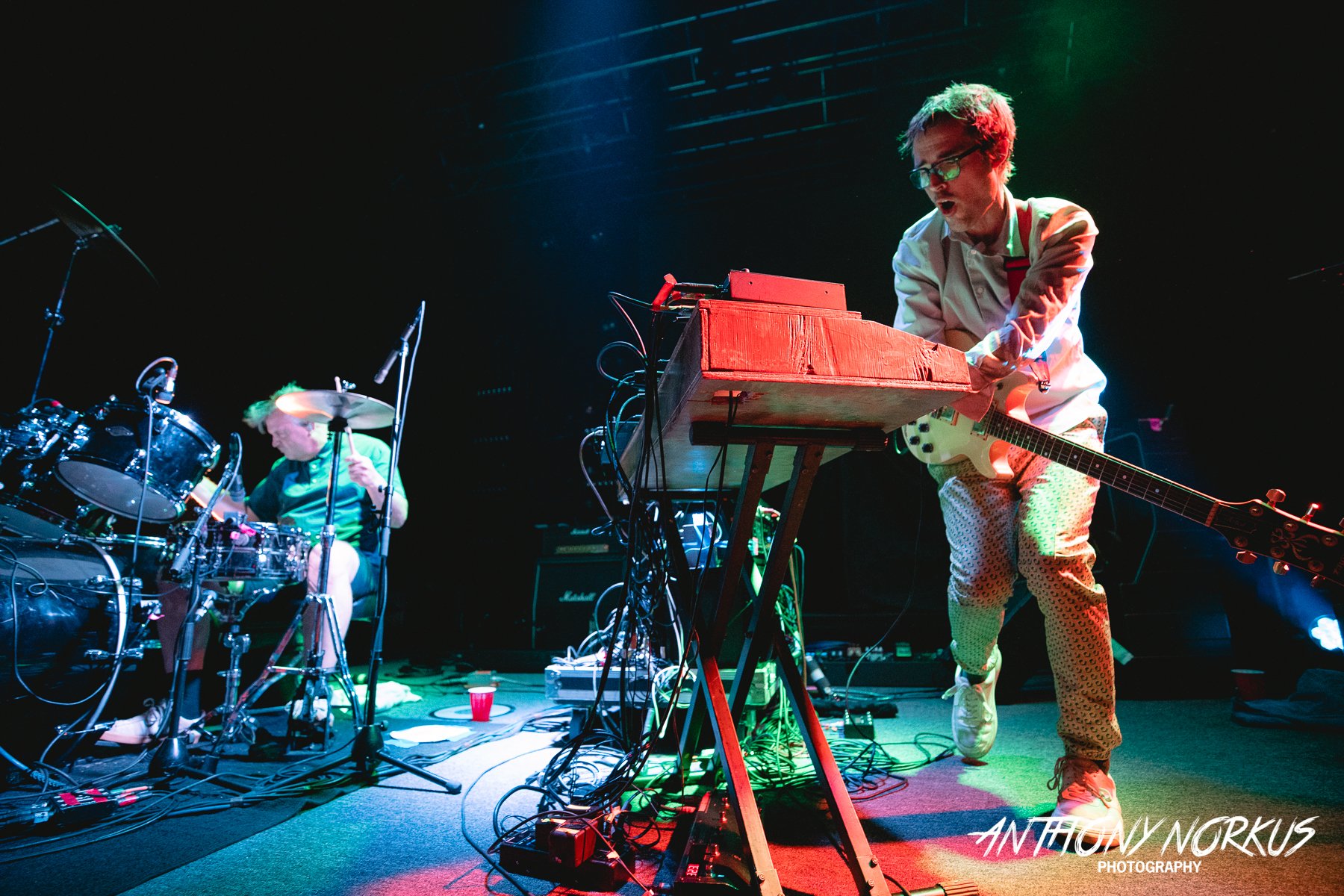
Making their Grand Rapids debut, New York City’s Battles got the crowd moving with a ecstatic blend of electronica, funk and rock, mostly from 2019’s stellar Juice B Crypts album. Ian Williams set the mood with his genial dad-dancing — triggering loops and laying down riffs on synth, garnishing the resulting blend with effects-laden guitar riffs and the odd solo in the moment. John Stanier, a hard-hitting drummer in the John Bonham vein, drove the tunes and cued one whiplash rhythm change after another, triggering new beats and repeatedly bashing his elevated crash cymbal along the way. The grooves were relentless but refreshingly unpredictable and airy; the interlocking melodic lines ranged from punky ferocity to video-game-soundtrack campiness; and the occasional pre-recorded guest vocal (like Jon Anderson adding some Yes-style sunshine to “Sugar Foot”) always seemed to furnish a cherry on top the sweet sonic sundae. Williams and Stanier have forged an impressively interactive relationship with their electronics in real time, bringing an artsy asymmetry and freshness to their music that gathered thrilling momentum as the set progressed. After 45 minutes of Battles, I felt like I’d already got my money’s worth. (And I can’t recommend their recorded catalog highly enough — if there’s such a thing as dance music for prog heads, this is it!)

Battles onstage at GLC Live: L to R, John Stanier and Ian Williams.

Following the openers’ clean lines and summery vibe, the headliners’ full-on first set was initially bewildering to a newbie like me. Bypassing their long-ago radio hits for the most part, Primus conjured up a thick, hypnotic pulse to jam on extended, deep catalog tracks like opener “Harold of the Rocks” and “American Life”, as well as new music from their Conspiranoid EP. While that approach grabbed the already-primed crowd from the start, I had to get my bearings. Still, it was quickly evident that Les Claypool’s circular, polyphonic bass riffs are the heart of Primus’ sound (with his outsider sensibility every bit as evident instrumentally as in his carnival barker voice and Zappaesque lyrics); that drummer Tim “Herb” Alexander not only locks in with Claypool’s grooves, but that he pretty much fills the remaining space in the soundfield; and that their tight connection allows Larry “Ler” LaLonde the freedom to play guitar in a completely lateral fashion, with blindingly off-angle solos that seem to defy not only the laws of tradition, but possibly the laws of physics. Add in a full-on light show and quirkily-cued screen projections, and you had an undeniably appealing set, connecting with the audience via its eccentricities, not despite them. But one question remained for me: how well could Primus, who opened for Rush back in their own early days, possibly recreate the operatic metal sound of their heroes in the 1970s?

Primus onstage at GLC Live: left to right, Larry LaLonde, Tim Alexander (behind drums), Les Claypool)

The answer: better than anyone had a right to expect. Primus had unquestionably done their homework; “A Farewell to Kings'” chiming classical intro and lumbering riffs plus “Xanadu’s” double-neck duet and bell tree accents proved the opening shots of an awe-inspiring re-creation, with all of Rush’s instrumental bells and whistles delightfully present and correct. All three players were stretching themselves to hit their marks, and you could tell how the effort had strengthened their overall bond as a band. And I’ll give the kimono-clad Claypool full credit for giving Geddy Lee’s utterly impossible vocals his best shot; generally sticking to a lower octave, occasionally letting loose with appropriate Plant-y screams, inviting the obvious singalong on “Closer to the Heart”, he was obviously having the time of his life nearly a year into this tour. By the time “Cygnus X-1, Book 1: The Voyage” (complete with Captain Smiler onboard the good ship Rocinante onscreen) gathered speed and dove into its climactic black hole, I was sold — even though my aching back meant I didn’t stay for what turned out to be an extended encore. Along with Battles’ marvelous opening set, my introduction to Primus’ weird world of pure imagination and their well-done “tribute to kings” proved to be an appropriately titled evening: a first-rate, full-on musical experience. If the above strikes your fancy and you get the chance, this tour is well worth your time and cash!

— Rick Krueger

Battles Setlist:

  • The Yabba
  • Hiro 3
  • IPT-2
  • Summer Simmer/Ice Cream (featuring Matias Aguayo)
  • A Loop So Nice . . .
  • Titanium 2 Step (featuring Sal Principato)
  • Fort Greene Park
  • Sugar Foot (featuring Jon Anderson and Prairie WWWW)
  • TRAS
  • Ambulance
  • Atlas

Primus Setlist:

  • Harold of the Rocks
  • Fisticuffs
  • The Pressman (quickly abandoned because, to quote Claypool, “I can’t remember the words. We’ll play something else!”)
  • American Life
  • Conspiranoia
  • Professor Nutterbutter’s House of Treats
  • Del Davis Tree Farm
  • Erin on the Side of Caution
  • Welcome to This World
  • Jerry Was a Race-Car Driver
  • A Farewell to Kings
  • Xanadu
  • Closer to the Heart
  • Cinderella Man
  • Madrigal
  • Cygnus X-1, Book 1: The Voyage
  • Too Many Puppies/Sgt. Baker/Too Many Puppies
  • Follow the Fool
  • Southbound Pachyderm

Rick’s Quick Takes for May

If there’s a theme this month, it might be “musicians going for it” — whatever the era, whatever the wisdom they assimilate along the way. Another common factor: all of these are strong contenders for my end of the year favorites list! As usual, purchasing links are embedded in each artist/title listing; where available, album playlists or samples follow each review.

Bill Bruford, Making a Song and Dance: completists may go pale, but this isn’t another massive “collect ’em all” box a la Bruford: Seems Like A Lifetime Ago or Earthworks Complete. Rather, it’s a judiciously curated, career-spanning set targeted at a wider market and chosen by the man himself. Organized to reflect the creative roles Bruford posited for expert drummers in his doctoral dissertation Uncharted, discs 1 and 2 cover his years as a “collaborator” in ongoing bands, (mostly Yes and King Crimson), while discs 3 and 4 lay out his qualifications as a jazz-oriented “composing leader” in the above bands and other occasional combos. But if your listening experience is like mine, discs 5 (“The Special Guest”) and 6 (“The Improviser”) will provide the freshest material and perhaps the niftiest surprises; Bruford sits in with everyone from folk-rock iconoclast Roy Harper to speed-fusion guitarist Al DiMeola to the Buddy Rich Big Band, then contributes equal amounts of chops and space to music conjured from thin air with (among others) daringly lateral pianists Patrick Moraz and Michael Borstlap. When the man said he retired from performance because he couldn’t think of anything more to play, he wasn’t kidding — based on the evidence collected here, he’d already done it all. Not only does Making A Song and Dance give an ample picture of Bruford’s stylistic range, it brilliantly charts the growth of an essential artist down the decades.

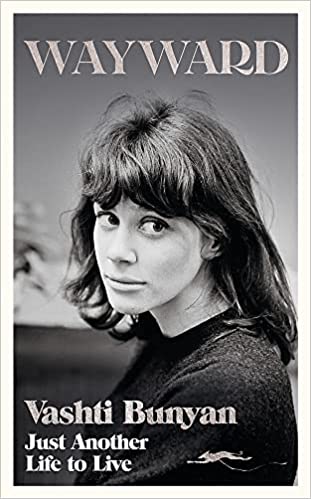
Vashti Bunyan, Wayward – Just Another Life to Live: indirectly named after a Biblical queen, Vashti Bunyan’s thirst for meaning led from a middle-class childhood through Oxford art school to a London fling as a wannabe pop chanteuse (her debut single was a Mick Jagger/Keith Richards offcut). Adrift in the aftermath, Bunyan seized what seemed a golden opportunity: a journey with her paramour from the Big Smoke to a new life in the Hebrides, undertaken by horse-drawn wagon. That unlikely odyssey forms the heart of this evocative, compelling narrative; laboriously heading north through the heart of England, Bunyan gains understanding of the natural world, of the extremes of human kindness and cruelty — and of her own animating passions, her sturdy inner core. She also writes the deceptively simple, uncommonly rich songs that became her lovely 1970 album Just Another Diamond Day. The fulfillment (and dissolution) of Bunyan’s quest, her immersion in “lookaftering” children and stepchildren, and her artistry’s rebirth when the Internet rediscovered her music in the early 2000s provide the epilogue to this tale of a wandering soul’s coming to terms with the beauty and the beastliness of life. Highly recommended.

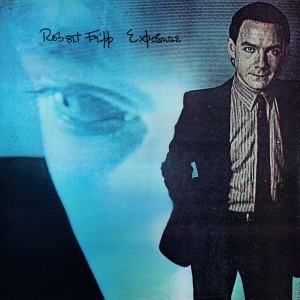
Robert Fripp, Exposure: After King Crimson “ceased to exist” in 1974, Fripp withdrew from the music industry, pursuing a spiritual sabbatical. Reinvigorated, he dipped his toe back in the water via guest shots with David Bowie and Blondie, then moved to New York City to get serious about returning to active service. Exposure was Fripp’s calling card for his “Drive to 1981,” self-described as research and development for what might come next; along with nods to his current production work with Peter Gabriel and Daryl Hall, ghosts of Crimson past (the metallic “Breathless”) and future (“NY3,” with ‘found vocals’ from Fripp’s argumentative neighbors draped over cyclical odd-time riffs) haunt the album. But there’s also New Wave 12-bar blues (“You Burn Me Up I’m A Cigarette,” with tongue-twister lyrics gamely tackled by Hall), furious punk energy (“Disengage,” featuring Peter Hammill’s improvised, gleefully atonal vocals cutting across Fripp’s proto-shred guitar and Phil Collins’ blunt, brutal drumming), and surprising amounts of gentle lyricism (Hall on “North Star”, Terre Roche on “Mary”, Gabriel on a gorgeous solo piano “Here Comes the Flood”). What binds these disparate tracks together is the innovation of Frippertronics — the solo guitar looping set-up that Fripp then took to concert halls, dance clubs, restaurants and record stores on a low-budget promotional tour — weaving in, out, between and behind it all to unify the album and give it a futuristic impetus. As strange and compelling a beast as any Fripp has brought us over the years, Exposure is a wild, worthwhile listen in and of itself, while providing distinctive previews of coming attractions. The new “Fourth Edition” features a discreetly energizing remix by Steven Wilson, plus previous versions (including an unreleased master with Hall as the primary vocalist) on a bonus DVD. For those with deeper pockets, the 32-disc box set Exposures exhaustively archives Fripp’s studio and live work from 1979-1981 — including the Frippertronics concert at Peaches Records in Detroit that completely exploded my own musical boundaries. (More of this boundary-breaking beauty can be found on the new release of 1981 Frippertronics, Washington Square Church.)

Continue reading “Rick’s Quick Takes for May”

Andy Tillison: The Progarchy Interview

The latest album from that stalwart institution The Tangent, Songs from the Hard Shoulder, will be released — or perhaps I should say unleashed — on June 10th. Boasting three extended tracks (“The Changes,” “GPS Vultures” and “The Lady Tied to the Lamp Post”), the short, sharp retro-anthem “Wasted Soul” and a head-turning cover of UK’s “In the Dead of Night”, it’s a brilliant collection from a first-class band at the peak of its powers. And beyond the formidable talents of guitarist Luke Machin, woodwind specialist Theo Travis, bassist Jonas Reingold and drummer Steve Roberts, the group’s remarkable collaborative chemistry is firmly rooted in the eclectic musical appetite and deeply humane vision of its founder, keyboardist and singer Andy Tillison.

It was serious fun for me to spend an hour talking with Andy, going into detail about the album — including some of the real life experiences behind the songs — and heading down other delightful rabbit trails besides: why he goes out of his way to hear other groups at prog festivals, our respective experiences of radio in our formative days, his favorite band (which may surprise you), and much, much more! Throughout, Andy answered every question candidly and put up with my schoolboy goofs/fanatical excesses, exuding his wonderfully unique mixture of curiosity, passionate commitment and dry humor. I hope you enjoy the experience as much as I did! The video is immediately below, with a complete transcript of the interview following (and continuing over the jump). But why were we both looking to our right??

Alright!  Well, first of all, congratulations on the new Tangent album!    I’ve heard it and I really enjoy it.  I’ve been a fan since the Le Sacre [du Travail] album, and have very much enjoyed – I saw you live in 2017 actually, in Chicago.

Right, yeah!  That was a great night; really enjoyed that one!  Some good experiences that night for me; I’ll never forget that one.

And that was a great weekend overall.

It was, yes.

To put you on the spot right away, if you had to describe Songs from the Hard Shoulder to someone who had never heard The Tangent, what kind of a pitch would you make?  

[Laughs] I would say it’s a difficult album, actually!  We haven’t made this as an easy sort of pigeonhole-able album.  Obviously, we do make albums where we try to put our case and make a beautifully constructed record.  But on this one – we just did what we wanted to do.  And we do that from time to time, you know?  We don’t always try to write to fit the need; we sometimes write from the point of view of what we want to write!  And we ended up with this slightly imbalanced record; it’s got three epic tracks and one short one! [Laughs]  How many other albums are quite like that?

And of course, the fact that all the three main tracks are completely different from one another!  I’ve been saying in other interviews that it’s almost like three different bands made three different tracks! [Both laugh].  The first one being very much like The Tangent, the second being a jazz-fusion band, the third one being dark and electronica influenced.  And then a Tamla-Motown song! 

I think it’s probably best to understand what the band have been doing before!  This is not necessarily a first album to hear by a band; it’s one of a sequence.

It works better in context is what you’re saying.

I think it’s a contextual album.  To be fair, if you’re looking at classic progressive bands of the past, most people who came into the world of Yes did not enter from the point of view of Tales from Topographic Oceans.  They came in with Fragile or The Yes Album or maybe even Close to the Edge is where they came in.  I say “maybe even Close to the Edge” cause that’s where I came in!

And the same with Genesis: most people who came in didn’t arrive with The Lamb Lies Down on Broadway; they came in at some other point.  And the sort of deeper albums are the ones they go back to and help develop their relationship with a group.

OK!  I think that what I heard in your pitch is that it’s very much “you guys” – the band that you are right now.

Yeah!

So, definitely not a snapshot, more like a short video at least!  [Both laugh]

I think that being in a progressive rock band, if you’re serious about it, and this is more than just a commercial label you use to make things more convenient for markets – you have to be able to make the developments, to take the risks, to do the non-commercial things!  Because that’s what the audience wants of us!  Sure, everybody likes Asia, for example, but they always want something more meaty than that, if you get what I’m saying.  They want something that’s a bit more out there, more adventurous.

So, the fact is that this great progressive arc can take in everything from pop songs, rock songs, pop-rock songs if you like, through to massive great big sinfonias!  Everything from an acoustic guitar being bashed on the stage by Peter Hammill right through to massive symphony orchestras.  There’s so much available to us in the power – every so often you have to use it!  And this means on this occasion, we didn’t write much short-form material for this record.

So that kind of answers my next question, because as you mentioned, three of the four tracks on the main album plus the bonus track are all over 15 minutes; they’re definitely what you would call “of epic length.”  Did you feel like, in terms of the songs with lyrics, that the subject matter demanded that?  How do you develop these longer pieces?

I think that it’s just something that happened.  To me, I grew up listening to rock music, but the first rock music I heard was long! [Laughs] 

OK!

I was listening to Yes age 12, Van der Graaf Generator age 12, Genesis 14 perhaps.  Picking up on Pink Floyd and finding that, because of my history in classical music, I tended to be more interested in the longer pieces.  Because the classical upbringing I’d had – and I’m talking about classical listening, because there was so much music in my house when I was a boy.  And so, I’d get to hear all this stuff!

Consequently, when I first heard things like the Beatles, I always used to be disappointed that the songs were over so quickly.  I thought, “I was just getting into it, what’s happened?”  [Both laugh]  So it just seemed a natural way.  In me it’s writing to how I always like listening to music!  I like music that goes on for a bit.

[Laughs] As I’ve said, many times, “this music is not epic at all!”  20 minutes is not epic at all; it’s an episode of Friends!

Continue reading “Andy Tillison: The Progarchy Interview”

RIP Alan White

YES Alan White-photo by Gottlieb Bros 152 ap copy 2
© Jerry and Lois Photography All rights reserved 

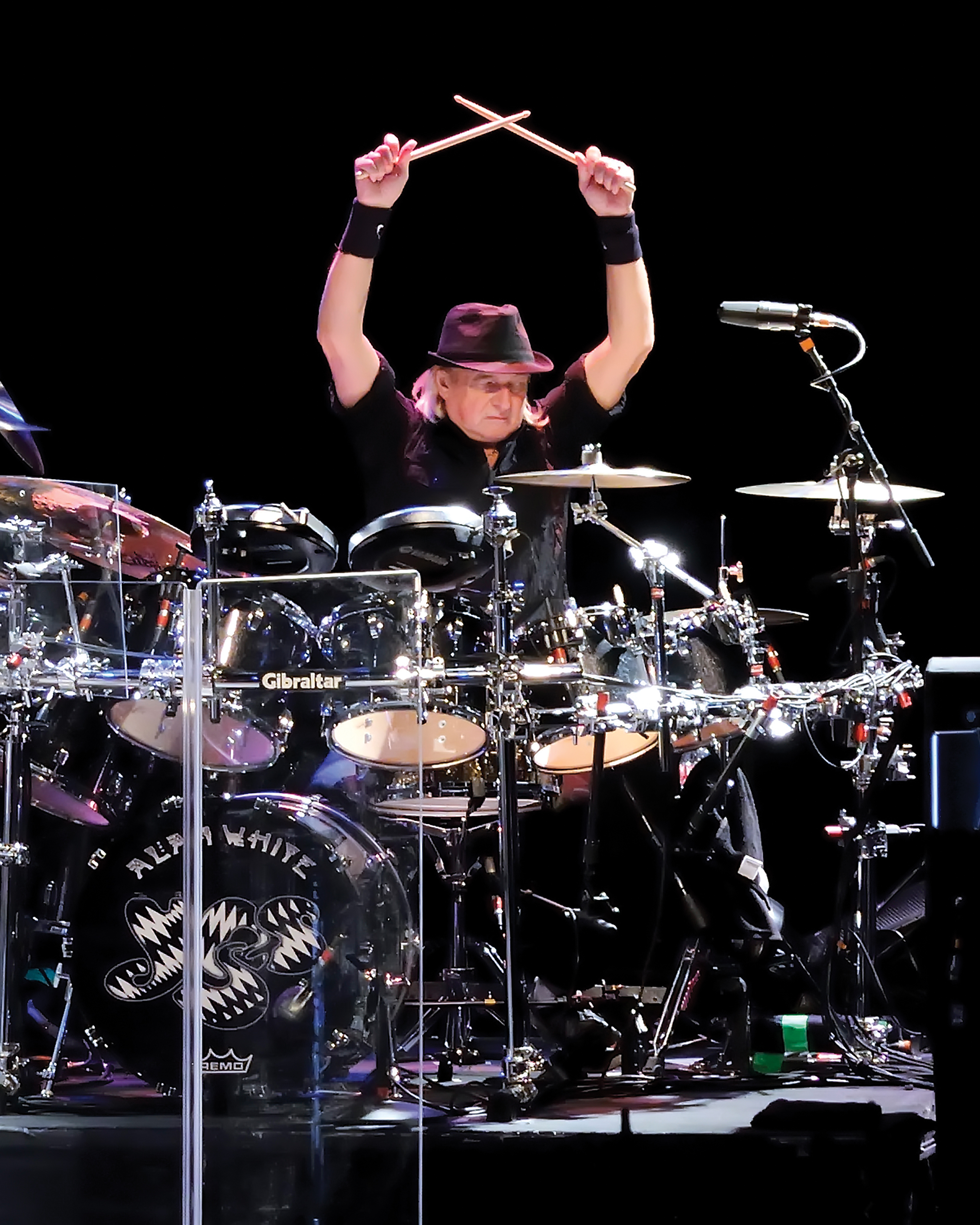
Just days after Yes announced that Alan White wouldn’t be able to play on the band’s upcoming tour due to health concerns, today the band announced that he has passed away at age 72. White has been a mainstay behind the drum kit for Yes since 1972. In an interview for Progarchy back in 2015, White commented on playing with the band for so long, “When I joined the band I said, ‘I’ll give you guys three months and see if I enjoy it and you give me three months and see if you enjoy it as a band.’  And I’m still here forty-three years later, so there must be something working.”

Health issues the past several years have limited how much Alan played with the band, with Jay Schellen filling in, but that still hadn’t stopped him from coming out towards the end of the concerts and showing the audience he still had it. I saw Yes on their 50th anniversary tour a few years ago, and they were phenomenal.

RIP Alan.

Here’s the full press release from the band:

It is with deep sadness that YES announce Alan White, their much-loved drummer and friend of 50 years, has passed away, aged 72, after a short illness. The news has shocked and stunned the entire YES family. 

Alan had been looking forward to the forthcoming UK Tour, to celebrating his 50th Anniversary with YES and their iconic Close To The Edge album, where Alan’s journey with YES began in July 1972. 

He recently celebrated the 40th Anniversary of his marriage to his loving wife Gigi.   Alan passed away, peacefully at home. 

Alan  was born in 1949 in County Durham. A number of health setbacks, since 2016, had restricted Alan’s time on stage with YES on recent tours with Jay Schellen filling in and Alan joining the band, to great applause, towards the end of each set.  

Alan was considered to be one of the greatest rock drummers of all time and joined YES in 1972 for the Close to the Edge Tour. He had previously worked with John Lennon’s Plastic Ono band after a call, in 1969, to play at the Toronto Rock Festival. Alan continued working with Lennon including on the Imagine album and with George Harrison on All Things Must Pass. He also worked with several other musicians, over the years, including Ginger Baker’s Air Force, Joe Cocker, Gary Wright, Doris Troy and Billy Preston to name but a few. Alan White was inducted into the Rock and Roll Hall of Fame as a member of YES in 2017.  

YES will dedicate their 50th Anniversary Close to the Edge UK Tour in June to White.    

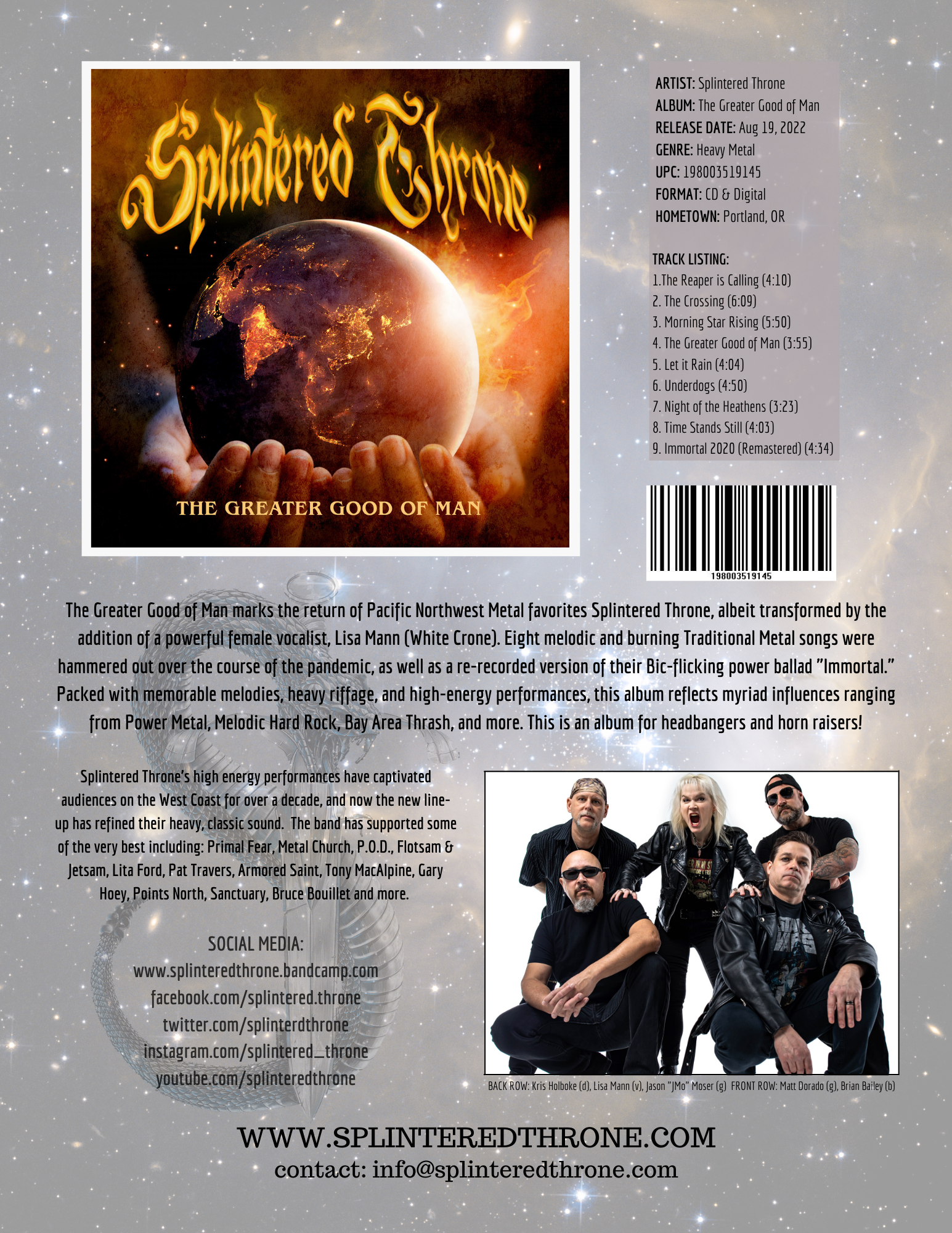
Splintered Throne, “The Reaper is Calling” (May 27)

Rawr! Get ready for Splintered Throne’s new incarnation with vocalist Lisa Mann, whose solo album The Poisoner (recorded under her alias White Crone) was chosen here at Progarchy as one of the ten best albums of 2020.

Splintered Throne’s new single is coming this Friday, May 27, in advance of the whole album’s release on August 19. Check below for the full track list.

Keep an eye on https://splinteredthrone.bandcamp.com/ for this Friday, indeed, but you can also right now order CD copies there of Splintered Crone’s 2018 metal masterpiece, Redline. Don’t be misled by its first three tracks, which are relatively traditional; the album unfolds with undeniable prog sensibilities with a veritable cascade of standout tracks like “Nature’s Design,” “Fog of War,” and “Inside Looking Out,” and then finally crescendoes into the absolutely epic “Take It to the Grave.”

It’s going to be great to hear what Lisa Mann’s Dio-like charisma will bring to the band. Compare her own prog chops on tracks like “Interment,” “Edge of Gone,” and “18 Rabbit” from her sledgehammer showcase The Poisoner. The new Throne disc seems likely to achieve the greater good of metal, thanks to her exciting new vibe.

He Dreamt Music

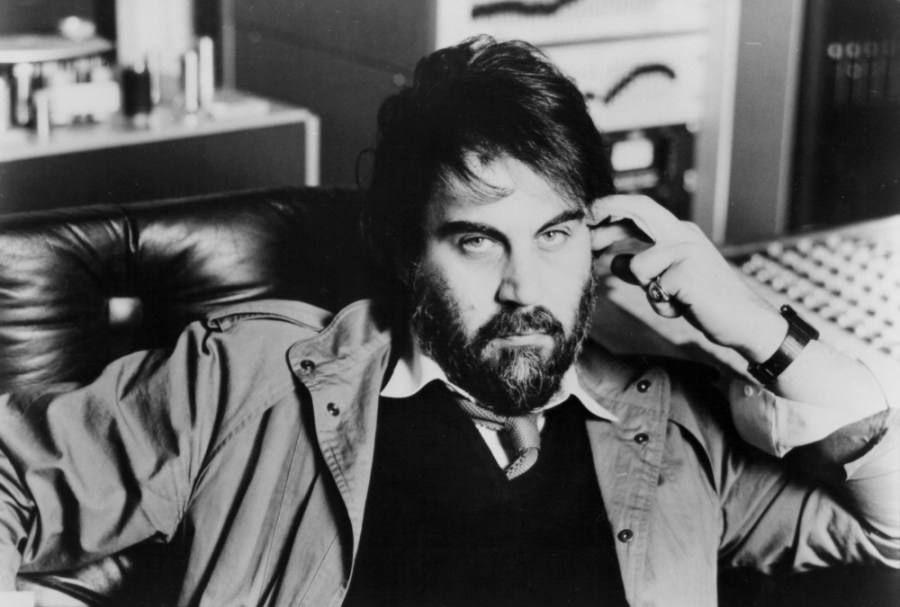
And then he composed it, and his compositions were groundbreaking. Vangelis, the Greek god of the keyboards, laid the foundation for cyberpunk with his bleak, brooding, synth-heavy score in the classic neo-noir film Blade Runner. If ever you find yourself cruising solo through a gritty, neon-lit city on a rainy night, play the soundtrack below. You will not be disappointed.

RIP Vangelis

Bryan Morey's avatarProgarchy

I’m very sad to see that Vangelis has passed away at the age of 79. What a legend, and what a loss. Whether it was his work with Aphrodite’s Child or his work on movie scores such as Chariots of Fire or Blade Runner, he made an unforgettable mark on the music world.

https://www.reuters.com/world/europe/vangelis-composer-chariots-fire-score-dies-79-2022-05-19/

View original post

RIP Vangelis

I’m very sad to see that Vangelis has passed away at the age of 79. What a legend, and what a loss. Whether it was his work with Aphrodite’s Child or his work on movie scores such as Chariots of Fire or Blade Runner, he made an unforgettable mark on the music world.

https://www.reuters.com/world/europe/vangelis-composer-chariots-fire-score-dies-79-2022-05-19/