More Heat Than Light?

This post started as a counterpoint to those earlier posts from Brad and from Erik, but then our esteemed Time Lord responded with a spirited defence of the music that seems to have offended sensibilities so greatly, and for a while I wondered whether to abandon these ramblings entirely.  If there is a point left to make, perhaps it is to reiterate something I said the last time the thorny issue of politics reared its ugly head in these hallowed virtual halls.

My point then was simply this: I don’t want any artist to keep politics out of their music, even if this means they end up pushing a viewpoint that I disagree with vehemently.

Why? Well, it has to do with passion. Many of us get very passionate about our politics; you only have to read those earlier posts to see that! And passion is also a necessary fuel for art. Can the artist separate the passionate feelings that stimulate great art from those that feed their political beliefs? I’m not sure that’s possible. Perhaps hearing something we might disagree with is just the price we have to pay for great art – for that other stuff that resonates and inspires, rather than mystifying or angering us.

To be honest, I’m rather surprised that we aren’t hearing a lot more proselytising in prog right now. After all, the tectonic plates of global politics seem to have shifted significantly over the past couple of years. And I would hope that all rational and reasonable people near the centre ground, whether they lean left or right, can agree that we’ve seen some disturbing trends – not least in the rise of far-right extremism.

I think this must be why I take exception to some of the criticism that Erik levels at Andy Tillison for his ‘bait and switch’ on the Slow Rust album. Was it clichéd? For sure. Clumsy and melodramatic? Probably. But considering the toxic and febrile atmosphere surrounding Brexit, where a politician was murdered by an avowed neo-Nazi and synagogues were vandalised in the aftermath of the referendum result, I believe wholeheartedly that Andy had a valid point.

I’ve heard none of this apparently controversial new material from The Flower Kings and The Tangent. (I no longer listen to advance copies because I’m so bad at reviewing, and it’s not fair to the artists to treat this stuff as ‘free music’ without the quid pro quo of a review.) Thus I can’t comment on the specific bones of contention that other Progarchists have picked over so ardently. But I feel I must repeat something that I said two years ago in my first musings on this troublesome issue:

An artist communicates their thoughts and feelings to us through their music: their thoughts and feelings, which may align with or contradict our own. As listeners, we are free to accept or reject the message, but we don’t get to decide its contents.

Thus I ask, tentatively, and with the greatest of respect, whether it might be more constructive in the future to keep the politics out of Progarchy, rather than arguing that it should be kept out of prog?

Anathema – Internal Landscapes – Album Review

Anathema – Internal Landscapes – Album Review

http://manofmuchmetal.com/2018/10/24/anathema-internal-landscapes-album-review/
— Read on manofmuchmetal.com/2018/10/24/anathema-internal-landscapes-album-review/

The Adulthood Lie

ProxyHeader

There has been some outpouring of emotions at Progarchy recently. I am just a poor boy, you can tell me by the way I walk. I will leave those discussions to folk with more intellect than myself. But here is what I do want to say.

There is a track on the new Tangent album that is possibly the most exciting piece of music to appear in a long long time. It’s Prog you can dance to. Electronic dance music, disco, prog, call it what you like. The chorus is so uplifting and musically engaging. The lyrics are from the heart. It is a brilliant piece of music. It puts a smile on my face and makes me want to dance around the room every time I play it. For me it’s the music that sets off my emotions.

When I was young, I fell in love sings Andy. You only have to look on progressive rock Facebook pages to see folk discussing how the great the early seventies were for the genre. There is so much great music being made today but that era is revered by many. I think it’s all to do with the emotional ties to that era. For many, they were young. It was a time of first loves, school memories, new experiences, concerts. These memories are intricately intertwined with the music and so we think that era was the best. I am sure there will be people younger than myself who think that the eighties were a wonderful time for music. Again, it is down to their emotional attachment to that time. I know of folk who think Invisible Touch is the best album Genesis ever made. Why? Because it was the first thing they heard by the group and it held an emotional attachment.

The adulthood lie has awoken an emotion in me. I love this song. I just can’t get enough. I am going to go now. I am getting all emotional.


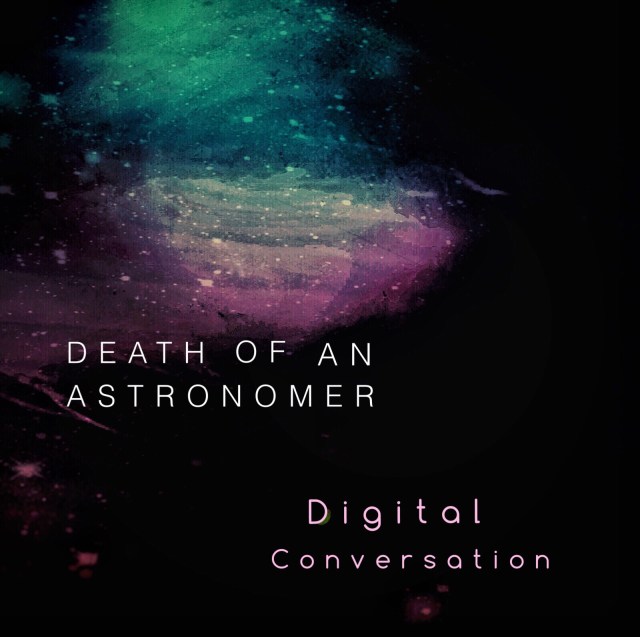
Track Review: Death of an Astronomer – Digital Conversation

Digital Conversation

Sometimes, metal guys want to play jazz fusion, and that is something that Los Angeles based keyboardist, guitarist and composer Jairo Estrada does with his project Death is an Astronomer on the recently released single “Digital Conversation.” 

https://bandcamp.com/EmbeddedPlayer/track=198860162/size=small/bgcol=ffffff/linkcol=0687f5/transparent=true/

Estrada offers up striking, highly progressive metallic fusion music that never bores or ventures too far off into aimless territory. Highly complex yet flowing, “Digital Conversation” sees weaving guitar and bass melodies twisting and turning around each other, the drums, following along every step of the way but keeping it all grounded. Arrangements just grab hold of you and take you on a mind altering journey. Nothing here is overly heavy, but there is just enough crunch in the guitar to keep this in the metal camp, yet when Estrada goes for some soaring, thought provoking chops, it’s classic jazz fusion/prog rock all the way. 

Jairo Estrada (Death of an Astronomer)

If you like adventurous, classy instrumental metal fusion, Death of an Astronomer’s debut single is a something you need to seek out immediately. But to make it easy, here is where you can get it.

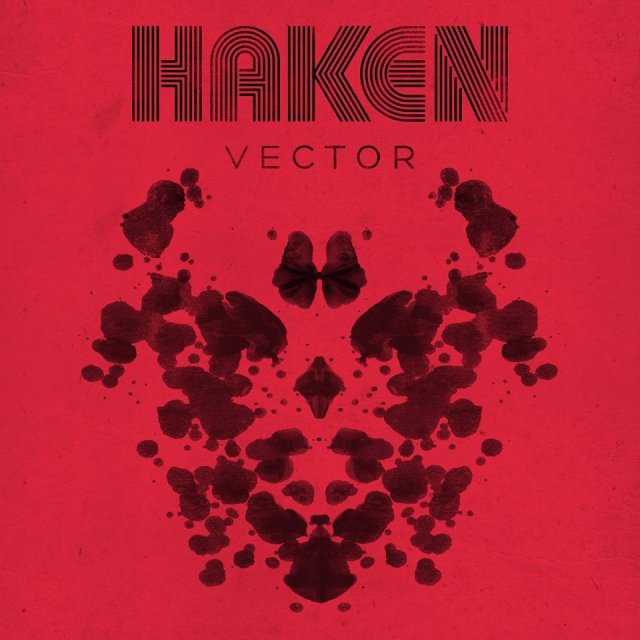
Album Review: Vector – Haken

38810878_10156676432099744_262269145683329024_n2

It took me a few listens before I truly found my way into Vector, the new studio offering from Haken.

And then I realized:

It’s the musical blot!

Genesis pun intended. Allow me to explain…

I was really looking forward to this album, because as I listened to L-1VE, their brilliant live album from earlier this year, I became convinced that, with Rush now retired, it is Haken that reigns supreme.

Haken’s ability to play with such complexity and virtuosity live, in such a compelling and spirited way, embodies that living “spirit of radio” that Rush had been able to offer live for so many decades.

L-1VE reminded me of Exit… Stage Left, in that it was a perfect overview of the band’s career, as well as definitive proof of their being today’s live band without equal.

At any rate, I was baffled by Vector at first, because initially it didn’t seem to be musically or lyrically coherent.

But the breakthrough came for me when I read the Man of Much Metal’s review of it, wherein he put forth the thesis that Vector is “an understated and clever homage to every single previous incarnation of the band within the music.”

In illustration of this thesis, he averred that Affinity can be heard within “The Good Doctor,” The Mountain within “Puzzle Box,” Aquarius within “Veil,” and Visions within “Host.”

This immediately rang true for me, as I realized each song indeed marked a “vector,” or definite trajectory, in fact audible in previous manifestations of the band.

In my mind, I added my own perception of the teleological spirit of Restoration in “A Cell Divides,” and of the jaw-dropping response induced by L-1VE (with its dazzling live display of unmatched technical musical ability) in the instrumental “Nil by Mouth.”

While the Vector album, on the one hand, thus didn’t have the overall coherent feel that comes from a spatio-temporally undivided live performance (which is what the career overview of L-1VE records), on the other hand, its fragmentary studio snapshots of discretely engineered musical styles did supply quantum musical “blots” of a Haken offered via a more scattershot distribution.

Thus, like the “ink blot” on the cover, you can see the Haken you want to see, if only you look more closely.

As for what Haken is overall, who knows; it is as if the band is saying, “It is up to you to perceive it; we are not going to decide it in advance, to fit some marketing categories or any other reductive schema.”

Look within the music, and you will see what is there.

And as I understand the point of this exercise, it is not so much “to project your own meaning” onto the music, but rather to be an active participant in the music itself, along with Haken.

Just as they themselves won’t reduce the musical experience in advance, so too do they invite you not to insist in advance that your musical experience be able to be put in a nice and neat little box.

So, instead they have given us quite the little puzzle box on Vector.

I believe I have solved it.

Not a musical box, but a most satisfying musical ink blot.

Lee Speaks About Music… #107 — Lee Speaks About…

Story Tellers Part Two – Tiger Moth Tales Introduction… The latest and 4th studio album release of Tiger Moth Tales is the sequel to the 2nd album Story Tellers Part One and I was so glad to that Story Tellers Part Two had been in the making and was to be the next album to hit […]

via Lee Speaks About Music… #107 — Lee Speaks About…

After the flood…

Kudos to Erik and Brad for being willing to step up and speak on this. This post began as a comment on Erik’s post (which was a response to Brad’s posts), but the words kept coming and it seemed better to add to the conversation separately.

I am probably the least informed of all of you with respect to the cutting edge of current Prog. I haven’t had a chance to listen to either album in question, so I shan’t speak to those specifically. I will say, that I’ve come to realize that a lot of the music that I enjoyed when I was younger was filled with political posturing that mostly sailed right over my head. But now, years later, when I listen to much of it I find the perspectives to be quite vacuous and it does spoil my experience of the music. Political criticisms can be powerfully done, but they typically work better when written in prose by people who have been gifted with insights for such things. Poetry can work to that end, but it takes an extremely deft hand (Shakespeare & Eliot come to mind) to really make it art.

Continue reading “After the flood…”

Lost Progarchy: Methinks Thou Doth Protest Too Much

If anyone has read the attacks below, posted on Progarchy, that are assaulting the latest from both Roine Stolt and The Tangent, I just want to encourage people to ignore the ranting and raving, and to actually go and listen to the music and lyrics instead.

Stolt releases a song called “Lost America” and suddenly some heads explode at Prograchy. Hey guys, calm down. How about you actually listen to the song? Is it too much to thoughtfully digest what an artist offers, before pronouncing premature rash judgment?

The music to “Lost America” is itself not too bad. Musically, there is nothing offensive. I admit the track doesn’t do much for me, because musically it has nothing too innovative or elaborate to get me excited. But, the guitars are great, and it’s still pleasantly enjoyable to listen to, nonetheless.

Continue reading “Lost Progarchy: Methinks Thou Doth Protest Too Much”

A Few More Words on the Politics Thing

One of our esteemed founders, Dr. Birzer, has had a few excellent posts today on the intersection of art and politics, in part to a reaction of some recent releases and in larger part in reaction to some larger trends.  In reading them, I had about 1.5 cents of my own I wanted to throw in.

This isn’t to say I don’t ever like political subject matter intertwined with music.  But some ways of doing it are more appealing than others.  One of my favorite albums this year – Galahad’s sprawling, incredible Seas of Change – is very political in its lyrics.  It’s focused on the tumult in the U.K. over Brexit.  However, which side of that debate it eventually comes down upon is hard to say.  I’ve read reviews that say it’s pro-Brexit, others that say it’s anti-Brexit.  When I pore over the lyrics, I come away with … I don’t know.  It seems like Galahad has plenty to critique on both sides of that debate.  Irrespective of that, one of the things I like about it is that it takes a “clean up your own backyard first” approach.  Nobody is doing a Roine Stolt on Lost America here, sitting back smugly criticizing another polity as if theirs is somehow perfect.  The path Galahad has chosen is one of self-reflection, the one chosen by Stolt is cheap, smug, self-superiority.  Galahad’s path is engaging (as is Marillion’s FEAR), Stolt’s is off-putting.

Continue reading “A Few More Words on the Politics Thing”

Glass Hammer Smashes Time

A Hole In The Sky

Do you long for the days when listening to FM rock radio meant hearing classic Todd Rundgren, early Chicago, ELO, ELP, Pink Floyd, and maybe a little Autobahn courtesy of Kraftwerk? Do you miss watching Rockford Files and Barney Miller on TV? If so, then you will love Glass Hammer’s new album, Chronomonaut. It is a trip back in time to those heady days of the 1970s when DJs thought nothing of playing an entire album side in the middle of an afternoon.

Brad Birzer has already written an impossible-to-improve-upon review of Glass Hammer’s latest, but I am so captivated by this album that I had to add my voice to the chorus of praise it is garnering. While Valkyrie was a beautiful and sympathetic examination of the horrors of WWI trench warfare and the toll it took on soldiers, Chronomonaut is a much lighter affair, at least in its brilliant mix of styles of music. Tongues are firmly in cheek throughout this update on the hapless protagonist, Tom Timely, whom we first met in 2000’s Chronometree.

Tom’s still convinced he’s receiving secret messages via prog music, and he is not a happy inhabitant of the 2010s. He is sure that he can travel back in time to the 1970s and fix whatever it was that made his life go off the rails. Where Chronometree was pretty much all in fun, though, this new chapter has some deeper messages lurking beneath the surface.

The music is all over the place, and I mean that in a good way. I hear snatches of early Chicago in the horns, some Houses of the Holy – era Led Zep, some early-80s new waviness, and a heavy dollop of Something/Anything? – era Todd Rundgren. Babb and Schendel put it all in a blender and it comes out sounding pretty glorious. Susie Bogdanowicz is still on board, thankfully, contributing her trademark angelic vocals. Aaron Raulston is solid as a rock throughout. He is the most adaptable drummer I’ve heard – regardless of the musical style, his percussion is a perfect fit. Steve Babb is now my favorite bassist – he is endlessly inventive and melodic without dominating the proceedings. And of course, Fred Schendel is marvelous on guitar and keyboards, pulling all kinds of vintage sounds out of his instrumental arsenal.

In the end though, amidst the sheer pleasure of listening to all of this ear candy, there is a sobering message: nostalgia for its own sake can be dangerous. As they sing in the album’s final and finest song, “Fade Away”,

“If you could truly travel back

You’d still not find the things you lack.

The glories you seem to recall

Were not glory after all.”

Tom, it turns out, is searching for Truth, and in the end he finds it. It’s a deeply moving moment in the arc of the album’s trajectory. There are not many bands who could pull off such a mix of engaging melodies with such a serious message. Glass Hammer, however, are not your typical band. They make it look easy, which is all the more impressive. Long may they run!