From Summer to Winter – Mike Kershaw’s “Ice Age”

2480067Admittedly, Mike Kershaw’s music is new to me, and his style is not something I typically listen to. However, I have found Ice Age
to be a detailed and complex album, definitely worthy of attention. The lyrics are hauntingly beautiful, and the keyboard driven music draws upon music from the 1970s and 80s, yet it still strikes me as being mysterious and unique. The steady drums and the interplay of the soft guitar make it all the more enjoyable to listen to.

Interestingly enough, after listening to the album, it struck me as being very “northern European.” Being an American with strictly northern and northeastern European ancestry, this music seems vaguely familiar. It is cold, yet warm underneath. It seems unapproachable at first, but once you give it a listen, it draws you in. Ice Age is an album that I believe J.R.R. Tolkien’s character Túrin Turambar, from The Silmarillion, would have on his iPod. If you haven’t read the book, you have no idea what I’m talking about. If you have, I think you might agree that this album has a very dark, brooding, and foreboding nature to it, much like Túrin. The album questions the future while looking back to warmer and happier days.

Ice Age maintains a very serious tone throughout the album, yet it becomes steadily more upbeat as the album progresses. Lyrically, the album is more hopeful in the beginning, focusing on a remembrance of happier times, yet still acknowledging turmoil ahead. As the album moves on, the lyrics become darker and focus on mere survival in the impending ice age. Yet, through all of that, aurally the album becomes more upbeat beginning with the 7th (of 9) song, “Tomorrow’s Door.” There is a distinct turn in the album with that song. The pace of the music quickens, almost as if someone has turned a pleasant walk into a jog. By the end the jog turns into a run. I find it interesting that Mr. Kershaw chose to make the album lyrically darker as it became aurally brighter. It reminds me of a bright winter day in northern Illinois, where the sun is shining, yet the temperature is -30 degrees Fahrenheit. Things can seem bright and cheery, but they really aren’t.

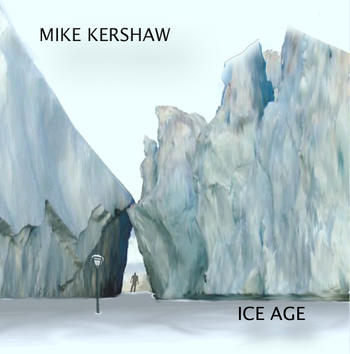
With that said, the cover art for this album is perfect. You see remnants of civilization, with what I believe is a streetlamp, with glaciers rising behind it, and in the shadow of the ice age, you see a single, solitary individual. You see the brightness of the sun reflecting off the ice and snow, yet the lyrics remind you of the cold and despair. It isn’t often when the artwork for an album so perfectly depicts the point the music is trying to get across.

Interspersed throughout the lyrics of the album, I found a gem that I particularly like. In the 5th song, entitled “Blossom Falls,” Kershaw sings:

We give our lives to progress

We pour them down the drain

These lines could not be more true, and he echoes the same sentiment elsewhere in the album. So often people devote their lives to an Aristotelian ideal of progress without remembering the mistakes and consequences of the past. When we do that, we wage the risk of wasting our lives by making the same past mistakes. Well said Mr. Kershaw. The lyrics of this album, for me, are definitely the best part of the music.

In the end, Ice Age, I believe, may take some effort to enjoy. To appreciate the complexity of the album, one really needs to devote their whole attention to it for the duration of the album. Believe me, though, it is worth it. I look forward to future releases from Mike Kershaw. The haunting beauty of his deep voice, the keyboards, drums, and guitars makes for an enthralling album.

http://www.kershmusic.com/home

http://mikekershaw.bandcamp.com

Dystopian Rock: A Request for Ideas

Dear Citizens of the anarcho-Republic of Progarchy,

As some of you might know, in addition to editing this site, I also pretend to be a professor and author during the day.  I’m currently working on a book on the history of dystopias (and dystopic ideas) in fiction, film, and music.  I’m trying to compile a list of dystopian rock albums.  Here’s what I’ve come up with.  If, in the comments section, you’d like to make suggestions of things I’ve missed–PLEASE do so!  I would be exceedingly grateful!

Yours, Brad

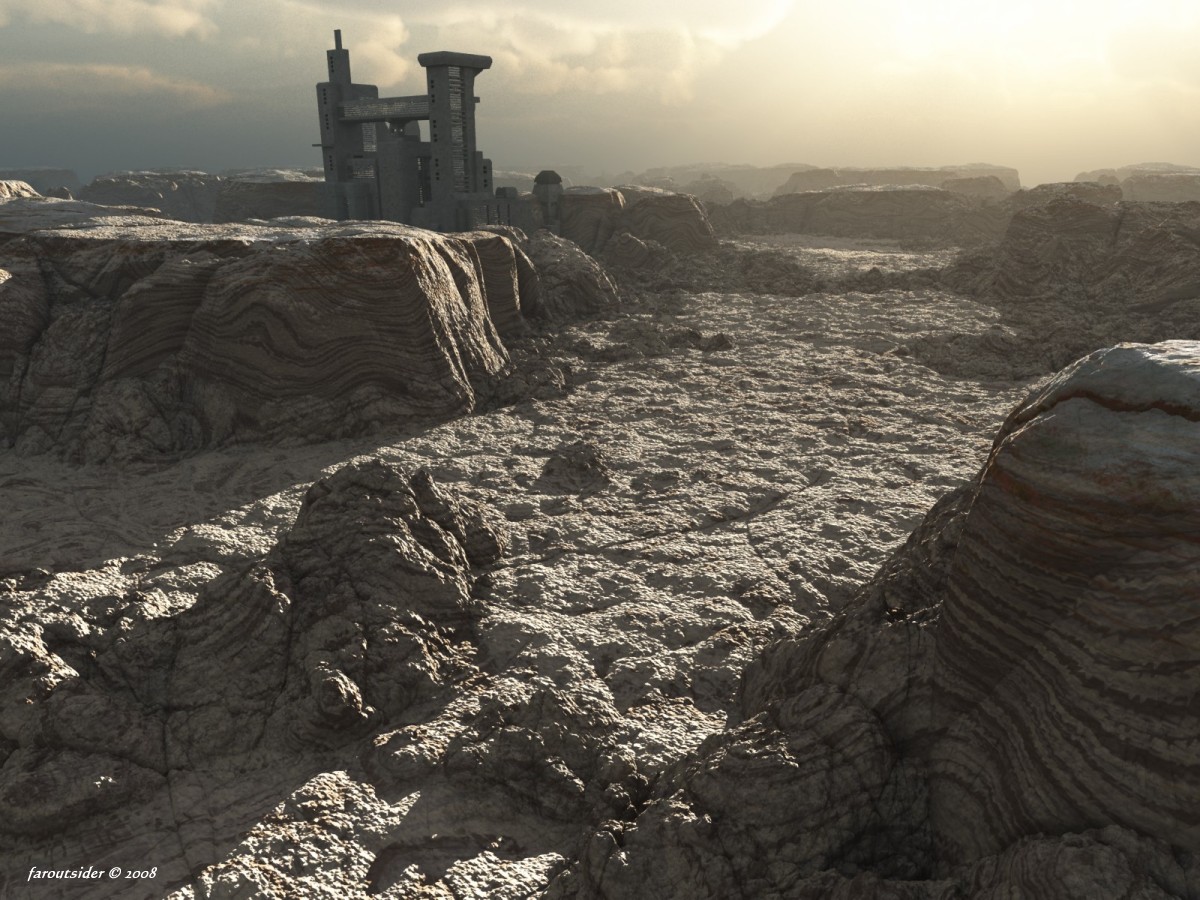
"Abandoned" by Craig Farham.
“Abandoned” by Craig Farham.


Rush, 2112

Rush, Clockwork Angels

The entire Ayreon series

Arjen Lucassen, Life in the New Real

The Tangent, Not as Good as the Book

Pink Floyd, Animals

Pink Floyd, The Wall

Gary Numan, “Down in the Park”

Radiohead, Kid A

Cosmograf, Capacitor

A few songs by Muse, Oingo Boingo, Coheed and Cambria

Flower Kings, Desolation Rose

Porcupine Tree, Fear of a Blank Planet

Yes, “Machine Messiah”

Greg Spawton: 2 Big Big Train Shows Live

Greg Marcus Aurelius Spawton

Our friend, Greg Spawton, posted this two hours ago on the Big Big Train Facebook page:

We’ve been reading the comments about the shows. One of the things we like about this forum is that people feel free to say what they think, whether it be positive or negative about BBT, without fear of us getting offended. We know some of the decisions we take won’t suit everybody, but we do read and take things onboard. The first thing to say is that BBT is a band and also a small business enterprise. Like it or not, we can’t make music without taking care of the business side of things, making sure we pay our taxes, pay money to these we employ and try not fall into debt. Over the last few years, our album sales have reached a level where the turnover allows us to make more ambitious music and to do some of the things we would like to do. One of these things is to spend more time together as a band and to play some shows. Now the problem is, we have a complicated live line-up. There are 13 musicians. There will be a crew of about 7 people. We need to rehearse together in a suitable place, feed people, pay transport costs, hotels, venue hire etc. It is a very expensive proposition. We’ve thought very carefully about where to play and the size of venues. To keep costs down, we do not have management or tour promoters. Therefore, we need to keep things simple for us by playing in one place. We can’t book places that are very big as they become too expensive to hire, exposing us to financial risk if we don’t sell enough tickets, so we’ve settled on two nights at a 400 seat venue. The venue is the right sort of place for BBT music and has excellent transport links. We know playing only in London isn’t ideal, but the band is based in the south of England and London has the best transport links for people who may be coming a very long way. If the gigs go well, then in future years we may play elsewhere. I am from Birmingham and David is from Nottingham, so somewhere in the Midlands would suit us just fine. Some have commented that there won’t be enough tickets to meet demand. However, I think we will do very well to sell both nights out. The ticket price is an issue. We want it to be affordable, but we think we have to charge about £35 to make this financially viable. That is more than we want to charge but we cannot ignore financial realities. At this price, the shows will run at an acceptable loss which we hope to recover through the additional publicity, perhaps live recordings etc. We are going to do all we can to give people on this forum a headstart. We will be talking to the ticket office to ask for a pre-sale which we will mention on here and only on here. This will give forum members a 24 hour start. We suggest that people try to buy tickets for one night only on that pre-sale. However, we cannot police that and just have to trust people to use their judgement. Once the pre-sale is done and tickets go on general sale, then if anybody wants to buy tickets for both nights that will be up to them. We will probably make a formal announcement of the dates tomorrow and will keep the forum updated on the ticket situation. There may be comments, questions, grumbles and I will pin this post for a few days so they can be aired.–Greg Spawton

Sparks In The Aether – The Tangent Blog

Our great and brilliant friend, Andy Tillison, is blogging like the English madman he is! Join us in celebrating the mighty pen (and keyboard) of Mr. Diskdrive!

progferbrains's avatarTheTangent.org


BLOG Articles: Pens And Swords NEW – The Spiritual AtheistJustification For making Another AlbumAt The Sharp End Of A Legacy

Welcome to the Tangent Blog. It’s been a long time coming. Here I’m going to TRY to be good and continue the work that the band does on paper. or not on paper actually, but you know what I mean.  This can be translated as “I’m going to nag on and on about stuff that no-one is really bothered about” but it seems that that activity is quite the thing these days, so why shouldn’t I try?

good

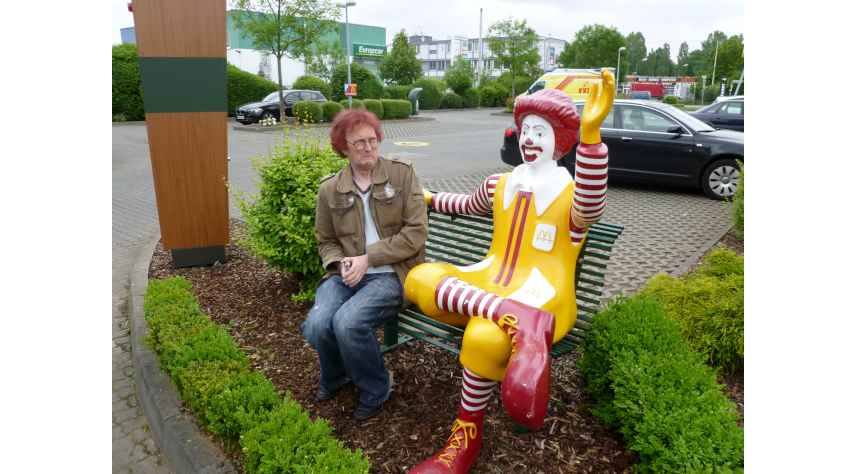
The Author with the only person he could get to listen that day.

The Tangent is a Progressive Rock Band. It tries to be be more than just that – which typifies the band as pretentious, full of its own self importance and  – well…

View original post 213 more words

Elephant Talk: An Interview With Tony Levin

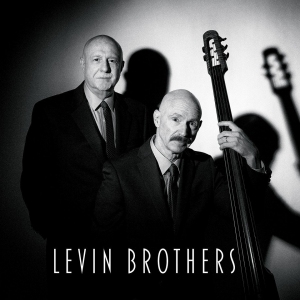
Levin-Brothers

Interview conducted via e-mail and reproduced below.

1. First of all, we at Progarchy would like to thank you for this opportunity. Many of us are big fans of King Crimson, Peter Gabriel, Pink Floyd, etc. We know you have a busy schedule, so I’ll keep the questions to a minimum. The 1950s was obviously a huge decade for jazz, featuring the talents of Miles Davis, Buddy Rich, and others of the cool jazz movement. What first attracted you to the jazz scene and do you have a preferred “style”?

It’s an interesting combination, me and Pete, because I’m primarily a rock player, who also plays jazz – while he’s a jazz player, who has played a lot of rock. So, Pete’s played in lots of jazz styles, on tons of records and tours. For me, I’m usually called in to a jazz album when they want it to be more like rock(!) But this time it’s us calling the shots, and we wanted to go back to the style we loved when we were kids just starting to play… the ‘cool jazz’ then may or may not have been ‘cool’, but it had melodic songs, and the solos weren’t as long winded as some other styles. In general it seemed less designed for the players, and more about having good writing, played well. So that’s what we aimed at with this album, hopefully giving the listener songs that’ll keep running thru their heads, and hopefully it’s music that has a classic element, and will sound as good 10 years from now as it does today.

2. What was the music scene like growing up in the 1950s Boston area and how much of an influence did it have on the you and your brother’s playing style?

When I was living in Boston I was only into Classical. There were great opportunities, and the Greater Boston Youth Symphony Orchestra took me to Carnegie Hall and the White House. But it was after I left to go to school in Rochester that I started playing jazz and rock — so I wasn’t much influenced by what was going on at home.

3. This is your first time releasing an album with your brother Pete, an accomplished musician in his own right. Why so long a wait? What was the experience like?

We did release a single track way back years ago, and it was a comedy piece! Otherwise, we’ve played on each others albums and projects many times, but really this is the first time we sat down and said, let’s make this album together. Surprising it took us that many years to do it. (And hopefully it’s worth the wait!)

4. Listening to the audio sample on Youtube, I was impressed by the quality musicianship, but it was certainly unlike anything most of your fans have heard before. Most listeners are familiar with your work with Peter Gabriel and King Crimson. What can they expect from the Levin Brothers album?

Oh this is different for sure. What it’s about is; nice jazz songs, played well, with unusual instrumentation (a lot of my cello playing the lead, as well as Pete’s piano and organ, and Erik’s sax). The solos are short and each guy does his best playing, then moves on for somebody else.
Oh, there is one King Crimson song, Matte Kudasai, that we included so that folks might have one song they already know.

5. I also noticed from the Levin Brothers site that Steve Gadd, one of the world’s most renowned drummers, is featured as a guest on two songs. However, a few other musicians, perhaps not as well known, appear on the album. Could you briefly discuss the talents of Jeff Siegel, David Spinozza, and Erik Lawrence?

Jeff and Erik are great players that Pete has gigged with a lot though the years. Guitarist David Spinozza has been in a jazz band with me, called L’Image, for … well, ever since I can remember — we don’t do much touring or recording, but there’s a good musical comraderie, so he seemed the right guy to bring in. You’re right about Steve Gadd being renowned, and it was important to me to have him on the track “Bassics”, because he was instrumental in making me a jazz player, back in the 60’s when we were in music school together. So it just seemed right to have him on that piece, which is mostly bass playing the lead, with drums sharing the spotlight.

6. This album is a dramatic shift from your typical role in a progressive rock band. As you continue to play for prog rockers such as King Crimson and Peter Gabriel, do you see yourself continuing to work on more jazz related projects in the future?

I never have much idea what the future will bring, but my plan is to continue with Crimson and Gabriel, but Pete and I will not only continue to do the local gigging we’ve always done – we will certainly take the band from the album out on tour sometime in the next year.

7. How did the songwriting process go? I noticed all but one song (Matte Kudasai) is an original composition. Whose specific influence (if any) can we hear on this album?

Pete and I both wrote songs for it – once the style was set (and I was very focussed on the albums of Julius Watkins and Oscar Pettiford) it was fun coming up with songs. We wrote more than we needed for the album, but also we kept the tracks short, on both the CD and LP, so we could fit many more songs on than is usual.
Incidentally, it was a longtime wish of mine to release a real vinyl album, and this was surely the right time for it – so we’re loving having the big artwork and vintage back cover on the vinyl version. Of course, as is standard nowadays, it comes with a download card for digital versions of all the songs.

8. Finally, do you plan on doing any touring once the album is released. I understand King Crimson is about to go on tour again, but will fans be treated to any live performances by the Levin Brothers in the near future?

Yes, as I mentioned before, I’ve got some Crimson and Gabriel tours to do this Fall, but next year we’ll also do some Levin Brothers jazz club dates for sure.

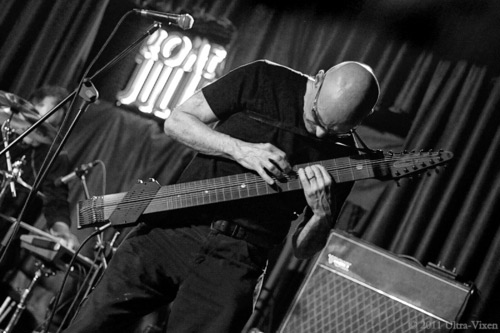
Best of luck on this album Tony and Pete. And one more question, if you don’t mind. A few of my fellow Progarchists (myself included) were wondering: where and when did you pick up the Chapman Stick? tony-levin-chapman-stick

Thanks, Connor. The Chapman Stick appealed to me as soon as I heard it, as a way to play my bass parts in a different way than normal. In prog music, I’m usually looking for those subtle things that move my playing forward. I never imagined, in my first years with the instrument, that I’d eventually play the guitar strings on it too, and form a group (“Stick Men”) that I now tour with more than any other group. It’s been a really rewarding experience for me.

For more information regarding the album:

http://thelevinbrothers.com

On the Channel Islands, Neil Peart Wrestles with Determinism

rvkeeper's avatarrush vault

Mu Inspiration Point My Inspiration Point

neil- Neil’s Inspiration Point

Neil has updated his blog with a post about two adventures he took earlier this summer to the Channel Islands, which are about a dozen miles off the Southern California coast. The post, called “Magnetic Mirages,” caught my attention because I had been to the Channel Islands myself at around the same time, and although our paths didn’t cross, I was interested to compare his notes with my own.

His adventures were a little more . . . adventurous, to say the least, since he got there by hitching a ride on the boat of his motorcycle buddy and security chief, Michael, while I just hopped on a tour boat. And he went to four of the eight islands, and I only went to one, Anacapa. (See “Inspiration Point” pictures.)

Neil's lens Neil’s lighthouse lens

My lens My lighthouse lens

Comparing notes was interesting but what caught…

View original post 673 more words

Seven Impale – Basking in the City of the Sun

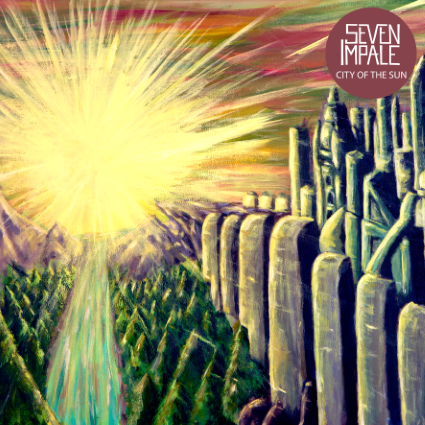
sevenimpaleOne of the many strands of the golden hair of art rock is rooted in John Coltrane’s epic India, where the mighty ‘Trane and Eric Dolphy so caught the attention of a young Roger McGuinn that the Byrd lifted the song’s theme whole, filtering it through his twelve-string Ric and overlaying it on his band’s psych pop masterpiece, Eight Miles High. It was a sincere embrace, in spirit, of modal jazz, and helped launch rock into territories beyond the blues, to points further east, to lands that Coltrane remapped as an astral plane. Four years later and three after Coltrane’s death, the Soft Machine’s album Third became the purest rock expression, from what remains art rock’s best “fusion” record, of what Coltrane had been searching for. Side-long pieces of heavy fuzz bass, driving organ, wailing horns, and Robert Wyatt’s inimitable drumming. This kind of music, like Coltrane’s, is hard, riffy, insistent, will not be denied.

It’s metal.

And it’s little wonder that progressive bands with a harder edge often integrate jazz phrasing in their music, particularly in terms of unfathomably weird time signatures and a reliance on a degree of technical proficiency that can solo across maddeningly complex changes. What we don’t hear much is the actual sound of the kind of hard jazz Coltrane and his generation created, a focus on the free and open tunefulness, or dense walls of sound, that their modal searching could create. Disciplined, melodic, challenging, lovely. All of this Norwegian band Seven Impale offer on their new album, City of the Sun. It is a masterpiece debut, its complexity never out-shouting its tunefulness, its heaviness wound round a shimmering swing, and its vocal lines, from singer Stian Økland, beautifully integral to the songs, soaring but with a vulnerability heavily reminiscent of Jeff Buckley, at times even containing the kind of emotional anger/terror that Roger Waters brought to Pink Floyd. Coming on the heels of (fellow Norwegians) Gazpacho’s heavy, heavy Demon, City of the Sun charts a similarly individual terrain anchored by a strong singer who treats his vox like a stringed instrument, with gorgeous results. This is a leap forward from Seven Impale’s EP, where Økland tended more towards a Robert Plant wail that, while powerful (and quite wonderful in its own right), lacked the tonal subtleties he brings to City of the Sun.

And while Økland’s vocal delivers its organic and shivering moods, the band reels and dances in great rotational swirls, aligning before spinning off into distinct orbits. Økland’s and Erlend Vottvik Olsen’s thick guitars join Håkon Vinje’s growling organ — screaming like a malevolent Jon Lord one moment, a whorling Mike Ratledge the next — and Benjamin Mekki Widerøe’s wall of saxophones, to create a tumult as rapturous as the rhythmic foundation of Fredrik Mekki Widerøe’s drumming and Tormod Fosso’s bass. I’ve extolled the virtues of a good Ben Allison record in the pages of Progarchy before, and as a point of reference I would mention Allison again, in the sense that if what Allison has been doing lately is taking his version of jazz closer to rock, what I hear in City of the Sun is a band taking their unique vision of rock closer to jazz, finding the metal possibilities within. The comparisons to Soft Machine hold up, I think, although a parallel might also be early 70s German band Out of Focus, who saw in the free jazz maelstrom a beautiful design, which City of the Sun’s dynamics and melodies generously provide. Take for example the alternately gentle and keening Oh My Gravity!:
https://soundcloud.com/karisma-records/seven-impale-oh-my-gravity

This fitting opener segue’s into the mellowing Wind Shears, a breather before the noodly, Zappa-esque Eschaton Horo. Extraction follows, unfolding like an existential Highway Star, full of dark female mystery and a weird groove that persists and tumbles and turns. God Left Us For a Black Dressed Woman continues the theme established in Extraction, and closes the album across fourteen minutes of terrain as intentional and intense, and catchy, as Crimson’s Starless and Bible Black. Økland’s dry vibrato wrings and works his words, and Jeff Buckley turns to Tim Buckley turns to Billie Holiday and back towards Zeppelin swagger. But far from imitative in its eclectic-ness, this music is instead far ranging, expressive, and whole.

I’m glad albums like City of the Sun are still possible, where you know that the artists have been to the well but that they’re also joyously creating their own thing, and making something real and new, something you want to hear more of.

Seven Impale generously answered some questions for us, about how this album and their music come together.

Progarchy: City of the Sun is an impressive full-length debut, following a fairly tremendous EP in Beginning/Relieve.  It feels like a leap forward.  How did you get from the EP to the LP, and what kind of progress has it been for the band?

Seven Impale: We feel that we’ve come far, both as musicians and composers, in the ~4 years we’ve been playing together. Even though it has only been a year since Beginning/Relieve was released, the material was made in the space between when the band was formed and when our current line-up had just been assembled. Wind shears, the second track on the album was actually composed around that time, but it’s been revisited and rearranged many times since then. The best thing is that we feel like the process has just started when we continue working together, making music that we enjoy, which challenges both the listener and us.

Progarchy: There is a lot going on in these songs.  What’s your writing process like, and how would you describe the narrative of the album?

Seven Impale: It differs a bit between the songs, but generally we start off with some guitar riffs or a rhythmic idea, and we jam for a while. Each of us gets to know the new parts and start to find our places, while we figure out what kind of musical landscape we are aiming for. And the songs take their form, one way or anther, often over the course of a few months.

Progarchy: City of the Sun makes the connection between modal jazz and heavy rock seem effortless.  The spirits of both inhabit this record seamlessly, as if John Coltrane and Deep Purple are smiling down benevolently.  This is what I hear, and it’s wonderful, but was this your intention?

Seven Impale: We have always enjoyed a lot of different music, but I think the progress and musical direction of Seven Impale has been more based on randomness than intentions. It has been our intention from the very start to make complex and exciting music, but the sound we have today has more to do with the individual musicians and what they bring to the table. A lot of details on the album came about through experimenting and/or “mistakes” during the recording process.

Progarchy: How did the band come together, what are your backgrounds?

Seven Impale: Fredrik and Benjamin are brothers (that’s the obvious one), and have grown up in the same area as Håkon and Tormod. The four of them have worked a lot together in various projects for a long time. Fredrik got to know Stian and Erlend through mutual friends, many years before Seven Impale, and the rest of the story is mostly random and about being at the right place at the right time, with the right instrument.

Progarchy: Is there a story behind the band’s name?

Seven Impale: Stian found the name before the band even existed. It came about kind of randomly when he was thinking about what to call the next project, and thought it has a nice feel to it. Also the number seven is often associated with religion, and the word “impale” brings more of a dark or heavy feel. And we are all somewhat critical towards religion, so it fits quite nicely.

Progarchy: What music are you listening to?

Seven Impale: We listen to a lot of different things, and we agree on most things musically. Stian has a bit more of the opera/classical music side, he is currently studying to be a classical singer. We listen to alt./prog rock like Mars Volta, King Crimson, Zappa, Motorpsycho and Porcupine Tree as well as heavier stuff like Tool, Pantera and Meshuggah. And then there’s the weird avant-garde/jazzy side of it, with Jaga Jazzist, TrioVD, Shining(NO), WSP, Ephel Duath, Nik Bartsch’s Ronin. In between there is some hip-hop: Hopsin, Side Brok, Bustah Rhymes and then there’s the electronic music like Noisia, Justice, Aphex Twin, Todd Terje and Venetian Snares.

Progarchy: Do you see yourselves as a Norwegian band, that is, do you have a sense that geography makes a difference in your music?

Seven Impale: Not really. But being from Norway means that we’re probably more exposed to and inspired by Norwegian bands, adopting what has been known to be the “Scandinavian sound”. Otherwise I don’t think it is significant, but what do we know?

Progarchy: Is there a city of the sun?

Seven Impale: There is a fictional book about a “City of the Sun”, by a 17th century Italian philosopher. In reality, I don’t think it ever will be.

Progarchy: What’s next for Seven Impale?

Seven Impale: Get rich or die tryin’

Progarchy: Please don’t die. We like your records too much!

https://www.facebook.com/sevenimpale?sk=wall

Seven Impale - City Of The Sun

Seven Impale – City Of The Sun

Take a big paper bag. Got one? Good – now toss in some 1970s King Crimson, some Frank Zappa, a bit of the 1969 ‘Crims, a healthy dose of their 80’s classic “Discipline“, a large amount of 90s-era ‘Crims, some Steely Dan, a bit of Toto, a very healthy quantity of the 1970s ECM catalog, a pinch of Edvard Grieg, a modicum of Steve Reich, a soupcon of Ulrich Schnauss’ textures, and some 50’s and 60s Blue Note Records for good measure. Got it all? Great. Now shake.

Keep shaking. Shake hard.

Right. That’s enough shaking. Now: Dump out the contents of your paper bag, and you should get the music of Seven Impale – “City Of The Sun”. Seven Impale - City Of The Sun

“WHO?” I heard someone in the back ask. 

Let’s turn to their label, Karimsa Records, for some details:

SEVEN IMPALE consists of Stian Økland on vocals and guitars, Fredrik Mekki Widerøe on drums, Benjamin Mekki Widerøe on sax, Tormod Fosso on bass, Erlend Vottvik Olsen on guitar and Håkon Vinje on keyboards, and was formed in Bergen, Norway in 2010. The album itself, which was recorded and produced at the Solslottet and Duper Studio by Iver Sandøy, who has produced bands such as Enslaved and Krakow.

The band’s second release, due out in September of this year (2014), is a fantastic Progressive Rock album. Rock? Check. Jazz? Check. Progressing the genre? Oh yeah. Moody, light, heavy, melodic, pounding, dark, making the odd-meters groove? Yup. Most certainly.

Let me tell you, when I first heard the opening track “Oh My Gravity!” from a post on reddit/r/progrockmusic, I flipped. “What the…”, I said to the paper cut-out TARDIS sitting on my crowded desk. “Who are these guys? What is this? This the some of the best progressive rock I’ve heard this year!”, I said.  The track starts out in the middle of the dynamic range, and by the final third of the song is heavy, heavy, heavy.   Slamming guitars, saxophone, key changes that add tension to an already tense situation, rhythmic pounding that slams home the point… and finally the guitar and bass and B3 get us back to a contemplative solace: “…2000 years, and counting“.

Here’s what the press release from label Karisma Records has to say:

Whilst the prevailing influence throughout “City Of The Sun” clearly lies within the Classic Progressive Rock genre, SEVEN IMPALE’s music actually transcends several genres fearlessly and with deceptive ease. The five musically complex tracks that form the album are each distinctly different, something that only a lineup of musicians from a variety of disciplines as diverse as classical orchestra and big band, metal and jazz, and rock and electronica, could hope to create.

That’s a good description, thank you record-label-person. 

The production is clear, the writing and arranging very creative, and the dynamic range between quiet, mid, and heavy is produced beautifully. These guys are not shy about getting heavy, and even less shy about melody and harmonic movement. They’ll pound their fists on the table one moment, and sing about it with their saxophones the next. 

One moment complicated, complex; the next elegant and simple; one moment it’s a nightmare of prime-number-fueled angry metal, the next a gorgeous and plaintive melody, the album is a joy-rode through eidolons, fever-dreams, textures, philosophy, contemplation, quiet rumination, and angular rage. 

ADDITIONAL INFORMATION
Facebook: https://www.facebook.com/sevenimpale
SoundCloud: http://soundcloud.com/sevenimpale

Jason Rubenstein is a musician and technologist living in San Francisco, CA. His music can be found at http://music.jasonrubenstein.com and can be reached at jason-(a)-jasonrubenstein.com. 

The Art of Inventioning

Inventioning (2)

Prog has a curious way of throwing the odd curveball from time to time.

Let me explain. Do you recall earlier this year back – in March to be precise -when there was an announcement online about Jon Anderson getting together with session guitarist/producer Michael Lewis and jazz fusion violinist Jean-Luc Ponty to form a band under the banner of Inventioning?

What a wonderful name, I thought. It speaks of newness, development, forward motion and creativity, all of which are the true essence of prog if you think about it.

Michael and Jon had started collaborating in January 2007, writing and producing songs, the vision being to one day perform them live together.

Explained Michael: “ While producing Some People, a song I had co-written with Jon, I asked Jean-Luc Ponty to cut a violin track on it — which led to an offer from Jean-Luc’s management for Jon and I to do a U.S. and world tour along with Jean-Luc.

“I first raised the concept of the band with Jon while hanging out at his hotel during one of his visits to Seattle in 2012. But he was reluctant to get back into a band situation at that time.”

Again the subject was raised when Yes was nominated for the Rock & Roll Hall of Fame last year. Michael approached Jon again about touring with him and his group of Nashville players who had appeared on the recordings.

This time, Jon said he felt he was ready to tour again with a band, so arranged for him to meet Jean-Luc’s manager. Afterwards, the great man said: “We are a band” and Inventioning was created.

Enter curveball.

We travel forward in time to 25 July, just a few days after Yes unleash Heaven And Earth, their polarising new album on an unsuspecting world. There is another announcement. It is that Jon and Jean-Luc had formed their own new project launched as a Kickstarter campaign.

However, there was no mention in the statement about pulling out of Inventioning. I caught up online with Michael over the weekend to find out about his reaction to this. He said he knew what the new plans were including next month’s show in Colorado.

Very stoically, he told me: “Regardless of my own personal disappointments, I’ve tried to remain supportive and positive towards them.”

Instead of allowing any resentment to get in the way of his masterplan – which he is financing as well as co-founding, producing and playing on – he has let Inventioning continue to develop. That has included revisiting a number of songs he had co-written with Jon which were still at his studio in varying stages of evolution.

Inventioning is now way on the way to releasing its first album called Affirmation, an interesting twist bearing in mind the past history of his erstwhile collaborator. (Yours truly has occasionally referred to Yes as The Affirmatives). However, he is using the original musicians who worked on the other songs.

“There is a financial burden, but I’ve invested so much time and money; I’m not about to stop now! We’ve got the players in place and we plan to follow up the release with a series of tours next year,” Michael declares.

Two clips from the new project were revealed on 8.14.14. The first song, Walking Talking, will be available as a single on iTunes in the coming weeks: and what a beautiful song it is too.

It’s a throwback to the Anderson, Bruford, Wakeman and Howe era of 1989 but with a modern twist. The electronic opening is the perfect vehicle for the arrival of that timeless, angelic voice, sounding a little more fragile now, but the instrumentation including a rumbling bass, driving rhythm and swirling synth is totally simpatico. There are several hairs on the back of the neck moments including the moment the synth comes floating in, a close harmony section and a jazzy guitar solo. Does that all sound familiar? You will not be disappointed, believe me, but it does leave you wondering what might have been.

Michael, a lifelong Yes fan, who has been a session player and performer for more than 25 years, is carrying on with Inventioning playing guitar and keyboards.

With him are vocalist Bridgette Lewis who has performed RnB and Blues covers with Michael under the name One Street Over for a number of years. Bridgette sang the original demos that Michael produced for the project and is featured on background vocals when Jon is singing lead.

On drums , you will find Grammy Award-winning Nashville session pro, Brian Fullen and bass will be covered by acclaimed Nashville jazz-fusion bassist, Adam Nitti.

There has been no formal confirmation about who will be playing keyboard for Inventioning. Michael’s plan is to work with L.A. session keyboardist Alessandro Bertoni on a few tracks to see how they gel. Fortunately Bertoni shares Michael’s passion for Prog Rock, Jazz Fusion and the Hammond B3 so watch this space.

With or without Jon Anderson or Jean-Luc Ponty, it sounds as though Inventioning could be one of the next big Prog happenings, so keep a close eye on the website http://inventioningband.com/.

I certainly will be.