Scandinavia: A Giant Of Heavy Music – An Introduction

manofmuchmetal's avatar

I have often jokingly said that, when it comes to heavy metal and rock music, there is an area of the world that seems to punch above it’s weight and provide the metal community with an extraordinary amount of high quality music. Indeed, every time I mention it, my family roll their eyes, a non-verbal ‘yes, I know, you mention this all the time’. But actually, it is not a joke, far from it in fact.

I’m not talking about the USA or even the UK, even though both have undeniable importance within the scene as a whole. I’m not even referring to South America or continental Europe, encompassing the likes of Germany, Italy and France. Again, there is much to be said about these countries and their contribution to the metal cause but that’s not the focus of this post.

I am, of course, referring to Scandinavia.

Depending…

View original post 494 more words

On a Silver Salver: The Miracle of 1984, Part I

As I mentioned yesterday (https://progarchy.com/2014/03/19/1994-a-pretty-good-year/), I thought 1994 was a “pretty good year” for music.  Thinking about 1994 made me think about 1984, and, methinks (don’t you hate it when writers use such pretentious words!  Ha), 1984 puts 1994 to shame.    In fact, it puts many, many years to shame.

As a product of midwestern America, Ronald Reagan will always dominate my main image and memory of 1984.  I write this nonpolitically. Whatever you thought of Reagan as a leader, the man wielded supernatural charisma.   He was, simply put, a presence.

But, other images emerge as well from 1984: movies such as 16 Candles, Red Dawn, and The Killing Fields.  Chernyanko becoming head of the Soviets.  Paul McCartney arrested for possession of pot.  The fall of AT&T.  The arrival of the first Macintosh.  What a year.

Beyond the above, I most remember the music.  What a year of greatness for those of us who love innovation and beauty in music.  So without further bloviation, I offer my favorites of that august year.

***

rush gup cover

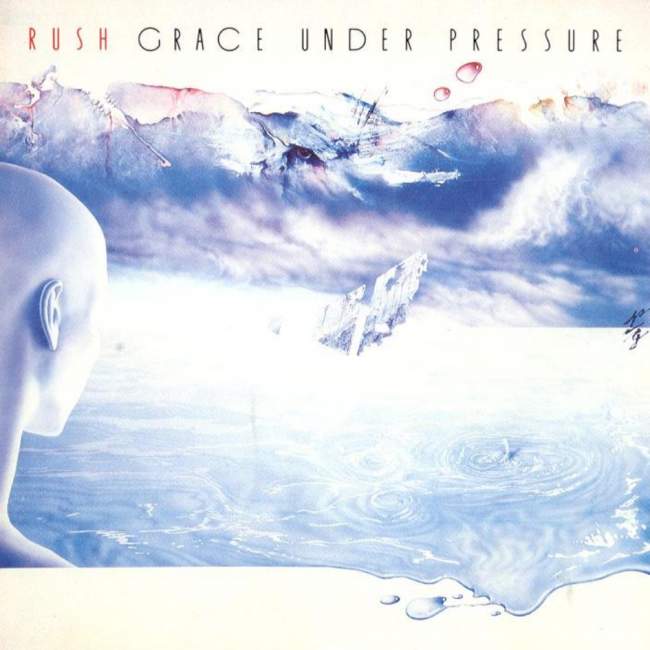
Rush, Grace Under Pressure.  This is not only my favorite Rush album, it was and remains my favorite album of 1984.  I’ve written about this elsewhere,  but it’s worth noting again that I think Rush perfectly captured the tensions of that year: the horrors of the gulags; the destruction of the environment; the loss of a friend; and so on.

I hear the echoes, I learned your love for life
I feel the way that you would

***

Thomas-Dolby-The-Flat-Earth-523101

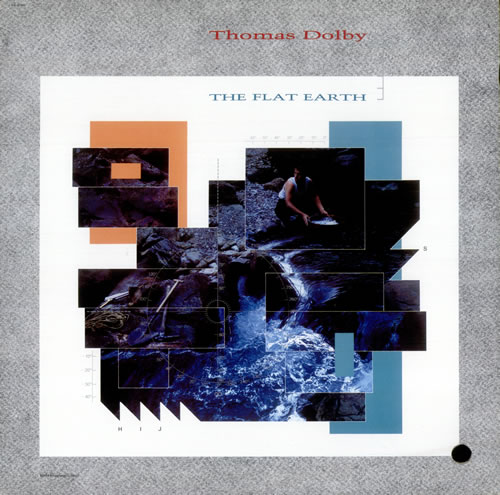
Thomas Dolby, The Flat Earth.  I’ve written about this album as well.  So brilliant.  As deep and as meaningful as Dolby’s first album was interesting and novel.

Suicide in the hills above old Hollywood
Is never gonna change the world

***

Ultravox_-_Lament

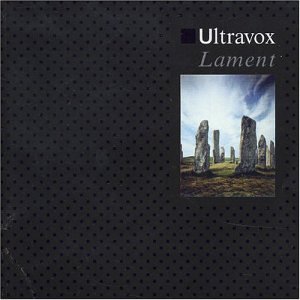
Ultravox, Lament.  My favorite Ultravox album?  Maybe.  As much as Rush captured the spirit of the year, so did Ultravox.  From the worry expressed in “White China” to the longing of “When the Time Comes,” Lament is a masterpiece.

Will you stand or fall, with your future in another’s hands
Will you stand or fall, when your life is not your own

***

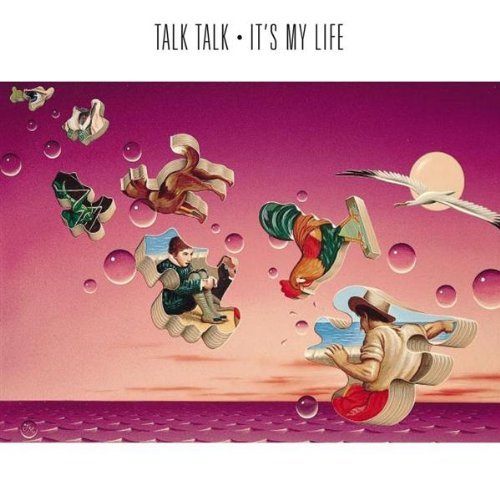
talk talk it's my lifeTalk Talk, It’s My Life.  While this is certainly not Talk Talk’s best album, it is quite good.  In particular, Hollis reveals much of his genius in songwriting, whatever the “new wave” trappings of the song.  Underneath whatever flesh the band gave the music, the lyrics cry out with a poetic lamentation of both confusion and hope.

The dice decide my fate, that’s a shame
In these trembling hands my faith
Tells me to react, I don’t care
Maybe it’s unkind if I should change
A feeling that we share, it’s a shame

***

Simple_Minds-Sparkle_In_The_Rain-Frontal

Simple Minds, Sparkle in the Rain.  Again, while this isn’t the best Simple Minds had to offer, it was the last great gasp of the band before entering into an overwhelming celebrity.  Kerr’s Catholicism especially reveals itself in songs such “Book of Brilliant Things” and “East at Easter.”

 I thank you for the shadows
It takes two or three to make company
I thank you for the lightning that shoots up and sparkles in the rain

BillyNews: Wishbone Ash Tour North America

Wishbone Ash 2014 photoNew London, CT – Wishbone Ash, one of the most influential guitar bands in the history of rock, returns to North America this Spring with brand new tunes from their upcoming release, Blue Horizon.
The group returns to these shores following last year’s annual tour through the the East, Midwest, Northwest and Western Canada, where they delighted fans with high-energy performances featuring a vast catalog spanning 45 continuous years of music-making.
The 2014 Spring tour has been nicknamed “The Blue Horizon Tour” to coincide with the March US release of Blue Horizon and celebrate the return of the band to areas not visited in many years.
I thought, why not ring the bell to see if our fans in the South and Southwest would come out and join the party,” says bandleader and founding member Andy Powell.
The first leg of the tour begins April 15 in Florida and winds south and west before heading northward through the Pacific West Coast and Canada.
We hope our long-lost fans will come check out what we’ve been doing, which has been continuously touring, recording and rehearsing,” said Powell. “The band has a fire in its belly, and we want to share that.”
Formed in 1969, Wishbone Ash has to its credit 24 original studio recordings, 10 live albums and four live DVDs along with a DVD rockumentary (“This is Wishbone Ash”). The band is led by founding member Andy Powell on guitar and vocals, trading licks with Finland’s guitar wizard Muddy Manninen. Bassist Bob Skeat, a 17-year veteran of the band and in-demand studio musician, sets the pace with Joe Crabtree, one of the best of Britain’s new breed of drummers whose performance credits include Pendragon and David Cross of King Crimson.
The band basically lives together year-round, so we have a very strong level of communication that translates in our performances and recordings,” says Powell.
Wishbone Ash’s new album, Blue Horizon (Solid Rockhouse Records), includes guest artist Pat McManus playing fiddle on two tracks. Fans will recall McManus made an appearance on 2011’s Elegant Stealth and also co-wrote one of the songs, “Can’t Go It Alone,” with Andy Powell. Blue Horizon features two songs written by Aynsley Powell (Powell’s son) and one by former Wishbone Ash guitarist Roger Filgate.
Elegant Stealth (ZYX Records) was enthusiastically received by fans and critics alike. Classic Rock Revisited’s Jeb Wright called it “One of the best albums in Wishbone Ash’s career.”
This band is like a fine wine that just keeps getting better with age and this is one of their strongest studio releases in years,” said Keith “MuzikMan” Hannaleck of MuzikReviews.com.
The songs are catchy, very technical, but there is a soul in what Wishbone Ash is doing!” said Mark Kadzielawa of 69 Faces of Rock.
Lynyrd Skynyrd cites Wishbone Ash as a primary influence on their style along with Thin Lizzy, Iron Maiden and, more recently, heavyweights like Opeth and some of the guitar-based Indie/Alternative bands. All have been transformed by the original, legendary twin-guitar approach of Wishbone Ash. There is no other rock band on the planet that has done more with the twin guitar concept than The Ash.
Longtime fans and new converts will find that Wishbone Ash offers an undeniable concert experience.
Tour dates and more information can be found at www.wishboneash.com
To download electronic press kit: www.wishboneash.com/epk
Like the band on Facebook: www.facebook.com/wishbone.ash.official
Wishbone Ash Publicity and Marketing: Kate Goldsmith – kate_goldsmith@wishboneash.com
Wishbone Ash Worldwide Publicity: Glass Onyon PR – PH: +1 828-350-8158 ,glassonyonpr@gmail.com
North American Booking: Steve Ozark, Ozark Talent (785)760-3143OzarkTalent@gmail.com

1994: A Pretty Good Year

Yesterday was one of those days where I felt like I did next to nothing but grade.  Freshmen midterms, upper-class midterms.  Midterms galore, and avalanches of blue books.  I also proofed a senior thesis.

Enough, Birzer!  Don’t bore the readers into madness. . . .

As I was calling it a day, a song from Pearl Jam’s Vitalogy came into my mind.  I have no idea why.  Sometimes, these things just happen.  And, the thought of the song led me to ask, when did that album come out.  As I looked it up, I realized how quickly 20 years had gone by.  I’m a historian, and I study memory, time, eternity.  But, this hit me.  “Last Exit” was 20 years old.  So, I did a quick search.  What else came out that year.  And, I came up quickly with this list of music that meant something to me (and still does) that came out that year.

Under the pink

Tori Amos, Under the Pink.  One of my favorite albums of all time.  So deadly in its perceptiveness of life.  So gloomy, so bouncy, so Tori.  “A pretty good year. . . .

Phish-Hoist-Frontal

Phish, Hoist.  I had the great privilege of meeting all of the guys of Phish in the spring of 1990.  They were the featured band at a campus event.  Amazingly, only about 20 of us came to watch them.  I was mesmerized.  These guys are a lot like Dave Matthews in terms of genre, but Phish is Monty Python to Matthew’s John Hughes.  Even after two decades, the lyrics of Hoist crack me up.  The music hasn’t stood up all that well.  But, still good.  The best song is the concluding “Demand.”

toward-the-within-4e9a078d6f126

Dead Can Dance, Toward the Within.  Seriously weird and gorgeous all at once.  In particular, “I Can See Now” and “American Dreaming” are two fantastic songs.

underthetableanddreaming

Dave Matthews Band, Under the Table and Dreaming.  When this album first appeared, I was rather blown away.  This struck me as a proper pop album.  Matthews has a good voice, and his lyrics can be quite infectious.  It doesn’t mean that much to me anymore, and I’m not sure I would do much to seek the album out.  But, still, “typical situation” remains a fine song.  Indeed, it’s one of the best of that decade.

1289832552_front

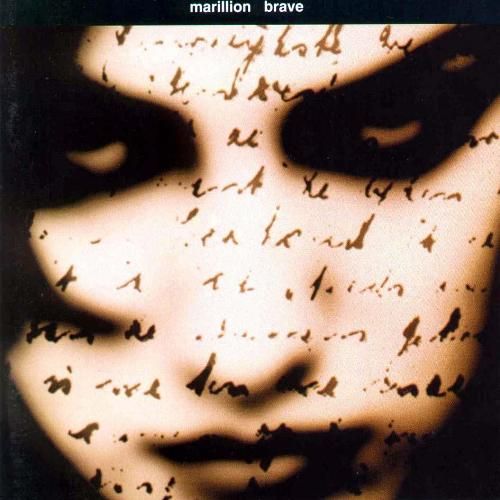
Marillion, Brave.  Another mind boggler.  I’ve written quite a bit about Brave elsewhere, and I plan to do so again.  But, sheesh, nothing captured the zeitgeist of the post-Cold War world more than this album did.  It could also be counted as one of the two of three albums that ushered in the third wave of prog.  Those bastards will find us another one!

220px-Lslalbum

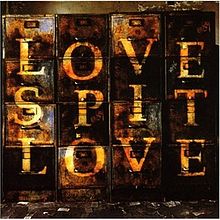
Love Spit Love, self titled.   I always liked the P-Furs, and this band was a worthy successor.  Sadly, I think almost everyone in the music business forgot this album even existed.  But, I’ve never stopped listening to it–even after two decades.  Butler has a voice that one either loves or hates.  I, for one, love it.  Though I risk a tongue lashing from Eric Perry, I regard this as one of the great rock-pop albums of the last fifty years.  Hooks, pauses, pounding drums, pauses, plaintive lyrics, wacky psychedelic keyboards, pauses, carnival-esque sound scapes, and still more pauses.  Phew. . . this is a masterful pop album.  Every single song is a wonder, but none more so than “Green” and  “St. Mary’s Gate.”  If these songs doesn’t bring a tear to your eye. . . nothing will.  If I had to compare this album to Amos’s Under the Pink and choose one over the other, I’m not sure I could.  When I feel imaginative and want to walk over grassy hills, I listen to Love Spit Love.  When I’m angry and feeling a bit like forcing some social justice down someone’s throat, I listen to Tori Amos.  In the end, though, I’d pick this one over Under the Pink.

So, in sum: 1994 was, as Tori Amos proclaimed, a pretty good year.

But, then, I thought of 1984.  Holy Schnikees.  More than pretty good, it was given to us on a silver salver.  But, that’s for another post.

Ben Allison, Lost in the Stars

ImageJazz at its best is about creating situations where its musicians, and sometimes its editors and producers, can perform a moment, a flash of form out of maelstroms of sound, its tinder a weird mix of blues, marching band music, and dime-turning improvisation.  It takes chops and intention to make this happen, and it doesn’t always work, or runs the risk of being admired simply for being difficult.  Perhaps because of this and the common belief that jazz’s golden era is behind it, it is a music that finds itself increasingly in the academy; cast out by pop culture for nearly half a century now, it has found solace and refuge in Deep Thought rather than in the visceral response that fed its early fires.  Ever the home of restless artistry, however, jazz does continue to flourish in its original state, an outsider, a dirty and punk-ish thing, much like its ugly, addle-brained cousin, rock and roll.  They make an uneasy pair, reminding each other of lost youth, which is why “jazz rock” in all its fusion can be a hateful muzak-y thing that is one’s reward for waiting for the doctor or being put on hold.

Or it can be the hands that lift us to ascension.  Which is why I’m writing this.

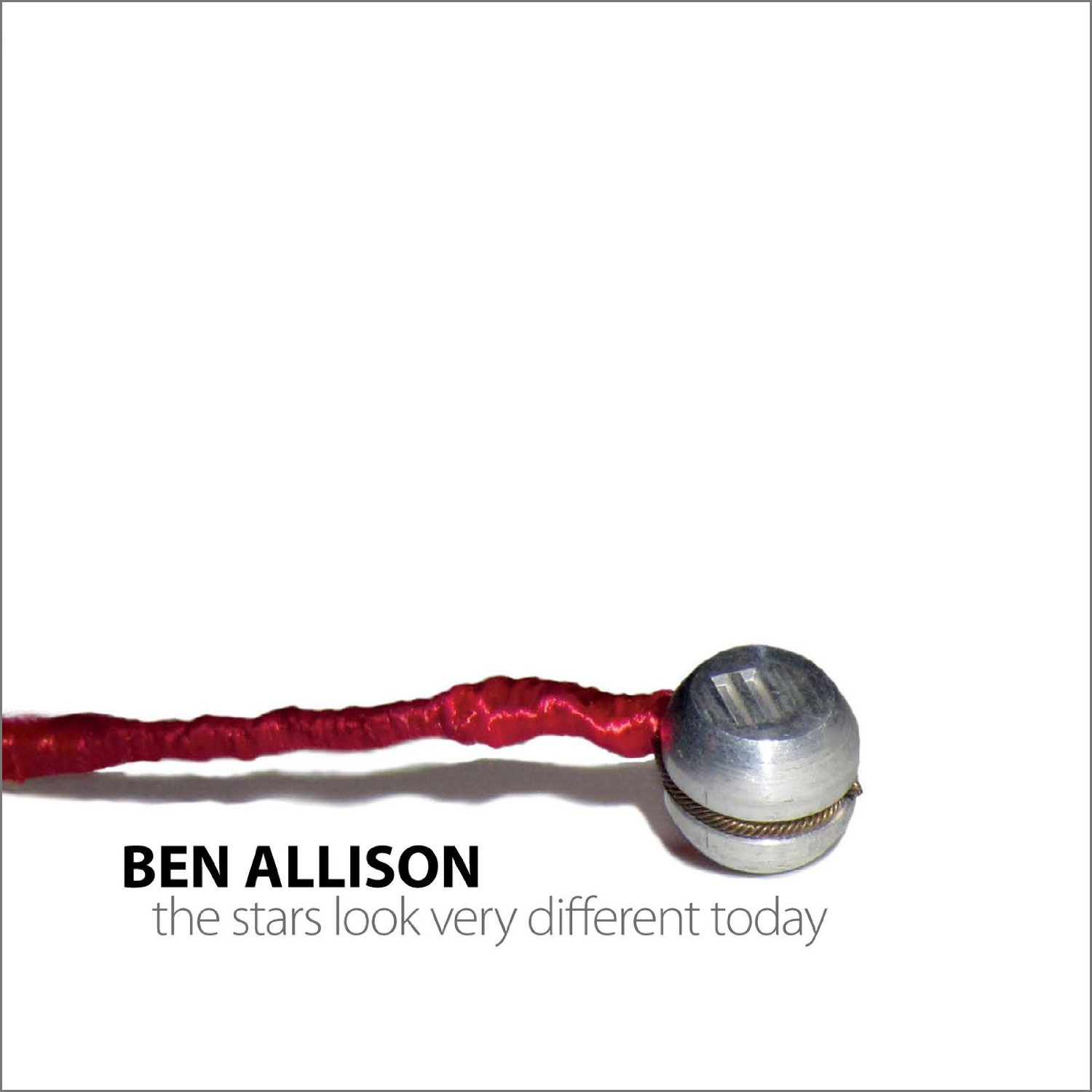
Ben Allison’s latest record, The Stars Look Very Different Today, continues the bassist’s journey into composing acoustic/electric jazz for a band that, consistently since 2006’s Cowboy Justice, has rocked behind the work of guitarist Steve Cardenas.  Cardenas is joined here by guitarist Brandon Seabrook, furthering I think Allison’s intention at broadening his palette, and this is not jazz guitar in the sense of Christian, Reinhardt, Farlow or Metheny.  Far more Sonny Sharrock or Marc Ribot, spacey and distorted, jagged, chunky and riffy.  Completed by the marvelously sympathetic drumming of Allison Miller, it is the territory of Tortoise and Pell Mell, and makes me believe that Ben Allison might be the guy, the one who is reviving jazz for those of us who never saw it as separate from other music, putting it in the context of seasoned cats while retaining a kind of indie band ethic, casting a wide and wild — even grungey — net, letting go.  Watch this band in action — jamming on “Roll Credits,” originally on Allison’s 2008 album Little Things Run the World, and you’ll get it:

Is he a jazz prophet? A rock and roll savior? I’ve been listening to Ben Allison’s work for a decade now, since Buzz (the one jazz album I can put on in a party and always expect the “Who IS this?” question — it is a fantastic, lovely record, and contains as its finale the only Beatles cover that to my mind ever worked), and to hear an artist progress as he has is a rare pleasure.  His early albums are wonderful examples of fairly straight post bop, but the long view is more bracing; it’s about an evolving musician and composer who challenges both jazz and rock form, as well as the artist’s role in creation, targeting in particular the shrugging status quo of social media’s — and its consumers’ — casual attitudes towards artists (see Ben’s blog for his search for justice for artists and their work, starting here: http://benallison.com/my-youtube-experiment/).

Contrary to what its title suggests, The Stars Look Very Different Today does not contain a David Bowie cover.  Instead it riffs on the themes in Space Oddity, and the space odyssey era that produced it and which it signified.  Like all Allison’s work, this is less constraint than starting point, so the album isn’t a sci-fi adventure as much as it is a feel, which is why we hear “The Ballad of Joe Buck,” a banjo-led homage to Jon Voigt’s character in Midnight Cowboy, tucked amidst the record’s more electrometal (!) explorations (“D.A.V.E.,” “Dr. Zaius,” “Neutron Star”).  The hallmark of all of Ben Allison’s records is present, intact, and sacred, and that’s a persistence towards beauty.  As a composer, his talent is an unafraid embrace of melody and a willingness to push at its seams and against its textures, to find the heart of the muse.  It’s why his music inhabits its own era.

Ben Allison’s no jazz prophet or rock and roll savior.  I think he’s going for something else entirely.

newspaperflyhunting offering first EP for free

Our friends in newspaperflyhunting are offering their first, 4-song EP from 2008 for free at bandcamp.

(from Facebook): “Our first EP – ‘Storytelling’ is out of print now and we’re planning no reissue, so we’ve decided to let you download it for free here:  http://newspaperflyhunting.bandcamp.com/album/storytelling-ep. You can also dowload our e-single ‘My Iceberg Soul’ for free athttp://newspaperflyhunting.bandcamp.com/album/my-iceberg-soul-single. We’re a cool and thoughtful band, aren’t we?”

It contains an early version of “The Third Sun,” which appears on their latest record, Iceberg Soul, which I reviewed here.  Remember, free on bandcamp also means you can give them money for it, so if the spirit moves you, then you too can be a freely giving patron of the arts.

Neil: First the Planning, Then the Magic

rvkeeper's avatarrush vault

NEP-2 “Magic happens, but it often requires planning.”

Neil shares his thoughts on touring and motorcycling this month with The BMW Owners News Magazine, called BMW ON, and he sees in motorcycling the perfect foil to drumming.

“For me, the riding time is stimulation,” he tells Don Argento for the piece “Backbeats & Backroads.” “It’s a different kind of concentration and certainly a different kind of responsibility [than drumming]. On stage I feel responsible to a similar degree, but a mistake isn’t going to kill me. There’s a big difference there. I find they complement each other. I notice that when I take a day off the bike, I feel the pain much worse. . . I feel like maybe the vibration is therapy in itself—just being on the bike.”

NEP-1Neil attributes his success to almost two decades of motorcycling between shows to the care he takes to do…

View original post 277 more words

Dennis DeYoung- Live in Joliet, IL

Dennis DeYoung knows how to put on a show. Last night was the best time I have had in a while, and being within the first ten rows was a definite bonus. I’m still waiting for my hearing to come back (it probably won’t, but who cares, it was worth it). Dennis DeYoung sounds as good today, at age 67, as he did in 1977 when The Grand Illusion was released, and I sincerely mean that. Not one single note was off key. I have seen both Ian Anderson and Kansas live within the last few years, and neither the great Anderson nor Steve Walsh can sing anywhere near what they could in the 70s. Not only was DeYoung at the top of his game, but his entire band was incredible as well. I would venture to say that they were as good or better than Styx. The lineup was Dennis DeYoung on lead vocals and keyboards, Tom Sharpe (of Mannheim Steamroller) on drums, August Zadra on lead vocals and lead guitar, Jimmy Leahey on guitar, John Blasucci on keyboards, Craig Carter on bass guitar, and Suzanne DeYoung (Dennis’ wife of 44 years!) on backing vocals. Wow. Dennis DeYoung has surrounded himself with some incredibly talented musicians, who were obviously enjoying the time of their lives on stage. I was exceedingly impressed by August Zadra’s vocal talent, for he sounds just like Tommy Shaw on songs like Renegade and Fooling Yourself (The Angry Young Man). Between Dennis and August, the band was able to play their most popular songs, even the ones where Dennis doesn’t sing lead. 

For the show itself, the band opened with none other than The Grand Illusion, which I believe to be one of the best songs to open a concert with. I forget the order of the rest of the songs, but throughout the concert they played Lady, Babe, Lorelei, Desert Moon (which wasn’t a Styx song, but according to DeYoung “should have been”), The Best of Times, Blue Collar Man, Fooling Yourself, Mr. Roboto, Show Me the Way, Too Much Time on My Hands, Suite Madame Blue, and finishing the show with Renegade and Come Sail Away. There are a couple of other songs that are slipping my mind, but this list was the majority of the show. The band started with a romp roaring rendition of Grand Illusion, and the show was never dull. In between many of the songs, Dennis DeYoung engaged the crowd by telling stories about himself and the band, cracking jokes about getting old, and cracking jokes at the audiences expense (he’s from the Chicago area so it’s all good). The best line of the night was when he asked who had seen him in concert before, and who was seeing him for the first time. When people yelled and cheered at the latter, he responded, “Where the hell have you been, I’m 67 years old for Christ’s sake?!” That kind of humor was displayed throughout the whole night, and it was great. I’ve been to concerts where the band never says anything, and I’ve been to concerts where the band doesn’t shut up. Dennis DeYoung had the perfect balance. All the humor just goes to show that at 67 years old, DeYoung is still touring and playing because he LOVES it. And the band members all loved it too. August Zadra looked like he was having more fun than any single person should be allowed to have in Joliet Illinois when it is 20 degrees F in the middle of March. And all that fun certainly found its way to the audience- the concert was a blast.

Something must also be said of the Rialto Square Theater in Joliet, IL. It is magnificently beautiful. It was built in the 1920s as a movie house, and it has been lovingly restored to its former glory. The interior is much like the Chicago Theater (in Chicago) or the Fox Theater in Detroit, just on a smaller scale. I look forward to seeing more shows there (B.B. King at the end of May. Giddy up).

In the end, Dennis DeYoung and his band could not have been better. The one complaint I had about the show was the absence of Pieces of Eight, and the presence of Mr. Roboto (the one Styx song I could really do without). So, if you find that Dennis DeYoung is coming to a theater near you, drop everything, call the theater, buy tickets, and get ready for an awesome show. These really are The Best of Times.

5-2011

http://www.dennisdeyoung.com

Haken – English Music’s Finest Hour?

manofmuchmetal's avatar

A while back now, I posted a blog whereby I listed my favourite 5 albums of all time. If you are interested, it can be found here. In that post, I found it impossible to keep my list to 5 and therefore rather autonomously added a sixth. The sixth album was the newest of the list having only been released in 2011. However, such is the impact that it has made on me and the wider progressive music community, it had to make my list.

Enough of being cryptic, I am of course referring to ‘Visions’, the sophomore album by UK-based progressive rock/metal band Haken.

Haken band

In the last few days, Haken have announced full details of their impending third album, entitled ‘The Mountain’, due out on one of my favourite record labels, Inside Out. In light of this and the fact that my excitement and anticipation has reached fever…

View original post 1,109 more words

Neil Peart: The Most Endangered Species

Some songs just scream “let me reach perfection.”  

Every note, every pause, every ebb, every swell, every silence, and every word just gravitates towards its right place.  It’s as though the cardinal and Platonic virtue of Justice becomes manifest, real, and tangible in this world.

There probably are very few perfect tracks—tracks that never grow old and never cease to cause wonder.  From the 70s and 80s the following immediately spring to mind as candidates: The Battle of Evermore, In Memory of Elizabeth Reed, Close to the Edge, In Your Eyes, Thick as a Brick, Cinema Show, Take a Chance with Me, Echoes, and The Killing Moon.

Of all of these great possibilities from those two wild and wholly decades, the one song that comes closest to attaining perfection, such as perfection is understood in this rather bent world, is Natural Science, the final track on Rush’s Permanent Waves.

Well, at least in my humble opinion.  Ok, not so humble of an opinion.

Rush PW cover

Unobjectively Rushed

In a number of previous posts here at progarchy and elsewhere, I’ve talked about my love for all things Rush, perhaps even putting myself in a position in which I simply can’t be objective about them.  Frankly, at age 46, I’m tired of trying to be objective about the things I love.  In fact, I want to be subjective.  Really, really subjective.  I want to spend the rest of my life promoting things of excellence and beauty, and not wasting my time analyzing what I don’t like.  I want to explore how various forms of art have shaped my own life, how they’ve guided me, how they’ve given me strength and comfort, and how best to pass on such nuggets of insight to my children and my students.

So, purely subjectively: I’ve always thought of Neil Peart as the older brother I never had—the cool kid with all the great ideas and, equally important, the guy with all of the good friends.  Most importantly, however, Peart has always had the courage of his convictions.  What an appealing combination of qualities.  Creativity, intelligence, integrity and perserverance.

As much as any person in my life I’ve never met (from Plato to St. Augustine to Friedrich Hayek to T.S. Eliot to J.R.R. Tolkien), Peart has profoundly shaped my view of the world.  I’ve known this since the spring of 1981, when, as a seventh grader, I first encountered Moving Pictures.

And, coming from a very (happily) nerdy and intellectual family which encouraged a love of music as much as it encouraged a love of reading and writing, I started writing my own first little essays on Rush while still in high school.

Perhaps my professors in college shouldn’t have allowed me to do this or encouraged me, but I did get to help lead a discussion on the Adventures of Huckleberry Finn, using the song “Tom Sawyer” to explain the significance of the end of Twain’s novel.  The end of that complex novel tries to examine the motivations of Huck and Tom as they decided whether or not to free Jim from his enslavement.  Their humanity tells them one thing, but their cultural upbringing tells them another.

I also, as I’ve mentioned before, wrote my major paper for my sophomore liberal-arts core course examining the philosophy of Neil Peart, using nothing but the lyrics of Grace Under Pressure.  Sadly, I don’t have a copy of that paper any longer, though I might attempt to reconstruct it at some point.

Rush 1980 by Todd Caudle

Natural Science

I can identify almost every single moment in my post-1980 life with a Rush album—noting when I first encountered that album, how it shaped my own thoughts, life, and actions, and what else was going on in my life at the same time.  Certainly, Rush has served as the soundtrack of my own existence for over three decades.  Strangely, the one album in Rush’s entire catalogue I can’t place perfectly—at least when I first encountered it—is Permanent Waves.  I’m guessing that I first heard it shortly after Spring 1981, but I’m not positive.  It just seems to have always been “there.”  There, meaning my life.  This is impossible, of course, as I was 11 when the album first came out, but it does seem to have an uncertain yet certain position in my memory.

I still regard the entire album as a work of artistic intensity and creative genius.  There’s a confidence that exists in every note of this album that had not yet appeared in Rush’s music.  Don’t get me wrong—up to Permanent Waves, Rush had always possessed audacity and integrity.  But, they’d not possessed this level of confidence before.  Songs such as Anthem—so openly declaring confidence—reveal youthful anxiety.  But, the personal aspects of Permanent Waves, such as in “Free Will,” carry with them a rather clear maturity.

To my mind, none of the songs carry as much confidence, however, as does Natural Science.  Originally, as is well known by Rush fans, Peart had hoped to write a saga, epic, or edda about the Court of King Arthur and especially about the character of Sir Gawain.

I had also been working on making a song out of a medieval epic from King Arthur’s time, called ‘Sir Gawain and the Green Knight’. It was a real story written around the 14th century, and I was trying to transform it while retaining it’s original form and style. Eventually it came to seem too awkwardly out of place with the other material we were working on, so we decided to shelve that project for the time being…with the departure of ‘Gawain’ we had left ourselves nothing with which to replace him!…something new began to take shape. It was the product of a whole host of unconnected experiences, books, images, thoughts, feelings, observations, and confirmed principles, that somehow took the form of ‘Natural Science’…forged from some bits from ‘Gawain’, some instrumental ideas that were still unused, and some parts newly-written. – Neil Peart, “Personal Waves, The Story Of An Album” [taken from: http://www.2112.net/powerwindows/main/RushInspirations.htm]

Though I don’t know this for certain, I assume that Peart was still in a bit of a myth/fantasy/Tolkien stage as he considered the lyrics for this song.  Best known by the world for his fiction, J.R.R. Tolkien was in his professional life the leading scholar of the medieval literature of Beowulf, Sir Gawain, and others.  In the late 1970s, Tolkien’s publisher attempted to capitalize on success of The Silmarillion by re-publishing almost everything Tolkien had ever written, including his academic work, repackaged for a popular audience.

Many of the ideas in Natural Science, at least musically, also came from a “mass of ideas called Uncle Tounouse” [Popoff, CONTENTS UNDER PRESSURE, 76; http://rushvault.com/2011/02/05/natural-science/; and http://www.2112.net/powerwindows/main/PeWlyrics.htm%5D

At 9 minutes, 17 seconds, “Natural Science” consists of three parts: Tide Pools; Hyperspace; and Permanent Waves.  These might have also have been titled, less poetically, Nature; Science; and Integrity.

In Part I, “Tide Pools,” Peart offers a vision of community.  Each person is born into a myriad of factors.  As the great Irishman, Edmund Burke, once said before Parliament: “Dark and inscrutable are the ways in which we come into the world.”  Each person is born into a family, an environment, a language, a set of morality, a religious system (even if atheist), etc.  Each of these factors shapes and delimits our very beings, and we must—from our earliest infancy—learn to move from one realm into another.  From, for example, our family to our school.  We must transition, we must bridge, we must understand, and we must integrate our experiences.  Such a world of communities brings us security, but it might also allow for an insular kind of inbreeding and sloth.  Looking at all of the connections and interactions, though, overwhelms us.

Wheels within wheels in a spiral array,

A pattern so grand and complex,

Time after time we lose sight of the way,

Our causes can’t see their effects.

Part II, “Hyperspace,” reveals how insane an integrated, uniform culture might before.  Peart’s vision of conformity here is not of a communist or fascist variety, but instead of a capitalist, consumerist variety.  It might metastasize uncontrollably.

A mechanized world out of hand.

Computerized clinic

For superior cynics

Who dance to a synthetic band.

In their own image,

Their world is fashion.

No wonder they don’t understand.

Part III, “Permanent Waves,” brings the story and listener to a stoic resignation, a realization that one must somehow and in some way recognize the limits as well as the advantages of an insular natural community and a hyper collectivist consumerism, brought together by (I presume) colossal bureaucracies of corporations, educational systems, and governments.

The true man, whatever the odds against him, will survive.

The most endangered species,

The honest man,

Will still survive annihilation.

Forming a world

State of integrity,

Sensitive, open and strong.

These are quintessentially Peartian themes, and he will return to them again and again in his lyrics.  “Subdivisions,” for example, offers almost all of the same sentiments, but it does so in lyrics that are much more direct.  The lyrics for Natural Science remain far more poetic than intellectual, far more artistic than philosophical.  And yet, they are poetic, intellectual, artistic, and philosophical all at once.

They are. . . well, Peartian. Very Peartian.
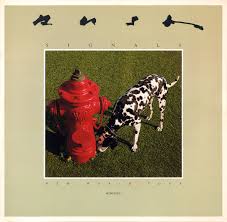
Signals Cover

Words of Friendship and Wisdom

In the summer of 1987, having completed my first year of college, I returned back to my hometown of Hutchinson, Kansas.  It was one of the best summers of my life, as all of my high school friends were home, and I had the best job possible—I was the overnight DJ at a local radio station.  In my mind, this really was the last year of my youth.  I didn’t realize that at the time, but I do now.  It was also, though, a summer of immense upheaval.  The following school year, I wouldn’t be returning to the University of Notre Dame.  Instead, I moved to Innsbruck, Austria, for a year.  At home, a number of domestic crises would lead to a divorce.  As much as I loved my mom, I needed to get away from the home front quickly.  All of this added up to a summer of craziness, me being a little more wild than I should have been.

Trying to get me back on track, one of my two closest college friends sent me a letter toward the end of that summer.  Inside, written on rice paper, neatly folded, were the lyrics to Natural Science, with a note of encouragement.

I carried that piece of folded rice paper with me—tucked in my wallet—for about two decades. It’s very hard to put into words what Peart’s thoughts in “Natural Science” did for me.  “Natural Science” did for me in my 20s and 30s, what “Subdivisions” had done for me at 14.  They gave me no easy answers or platitudes, but honesty and courage.  They got me through many, many tough times, never failing to remind me that right has absolutely nothing to do with winning or losing.  Right, instead, has to do with being right.  Nothing more, nothing less.  We do the right thing not for advantage, but merely and simply because it’s right.  It’s not subjective.  It’s either right, or it’s not.  It’s not partially right or almost right.  It’s either right, or it’s not.

Sometimes, we just need a big brother or a friend to remind us of these things.

Neil Peart, moral philosopher, “sensitive, open, and strong.”


*******

For more from Progarchy on Rush

The first Rush album reviewed by Craig Breaden

https://progarchy.com/2014/02/22/rushs-first/

A review of A Farewell to Kings by Kevin McCormick

https://progarchy.com/2013/01/21/rush-a-farewell-to-hemispheres-part-i/

A review of Power Windows by Brad Birzer

https://progarchy.com/2013/12/14/power-windows-rush-and-excellence-against-conformity/

Kevin Williams on Clockwork Angels Tour

https://progarchy.com/2013/11/24/rushs-clockwork-angels-tour-straddles-the-80s-and-the-now/

Brad Birzer on Clockwork Angels Tour

https://progarchy.com/2013/11/27/rush-2-0-clockwork-angels-tour-2013-review/

Erik Heter on Clockwork Angels Tour Concert in Texas

https://progarchy.com/2013/04/24/you-can-do-a-lot-in-a-lifetime-if-you-dont-burn-out-too-fast-rush-april-23-2013-at-the-frank-erwin-center-austin-texas/

A review of Vapor Trails Remixed by Birzer

https://progarchy.com/2013/10/05/resignated-joy-rush-and-vapor-trails-2013/

A review of Grace Under Pressure by Birzer

https://progarchy.com/2013/02/21/wind-blown-notes-rush-and-grace-under-pressure/

RETRORUSHgallery