Glass Hammer Nails Down a Masterpiece

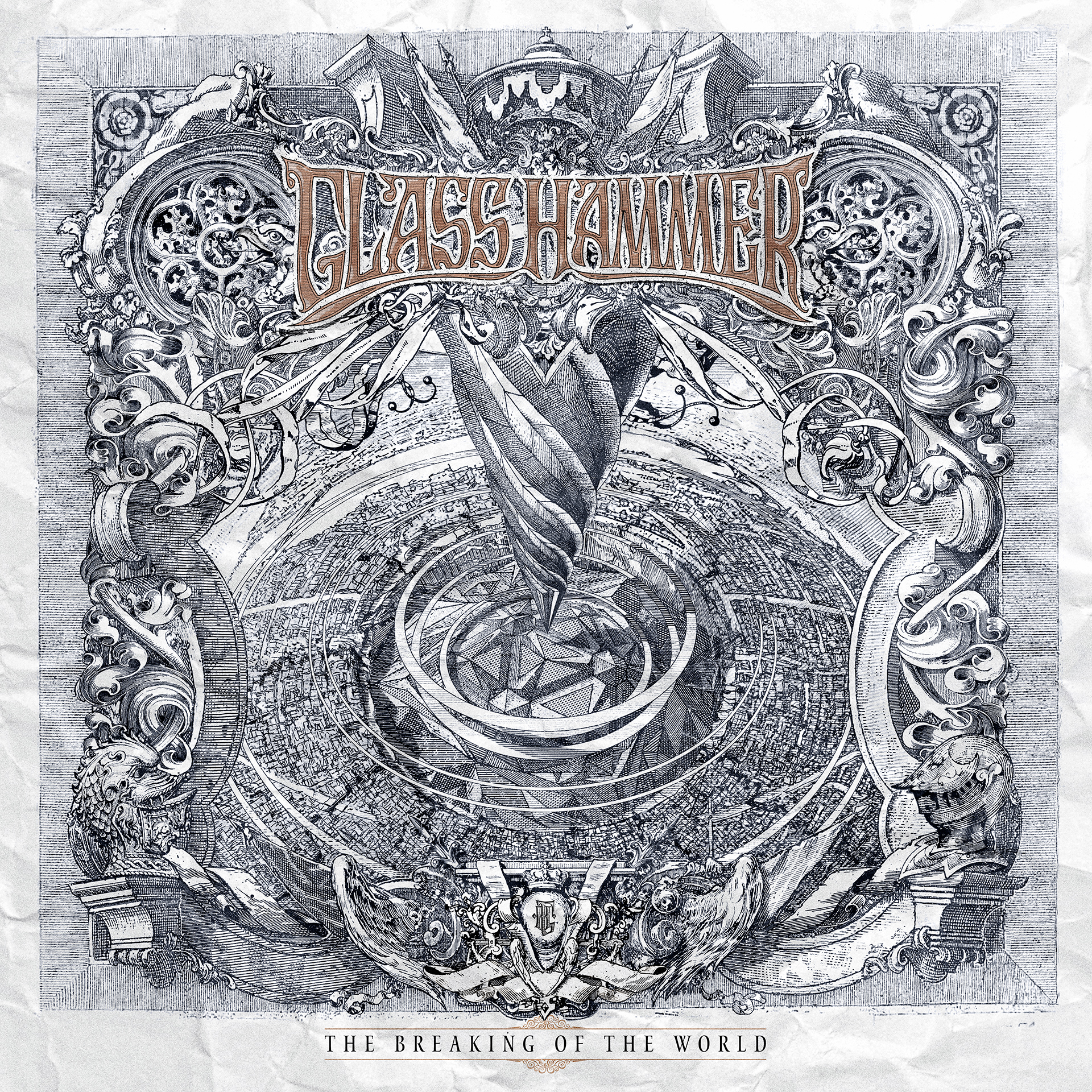
The cover art is as gorgeous as the music.  Now, THIS is a real album cover.

In a recent post, I (belatedly) sang the praises of Glass Hammer’s Ode To Echo. As good as that album is, their latest release, The Breaking Of The World, is even better. Every detail demonstrates this group’s striving for excellence: the beautiful cover reminiscent of Albrecht Durer, the individual photos of the band members, the layout of the lyrics in the booklet, the lyrics themselves, the MUSIC. Glass Hammer exemplifies the definition of arête more than any artist currently active.

From the opening blast of Mythopoeia to the closing bars of Nothing, Everything, there is not a wasted note. The creative fire that gave birth to Ode To Echo has not abated one bit, and one can only hope they continue on this extraordinary run of inspiration.

Highlights? There are too many to list them all, but Mythopoeia is the track I keep returning to. A tribute to J. R. R. Tolkien, it is a paean to divine inspiration that matches its ambition. Veering from some of the hardest rock they’ve ever done to marvelous acoustic sections, this is eight and half minutes of sheer bliss. And how about a shout-out to guitarist Kamran Alan Shikoh! He is masterful on both electric and acoustic instruments.

I also have to mention the incredible work of Steve Babb. Very few bassists can take the lead in a melody while continuing to provide the rock-solid foundation necessary to propel a band. Babb makes it look easy; he is one of the most inventive bassists I’ve ever heard.

Finally, we must recognize the enormous contribution Carl Groves makes. In my opinion, he is the best male vocalist Glass Hammer has ever had, and his lyrics are delightful. Bandwagon skewers the hypocrisy of our age of social media:

“We care!” Isn’t that what you said from your ocean-front home?

I know it’s got to make you feel so much nicer.

Groves’ clever use of paradox in Nothing, Everything would make G. K. Chesterton proud.  In a lament on the brevity of human life and humanity’s short memory, he sings,

We are nothing

A small imperfection on the flip side of a grain of salt

We are everything

The light that unthreads all our webs of doubt

It’s been said that Glass Hammer is heavily influenced by the sound of classic Yes. They are light-years beyond being influenced by any group’s sound. They have forged their own unique sound, and it is brimming with unquenchable confidence. May they never abandon their quest for perfection.

Robin Armstrong Tells It Like It Is

Robin Armstrong’s (Cosmograf) latest post on his website is a must-read defense of Steven Wilson’s hard-won popularity. Here’s an excerpt:

Well here’s the rub, you, like me and thousands upon thousands of people making music in the world today are entitled to precisely nothing.  We have no right to be heard, no right to earn a living from our art and certainly no right to success.  For the mere mortals, these things have to be earned, slogged at, and when some little successes arrive, appreciate them.

The truth is, that making a record now has never been easier.  Making a record that people will listen to got harder, much harder.   When someone makes a record that people are falling over themselves to listen to, in a genre of music that’s similar to yours, be bloody inspired, I know I am…

Read the whole thing here.

Eric Gillette: The Best A Prog Fan Can Get

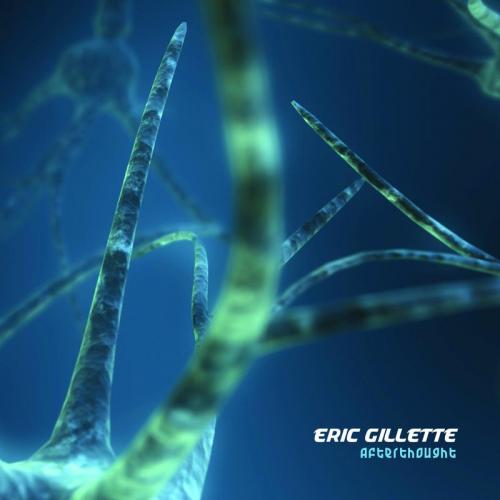
Gillette's first album.
Gillette’s first album.

As Brad Birzer mentioned in another post, Eric Gillette is the lead guitarist for The Neal Morse Band, having contributed to their album The Grand Experiment and currently touring with them. Before he hooked up with Neal, Eric released a self-produced album, Afterthought, which certainly deserves to be recognized in its own right for the excellent slab of prog it is.

It begins with three very heavy guitar-based instrumentals, “Afterthought”, “Change”, and “You’re Full Of It”. Fans of Joe Satriani and Eric Johnson will eat these up, as they showcase Eric’s phenomenal guitar skills. Eric’s gift is his ever-present melodicism, regardless of how crunching the riffs are underneath.

The fourth track, “Lost” (featuring long-time Neal Morse collaborator Randy George on bass), is something very special. A 22 minute epic that begins with a fast Crimson-like guitar intro soon settles into a keyboard section reminiscent of classic Todd Rundgren while Eric sings, “Can you hear me? Is there anyone out there? I could use a helping hand…I will find my way; I won’t be afraid. I can feel you next to me.” After three blistering instrumentals, it is a startling and inspiring moment to hear his pure and strong vocals. “Lost” is a tremendous track, with not a note wasted during its entire length.

“Rising” is another instrumental, this time featuring fellow NMB member Bill Hubauer on keyboards. “Bring You Down” is another heavy track with excellent vocals. It brings to mind Nine Inch Nails’ Trent Reznor at his best. Unlike NIN, though, Gillete’s lyrics are more positive: “You don’t have to face it alone/Don’t let it bring you down.”

“Out Of Control” is another guitar showcase that would give Jeff Beck a run for his money. As a matter of fact, if you miss those classic Jeff Beck/Jan Hammer jams, then “Stagger”, “Blue Sky” and “Miles Away” will satisfy. The latter song, in particular, is simply gorgeous, and I am sure it was no accident that the title suggests Miles Davis’ balladry.

The album closes on a gentle note with a piano-based acoustic tour de force, “Above The Sky”. Eric’s multitracked harmonies sing a song of hope and redemption: “Darkness turns to light/Now you can finally see what this all meant/ No more questions why/The answer’s right in front of you, so open your eyes/Above the sky”.

It is an extraordinary achievement for a young musician to produce a debut album of such high quality. It’s no surprise Neal Morse included him in his new band – Eric Gillette is the real deal, and we will be hearing a lot more from him in the years to come.

An Esoteric Recordings Review Special

One of the best independent labels currently operating within the progressive and beyond genre Esoteric recordings are not only experts at reissuing and remastering, having been behind the impressive Hawkwind and Man catalogue reissues, but they are also adept at finding new talents like Schnauser, Sanguine Hum & Hi-Fiction Science amongst many others, a couple of which are featured here.

This is review round up of a selection of the fine records that they released or reissued last year.

 Fish on Friday

Fish on Friday: Godspeed
EANTCD1037

Before cracking on with the re-issues I thought I would have a look at one of the new records Esoteric released last year on their Antenna label.
Hope to artists like Matt Stevens, Schnauser, Van der Graaf Generator and Andy Jackson amongst many others, their Antenna label is the home to new prog bands that they discover and promote.
Fish on Friday is one of those new talents, a Belgian band who released their third album Godspeed through the Esoteric Antenna label last autumn.
Featuring the bass & vocal talents of Nick Beggs, the band, William Beckers on keyboards/percussion, Frank Van Bogaert keyboards/vocals/additional guitars, Marty Townsend electric/ acoustic guitars and Marcus Weymaere on drums and percussion are a superb musical unit, very talented and inventive songwriters.
It’s the measure of how good the band is, by the company they keep, and Fish on Friday are very good with guests of the calibre of Theo Travis, who enhances the beautiful Ghost Song, with it’s stunning musical work, and some fantastic bass work from Beggs underpinning the majestic 6 minute epic as Travis goes to work with his sublime sax work, and haunting interludes, as well as Theo’s flute work on the brilliant Calling Planet Home.
The stand out track on the album for me is Radio, with it’s wonderful couplet ‘And the Buggles Killed the Radio Star’ and it’s beautifully evocative lyrics and the driving rock, it would be a shoe in for a single, as it’s got catchy lyrics, a great sound, and it leads almost seamlessly into 8 minutes Sanctuary, with its great female backing vocals and some beautiful guitar work.
In fact the musical interplay between the band is sublime on this album, and the songwriting is superb, as they blend seamless rock into atmospheric prog and back into catchy hooks effortlessly, and with some vocal harmonies and musical moments to die for, this is a fantastic record.
If you love new progressive music, and lets face it who doesn’t? Then this is for you, a superb piece of music, mixing the finest songwriting, the best performances and utilising some superb guest musicians.
Another fantastic find from Esoteric.

The Gasoline Band

The Gasoline Band
Esoteric ECLEC2467

This is a mighty record, the only record from the British based, ten piece blues, jazz rock band The Gasoline Band, formed mostly from American servicemen who had been stationed in Germany and led by keyboard player Fred Schwartz whose vision helped meld the Gasoline Band into the unique outfit that they were.
Originally released back in 1972 on the Cube Records label, it didn’t shift many copies, and whilst the band were popular live, as is often the way, particularly with larger bands, they drifted apart and that was it. Which is an almighty shame, as there is so much power on this record, and when you think of a traditional band with guitar, drums, bass, keyboards and the excellent vocals of Brian Bevan, then you add in two sax players, two trumpet players, a trombone and a conga player. The sound combinations suddenly explode into life.
From the astonishing opening of The Bitch, with it’s guitar soloing, it’s stabbing brass and jazz rock influences, it packs more ideas into it’s punchy 5 minutes than some bands ever manage in a career.
The German influence can be heard in the driving Ein Grosses, and the music is a blend of progressive blues and jazz, creating a unique sound, with such power and a taut groove that you can’t help but get drawn in and tap your feet, as the guitars and brass duel throughout. Tracks like the magnificent Shrapnel and the groove driven World What You Gonna Do, showcase a mighty band at the peak of the powers.
It’s such a shame that they fell apart after this impressive debut, as it would have been fascinating to hear where they took their muse next.
If you love blues and brass driven rock then this is a rare old treat for you.
A sublime record.

Bill Nelson

Bill Nelson: After the Satellite Sings
Esoteric/Cocteau COCD1010

Another classic from the expansive back catalogue of enigmatic musician Bill Nelson makes its welcome reappearance here on CD.
Originally recorded and released in 1995, this sees the ever-restless muse of Bill Nelson taking his unique writing style, and working with the then contemporary sound of drum and bass. The result is an interesting hybrid of an album that mixes nelsons languid vocals, his exemplorary guitar playing and some well performed and well mixed beats and spoken word, almost beat poetry, almost rap to create an explosion of sound.
On tracks like Streamliner with its great keyboard work and vocals about the American dream his semi spoken word raps sound a little like Neil Tennant, whilst there are elements of music concrete throughout the album, with the church bells on Memory Babe, with its driving beat and pounding keyboard work.
With its mixture of sci-fi sounds, and retro artwork it invokes the past and the future, with Nelsons songwriting as sharp as ever, and his guitar work scything through the sounds. According to the sleeve notes this was an influence on David Bowies later foray into Drum and Bass on Earthling, and the two albums have similarities. However Nelson was here first, and this is another exciting release from an artist not content to rest on his laurels, from the work he did with Be Bop Deluxe in the 1970’s to his ambient soundscapes, Bill Nelson is a restless intelligent talent and impossible to pigeonhole.

Panic Room

Panic Room: Satellite
Esoteric Antenna EANTCD21033

Originally released back in 2010 this is a remastered and expanded edition of Prog Award winners Panic Rooms 2nd album, the last to feature their original line up.
Much more song orientated than their debut, Visionary Position.
With the line up being the remnants of live powerhouse Karnataka, and with the sublime vocals of Anne-Marie Helder, this is an amazing album.
From the opening Freedom to Breathe, with its fantastic guitar work from Paul Davies, and the keyboard interplay with Jonathan Edwards is great, particularly as they create the soundscapes for Anne-Maries voice to soar. With tracks like I am a Cat, Muse and the epic title track, this was a definite statement of intent from Panic Room and is strong today as it was when first issued.
The musicianship is top quality on here, whilst the vocals and lyrics are fantastic, there are no weak links in this musical chain, and listening to this you can see why Panic Room are one of the hottest live bands around.

Jack Bruce Monk Jack Bruce Somethin Jack bruce Cities

Jack Bruce: Somethin’ Els
Cities of the Heart
Monkjack

Esoteric Records ECLEC2427
ECLEC22428
ECLEC2429

A trio of remastered albums from one of the most influential blues bassists and rock legends the late great Jack Bruce come from the mid 1990’s, when following a period of personal turbulence he was starting to get his career back on track, and his addictions dealt with.
1993’s Somethin’ Els, sees him reunited with his old Cream sparring partner Eric Clapton on a large number of the tracks, and the old magic is still there throughout, older, and wiser, but they still spark off each other, like great musical partners often do, and age or time hasn’t diminished their impact. Surrounding himself with a band of including Stuart Eliot on drums, Peter Weihe and Clem Clempson on rhythm guitar and with guest appearances from artists like Dick Heckstall-Smith who adds his unique sax sound to the wonderful G.B Dawn Blues, and the wonderful vocals of Maggie Reilly who provides a beautiful foil for Jack on the superb Ships in the Night, and the brilliant Peaces of the East. This album is a tour de force for Jack, his vocals and playing are on top form, and his tight band bounce off each other and there is a real spark here. A fine return to form.
1994’s double live Cities of the Heart album is a musical celebration of Jacks career, and features an absolute whose who of musicians, from a reunion with Ginger Baker, with Gary Moore playing the Clapton role on some fantastic versions of NSU, Willie Dixon’s Spoonful, Chester Burnett’s Sitting on Top of the World and the wonderful Politician (lets not forget that shortly afterwards this trio released the hard to find, but worth hunting BBM album) whilst Maggie Reilly adds her vocals to Ships in the Night, whilst other guests like Dick Heckstall-Smith and Simon Phillips add their magic. As a pause and a celebration of Jacks career so far as he celebrated his 50th birthday, this is a great live album, and a wonderful retrospective covering his career to date, the closing finale of Sunshine of Your Love is as brilliant as you would imagine.
1995’s Monkjack is a different approach to the Blues from the previous albums, instead of being the full on blues/rock attack Bruce is known for, this showcases his piano and vocal performances in partnership with Bernie Worrall on the wonderful sound of the Hammond Organ, and is as exciting as you can imagine.
Sometimes less is more, and here, with piano and organ there is nowhere to hide, and Bruce’s voice is amazing, not just singing the material, but actually living it. Revisiting older material like Folk Song and Weird of Hermiston in radically different arrangements, as well as great interpretation of the Willie Dixon song Third Degree, this features some great new material like Shouldn’t We and Tightrope, and with Bernie Worralls Hammond mixing with Jacks piano, this is the sort of sound you expect to hear in late night blues clubs or jazz bars, and is the forerunner to the sort of thing Hugh Laurie is currently doing. This is a fantastic record and cuts right to the heart and soul of Jack Bruce, and out of the three remastered gems on offer, is definitely my favourite. Sadly Jack died last year not so long after the release of these records, so not only do they stand as a strong part of a great mans musical catalogue, but also as a testament to his brilliance. RIP Jack.

Kongos

John Kongos: Kongos

Esoteric ECLEC2466

If all you know of John Kongos is his hit single Togoloshe Man being used in Life on Mars, or his other hit He’s Gonna Step on You Again being borrowed and sampled by popular beat combo The Happy Mondays for their big hit Step On, then you really need to get yourself a copy of this fantastic reissue of his second album, originally released on the Fly records label in 1971.
Born in Johannesburg, John Kongos moved to the UK in the mid sixties, and was on the periphery of something big until he was signed to the Fly label, with label mates like Marc Bolan. Mixing in rhythms from his native South Africa, and produced by Gus Dudgeon and engineered by Roy Thomas Baker (who later helped shape Queens unique sound) and utilising session musicians like Ray Cooper and Caleb Quaye who had worked so successfully with Elton John, and Mike Moran on keys and piano, they crafted a perfect album, which seems to have slipped behind the sofa of popular culture.
From the opening driving beat of Togoloshe Man to the beautifully elegiac Tomorrow I’ll go, via the wonderful Jubilee Cloud, Johns vocals are superb, his songwriting exemplorary, and his musical accompaniment is spot on every time. He can mix and match moods from ballads to driving pieces like Try to touch Just one, with nods to his native South African beats and rhythms throughout (over 20 years before Paul Simon). With songs that seem spiritual like Come on Down Jesus, or the bonus Higher than Gods Hat, there is a deep intellectual spirituality at work here, along with a songwriter on top of his game, and rounding the original album off with the rousing He’s Gonna Step on You Again (which is far better than the Happy Mondays version) is a touch of genius.
Fleshing out this immaculate package are 8 single a and b-sides, plus the single edit of Togoloshe Man, which is enough to create another album, and tracks like Ride the Lightening and Great White Lady are superb, and it’s a mystery to me after listening to this album why it isn’t held in as high a regard as other early 70’s singer/songwriter albums like Elton’s Madman Across the Water, George Harrison’s Living in the Material World or Richard Thompson’s Henry the Human Fly, as it has great emotion, real power and some of the finest tracks you’ll hear this side of a George Harrison album.
I hope this reissue reminds the world of what a fantastic record Kongos is.

Quantum Jump Barracuda

Quantum Jump: Quantum Jump
Barracuda
Esoteric ECLEC2472
Esoteric ECLEC22477

Formed in Farmyard Studios in 1974, Quantum Jump coalesced around Rupert Hine (vocals and keyboards) former Caravan bassist and vocalist John G Perry, guitarist Mark Warner and drummer Trevor Morais.
This debut album newly remastered and repackaged to the usual high standards by Esoteric Records is a fine blend of jazz, rock and hints of prog sneaking in their as well.
Underpinned by the fine songwriting sensibilities of the band, and their innate musical dexterity, Quantum Jump is an overlooked classic, with some fantastic pieces on here, the great opening Captain Boogaloo, the brilliant No American Starship, and the closing 7 minutes plus of Something at the Bottom of the Sea, which showcases all of the bands versatility, from Warners fluid guitar, Perry’s subtle and intense bass playing, the dextrous drumming from Morais (reminiscent of Billy Cobham at points) and Hines superb keyboard style all brought together to create a magnificent album.
The bands most famous song The Lone Ranger is here as well, in its original album form, and the 1979 remix which hit the top 5. Originally released in 1976 it was named Tony Blackburns record of the week, and was starting to sneak into the top 30, when the BBC banned it due to its drug references and homoerotic lyrical content. Then due to Kenny Everett using its distinctive opening on his various radio and TV shows, the song was remixed and released where it achieved its full potential. Also included are the single b side Drift, and several remixes from 1979’s compilation album Mixing, which subtly updated the jazz fusion sound of Quantum Jump with some more sophisticated synthesisers.
Come 1977 and Quantum Jump reconvened for the follow up to their debut, the brilliant Barracuda, beautifully reissued here in a double disc set including a complete BBC Radio One in concert from 1977, previously unreleased on CD and the mopping up of the tracks from the Mixing compilation.
Down to a core trio of Hine, Perry & Morais, this picks up where the debut left off, with a similar vibe on the record, and of interest to Caravan fans Geoffrey Richardson adding viola, guitar and flute amongst others, whilst Elkie Brooks adds her familiar vocals to the record.
The air of sophistication surrounds Barracuda, and it’s an incongruous record for the time (1976) it was recorded in, of course punks impact is often overstated (after all Disco was bigger than punk, and one of the biggest selling bands of the period were the immaculately produced ELO) however it undoubtedly had an impact on Quantum Jump who weren’t big enough to not be caught up in punks year zero approach.
However the loss at the time is our gain, as what we have here is an immaculately produced, intelligently written album, with some fantastic use of brass and strings, as well as fantastic lyrics from Martin Hall & Jeanette Obstoj, which by dint of having a huge element of care over the production means it sounds timeless and hasn’t dated anywhere near as much as some of the original punk sounds.
The vocal harmonies, particularly on the opener Don’t Look Now, with it’s smooth blend of funk and rock are superb, whilst the strings on The Séance (too Spooky) are hauntingly perfect and the fine blend of funk and rock that is the Quantum Jump trademark is sublime.
The title track features some great keyboard work from Hine, whilst throughout the record the drums and bass from Morais and Perry is superb as they bounce off each other and work as the lynch pins to the record.
Bonus tracks include a sublime single version of Summer in the City, which is a fantastic cover.
Disc 2 is taken up by the BBC Radio One live in concert, where Roye Albrighton from Nektar joins the Quantum Jump trio on guitar and Geoffrey Richardson renewing his working relationship with John G Perry.
The concert is a fantastic testament to Quantum Jumps live prowess and features a great mix of material from both albums, with Barracuda well featured by a blistering version of the title track, Don’t Look Now, Starbright Park and a great version of The Séance (Too Spooky) whilst their signature track The Lone Ranger gets a great live workout and tracks like No American Starship (Looking for the Next World) and Over Rio show their versatility and great songwriting skills.
These two albums beautifully remastered and with some great liner notes tell the complete Quantum Jump history, and are a fantastic couple of records with a real groove and some stunning musicianship.
If you’ve never heard of Quantum Jump then now is the time you discovered them.

Cale

John Cale & Terry Riley: Church of Anthrax
Esoteric ECLEC2448

Fresh from the Velvet Underground CBS Masterworks signed John Cale to a two-album deal, one was his debut solo album, the rather wonderful Vintage Violence, and the other was this, his collaboration with underground minimalist composing genius Terry Riley (whose A Rainbow in Curved Air & In C were both highly acclaimed)
Taking Cales compositional style and mixing it with Rileys was an inspired idea, as the two men both worked in similar vein, and their styles are complimentary. Despite Riley leaving the project at mixing stage, there is still a lot of Terry Riley within this record.
It makes it’s overdue reappearance here on CD, newly remastered and with incisive notes from Sid Smith, and at points throughout the record it sounds so far ahead of it’s time it is unbelievable.
The opening title track with it’s pulsating and clashing keyboards and insinuating metronomic riffs is an opening statement of intent, and takes Cales musicality out of the Velvet underground, and into a new playground, and with both men operating in a similar vein it is hard to tell where Cale ends and Riley begins as it’s 9 minutes plus musical power sounds like a proto-krautrock epic.
The Hall of Mirrors in the Palace of Versailles, like most of the tracks, are all built round improvisations, and its wonderful to hear them pushing each other out there, as Cale and Riley trade riffs and piano sounds.
The Soul of Patrick Lee, the only track on here with vocals provided by Adam Miller, is the only song provided by John Cale, it foreshadows Cales solo career, with its superb lyrics and great musical performance, and could have easily fallen onto Cales albums like Vintage Violence or Paris, 1919.
Ides of March is another superb musical collaboration, with the stereo phasing being put to good use, and the insistent piano and percussion counterpoint working wonderfully together.
Closing with the short guitar driven The Protégé, which of all the compositions on here sounds closet to Cales work with the Velvet Underground than any of the more minimalist stylings of Riley, the piano is still to the fore and the sound here is taut and powerful, finishing off an immense record in style.
This is a fantastic collaboration between two intelligent and visionary musicians and composers and it is fantastic that it is now available again, providing the missing link between John Cales Velvet Underground work and his impressive and inventive solo career.

Mantwang Manmoon

Man: The Twang Dynasty
Call Down the Moon
Esoteric ECLEC32455
Esoteric ECLEC2456

Continuing their remastering and definitive edition reissue of the Man catalogue, and to prepare us for the new Man album later on in the year, Esoteric have reissued two of Mans late period studio albums, 1992’s Twang Dynasty & 1995’s Call Down the Moon.
The Twang Dynasty was their first studio album in 16 years, and is expanded here with the addition of the complete Live at Glastonbury show they did in 1994 over two extra discs.
The band, at this point Martin Ace, Micky Jones, Deke Leonard and John Weathers had been touring constantly since a 1983 reformation, and ended up as the Manbands longest serving incarnation, and in terms of getting down to recording a new album, a 9 year wait is par for the course for the Manband.
However the twang Dynasty was well worth the wait, and mixing their twin guitar sound and vocals, the album is a fantastic piece of rock, opening with a powerful trio of songs A feather on the Scales of Justice, Mad on Her and Jumpin’ Like a Kangaroo, all of which remained as staples in their live set (listening to the versions of Mad on Her and A Feather on the Scales of Justice on Disc 2 & 3 of this set respectively shows why)
The songwriting and performance here is top notch, with the band on top form, but then as they had been touring together for so longer they were on fine form.
Tracks like The Chinese Cut, the rather splendid Out of the Darkness and the closing rocker The Wings of Mercury (which again made it into the live set) are sublime, and show that despite the gap since the last record Man hadn’t lost their Mojo or power.
Discs 2 & 3 come from surprisingly enough their first performance at Glastonbury, and alongside the Twang tracks, it features some blinding performances of tracks from their 70’s heyday, versions of Many are called but few get/the Strom, Bananas and Romain prove that they still cut it as an almighty live band, and provide a fantastic companion to one of the great comeback albums of all time.
1995’s Call Down the Moon was the second album in a row from the same line-up, and the confidence from The Twang Dynasty is obvious to hear, as this album follows on from where that left off, with some sublime musical moments, building on their past the ten minute title track developed from an improvised riff used during their classic song C’mon, which was so good they built on it, and the title track was born seamlessly blending the old and the new, and creating a contemporary Man classic as they went along, yet this was still a departure from the classic sound as Deke Leonard focused more on keyboards than guitar, and so some of the twin guitar sound that was classic Man had snuck away. The improvisational way of writing worked on here, as this is an incredibly great album, with some fantastic tracks on here, like the wonderful piano driven Blackout, the funky Heaven & Hell with some classic Deke Leonard lyrics, and has some fantastic musical interplay between the whole band.
With some classic Man tracks like The Girl is trouble and the original album closer Burn my Workin’ Clothes which gives John Weathers a chance to sing and has some fab slide guitar all over it. The two bonus tracks are the original version of Dream Away and an unfinished piece known as Micky Buys a Round, which show the genesis of the work on the album.
These two remasters are a fine return to musical form for the Manband, and make a welcome return to CD, sounding as great as Man ever did, and are worth getting hold of.

Sanciousforest Sancioustrans

David Sancious: Forest of Feelings
David Sancious & Tone: Transformation (The speed of Love)

Esoteric ECLEC2457
Esoteric ECLEC2458

Take the prodigious keyboard talent David Sancious, who had been a lynchpin up til 1974 in Bruce Springsteens E Street Band, add his old sparring partner drummer Ernest Carter from the E-Street band and Gerald Carboy on bass, add the production skills of one of the greatest drummers around Billy Cobham, who also contributes to Suite Cassandra, The Forest of Feelings & Further into the Forest of Feelings, and let them loose into the studio, and what do you get?
You get Forest of Feelings, originally unleashed on an unsuspecting world back in 1975, bear in mind when you listen to this, that the immensely talented Sancious was only 21 when this was made, and it blows your mind that a record this assured, this well performed, and this damn fantastic was his debut solo release.
Cobham’s production was a masterstroke, as it allows each performer to breathe, each note to resonate, and this falls somewhere between the prog work of keyboard players like Dave Greenslade, and the more full on jazz of Cobham, and is a million light years away from the working man rock of Springsteen.
From the opening Suite Cassandra, with its mix of classical, jazz, and progressive themes all building and flitting from one mood to the other. With Cobham producing of course there’s going to be comparisons with the Mahavishnu Orchestra, which is inevitable, but Sancious is very much his own composer. One of the stand out pieces on here is Sancious obvious reworking of Dixie, into a far more contemporary piece with nods towards the race relations movement, and turning it into a darker piece.
With some superb performances throughout from Carter & Carboy, this is a true power trio at work, particularly on some of the moments within title track as Carters drumming is relentless, and ably complimenting Sancious stunning playing.
Nicely rounded out with the bonus track Promise of Light, which offers a melodic contrast to what, has gone before, this is a stunning debut from Sancious, laying down a marker as to what will follow.
What did follow was 1976’s Transformation (The Speed of Love) where the band was now called Tone, and Sancious was keen to progress his sound from the debut album, also the band had been working together as tight unit, so there is a lot of confidence and power about the band on this ambitious second album.
Produced by another musical alumni Bruce Botnik, who also worked with the Doors, the progressive influence is also shown here, on the title track, which takes up the whole of what would have been side two, but more on that later.
Coming to the fore on this album alongside his keyboard skills is Sancious ferocious guitar playing, particularly on the tremendous opener Piktors Metamorphosis, whilst the 8 minute plus majesty of Sky Church Hymn #9 is inspired by Jimi Hendrix, and features some astonishing slide guitar, and the work of Carter & Carboy cannot be praised enough, their style and tone works so well with Sancious, and live I can imagine they would have blown anyone away.
The fourth track on the album, the 18 minute epic Transformation (The speed of love) manages to distil all the disparate influences and styles that Sancious and Tone were so adept in into one long piece of music, that is effortless in its beauty and majesty and the intensity of the piece, with the trio all bouncing off each other, is an art form in itself. The way that Sancious works the keyboards and drives the piece along is wonderful to hear whilst the drumming of Carter and the subtle insinuating bass of Carboy is a joy to hear.
When the power trio works well it is indisputably the finest combination in music, and here we have a jazz/prog/rock power trio at the peak of their game, giving us some phenomenal music.
These two albums are an absolute must own for any fan of early to mid 70’s keyboard work.

All these releases can be found at http://www.esotericrecordings.com

Peaceful Harbor by Flying Colors

And, this is probably album cover of 2014.  Hugh Syme.
And, this is probably album cover of 2014. Hugh Syme.

I don’t want to get in the habit of quoting myself (a sure sign of descent either into senility or sociopathism), but I wrote this about a month ago:

In a world of true justice, Flying Colors would be blaring from every car stereo tuned to album rock radio across North America.  Not only does SECOND NATURE have the single best album cover of the year, but the album is absolutely riveting.  It’s not quite prog, though, as with the best of AOR, it contains great prog elements.  Everything fits perfectly here.  The lyrics are solid, the vocals are superior.  The final two songs—Peaceful Harbor and Cosmic Symphony (sort of a gospel prog)—alone are worth the entire album.  But, the entire album is, thankfully, worth the entire album.  For me, every time I listen to this album, I’m transported back to 1985.  This would have sounded great next to Power Windows.  And, unquestionably, Peaceful Harbor would easily outdo almost any contemporary worship song should churches look for some good new music.

It’s not strong enough.  The more I listen to this wonderful album, the more I realize just how very prog and how very good it is.  I think the first album–which I admire and listen to frequently (it’s also my oldest son’s favorite album, which doesn’t hurt!)–tainted my view on this new one too much.  That is, I was too willing to dismiss SECOND NATURE as AOR.  Really, really, really good AOR, but still AOR.

May I please revise what I wrote so definitively in 2014?  Please?  SECOND NATURE is way too complicated and deep for AOR.

For some reason, I’ve spent the last three days with SECOND NATURE as my sound track, especially as I prepare for the new semester.  On Tuesday, I had the grand privilege of meeting a Facebook friend, Geddy Lee Israel.  We had a wonderful time, but that’s a different story.  As we said goodbye to one another under very sunny but crisp Colorado skies, we started talking about Flying Colors.  When i told him I thought it was the best AOR album of the year, he corrected me–no, it’s prog. Straight up prog.  He was right.

Now, I know that labels reek, but Geddy’s comment got me to thinking.  What it allowed was for me to see this album for what it probably is rather than what I’d wanted or I’d assumed it would be.

Whether you already like the album or not, I’d encourage you to listen to it again–but, this time, with headphones on and the lyrics in front of you.   Imagine a deeply spiritual Neil Peart or an equally reasonable Kansas–you might come close to the lyrics of Flying Colors.  I really had no idea how beautifully written these lyrics are until my brief goodbye with Geddy.  Holy Moses, these are gorgeous in every way.  Deep, yet ethereal.  Truly poetic.

I hope I’m not violating copyright, but let me just offer this.  This is the best song on the album, Peaceful Harbor.

And, here are the lyrics.

Born into the wind
It makes its way
To the lost and the hollow
Life begins again
Sometimes we lead
Sometimes we follow
Where we do not know
No sky can hold
No end, no border
The wind will fill the sails
And push you through to peaceful harbor
Love, like Heaven’s wind
No eye can see
How it blows in the darkness
Fear may freeze our steps
Loss and regret, every scar turning scarlet
Help to set your course
Through sightless days and violent waters
Love will fill your sails
And bring you through, to peaceful harbor
Chase this rising wind
anchor released
No want of landing
All in deep despair
Come feel the air
In its full finale
And yes, the chase is on
I’ll look beyond
With the bedlam behind me
And i embrace the sky
My soul will cry
May your wind ever find me

Source: Flying Colors – Peaceful Harbor Lyrics | MetroLyrics

Like “Dust in the Wind,” this is the kind of song that makes me wonder if. . . just if. . . a song really could change the world.

May peace reign in this world of sorrows.

Reflections on Transatlantic’s “KaLIVEascope”

TA4liveA kaleidoscope takes a mishmash of glass bits, pieces of plastic and paper, and combines them into symmetric images. Random elements are jumbled together and reflected into scenes of beautiful harmony and balance. Just like the kaleidoscope’s mirrors create beauty from seemingly incompatible pieces of broken glass, Transatlantic takes four exceedingly talented and strong personalities and combines them in ways that generate some of the most beautiful and powerful music today.

Transatlantic has just released a mammoth live set from their European tour in support of their recent album, Kaleidoscope, and it’s a scorcher. There are several different editions, and the smallest consists of 3 CDs/1 DVD (which is a steal at 23 USD). The CDs document their more than 3-hour-long show at Tilburg, The Netherlands, while the DVD covers their Cologne, Germany concert. The Tilburg show is really something special – Transatlantic and Neal Morse (as a solo artist) have performed there many times, and an obvious bond exists between the band and the audience. The DVD is very nice, because throughout the concert here is a huge screen behind the band with continually evolving kaleidoscopic/fractal patterns that enhance the viewing experience.

Transatlantic have grown tremendously as a group. For the uninitiated, it is a “super-group”, with members coming from some of the most successful prog acts ever: Neal Morse (Spock’s Beard, Flying Colors, solo), Mike Portnoy (Dream Theater, Winery Dogs, Adrenaline Mob, Flying Colors, etc., etc.), Roine Stolt (The Flower Kings), and Pete Trewavas (Marillion). Their first couple of albums, SMPTe and Bridge Across Forever were great, but one got the sense that the various members brought their own songs to the projects, and not a lot of collaboration happened. The musical interaction on their third album, The Whirlwind, was excellent, but the music had a sense of familiarity that was getting worrisome.

Fortunately, on Kaleidoscope, Transatlantic have truly come into their own as a group. It’s hard to tell where one member’s influence ends and another’s begins; they have established their own unique sound, and when all the parts lock together and take off, there isn’t another band that can touch them. The DVD documenting the making of Kaleidoscope confirms the collaborative nature of the songs – I had assumed that Neal Morse was the primary creative force, but surprisingly, Mike Portnoy comes across as the main driver of the composing and arranging.

For KaLIVEascope, the boys are supported by multi-instrumentalist Ted Leonard, which frees up Roine to concentrate on his gorgeous lead guitar lines. Mike Portnoy has to be the hardest-working drummer in show business – he is indefatigable through hours and hours of incredibly complex and lengthy songs. Neal Morse is the primary lead vocalist, and in both the Tilburg and Cologne shows he again demonstrates his uncanny ability to reach out and connect with the audience. Finally, both the CD and DVD mixes give bassist Pete Trewavas the prominence he deserves. I’m a sucker for energetic and melodic basslines, and Pete does not disappoint.

Both shows open with “Into the Blue”, off Kaleidoscope. Then comes “My New World” from their debut. Their performance of this song is a revelation, as Roine sounds like a fire’s been lit under him. It’s now one of my favorite songs from their extensive catalog. “Shine” follows, which is one of their most straightforward “pop” songs. There’s a 30 – minute “Whirlwind” medley, then Neal sings a brief “Beyond The Sun” alone. They immediately segue into the epic “Kaleidoscope” which is performed exceptionally well on the Cologne DVD. A highlight is a jazzy section where Neal and Roine bring to mind the classic live work of Jan Hammer and Jeff Beck.

At this point, most bands would call it a night and leave the stage utterly spent, but there’s much more music in store. Neal and Roine perform a beautiful duet on acoustic and electric guitars. Next is the perennial crowd singalong, “We All Need Some Light”, and then the show proper concludes with an electrifying performance of “Black As The Sky”. I’ve seen all of Transatalantic’s live DVDs, and on this song they are at the absolute top of their game. (Video is below)

For encores, the Tilburg and Cologne setlists diverge: Tilburg includes “Nights in White Satin”, and Focus’ “Sylvia/Hocus Pocus”, featuring Thys van Leer himself(!). The evening finally concludes with a rousing medley of “All Of The Above/Stranger In Your Soul”. The Cologne show skips the covers, and goes straight to the medley.

Transatlantic is not a super-group; they are a cohesive unit. They are far greater than the sum of their parts, and it shows in these performances. Even earlier material sounds new; they’ve achieved that mysterious ability of gifted musicians to anticipate each others’ next move, and push themselves to higher and higher levels.


Demon – A Love Story (or: My late, yet very timely review of Gazpacho’s latest offering)

The Demon Part:

Most of the reviews of Gazpacho’s latest album, Demon, are already in (including Progarchy’s own reviews). Mine here … well, it’s a little late, considering the album came out in spring and we are demoncovernow on solidly in autumn. Nevertheless, I am going to pat myself on the back and say I’ve made quite an improvement for timeliness for Gazpacho reviews. You see, in June of 2013, I reviewed Tick Tock on this same site. Considering that album came out in 2009, my review was approximately four years after the fact. Now, I’ve whittled my Gazpacho review time down to mere months from release – an order of magnitude improvement! Note: you are not allowed to mention that I’ve never reviewed Missa Atropos or March of Ghosts, capisce?

So, about Demon itself? Haunting is one word that can be used to describe this album. Strange is another one. This album … it’s out there. At times it gives me the creeps, the willies, and the heeby-jeebies. You know what else? It’s damn good, brimming with excellence on par with the other great albums they have released beginning with 2007’s Night.

Demon takes us on a journey through the ramblings of a disturbed individual descending into outright madness. The idea behind the album originates from the writings of an unknown apartment dweller in Prague, with the lyrics based on these ramblings. I’m not going to pretend to have any deep understanding of these lyrics; I don’t. I’ve read through them numerous times and followed them through a few listens of this album. Sure, I have my own ideas as to various possible interpretations. But I do not grok them at this point.

Musically, the album has a very experimental feel to it, or at least more so than the typical Gazpacho album. Sonically, it has a sound quite different than any of their previous works, and yet it is unmistakably Gazpacho.

The album kicks off with I’ve Been Walking. The introduction is light, with a sound effect and some soft vocals before ever so slightly picking up the pace. Throughout the track, slower, mellower, minor key parts alternate with occasional louder, wall of sound bursts. Piano, choral arrangements, mellotron, and the smooth vocals of Jan Henrik Ohme all take their turns as the feature instrument. The track closes with some melancholy solo violin which has become a trademark of Gazpacho. This track is extremely effective in setting the mood for the album as a whole.

Next up is The Wizard of Altai Mountain.   This song is almost whimsical sounding in it’s first of two very distinctive parts. At about the halfway point, the music takes a noticeable change of direction, to a folky accordion that reminds me of some traditional, Eastern European music. It fills me with the urge to drink vodka – no small feat with me being much more of a whisky/beer man. My mind’s eye can picture someone dancing the kazachoc, a traditional Slavic fast dance in which the dancer squats and alternatively kicks out his legs (yes, I had to look that up).

I’ve Been Walking (Part 2) follows, with a much different mood, one of a resigned sadness. Jan-Henrik Ohme’s vocals are excellent throughout the album, but they are especially great on this track. They are particularly effective in expressing the melancholy realization that comes with shattered illusions:

There’s no Altai Mountain

No eternal chord

Lost a diamond

No El Dorado

There is no reward

In the background of this piece a remote, old 78 plays to great effect. The mood of the track shifts a little bit toward the end, maybe as to signal some acceptance that there is “no El Dorado.” It’s one of the lightest parts of the album, along with the first half of The Wizard of Altai Mountain.

The final track, Death Room, is where the strangeness of this album comes to a head. The track announces itself with subterranean rumblings and electronic buzzing before settling into three note mandolin figure which produces some unbelievable tension that is occasionally punctuated by short saws of dissonant violin. This is one of the creepiest, strangest parts of an album full of them, and I can imagine Edgar Allan Poe feeling right at home listening to this as he spun out another macabre tale. Percussion soon joins and pulls the music along, until the piano announces itself and changes the mood with a sudden subtlety that nobody can pull of like Gazpacho. From there, the music progresses through a series of different moods, all suggestive of the unknown apartment dweller losing grip on his sanity. The track and the album proper ends with some very strange percussion that suggests the grip has finally been lost.

Earlier I offered a lame explanation in an attempt to justify the tardiness of my review, considering the album’s springtime release. But let’s get to the real reason. Currently, it’s Autumn – October to be specific. And this album is absolutely made for fall listening. The name Demon conjures up images of that most famous of October celebrations, Halloween. The CD case is a fall color, not unlike one you might see on a dying leave that is going out in one last blaze of colorful glory. And the music … well, it’s hard to define, but it’s definitely fall music. Recently, on Brad’s Facebook page, I saw 6pqvnqf00n6jghv9p3c3o39sj6544affaa7f81ahim shout his love for the month of October, describing it as “purgatorial twilight.” I cannot think of a better light in which to listen to this album. Not the dark, certainly not the bright light of mid-day sun. But late in a fall day, when the last gasps of sunlight collide with the spectacular fall colors that both marvel our sight but also portend the cold grayness of winter is approaching? There could not possibly be a better time to listen to Demon.

If you are one of those lucky souls that lives in an area with a noticeable change of seasons, this is the time you need to get out this album and give it another listen (or a first listen if you haven’t heard it yet). Put the CD in your car’s player, grab your iPod, whatever. Just make sure you are outside toward the end of the day in the light described above … and immerse yourself in the beautiful madness that is Demon.


The Love Story Part:

It’s a little over two years now since I heard my first Gazpacho album, Night to be specific. Since that time, I’ve worked my way forward through their catalog, listening to and owning everything right up through Demon. While I still haven’t perused any of their pre-Night catalog, I’ve definitely heard enough to have seriously fallen in love with the music of this incredible band.

Describing the music of Gazpacho to someone who has never heard it is a bit of a challenge. In my review of Tick Tock, I described them subtle and meticulous. While those adjectives certainly ring true, they only convey a small part of the story. Another time recently, while introducing someone to Gazpacho, I described them as a cross between Pink Floyd and late-era Talk Talk. That also conveys part of the story, but by no means does it in full. On another prog site I occasionally visit, I have seen them described as crossover prog … I still have no idea what that means. And I’ve seen a number of other descriptions of Gazpacho, many of which give part of the picture, but none that quite give the whole. It’s not like describing a band such as Iron Maiden as heavy metal. That description gives you a pretty good idea of what they are about, at least in a musical sense. With Gazpacho, giving a two or three word description is never going to be sufficient.

In fact, even describing them as being progressive can be problematic. Don’t get me wrong, I would classify Gazpacho unequivocally as being prog. But they are unlike any other band in the genre.

With so much of the prog to which I listened on my initial discovery in the late 1970’s – Yes, ELP, Rush, Jethro Tull – there were always virtuoso musicians setting off instrumental fireworks. Gazpacho seems to have turned this ethic completely on its head. You don’t hear long, flashy guitar or keyboard solos, the pyrotechnic drums with a beat that is both discernable and just out of reach, and so on. Much of Gazpacho’s music is built in some very simple riffs. And yet as a testament to their supreme skill and artistry, these simple riffs are combined and arranged into a much greater whole, one of dizzying complexity that gets hidden ever so slightly below a veneer of simplicity. Using a sports metaphor, much of progressive rock could be analogized to professional football or basketball – an obvious complexity accompanied with dazzling theatrics. Gazpacho on the other hand would be more like professional baseball – a simple, subtle game on the surface with a world of complexity underneath for those willing to dig deeper.

Architecturally, their songs defy any conventional structure, unfolding instead with a brilliant logic that becomes apparent by the time you’ve reached the end. It all adds up to a mixture that is challenging to grasp, but easy to love – and one that is progressive rock at it’s absolute, boundary smashing best.gazpacho-demon-cover2-2014

It’s when I survey the current prog landscape that it really hits me, the incredible brilliance of this band. Myself and others on this site have written much about how blessed us fans are in the current age of prog. I loved how the proggers of the 1970s pushed the envelope of rock music to new artistic heights. And yet in what may be the ultimate compliment the previous generation, the best prog bands of today are showing us how their prog ancestors were only scratching the surface. Bands such as Riverside, Porcupine Tree and their leader, Steven Wilson, The Tangent, Big Big Train, and so on – all have taken prog in various directions previously unimagined. So to has Gazpacho. But more than all of these bands, Gazpacho, at least for me, is the most difficult to describe in words. And what really makes that so is this – they are simply the most unique and original sounding band in a golden age of prog that has produced many unique and original sounds. Is it any wonder I’ve fallen so in love with these guys?

Terminal Degree – The Middle Of Nowhen

“What if…?” is a qTerminal Degreeuestion that is asked often in progressive rock and metal, sometimes to original and interesting results.  Terminal Degree asked “What if we made a metal album using violins instead of guitars?

Bet you didn’t see that coming.

What if Paganini played lead for a progressive-metal band? What if Heifetz played Carnegie Hall with metal drums and bass? What if we dual-tracked the violin and let it shred over pummeling bass and drums?

What if.

Wonder no more. “The Middle Of Nowhen” is an instrumental album of intense, heavy songs written and performed by a power trio of drums, bass, and violin.


Stanley Chepaitis – acoustic and 5-string electric violins
Nathan Santos – 6-string bass
Mike Barnett – drums

Where guitars usually rule, the violin seriously rocks. This album featured a virtuoso performance from Stanley Chepaitis and a granite-solid back-line of Nathan Santos’ bass and Mike Barnett’s drums. Want to hear where classical music meets metal? This is it. The production is clean and clear, the drums punchy and driving, the bass heavy and steady and the violin playing technical, mixed-genre melody and solos.

Here’s a quick rundown of most of the tracks on the album:

Resisting A Rest
Ha ha! (I’m a sucker for paronomasic song titles). And indeed they do. Virtuoso violin parts, both rhythm and lead, propel this song. Tense lines, too – with a foot on the gas, but not at all frenetic. This is a great first track for the album. We know what we’re in for, here. And, like it says on the wrapper, no rests to be found.

Deep Phreeze.
More melodic than the first track, but easily as loud, powerful, and articulated. Is there some 1970s melodic prog sensibility here, perhaps? It’s hard to resist the comparisons to Kansas, but this is much more energetic, intense, and heavy than that.

The songs are composed to lead from one statement to the next fairly quickly – no lingering on a repeated phrase or progression. The songs get to the point, and develop the themes and ideas before returning to the original statement, or mood. Very classical compositional forms are at work here – and the songs stay interesting throughout.

Fool To A King
Hey, medieval! Parallel fifths and pagentry. But if you’re looking for ren-faire background dross, keep looking. This is the road-trip continuing to bring the heavy – if Ye Minstral In The Gallery could shred, this is what he’d sound like before rocking out through the middle of the song. I’m hearing a shreddy Jethro Tull, ELO kind of thing going on here.

Onward and Inward.
The first musically contemplative section so far on the album. The violin brings the sound into classical territory immediately, but the group brings it back to a complex ballad within the first minute. By the first third of the song, the mood picks up, and things return to the intensity found on the previous tracks. We’re on a journey now. The violin never loses it’s virtuoso thread, and keeps ahead of the back-line that’s relentlessly steaming forward. There is plenty of melody here, and it’s well balanced with some classi-metal four-string-and-a-bow shredding.

Firebow.
Ah, now here’s where Paganini would be proud of his metal descendants. The piece starts mid-flight, and doesn’t relent. This is a showpiece for Stanley Chepaitis. There are hints of Balkan or Hungarian modal elements in the solos.

Whimsicle.
I heard somewhere that all of the whimsicles sold out at Comicon this year, and people had to fall back to cold water and crushed ice. Regardless, the trio here continues the heavy violin-driven sound in one of the more complex, interesting compositions of the album. Complicated rhythms, key changes, and dissonant riffing before speeding into a middle double-time, rock-out \m/ exposition.

Crosshairs:
⅞ time at last! And some strange chord changes! (To be fair, if there have been any odd-time-signatures so far, I didn’t call them out or notice overtly, having been into and enjoying the music overall).

Psychodomy
A fine ending to the album, the last piece starts with a distant, lone violin before the pounding bass and drums kick in. The group returns to a complex arrangement and progression mid-song, and keeps iterating over different sections through to the end. Like a caravan through disparate and distant lands, this last piece is an interesting and surprising road-trip.

Heavy metal violin? Can’t say that’s a common occurrence these days. In a sea of 7-string copycats and hyper-compressed blast-beats, this album stands very far from the maddening crowd. The trio’s classical training and multi-genre sensibilities come through on the album, from the mid-nineteenth century Romantics to the Twentieth-Century Moderns and of course progressive rock and metal: there’s contemporary classical in here, in a mix with several sub-genres of metal. The result is a metal-classical fusion very much in sync with the spirit of the classical music Romantics of two centuries ago who fused foreign (to them) music with staid, classical motifs and traditions, and whose virtuoso performances thrilled their audiences – and also in sync with modern rock musicians and audiences interested in continued explorations of heavy, intense rock not limited to That Which Has Gone Before™.

A lot of credit goes to the violinist here – the violin is a very demanding instrument, and in order to pull off a compelling metal performance (let alone a classical performance!) your chops must be excellent. Stanley does not disappoint – his technique and performance here are top-shelf. I’d love to hear more variety of timbre and tone from the violin: gypsy-sounding one song, and perhaps JL Ponty-like the next. Because the instrument is the lead through all songs, the band has a lot of freedom to explore different textures and tones. But this is an editorial nit-pick — an option, and not a detriment, to the work as a whole. In the end, they pull off a thorough and successful fusion of classical and metal, borrowing ideas from Sarasate, Paganini, and the incredible virtuosity of Heifetz and placing them squarely in the context of progressive metal. Listening closely, you can hear a range of ideas from a Bohemian zegeunerlied to the style of Steve Vai.

ADDITIONAL INFORMATION
https://www.facebook.com/TerminalDegreeMusic

http://www.cdbaby.com/Artist/TerminalDegree


Jason Rubenstein is a musician and technologist living in San Francisco, CA. His music can be found at http://music.jasonrubenstein.com and can be reached at jason-(a)-jasonrubenstein.com


Tillison Megafan Pre-pre-Orders

Nearly unstoppable in his Chestertonian genius, Andy Tillison is once again on the move.  

Evolving in what can only be considered punctuated equilibrium, our favorite redheaded English master of mischiveousness had not only just introduced the world to his new blog, http://www.thetangent.org/, he has also—as of yesterday—introduced the world to his new music, all of it in progress.

If you go to the official website, http://www.thetangent.org/, click on “shop,” and purchase the megafan pre-pre-release, you will immediately gain access to six new songs from Andy.

The three The Tangent songs are: A Spark in the Aether, Part 1; Codpieces and Capes; and A Spark in the Aether, Part 2.

The three pieces from the forthcoming solo album, “Multiplex,” are: Allegro; Andante; and Prosciutto.

I’ve only owned each of these six songs for less than 24 hours, but I’m already hooked.  If you properly assumed the genius of Tillison before today, be prepared to be even MORE impressed.

The Stoic Wisdom of Neil Peart

Seneca. Epictetus. Marcus Aurelius. Neil Peart.Rush Discourses

(This is where you do a double take).

No, that wasn’t a misprint.

Rush lyrics (penned almost entirely by Peart from their second album onward) cover a lot of ground. Individual songs meditate on the dreariness of the suburbs, the balance between heart and mind, the individual vs. the collective, intolerance, the perils of fame, nationalism, the tensions of art vs. commerce and so forth.   When you step back a bit to take a wider view, themes that stretch across a number of songs or even albums begin to emerge. Among those that emerge over the course of Rush’s output are themes of Stoicism. So let me just proclaim that Neil Peart is a Stoic and that Stoicism is a significant component in his philosophical approach to life itself.

I should probably give a brief primer on Stoicism here, and will do so with a bit of trepidation, as there are several other contributors to this site whose knowledge of this school of thought and philosophy (or any philosophy) vastly exceeds my own.

The Stoic school of thought originated with Zeno of Citium, who began teaching it in Athens around 300 B.C. It was later adopted by the Romans, including the famous three listed above. A fundamental tenet of Stoicism is to live in agreement with nature, i.e. “the way things are.” Another one is to learn to distinguish between those things which are under one’s control and those things that are not – and to not worry about the latter. A exceptionally difficult goal to attain to be sure, but one well worth striving for. Contrary to popular opinion, Stoicism does not teach the suppression of emotions, but rather that emotions are instinctive reactions to events, while our judgments of the same can either arouse or cool those emotions. Balance is key.

So how does all this tie in with Rush lyrics? Let’s take a look.

Continue reading “The Stoic Wisdom of Neil Peart”