Chris Wade is a multi talented and multi-faceted chap who on the one hand produces his own music magazine, whilst on the other writes highly regarded critical analysis of various artists works spanning all genres from film to music, not to mention being the writer of his own range of comedic novels and the brains behind Dodson and Folk, the acid folk project that has spawned 11 albums, and features a multitude of special guests. Since 2012 he has been ploughing his own musical furrow as Dodson and Fogg, with musical excursions into instrumental prog (The Moonlight banquet) collaboration with his brother (Rexford Bedlo) as well as Rainsmoke (with Nigel Planer and Roger Planer) and the last time I spoke to Chris was just after his Dodson and Fogg début had been released. I decided that as four years is a long time in music, and because I like talking to Chris, I would have a chat with him to find out what’s going on in his world and to chat about his new album, The White House on the Hill.
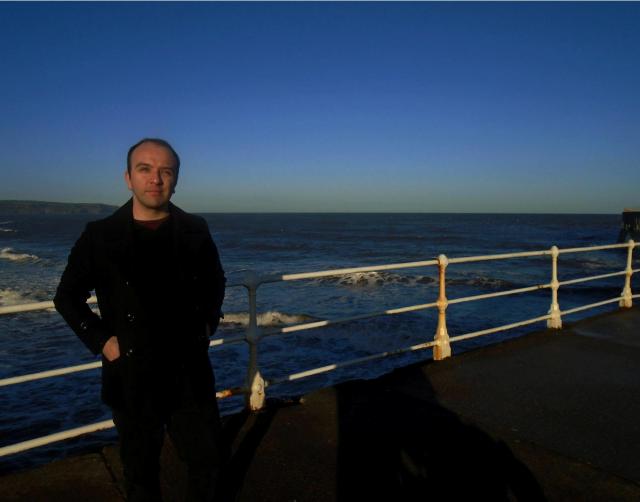
I first mentioned his role as a one-man acid folk pioneer, and the release of his new album
‘I prefer to call it Maltloaf folk; it’s a new tag that I’m going to start using. This is album number 11, if you don’t count the outtakes.
I hadn’t planned the next album but I moved out to the countryside about 4 months ago and found in the second month of living here I’d started writing the next record, but that won’t be out until next year because of the books I am working on’
Ah yes, the books,
‘I’ve just done a Hawkwind book, a recent fiction book and I’m working on books on Dennis Hopper, George A Romero and Woody Allen. I find when I’m doing the books I just get immersed in the world of the subject, I’m watching all the films, tracking people down and reviewing them’
We started talking about how things have changed since the first Dodson and Fogg album was released back in 2012,
‘Progs totally altered since the first release, since then the industry has changed with all releases, back in November 2012 there wasn’t things like Spotify, 4 years seems like a long time ago for me now’
I first contacted Chris back in 2012 using twitter and since then we’ve been friends on Facebook,
‘This is the thing about Facebook, you don’t see some people that often but you can see how peoples lifes have changed over time’
I wondered if Chris was still an avid user of social media,
‘I’ve got a Facebook set up for the books and the albums, and it showcases the latest work, but it doesn’t really generate sales for books or music, and in that respect it isn’t that useful. Someone was complaining on Facebook recently about mailing lists and emails not being read, I don’t thing it’s fair to criticise your audience on Facebook or social media, but it proves that you can’t rely on social media, I only use it a little bit’
Chris is very prolific and I wondered where the inspiration comes from,
‘I do all this because I don’t want a normal job, the more I do then the more income I get, I don’t push a lot of this to be honest, I like to do projects and that’s how I spend my time, on my projects and with my family. A lot of creative people like to think they are different and special, and I love making music and writing books but to me it’s an everyday job with no lucrative income’

With the books Chris tends to self publish,
‘My first self published book was before I discovered the server I use now, it was a book about Malcolm McDowell, and since then I’ve learnt over time, some of the earlier books are a bit creaky but it proved to me that learning as I go and self publishing is a valid option. I’d rather put it all out myself, as it gives me complete control’.
Dodson and Fogg are well known for the use of guest stars,
‘I have built up a contact list, for the latest record I used Toyah, I was only aware of her 80’s work, and heard some of her later work with Fripp in the Humans. I liked what she was doing and made contact through her website, she was working somewhere in a studio and I sent her the track (Drinking from the Gun), and it ended up being a co-write as she wrote a third verse and did really interesting things with the track.
I’m always after interesting sounds, I’ve always been after a stuffy brass band sound, I really like the old fashioned brass band, (It must be something about being from Yorkshire as I adore that sound as well) It’s the sad sound of the brass, it’s summit in the blood. I enjoyed working with Ricky Romain on the sitar, I loved mixing the sound in but people were saying I was just doing psych acid folk because of the sitar. I can’t do the same thing all the time, I like to swap things around’.
What about your influences?
‘I don’t tend to have lots now, I can find sometimes if I’m writing a book I can pick up the guitar and something will come to me, at the moment I keep listening to a lot of Neil Young and Bob Dylan, it’s stuff I like and will never stop liking it, it’s my music. I listen to a lot of Madonna, although you won’t see me in a conical bra. I used to really like Donovan but I can’t listen to him any more, you find without noticing that your tastes change over time’.
Do you ever have a theme for your albums?
‘On some of the early ones I did, the first two didn’t have themes, but the third one Sounds of Day and Night (2013) the loose thread was that all the songs were about day and night.
The later albums are more like a diary, showing where I am at any moment in time, for people who buy the later albums say the project has gone in different directions.
I do it for fun, and like to structure the albums like a 1960’s album, around 40 minutes long, it doesn’t ramble, you can listen to it in one sitting and pop it on a tape, I record and structure them in the way that I like to listen to albums.
The first album with a real concept was the one I did with Nigel Planer doing the stories (In a Strange Slumber 2014) and When the Light ran Out (2015) was an idea of home and how that works, both my Mum and my Sister moved away, and it made me think of what home meant. The songs are all personal to me and get emotions out there that you wouldn’t normally get out there, it’s a loose diary of my life’
Talking of home you recently moved to the country,
‘I’ve moved near to a farm into the countryside, I’ve taken up gardening and getting into my photography, it’s a nicer life, though there is that cliché about not making good art if you’re too content. I find it more comfortable that there’s next to nothing out here, an old train line, a farm, it’s far better than having too many people in your face.
Doing this interview is like therapy, I’m telling you stuff I haven’t mentioned before!
(I did mention I was much cheaper than any therapist!)
I like doing these projects because I’ve always wanted to do things I wanted to do and make it work for me. I had no interest in serving customers or trying to flog more things to get an extra 10p.
I just feel like when I was a kid I used to make books and liked the idea of putting a book together and playing drums. My brother and I used to make albums, with the sleeves and my Dad would encourage us by popping them on the shelves next to his Beatles or Kinks tape and encourage us to make more.
I’m a haemophiliac and found it hard to get work, it was difficult to get insurance in conventional jobs, I lost jobs because they couldn’t get insurance for me, when I was a child I wasn’t allowed to do contact sports and preferred to write, draw and play guitar. That’s another revelation to me, you sure this isn’t therapy?
Being creative is worthwhile, it’s important because what would the world be like without music, books, arts? It would be a very dull place indeed. We should encourage kids, my little girl Lily is 2, I wonder what she’ll do, she can draw, she loves music and watching films, it’s great watching them grow up.’
So where next for Dodson and Fogg?
‘If your creative you want to move onto the next thing, I don’t like sitting on work, I want to release it and move on, it might be commercial suicide but that doesn’t bother me, it’s not and never has been about the commercial side.
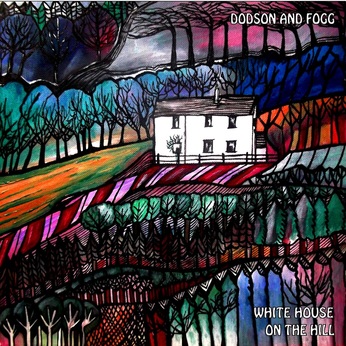
In 2012 I spotted a tweet from a singer songwriter about a musical project he was launching, the tweeter was Chris Wade and the project was Dodson and Fogg, and I have watched and listened as Chris has taken his DIY ethos through 10 previous diverse albums, with guests like Celia Humphries, Nik Turner, Nigel Planer, Ricky Romain, Alison O’Donnell, Scarlet Riviera, Judy Dyble and Chloe Herington to name but a few, and over the past four years it’s been a delight to hear Chris muse take him down new and exciting avenues.
This latest release which came out back in August is his first release since moving out to the countryside, but don’t expect him to have gone all back to the country, no sir, what we have hear is another clear progression of the Dodson and Fogg sound, and every time Chris releases another record I worry about whether he’s stretched himself too thin this time, but no every time he comes up trumps.
It’s not cheap being a Dodson and Fogg fan, but when the music is this good, then does it matter how often the records are released?
With a smaller cast list, the focus is primarily on Chris soft vocals, and his superb guitar playing, with guests Georgia Cooke on Flute and John Garners violin adding their soft touches throughout the album to enhance the D&F sound. As Chris mentioned in his interview this time around he got Toyah to guest on this record, and the duet, Drinking from the Gun, where as ever the artist she is Toyah contributed an extra verse, is a superb jazzy duet, where their vocals blend perfectly, whilst the title track that opens the album is a joyously bucolic folk rocker with some fantastically sympathetic violin work throughout. Meanwhile the powerful instrumental Bitten has a real funky groove to it, in fact the album is pretty funky throughout, as Chris gets his funky troubadour hat on Tell Me When Your Ready to Leave, with its Ric Sanders esque jazzy violin, in fact with Chris vocals, this sounds like the current incarnation of Fairport Convention could cover it, and it would slot right into their repertoire.
In fact this is pretty funky album, as Chris growls his way through the heavy funk of The Giant. Whilst the instrumental Bitten has powerful rocking riff that runs through the record like Scarborough through a stick of rock.
The closing 7 minuter Lily and The Moonlight, a wonderfully languid mellow rocker inspired by Chris daughter, is a slow builder, giving time for the song to build and grow and Chris fantastically cool vocals and a wonderfully eloquent guitar led coda closes this fine album in style.
For those worried that Chris is running out of ideas, don’t. This is another eloquent musical statement from one of the most prolific artists around who enriches the musical scene that he sits in.
Ladies and Gentleman, Dodson and Fogg, England’s premier Maltloaf folk band.
All photos by Linzi Napier
Thanks to Chris for his time.
Dodson and Fogg albums and Chris’ books are all available from
http://wisdomtwinsbooks.weebly.com/


 A deep blues, a call to enlightenment, a psychedelic spiritual of epic proportions, Pharaoh Sanders’ “The Creator has a master plan” rings with a disciplined clarity one might expect from a former John Coltrane collaborator and acolyte of spiritual jazz. But if Sanders extends the Coltrane legacy to this recording, he also pushes open new doors, inviting across the song’s 32 minutes an ascent into a flowing, meditational free jazz where vocalist Leon Thomas shrieks and yodels along with Sanders’ sax, and the band lays down a freakout that in its joyful conclusion returns to the cradling peace of the main theme. Mere months after participating in the sessions that yielded Van Morrison’s Astral Weeks, Richard Davis again is an anchor, working with fellow bassist Reggie Workman to drive the music in its soaring flight and underpin the caterwaul as the whole ship hits the heart of the African sun. This is the sound of jazz taking back its rock and roll at the most essential level, and I think too a nod of respect to rock’s embrace of jazz in its great psychedelic experiment.
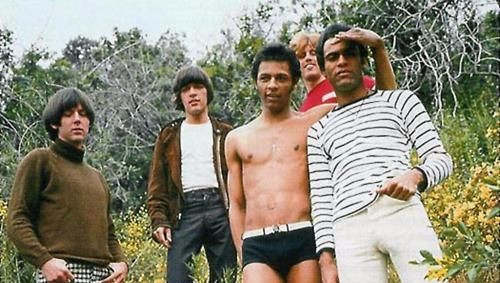 In 1966-1967 Los Angeles was Arthur Lee’s dark kingdom. Brian Wilson owned the sun, Jim Morrison traveled the other side, and while the Byrds and Buffalo Springfield gave L.A. its folkie hippie face, Lee’s band Love fashioned a punk muzak masquerade that fifty years on will still not relent. Their capstone album, 1967’s Forever Changes, is one of the handful of perfect rock records, but it is a difficult masterpiece, borne of a drug-addled band falling apart on the heels of some minor pop success (thanks to their cover of Bacharach/David’s “My Little Red Book” and the blazing protopunk of “7 and 7 Is”), as their chief admirers and competitors the Doors were surpassing them in popularity, commercially beating them at their own game. Forever Changes is not instantly recognizable for what it is, and its easy melodic beauty — indebted to the Tijuana Brass, smooth jazz, and surf instrumentals — supports a poetry far more complex and subtle than anyone else in rock was writing at the time, save perhaps Van Morrison.
 There were only a handful of them, American rock bands in the late 1960s who sunk the kind of roots that North American progressive rock could grow from. Spirit was one of them, and by the time they released their fourth album in 1970, they’d covered enough territory that they managed to have both a pop single, in the garage rock monster “I Got Line On You,” and a back catalogue of albums critically respected for their sophistication in arrangement and playing. Although recently dwarfed by the attention given to their instrumental “Taurus,” which Led Zeppelin may have heard and used, probably unwittingly, for “Stairway to Heaven,” Spirit’s albums up through Twelve Dreams of Dr. Sardonicus are rich canvases that, some have observed, may seem too eclectic, don’t always sum the band’s talents as they could. So that when you look for a definable Spirit sound, it eludes definition. I can see this, but at the same time Spirit’s appetite for musical movement was its guide, a definable point not being the point at all.

 Like Rush, the
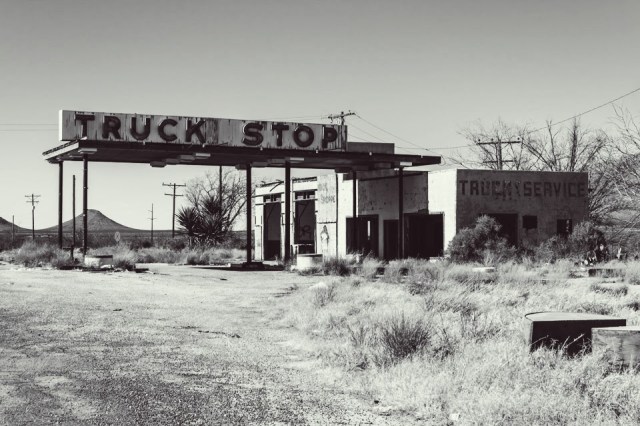 Years before the hybrid of classic rock and distorted garage psychedelia and punk became the legendary Grunge that vanquished the Hair Metal Dragon in the early 1990s, Screaming Trees and Thin White Rope plied their trade in relative obscurity and penury. Even as “punk broke” in America and they were afforded greater opportunity for exposure, as groups they had already cycled through lineup changes and masterwork albums, and the timing for broad success never really synced. Yet you can sight through the lens of their recorded legacy an understanding of what Grunge in America was, where it came from, what it meant, how it drew upon American roots music, acknowledging what Greil Marcus called the “old, weird America,” of everything from 13th Floor Elevators and Neil Young to the folk revival of the 1960s to the hillbilly/race records of the 1920s and 1930s. The references aren’t always apparent, but they’re embedded in the dust devils Thin White Rope appeared through and the rain-soaked northwestern pines the Screaming Trees turned dayglo.
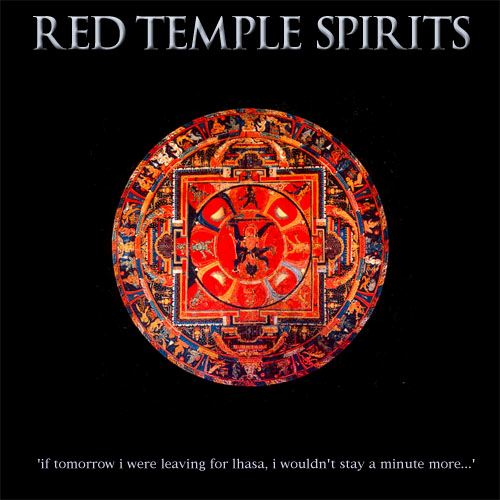 For years, LA’s Red Temple Spirits were a tease, a psych rock ghost that once got a short write-up in Rolling Stone, which gave an address to write to if you wanted the album, an address for an obscure label that never wrote back. It was the pre-internet treasure map to sacred recordings process that was our siren’s call. Guesswork, album reviews, dudes in record stores who’d gone to see Hendrix and never really come back. From the description I read, this band was for me. But for about five years, every record store I walked into got the question: “Red Temple Spirits?” and I would receive a shake of the head back. Along with Television Personalities, in the late 80s and early 90s they were my grail, a band whose records couldn’t seem to be found for love or money, as if they wanted it that way, ached to be left alone. Around 1993 I finally and gratefully scored a cassette of their 1989 album If tomorrow I were leaving for Lhasa I wouldn’t stay a minute more… (possibly from Austin’s Waterloo records, who had hooked me up with Television Personalities a couple years earlier too) and discovered the small window of hype Rolling Stone gave them was deserved. A rockier, psychier version of the
  Progarchy