


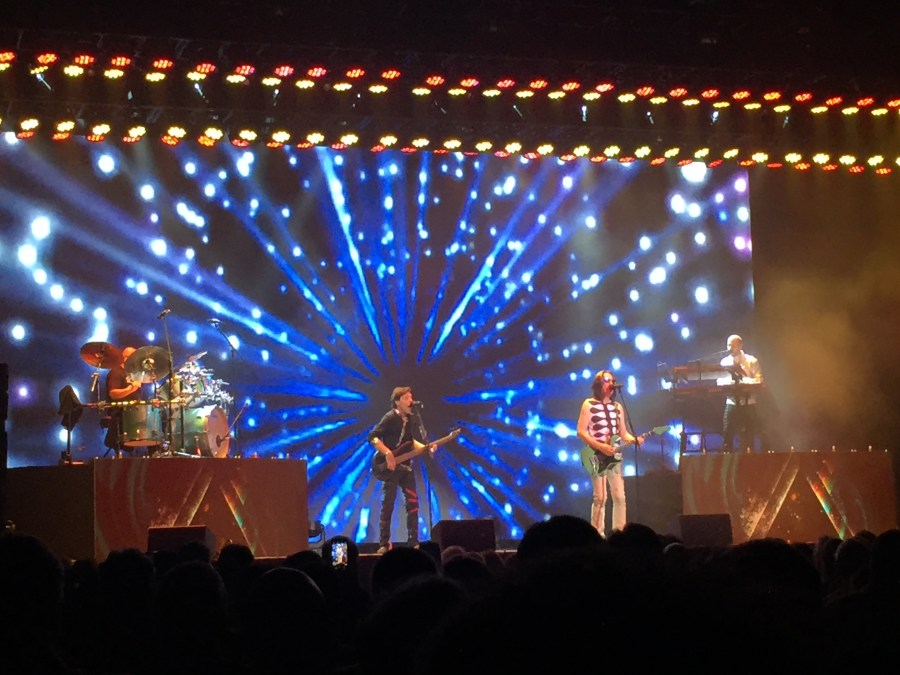
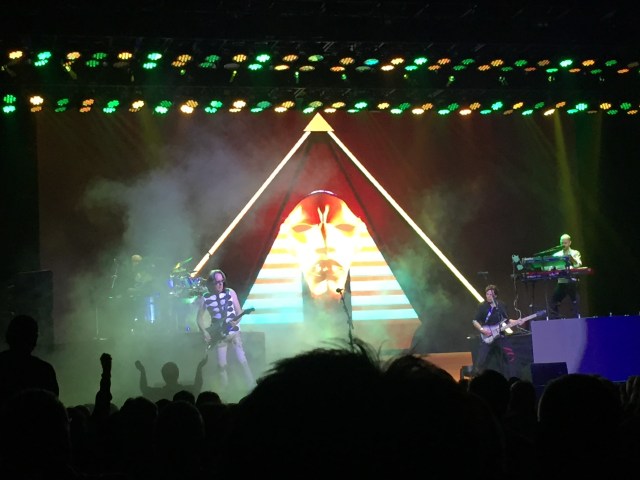
Toto at Frederik Meijer Gardens Amphitheatre, Grand Rapids Michigan, August 24, 2018.
Toto’s sold out my local outdoor shed twice in the past three years. Last time through, they stacked the deck, playing plenty of hits and radio favorites. This year, with the anniversary compilation 40 Trips Around the Sun to flog, they took more chances with a deep-cut setlist, a semi-acoustic storytellers interlude, and extended displays of their fearsome chops. Riding a fresh wave of Internet love, they could do no wrong for the hyped-up crowd.
And the same held true for me; I’ve always had a soft spot in my heart (and possibly my critical faculties) for Toto. A posse of Los Angeles studio aces melding Steely Dan’s shuffles, Boz Scaggs’ blue-eyed soul, crunchy proto-Van Halen guitar and proggy synthesizer fanfares, with the mission statement (from founding drummer Jeff Porcaro in Rolling Stone) “craft is content”? No wonder rock critics hated their guts, especially when when they got triple platinum sales out of the box. Their goal was to make sleek, catchy pop with a touch of musical ambition, get on radio and move records — not bare their souls, change the world, or even necessarily write sensible lyrics. There’s an odd, appealing purity to that aim, no matter how calculated the strategy.
Top 40 radio courts a different sound these days, but Toto still has a knack for the killer hook; kicking off, new songs “Alone” and “Spanish Sea” were every bit as engaging as the singalong version of “Hold the Line” and Toto IV’s “Lovers of the Night” that they framed. Following spirited takes of tracks from forgotten-stepchild albums like Tambu and Turn Back, the band lit the fuse on Kingdom of Desire’s funky instrumental “Jake to the Bone;” guest keyboardist Dominique “Xavier” Talpin (subbing for founder David Paich) and guitarist Steve Lukather stoked their lengthly solos to the boiling point, while synth whiz Steve Porcaro and the rhythm section (Shem von Schroeck on bass, Shannon Forest on drums, Lenny Castro on percussion) simmered underneath. Building on the momentum, “Rosanna” was a foregone, happily welcomed conclusion to the first half, with singer Joseph Williams (the John Williams’ son! Really!) and sax man Warren Ham helping bring the crowd to their feet.
The storytellers interlude — with everyone sitting on stools and Lukather playing acoustic guitar — had its charms, even though the six selections (including Porcaro’s “Human Nature” from Michael Jackson’s Thriller) were truncated to keep things moving. Ramping up again, the band dove deeper into their catalog, holding the audience’s attention even through obscurities like the Dune soundtrack’s impressive “Desert Theme”. But in the end, past was all prologue; the moment Lukather shouted, “Are you ready for that song?” and Castro and Forrest launched the polyrhythms of “Africa,” Meijer Gardens went joyously, deliriously nuts. It was gonna take a lot to drag 2,000 fans away from that moment; they were all in — dancing, singing along, clapping during Castro’s exhilarating solo, chanting back and forth vocals with Williams, responding with a full-throated standing ovation. Hard to beat an extended moment of pop ecstasy like that — even if you’re frightened of this thing that you’ve become.
One quick and grungy cover of Weezer’s “Hash Pipe” later (sadly, without Rivers Cuomo or “Weird Al” Yankovic in sight), Toto was done, the crowd went home happy, and my streak of satisfying shows in 2018 was unbroken. Check out another review of the show, with an extensive photo gallery, here.
Setlist:
- Alone
- Hold the Line
- Lovers in the Night
- Spanish Sea
- I Will Remember
- English Eyes
- Jake to the Bone
- Lea
- Rosanna
- Storytellers interlude:
- Georgy Porgy
- Human Nature
- Holyanna
- No Love
- Mushanga
- Stop Loving You
- Girl Goodbye
- Lion
- Dune (Desert Theme)
- While My Guitar Gently Weeps
- Make Believe
- Africa
- Hash Pipe
— Rick Krueger




 “Violence” erupts from Parquet Courts’ Wide Awaaaaake! (2018) in a riot of barbed slogans, proclaiming and exclaiming over everything from the “blazer of the Trail of Tears” to prison TV shows, against a dark drums’n’organ funk. The band have drawn comparisons across their productive years to Pavement, Beastie Boys, the hyper-literate NY punk cognoscenti, but here it’s all about
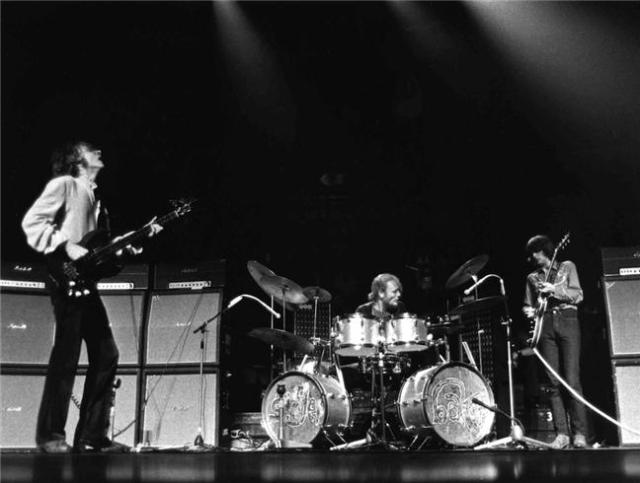 A worthwhile imaginary history: Eric Clapton doesn’t leave the Yardbirds in March 1965. He stays, compromised but successful, and the band’s psych-garage boilerplate “For Your Love” is the first in a clutch of similar vocal-fronted hits that eventually morph the band into a second string Moody Blues. Jeff Beck and Jimmy Page never join the band, thus there is no Jeff Beck Group (thus no Rod Stewart, no Faces), and no Led Zeppelin. Clapton’s presence in the Yardbirds corks those possible future bottles. And, of course, there’s no Cream, and as such possibly no Jethro Tull or Black Sabbath, and, most definitely, no Mountain. There’s an argument here against Hendrix as well….
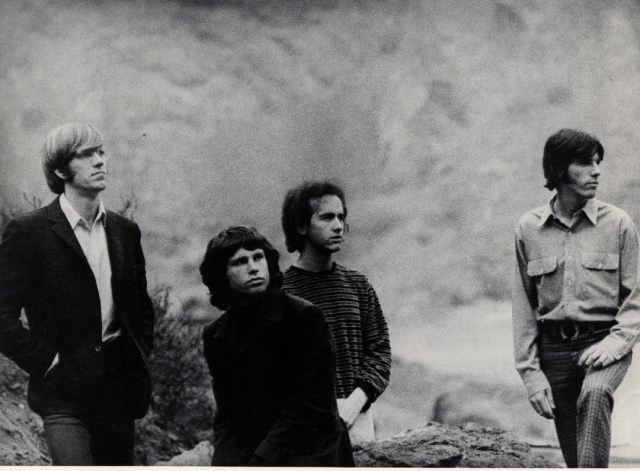 The Doors built its finest work around straight-ahead rock’n’roll, adding a whirling, baroque jazz samba momentum from the alchemy of keyboardist Ray Manzarek, guitarist Robby Krieger, and drummer John Densmore, all schooled in the post-bop cool permeating, by the mid-1960s, the many stripes of a blossoming California pop music scene. Jim Morrison brought the goods of fame, an impassioned thunderhead vocal whether singing his own lyrics or Krieger’s (the band’s most successful writer), and a hip pin-up beauty boosting the band’s pop darling status. (There is great irony here, as the New York Factory crowd crowed over Morrison’s veneer — with appropriate Warhol-esque fascination — and Morrison himself did everything he could to make and then deface his pretty boy shell, revealing the rot within, in one of rock’s most infamous stories of self-creation/immolation.) At the core of Elektra’s push to advance American rock in the wake of the British Invasion, the Doors — along with label mates
  When psychedelia and blues came together in Cream’s quickfire trio of studio albums in the late 1960s, it created a blueprint for blues-respecting bottom-heavy rock that would rule the airwaves for at least a decade. In their roots and early trajectories, the Winter brothers, emerging out of the heartland of Beaumont, Texas, were not unlike north Florida’s
 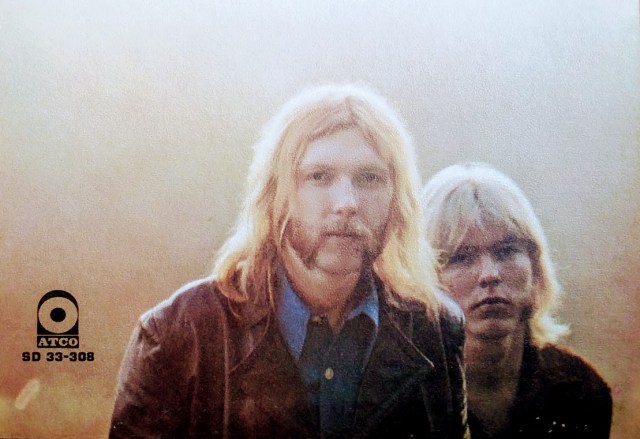 Southern Rock’s manifesto is like no other rock album. The Allman Brothers Band, released in November 1969, carries a hard sonic power absent from its closest temporal and spiritual brother, the Band’s Music from Big Pink (1968), and tight, sharp-cornered riffing missing from the work of the Grateful Dead, who the Allmans resembled in their two-drummer, double guitar form and in their tendency to stretch out in live performance. Mostly, though, the group had the brothers themselves: Duane, a guitar sharpshooter whose session work had honed his chops — including a wicked slide technique — to a razor’s edge; and
