soundstreamsunday #94: “Gold Dust Woman” by Fleetwood Mac

fleetwoodmacThere is a little irony that Fleetwood Mac hit superstardom ten years into its existence, having jettisoned numerous guitar heroes — including the group’s founder, the inimitable and brilliant Peter Green — and did so as a West Coast soft rock band rather than the grimy British hard blues act that inspired contemporaries and was absolutely formative for Jimmy Page in his vision of Led Zeppelin.  By 1975, beleaguered and getting old in the rock and roll tooth, and years since it had anything approaching a hit, the band made a last ditch, daring sea change that saw them bring on the largely unknown singer-songwriting couple Stevie Nicks and Lindsey Buckingham, who radically reshaped Fleetwood Mac’s sound.  1975’s Fleetwood Mac was their breakthrough, while 1977’s Rumours proved the formula worked, as Nicks and Buckingham brought a finesse of songcraft sorely missing since Peter Green left the band.  More than this, though, the two Americans integrated, rather than overlayed, their sound on Fleetwood Mac.  Onstage, Nicks became Green’s “Black Magic Woman” incarnate, a gypsy witch with a unique vocal power (and a sexual presence that didn’t hurt the band’s progress), while Buckingham, a gifted, complete guitarist, could play lines summoning the group’s bluesy manalishi ghosts while feeding the ravenous pop machine he was building.

The last song on Rumours, Nicks’ “Gold Dust Woman” is an ode to coke, interwoven with the legendary California cartoon of disintegrating relationships and romantic triangles making up Fleetwood Mac’s lore.  It completes side two of the LP as assuredly as “The Chain” begins it, the two songs dancing at the edges of Peter Green’s blues terrors, advancing into soft rock classic dark jazz torches like “Lush Life” while setting the stage for future L.A. creatures like “Babylon Sisters.”  Like the LP it finishes, the song is a dark star, a downer completing one of the unlikeliest of pop albums.  “Rock on, gold dust woman.”

soundstreamsunday presents one song or live set by an artist each week, and in theory wants to be an infinite linear mix tape where the songs relate and progress as a whole. For the complete playlist, go here: soundstreamsunday archive and playlist, or check related articles by clicking on”soundstreamsunday” in the tags section.
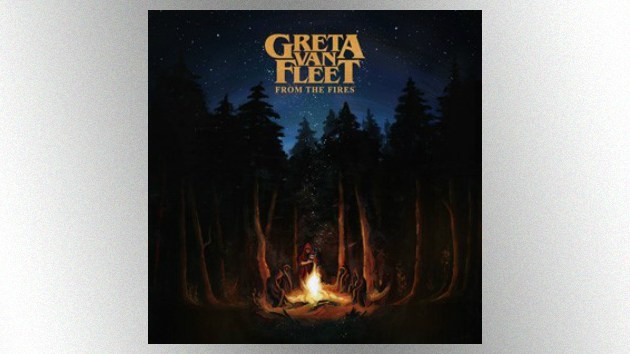
Rick’s Quick Takes: From the Fires by Greta Van Fleet

“Rock & roll isn’t really going on right now and it’s something the people need.” — Josh Kiszka, Greta Van Fleet, quoted in Rolling Stone.

If Frankenmuth, Michigan is known at all, it’s usually as a tourist spot that channels a kitschy “Little Bavaria” vibe  — complete with chicken dinners,  a Christmas superstore that my wife described as “obscene” after a visit, and its local polka band heroes.  (To be fair, it began as a mission colony, founded by Bavarians who crossed the Atlantic to minister to Michigan’s Chippewas.  These “Franconians” became key players in the founding of my spiritual home, the Lutheran Church-Missouri Synod — but I digress.)

This year, a different kind of band from Frankenmuth is on a new mission; the incredibly young quartet Greta Van Fleet (named for a octogenarian hammer dulcimer player) aims to stoke the “rock & roll revolution” Bono predicted in his recent Rolling Stone interview.  Their weapon of choice: a heavy, howling sound that reconnects to the energy of Chicago blues, early pre-mellow Bob Seger and the British hard rock boom — especially to Led Zeppelin.

Be warned: there’s a whole lotta Zeppelin influence on this compilation of two EPs — so much so that my longtime buddies from high school were comparing the music to 1970s German Zep-alikes Kingdom Come when we got together recently.  And it’s fair to wonder how the band — twin brothers Josh Kiszka on vocals & Jake Kiszka on guitar, baby brother Sam Kiszka on bass and pal Danny Wagner on drums, ranging in age from 18 to 21 — could possibly have been so well marinated in the classic sounds they emulate.  (Parents with great record collections and a musical family that jams together on long weekends seem to hold the answer.)

But let’s face it: Robert Plant & Jimmy Page were these kids’ age once, and they did all right for themselves.  More than anything, it’s the explosive energy of youth that these boys are bringing to the table, and they surf that energy on From the Fires until it soars.  The opening “Safari Song,” the semi-acoustic “Flower Power” and the surprise radio hit “Highway Tune” work as brazen, thoroughly convincing new-Zep; the strong covers of Sam Cooke’s “A Change Is Gonna Come” and Fairport Convention’s “Meet on the Ledge” showcase their eclectic, well-formed taste, and at a short, sharp 32 minutes, the whole set oozes potential.

Not that there won’t be some growing pains along the way; while Greta Van Fleet has sold out every headline show they’ve played this year, there were credible grumbles about their live sound and management in the wake of their recent Grand Rapids gig.  Still — a rock band from the Midwest with nationwide, possibly international potential!  It’s been a while since that’s happened.  On the evidence of From the Fires, I think they have what it takes to go for it, and I wish them the best.  But feel free to judge for yourself below. — Rick Krueger


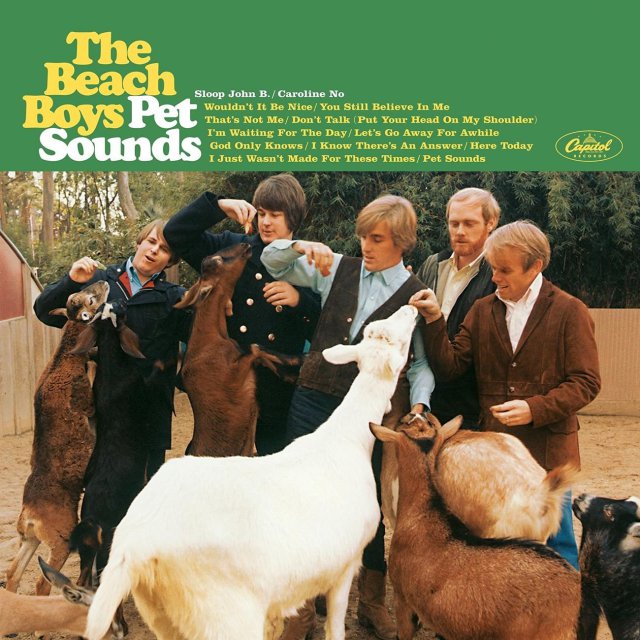
The Albums That Changed My Life: #8, Pet Sounds by The Beach Boys

by Rick Krueger

The good Dr. Birzer did a fine track-by-track survey of this milestone album for its 50th anniversary in 2016.   While I’m tempted to say “just read his article,” it wouldn’t answer the implied question this series poses.  How did hearing Pet Sounds change my life?

Though I always liked the Beach Boys, I didn’t glom onto Pet Sounds until I was in my 30s. My older brother had a few of their early records; I remember borrowing the In Concert album and subjecting my family to repeated plays on one vacation.  Some of their songs from the 1970s filtered through to FM rock radio in my high school years, too; “Sail On Sailor” was particularly popular.  I even arranged a medley of the band’s 1960s classics for my final choir concert at Lutheran High School East.  But I typically thought of the Beach Boys as a group with cool harmonies, a Chuck Berry fixation, and decent songs about surfing, cars and girls.

Then, on a whim, I picked up the 30th anniversary edition of Pet Sounds in 1996.  Which included liner notes featuring Paul McCartney quotes like “this is the album of all time” and “no one is educated musically until they’ve heard that album.”  I figured I’d better give it a serious listen.

Continue reading “The Albums That Changed My Life: #8, Pet Sounds by The Beach Boys”

soundstreamsunday #92: “Kashmir” by Led Zeppelin

kashmirConsider Blueshammer.  Fictional, yes, short-lived, definitely (seconds at most).  Daniel Clowes and Terry Zwigoff made no bones in their film Ghost World (from Clowes’ graphic novel) about white blues musicians — that is, Blueshammer — who drowned out the source of their inspiration through sheer volume, and the thoughtlessness of the fans who followed them.  It’s easy pickings, sure, but there’s also some truth there, and as practitioners of the art of the blues hammer, it wasn’t the first time Led Zeppelin and their peers were skewered in pop culture (see Spinal Tap), nor would it prevent other very capable white bro’ blues artists from on the one hand shredding and posturing, and on the other (and doubly suspect I think) donning the Ray-Bans and porkpie hats and a-how-how-howing through thousands of dollars of instruments, cables, amps, etc. to legions of adoring fans.  Shall we name names? No.  You and they and I know who they and I and you are.

Even at their emergence, many rock royalty decried the bludgeoning the mighty Zeppelin gave the blues, and certainly their excesses were as clear as their achievements.  But, they achieved a lot:  between their approach to traditional music of all stripes (they bludgeoned everything equally, often with finesse), their revolutionary production techniques, Jimmy Page’s ability to find the sweet spot between technique and feeling (and Robert Plant’s cock-of-the-walk wail, and John Bonham’s pounding, and John Paul Jones’s rock steady everything else), and their marketing prowess, it’s hard to sell Led Zeppelin short.  As they would have it, it might be blues hammer, but it was blues hammer of the gods, straight outta Valhalla.  And they were pretty much right, the most powerfully potent rock band of the 1970s, so successful that the only thing they risked was radio fatigue from overplay — a risk that proved all too real for a lot us (I’d never surrender my Zep LPs, but do I listen to them….?).  When Bonham drank himself to death it probably wasn’t the worst thing to happen to the band in terms of its own legacy: across eight seamlessly consistent studio albums they managed not to make one dud, as they threw most everything against the wall.  It all stuck.  Their apex was 1975’s Physical Graffiti, a double album opus that sprawled and summed, peaking with the epic “Kashmir.”  It was a landmark of progressive hard rock, an ego-driven nod to world music in all its variegated unfolding, and even as Zep dressed their song in the North African and eastern themes that captured their imaginations as strongly as the Mississippi Delta or the Welsh hills had, there was never any doubt that this music was completely theirs, and that it was nobly and spiritedly done.

Here is “Kashmir” from Celebration Day, the concert Zeppelin gave in 2007 in honor of Ahmet Ertegun, Atlantic Records founder.  It may be their greatest live moment, even minus their legendary drummer, as the band (with Bonham’s son Jason ably thundering), healthy and aged and all in, describe why they were worth listening to in the first place, and why, really, they were never just a hammer of the blues, but indeed a hammer of the gods.

soundstreamsunday presents one song or live set by an artist each week, and in theory wants to be an infinite linear mix tape where the songs relate and progress as a whole. For the complete playlist, go here: soundstreamsunday archive and playlist, or check related articles by clicking on”soundstreamsunday” in the tags section.
Pat DiNizio, 1955-2017

According to Variety,

Pat DiNizio, vocalist-guitarist-songwriter for the tough yet tuneful New Jersey rock band the Smithereens, died Tuesday. He was 62.

The group announced his passing on their web site. No cause of death was given, but the musician had been beset by health problems in recent years; in 2015 he was sidelined after losing the use of his right hand and arm following a pair of falls that incurred serious nerve damage.

I remember being knocked sideways hearing the Smithereens’ “Behind the Wall of Sleep” on the radio in 1986.  I was always scanning record stores and the airwaves for tuneful, Beatle-ish power-pop, and this filled the bill nicely:

Three things about the song grabbed me: the misquote of H.P. Lovecraft in the title; the 1960s callbacks in the lyrics; and the killer combination of catchy melody and hard-rock groove — more Cheap Trick than Marshall Crenshaw.

After that, I was always excited to hear the Smithereens on the radio.  Maybe the melancholy skew of their lyrics (“Blood and Roses,” “In a Lonely Place,” “Only A Memory,” — sensing a theme yet?) was another factor in their favor during my self-pitying single years.   When they had an actual hit (“A Girl Like You”) off a solid album (11, also featuring Belinda Carlisle’s duet with DiNizio on the Rubber Soul homage “Blue Period”), it felt like a triumph!

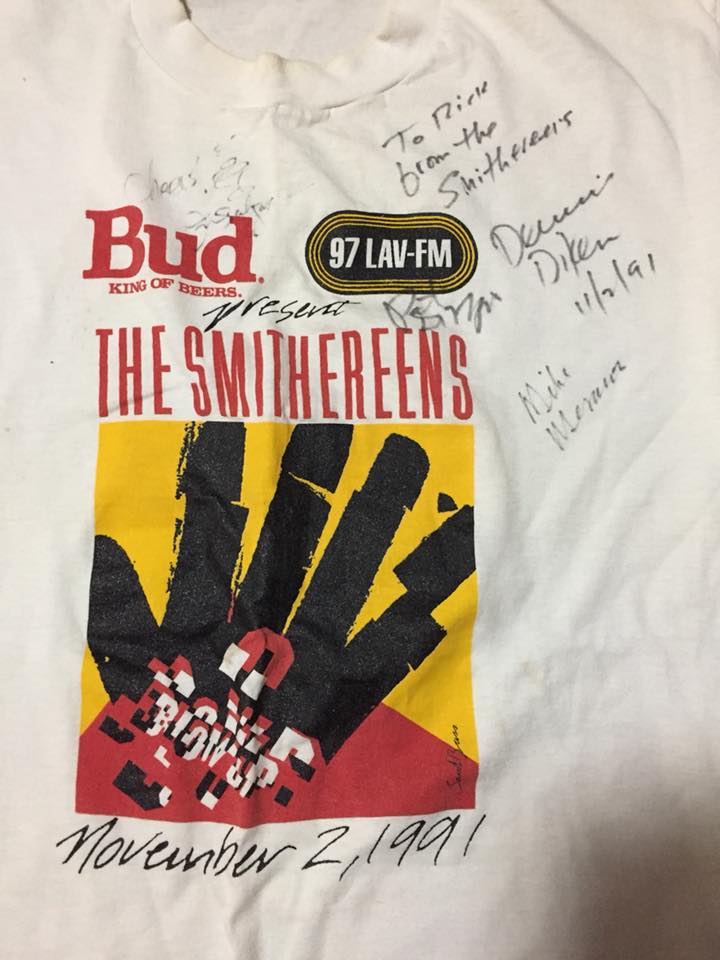
The window to mass culture closed on the Smithereens after their next album Blow Up, but not before they came to Grand Rapids and played a free show at the Civic Auditorium the night before my 30th birthday.  You had to go to the main location of the local chain Believe in Music to get tickets, which is where the band autographed the t-shirt pictured above.  It was a good show; I remember lots of audience interaction, including guitarist Jim Babjak venturing into the audience for the guitar solo on “Blood and Roses.”

The Smithereens made one more major label album, A Date with the Smithereens (first line of lyrics: “Guess what, there’s a black cloud inside of my head”) before fading into where-are-they-now territory.  Which turned out to be their original stomping ground of Carteret, New Jersey.  They made occasional albums:  some new material — including a Christmas disc; some live retreads; some tributes to the Beatles and the Who — for my money, their take on Tommy has more guts than the original.

The Smithereens were planning live shows in 2018, but it wasn’t to be.  In one of his final Facebook posts, Pat DiNizio turned to thoughts of Christmas:

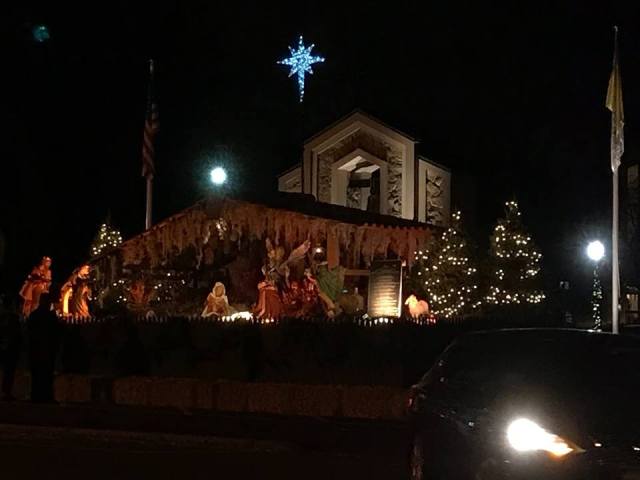
In early December the church that I live directly across the street from here in Scotch Plains builds a life size classic manger scene that is among one of the most beautiful and detailed one that I have ever seen. I can’t say that I’m a church goer, but I was raised Catholic, and the aforementioned church was where I was baptized, received Holy Communion was confirmed, where my parents were married (as well as every other member of my family) and where the funerals were held for my father, grandfather, grandmother, aunts, uncles and virtually every member of my family. Most of them were married there too. So when Hollingsworth House, the home that I have lived in the past 20 years or so became available, it seemed to me a stroke of good fortune to be able to live a hundred yards away across the street from the church that was and has been such an important part of my life.

dinizio in memoriam

Here’s hoping that Pat DiNizio now enjoys the peace embodied across the street from his house.  Buona Natale!

Kruekutt’s 2017 Favorites: New Albums & Videos

by Rick Krueger

After the jump are the new albums and videos from 2017 that grabbed me on first or second listen, then compelled repeated plays.  I’m not gonna rank them except for my Top Favorite, which I’ll save for the very end.  The others are listed alphabetically by artist. (Old school style, that is — last names first where necessary!)  Links to the ones I’ve previously reviewed are embedded in the album titles.

Continue reading “Kruekutt’s 2017 Favorites: New Albums & Videos”

Rick’s Retroarchy: Favorite 2017 Reissues

by Rick Krueger

I still have a few more albums to listen to before finalizing my favorite new releases of 2017.  To warm up, here are the reissues from this past year that:

  1. I absolutely had to buy, and
  2. That grabbed me on first listen (whether I’d previously owned a copy or not) and didn’t let go through repeated plays.  Except for my “top favorite” at the end of the post, I haven’t ranked ’em — in my opinion, they’re all equally worth your time.

Continue reading “Rick’s Retroarchy: Favorite 2017 Reissues”

Neil Young’s Archives Open for Business

by Rick Krueger

Remember Neil Young’s Archives Volume 1?  Released in 2009, it was a comprehensive, though not exhaustive, box set of the man’s music from 1963 to 1972 — 137 tracks, 47 previously unreleased.  If you ponied up a three figure sum (guilty), you could get the set in DVD or Blu-Ray format, and have multiple visual gimcracks to click on and view while the music was playing.  Some of these were quite cool; my favorite was a candid camera video of Young pestering a New York City record store clerk.

Since then, Young has occasionally promised further Archives installments — but given his  multiple interests and projects (along with his propensity to change his mind), it wasn’t surprising that nothing followed.  That is, until yesterday, when www.neilyoungarchives.com went live.  The site will ultimately provide audio/visual access to more than 900 recordings by Young from 1963 to the present, whether solo or with his collaborators through the years — Buffalo Springfield, CSNY, Crazy Horse and The Promise of the Real, among others.  Songs and albums are searchable, and everything is also accessible via the “timeline” or “file cabinet” formats used for Archives Volume 1. 

In the FAQ section of the new site, Young and his collaborators go into great detail about their proprietary “Xstream by NYA” format, claiming to offer up to 20 times more audio data than the 320 kilobytes per second of high-quality mp3 files.  Listening to Young’s live Time Fades Away as I type, my streaming rate has ranged from 1600 to 1800 kbps.  It’s an impressive-looking stat, but given the basic grungy sound of the album, it’s hard to hear any substantial difference — especially since my sound system is a solid performer, but nowhere near audiophile territory.

Of course, there’s no such thing as a free lunch; to quote the Archives FAQ, “all content and songs on NYA are free for a limited time only.  After that, access will require a subscription.  Duration and cost of subscription are still TBD, but we can tell you that the more users we have the cheaper it will be.”  At least right now, you can log in through Facebook or Google and avoid setting up yet another online account.  Since my interest in Young’s music basically extends through the Rust Never Sleeps era, I’ll hopefully have enough time to listen to the music of his “Ditch trilogy” period (when he made Time Fades Away, Tonight’s The Night, and On the Beach) before the subscription model kicks in. [Note: according to a “Welcome to Neil Young Archives” email I’ve received, my free trial period lasts until June 30.  Plenty of time then!]

In the meantime, the Archives website provides a window of opportunity to hear a seminal artist’s music for free.  If you have any interest in Young’s work, it’s worth checking out.

soundstreamsunday #84: “Your Protector” by Fleet Foxes

fleetfoxes2edit

Fleet Foxes is a progressive rock band in the same sense Gazpacho is, where what they’re getting at is a total environment or vibe rather than a particular baroque form of electric music with rock instrumentation.  I read recently what I think is a good observation, that their third album, 2017’s Crack-Up, has an appropriate home in Nonesuch, which started as the classical wing of Jac Holzman’s Elektra Records, but in recent years has extended its reach to artful achievers in what we might otherwise think of as the rock world.  It’s the right label for a band that doesn’t like to rush things.  Their previous record, Helplessness Blues, was released in 2011, after which songwriter and lead singer Robin Pecknold, by then a rock star, decided to push pause and go to college and wait for the muse to revisit.  It did.

In a rock world where everything is “post-,” Fleet Foxes shares with the other intelligent American bands of their era — thinking Spoon, Band of Horses, My Morning Jacket, Shearwater — a smart melodic sensibility and a complex vocal approach to its music, atop an intense but restrained musicianship.  With a sound instantly identifiable, in its harmonies the band reliably draws comparisons with the Zombies, Moody Blues, and Crosby, Stills and Nash, and while I get it I don’t really hear it, maybe because I find Pecknold’s lyrics darker, funnier, better, or maybe because there’s no smack of the hippie, despite the hair, that so defined those groups.  I think if anything Fleet Foxes taps into the reverb-drenched sound of 90’s Britpop, the adventurousness of the early 70s British folk scene, and the impressionistic poetics of Dylan‘s best work.  Even while being on the inside there’s an outsider’s sensibility.

“Your Protector,” from Fleet Foxes’ 2008 self-titled debut, is like a puzzle you turn in your hands trying to figure out how it comes apart.  I can’t really parse it, but I’m pretty sure it’s not a happy story, while the galloping, western-movie chorus is an inscrutable, spine-tingling chant difficult to forget.

As you lay to die beside me, baby
On the morning that you came
Would you wait for me?
The other one
Would wait for me

The live-in-studio version here shows the band in full flight, as part the second series in Nigel Godrich’s From the Basement program, and includes drummer Josh Tillman (aka Father John Misty) soon after he joined the group.  There’s a sleekness to the work that speaks volumes on the meticulousness of the band’s constructions: the simplicity of the arrangement, the power in its dynamics, the harmonies.  The air crackles and sparks.

soundstreamsunday presents one song or live set by an artist each week, and in theory wants to be an infinite linear mix tape where the songs relate and progress as a whole. For the complete playlist, go here: soundstreamsunday archive and playlist, or check related articles by clicking on”soundstreamsunday” in the tags section.

Progtoberfest: Day 2 Report

by Rick Krueger

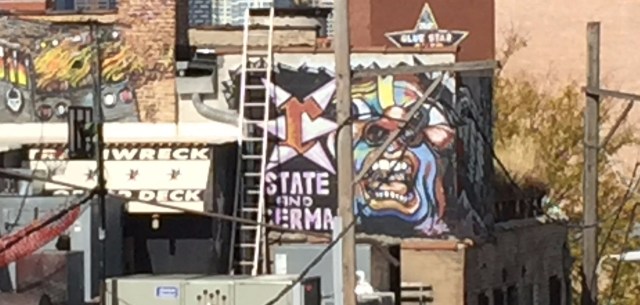
The sun shone warmly again on the south side of Chicago as Progtoberfest III kicked off its second day.  Taking in the view as I exited the ‘L’, it was amusing and welcoming to see a familiar screaming face painted on the exterior of Reggie’s:

IMG_4097

Hoping to get Alphonso Johnson’s and Chester Thompson’s autographs in the VIP Lounge the night before, I’d struck up a delightful conversation with members of the North Carolina Genesis tribute band ABACAB.  In 2016, festival organizer Kevin Pollack had given them “homework” for this year: to play all of Genesis’ live album Seconds Out on the 40th anniversary of its release.  You could tell the band was nervous (they focus on 1980s Genesis to get bookings, so they had to learn half the album in the past year) but also absolutely thrilled to bring it to the Rock Club stage.  And on Saturday afternoon, they nailed it, to the joy of an enthusiastic, supportive crowd and rave reviews from other acts.  They’re already planning to return to Reggie’s in April as a headliner, and for Progtoberfest IV next October.  Check out why below:

Continue reading “Progtoberfest: Day 2 Report”