by Rick Krueger (Thanks to Brad Birzer for his encouragement in the comments on his Sgt. Pepper at 50 post.)
“Bliss was it in that dawn to be alive, But to be young was very heaven!”
— William Wordsworth
I was definitely young — just over 2 years old, in fact — in February 1964, when this came on my grandparents’ TV:
It’s the first thing I remember. It felt like Wordsworth’s “very heaven.” And it instantly led to the first two things I remember wanting: Beatles records, and a Beatles wig.
My birthday is in November, so I have no idea how my parents pacified me till then. I have a vague memory that my mom re-purposed a yellow fringed toilet seat cover and I became a blond Beatle for a while. Whether that’s fact or imagination, you can see the outfit I got when I turned 3 after the jump:
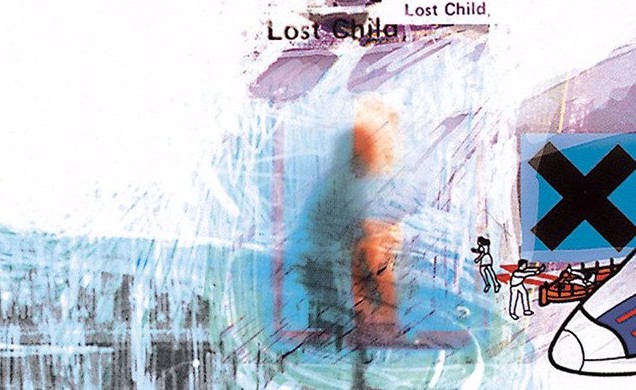
The figure “singing from the window in the Mission of the Sacred Heart” in ELO’s “Mission (A World Record)”, last week’s soundstreamsunday entry, could be the uptight narrator of Radiohead’s “Subterranean Homesick Alien,” from the band’s 1997 tour-de-force OK Computer. As if in mirrored conversation, those two songs, separated in time by over 20 years but perhaps closer than they appear — in their beam-me-up guitar melodies, keyboarded grandeur and darkening moods — are to me joined at their metaphoric sci-fi hips.
Radiohead’s confidence on OK Computer, in both the intense alienation of the fragmented lyrics and the band’s break with the walls and squalls of mid-90s guitar rock, is a subtle swagger ripe with end-of-the-millenia decaying beauty. It’s a prog goth triumph, reaching in its many directions to locate the mood of its time, a burred gloaming richly unsettled. It’s also, I was reminded when listening again to it recently, funny, in the same way that Forever Changes is, or Fight Club, or a mad prophet preaching the end times. There’s just no telling what the next turn will be, but there is a willful design, and so the satisfaction of a wicked lyric or the resolution of a majestic melodic sequence prompts a smile or a laugh. The parts come together, a human victory, a denial of the end even as it’s being trumpeted.
The internally rhyming title of “Subterranean Homesick Alien,” a riff on a Dylan masterpiece (and, further back, a Kerouac novel), feels tossed off on the one hand but also maybe the only choice given its narrator’s painting a scene of alien surveillance and his desire, that he be taken “on board their beautiful ship, show me the world as I’d love to see it.” He’s maybe one of them, maybe wants to be one of them, but who They are is undetermined and in any case moot: the point is homesickness for a place that has to be better, with the “breath of the morning” and the “smell of the warm summer air.”
soundstreamsunday presents one song or live set by an artist each week, and in theory wants to be an infinite linear mix tape where the songs relate and progress as a whole. For the complete playlist, go here:soundstreamsunday archive and playlist, or check related articles by clicking on”soundstreamsunday” in the tags section above.
I never knew anyone who wasn’t at least a little bit of a fan of Electric Light Orchestra. My age privileges me in remembering hearing new ELO songs on the radio when I was a kid — it was almost impossible I think for DJs to screw up their set with ELO, as the band’s music straddled so many genres at one time — and although I never owned any of their albums until I was in my 40s (I can’t believe it either), not liking their music would be akin to not liking having any fun. But along with that fun came a musicality and seriousness of songwriting that could get you scratching your head, too. In the words of the old ad, this stuff was good and good for you.
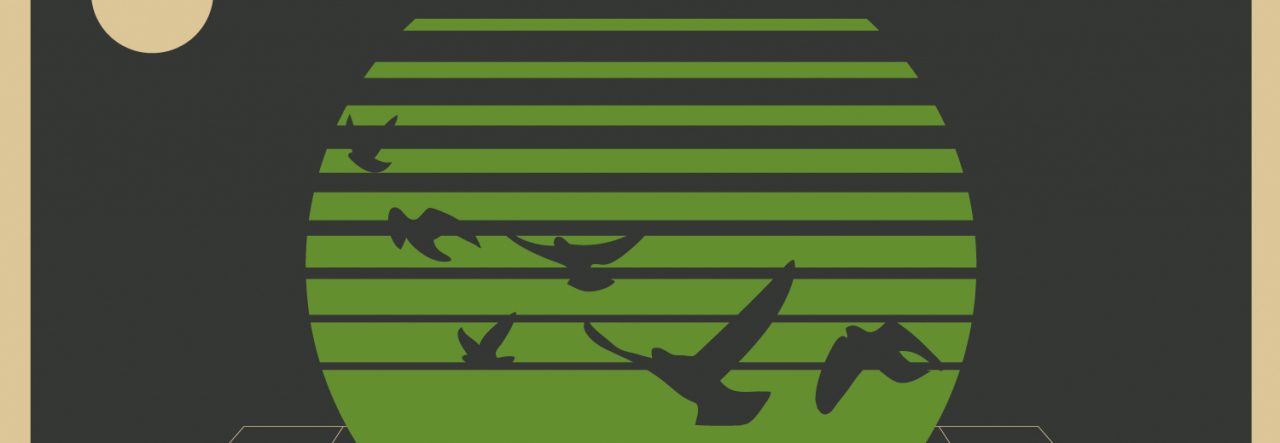
Those were the days…. Launched on record in 1971, by 1976 ELO had five albums under their belt and their sixth, A New World Record, would distill Jeff Lynne’s profound ambition into a back-to-front nine-song pop-prog epic 36 minutes long. While many fans cite ELO’s next record, 1977’s Out of the Blue, as the masterpiece (and in some ways it is), that double album’s aesthetic really gestated on A New World Record: late-era Beatles laid across heavy accents of American R&B and soul, filtered through an army of instruments and tracks. Lynne’s achievement in 1976 was to make this happen succinctly, in service of his writing, which produced the best kinds of love songs — those without the hey babies — full of heartbreak, hope, and hooks. Always the hooks, the insanely catchy melodies. And so the album is packed with genuine chart hits: “Telephone Line,” “Livin’ Thing,” the odd and wonderful “Do Ya,” the dopey but tolerable “Rockaria!” Pop done and undone to the level of the avant-garde, it’s so ridiculous. But it’s at the end of the album’s sides where the sweetness isn’t so much cleansed as qualified, adding a complex finish to the confections preceding. So the album closer “Shangri-La” declares in its operatic final two minutes a return to paradise, either towards or away from the pain of love, and the last cut on side A is a puzzle that resolves in a lyrical, gorgeous sadness.
From the LP lyric sheet, the (artfully incomplete) words to “Mission (A World Record)”
There is nothing straightforward in “Mission (A World Record),” the central lyrics of which are “watching all the world go by” and — not even printed in the liner notes — “how’s life on Earth?” The rest of it could be a starry sci-fi mini-epic or the rant of a tenant at a mission hospital, or both. But, astral projection or interstellar travel aside, the song concerns itself primarily with a melody, guitar line, and arrangement that read like maps of a future Radiohead. A vibe of desolate beauty, of being left behind, linked with a prophecy or the ramblings of a seer, a paranoid android or a subterranean homesick alien.
soundstreamsunday presents one song or live set by an artist each week, and in theory wants to be an infinite linear mix tape where the songs relate and progress as a whole. For the complete playlist, go here:soundstreamsunday archive and playlist, or check related articles by clicking on”soundstreamsunday” in the tags section above.
In the early 1970s in England there were a few rock bands that mattered and one that really mattered, and that was the Faces. I mean Rock band. Rock and roll. They were a supergroup, a bridge between genres, a match in a haystack. They had big hits and the best hair.
For English kids the Faces must have represented a lot of things, glam without the spacesuits, the Stones but more fun, a way to get back to the basics in the wake of the Beatles’ passing. So they could springboard Rod Stewart to pop stardom, sure, but also be an inspiration, both in attitude and rock power, to punk bands from the New York Dolls to the Sex Pistols. The Faces were about energy and, when they put their mind to it, peerless songwriting, thanks in good part to Ronnie Lane, the core of a band who counted among its cadre once or future members of the Jeff Beck Group, the Small Faces, the Rolling Stones, and the Who. Across their four albums you get the strong sense the rest of them were there because of Lane — playing a cheery bass and occasionally singing, in his homespun warble, songs with a a bit of a wink and a whole lot of heart.
“Ooh La La,” a rock and roll music hall chanty of the type Lane virtually invented in the Small Faces, was the last song on the Faces’ last record. It’s perfect. It’s a smiling shake of the head, a “poor old granddad” and “poor young grandson” dialogue of women and love and sex. There was genius in the decision to have Ronnie Wood sing Lane’s lyric — ragged but right, he brings to it the feeling of an old man, twinkle in his eye, holding forth in the corner of a bar. Such places are after all where the Faces lived, and where you can still find them.
soundstreamsunday presents one song or live set by an artist each week, and in theory wants to be an infinite linear mix tape where the songs relate and progress as a whole. For the complete playlist, go here: soundstreamsunday archive and playlist, or check related articles by clicking on”soundstreamsunday” in the tags section above.
Phil Lynott’s destiny — reimagining rock and roll as heavy Irish metal — meant that his band Thin Lizzy, like Motörhead and maybe AC/DC, had a claim to authenticity that punk couldn’t ignore. Lizzy’s music was lean, written with a razor, and Lynott wrung from his blackness and his Irishness every possible note of rock and roll victory in a landscape that generally counted him out. Lynott’s conversational style in song could echo Van Morrison (if with a brash sexuality Morrison could never pull off), and like the great Van could conjure specific visions of Irish traditional culture while turning them on their ear. I can only imagine that the Clancy Brothers blanched, and Planxty swooned, at his treatment of “Whiskey in the Jar.”
“Emerald” closes Thin Lizzy’s blockbuster Jailbreak (1976), and while not the hit every metalhead thinks it should have been — that honor went to the catchy hard rock of “The Boys Are Back in Town” — as the closing track of a great set (“Jailbreak”!, “Cowboy Song”!), it templated the double-guitar attack metal was moving toward. It’s hard to imagine K.K. Downing and Glen Tipton shrugging off “Emerald’s” twining riffs and solos, as Scott Goreham and Brian Robertson mapped a terrain in this performance where Judas Priest would go on to flourish. Lynott’s lyric has all the Celtic warrior mysticism necessary to make fists shake and heads bang, whether your sporting a safety pin or a mullet, and as ever his impassioned singing and playing cannot be denied. This is the metal mountain.
soundstreamsunday presents one song or live set by an artist each week, and in theory wants to be an infinite linear mix tape where the songs relate and progress as a whole. For the complete playlist, go here: soundstreamsunday archive and playlist, or check related articles by clicking on”soundstreamsunday” in the tags section above.
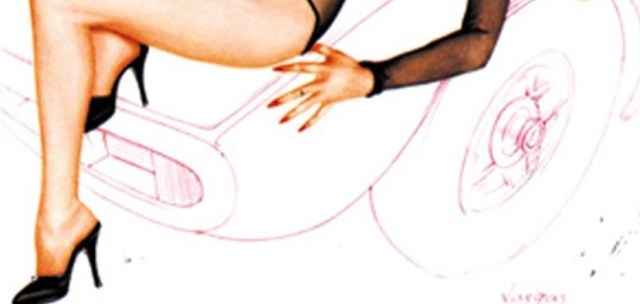
It’s been forty-ish years since their first record but it’s not difficult to remember how important the Cars were to American music. Punk really broke with the Cars and maybe also with Devo, because until these bands hit the radio, and they did so in a big way in 1978-79, punk music and its influence was just a news story for those of us not living on America’s coasts. The Cars weren’t a punk band really at all but they brought a toughness to their pop music that defined American new wave, even as they were being played, say, between the Doobies and AC/DC on the radio (as they still are today). They represented a slew of less commercially fortunate American underground bands: Big Star, NRBQ, Flamin’ Groovies, the kind of groups who extended 60s garage rock post Beatles. That is, they saw the art in what they did. They opened ears. Ric Ocasek’s and Benjamin Orr’s lyrics were smart, un-fussy, their singing had the odd effect of creating emotional distance even while containing heartbreak, and Elliott Easton’s guitar kept the band on course — they were never not a rock band. Here on “Candy-O,” the title track of their second album, the Cars throw down a power pop gauntlet elevated by this raw live peformance. Bookended by a monster debut album and outsized 1980s success, “Candy-O” is nonetheless the band’s peak as new wave game changer.
soundstreamsunday presents one song or live set by an artist each week, and in theory wants to be an infinite linear mix tape where the songs relate and progress as a whole. For the complete playlist, go here: soundstreamsunday archive and playlist, or check related articles by clicking on”soundstreamsunday” in the tags section above.
The principles of exclusion, constraint, and limitation are drivers of art as much as what ends up on the canvas, and more than anything explain how U2’s “The Three Sunrises” did not make the cut of their seminal 1984 album The Unforgettable Fire. That album, their fourth, changed the band’s trajectory by broadening their palette (thus ultimately guaranteeing their longevity). Subduing the band’s onward-Christian-soldier martial airs without dulling its passion, producers Brian Eno and Daniel Lanois — who the previous year had created, along with Roger Eno, one of the great ambient masterworks in Apollo — worked at applying creative filters to make a music that was moody, introspective, less deliberate but also more whole. The Unforgettable Fire feels more like an album with a sonic narrative than any of its predecessors. Still, no one, not even Eno, could contain U2’s spirit or strong self-identity, and the recording sessions yielded some work with one foot still grounded in the energetic brightness characterizing their previous catalog.
In 1985, U2 stopped the show at Live Aid with a stunning, impassioned performance of the song “Bad” from The Unforgettable Fire. In packaging the performance for release — and here it’s important to understand the impact that Live Aid had on popular music at the time, as it was simulcast on radio and TV worldwide — the band put it on the Wide Awake in America EP along with another live track (“A Sort of Homecoming”) and two studio outtakes from The Unforgettable Fire sessions. “Love Comes Tumbling” shares the twilit moodiness of the album it didn’t end up on, but “The Three Sunrises” is both farewell and greeting, a simple effusion of a youthful love song wrapped in a gleeful guitar riff, its title bearing a suggestion of trinity that so bound the group, especially in its early days, to a strong Christian following. More than this, or perhaps because of their beliefs and willingness to be moved by the Spirit, U2 was a post-punk band able to express joy like few other “serious” groups of the time, and in “The Three Sunrises” their ability to strike at the heart remained innocently undiminished.
*Above image is a detail of Larry Mullen, Jr., Adam Clayton, and Bono listening to Edge perform the riff to “The Three Sunrises,” from the documentary of the making of The Unforgettable Fire.
soundstreamsunday presents one song or live set by an artist each week, and in theory wants to be an infinite linear mix tape where the songs relate and progress as a whole. For the complete playlist, go here: soundstreamsunday archive and playlist, or check related articles by clicking on”soundstreamsunday” in the tags section above.
Even with an acknowledgment that the guitar crossroads intersect and break and branch through Jimi Hendrix, there’s not an over-regard for Hendrix’s impact on New York punk in the 1970s. But, in his quick transition from darling of the London psychedelic blues scene back to an American identity, in an atmosphere where racial politics and music were increasingly conflated in the funk and jazz musics of the late 1960s, Hendrix was central in the rise of a “street” culture that demanded a breaking of barriers of race and class. While he outraged critics with his national anthem at Woodstock, he inspired a generation who saw in it both brutal truth and lovely homage, and as he spent his last summer building his Electric Lady studio in Greenwich Village, his presence as a New Yorker was inspiring to the small cadre of poets, visual artists, and musicians who would evolve into the New York punk scene. To the members of the band that would become Television, Hendrix was proof that the electric guitar could continue to break ground, and that to do that you had to be uncompromising (this is probably the real ethic that links Hendrix to the punks).
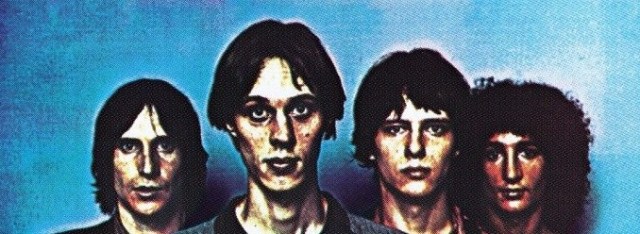
It could certainly be argued that Television’s classic album Marquee Moon, a monument of guitar virtuosity that inspired players of all genres, is hardly a punk album in the same sense that, say, Ramones is a punk album. But they both represent a culture that was inclusive enough to count among its members Lou Reed, Patti Smith, the New York Dolls, Blondie, and Talking Heads, and that inspired some of England’s most established progressive rock musicians, particularly Peter Gabriel, Brian Eno, and Robert Fripp. Marquee Moon‘s title song is representative of the record as a whole: guitarists Richard Lloyd and Tom Verlaine intertwine their playing like a Picasso-esque version of Duane and Dicky, it’s all angles, and with a dry production that lets Billy Ficca’s drums and Fred Smith’s bass pop in the mix. As well, Verlaine’s approach to singing was revolutionary for its time, his high, nervy vocal delivering its Bowery poetics atop the killer riffs. Both arty and danceable, this is the rock and roll truth, and, working within and at times breaking the boundaries and burdens of Hendrix’s legacy, it again transformed the possibilities and future of guitar-based music.
soundstreamsunday presents one song or live set by an artist each week, and in theory wants to be an infinite linear mix tape where the songs relate and progress as a whole. For the complete playlist, go here: soundstreamsunday archive and playlist, or check related articles by clicking on”soundstreamsunday” in the tags section above.
Jimi Hendrix’s mystery is something not quite capture-able as an iconographic or intellectual thing. Even knowing some of the details of his background — from his emergence on the chitlin circuit to his being shepherded to London by Chas Chandler — doesn’t explain the lightning the man conjured. The scant year and a half that Hendrix and his Experience released their three albums (May ’67-October ’68) encompassed a sea change in rock music that saw a full embrace of Dylan’s lyrical approach and of Hendrix’s instrumental creativity. It went beyond the firepower, to the belief, the true faith, in what the electric guitar could ultimately offer to rock and other music. Hendrix refracted his surroundings, adding to his electric soul and blues the emerging British fascination with distortion and eastern scales, and beamed them into the very brains of rock and jazz. Since September 18, 1970, his is a persistent ghost, THE example of a technically skilled player and writer who, as importantly, brought imagination and soul and heart to the act of making music.
Electric Ladyland is Hendrix’s great work, mid-wifed by hard-won artistic and financial independence. As double albums of that era tend to, it sprawls, spinning with ambition, noble failures, and grand successes. He’s using the studio as an instrument, stretching the ideas cycling through him. Some of his most radio-friendly hits appear on Electric Ladyland (“All Along the Watchtower,” “Voodoo Chile (Slight Return),” “Crosstown Traffic”). But buried in the middle, on side 3, is the album’s jewel and centerpiece, “1983…(A Merman I Should Turn To Be),” a proto-prog epic on the art of walking away from the nonsense humanity inflicts upon itself, “not to die but to be reborn, away from the land so battered and torn.” The music is a wild, left-field, Bolero-paced march where Hendrix overlaps his guitars and basses like a string section, affecting oceanic waves and surf, with sympathetic playing by steadfast Experience drummer Mitch Mitchell and flautist Chris Wood (on loan from Traffic). In it are sonic echoes from “Third Stone from the Sun” (from 1967’s Are You Experienced?) and thematically Hendrix continues to mine the problem of Earth-boundedness. Of being contained in a place that doesn’t seem to fit. And even as Hendrix’s music transcends and transports, his real and continued gift is the mirror he holds up to those of us listening.
soundstreamsunday presents one song or live set by an artist each week, and in theory wants to be an infinite linear mix tape where the songs relate and progress as a whole. For the complete playlist, go here: soundstreamsunday archive and playlist, or check related articles by clicking on”soundstreamsunday” in the tags section above.
The art gallery of rock and roll is a rich and welcoming place, with room upon room spinning off into many-directioned distances. There is no entrance fee or warnings to stand back, please, from the piece. And, like at all great museums, any pretense to surface comportment is, if meaningful at all, only a nod of respect to the spark of human creativity. A sign that we don’t stand in willful ignorance. Before the work, within the work, we are all children. It is in rock’s nature to empower its listeners to create, and within this space there is no genre, no boogie no punk no progressive no pop no indie no folk, just an honoring of the empty canvas and the unrestrained fire banked down in humanity. It’s what I love about rock, and it’s what made Van Morrison’s Astral Weeks happen.
Drummer Connie Kay and guitarist Jay Berliner both famously recounted that Morrison told his musicians — and these weren’t just any musicians, but some of the finest jazz players New York could provide in the late 1960s, led by the inimitable bassist Richard Davis — to “play what you want” and then left them alone to back and guide him on a set of eight songs whose precedents were slim and bore little relation to the rock-pop classics he recorded with his band Them (“Gloria,” “Here Comes the Night”) or on his first solo album (“Brown Eyed Girl”). Astral Weeks (1968) is an echo of Miles Davis’s Kind of Blue (1959), where an extraordinarily talented group of jazz musicians received a similar lack of instruction, and Love’s Forever Changes (1967), where the pop songwriter deliberately challenged the very notion and direction of his craft. Morrison’s artistic success on Astral Weeks was, and remains, startling. The album’s embrace of acoustic jazz as a way forward had a profound impact on the burgeoning “singer songwriter” movement, and for better or worse has become instant point of comparison with subsequent work by musicians such as Joni Mitchell or Tim Buckley or Nick Drake.
“Ballerina” captures the essence of an album that is about nothing as much as ecstatic love, the joyous and at times Joyce-ean observations of a 23-year-old ancient who had spent the previous year turning his voice into a bebop trumpet. While Morrison got and kept his fame on the back of “Brown Eyed Girl” and “Moondance” and the slew of equally wonderful R&B radio-ready hits that would come his way, it’s here that his artistic street cred was established, as he honored the canvas and invited Davis, Kay, and Berliner to follow their hearts along with him.
soundstreamsunday presents one song or live set by an artist each week, and in theory wants to be an infinite linear mix tape where the songs relate and progress as a whole. For the complete playlist, go here: soundstreamsunday archive and playlist, or check related articles by clicking on”soundstreamsunday” in the tags section above.


 The figure “singing from the window in the Mission of the Sacred Heart” in

 In the early 1970s in England there were a few rock bands that mattered and one that really mattered, and that was the Faces. I mean Rock band. Rock and roll. They were a supergroup, a bridge between genres, a match in a haystack. They had big hits and the best hair.
 Phil Lynott’s destiny — reimagining rock and roll as heavy Irish metal — meant that his band Thin Lizzy, like Motörhead and maybe AC/DC, had a claim to authenticity that punk couldn’t ignore. Lizzy’s music was lean, written with a razor, and Lynott wrung from his blackness and his Irishness every possible note of rock and roll victory in a landscape that generally counted him out. Lynott’s conversational style in song could echo
  It’s been forty-ish years since their first record but it’s not difficult to remember how important the Cars were to American music. Punk really broke with the Cars and maybe also with Devo, because until these bands hit the radio, and they did so in a big way in 1978-79, punk music and its influence was just a news story for those of us not living on America’s coasts. The Cars weren’t a punk band really at all but they brought a toughness to their pop music that defined American new wave, even as they were being played, say, between the Doobies and AC/DC on the radio (as they still are today). They represented a slew of less commercially fortunate American underground bands: Big Star, NRBQ, Flamin’ Groovies, the kind of groups who extended 60s garage rock post Beatles. That is, they saw the art in what they did. They opened ears. Ric Ocasek’s and Benjamin Orr’s lyrics were smart, un-fussy, their singing had the odd effect of creating emotional distance even while containing heartbreak, and Elliott Easton’s guitar kept the band on course — they were never not a rock band. Here on “Candy-O,” the title track of their second album, the Cars throw down a power pop gauntlet elevated by this raw live peformance. Bookended by a monster debut album and outsized 1980s success, “Candy-O” is nonetheless the band’s peak as new wave game changer.
 The principles of exclusion, constraint, and limitation are drivers of art as much as what ends up on the canvas, and more than anything explain how U2’s “The Three Sunrises” did not make the cut of their seminal 1984 album The Unforgettable Fire. That album, their fourth, changed the band’s trajectory by broadening their palette (thus ultimately guaranteeing their longevity). Subduing the band’s onward-Christian-soldier martial airs without dulling its passion, producers Brian Eno and Daniel Lanois — who the previous year had created, along with Roger Eno, one of the great ambient masterworks in Apollo — worked at applying creative filters to make a music that was moody, introspective, less deliberate but also more whole. The Unforgettable Fire feels more like an album with a sonic narrative than any of its predecessors. Still, no one, not even Eno, could contain U2’s spirit or strong self-identity, and the recording sessions yielded some work with one foot still grounded in the energetic brightness characterizing their previous catalog.
 Even with an acknowledgment that the guitar crossroads intersect and break and branch through
 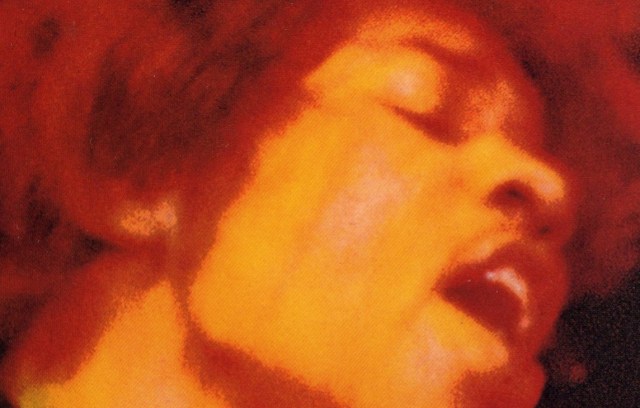 Jimi Hendrix’s mystery is something not quite capture-able as an iconographic or intellectual thing. Even knowing some of the details of his background — from his emergence on the chitlin circuit to his being shepherded to London by Chas Chandler — doesn’t explain the lightning the man conjured. The scant year and a half that Hendrix and his Experience released their three albums (May ’67-October ’68) encompassed a sea change in rock music that saw a full embrace of
 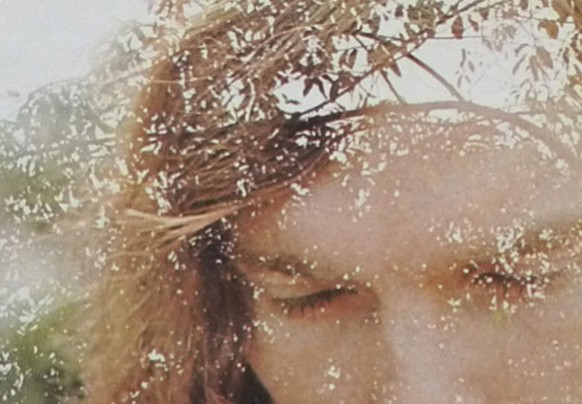 The art gallery of rock and roll is a rich and welcoming place, with room upon room spinning off into many-directioned distances. There is no entrance fee or warnings to stand back, please, from the piece. And, like at all great museums, any pretense to surface comportment is, if meaningful at all, only a nod of respect to the spark of human creativity. A sign that we don’t stand in willful ignorance. Before the work, within the work, we are all children. It is in rock’s nature to empower its listeners to create, and within this space there is no genre, no boogie no punk no progressive no pop no indie no folk, just an honoring of the empty canvas and the unrestrained fire banked down in humanity. It’s what I love about rock, and it’s what made Van Morrison’s Astral Weeks happen.
 Progarchy