
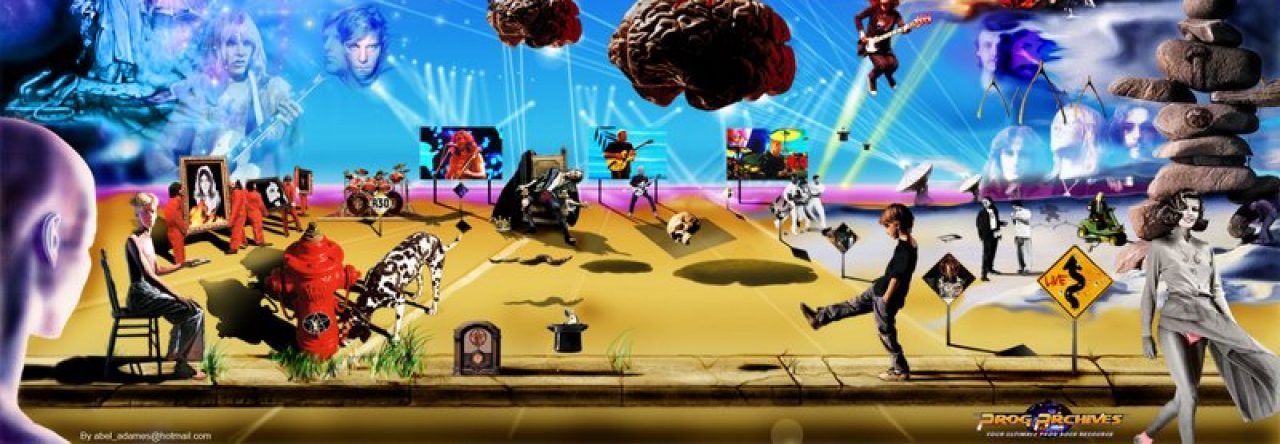
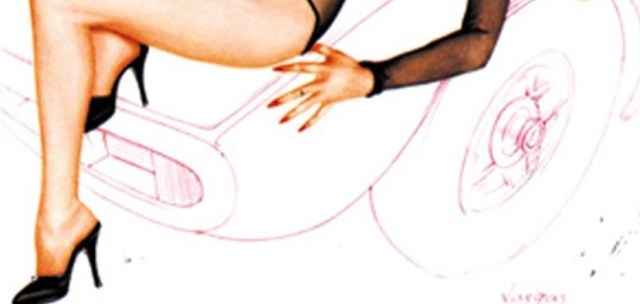
 It’s been forty-ish years since their first record but it’s not difficult to remember how important the Cars were to American music. Punk really broke with the Cars and maybe also with Devo, because until these bands hit the radio, and they did so in a big way in 1978-79, punk music and its influence was just a news story for those of us not living on America’s coasts. The Cars weren’t a punk band really at all but they brought a toughness to their pop music that defined American new wave, even as they were being played, say, between the Doobies and AC/DC on the radio (as they still are today). They represented a slew of less commercially fortunate American underground bands: Big Star, NRBQ, Flamin’ Groovies, the kind of groups who extended 60s garage rock post Beatles. That is, they saw the art in what they did. They opened ears. Ric Ocasek’s and Benjamin Orr’s lyrics were smart, un-fussy, their singing had the odd effect of creating emotional distance even while containing heartbreak, and Elliott Easton’s guitar kept the band on course — they were never not a rock band. Here on “Candy-O,” the title track of their second album, the Cars throw down a power pop gauntlet elevated by this raw live peformance. Bookended by a monster debut album and outsized 1980s success, “Candy-O” is nonetheless the band’s peak as new wave game changer.
soundstreamsunday presents one song or live set by an artist each week, and in theory wants to be an infinite linear mix tape where the songs relate and progress as a whole. For the complete playlist, go here: soundstreamsunday archive and playlist, or check related articles by clicking on”soundstreamsunday” in the tags section above.
 The principles of exclusion, constraint, and limitation are drivers of art as much as what ends up on the canvas, and more than anything explain how U2’s “The Three Sunrises” did not make the cut of their seminal 1984 album The Unforgettable Fire. That album, their fourth, changed the band’s trajectory by broadening their palette (thus ultimately guaranteeing their longevity). Subduing the band’s onward-Christian-soldier martial airs without dulling its passion, producers Brian Eno and Daniel Lanois — who the previous year had created, along with Roger Eno, one of the great ambient masterworks in Apollo — worked at applying creative filters to make a music that was moody, introspective, less deliberate but also more whole. The Unforgettable Fire feels more like an album with a sonic narrative than any of its predecessors. Still, no one, not even Eno, could contain U2’s spirit or strong self-identity, and the recording sessions yielded some work with one foot still grounded in the energetic brightness characterizing their previous catalog.
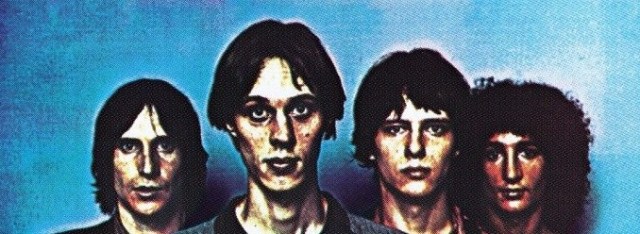 Even with an acknowledgment that the guitar crossroads intersect and break and branch through
 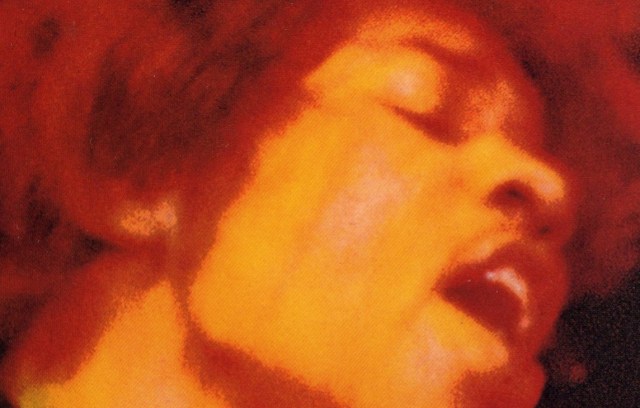 Jimi Hendrix’s mystery is something not quite capture-able as an iconographic or intellectual thing. Even knowing some of the details of his background — from his emergence on the chitlin circuit to his being shepherded to London by Chas Chandler — doesn’t explain the lightning the man conjured. The scant year and a half that Hendrix and his Experience released their three albums (May ’67-October ’68) encompassed a sea change in rock music that saw a full embrace of
 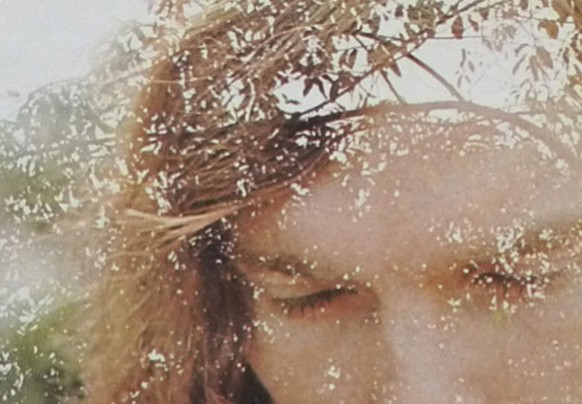 The art gallery of rock and roll is a rich and welcoming place, with room upon room spinning off into many-directioned distances. There is no entrance fee or warnings to stand back, please, from the piece. And, like at all great museums, any pretense to surface comportment is, if meaningful at all, only a nod of respect to the spark of human creativity. A sign that we don’t stand in willful ignorance. Before the work, within the work, we are all children. It is in rock’s nature to empower its listeners to create, and within this space there is no genre, no boogie no punk no progressive no pop no indie no folk, just an honoring of the empty canvas and the unrestrained fire banked down in humanity. It’s what I love about rock, and it’s what made Van Morrison’s Astral Weeks happen.
 There were only a handful of them, American rock bands in the late 1960s who sunk the kind of roots that North American progressive rock could grow from. Spirit was one of them, and by the time they released their fourth album in 1970, they’d covered enough territory that they managed to have both a pop single, in the garage rock monster “I Got Line On You,” and a back catalogue of albums critically respected for their sophistication in arrangement and playing. Although recently dwarfed by the attention given to their instrumental “Taurus,” which Led Zeppelin may have heard and used, probably unwittingly, for “Stairway to Heaven,” Spirit’s albums up through Twelve Dreams of Dr. Sardonicus are rich canvases that, some have observed, may seem too eclectic, don’t always sum the band’s talents as they could. So that when you look for a definable Spirit sound, it eludes definition. I can see this, but at the same time Spirit’s appetite for musical movement was its guide, a definable point not being the point at all.
 Like Rush, the
  Outside the fact both groups employed players of a violin/viola in their lineups at one time or another, and possessed songwriters of legend, you’d be hard pressed to find common ground for
  Bob Dylan is the rare artist who, at 75, retains the power, energy, and restlessness that distinguished his early work. As both a recording and performing artist, his electricity is unabated, and he continues to make vibrant contributions to the post-folk culture he virtually created. That he has achieved this is astounding; for those of us who have followed his career and know something of its roots and evolution, it is not surprising. He constantly recasts his song catalogue, the depth of which by 1965 (let alone 2016) was unrivaled in the rock/folk/singer-songwriter genre he invented, to match his current sound, and commands a fluidity of vision in his writing that sees beyond the trees and perhaps the forest as well. Witness “High Water,” a tribute to Charley Patton (whose “High Water Everywhere” is a stone cold delta blues barking, howling, classic), from 2001’s Love and Theft. This is a blues about love and the water that rises, that has picked up some oldtime, some drone, shaking and breaking and name-checking muscle cars and evolutionary philosophers. The thing is that it works because when Dylan sings “the cuckoo is a pretty bird” that’s a kind of referenced code that he’s hollering back to Patton. He’s writing a blank check to freely associate (find and listen to a version of “The Cuckoo” and you’ll get what I mean), to make the rhyme work and throw meaning to the wind and to the listener. Harder than it sounds because it’s about the sound, what music is, what makes its power inexplicable. To make that warble on the 5th day of July, and trace your absurd and beautiful melody: it takes courage and a resolution that comes at a price only Dylan, and maybe Patton, knows.
 Three months after
