The Genius Rages: The Tangent’s Le Sacre Du Travail (2013)

group ANNOUNCEMENT

Genius

Andy Tillison is a genius.  It must stated as bluntly as possible.  Tillison is a genius.  He’s a musical genius and a lyrical genius, but he’s also just a genius genius.  Actually, this might seem redundant, but it’s not.  Only genius could properly modify genius when it comes to Tillison’s art.

As I mentioned in a previous post on our beloved site, Progarchy, anything Tillison releases is not just an event, but a moment.  A real moment, not a fleeting one.  A moment of seriousness and reflection.

From the first I listened to The Tangent’s The Music That Died Alone, a full decade ago, I knew there was something special going on.  Not only did the cover art entrance me,  but the very depth and seriousness of the music captured my then 35-year old imagination.  I felt as though Tillison was speaking directly to me, asking me to remember the greatness of the musicians who came before 2003, but also inviting me–in a very meaningful fashion–to move forward with him.
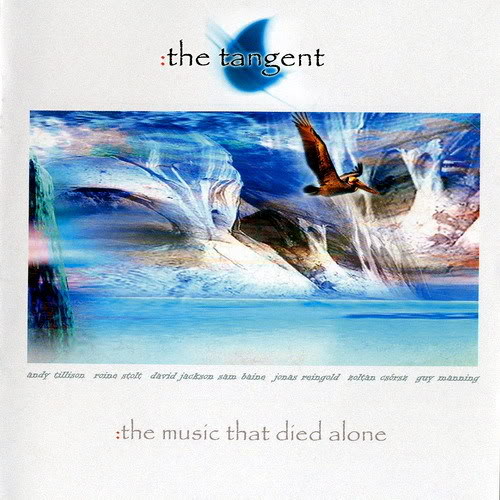
cover_2458173122009The Music That Died Alone really serves as a powerful nexus between past and present, present and future, up and down, and every which way.  Only the evocative power of the lyrics match the classiness and free flow (though, we all know what makes something seem free is often a highly disciplined mind and soul) of the music.

At the time I first heard them, I mentally labeled The Tangent a “neo-Canterbury band,” but I was too limited in my imagination, and I would discover this very quickly.  Indeed, each subsequent The Tangent album offers new pleasures and paths for adventure, but always with that power of that Tillison nexus, connecting the past and the future with beauty.

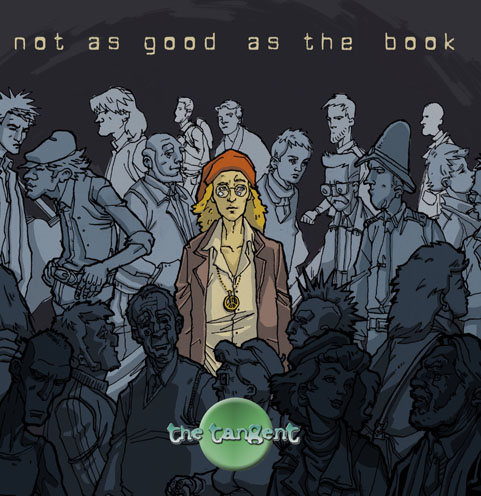
Tillison makes this connection literal in his very fine novella, “Not as Good as the Book: A Midlife Crisis in a Minor.”  The dedication lists close to 100 names, including numerous members (first names only) of the members of various bands from Yes to ELP to The Flower Kings to Spock’s Beard to XTC and to authors such as Arthur C. Clarke and J.R.R. Tolkien.  None of this is contrived.  Just pure Tillison expressions of gratitude.not as good
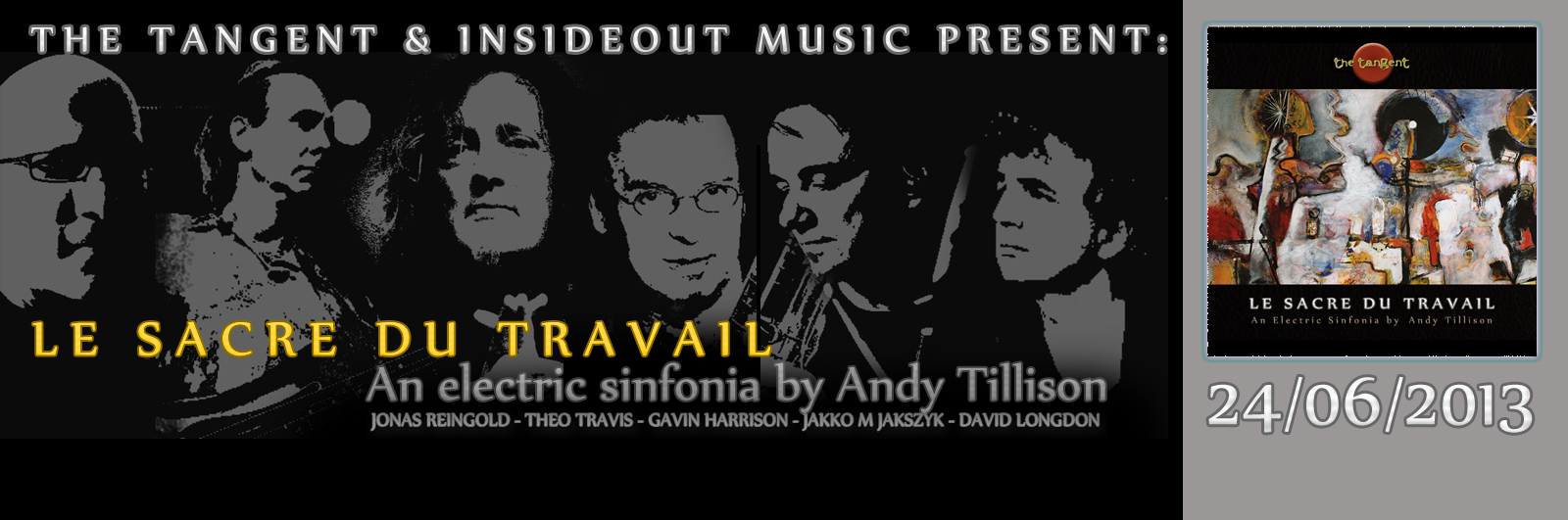
Privileged (well, blessed, frankly, if you’ll pardon a blatant religious term) to receive a review copy of the new album, Le Sacre Du Travail (Out officially June 24, 2013 from InsideOut Music), I dove right into the music.  Full immersion.  With every album, Tillison has only improved.  Each album has bettered the already previous excellent album with even more classiness, more intensity, and more meaning.  Not an easy feat in this modern world of chaos and consumerist fetishes.

With this album, though, Tillison has moved forward the equivalent of several The Tangent albums.  Again, to be blunt, the album is mind-boggingly good.

Easy listening?  No.  Of course not.  It’s Tillison, it’s prog, and it’s excellent.  What part of those three things suggests easy.  No excellent thing is easy.  Can’t be.  It wouldn’t and couldn’t be excellent if easy.

Satisfying listening?  Oh, yes.  A thousand times, yes.

For one thing, Tillison has brought together some of the finest artists in the business.  I was convinced of the potential greatness of this new album when I first heard David Longdon (in my not so humble opinion, the finest voice in rock today) would appear on the album.  But, add a number of others in: Jonas Reingold (The Flower Kings), Jakko Jakszyk (Level 42), Theo Travis (Soft Machine), and Gavin Harrison (Porcupine Tree).  And, it doesn’t stop here.  Add Brian Watson (DPRP.net)’s spectacular art work and the cool dj voice of Geoff Banks (Prog Dog show).  Ok, this is one very, very solid lineup of the best of the best.

1913

Ten years ago, Tillison released the first The Tangent album.  100 years ago, Igor Stravinsky released what was arguably his masterpiece and certainly one of the finest pieces of music of the twentieth-century, The Rite of Spring.  While The Rite of Spring hasn’t pervaded our culture in the way the fourth movement of Beethoven’s 9th Symphony has, it’s a close second.  Every person, an appreciator of music or not, knows at least part of The Rite of Spring.

Imagine for a moment 1913.  It was, by almost every standard, the last great year of the optimism of western civilization.  Technology upon technology had produced innumerable advancements, almost everyone in the western world believed in unlimited progress, and even devout Christian artists (such as Stravinsky) had no problems embracing the greatest elements of paganism and folk culture.

In almost every way, Stravinsky explored not only the folk traditions of his era, but he embraced and, really, transcended the modernist movement in music.  He bested it.  His Rite is full of tensions and dissonance, but each of these is overruled and corrected by harmony and emergent joy.  The Rite, no matter how pagan, also has deep roots in the Judeo-Christian and Greco-Roman traditions.  The Rite–the ritual, the liturgy–has been a part of western civilization since the pre-Socratics debated about the origins of the cycles of the world and history: earth, water, air, or fire.

MARTIN STEPHEN COVER PIC2013

Imagine for a moment 2013.  Well, ok, just look around.  Technology remains exponential in its growth, but few would praise the development of the Atomic Bomb, the gas chamber, or the aerial bomber.  But, then, there’s the iPod.  And, unless you’re Steven Wilson, you probably think your iPod is ok.  Certainly better than an Atomic Bomb.

Optimism?  No.  I don’t need to go into detail, but, suffice it state, T.S. Eliot might very well have been correct when in the late 1940s he claimed the western world in an advancing stage of darkness:

the tower overthrown, the bells upturned, what have we to do

But stand with empty hands and palms turned upwards

In an age which advances progressively backwards?

The U.S. and the U.K. are currently waging numerous wars, and there seems to be no end in sight.

The Rite of Work

As with the Stravinsky of 1913, the Tillison of 2013 surveys the cultural landscape.  Unlike his Russian counterpart, the Yorkshire man finds little to celebrate in this whirligig of modernity.

The “good guy anarchist,” as he described himself in a recent interview (and, not to be too political, but more than one progarchist would be in great sympathy with Tillison on this point), Tillison observes not the Rite of Spring, but the liturgy of work.  We get up, we commute, we sit in our cubicle, we commute again, we eat, we drink, we have sex, we watch a little t.v., and we sleep.  The cycle beings again every Monday, Tuesday, Wednesday, Thursday, and Friday.  Who made this deal, Tillison wisely asks.

Throughout it all–pure prog interspersed with very modernist musical elements from time to time–Tillison references much in our modern folk and popular culture, including The Sound of Music and Rush (2112):

In a Rush T-shirt, pony tail, 2112 tatooed on his hands

He’s a star through thick & thin

But he still gets that data in

A modern day warrior, today’s Tom Sawyer is a clerk

He’s a meta for disillusion

He’s a metaphor for life

But, interestingly enough, Tillison does all of this as a modern-day St. Thomas the Doubter.

But I don’t believe them, not ’til I see it

Until I put my finger in the holes

In every word, the lyrics rage against the conformity demanded in 2013–demanded by our corporations, our neighbors, and our governments.  What have we become. . . mere ants, living in a world of bird dung.  Certainly, whatever humanity remains has been given over to some institution radiating power.

And, yet, still somewhat in the persona of St. Thomas, Tillison asks us to reconsider our day-to-day rituals and liturgies.  Is it worth it that we squander what little time we have in the name of the mindless and soulless cycles of modern life?  By far the most powerful moment of an album of immense power (power in the good sense; not in the domineering sense):

‘Cos you can’t take it with you

There’s no luggage allowed

No you can’t take it with you

No matter how rich or proud

Your kids will sell it off on Ebay

For god’s sake don’t waste their time

‘Cos you can’t take it with you

You can leave just a little bit behind.

Summa

Well, what an album.  What an artist.  What a group of artists.  If any one ever again complains about the superficiality of rock music, consider handing them a copy of this CD.  No superficiality here.  Only beautiful–if at times gut wrenching–meaning.

Keep raging, Mr. Diskdrive.  Rage on.

To order the album (and you should, several times!), go here: http://www.thetangent.org/
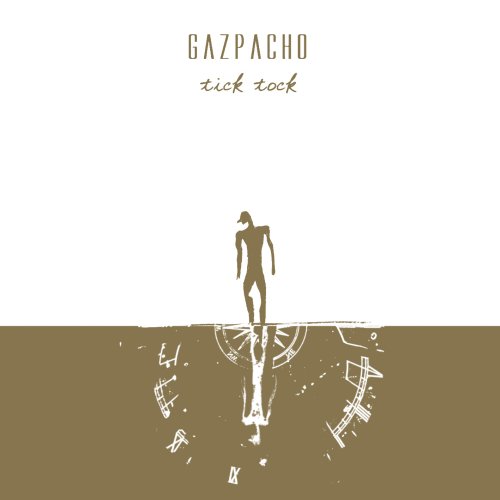
Ticking and Tocking Through a Back Catalog: Gazpacho’s ‘Tick Tock’

ImageOne of the great things about getting to know some of the other contributors to this site is the discovery of bands that were previously missed.  One such band that I had missed out on was Gazpacho, of whom I did not learn of until 2011.  At that time, I took mental notes that I would check them out one day.  After reading this fantastic review of their 2007 album ‘Night’, I knew it was time.  Literally within minutes of finishing my reading of that review, I had purchased the album and was giving it a first of many listens.  I was not disappointed, and will definitely vouch for all the good things written about ‘Night’. It is truly is one incredible album.


After such an excellent and absorbing introduction to Gazpacho, I knew I would have to explore some of their other works.  I read a few reviews and asked around a little bit, and finally settled on the follow-up to ‘Night’, ‘Tick Tock’ from 2009, as my next foray into the world of Gazpacho.  I knew this album would be a big challenge for the band, as is any follow-up to such a masterpiece.  And once a again, I can say I was not disappointed.  In fact, I can and will say a whole lot more, as ‘Tick Tock’ is an incredibly brilliant work in its own right and most certainly belongs on the shelf right next to ‘Night’, not just for being from the same band, but for being an album of the same level of artistry.  In other words, ‘Tick Tock’ is an absolutely fantastic album, and could end up being the tipping point that turns me into a Gazpacho junkie.


A short summary of Gazpacho’s music is in order (at least as I know it from the two albums I have heard thus far).  Unlike a lot of progressive rock, and certainly unlike most 70’s prog, you won’t hear a lot of instrumental fireworks in their music.  If you are looking for self-indulgent soloing, Gazpacho is not your band.  On the other hand, much like one particularly popular 70’s prog band – Pink Floyd – Gazpacho’s music give the listener a lot of room for contemplation (this is not to say they sound like Pink Floyd – they most certainly do not).  ‘Spacious’ is one adjective I would use to describe their music.  Two other adjectives I would use are ‘subtle’ and ‘meticulous’.  Because Gazpacho relies on subtlety instead of flashy instrumentals pushed to the forefront of the mix, their music often requires more work from the listener to fully ‘get’ it.  Ah, but what rewarding work it is!  Repeated listens with undivided attention reveals the meticulous attention to detail in their arrangements. 


One final adjective I would use to describe Gazpacho music is synergistic – the whole is much, much greater than the sum of its individual parts.


Getting back to the subject of this review, ‘Tick Tock’ is a concept album based on the story of the airplane crash of Antoine de Saint-Exupéry and his navigator during a Paris-to-Saigon air race, and their subsequent walk through the desert.  The walk nearly ended in tragedy, but both were saved by Bedouins in the nick of time.  The album is divided into four separate compositions (in order), ‘Desert Flight’, ‘The Walk’, ‘Tick Tock’ and ‘Winter is Never’.  The middle two compositions are relatively lengthy, with the first being divided into two tracks, the second being divided into three. 


Taking into account my basic summary of Gazpacho music above, ‘Desert Flight’ goes and makes a liar out of me. It begins as a straight ahead rocker.  Musically and lyrically, it conveys an adventurous spirit:


We can be the first

Tie a ribbon all ‘round the world

We’ll make it a gift to us

From the start with a wind-flapped officer’s scarf

Like a ghost in the wind


Eventually, the mood of the music shifts a bit to give the listener a sense of trouble.  Toward the end of the song, the pace picks up again in the same manner the ground would appear to move by faster as the airplane loses altitude.  And suddenly, the pace grinds to a halt, with the mood of the violin and piano letting us know that we are now on the ground – but alive nonetheless.


The trek across the Sahara then starts in earnest with ‘The Walk’.  Our heroes are lost, but nonetheless confident that they will get out of their predicament relatively unscathed.  Musically, the acoustic guitar and drums dominate, with other instruments making brief appearances before stepping back into the shadows (a classic example of the meticulous arranging I discussed above).  Midway through Part I, the violin steps to the forefront with a Middle Eastern motif, with the other instruments carrying this motif through the end of Part I.   As the music segues into Part II of ‘The Walk’ we can feel the doubts creeping into the minds of our heroes, and maybe a little loss of coherency of their thought processes.  We’ve now transitioned from adventure mode to survival mode. Image


Part I of the title track begins with the percussion indicating the ticking of a clock, and this ticking carries on throughout the entirety of the piece.  The lyrics in Part I of ‘Tick Tock’ begin to really bring home the predicament our heroes are in as they trek through the sands of the Sahara:


You beg for time

She’s china white

There’s no cure

Nowhere to hide


A Gregorian-sounding chant appears near the end of Part I, and the mood becomes even darker as Part II begins.  The sheer drudgery of walking through the hot desert is conveyed through the music, while the lyrics have one of our heroes (probably the pilot) beginning to question his own life.  In Part III, the trek is taking its toll on our pilot and our navigator, as they apparently begin hallucinating as their survival hangs by a thread:


And what do you think they’ll do?

The ground is a pendulum

The continent is gravel

Humming in your shoe

A pendulum.


The final track is ‘Winter is Never’, which occurs chronologically after the rescue in the desert.  It is a reflective track, appreciative of the present and hopeful for the future in light of the recent past in the desert.  It’s a fitting conclusion for a fantastic album.


Like its predecessor ‘Night’, ‘Tick Tock’ is a must-own masterpiece.  I won’t go so far as to say this album is better than ‘Night’, but in this reviewer’s opinion, it is every bit as good.  The number of bands out there that can put out an album of the artistry of ‘Night’ and ‘Tick Tock’ is small; the number of bands that can do it on two consecutive albums is even smaller.  Everything about the music of ‘Tick Tock’ is utterly flawless, as is the delivery of the lyrics by Jan Henrik Ohme.  It’s the kind of album you want to listen to eyes shut through headphones as you get lost and absorbed into it. 


If you had previously missed out on Gazpacho, as did I, now is the time to go back and explore some of their back catalog.  Start with either one of ‘Tick Tock’ or ‘Night’.  Drink it in fully, and then move on to the other one.  You will quickly find that what they have done as a band is to create a sound like no other.  While you may hear an influence here or there, those influences have been amalgamated into something completely unique.  Like the best progressive rock bands, they have pushed the boundaries back to create something new.  As ‘Tick Tock’ indicates,, along with its predecessor, these guys need to be in any conversation regarding the best progressive rock bands, not only for the present revival, but for the entire history of the genre. 

Now, onward to ‘Missa Atropos’!


More BillyNews: The Dutch Woodstock, 1970

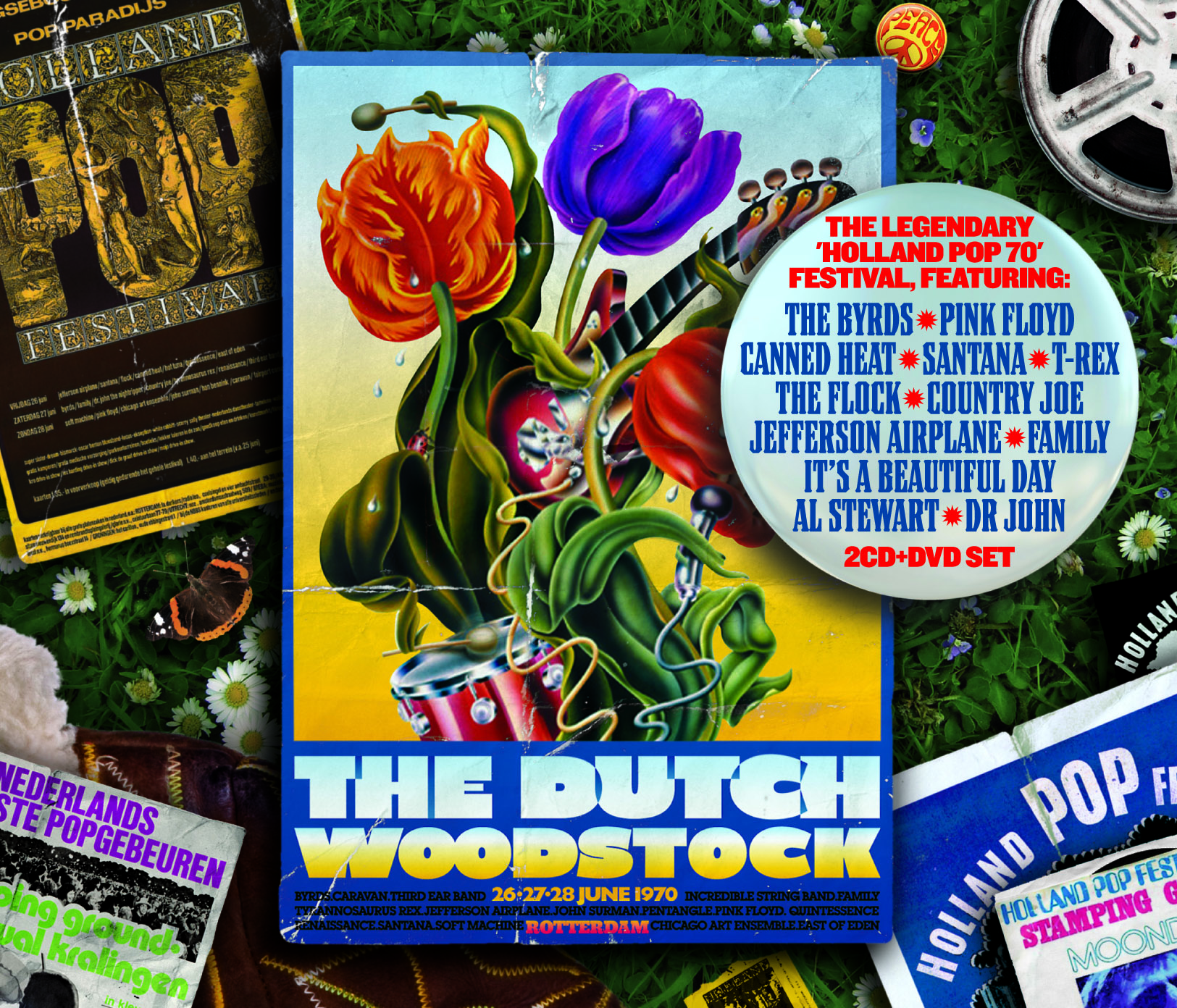
0146 CD Front Inlay.inddFeaturing performances by Pink Floyd, Santana, T.Rex, The Byrds, Canned Heat, Jefferson Airplane, Soft Machine, It’s A Beautiful Day, Family, Country Joe, Dr. John & the Night Trippers, Flock and Al Stewart

London, UK – One of the most historic concert events of the early ’70s, the Dutch Woodstock, also called the ‘Holland Pop Festival’, has now been released on a double CD/DVD set by UK’s Gonzo MultiMedia. Featuring rare and exciting performances by Pink Floyd, Santana, T.Rex, The Byrds, Canned Heat, Jefferson Airplane, Soft Machine, It’s A Beautiful Day, Family, Country Joe, Dr. John & The Night Trippers, Flock and Al Stewart, makes this extraordinary release a must for fans of music everywhere! The three-day festival was held in August 1970 at the Kralingse Bos (Kralingse Forest) in Rotterdam, and despite the rain, an estimated 100,000 people attended the astounding event!


Featuring…

Pink Floyd – Set The Controls For The Heart Of The Sun, A Saucerful Of Secrets

Santana – Gumbo, Savor, Jingo

The Byrds – Old Blue

Canned Heat – Human Condition, So Sad

T-Rex – Pavillions Of Sun

Jefferson Airplane – Saturday Afternoon, White Rabbit, Ballad Of You & Me & Pooneil plus interviews with Paul Kanter & Grace Slick

Soft Machine – Esther’s Nose Job

It’s A Beautiful Day – Wasted Union Blues, Open Up Your Hearts

Family – Drowned In Wine

Country Joe – Freedom Is A Constant

Dr. John & The Night Trippers – Mardi Gras Day

Flock – Big Bird

Al Stewart – Zero She Flies


The Dutch Woodstock double CD/DVD set will be released by GONZO MultiMedia UK on March 22, 2013

To Purchase The Dutch Woodstock double CD/DVD set: http://www.gonzomultimedia.co.uk/product_details/15545

Press inquiries: Glass Onyon PR, glassonyonpr@gmail.com

BillyNews: UK Prog Legends Nektar To Release Highly Anticipated New Studio Album ‘Time Machine’

Nektar Time Machine cover

Los Angeles, CA – Prog legends Nektar return with their triumphant 13th album ‘Time Machine’ on June 18, 2013 on Purple Pyramid Records – the first album of new material in over 4 years – that band leader and founding member Roye Albrighton is calling “The best album Nektar has ever made!” ‘Time Machine’ showcases a new depth of songwriting, melodic complexity and musical exploration that hearkens back to early Nektar releases such as ‘Remember The Future’ and ‘A Tab In The Ocean’.

Nektar, featuring Albrighton, founding drummer Ron Howden, keyboardist Klaus Hentasch and bassist Lux Vibratus, is British, but was formed in Hamburg, Germany in 1970. Their early albums featured a heady, exhilarating mix of progressive, experimental rock sounds that soon caught on worldwide at the height of the international prog-rock boom. Touring the world behind numerous album releases throughout the ‘70s and ‘80s helped to cement the band’s reputation as an influential prog-rock legend. Having undergone a variety of personnel changes over the past decade or so, the band now boasts its strongest lineup in years and is ready to prove so yet again to its many fans throughout North America. In celebration of the 40th anniversary of the original release date of the band’s classic album, ‘Remember the Future’, Nektar is looking to perform in its entirety this most heralded release from its vast catalog, a rarity in that the band has not performed the entire album live in years.

Nektar ‘Time Machine’ CD is available for pre-order now at Amazon: http://www.amazon.com/Time-Machine-Nektar/dp/B00CGUSM16

Nektar / Son’s Of Hippies US Tour Dates:

June 20 – Sully’s – Chantilly, VA

June 21 – Altar Bar – Pittsburgh, PA

June 22 – Sellersville Theatre – Sellersville, PA

June 23 – B.B. King Blues Club & Grill – NYC

June 26 – The Winchester Music Hall – Cleveland, OH

June 26 – The RockPile Bar & Nightclub – Toronto, ON, Canada

June 28 – Shank Hall – Milwaukee, WI

June 29 – Viper Alley – Lincolnshire, IL

June 30 – Famous Dave’s Blues Club – Minneapolis, MN

July 02 – Rogue Pizza Co. – Fayetteville, AR

July 03 – Cheer Up Charlie’s – Austin, TX

July 04 – The Grotto – Fort Worth, TX


For more information visit Nektar’s official website: www.nektarsmusic.com

Press inquiries:Glass Onyon PR, Billy James, Ph: 828-350-8158,

glassonyonpr@gmail.com


CLEOPATRA RECORDS, Inc.

11041 Santa Monica Blvd #703

Los Angeles CA 90025

www.CleopatraRecords.com

The Tangent News

MARTIN STEPHEN COVER PIC

As most readers of Progarchy well know, Andy Tillison will be releasing the new The Tangent album at the end of this month.  Any Tillison release is as much an event as it is a momentous moment.  As he’s proven time and again over the last decade with The Tangent releases, Tillison is a true believer in the roots and the origins of prog as well as in the future and innovation of prog.  He’s a seeker of all things excellent and beautiful.

Bringing in David Longdon for the new album is a touch of genius.  But, Longdon is not alone.  Bassist Jonas Reingold and guitarist Jakko M. Jakszyk join as well.

In case you’re interested, and I assume we all are, there are two pieces on the internet well worth checking out today:

A newspaper interview with Tillison here:

http://www.yorkshirepost.co.uk/yorkshire-living/arts/music/prog-rock-is-alive-and-well-in-otley-1-5747200

And, the first review of the new The Tangent album here:

http://ytsejam.com/music-review/the-tangent-le-sacre-du-travail-the-rite-of-work/

You can order the album here:

http://www.thetangent.org/
Enjoy!

30 years after taking “Drastic Measures”, John Elefante revisits Kansas

Any rock group that has been around for a few decades has seen its share of line-up changes. The same is true several times over for certain prog groups, some having a near legendary reputation for players coming and going, returning and re-leaving, rinsing and repeating. Yes comes to mind, along with King Crimson, Asia, and Kansas. The latter has essentially (if not precisely) had three different incarnations in the forty years since it formed in 1973: the original/current one (1973-1981; 1985-present), the one with John Elefante replacing Steve Walsh as lead singer/keyboardist (1982-84), and the line-up with Steve Morse taking the place of Kerry Livgren as lead guitarist (1985-89). Violinist Robbie Steinhardt has come and gone several times over the years; the two stalwarts have been drummer Phil Ehart and guitarist Rich Williams, who have appeared on every Kansas album. (A complete breakdown is available here)

The 1980s brought challenges stylistic, cultural, and technological in nature for most prog groups (Yes, Genesis, etc.) that tasted or enjoyed significant success in the 1970s . Much is made of the influence of punk in the demise of ambitious, complex prog albums, but other factors were in play. Those included the advance of electronic instrumentation and production values that were intertwined with the arrival of New Wave Music, something of a sophisticated, artsy cousin of punk. Also notable was the rise of Album Oriented Rock (AOR) in the mid-70s, which johnelefante_neweventually narrowed the focus and homogenized the content of music-oriented radio. It is rather fascinating, in considering the groups Yes, Genesis, and Kansas, how each went through big line-up changes in the late 1970s and early 1980s, and then experienced massive successes in the first part of the Eighties with songs and albums that were less complex, more commercial, and often very much in keeping with the AOR sounds of the time. Journey, the band that (arguably) best embodied the AOR “sound”—or at least approach—was originally formed in the mid-1970s as a rather “meandering jazz-rock” , prog-ish band, finally arriving on the winning formula when singer/songwriter Steve Perry joined the group in 1977. And there is no doubt that Asia was formed by four prog giants in order to produce radio-friendly music that could—and did, of course—move truckloads of units. 

Kansas, meanwhile, had its biggest hit with “Dust In the Wind” (what, you’ve heard of it?), which reached #6 on the Billboard Top 100 in 1978. Yet the song was not the typical Kansas song up to that point: it was quite short—just over three minutes long)—quite simple, and quite sparse, with just vocals, acoustic guitar, violin, and a great melody line (not to mention some overtly existential lyrics shot through with palpable angst). But, having achieved remarkable success, the band began to show the wear of constant touring and being pushed to have further commercial success. In addition, band founder and primary songwriter Livgren announced during the Monolith tour in 1980 that he had converted to Christianity after years of obvious spiritual seeking (many of the lyrics on the Monolith album were influenced by The Urantia Book). Later in 1980, Livgren released his first solo album, Seeds of Change, which featured overtly Christian lyrics. With discord growing, Walsh finally left Kansas in October 1981. The year before, Walsh had released his first solo album, Schemer-Dreamer, which featured Kansas band mates Livgren, Williams and Ehart, as well as the great Steve Morse, who would eventually become the lead guitarist of Kansas when Walsh rejoined the group in 1985 (yes, keeping track of this stuff can be challenging!).

Which brings me, finally, to John Elefante.

Continue reading “30 years after taking “Drastic Measures”, John Elefante revisits Kansas”

Beautiful folk post-rock from Scotland

Image

‘Quickbeam’ by Quickbeam

This lovely self-titled debut release from Scottish band Quickbeam is working it’s way into my affections very quickly. As soon as I saw the video for ‘Immersed’ I knew I had stumbled on something special

These guys are not new to music and have not suddenly appeared from nowhere having steadily plied their trade on the folk scene for the last three years or so. This is perhaps why there is such a finished air to their debut with a depth of emotion and feeling that lends a tangibly plaintive air across the 12 tracks.

The combination of Monika Gromeks lovely voice with piano, cello, guitar, trombone and harmonium is a thing of beauty which swells like the ocean and builds up into wonderful layers of sound – in particular the above mentioned track ‘Immersed’ which has a feel of Sigur Ros from their Harf-Heim DVD/album where they play acoustically at local venues across Iceland.

I also get the feel of that gorgeous album ‘Diamond Mine’ from King Creosote and Jon Hopkins – a big favourite of mine with it’s simple, elegant and understated tones.

Quickbeam stand up to any of these references and have produced a compelling, albeit gentle, album which is a great companion when you need to relax and contemplate and revel in the atmosphere and mood of acoustically soothing music.

Tracks such as ‘Fall’ are enchanting. Minimal lyrics coupled with a build up of a simple refrain adding strings, piano, cello and eventually trombone create a moving, elegant piece.

This is taken further with ‘Home’ where the gentle opening leads into an upbeat drum finale with the relaxed vocals washing beautifully over the top leading to pure folk-post-rock majesty.

Even the track titles are minimalist – ‘Remember’, ‘Matter’, ‘Grace’ – all reflecting a quiet confidence in what this band are trying to achieve and with this album they certainly deliver.

If I were to try and pin down their sound, I  would describe Quickbeam as a Scottish folk Sigur Ros, but there is enough individual quality and ideas here for them to stand proud and build a solid following on this showing.

A super recording and highly recommended.

Days Between Stations. A Must Own. Yes, Must.

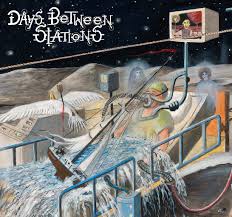
days between stationsForgive this quick post.  We have a school event to attend this evening.

But, I can’t allow this afternoon to pass without noticing one of the best new releases of the year, Days Between Stations’ latest, “In Extremis.”  What can I write, but that this album is simply mind boggling.  I played it for the first time only early yesterday morning, and I’ve listened to little else in two days.  I’m sure I’m on my seventh or eighth listen.

This is prog.  Psychadelic prog, but prog–unapologetic prog–to be sure.  There are some hints of Pink Floyd, Miles Davis, early Spock’s Beard, Genesis, and The Doors within.  Regardless, Days Between Stations is its own band.

To add to overall beauty of this album, Colin Moulding, Tony Levin, and Rick Wakeman contribute.

It is an absolute must own.  A huge thank to Billy James of Glass Onyon for letting me know about this thing of beauty.  And, long live the Eggshell Man.