The Madeira Live, 2013

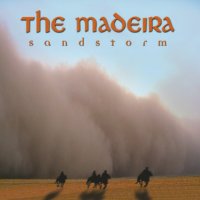
Last night, my wife and I had a date.  Having as many kids as we do makes this rather difficult at times.  Granted, we did have some choice in having all of the kids we do, so I can’t really complain too much about our confinement to the Birzer home on the weekends.   sandstorm
Of course, it’s my wife’s fault we have so many kids, but that’s another story.

We only had to travel about 1.2 miles to the site of our date, the Dawn Theater–a restored movie theater from the last century now turned into a nice dinner club with a full bar, great lighting, and nice acoustics.  You must understand, we live in a town with a population of only 8,000 and a county that seems to have more Blue Laws than all of the Bible Belt states put together (as a good friend of mine notes, Hillsdale must be one of the view places in which any one can rent the most disturbing and raunchy video imaginable (or, let’s hope, unimaginable) after church on Sunday mornings, but you are forbidden from buying a bottle of vodka–INSANITY!).

So, a nice dinner club is a stunning thing in Hillsdale County, and Peg Williams does a brilliant job of running it.  Thank you, Peg.

But, to top it all off, we got to hear The Madeira play.  It was my first time to see them, though they’ve toured throughout North America and Europe previously.  I pray it will not be my last time.

The Madeira, led by my close friend, political ally, and colleague in the economics department at Hillsdale College, Ivan Pongracic, specializes in Surf Rock.  I hate to admit it, but I’m really not that familiar with the genre–coming out of the Middle East originally but exploding in California in the very early 1960s.

As the band explains it on their website:

The Madeira plays surf music born of screaming wind over the sand dunes of the Sahara Desert, deafening echoes of waves pounding the Gibraltar Rock, joyous late-night gypsy dances in the small towns of Andalucia, and exotic cacophony of the Marrakesh town square. It is the surf music of the millennia-old Mediterranean mysteries.

To my untrained ear, the music most resembled that of Chris Isaac and of Ennio Morricone from the Spaghetti Westerns of the 1960s.
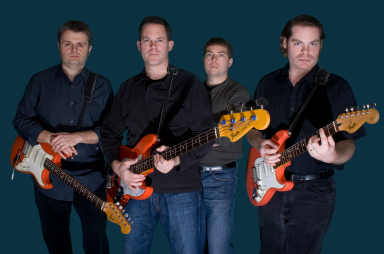
band2008From my rather ignorant understanding of Surf, it struck me as possessing a really traditional rock rhythm section (bass and drums in almost perfect syncopation) but with a very mischievous lead guitar and a devastatingly hyperactive rhythm guitar.   The drums, especially, had an interesting sound–and for those of you who have any understanding and knowledge of drumming and percussion, please forgive me–as there was an emphasis on the deepest bass drum and on the highest cymbals, with little attention on the middle range.

Overall, the lack of lyrics and the place of Surf in history of the pre-radical sixties, gave the music a real innocence.  But, it was the innocence of genius, not of decadence.

The whole show last night–just a little under one hour long–overflowed with the energy of a thousand stars.  Amazing.  The audience enjoyed it just as much as the band.  Everyone enjoyed it.

Granted, I’m biased, as I think the world of Ivan, but he served as the perfect leader of the band.  He played with finesse and confidence, and he had the audience completely in the palm of his hand.  He joked, often, of the commercial suicide he and the band committed by dedicating themselves to Surf.  Well, what may be bad for the pocket book is perfectly healthy for the soul.

The Madeira is Ivan Pongracic (lead guitar), Patrick O’Connor (rhythm guitar) , Todd Fortier (bass), and Dane Carter (drums).  Their studio CDs (Double Crown Records) are 1) Sandstorm (2005) and 2) Carpe Noctem (2007), and 3) Tribal Fires (2012).  To order The Madeira’s studio CDs (and I very much encourage you to), go here.

The Mysterious Driving Majesty of Jeff Hamel and Majestic

Review: Majestic’s “V.O.Z.” (Majestic Records, 2013; two disks–”Voyage of Zosimos”).  Produced by Jeff Hamel, with two full-time members of the band: Hamel (guitars and keyboards) and Mike Kosacek (drums, percussion).  Additionally, there are four vocalists: David Cagle, Tara Morgan, Chris Hodges, and Celine Derval.

majestic voz

From the moment I received a physical promo copy of Majestic’s latest CD in the mail, I was intrigued.  Two disks, a concept, and with cover art equally enticing as well as disturbing (a wraith/priest/mystic/monk? holding its own eyeballs).

And, who is Zosimos?  My first thought was of the Eastern Orthodox priest and saint, Father Zossima, from Brothers Karamazov.  But,  then there’s also the early Christian heretic, Zosimos of Panopolis.  A wonderful set of options–orthodoxy or heresy?  When I wrote to Hamel, asking about all of this, he responded, it’s most closely related to Greek tragedy.

Well, that means it could still be about the Orthodox or the Gnostic!  But, this is totally fine.  I’m happy to leave it a mystery.  The lyrics carry as much a sense of artistry as do the composition and production of the album as a whole.  Clearly, the lyrics involve a journey, and that journey, as all good ones do, involves wonder, tragedy, and joy.   Disk two, even proggier than disk one, seems a series of vignettes–perhaps the visions of Zosimov.

No matter how many times I listen to this CD, I find it enthralling.  While certainly “prog rock,” VOZ has unusual sounds, atmospheres, and mysteries around every corner and at ever turn of this stunning album.  If Jeff Hamel is half as interesting in real life as he is in the studio, an astounding person he must be.  Indeed, though listed as producer and primary song writer, he is, for all intents and purpose, a director and an orchestrator.  Truly, every aspect of this release is a work of art.

I’m not always a huge fan of comparing one person’s art to those of others, but if I had to, I would ask the reader of the review to imagine Edgar Allen Poe or Washington Irving as lyricist, Tangerine Dream as creator of atmospheres and atmospherics, and Rush for song writing hooks.  And, if someone forced me into comparing Hamel’s work to a modern-day Progger, I would certainly think of him as the North American equivalent of Arjen Lucassen.

According to Majestic’s website, this album took two years to write, record, and produce.  I’m not surprised in the least.  VOZ has perfectionist written all over it.  And, thank the good Lord!  Who wants half-hearted art?  Certainly, no Progarchist.

Official website for the band and the label: www.majesticsongs.com, its physical offices located in Minnesota.  It’s a wonderful website–with lots of musical treasures and much to explore.

This will certainly not be my last Majestic CD.  I’m more than eager to explore Hamel’s back catalogue.  I give VOZ my highest recommendation.

And, on a personal note–Jeff, thank you.  Thank you for not dumbing down or commercializing your art.  Don’t get me wrong, I hope your music makes you a wealthy man.  But, I hope this happens through what you’ve shown already to be immense integrity.  Yours, Brad (ed.)

Nosound–Quite the Contrary

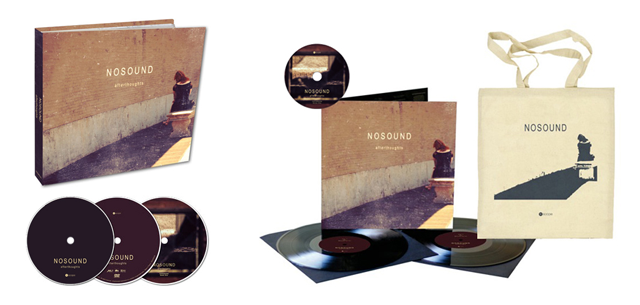
comboweb640 (1)There can be no doubt that this will be one very, very great year for Prog.  We’ve already had masterpieces from Big Big Train and Cosmograf.  Sanguine Hum has released its second, though it’s still not available in North America.  Matt Stevens, Ayreon, Heliopolis, Advent, and the Tin Spirits are working on new albums as well.  Very exciting.

One of the albums I’m most looking forward to this year is the new studio album (KScope–May 6, 2013) from Nosound, “Afterthoughts.”  It will be their fourth studio release.

Sea of Tranquility was able to get a hold of a pre-release copy and has offered an excellent review.  You can read it here.

I’ve been a huge fan of this Italian (now, Anglo-Italian with the addition of Chris Maitland on drums) post-prog act for coming up on a decade now.  Indeed, I find Lightdark (2008) and A Sense of Loss (2009) to be essential parts of any serious progger’s library.  When music historians look back on this current revival of prog, the albums of Nosound will stand at the forefront–along with the works of Big Big Train, Glass Hammer, Gazpacho, Cosmograf, Ayreon, and The Fierce and the Dead . . . and many others (what a great time to be a prog fan!).

This music is contemplative and wave-like, without ever descending into the abyss of self-absorption or ascending into the madness of over-the-top ELPism.  Probably the best descriptive of Nosound’s perfectionist sound would be: tasteful.

Nosound’s official website is: http://nosound.net/.  I preordered “Afterthoughts” the moment the CD was announced, and I very much look forward to reviewing it.

Steve Howe leaves Asia (again), talks guitar

Someone with time on their hands and prog trivia on their brains should do some careful historical research in search of the answer to this question: “Which prog group has the most line-up changes all-time?” Three groups come to mind immediately: Yes, Asia, and King Crimson. And the three are, of course, bound together by all sorts of personnel connections and such, as SteveHowe1970swell as having been around for decades, which surely is part of the ongoing drama of departing, returning, reuniting, breaking up, reforming, guesting, and so forth. Anyhow, legendary guitarist Steve Howe has announced that he is leaving Asia so he can concentrate on solo work and (it appears) his commitments to Yes. Just as (or more) interesting are his remarks on playing guitar. From the ProgRockMag.com site:

The pressures of attending to the requirements of two large-scale acts was also getting to him, he admits. “Over the last year I started to think, ‘Boy, when Yes extend a tour then Asia start a day early, I’m the guy getting squeezed.’ I couldn’t do it much longer without feeling that I was running on autopilot. I want to be in control of my musical direction and follow my calling.”

That calling will include the Cross Styles Music Retreat, during which Howe hopes to share his passion and experience of guitar with attendees. But he’s wary of the “unique” label: “It sounds like I’ve set myself up for a fall there,” he laughs. “All I’m saying is: I’m not educated, I don’t read music, I didn’t go to music school, I don’t have the theory. All I have is my experience, and presumably people want that, otherwise I wouldn’t be selling any tickets.

“I’ve done these things before. I walk in and say, ‘Don’t talk to me about demi-semiquavers. Don’t talk to me about time signatures.’ I play. Everything I do and everything I’ve learned is by ear.

“You don’t have to drive yourself mad reading dots. If you want to play classical music you should; but where I’m coming from, improvisation, composition. I’m bringing in an unschooled – I wouldn’t say rebellious, but individual – approach to guitar.

“I’m not going to pose that it’s going to be anything else. You get me, I play tunes and I talk about guitar. I’ve managed to make that interesting for myself for over 50 years, so there must be something!”

Howe states that he’s never believed in straight-out practising. “Playing scales would have driven me stark raving bonkers,” he says. “That’s not what I call music. It might be an essential part of keeping your muscles and fingers in good order and I don’t say it’s terrible. But my central thing is improvisation. Play stuff – make stuff up. That’s how I keep interested: by interacting with it, not just being a mechanical, physical observer.”

He didn’t enjoy his school days, finding London’s Holloway School “oppressive, violent, mixed with racial and religious prejudices.” But he’s never found that a lack of a “proper” musical education held him back – except when he tried to learn to play flute and discovered it was too distant from guitar to make the transfer comfortable.

As a result of being self-taught he does encounter people who are better technicians than he is. “But I don’t feel particularly threatened,” he explains. “What I feel is: ‘They’re very advanced in their technique – how advanced are they in their general view of music?’

“Guitarists can get fanatical about guitarists; but in the end we’re musicians. We make sound. It’s the sound that’s got to be pleasing – not how you made the sound. Who cares how you play it? What’s important is what comes out the other end.”

And one of the key lessons he hopes to impart at Cross Styles is: “Musicians are lucky; we can break the rules. There’s no such thing as the ‘music police’ – they’re not going to come round and say ‘You shouldn’t have played a D-flat, it should have been a D. You can do what you want – live and die by the musical sword!”

In addition to the retreat he’s planning a solo tour and a new Steve Howe Trio album and tour. “We’re just about to launch some dates. I’ve got two or three weeks of solo dates in June, which I haven’t done in a very long time due to my demanding schedule of keeping two bands happy. In September we’re doing the trio again. We should have a new recording before that.”

His desire to move away from the band environment is much more than just a whim, Howe notes. “My solo guitar work is pretty central to my musical existence. I’m not a blues, rock or jazz guitarist – I’m a guitarist, and the central thing is solo playing.

Read the entire piece. Glancing over his bio on Wikipedia (yes, I know, forgive me), I was a bit surprised to learn that Howe was the first player to be inducted into the Guitar Player Hall of Fame, and one of the few in the GP’s “Gallery of Greats”, which comes with being selected best overall guitarist at least five times (although it appears the criteria has now been modified). Howe’s playing has long intrigued me because of the obvious jazz influences; he was influenced by Wes Montgomery, as well as Chet Atkins, whose mark on Howe can be seen in Yes songs that have a country-type feel to them, quite unique within the prog realm.

Short reviews of new music from Asia, Proto-kaw, Mystery, and Godstick

I’ll skip my usual apologia attempting to explain my long absence from this fine blog and instead spend my limited, if not valuable time, remarking on four recent prog and proggy albums that have been found a home on my regular iTunes rotation. I may write longer reviews of a couple of these albums, but some short remarks are better than none.asia_resonance

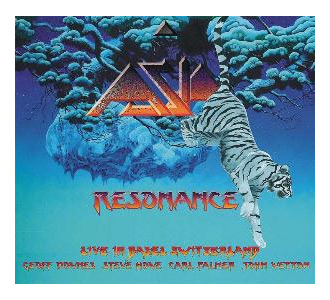
Asia — Resonance (The Omega Tour, 2010; released 2012): After Kansas, Asia was the group that first introduced me into the world of prog, back in the early to mid-1980s, when I was an innocent small town Montana boy making my way through high school. I recall seeking out books and magazines that explained the musical pedigree of Downes, Howe, Palmer, and Wetton, and thus being introduced to early King Crimson, ELP, Yes, and more. I know that Asia has been a source of debate among prog fans, some of whom dismiss and even deride the group; I’ll just say that I really liked and still do like the first two albums, Asia and Alpha, and make no excuses for the warm and gratifying nostalgia they bring to the surface whenever I play them. And, truth be told, I’m partial to the third album, Astra, which marked the first of two billion line-up changes (Mandy Meyer took over guitar from Howe, who had departed), as it is actually a good, hook-heavy example of what might be call “arena prog” or “pop prog” or something similar. Anyhow, the original line-up has been back for a while—and getting solid to excellent reviews—and this live album documents the group’s 2010 tour. I’ve heard cuts from earlier live albums by Asia, and have found most of them disappointing, especially in the vocal department. But this album, dare I say it, is rather stunning, both in terms of the outstanding sound quality and the amazing power and clarity of Wetton’s voice. Wetton, to my ear, sounds just as good as he did on the studio cuts from the early and mid ’80s, which is saying something. The playing is excellent, of course; my only small beef is that the drums seem a bit back in the mix, although there is an extended and fine drum solo on “The Heat Goes On”. Otherwise, a great mix of cuts, with some nice acoustic-oriented variations of old hits such as “Don’t Cry” and “The Smile Has Left Your Eyes”.

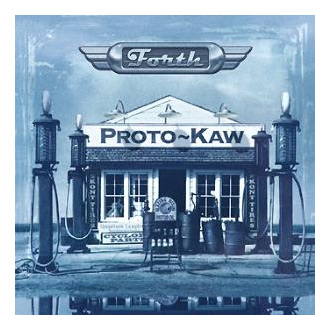
• Proto-kaw: Forth (2011): Speaking of Kansas, the group Proto-kaw was the second of three early incarnations of what eventually became simply “Kansas” in 1973. The key constant in protokaw_forththose groups was songwriter, lyricist, guitarist, and keyboardist Kerry Livgren, who conquered the world with Kansas in the 1970s (“Dust in the Wind”, anyone?), had a run of contemporary Christian rock albums in the 1980s (both solo and with the group AD), and then reformed Kansas and Proto-kaw in the 1990s. (Fun fact: metal legend Ronny James Dio sang lead on two songs on Livgren’s first solo album, “Seeds of Change”, in 1980.) All three of the newer Proto-kaw albums are worth checking out, and that is especially true of Forth, the most cohesive and fully realized album yet by the group. What strikes me, as a longtime fan of Kansas, is how much classical influence there is in Livgren’s writing, as his songs often have a suite-like quality that builds on either strings or keyboards/guitars that act as a strings section. Proto-kaw, like all Livgren-led bands, has dual lead singers (yes, Steve Walsh was a the primary singer in Kansas, but Robby Steinhardt sang lead or co-lead on numerous songs), and features excellent and often complex harmonies, masterfully constructed arrangements, and strong songwriting. One distinctive element is the presence of saxophone and flute (John Bolton), used to great affect in song such as “Pilgrim’s Wake”, one of my favorite cuts on Forth. A must listen for anyone with a soft spot for 1970s Kansas. And, speaking of Kansas (again!), this year marks the 40th anniversary of the group’s founding; I plan a couple of posts about the group and some of my favorite Kansas albums and songs.

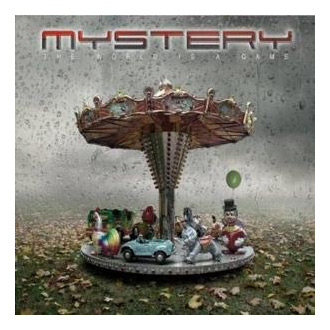
• Mystery: The World Is a Game (2012): How embarrassing it is to admit that prior to the Yes album, Fly From Here (2011), I had no idea who Benoît David was. Having replaced Jon Anderson and toured with Yes—and then having himself been replaced due to his own respiratory issues—the talented vocalist worked on his third album with veteran Canadian proggers mystery_worldMystery, a group he had joined in 1999. Having not heard any of his work with Mystery (which my iTunes annoyingly tagged as “The Mystery”), I was surprised—in a good way—that David did not sound like Anderson and that the group does not sound much like Yes, although the influence is present. In fact, at times David sounds more like another great Canadian singer, Geddy Lee. The two words that keep coming to mind after repeated listens of this exceptional album are “melodic” and “soaring”. The vocals soar, the guitars (by band founder, guitarist, lyricist, and producer Michel St-Père) soar, and the songs soar with a wonderful sense of discovery, melancholy, joy, and introspection, a not-so-easy mixture to navigate. And then there is the drumming of Nick D’Virgilio, who is rightly revered as one of the finest drummers in the prog/rock world. His drumming is, in a word, orchestral, and it is reason alone for buying this fine release. But, for me (a vocalist junkie), it is David who is the revelation here, especially after hearing his solid but rather emotionless performance on Fly From Here. In the words of a reviewer on ProgArchives.com, “Finally vocalist Benoit David proves what a versatile and commanding singer he is, a million miles away from the Yes/Jon Anderson clone dismissals. It’s also great to hear his voice so full of human feeling and compassion again after being so over-produced and rendered mostly lifeless on the Yes album `Fly From Here’!” Exactly right.

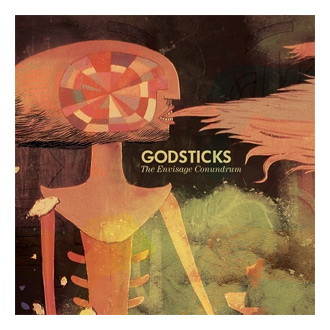
Godsticks: The Envisage Conundrum (2013): Here is a group (from South Wales) I knew nothing about a week ago, but has captured my attention in a way that only a few groups have on first listen. Explaining why is a bit difficult; the difficulty arises, in part, from the most enjoyable fact this is a group that is very hard to describe or label or situate in the universe of godsticks_conundrumprog/rock music. Nearly every review I’ve read says the same, and rightly so. One of those reviews, by Adrian Bloxham, puts it well: ” The world of Godsticks is not straightforward; they seem to have baffled other reviewers trying to pigeon hole them. They make their own brand of what they describe as ‘progressive rock/pop, but it is very much their own take on the sound. You get the idea that this is exactly the music they have inside their heads trying to get out and if you like it they will be pleased but that’s not why they do what they do.” The one influence I hear is later King Crimson, but even that is hard to pinpoint, although the angular, often astonishing guitar work by guitarist/singer Darran Charles brings it to mind in several places. None of the songs are longer than seven minutes in length, but some of them pack in more twists, turns, veers, swerves, and surprises in five or six minutes than many bands can pack into songs three times as long. The title cut is a perfect example. It begins with a chugging, almost “boogie” riff out of which emerges a spider-like flurry of notes, leading into a wall of harmonized vocals over a heavy, grunge-like riff backed by the tight, slightly funky, never quite straight forward rhythm section of Steve Roberts (drums, keys) and Dan Nelson (bass). Charles’ voice is part of the mystery here, a strong, clear instrument that manages to be intense, detached, soulful, and slyly humorous (and occasionally darkly smirking) all at once. There is an abundance of odd chords, meters, notes, and harmonies, sometimes, to my ear, sounding like a Robert Fripp-inspired space alien sibling of Soundgarden. And did I mention the album features a 3:49 piano solo by Roberts that could easily have made it onto one of Keith Jarrett’s solo albums? Followed by a three-part suite—”Borderstomp”, parts 1-3—that sometimes calls to mind Steve Vai? Not straightforward, indeed!

Interview with Tim Friese-Greene (2006)

Wallace references this interview with Talk Talk’s Tim Friese-Greene.  Very good and worth reading.

http://www.pennyblackmusic.co.uk/MagSitePages/Article.aspx?id=3930

Talk Talk’s Laughing Stock, 20 years on

I’ve become quite enamored of Wyndham Wallace’s writings over the past several days.  Here’s a wonderfully insightful piece he wrote on the 20th anniversary of the release of Talk Talk’s Laughing Stock.  Enjoy.

There are many remarkable aspects to the story of Talk Talk’s fifth and final album, Laughing Stock. It took a year to make, and most of what was put to tape ended up on the scrapheap. In London’s Wessex Studios, where it was recorded, windows were blacked out, clocks removed, and light sources limited to oil projectors and strobe lights. Around fifty musicians contributed to its making, but only eighteen ended up on the finished album. It was a commercial failure, critically reviled as much as it was praised, and was impossible to perform live. Then the band broke up, forcing fans to wait seven years before its central protagonist released any new music, something followed by almost complete silence. Laughing Stock is also shrouded in mystery: apart from limited comments made during brief bursts of promotional activity to promote their own even more limited work since, the three authors of the record – Mark Hollis (songwriter and founder), Tim Friese-Greene (producer and co-songwriter since their third album, The Colour Of Spring) and Lee Harris (drums, and the only other remaining member of the band’s original line up by the time of Laughing Stock) – have refused to discuss it for years. But the music remains, its reputation growing with each passing year since its release two decades ago: stark, bold, indefinable and the greatest testament to the band. . . .

To keep reading the article at The Quietus, click here.

Here She Comes, Laughter Upon Her Lips: Talk Talk’s 1986 Masterpiece

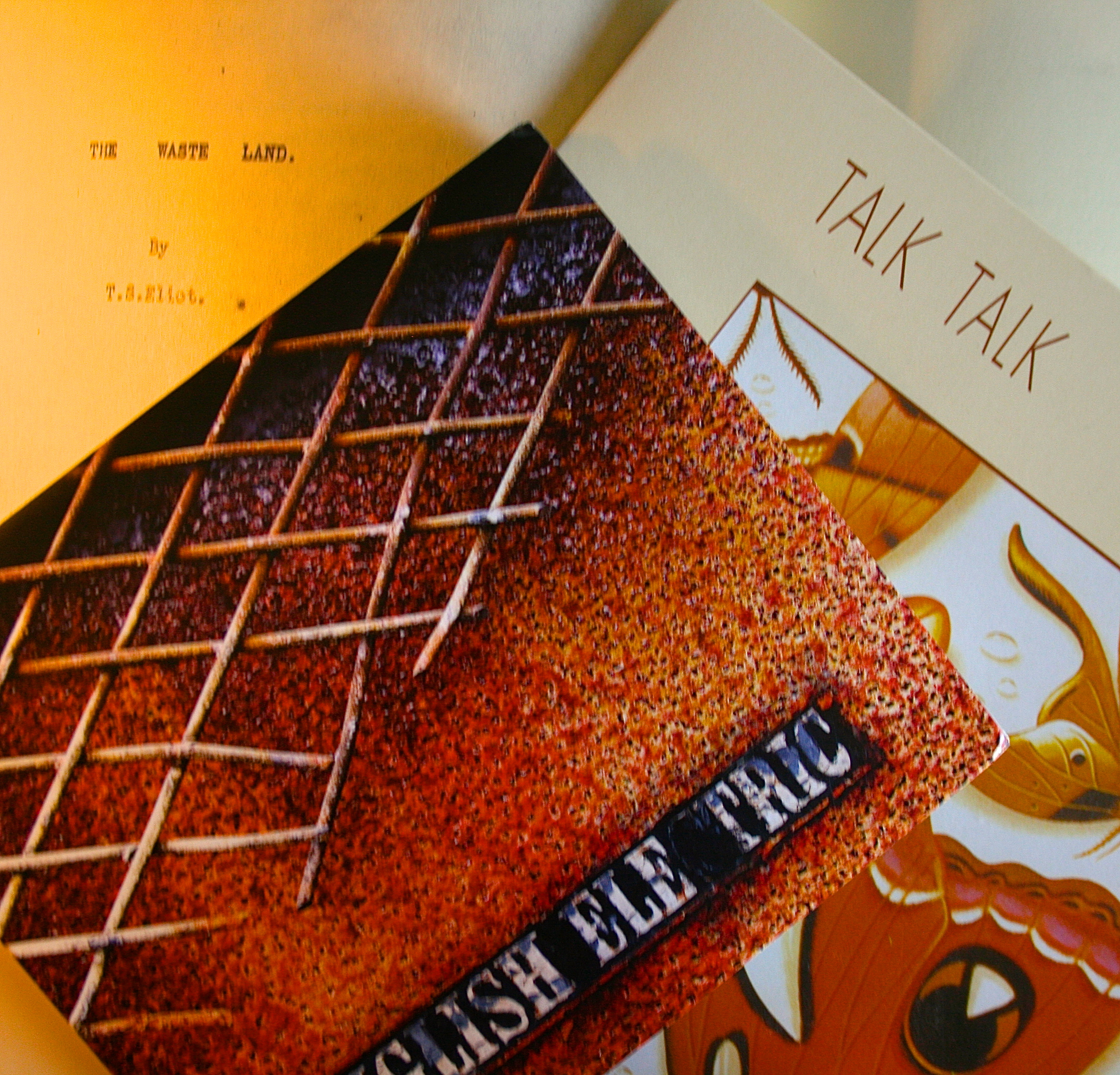
IMG_1425Years ago–maybe as many as 25 years ago–fellow Progarchist and classical musician Kevin McCormick and I vowed to listen to Talk Talk’s The Colour of Spring every April 5th, in honor of what is arguably the first post-rock track ever released, entitled, appropriately enough, “April 5.”  I’ve tried to live up to this agreement every year since, and I don’t think I’ve missed an April 5th listening yet.

Last year, before Progarchy even existed, I wrote a piece asking Mark Hollis to call his legitimate successor, Greg Spawton, and the members of Big Big Train.  I mean really.  Imagine Mark Hollis working with Spawton, Poole, NDV, Longdon, Manners, Gregory, and Aubrey.  What a match made in heaven.  After teasing Greg about this a few times, he admitted that if he ever runs into Hollis, he’ll invite him to join BBT.

Amen, Greg, amen.

But, back to Talk Talk.

Though I’d seen Talk Talk’s earlier pop songs/videos on MTV in the early to mid 1980s, I wasn’t taken with the group until I came across 1986’s “The Colour of Spring,” an album that, without much exaggeration, not only opened my eyes to artistic possibilities but also caused me to claim my second music obsession: first, Rush; second, Talk Talk and Mark Hollis.

Everything else I treasured at the time such as early Yes and early Genesis paled next to The Colour of Spring.  Please don’t get me wrong.  I still adored Yes and Genesis, and I always have and probably always will.  But, The Colour of Spring was something beyond.  Beyond rock.  Beyond prog.  I heard lots of Traffic and Spooky Tooth in it, but I also heard a lot of experimental jazz from the 1950s and 1960s.

This album, frankly, seemed like the best prog album since 1977’s Going For the One, but still bettering anything that had come before it.

I studied the art work of James Marsh–those brightly colored moths forming some kind of order as they hovered around droplets of water.  I listened repeatedly to the music.  Too many times over the past twenty-six years to count now.  And, I have dwelt lovingly over the lyrics, which have, in their own way, brought me so much comfort during the good and bad of my life as to rival my love of the words of T.S. Eliot and of St. John the Beloved.  When I first purchased the American version of The Colour of Spring, no lyrics came with it.  Part of Hollis’s charm is his ability to muffle his words in a mysterious but artistic fashion.  I had all kinds of ideas about what Hollis was singing, but I later found I was mostly wrong in my interpretation and translation of those words into song lyrics.

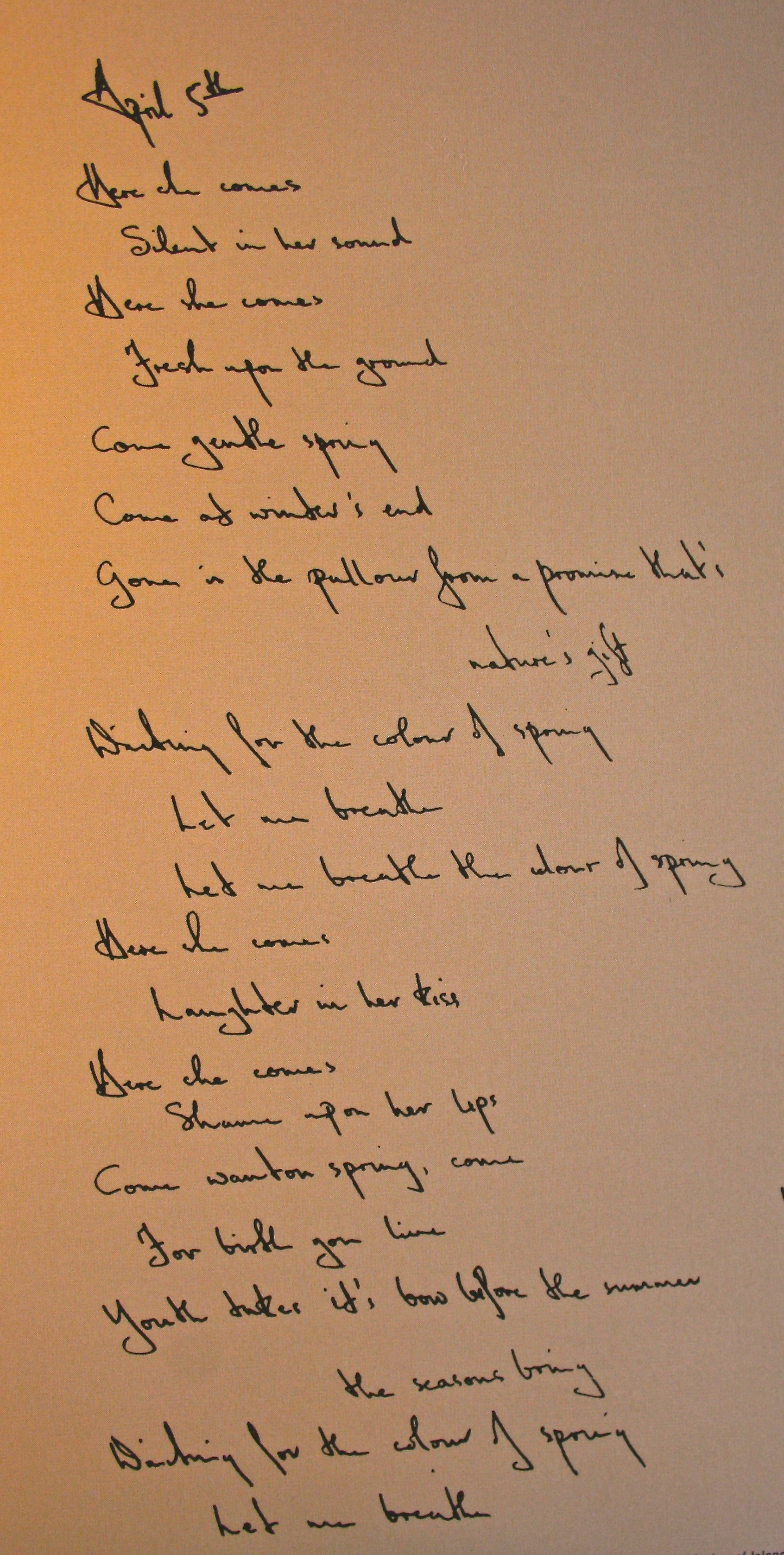
In March 1988, Kevin and I found a copy of the British release of the album in a London music shop.  There, on a brilliant spring day–I can still remember the sun streaming through the windows into that rather dark shop–I read the lyrics as Hollis had written them (even printed in his handwriting) for the first time.

I was, needless to write, emotionally overcome as my mouth dropped open and my eyes teared up.

The lyrics were far better than I’d imagined, in meaning and in form.  I shouldn’t have been in the least surprised.  Though, every listening from that point forward has meant more to me than each and any previous listening.  Only a few other albums in my life have stuck with me as long as has The Colour of Spring.  It has remained my gold standard, surpassed only by its immediate successor, The Spirit of Eden, and (finally–twenty-five years later) by Big Big Train’s English Electric vols. 1 and 2.

In every aspect of The Colour of Spring, Mark Hollis offered not only his genius, but his very being.  That is, he was the music, and music reflected him.  But, really, it did far more than reflect him.  Without trying to become too metaphysical, I must state, the music seems to be coming from somewhere beyond anything known in this world, with Hollis merely reflecting the Divine itself, but putting his own personality on what was given to him.  This is much like the way Tolkien claimed to have written his mythology–not as a creator, but as a discoverer and as a recorder.

Hollis expressed so much love of the world (its physical nature) and a profound respect for religion in interviews–along with his despising of the corporate media culture of the 1980s–that one can easily envision him in Rivendell, the Last Homely House, recording his work among the greatest artists of Middle-earth, lost somewhere in a timeless realm.  Or, more classically, Hollis’s love of the created order makes me wonder if he somehow heard (or felt) the revolving of the Platonic spheres.

Back in 1986, Hollis admitted in interviews that the concept behind the album and the theme were quite simple: religion is wonderful, and war is horrific.  An alliance of the two, however, makes for the worst of all possible worlds.  Ultimately, Hollis claimed, the lyrics reflect the ideals of “life and morality.”

Prog fans, take pride: The Colour of Spring was a concept, to be sure.

The aim of ‘The Colour of Spring,’ he explains ‘is to present great variety in terms of mood and arrangement, treating the whole thing as a concept.  An album shouldn’t be something from which a single is pulled, leaving the rest filled up with rubbish. [New Music Express, Feb. 22, 1986]

The theme, however, must be the only thing that was simple about the album.  Certainly not the actual lyrics, or its song structure, or its production, or, even, its reception.

The album took Hollis exactly one year and two days to write and record.  Having made an enormous sum of money with the first two Talk Talk albums, The Party’s Over (1982) and Life’s What You Make It (1984),  Hollis fulfilled his dreams of moving everything toward the real and organic, away from the synths of the previous albums, there only because he couldn’t afford to hire a rock ensemble.  Now, with The Colour of Spring, he could.

Interestingly enough, Hollis considered “It’s Getting Late in the Evening” to be the core of the album.  For those of you who know The Colour of Spring, you’re probably scratching your head, as this song didn’t make it onto the final cut, and appeared at the time only as a b-side.  Haunting to the extreme, “It’s Getting Late in the Evening,” presents an impressionistic look at American slaves discovering their freedom following the American Civil War.

The tide shall turn to shelter us from storm/The seas of charity shall overflow and bathe us all.

IMG_1428Today, though, we at Progarchy remember the last track of side one, “April 5,” perhaps the first post-rock, post-prog track ever released.  At only 5 minutes and 52 seconds, it is a masterpiece of meandering brevity, a creative breath of freedom and beauty, a reaching and striving as well as a reflection.

Thank you for everything, Mr. Hollis.  If you read this, I only request of you the same thing I requested of you a year ago.  Please call Mr. Spawton.  If you need his number or email, just let me know.

***


I dedicate this post to the genius and friendship of Greg Spawton.

Sources: Talk Talk, The Colour of Spring (EMI, 1986); “A Chin Wag with Talk Talk,” Number One (Feb. 8, 1986); “Talk Talk,” Record Mirror (Feb. 1, 1986); “Communication Breakdown,” New Music Express (Feb. 22, 1986); Rachael Demadeo, “Mark Hollis Interview,” Britannia Hotel in Manchester, May 5, 1986, posted at Within Without.

Nice Piece on Talk Talk’s THE COLOUR OF SPRING

It was, in retrospect, what people call a “pivotal album.” The Colour of Spring, Talk Talk’s third full-length release, appeared initially to be a straightforward development from the band’s previous recordings – artfully crafted pop delivering global hits – and yet pointed bravely towards something unexpected, something decidedly un-pop. One could see the footprints the band had left along the trail from their 1982 debut single, “Mirror Man”, to the 1986 release of this, their biggest selling record, but there were also signs they were heading into new, uncharted territory. Life’s What You Make It was the calling card, a bold burst of vibrant, optimistic acceptance, driven by a rolling piano line and drums inspired by Kate Bush’s Running Up That Hill, and Living in Another World stood proudly beside it, distinguished by Traffic’s Steve Winwood’s exuberant organ cameo. But April 5th and Chameleon Day were intimate, lingering slices of abstract sound that were as baffling as they were haunting.

To keep reading this excellent article by Wyndham Wallace, click here.

About as good as pop gets: Songs from the Big Chair (1985)

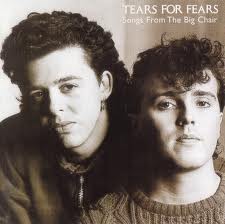
tff sftbcOk, so it’s not a perfect album, but it’s about as good as pop gets.

***

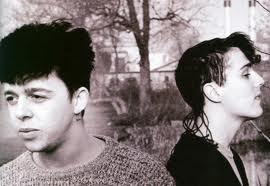
As I finished my junior year of high school, Tears for Fears released its second album, the first to make it huge in the U.S., Songs from the Big Chair.

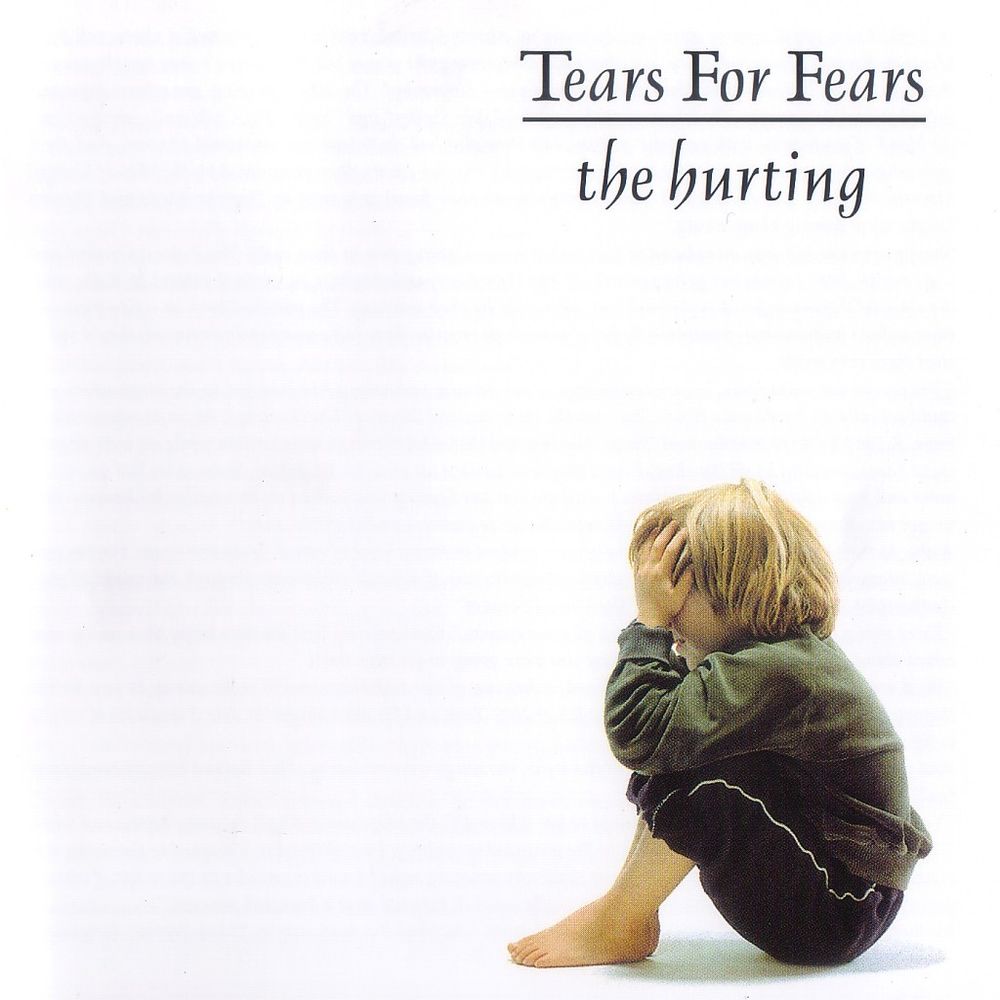
The hurtingThe first album, The Hurting, proved the sheer brilliance of Orzabal and Smith, but it also felt very, very, very, very (ok, I’ll stop–but, really, very) constricting.  As Orzabal and Smith released their primal screams and healed their own hurts, the listener entered into a sort of padded but rhythmic asylum for 41 minutes and 39 seconds.

Possibly the breath would simply disappear if that album went on 21 more seconds.  Imagine Andy Summers shouting “mother!” or Phil Collins begging for his “mama” but with serious prog sensibilities.  Well, you get The Hurting.  Enough.

In contrast, Songs from the Big Chair, though still thematically dealing with emotional and mental trauma, sends the listener into realms of openness and euphoria.  The entire album is full of possibilities, full of what might have beens–all of them good, a cornucopia of aural pleasures.  For the listener, Songs from the Big Chair is one huge intake of morning air in the Rocky Mountains.  This is pop at its purest, achieved, really, only by the Beatles and XTC.  Rarified.

Side one (yes, I’m old enough to remember sides).  Frankly, the two American hits, “Shout” and “Everybody Wants to Rule the World”, are the weakest tracks on the entire album.  But, that said, they’re still brilliant.  “Shout” is righteous pop, filled with a soaring guitar that might fit nicely on a Big Country album.  “Everybody Wants to Rule the World” is a clever dig at oppression and imperialism, dressed in a sunny tune.

Both of these songs played so often on radio and MTV in the mid 1980s in the United States that it’s impossible for me to avoid thinking about Apple Computer, Ronald Reagan, the Icelandic summit, or John Hughes when hearing even a few notes of either.

“The Working Hour,” track two, rings with jazz flourishes and an urgency lyrically and musically.  It begins with pure taste, as brass and keyboards gently dance around one another.  Though only one second shorter than “Shout”, the song has much more depth to it.  It’s Orzabal’s guitar work, however, that makes the song so beautiful.  That, and his voice–the depth and anguish of it all.  It all ends up being a song that never ages, never becomes tiresome.

Track four on side one, “Mother’s Talk,” has the percussive feel of much of The Hurting but without the claustrophobia.  Indeed, it feels far more Latin American and than it does European.  Or, perhaps, it has a bit of Peter Gabriel in it.  Whatever it is, it works wonderfully, a perfect way to end side one.  As with The Hurting, the lyrics are gut-wrenching and desperate, dealing with the fears of conformity and the inability to resist what is clearly dangerous in a community.  In the end, the weak person destroys not only his own soul but the very integrity of society as well.

tff 80sSide Two, a dramatic tale from beginning to end.  Starting with ominous notes from a grand piano, Orzabal picks up lyrically from the previous album.  “I believe,” he cries in his best croon, an affirmation that the therapy expressed in The Hurting has accomplished something.  Well, at least that’s his hope. By the end of the song, however, Orzabal expresses nothing but doubt.  Who are you to think that you can shape a life?  No, too late.

The song slides perfectly into “Broken”–less than three-minutes long, but full of 80s production–with big and angry guitar, a relentlessly driving bass, and intricate keyboards.  “Between the searching and the need to work it out,” Orzabal laments, he deceived himself by believing all would be well.  Impossible.  “Broken.  We are broken.”

Then, the haunting line: a moment only between being a child and being a man, seeing one’s life in continuity, all that is good and all that is wrong.  Tempus fugit.  A moment.

Back to full-blown, over the top, crooning pop: “Head over Heels.”  Sheesh, Orzabal explains, I just wanted to talk, to enjoy your company.  I didn’t realize this was going to get so deep, so quickly.  He then explains that his family desired so much of him and for him.  He.  Well, he just wanted some freedom to find his own path and his own creativity.  So hard to do.  “I’m on the line, one open mind.”

As the song fades out with a chorus of “la-la-la-la (repeat x20),” Orzabal’s voice twists and the album returns to “Broken,” ending, strangely, with a live audience cheering wildly.  As the audience’s applause dies down, swirling, psychedelic keyboard and hypnotic voices emerge.  Again, with the tasteful guitar of side one.  The final six minutes of the album seems like something that might have appeared on a pre-pop Simple Minds or a Tangerine Dream album.  Electronica not for dance, but for centering and psychic probing.

The lyrics to the final song, “Listen,” conclude nothing but add a certain mystery to the whole album.  Only a few lines repeat: Russia attempts to heal, while the pilgrims head to America.  Meanwhile, Orzabal chants his desire to soothe feelings and bring mercy.  Spanish voices cry in bewilderment.

The final noise of the album: percussion that sounds as though an ocean wave has overcome all.

*** 

For me, the album is the sound track to my senior year of high school.  My debate colleague and one of my life-long friends, Ron Strayer, and I listened to the album over and over again, adding the b-side “Pharaohs.”

Frankly, I think the overwhelming popularity of Tears for Fears in the 1980s and some of the pretentiousness of their lyrics has relegated them merely to 80’s status, locked in that decade as though a museum piece.  They deserve more applause and attention from those of us who love music.  I never particularly liked The Seeds of Love (1989), but I think Elemental (1993) and Raoul and the Kings of Spain (1995) are some of the most creatively crafted rock/pop albums ever made.

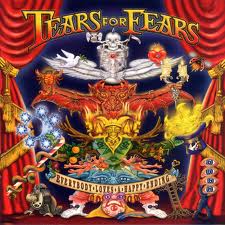
tff everybody lovesThough, the final Tears for Fears album, Everybody Loves a Happy Ending, could be an XTC-style Dukes of Stratosphere paean to the Beatles, it works.  It has some of the best pop written. . . well, since Abbey Road.  “Who Killed Tangerine?” especially has to be one of the most interesting pop songs of all time.

But, these are topics for other posts.  For now, enjoy a rediscovery of Songs from the Big Chair.