Gazpacho news

2008_gazpacho_6Gazpacho, one of my all-time favorite bands, posted this (below) today at FACEBOOK.  I assume they won’t mind me reposting it here at Progarchy–Brad, ed.

*****


Hi there and greeting from us lazybones. It has been a special year with happy and sad events as life thunders on. We can definitely confirm that we havent been.

However, being who we are, it has been very difficult to suspend the need to make more of our particular brand of music. Last album Mog was written in a frenzied weekend session where most of the original demos were kept and polished over the year it took to make the final album.

This time we set our standards much higher and as the months have gone by we have written about an hours worth of music which will be whittled down and added to over the year. We have committed to a concept album in the true meaning of the word and where our last four albums have been intended as films without pictures the new one feels a lot more like a novel. A novel written by a confused and crazy man but still a novel!

The ideas we are toying with are based around the concept of evil and its different shapes and incarnations. The malevolent force that mankind has dressed up as the will of God or the misdeeds of demons depending on the circumstance. Is it possible to catch the feel and the impact of this in music? Well we think so, and the demos are dark but strangely engaging.

Its still early days and as soon as we have a release date we’ll keep you posted.

Wish us luck!

Love
Gazpacho

Wind-blown Notes: Rush and Grace Under Pressure

graceunderpressure-cover-sMy favorite Rush album has been, at least going back to April 1984, Grace Under Pressure.  I realize that among Rush fans and among prog fans, this might serve as a contentious choice.  My praise of GUP is not in any way meant to denigrate any other Rush albums.  Frankly, I love them all.  Rush has offered us an outrageous wealth of blessings, and I won’t even pretend objectivity.

I love Rush.  I love Grace Under Pressure.

extrait_rush-grace-under-pressure-tour-1984_0

I still remember opening Grace Under Pressure for the first time.  Gently knifing the cellophane so as not to crease the cardboard, slowly pulling out the vinyl wrapped in a paper sleeve, the hues of gray, pink, blue, and granite and that egg caught in a vicegrip, the distinctive smell of a brand new album. . . . the crackle as the needle hit . . . .

I was sixteen.

From the opening wind-blown notes, sound effects, and men, I was hooked, completely.  I had loved Moving Pictures and Signals–each giving me great comfort personally, perhaps even saving my life during some pretty horrific junior high and early high school moments.

But this Grace Under Pressure.  This was something else.

If Moving Pictures and Signals taught me to be myself and pursue excellence, Grace Under Pressure taught me that once I knew myself, I had the high duty to go into the world and fight for what’s good and right, no matter the cost.  At sixteen, I desperately needed to believe that, and I thank God that Peart provided that lesson.  There are so many other lessons a young energetic boy could have picked up from the rather fragile culture of the time and the incredibly dysfunctional home in which I was raised.  With Grace Under Pressure, though, I was certainly ready to follow Peart into Hell and back for the right cause.  Peart certainly became one of the most foundational influences on my life, along with other authors I was reading at the time, such as Orwell and Bradbury.

Though I’m sure that Peart did not intend for the album to have any kind of overriding story such as the first sides of  2112 or Hemispheres had told, GUP holds together as a concept album brilliantly.

The opening calls to us: beware!  Wake up!  Shake off your slumbers!  The world is near its doom.

Or so it seems.

Geddy’s voice, strong with anxiety, begins: “An ill wind comes arising. . .”  In the pressures of chaos, Pearts suggests, we so easily see the world fall apart, ourselves not only caught in the maelstrom, but possibly aggravating it.  “Red Alert” ends with possibly the most desperate cry of the Old Testament: “Absalom, Absalom!”  Certainly, there is no hope merely in the self.  Again, so it seems.

The second song, gut wrenching to the extreme, deals with the loss of a person, his imprint is all that remains after bodily removed from this existence.  Yet, despite the topic, there is more hope in this song than in the first.  Despite loss, memory allows life to continue, to “feel the way you would.”  I had recently lost my maternal grandfather–the finest man  I ever knew–before first hearing this album.  His image will always be my “Afterimage.”

It seems, though, that more than one have died.  The third song takes us to the inside of a prison camp.  Whether a Holocaust camp or a Gulag, it’s unclear.  Frankly, it’s probably not important if the owners of the camp are Communists or Fascists.  Either way, those inside are most likely doomed.  Not only had I been reading lots of dystopian literature in 1984 (appropriate, I suppose, given the date), but I was reading everything I could find by and about Solzhenitzyn.  This made the Gulag even more real and more terrifying.

Just when the brooding might become unbearable, the three men of Rush seem to offer a Gothic, not quite hellish, smile as the fourth song, “The Enemy Within” begins.  Part One of “Fear,” the fourth track offers a psychological insight into the paranoia of a person.  Perhaps we should first look at our own problems before we place them whole cloth upon the world.

Pick needle up, turn album over, clean with dust sponge, and drop needle. . . .

Funk.  Sci-fi funk emerges after the needle has crackled and founds its groove.  A robot has escaped, perhaps yearning for or even having attained sentience.  I could never count how many hours of conversation these lyrics prompted, as Kevin McCormick and I discussed the nature of free will.  It’s the stuff of Philip K. Dick, the liberal arts, and the best of theology.

More bass funk for track six and a return to psychological introspection, “Kid Gloves.”  But, we move out quickly into the larger world again with the seventh track, “Red Lenses,” taking the listener back to the themes of paranoia.  When the man emerges for action, will he do so in reaction to the personal pain he has experienced, or will he do so with an objective truth set to enliven the common good?

grace_under_pressure_0In the end, this is the choice for those who do not lose themselves to the cathode rays.  Is man fighting for what should be or he is reacting merely to what has happened, “to live between a rock and a hardplace.”

Unlike the previous albums which end with narrative certainty, Grace Under Pressure leaves the listener with more questions than it does answers, though tellingly it harkens to Hemingway and to T.S. Eliot.

Given the album as a whole, one might take this as Stoic resignation–merely accepting the flaws of the world.  “Can you spare another war?  Another waste land?”

Wheels can take you around

Wheels can cut you down. . . .

We’ve all got to try and fill the void.

But, this doesn’t fit Peart.  We all know whatever blows life has dealt Peart, he has stood back up, practiced twenty times harder, and read 20 more books.  That man does not go down for long.  And, neither should we.

In the spring of 1987, much to my surprise, one of my humanities professors allowed me to write on the ideas of Peart.  I can no longer find that essay (swallowed up and now painfully lonely on some primitive MacPlus harddrive or 3.5 floppy disk most likely rotting in a landfill in central Kansas), but it was the kind of writing and thinking that opened up whole new worlds to me.  My only quotes were from “Grace Under Pressure,” drawing a distinction between nature of the liberal arts and the loss of humanity through the mechanizing of the human person.  It dealt, understandably, with environmental and cultural degradation, the dangers of conformist thinking, and the brutal inhumanity of ideologies.  It was probably the smartest thing I’d written up to that point in my life, and even my professor liked it.

Of course, the ideas were all Peart’s, and I once again fondly imagined him as that really great older brother–the one who knows what an annoying pain I am, but who sees promise in me anyway, giving me just enough space to find my own way.

I’m forty five, and I still want Neil to be my older brother.

Remembering: Rick Wakeman, The Six Wives of Henry VIII (1973)

All those discoveries, all those revelations.  The heady seventies seemed, to this newly addicted progger, a time when music was becoming something very important, and something very Other than whatever it had been before.  It was as though my listening knew a simple filing system reflected in the arrangement of bins in the store where I bought most of my records.  Classical, Jazz, and something like “Pop/Rock,” where the prog seemed mostly to fall back then.  January of 1973 had not yet been shaken by Oldfield’s Tubular Bells (coming later that same year), which would bash against the sides of the existing bins even more forcefully.

Wakeman6wives

But then there was Wakeman’s The Six Wives of Henry VIII.  The historical record now seems to show that marketers and critics often didn’t have much of a clue what to make of it.  I remember the first time I saw it at the store, displayed prominently among “recently released” titles.  I thought of myself as being hooked on almost anything that involved synthesizers, and being very much under the spell of Fragile, I bought it without hesitation.  I knew that Henry VIII had been a King, but not much more than that.

I remember listening multiple times, and being convinced that I liked what I was hearing.  In retrospect, however, I think it was a fairly long time before I had anything that would qualify as an understanding of what I was hearing.  The continuities with Yes were palpable enough to confirm my favor immediately, but I know that I first heard them as something like isolated moments.  It was as though I had to wait between them, and I didn’t notice for a while how impatient and superficial was that waiting.  I also didn’t notice until later how momentous an impression was growing within me of that music through which I initially “waited.”

Keyboards!  KEYBOARDS!!

I cradled the album cover so reverently in my lap, poring over that center picture of Rick looking so cool and so totally at home in that nest of keyboards.  I’m quite sure that I had looked at it more times than I could count before I really noticed one day that there, so dominant in that nest, was the keyboard of a grand piano, the most-emphatically-NOT-a-synthesizer presence once I had really perceived it there.  Indeed, it may not have been until after a few spins of Tubular Bells (with that very British voice, announcing: “Grand Piano!”) that I went back and really saw it.

WakemankeyboardsI now see my belated noticing of the grand piano as a sort of marker for my beginning to notice just how rich was the instrumentation, how complex and layered were ALL of those keyboards, and how they were layered with ALL of the other instruments.

I’ve already alluded here a number of times to the “between” character of what we were then calling “progressive.”  It was with Six Wives, its completely unapologetic thematic immersion in the grandeur and tradition of British monarchy, and its continuity with Fragile‘s explicit embrace of “classical,” that I really began to find my feet in what became a lifelong love of what anthropologist Clifford Geertz called “blurred genres.”

Yeah, I was just as taken with Journey to the Centre of the Earth when it came out in 1974.  But now I would say that Six Wives has held up much better with the passage of time.  Compared to Journey, it seems not to have aged.  In fact, if anything sounds a bit dated now, it’s those synthesizer moments that first stood out to me, for which I found myself “waded” at first.

Wakeman’s output has been huge, and I’ll confess to not having heard ALL of it.  But it’s difficult for me to imagine him ever really topping this masterpiece.  When I saw Wakeman live with Yes in 2004, and they played that wonderful acoustic “shuffle” version of “Roundabout,” I felt like I was back in Henry’s court.

The European Perspective #176–Cosmograf

Make sure to download David “Amazing Wilf” Elliott’s latest podcast, an interview with Master of Time and Chronometers, Robin Armstrong.  An excellent insight into the making of a truly stunning work of art, The Man Left in Space.

http://www.thedividingline.com/podcasts/european-perspective/

It’s an episode that I will probably revisit.

Self-Imposed Slavery: Riverside’s ‘Shrine of New Generation Slaves’

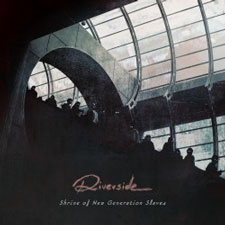
Image    Riverside’s recorded output began with three albums that are collectively known as the Reality Dream Trilogy (‘Out of Myself’, ‘Second Life Syndrome’, and ‘Rapid Eye Movement’).  These are all very good albums, although I wouldn’t call any of them great albums.  However, in 2009, Riverside took a big leap forward with ‘Anno Domini High Definition’ (ADHD).  The music took a noticeably different direction from its three predecessors, and reflected well on the album’s subject matter, i.e. the frenetic pace of modern life and accompanying dissatisfaction that sometimes goes with it.  After a two-and-a-half year wait (with the EP ‘Memories in My Head’ thrown in during the meantime), Riverside has returned with ‘Shrine of New Generation Slaves’ (SONGS).  And once again, they have taken a big – no, huge – leap forward.  Quite simply, this is Riverside’s best album to date.

Conceptually, the album relates to dissatisfaction with modern life, so much so that many people feel that they are slaves to something beyond their control.  Thematically, there are some common threads with various lyrics on SONGS predecessor, ADHD (in particular, the lyrics on the excellent ‘Driven to Destruction’).  Nevertheless, the lyrical (and thus conceptual) content extends beyond that to into areas such as stagnant relationships, the depravity of celebrity culture, surrender to nihilism, and ultimately, redemption.

Musically, the album is just fantastic.  In contrast to its predecessor, it does not feature a barrage of notes and thus gives the listener a little more space to contemplate the lyrics. That being said, I wouldn’t call it dimensionally sparse either, as there is plenty going on.  The music is probably the result of a different approach.  Bass player Mariusz Duda stated in a recent interview:

I had some problems before as I was a little bit tired of the formula that we had in the past and I didn’t want to do another album with complicated structures. I just wanted to finally focus more on the arrangements and the composition. To focus on some details, like a way for playing drums, a way of playing guitar. I really, really wanted to focus simply on songs. Simply songs, ambitious songs should be the foundation of this album. The metal parts I skip and replace them with hard rock elements.

Confident in the chops honed on previous albums, the band has taken more of a big picture approach to the music on this album – an approach that seems to have served them very well.

‘New Generation Slave’ opens up the album, featuring a heavy guitar riff interleaved with verses of Duda’s protagonist lamenting his life and dissatisfaction with it:

Ain’t nothing more to say

Your Honor

Don’t look at me like that

The truth is

I am a free man

But I can’t enjoy my life

The tempo then picks up, and keyboardist Michał Łapaj announces his presence in this piece by getting in touch with his inner Jon Lord (RIP), and repeats this a number of times throughout the album.  The opening track segues into ‘The Depth of Self Delusion’, which is less heavy and a bit slower, but no less good.  The use of acoustic guitar and atmospheric keyboards make their first appearance.  I don’t recall this much use of acoustic guitar on any previous Riverside release, and it’s great to hear them expand their sonic palette in this manner.  The song includes some interesting bass work in the latter half and closes with light acoustic guitar.  The band then blasts into ‘Celebrity Touch’ as Duda offers his critique of our Kardashian-ized culture and the pathological need some have for attention and approval from others:

I can’t afford to be silent

I can’t afford to lose my stand

What matters is to be in view

I am seen therefore I am

I can satisfy my hunger

I can satisfy my thirst

What about the feeling of importance

Now I’ve got my chance

In the center of attention

TV
Glossy magazines

My private life is public

I sell everything

Days are getting shorter

They’ll forget about me soon

So I jump on the bandwagon

With no taboos

The song includes a nice juxtaposition between a heavy riff that accompanies the above lyrics, to a less heavy, more reflective section:

But what if we start to talk

Not only say out loud

What if we sift the babble

From what really counts

What if we disappear

Go deeply underground

What if we hide away

From being stupefied

‘We Got Used to Us’ follows, and is yet another slower track that has somewhat of a Porcupine Tree-like vibe as our protagonist ponders a stagnant and dissatisfying relationship.  This one is pretty emotional.

Next up is the punchy ‘Feel Like Falling’, a song with crossover appeal having upbeat music that belies the lyrics, as our protagonist begins to realize the path he has chosen in life has led him astray and left him wanting to simply give up:

Had allowed that life to drift

For I’ve chosen a different trail

When light fades

I feel like falling into blank space

‘Deprived (Irretrievably Lost Imagination)’ is up next with music that is slower, mellower, and decidedly more melancholy than the previous track.  The music includes a nice, Floyd-ian interlude at about the halfway mark leading into a jazz-infused instrumental section in the latter half featuring some excellent sax playing.   Our protagonists dissatisfaction seems to be so intense at this point that they have gone beyond the mere desire to give up as in ‘Feel Like Falling’ – now we have a full fledged surrender to despair:

Curled up

Deprived
Curled up

Deprived
I shut away

Please don’t call my name

‘Escalator Shrine’ begins as another slower track, but picks up the pace after a few minutes.  Once again we hear the Hammond organ with the Leslie cabinet, some excellent bass playing, and some heavy (but not necessarily metal) guitar.  Like the previous track, it includes another Floyd-ian interlude at about the halfway mark.  Lyrically, ‘Escalator Shrine’ approaches the new generation slavery from more of an intellectual level than an emotional one, as our protagonist channels Albert Camus and the Myth of Sisyphus:

Dragging our feet

Tired and deceived

Slowly moving on

Bracing shaky legs

Against all those wasted years

We roll the boulders of sins

Up a hill of new days

‘Coda’ is the final track on the album, and maybe the most emotionally heavy, even though it is instrumentally the lightest – a single acoustic guitar.  Perhaps our protagonist has read some Epictetus, or maybe the serenity prayer, but it appears he has realized that his happiness and satisfaction with life is ultimately in his control and his own responsibility:

Night outside grows white

I lie faceup in my shell

Open my eyes

Don’t feel like falling into blank space

Indeed, for all of its darkness and all of its sadness, SONGS ends on an upbeat note, as our protagonist casts off his self-imposed chains:

I won’t collapse

I’m set to rise

It’s interesting to note that, although ‘Coda’ is the final track on the album, it is also numbered as Track 1, as is ‘New Generation Slave’.  Indeed, our protagonist has hit the reset button and is starting over.

I simply cannot say enough good about this album.  As thrilled as I was with ADHD, my response to SONGS is in a completely different realm.  Musically, the album has a perfect blend of heavy and light, of complex and simple, emotional and intellectual.  Nothing is overdone, nothing is incomplete.  The lyrics have a strong message, and as dark as the album’s atmosphere, it’s ultimately a message of hope for those that get it.  And if this album is an indication of what we can expect in the future from Riverside, then it’s another strong piece of anecdotal evidence that we are in the midst of a progressive rock golden age heretofore unseen.

Oh, and in case you didn’t get it, I strongly recommend this album 🙂

The Stranglers, A Retrospective

About 5 or 6 years ago my son’s guitar teacher, a young dreadlocked guy into hard rock and grunge, asked me who was my favourite band. I surprised myself when I immediately answered “The Stranglers”. “Oh” he replied, “The band who sung Golden Brown?”  “Yes” said I “but haven’t you heard the early stuff from the punk-era like Hanging Around, Grip, Peaches?”……

I’ve asked a few from the younger generation about the Stranglers and many either haven’t heard of them or they are remembered for some of their 80’s pop hits like the aforementioned ‘Golden Brown’, ‘Strange Little Girl’, ‘Always The Sun’ etc. Indeed they did write some superb ‘pop’ songs but I remember them for their uncompromising attitude; their clear desire to ‘progress’ their musical style and their unique sound, driven along by thumping bass lines and swirling keyboards.

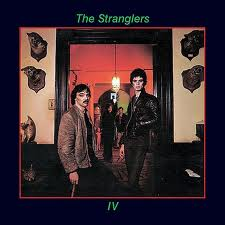
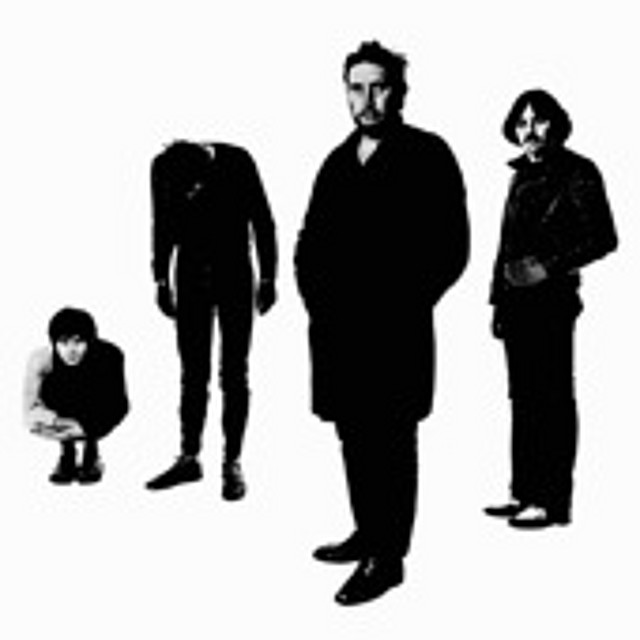
In 1977 and 1978 the Stranglers produced certainly one (Rattus Norvegicus), if not two (Black and White) of the great albums to come out of the Punk Era. Whilst not considered punk, these albums stand alongside the great Punk albums of the period: The Clash and London Calling by The Clash; NMTB by the Sex Pistols; Fresh Fruit for Rotting Vegetables by The Dead Kennedys; Machine Gun Etiquette by The Damned; The Ramones by The Ramones; Love Bites by the Buzzcocks and Pink Flag by Wire, to name a few. But you won’t find Rattus or B&W featuring highly, if at all, on any Top list of Punk albums.

Rattus Norvegicus

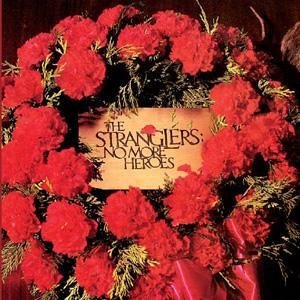
No More Heroes

Black and White

Many at the time said they had jumped on the punk bandwagon. Certainly they had been playing as an unsuccessful pub-rock band for a couple of years as the Guildford Stranglers. But by opening for the 1976 tour of the Ramones and Patti Smith they got noticed and signed a deal with United Artists.

From a punk perspective they were considered outsiders, both in terms of their age, being older than their peers (Jet Black was in his late thirties when Rattus was released) and musically different. Their sound was unusually melodic (helped by the fact they were ‘relatively’ musically accomplished); their lyrics could be clearly heard (!) and even solos were allowed (!).

The band certainly took advantage of the musical zeitgeist but never truly embraced the punk culture. They did adopt the aggressive and abrasive punk attitude on stage; they delivered their lyrics with snarling brute force. Their dealings with the musical press were notorious leading to JJ Burnel punching a music journalist. Some of their lyrical output reflected the punk-spirit. They exhibited a total disregard for political correctness at times, highlighted by bringing strippers on stage at the Battersea festival in the summer of 1978 (strangely the main support act was a man by the name of Peter Gabriel !).

Led by two charismatic front men, Hugh Cornwell on lead guitar and Jean-Jacques Burnel on bass, they delivered an incredibly varied output over the years. From the simply arranged punk anthems of ‘No More Heroes’, ‘5 Minutes’ and ‘Something Better Change’; through the reggae-inspired ‘Peaches’; to the dark more complex and experimental ‘Black’ side of the Black and White album; and they even wrote the 4 part and 8 minute long ‘Prog-structured’ classic, ‘Down in the Sewer’.  They broke away from the punk scene totally in 1979, their early success giving them the confidence to release their avant-garde fourth album, The Raven. They followed this with the unusual but ultimately disappointing concept album, The Gospel According to the Men In Black (which lost me and many others as fans for a while). The Stranglers were definitely not derivative and did not want to be pigeon-holed. Their musical and lyrical diversity on a track by track basis is rare and a testament to their originality and innovative skills.

Their signature sound was driven along by the ‘rough’ and a chest-filling bass lines of Jean-Jacques Burnel, usually followed by the swirling Hammond organ and mini-moog keyboards of Dave Greenfield. Unusually the guitar melodies were shared between lead and bass and there are an astonishing number of catchy riffs in their early output. Dave Geenfield’s psychedelic keyboards are hugely inspired by Ray Manzerek of the Doors, particularly on their brilliant cover of Bacharach and David’s ‘Walk on By’. Jet Black’s drums ties everything together nicely with competent drumming. Martin Rushent’s production on the early albums superb.

Their musical style and structure was initially quite basic  but over time became more intricate with the use of complex time signatures; effects to slow and speed up sound and, from Black and White onwards, the more frequent use of synthesizers to create weird vocals and soundscapes.

The band’s lyrical themes were hugely diverse. Songs about boring lives, disenchantment, alienation, and the breakdown of political and social order were laced with biting political and social comment and par for the course at the time. But they were also inspired by the writings of Nostradamus, Japanese and Viking culture and even by a Victor Hugo novel.

Their lyrics quite often pushed the boundaries of what was acceptable. ‘Peaches’ is the only song I know that has the word ‘clitoris’ in it (changed to ‘bikini’ for the UK’s Top of the Pops). Clearly their lyrics were at times sexist and whilst unacceptable they were tame compared to today’s rap music and I believe ignore the playful irony and satire inherent in much of the band’s output. Most controversial was the misogynistic ‘Bring on the Nubiles’, about the obsession of older men for younger girls. The song comprises ‘in your face’ vulgarity and alludes to incest. Were they serious or just exploiting the times? What we do know is the band was deliberately antagonistic and courted controversy to increase their profile and this was indirectly supported by their record company who saw no reason to censor their lyrics or curtail their behaviour (it sold records for God’s sake!!!).

Here are some of my favourite lyrics:

From the punk anthem ‘No More Heroes’, the witty:

Whatever happened to Leon Trotsky?
He got an ice pick
That made his ears burn

From ‘Grip’ the truly memorable:

Stranger from another planet welcome to our hole
Just strap on your guitar and we’ll play some rock ‘n roll

Visceral social commentary from ‘Hanging Around’:

I’m moving in the Coleherne
With the leather all around me
And the sweat is getting steamy
But their eyes are on the ground
They’re just hanging around

(The Coleherne was an infamous gay leather bar in Earls Court, London in the 70s and 80s frequented by many famous clientele).

Here’s a typically aggressive live, albeit shortened, version…

Acerbic criticism of the educational system in ‘School Mam’:

http://www.lyricsbox.com/stranglers-lyrics-school-mam-1vprfx3.html

In the free-form, abrasive and controversial ‘Ugly’, only the Stranglers could juxtapose a reference to Ozymandias, a poem by Shelley about folly in the pursuit of power, with the shallowness of mankind’s attitude towards aesthetics:

I Could Have
Read A Poem Called
Ozymandias
To Her Instead
I Lived For The Moment
It Was A Futile
Gesture Anyway
I Was Here
And She Was Here
And Being Broad
Of Minds And Hips
We Did The Only Thing Possible

I Guess I Shouldn’t Have Strangled Her To Death But
I Had To Go To Work And She Had Laced My Coffee With Acid

Normally I Wouldn’t Have Minded
But I’m Allergic To Sulphuric Acid
Besides She Had Acne
And If You’ve Got Acne, Well,
I Apologise For Disliking It Intensely,
But It’s Understandable That Ugly People Have Got Complexes
I Mean It Seems To Me
That Ugly People Don’t Have A Chance

It’s Only The Children Of The Fucking Wealthy Who Tend To Be Good Looking

An Ugly Fart
Attracts A Good-Looking
Chick If He’s Got Money
An Ugly Fart
Attracts A Good-Looking
Chick If He’s Got Money
An Ugly Fart
Attracts A Good-Looking
Chick If He’s Got Money

It’s Different For Jews Somehow.

I’d Like To See
A Passionate Film Between
The Two Ugliest
People In The World.
When I Say Ugly
I Don’t Mean Rough Looking
I Mean Hideous.

Don’t Tell Me That
Aesthetics Are
Subjective You
Just Know The Truth
When You See It
Whatever It Is

Powerful stuff indeed.

In 1990 Hugh Cornwell left the band and it appeared to be the end of an era. Over the subsequent years they continued to release albums with little mainstream success but were (and still are) supported by a fanatically loyal fan base. However, with the addition of Baz Warne, whose energy and snarling aggression making him a worthy replacement to Hugh Cornwell, they have become a superb live act. Their latest album ‘Giants’ released in 2012 is a huge return to form, echoing their halcyon period of the late 70s. It seems ironic that I saw them headline a predominantly ‘Prog’ festival, Weyfest, in 2010 but it’s a clear indication of their popularity amongst a wide cross-section of music lovers.

The Stranglers are arguably the greatest and certainly the most enduring band to emerge from the punk era. I look forward to another brutal encounter with them later this year in Guildford, their spiritual home and fortunately only a few miles away from chez moi.

Final words though must go to Hugh, JJ, Dave and Jet from the epic ‘Down in the Sewer’

I tell you what I’m gonna do
Gonna make love to a water rat or two
and breed a family
they’ll be called the survivors
You know why ?

No
Coz they’re gonna survive

Nearly 40 years on and they are surviving remarkably well 🙂

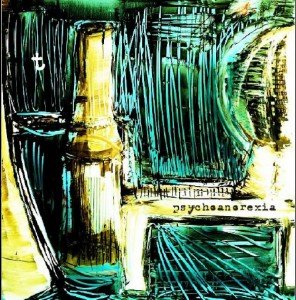
Psychoanorexia by t (Thomas Thielen)

by Frank Urbaniak, Progarchist

Symphonic Modern Progressive Rock (we will skip the word Neo) with rich, dense instrumentation and melancholy lyrics/melodies for fans of Marillion-Brave Era, PG, Radiohead, Porcupine Tree (SD, LBS Era), Bowie, Floyd, VDGG.  

PsychoanorexiaRecommendation:  Highly Recommended

Art is a bitch, and so is literature – and music. They always present us worlds well out of reach – pipedream kingdoms of epic journeys, heroism, boundless yearning and lots of all the things we are, well, let’s face it, not. Art is, insofar, simply destructive for your everyday middle class John Doe. It makes him long for things he neither really wants or needs: danger, uncertainty, lovesickness, bleeding hearts, je ne sais quoi. – t on anti-matter poetry.

2013 is looking to be another great year for progressive music with Steve Wilson, Lifesigns, BBT, Riverside and Cosmograf all released by mid-March.  The sheer volume of quality releases makes it easy to overlook an artist who cannot easily be googled ( t ), has long gaps between releases and does little or no touring.  t /Thomas is classically educated in piano and voice, but switched to guitar early in childhood when he realized that ‘most girls in his class fancied guitar players’. Psychoanorexia is his fourth solo CD since leaving German art rock band Scythe, and he plays all instruments, sings, arranges, produces and mixes his work. His two most recent CDs, Voices and Anti-Matter Poetry, each about 3 years in the making, received critical acclaim in some quarters but failed to achieve the overall recognition they deserved. This is likely a result of two factors:

  • t music is not always an easy listen, but as Kinesis said, ‘t takes the listener into an alternate musical reality, and after the album concludes, you may need to pause and take several deep breaths before returning to waking reality’.  The music is sometimes dark and moody, offset by beautiful, melancholy melodies often delivered through heavily processed vocals and dense instrumentation so it is not a easy casual listen.
  • t is a deep thinker and a poet.  He focuses on the alienation we experience as society and technology advance, the impact on our relationships and our ability to stay linked and loved. Lost loves, disconnected lovers, feeling alone and alienated while being with someone, the multiple influences that affect our everyday lives and therefore our relationships is not always happy stuff.

From t:

“This is the time when ringtone applicability equals musical quality. This is the place where the greed of being a pop star has replaced the sublime experience of creativity. This is the era in which democracy means mass phenomena, not choices. When we have become too lazy even for subterfuges. And too busy to feel the loss.”

Psychoanorexia consists of only 4 songs, three epics and one shorter track. His lyrics –which fill several pages of the CD insert, are complex and interesting but not always easy to understand due to the amount of vocal processing. The opening track, the three-part The Aftermath of Silence, is a beautiful seventeen minute love story with very accessible melodies. Aftermath begins with a long and haunting instrumental passage leading to the refrain

‘ So this is the day, the sky too blue.’

Slow and sad, the opening moves through an interesting set of musical progressions reminiscent of Marillion, concluding with:

‘We came back, but we never recovered

We always reminded ourselves of each other’.

Kryptonite Monologues, the most complex and challenging track, continues the theme of love lost by abandoning the mood of the previous track with a frantic opening section named ‘Breakfast Cataclysm’. This is the most symphonic track, with hints of Yes, Van Der Graaf Generator and Crimson.  After a soaring instrumental section with some pounding drums and heavy guitar lead t moves to a bombastic operatic interlude he describes as part comedy (Monty Python), hinting at the absurdity of it all, collapsing into a lovely classical section named ‘Borrowed Time ‘with soaring strings.  Driving percussion builds to the haunting climax ‘The End of the World’ with echoes again of Marillion’s Brave.

The third track, The Irrelevant Lovesong could be a lost track from somewhere between Peter Gabriel’s Scratch and Us periods, and is a short, moving poem describing the growing gulf between two people:

‘All through the nights

Though cold and blind

I hold you here

But no, I love you not

No, I love you not’.

The CD concludes with Psychoanorexia in two movements, ‘Bedhalf Exiles ‘and ‘The Stand’.  The music again alternates between attack and reflect, the gates are locked and defenses up in an effort to save all that is worth saving.

‘Save our souls

And guard all the doors we closed

And promise to stake our hearts

Lest one of our oaths could last’.

The song ends with a barrage of frantic drums and a vocal chant reminiscent of mid-70’s Genesis in tone.   The journey is tiring but rewarding, challenging but gratifying.  I thought that his previous were highly personal stories, but here t seems to be more of an observer, reporting on the irony of our (or his) existence, the decay that comes with progress.

Psychoanorexia is modern symphonic rock at its finest, rich, inventive and always interesting. I love the dense instrumentation, vocal effects and overall presentation.  t’s biography mentions his obsession with sound and he is obviously proficient at all instruments, but it is his keyboard prowess and engineering skills are what enables him to deliver on his vision. t also uses electronic drums more effectively than most, and in many cases you are hard pressed to recognize them as electronic except the cymbals, which at times sound too separated (crash cymbals should not be left or right speaker only) and a minor quibble, sound a bit ‘spitty’.  Psychoanorexia  is an obvious labor of love by a unique musical poet and this outstanding effort by t is one I highly recommend.

Challenging Greed and Media Whoredom: 3rdegree’s “The Long Division”

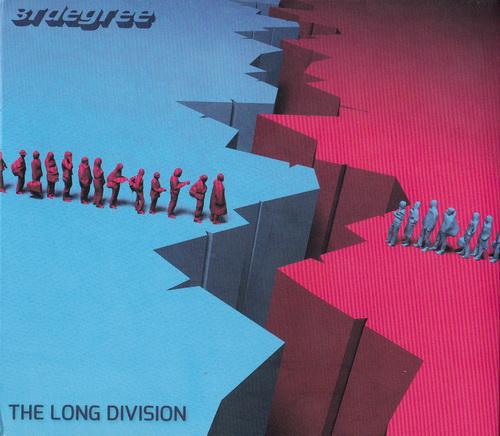
“The Long Division” By 3rdegree (2012)

Sometime right after Christmas, I had the great joy of receiving a package addressed to Progarchy from New Jersey.  A nice note accompanied the very intriguingly-packaged CD, “The Long Division” by 3rdegree.  long division cover

Lots of great CDs have come in for review, but I’m always surprised when they’re not accompanied by some explanation.  Or, it would be better to write: I love getting notes from the artists themselves.  Even the short “Hey, let us know what you think” offers a personal connection.  Maybe it’s just my Kansas upbringing regarding such things as “thank you notes.”  But, I digress.

Suffice it to write, the note from Robert of 3rdegree said: love what you’re doing; please check us out when you have a moment.

Absolutely!

And, for the last month, I’ve been thoroughly enjoying my time with 3rdegree’s 2012 release, “The Long Division.”  Imagine Steely Dan, Echolyn, and Tears for Fears in the studio together.  Maybe throw in just a touch of the more complex aspects of some 70s harder rock.  Prog it all up and throw some New Jersey attitude in.  Finally, mix in some really bitter populist–true and righteous (in the best sense)–lyrics, and you start to approach the wonder that is 3rdegree.

And, I should mention, this is really, really American.  How can I state this?  I’m frankly not entirely sure.  But, the whole cd certainly feels very American.

As with much of prog, there’s a real perfectionism here, too.  The keyboards (especially the piano), the bass, the drums, and the guitars sound very sharp.  The mix is simply excellent, and the group feels tight.  My guess is they like each other very much.  I don’t think it would be possible to play like this without a real sense of perfectionism and sympathy with and respect for one another.

My favorite part, though, are the vocals.  The closest comparison I could make–in terms of vocals–is to the best of Spock’s Beard, Gentile Giant, and early Echolyn.  I can’t imagine the vocal arrangements here ever getting boring or rote in any way.  Outstanding.  Truly outstanding.

This leads me, naturally, to the lyrics.  When Carl, Chris, and I started Progarchy, we decided to make music the focus and avoid–wherever possible–the subject of religion and politics.  The three of us already do that fervently elsewhere on the web.  Progarchy is meant to be a music site, open to all.

That said, I don’t think it would be possible to review this cd without at least a mention of the politics presented here.  Never dumbed down (thank you, 3rdegree), the lyrics reflect a real anger at the state of American political culture.  Whether that anger stems from a Left or a Right–a liberal/Democratic or conservative/Republican–position, I just can’t tell, despite my numerous readings of the lyrics.  My guess is that these guys are simply too smart to be either left or right.  Clearly, they’re not fans of corporate welfare.  But, they don’t seem thrilled with eco-freaks either.  Here’s their own statement on their website:

“You’re Fooling Yourselves!”, wails 3RDegree lead singer/keyboardist George Dobbs on the band’s lead-off single from the new CD THE LONG DIVISION-their first since 2008.  This song-as well as a few others on the first half of the album-flesh out the band’s 2012 political treatise: that America’s political parties (and probably those in other countries) have long divided it’s populous on the basis of color, salary, sex, age and much else, have played on their fears, and have used their accumulated powers to build up largesse to keep their supporters in the fold.  Ok, it’s not always that heavy, but the album was penned in the shadow of the 2008 economic collapse that was happening right as 3RDegree were releasing their first album in 12 years:  NARROW-CASTER.  While that third album was a combination of fresh songs and resurrected ideas from the period just before the band’s original breakup in 1997, THE LONG DIVISION is in the shared vintage of Tea Parties, Occupy Movements, shovel-ready jobs and banks and car companies “too big to fail”.

Well, from whatever position, I like it.

I can’t give enough praise to this CD.  It’s the kind of cd that makes you increasingly enthusiastic with each new track.  One track is utterly brilliant, and just when you think there’s no way the band can top track one, track two starts, and you’re blown away.  Then, track three, four, five. . . .  It just keeps being increasingly mind boggling.

Whatever the state of civil liberties, the economy, or government in the U.S., 3rdegree dramatically affirms my belief that American prog is alive and well.

To learn more about 3rdegree, check out their outstanding website (the perfect model of a website for any band–a fan’s dream; lots and lots of information):  http://3rdegreeonline.com/3RDegree/Home.html.  I also want to note that one of our favorite American proggers, Mark Ptak of The Advent, plays on “The Long Division” as well.  Additionally, the band supports good beer.

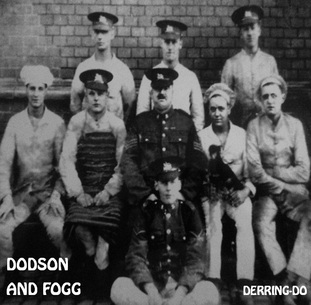
Steamfolk – The Derring Do of Dodson and Fogg

ImageThere was a fairly determinate point in the British folk rock movement of the late 1960s/early 1970s where a second string, following on the heels of Fairport Convention and Steeleye Span, made a bid for eternity.  Trees, Mellow Candle, Mr. Fox, and the chamber folk musicians, like Nick Drake or John Martyn or Roy Harper or Michael Chapman, bent their axes in a more idyllic, often trippily electric, singer-songwriter direction, creating everything from full-out jazz improv to fairly quaint hippy platitudes.  The rarity of some of the LPs these artists produced is legend — it took the internet to demystify them, and reconnect listeners to a wellspring of achieving, often remarkable, sometimes dated, music.

As a touchstone for inspiration these records are nearly without peer, independent and uncompromising.  But having a Vashti Bunyan album in your collection and making music that you make your own is another thing.  Chris Wade, who leads the project Dodson and Fogg — as well as being a rock writer in his own right — has done that with Derring Do, the group’s second album.  Derring Do elaborates on the first, self-titled Dodson and Fogg record, while taking a leap forward lyrically and musically — the limitations of a home studio have become strengths, the writing delivering songs that fit together.  Wade has achieved this by understanding the tools he’s working with, and by having a deep respect for his inspirations while retaining his artist’s eye and ear for what does justice to his songs.  So he’s able to coax graceful backing from two of British folk rock’s great singers — Celia Humphris (Trees), and Alison O’Donnell (Mellow Candle) — while maintaining a focus and direction of his own device.

There are traces on Derring Do that listeners might find familiar, the floating-down-a-river sound of Nick Drake or James Yorkston, the pop folk of Iron and Wine, the simple melodic invention of Syd Barrett, and the more pastoral forays of T. Rex and the Kinks.  The lyrics are simple and unfussy, straightforward, working with the melodies rather than overly concerned with poetics or narrative.  Unexpected touches appear, such as really tasteful, brief guitar solos that work — there’s an ebb and flow that occasionally needs breaking, and Wade has the feel and chops to put some crunch in the right places.  There are trumpets, spare percussion, flutes, and Wade’s voice, dwelling at times in the lower registers, can range from a kind of glam-punk bite to the breathy approach that’s come to be so associated with Nick Drake.  The remarkable thing about this album, though, is that no voice dominates within each composition.  The impulse to go long, as his folk and prog rock predecessors might have done, is also resisted — there are few wasted notes or words.  Less is more sometimes, and service here is done to Song.

“The Leaves They Fall” is a video Wade put together for Derring Do, which gives a good general idea of the album’s direction

http://www.youtube.com/watch?feature=player_embedded&v=diKQgjmnk0I

but I think most representative (and beautiful) is “To the Sea,” with its on-fire electric outro:

http://www.youtube.com/watch?v=fywm2bUM0D0

I caught up with Chris Wade the other day — after hearing the record, I wanted to ask him some questions, which he graciously consented to answer.  I think he tells Dodson and Fogg’s story best, plus he reminded me I need to read more Dickens.

I’ve read you spent a lot of time in your teens with a guitar and a 4-track.  That kind of intimate warmth is present on Derring Do.  It’s loose, not precise, something so tempting in our digital world.  Describe your recording process — are these home studio recordings?
Yeah, these are done in my home studio. I knew that with a simple set up, a microphone miking it all up like in the old days, it would make the record sound like it was perhaps from my favourite era of music, late 60s, early 70s. I basically start with an acoustic track, which I might double up, then do a bass track, then start on the vocals, then anything else comes in after that. On Derring Do I definitely got this down to a proper functioning way of doing it. You do need to have a plan when you’re recording and producing yourself. The great part is when other people send their things for the mix, that’s when it comes to life, especially when Celia [Humphris] sends some of her vocals over.

What’s the inspiration for the name Dodson and Fogg? (I can’t get out my head Lindisfarne’s Fog on the Tyne.)
Dodson and Fogg were two lawyers in Dickens’ Pickwick Papers. I thought it had a cool ring to it and I like the fact the name has caused a bit of confusion. Some people have gone in assuming it was a duo, but it’s me really with guest musicians. I love Lindisfarne as well, funny you should mention them. I just did a piece on them for my magazine Hound Dawg and all surviving members contributed text for it. Great band.

Anyone familiar with the history of the British folk revival will recognize some of Derring Do’s contributors.  How did you come to work with Judy Dyble, Celia Humphris and Alison O’Donnell? How about Nik Turner of Hawkwind? Is that his flute I hear?
Yeah, Nik is great on the flute, he did some amazing stuff on the first album. It was a matter of emailing them to ask if they’d be interested. I’ve always thought ‘you never know until you try’ and I have been a bit of a cheeky git in the past. But Nik and Judy did their bits and emailed them across to me. But Celia is very much more involved in the whole thing. She contributes a lot of vocals and puts in a lot of time to this, so I am really grateful of that. She’s done loads of good stuff on Derring Do, given the album a real nice touch. I still can’t believe they took the time out do it and as a big fan of trees and Celia’s voice, it’s amazing to have her on the songs. her voice is stronger than ever too, she really is very very talented.

I love how you use horns (thinking here of What Goes Around and Too Bright).  Can you talk about your approach to arranging your songs?
I’m glad you like the horns. Arranging a track, I like to record what I think is a decent simple acoustic and vocal track, and then think of an instrument or a sound that may make it a little bit different, unusual, but it has to fit just right. Colin Jones, the trumpet player, did some brilliant things on the Derring Do album. He’s a nice bloke as well. I see mixing a track like doing a painting, without sounding pretentious (which i probably just have sounded) because you lay sounds on, mix them around, put them in one speaker to balance it out, turn them up, turn them down, and sometimes delete them from the mix. I love that process, I could do it all day (sometimes I have been doing that actually).

Nice lead guitar and solos – is that you, or who’s responsible? Can you tell us something about choosing your tones?
Thanks, yeah that’s me on electric guitar. I love playing the guitar, it’s always my favourite part of doing a track, writing and playing the solo. I just play naturally really, whatever I feel should come out. I use a Tanglewood SG on the albums. I mike the amp up, make sure there’s a lot of treble on the guitar and that’s basically it. A reviewer said it was shredding and a sharp sound. I like to use the electric every now and then, and not necessarily on every track, because it has more power when it comes up then. I’ve been playing since I was a kid, but I don’t think i really started understanding that sometimes less is more and that a solo should be a properly structured piece of music in itself rather than a random improvised noodle, although i do like them, just not in my own songs because I’m crap at them.

Can you describe your vocal approach (I notice on the first record you double your vocal a lot, less so on Derring Do — which I like).
I like to sing within a range that is comfortable. One thing I don’t really like is loud, high singing, because I have a low voice and if I try and go higher i sound like my balls are in a vice or being chewed by a rabid hound. So I like to keep it comfortable and also easier to listen to. No one wants to hear someone struggling with high notes, not much of a pleasant experience really. But I like the voice to sound strong and loud in the mix, so you can hopefully hear all the lyrics. The cool thing is having proper singers with you on the songs who really can use their voices, when Celia’s voice comes into the mix I sometimes have to pinch myself. It’s brilliant.

I hear a musical leap between the debut and Derring Do, which seems, musically and lyrically, far more focused.  Am I hearing right, and would you elaborate if I am?
Yeah i think there is a leap. I’m not a seasoned pro with proper writing and recording so I guess i am still learning and developing a style, which is really exciting and I’m really glad you recognised the shift in styles. I started recording Derring Do before the first one was out and knew I felt like expanding the sound a bit. When I recorded the first one I was kind of testing what I could do on this set up and a lot of it is safer in a way. With Derring Do I wanted it to sound fuller, more elaborate at points and also more varied, like an album with lots of moods, styles and shades, which is quite a progressive approach. But a lot of the time anyone recording music is just doing what they feel like doing that day and going where the song is taking them.

There’s a lot going on in these songs, threads of past and present.  Who are some of your influences, and who of your contemporaries do you follow?
I mostly love music from the 60s and 70s, but wasn’t born until 1985. I always love listening to Donovan, Jethro Tull, The Kinks, Cat Stevens, Frank Zappa, King Crimson, Pink Floyd, Trees… I am not sure how they influence the music but some reviewers have heard bits of Trees, Tull, Barrett and Crimson in the music, but you never really know yourself do you? I don’t really follow modern music really, only bits and pieces, although I know I should.

How would you describe (I hate to say it, but “categorize”) your own music?
For the first album I just thought of it as a folk rock album, but found that a lot of folk sites and shows didn’t think it was pure folk enough, and then people started calling it ‘acid folk’ which was a term I didn’t know until then. I thought they were accusing me of being a spaced out acid head or something. The only thing I have in excess is malt loaf (mmm… malt loaf). But people have also called it ‘progressive folk’ which I like. it seems to work under that category i think.

You’re a busy man, a writer, musician, visual artist — what excites you most about what you do?
I’m most excited by the music now, it’s really took hold of me and I love putting the work into it. I love the fact I get to do the mix, sort out the artwork, royalties, promo, everything. If it’s your job then why not make it your proper job and put full time work into it. That’s what excites me, and also the thrill of creating something you’re really enjoying. I’ve done a mix of things, like the audiobook with the comedian Rik Mayall  but it doesn’t come near the enjoyment of making music. I don’t like having to deal with egos and awkward people who are more interested in their images than the work you’re creating. It isn’t the best way of spending your time. I have a working class ethic to it, it’s a job and you fund it and do it yourself, because no one else is going to do it for you.

On the pages of Progarchy we regularly (short-lived as we are) hear from artists who struggle to find reward for what they do.  What’s your perspective on this? Can a musician be just a musician anymore? What’s the easiest way for someone not familiar with Dodson and Fogg access your music?
Luckily for me I have quite a lot of projects that are out there, so the music is just one of my things available, if you like. I think it might be hard to survive on royalties alone these days, but then again I am really new to the “music biz” (business I mean, not poo) so I don’t really know too much about it. I’m still learning. The CDs are available from my website, where all my stuff is available, but you can also download from bandcamp and also Itunes, Amazon and all the digital stores. But the easiest way is to type in Dodson and Fogg to the Google search and the top result is my website. All the info is there.

What’s next for you?
I’ve got some promotion to do and sorting things out for the album, and also doing some articles for the next Hound Dawg magazine. After that i think I’ll start on album number three, which will be really fun!

Thanks to Chris Wade for such generous responses. Check out Dodson and Fogg’s website here:
http://wisdomtwinsbooks.weebly.com/dodson-and-fogg.html

and online back issues of Chris’s Hound Dawg: http://wisdomtwinsbooks.weebly.com/hound-dawg-magazine-online.html

Craig Breaden, February 2013