
Wow. Just wow.

Wow. Just wow.
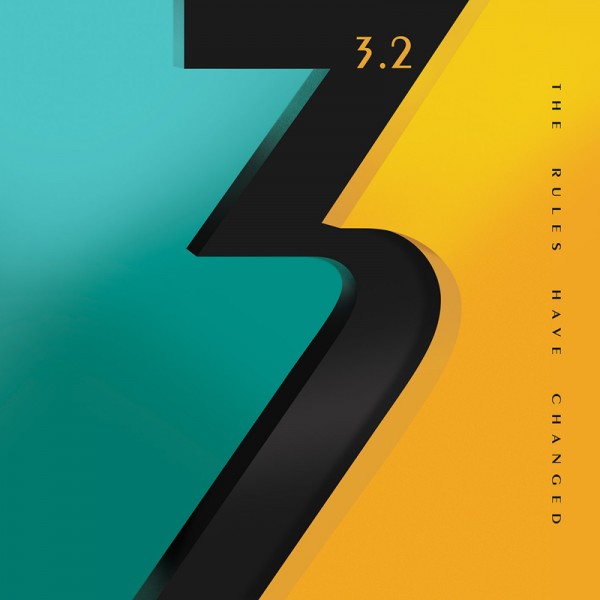
After Emerson Lake & Palmer’s late-1970s collapse, the separate members of the trio didn’t stop making music, releasing solo projects, launching new bands — and often working with one (but never both!) of their former colleagues.
The last such project before ELP’s 1990’s reunion was 3, a Geffen Records brainstorm to bring together the post-Lake & Powell Keith Emerson, the post-Asia Carl Palmer and guitarist/vocalist Robert Berry, a hot young gun from Los Angeles in the Trevor Rabin mold. Aiming for another 90125 (or at least another GTR), the 1988 album To the Power of Three had some solid, intriguing moments — but it wasn’t pop enough to yield a substantial hit, or prog enough to reactivate ELP’s fanbase. When Geffen cut off tour support and ordered 3 back into the studio for another album, Emerson pulled the plug on the band.
Fast forward to March 2016. With an archive live release from 3’s US tour stirring fresh interest, Berry and Emerson planned to collaborate on a duo album, updating and re-energizing their sound for an environment where prog of all stripes had found an audience again. Then, succumbing to depression on the eve of a Japanese solo tour, Emerson killed himself.
Nevertheless, using co-written songs and musical ideas Keith Emerson left behind, Robert Berry (also a classically trained pianist) persisted, playing all the instruments himself for the now-solo project 3.2. The result is The Rules Have Changed, due for release on August 10 from Frontiers Records. No less of a progressive music authority than Innerviews editor Anil Prasad calls it “an expertly-executed and performed album that takes the spirit of the first 3 release and propels it into edgier and more adventurous territory, while retaining the melodic qualities of its predecessor.”
I got to meet Robert Berry a couple years back, when his charity band December People (playing Christmas songs in the styles of classic rock and prog artists) toured Michigan for the holidays. Our brief conversation revealed him as a down to earth guy, with fond memories of his time in 3 and deep respect for Keith Emerson. Based on the sample track “Somebody’s Watching,” which absolutely captures the sound of the original band at their most daring and delightful, I’m definitely looking forward to The Rules Have Changed, and I wish Berry’s 3.2 project all the success in the world.
— Rick Krueger
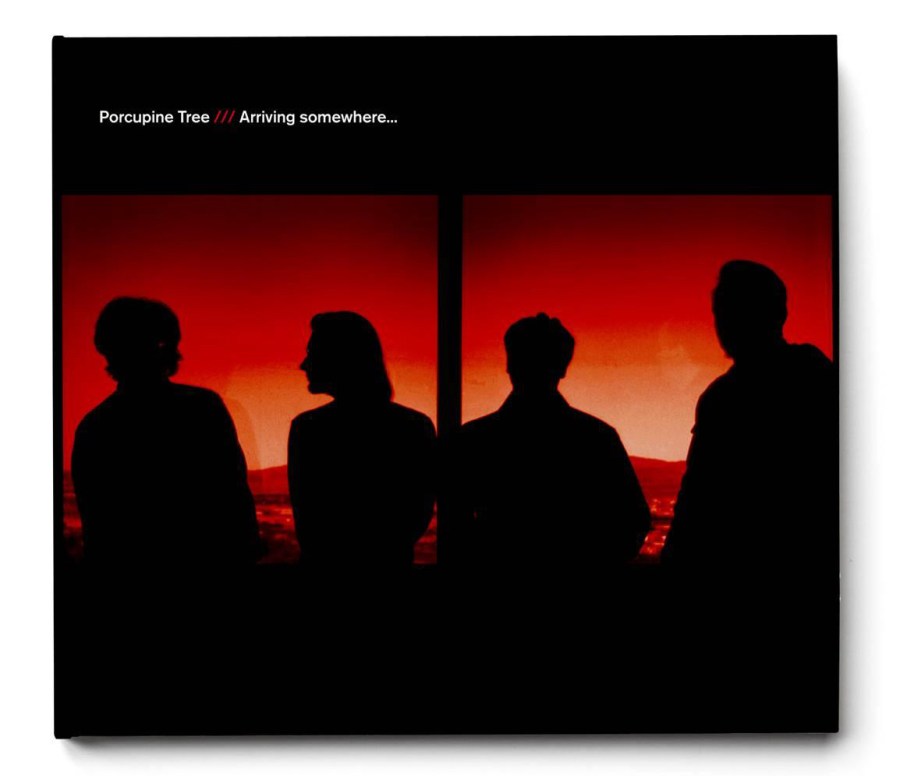
Porcupine Tree, ARRIVING SOMEWHERE. . . (Kscope, 2018). 2 CD/1 Blu-ray package. A re-release of the 2007 title on DVD.
Though it originally came out over a decade ago, Porcupine Tree’s ARRIVING SOMEWHERE . . .–its live show from Chicago, October 11-12, 2005–has just been re-released by Kscope in a very nice 2 cd/1 blu-ray book.
When it first came out on DVD in 2007, I had purchased it immediately. Of all the concerts I own on varous forms of video, ARRIVING SOMEWHERE . . . has been in constant play, rivaling only Rush’s TIME MACHINE and Talk Talk’s LIVE IN MONTREUX for most played.
Now, having it on CD and blu-ray reminds me yet again how incredible Porcupine Tree was in the first decade of this millenium. Admittedly, between 2001 and 2010, I was rather obsessed with the band. To me–all pre-2009 and, thus, pre-UNDERFALL YARD–no other band had reached as far and as perceptively as had Porcupine Tree. The band seemed the perfect fusion of prog, pop, and psychedelia–in its music as well as in its lyrics.
Recently, on Facebook (where I still dwell in a love/hate “it’s complicated” sort of way), I saw a group called “ARW is Not Yes Because 3/18 of Yes is NOT Yes.” A string of several loosely related thoughts (some of them a bit smart-assy) tumbled forth when I saw that group name:
This line of thought simmered in my thinking for about a day. Then I read some Facebook posts and Tweets about how Fleetwood Mac without Lindsay Buckingham would not be Fleetwood Mac. This struck me as downright funny, due to my familiarity with the many albums released by Fleetwood Mac before Buckingham was around. If there is an essence to Fleetwood Mac, it is Mick Fleetwood and John McVie, no?
Is anyone besides Robert Fripp essential to King Crimson? (Here my temptation is to see Bruford and Wetton as essential as well, since that is my favorite KC. It sounds much more authoritative to say “essential,” than it does to say “favorite,” you see?)
But what is “essential”? What is an essence?
I could go into a bunch of philosophy here, but if you’re willing to trust me, I’ll give you a bit of an upshot without going into what gets me there. Consider the idea that an essence is just “the way in which something is what it is.” Not what it’s made of. Not the sum of its parts (whatever they might be). How it goes about being. The word ‘essence’ has its etymological roots in a word that just means “to be.” It is the thing’s way to be.
I sometimes urge my students to think of ‘essence’ as a verb. It’s bad grammar, and can’t really be written exactly, but think of the essence of something as “the way in which it bes what it is.” The word I’m putting down as “bes” is prounounced like “beeze.” If there is a certain way in which I be (that’s a verb, remember?), then you would say that’s the way that Pete Blum bes.
Will all of this help with the matter of whether a particular band is still the same band without member X, Y, or Z? Well, it could; but that’s not really where I want to go. This is a Look at The Lamb, right? So…
What is the essence of The Lamb? What is its way to be?
While I don’t have an answer to lay out for you, I do have some suggestions regarding how to listen for the essence:
Pick one. Or maybe two.
Or more, if how it bes draws you in.
[No pictures or explicit references to the content of The Lamb this time?! Yes, that’s deliberate.]
<—- Previous Look Prologue Next Look —->
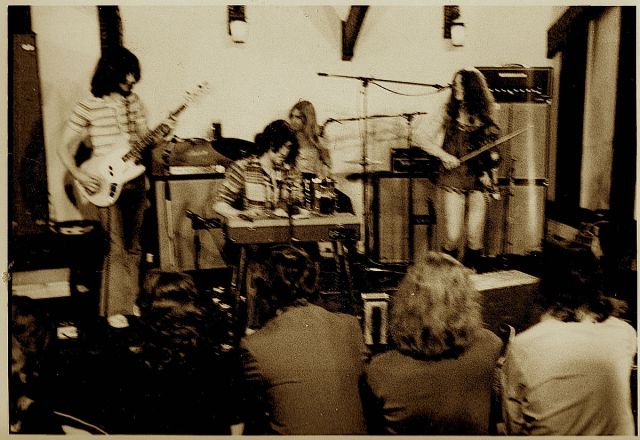 Bob and Carole Pegg formed Mr. Fox in 1970 in the wake of Ashley Hutchings’ early rehearsals for Steeleye Span (having I suppose not passed that audition), made two eccentric albums that writers on the British folk revival still can’t really sum, and were done in both their marriage and the band by 1972. Critics claim it was uneven live performing, a hard-to-parse new music approach to folk rock, or lack of vocal heft that singers like Sandy Denny or Maddy Prior brought to their respective groups… I put my money on a general learned restlessness you can hear in the music itself, in their very Reynardine-esque name. Oddball northern England raps butted up against drones, earthy fuzz bass and respirating bellowed instruments, and original songwriting. Decades later these would earn the band a reputation among acid folk revivalists, but Mr. Fox were less Trees or Mellow Candle, more John Cale as filtered through the Yorkshire dales, even as Bob possessed the patented nasal drawl requisite to any respectable folk act of the period and Carole’s fiddling was appropriately rustic.
A gay goshawk came to my window sill,
The snow it fell fast and the stars stood still,
Oh, won’t you take me in from the storm,
Won’t you take me between your sheets so warm?’
Gold was the colour of his wings so fair,
His eyes they were bold and of silver so clear,
As I laid his brown body upon the pillow,
He became a man, live as a willow.‘Don’t breathe a word, don’t scream, don’t shout,
Or I’ll turn the whole world round about,
I’ll lay the moon flat on the land,
Twist a rope out of flying sand.’
Whispering women say I have been beguiled,
Now the deed’s done, she must care for the child,
Jasmine’s the colour of his hair,
A nut brown boy with a silvery stare.The night has gone and the seasons slip by,
Knowing seducers still give me the eye,
But on cold winter’s evenings alone I walk,
I watch and I pray for my gay goshawk.
Penned by Carole Pegg, “The Gay Goshawk,” from Mr. Fox’s self-titled 1970 debut, with its pounding tom and killer fiddle drift, is a lesson in folk-inspired songwriting and in shrugging convention. No other British folk rock outfit could touch it in terms of both originality and faithfulness to the spirit of the tradition being upheld, although Brass Monkey’s “Fable of the Wings” dwells in a similar landscape. Evidently the song had staying power for Carole, who recast it over four decades on with, naturally, Tuvan throat singer Radik Tülüsh. Sly Mr. Fox.
*Image above, Mr. Fox live, circa 1970.
soundstreamsunday presents one song or live set by an artist each week, and in theory wants to be an infinite linear mix tape where the songs relate and progress as a whole. For the complete playlist, go here: soundstreamsunday archive and playlist, or check related articles by clicking on”soundstreamsunday” in the tags section.
Discerning structural progression with that all-consuming guitar harmony –it’s 1991, but Chuck Schuldiner was already crafting that musical transformation of Death. Sort of chiseled with mathematical precision, these riffs can be overwhelming. Add some layering and complex transformations to the mix, and Death successfully exacts an emotional toll on their listeners. A musical arrangement so aggressive and poignant — baffling how such contradictions can gracefully coexist.
A revisiting of this classic album was purely accidental. I was driving up the Cascade Loop for a quick weekend hike and Death started playing on the radio. A drive through the tunnels with “Lack of Comprehension” on stereo was one of those fine death metal moments. An uneventful afternoon hike with stunning PNW visuals — but in my head, Death’s riffs were still playing in an endless loop.
By A Sniper [CC BY-SA 3.0 or GFDL], from Wikimedia Commons

The Power and The Glory (CD/Blu Ray) – Gentle Giant Introduction… Well I have always liked Gentle Giant since I finally got into them which was a good couple of decades after they disbanded in 1980. I barely took any notice of them back in the 70’s and I am pretty sure it was through […]
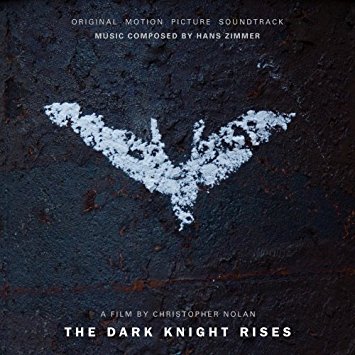
I would be stunned to find out that most lovers of prog music don’t also love really artful and meaningful films.
I’m not knocking goofy films. I love Bowfinger, Old School, etc.: movies my brothers and I lovingly refer to as “great stupid movies.”
And, of course, there are a number of movies that play what my friend, Mike Church, calls “juke box” music–The Wedding Singer or almost any John Hughes movie.
I’m, however, thinking of actual cinematic scores written for the screen.
And, to be fair–and probably state the obvious–many of the best modern soundtracks, such as those by Hans Zimmer–are clearly influenced by prog rock.
Gottwut’s sonic brew is rooted in the 90s. Not just industrial, techno and symphonic elements – Konglomerat integrates alternative, gothic and occasional hard rock riffs. In spite of constantly shifting its sound and tempo, the record manages to hold its atmosphere. Drawing from a broad spectrum of influences it simply packs enough ammo — more than enough to capture the attention of a goth or an industrial head. Needless to say, those vocals and compositions structured for live shows will inevitably draw well deserving comparisons with this massively influential industrial band from Berlin.


The first in a series of sales to celebrate 10 years of the Kscope label.
Many Paul Draper items – including the extremely limited limited cassette edition of Spooky Action – will be available at a reduced price until May 31st.

Welcome To The Blackout (Live London ’78) captures Bowie live during the ISOLAR II tour at Earls Court, London on the 30th June and 1st July 1978.
The album was recorded by Tony Visconti and was mixed by David and David Richards at Mountain Studios, Montreux in January 1979.
Initials copies of the CD are packaged in a six-panel digipak with rare photos from Sukita and Chris Walters
Double CD in digipak.
Pre-order for 29th June release.
 Progarchy
