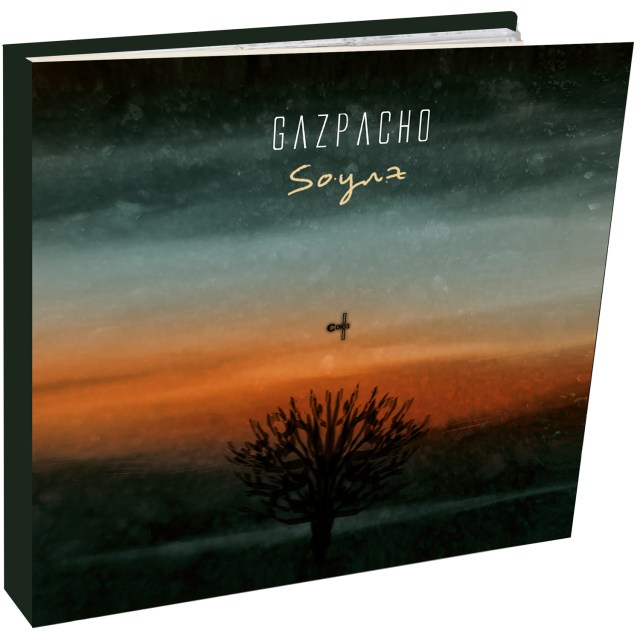
Great news today from Burning Shed. The forthcoming album from Gazpacho: SOYUZ is now available for pre-order.
I didn’t realize this would be coming so soon. I’m in the middle of a retrospective of all of Gazpacho’s albums. This, of course, will be coming to a progarchy website near you.
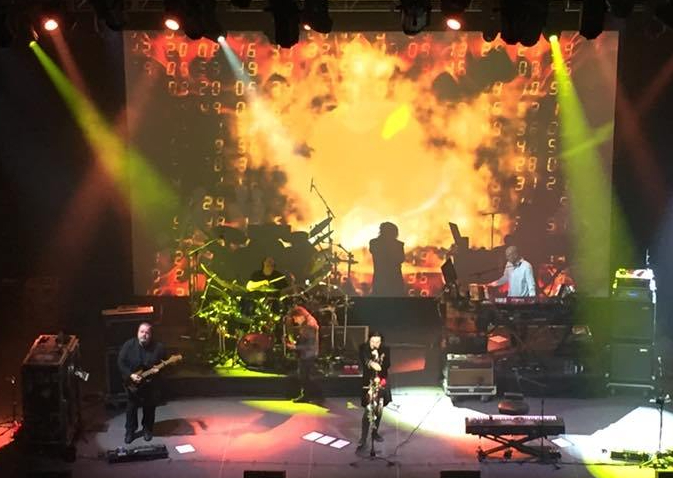
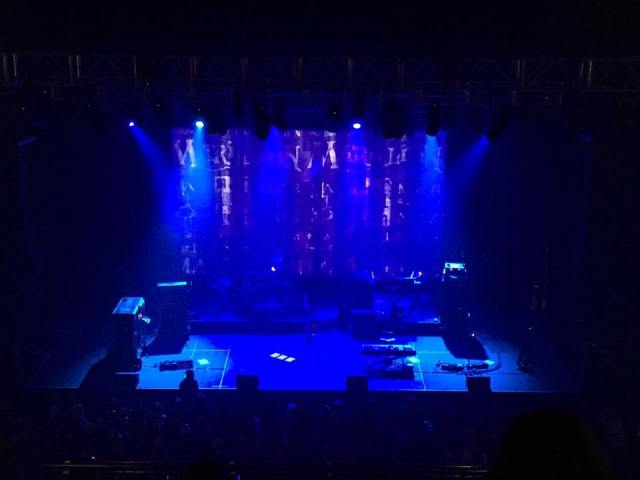
Marillion at 20 Monroe Live, Grand Rapids, Michigan, February 18, 2018.
Waiting for Marillion to take the stage, my thoughts drifted to the rest of those gathering in this well-appointed concert club. Why were they here?
Doubtless, there were locals who, when they heard Marillion was returning to Grand Rapids after 20+ years, anticipated pure nostalgia — “Kayleigh,” “Incommunicado,” “Hooks In You,” “No One Can,” fixtures of local rock radio in the early 1990s. After all, why else would a band with no more than a cult following tour the States, if not to play the hits?
Then there were the hardcore fans, the ones I’d hung with in Facebook groups for a couple of years now. People from GR, Kalamazoo, and Detroit who’ve traveled nationally and internationally to see the band since their last Michigan stops — some 30, 40 or more times. The folks who converged on this mid-size Midwestern city from (for example): Bangor, Maine; Hillsboro, Oregon; Sioux Falls, South Dakota; Baja, Mexico; and Stoke-on-Trent, England, telling stories of their first Marillion experiences, sometimes stretching back more than four decades. Not to mention “The Nine,” as they named themselves, who’ve seen every show on the current US tour. They all have their favorite songs — but they knew that much more was coming than a rote run-through of career high points.
And then there was me — a Marillion fan since Seasons End, but only on my fourth show (still way behind King Crimson and Rush), bringing my wife and two friends for their first experience of the band, ten minutes away from my house. I couldn’t help but wonder: what connects us? Why this band? What’s at the heart of this experience?
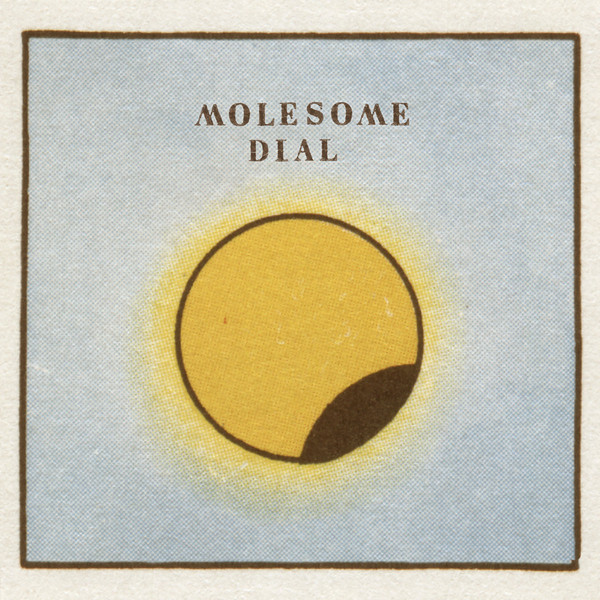
Today, much to my surprise, a nice package arrived from Sweden. And, to make it even better, inside, I found not just a beautiful new cd, but also a three-page handwritten note.
The CD. Beautiful. I’ll keep the three-page note to myself, though.
Now, that’s excellence!
Thank you, Mattias Olsson. I’ve not listened to a single note yet, and I’m already your fan!
Did Beethoven steal tunes from his older contemporary for the “Eroica” Symphony, the Ninth Symphony, and for his most popular and beautiful song?… It is one of the most popular tunes in all of classical music, nay, in all of music, period. 1,085 more words
March 23: Unplugged at the Walls (1999) and Tumbling Down the Years (2010)
May 25: Smoke and Mirrors (both 2006)
July 6: Happiness Is Cologne (2009) and Popular Music (2005)
September 21: Live in Glasgow (1993) and Brave Live (2013)
Merch copies of the “Limited USA Tour Edition” of FEAR (which includes a sampler of the live reissues) sold out at Marillion’s recent Grand Rapids show, but it’s still available from Amazon at this writing.
For the first time in 32 years, performer/producer Todd Rundgren is reuniting his band Utopia for an extended tour of the United States.
Founded as a progressive septet specializing in synthesizer-heavy, instrumentally-oriented wigouts, Utopia served as both Rundgren’s dedicated live band and an outlet for his more experimental music. However, as Rundgren’s solo albums kept getting wilder, Utopia went a different way, shedding two of three keyboard players, picking up Kasim Sulton as bassist and co-vocalist, and morphing from the proggy hard rock of Ra (including the tongue-in-cheek epic “Singring and the Glass Guitar — An Electrified Fairy Tale”) to sleek power pop with cooperative songwriting, tight harmonies and a high-tech sheen.
With Roger Powell on keyboards and Willie Wilcox on drums, Utopia hit a commercial peak on the albums Oops! Wrong Planet (including “Love Is the Answer,” later a pop hit for England Dan & John Ford Coley) and Adventures In Utopia (intended as the soundtrack for a Monkees-like TV series that never happened). The band’s highest visibility may have been as the backing group for Meat Loaf’s Bat Out of Hell album, which Rundgren produced.
True to Rundgren’s restless musical tastes, Utopia then veered off into the commercial dead ends of Deface the Music (an album of Beatles pastiches) and Swing to the Right (a concept record slamming early Reaganism). Rundgren’s pioneering video work for the band gained extensive play on the fledging MTV, but the quartet petered out in 1985, only reuniting for a 1992 tour of Japan.
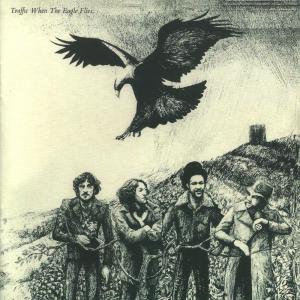
Purely by chance (if such a thing as chance exists), Fidelia played Traffic’s “Dream Gerrard” from WHEN THE EAGLE FLIES, then Gazpacho’s “Vera” from LONDON.
From such “chances” emerge the stuff of dreams.
What hit me hard–in fact, for the first time–is how similar the style of the two bands is.
Separated by decades as well as countries of origin, Traffic’s epic “Dream Gerrard” blended stunningly into Gazpacho’s “Vera.” Same style of bass, keyboard swells, and atmospherics.
Iceland has been very active when it comes to the Progressive Rock genre in the recent years. It could be said that Ring of Gyges is one of the bands that represent this wave of the Icelandic Prog very well. Formed in 2013, the quintet released an EP titled “Ramblings of Madmen” in 2015 and a single “Witchcraft” in 2016, before launching their debut full-length release “Beyond the Night Sky” in November last year.
Vocalist and guitarist Helgi Jónsson told us about the band’s beginnings, new album, the Icelandic Prog scene, and more.
Let’s start from your early music beginnings. How did your musical career begin? When did you start playing? Which groups have been your favorites as a young man? Please tell us something more about your early life.
I come from a musical family, my dad plays bass and my parents raised me with their old vinyl records; Queen, Pink Floyd, The Beatles, that kind of stuff. I started learning classical guitar when I was a kid, probably around 9 or 10 years old, though I wasn’t really interested in that kind of music. I grew up in the countryside and the music school I went to wasn’t very good so the only proper tutoring I was getting at the time was from my dad, who taught me my first chords on the guitar (the power chords were particularly interesting to me!). When I was 13 I scraped together some money out of birthday cards and bought my very first electric guitar and amplifier, both shitty no-name brands, but I was ecstatic. I quickly formed a band with two of my schoolmates. We were mostly playing covers but I wrote one original song as well. Later on, my parents gave me an American Fender Stratocaster as a confirmation present, which remains to this day my favorite guitar and a good portion of our album was recorded with it. In high school I started to really get into prog, Rush, Dream Theater and Focus were some early favorites, but Blackwater Park by Opeth is probably the album that really sealed the deal for me on this whole prog metal thing.
If they’re the only band on the infinite linear mixtape to be featured twice, and back-to-back at that, it’s because of the singularity of their two lead singers, who so influenced their respective versions of Black Sabbath that each iteration of the band made a distinct impact on rock and metal. Sabbath guitarist Tony Iommi has stated that the difference lay in writing for Ozzy Osbourne, who sang the melody of the riff, versus writing for Ronnie James Dio, a far more technically accomplished singer, who sang around the song’s chords. But even with Dio’s vocal expertise stretching Sabbath’s range, the core of Black Sabbath’s legacy really does belong to Ozzy, whose shakily intoned shriek conveyed — at least across their first six records, and before it became Ozzy’s schtick — the terror of a man trapped inside a nightmare.
When Sabbath took to the studio in October 1969 to make their first record, they were like dozens of other post-Cream British blues rock bands struggling to find their own voice. But, they had some advantages that maybe weren’t immediately apparent. Iommi’s short and ultimately unsuccessful stint in Jethro Tull in 1968 was an education, as that band was finding its own, heavier feet following the departure of Mick Abrams (Martin Barre, the definitive Tull guitarist, would be hired shortly after Iommi filled in, with a thunderingly loud but finessed guitar style not unlike Iommi’s). And Ian Anderson provided an object lesson for Iommi when Iommi went back to his band Earth: success would largely depend on the labor you put in. Tull worked for its fortune. As Earth transformed itself into Black Sabbath, Iommi demanded the band become a workhorse, and the group began developing a set of songs around bassist Geezer Butler’s night frights, a fascination with horror movies (e.g., Black Sabbath), and two significant technical issues that became key to a conceptual breakthrough: the tips of Iommi’s fingers on his right (fretting) hand had been shorn off in an accident in 1965, and it was while developing his newly renamed band’s sound and songs that he down-tuned his guitar to make it easier to play with the plastic tips he adhered to the tops of his fingers; also, Butler’s facility on bass was limited in their early days, so he ditched melodic runs and just mimicked Iommi, also down-tuning his bass. The result was literally diabolic. From the opening notes of “Black Sabbath,” the sound sends shivers, and it is here that heavy metal was born, out of imaginative use of limitation — such is Art — and the doom-laden tritone, the diabolus in musica, that Sabbath employed as its calling card. Iommi, riffing on Butler’s attempt to mimic Gustav Holst’s “Mars: The Bringer of War” from The Planets suite, produced a metal manifesto so potent that it resonates almost 50 years on, remaining a rock touchstone of its era as significant as Velvet Underground & Nico, Astral Weeks, Forever Changes, or Funhouse, ever begging the question: What is this that stands before me?
Studio version here but also the Paris ’70 version, with Ozzy jumping like Iggy.
There is, in fact, none more black.
soundstreamsunday presents one song or live set by an artist each week, and in theory wants to be an infinite linear mix tape where the songs relate and progress as a whole. For the complete playlist, go here:soundstreamsunday archive and playlist, or check related articles by clicking on”soundstreamsunday” in the tags section.