Review: Distant Horizon – Laniakea

Distant Horizon - Laniakea

Distant Horizon is a new band coming from Lapua, Finland who released their debut EP “Laniakea” in June 2017. This fully instrumental progressive metal project is led comprised of Joona Lehto on guitar, Jere Lehto on bass, Jesse Lehto on drums, and Matias Kalli on keyboards and guitar.

As is the case with most instrumental albums, “Laniakea” requires careful listening in order to be fully appreciated. It is definitely not the kind of stuff you can put on as a soundtrack for other activities — complex music, full of twists and turns, yet not unnecessarily complicated, or weird for weirdness’ sake. In fact, the music has a beautiful, natural flow, a clarity and melodic quality. Even though guitars make up a prominent part of the sound, they never get to the point of overwhelming the other instruments. As in most experimental music, however, the foundation of Distant Horizon’s sound lies in the rhythm section, especially in the jaw-dropping drumming patterns provided by Jesse Lehto.

Head-spinningly complex without being cold and sterile as other efforts in a similar vein, “Laniakea” can easily be (re)listed as one of the top releases of 2017. In fact, the sterling musicianship, coupled with an admirable sense of restraint, focuses on creating cohesive, highly listenable tracks rather than pointless displays of technical skill. However, it is also a release that will definitely not be everyone’s cup of tea. Strongly recommended to practising musicians and fans of intricate, challenging music, it may come across as daunting to those fans who prefer a higher measure of melody and accessibility, as well as a more conservative approach to progressive rock and jazz fusion.

The album is available from Bandcamp here.

Farewell to Kings (and Faith): Neil Peart, 1977

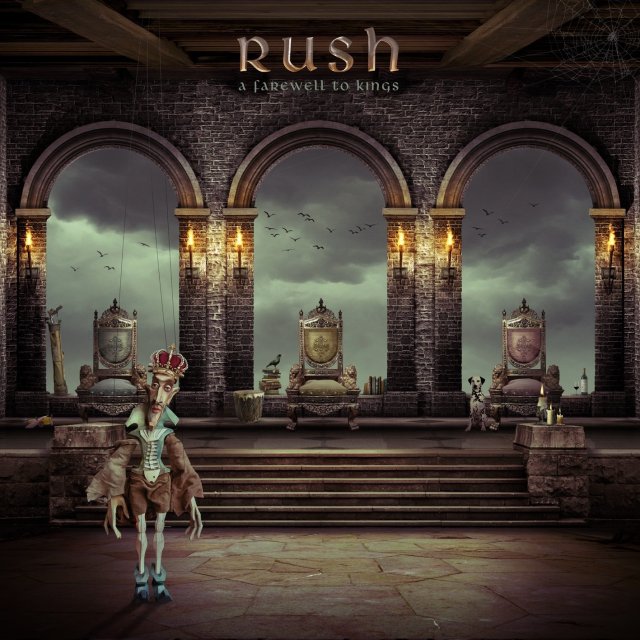
In honor of the 40th anniversary of the release of A FAREWELL TO KINGS.

rush farewell
40th Anniversary Edition

What followed, 1977’s A Farewell to Kings, though, had far more in common with 1976’s 2112 than it would with 1980’s Permanent Waves.  Not appearing on the market until September 1, 1977, A Farewell to Kings ended the new album every six months schedule Rush has followed thus far.  A brilliant album in and of itself, A Farewell to Kings still belongs to Rush 2.1 as I have defined it.  So does the follow-up album, Hemispheres.  Certainly, Rush tried many new things—in terms of album structure, lyrical depth and story telling, and musical complexity—than it had on the first several albums.  “We had written material that was a little beyond us, considering our level of musicianship at the time,” Lee later admitted.[i]  But the progress is in continuity, a major reform rather than a revolution.  “Our progress has always been sincere—not in an arrogant way, but for our own pleasure,” Peart stated in 1982.  “We’ve always incorporated music from people we liked, so it has made us stylistically schizoid.”[ii]

While there are no side length tracks on A Farewell to Kings, the album revolves around its two major songs, “Xanadu” at 11 minutes in length and “Cygnus X-1” at almost ten and 1/2 minutes.  Thematically, Peart continues to embrace both the fantastic—“Xanadu” based on the iconic romantic English poem, “Kubla Kahn,” by Samuel Coleridge—and science-fiction, “Cygnus X-1.”  At the time, Peart lauded fantasy writing in lyrics.  “It’s a way to put a message across without being oppressive.”[iii]

Continue reading “Farewell to Kings (and Faith): Neil Peart, 1977”

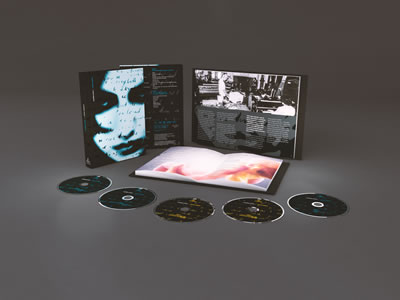
Marillion BRAVE pre-order news for U.S.

marillion brave
De-Luxe!!!

Dear Fellow Citizens of the United States,

At the moment, it is cheaper to order the 5-disc Steven Wilson remix deluxe version of the forthcoming BRAVE from Marillion through Marillion.com than it is through amazon.com.

At Marillion.com, including shipping, $42.

At amazon.com, including shipping, $49.98.

This has been a public service announcement from your friends at progarchy.com.

Yours, Brad

Sound of Contact Drama Continues

I loved Sound of Contact’s first album, but this band seems to be surrounded by some sort of unknown drama. Simon Collins (son of the mighty Phil) and Kelly Nordtrom both announced that they have left the band. Since Simon was both drummer and vocalist, it really isn’t Sound of Contact without him (there’s no way they have another drummer that happens to sound exactly like him). This is certainly a very strange turn of events, especially considering Dave Kerzner left the band and rejoined a few years ago.

More over at the good folks at Prog mag: http://teamrock.com/news/2018-01-20/simon-collins-and-kelly-nordtrom-quit-sound-of-contact.


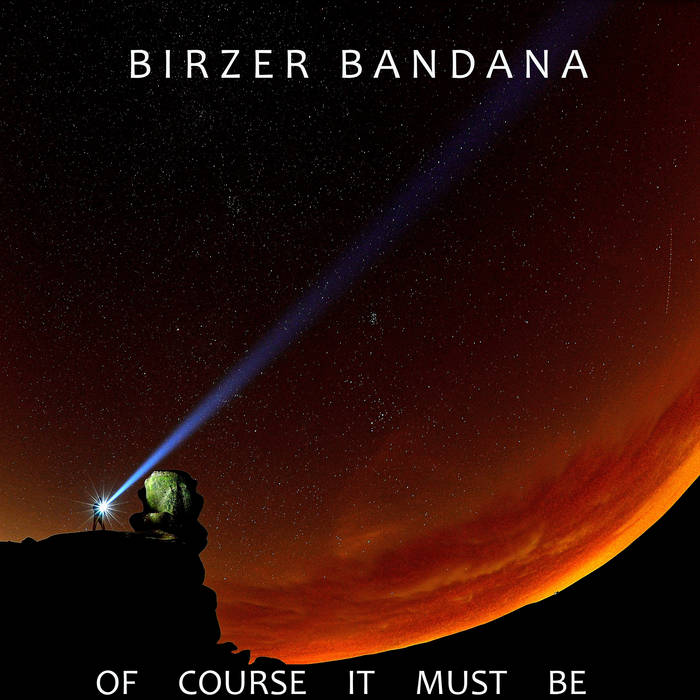
Birzer Bandana – Of Course It Must Be

Re blogged from Kadees Music

kadees's avatarkadees.music.

Cover

“Birzer Bandana
are two prog lovers from opposite sides of the Atlantic who have never met.

View original post 46 more words

Rick’s Reissue Roundup: Attack of the Spring Box Sets!

Shed a tear for the hardcore prog collector — actually, don’t.  This week has been absolutely crammed with articulate announcements looking to part fans from their hard-earned cash or pull them deeper into debt.  And no, I’m not talking about the upcoming Derek Smalls solo album.  Check out what’s coming our way as winter (hopefully) gives way to the spring of 2018:

Continue reading “Rick’s Reissue Roundup: Attack of the Spring Box Sets!”

Review: PuzzleWood – Gates of Loki

Gates of Loki

The “Gates of Loki” album and its music is a desolate, introverted place of darkness that summons broodingly melancholic images of angst and tension, and it’s all been dreamt up by Russia’s PuzzleWood.

The music on this debut album, I have to say, doesn’t immediately reward you as a listener. However, the lush melodies that are imbedded deep within the ten songs found on this recording grow, swell and expand the more you explore them, and soon the shadowy lyrical themes of alienation that exist between the individual and society as a whole draw you in to the all encompassing world that PuzzleWood have fashioned.

The album kicks off cleverly with “Intro (Gates of Loki)”. Its light but sinister musicality builds over time and you find that your attention never wanders, however laid back the music feels to you; the song sweeps over your senses, taking them hostage, and its (almost) hypnotic, trance-like melody keeps you chained to the song like a prisoner, but a prisoner who doesn’t want to escape. “Remember My Name” has an almost Riverside-like feel to it. “Tyrant Who Fall in Love” is again trance-like in the extreme, but the way the song is nurtured and allowed to grow is an amazing thing to hear, and it is for me the album’s standout composition.

“To the Void” feels intricate, incorporating varied instrumentation by the three members, as well as a bouzouki performed by guest Dmitry Ignatov. There is a number of ethnic instruments that can be heard throughout “Gates of Loki,” what gives this record its specific flavour. Basem Al-Ashkar’s arabic oud on the closing “Road Will Lead” is beautifully dissonant, making for a perfect ending.

It’s not an easy album to like initially, but given the right amount of time that this weird style of Prog needs to work its magic on you, “Gates of Loki” soon becomes an impressive, thoughtful release that has all the tools needed for it to become a minor classic amongst those who frequent the shaded borderlands of the Progressive Rock World.

Stream / buy “Gates of Loki” from Bandcamp.

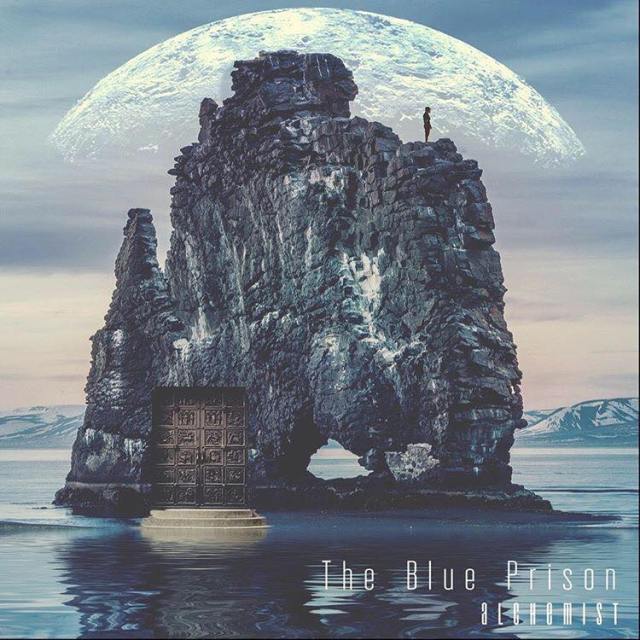
Review: The Blue Prison – Alchemist

The Blue Prison - Alchemist

Alchemist is a new EP release from a Japanese guitarist and composer Keigo Yoshida (The Blue Prison), residing in Los Angeles, CA.

Right from the start, the title song kicks off the EP incredibly strong with its toe-tappingly catchy rhythms and roaring guitars, followed by an equally solid djenty “Zenith,” presented with immaculate detail with ricocheting metalcoresque drums. “Kingdom” is far more edgy, with guitar solos tripping over the song’s plodding rhythm. “Red Sun” introduces a symphonic pattern forming a backbone for Yoshida’s immaculate soloing. Short closing piece “River” is an atmospheric piece that brings Alchemist to a solid closure.

Curiosity begs the question: what does The Blue Prison sound like outside the comfort of his niche he’s carved? Perhaps necessity will force him outside his signature sound before stagnation takes hold in future releases, but for now,  Yoshida has done his best: no-nonsense, tightly produced melodic prog.

Alchemist is out today; order it from Bandcamp.

Review: Barry Weinberg – Samsarana

01_booklet_cover

Fresh from the warm South Florida, comes a prog rock veteran Barry Weinberg, with his debut album “Samsarana” dropping January 25th.

The fifteen-piece musical beast of a debut appears very much ready to stand next to plethora of amazing albums that the genre gave birth to over the years.

After short and atmospheric intro titled “Conception,” forward comes “Creation” leading off with a very Floydian feel and with a full sized chorus following all verses, it seems there may be an easy ride ahead for more cautious listeners. “Welcome to my World” is a laid-back stripped down acoustic piece with Weinberg’s voice over leading to “This Vicious Circle,” which sees Weinberg’s circling melody wash over the pebbles and steal away the shoreline behind, whereas “Come Out and Play” is a groovy and funny little piece.

“Beyond the Astral Sky” kicks in through a silent verse, attacking with a slightly alternative-flavoured chorus, and some sharp instrumentation, before the leviathan-sized hook belonging to “Taking it All” take things to a further level, with occasional hard rock sprinkle. We hear the same good work kept up through “Endless Sea” and “A Passage of Time,” the latter ringing the Genesis influence.

After another instrumental interlude “Perception,” “You Cannot Burn the Fire” comes as, arguably, the heaviest piece, incorporating heavy metal riffing and evil-flavoured singing. “Come My Way” brings in the folk element, while the following “The Way” comes with a steady pace, making for one of the highlights.

“Samsarana” is an absolutely accomplished piece of playing, writing and performance that should see the genre pushed out of its confines.

“Samsarana” is out on January 25th; pre-order it from Barry Weinberg’s official website.

Rush Living In The Limelight

Few bands have released as much video documentation of their live performances as Rush. Some are definitely better than others, so, in chronological order, here’s a handy Buyer’s Guide to Rush on DVD and Blu-Ray:

Released in 2001, Chronicles is just a collection of music videos Rush made for Hemispheres through Hold Your Fire. It was originally released on VHS, and the picture quality is correspondingly poor. Anyway, it has been rendered obsolete due to YouTube. Highlight: “The Big Money” video, with primitive computer graphics that were amazing for the time, and Alex Lifeson looking like he just stepped off the set of Miami Vice. Easter eggs: if you hit the skip forward button after the last video, you can access two more “hidden” videos for “The Enemy Within” and “Afterimage”.

Replay x3 (2006) is a very nice collection of two shows that were originally on VHS (Exit Stage Left and A Show Of Hands), plus a previously unreleased video of a concert from their Grace Under Pressure tour. [Update: Rush fan Kevin Williams pointed out to me (see comment below) that the Grace Under Pressure concert was available on VHS via special order.] In these days of HD Blu-Ray, the picture and sound quality leave something to be desired, but that’s more than made up for by the passion of Rush playing at the peak of their power. A CD of the Grace Under Pressure show is included, as well as reproductions of the three tour programs.

Rush In Rio (2003) is a video of a concert in Rio de Janeiro. The audience of 40,000 people almost drown out the music, their nonstop roar is so deafening. As a result, the band sounds like they are playing in a tunnel. However, there is undeniable energy in their performance. This tour was in support of Vapor Trails, the album that signaled the renaissance of Rush as a working unit after Neil’s personal tragedies. Most Rush fans thought they would never see Neil, Geddy, and Alex perform again, so the ecstatic reception given them by Brazil is understandable. Easter eggs: A. On Main Menu, press 2; when you see the picture for the drum solo, press Menu; back at Main Menu, press 1; when you see the picture for YYZ, press Menu; at Main Menu, press 2; when you see the drum solo picture, press Menu; now the Main Menu shows “Special Bonus: Anthem 1975”. B. In the documentary, when Alex mentions By-Tor, press enter, and the By-Tor Movie will play.

R30 (2005) is from a performance in Frankfurt, Germany, and it’s excellent. The sound is a 5.1 mix, and the setlist is terrific. The 2DVD/2CD package also includes a ton of special features that span Rush’s entire career: interviews, Juno Hall of Fame induction, and live performances going way back to 1970s television shows. Easter eggs: A. In disc 2, press the right arrow several times, you will see an option, “Rush hits St. John’s”, which is a bunch of fan interviews. B. In disc 2 in the interviews menu, navigate to the lower right corner. Press the right arrow several times, and the figure in shadow will light up in yellow. This lets you access “Alex’s Interview for Artist of the Decade” (which is hilarious, BTW).

Snakes and Arrows Live (2008) is a 3-disc set that was filmed in Holland. The performance is top-notch – the boys have two albums under their belts since the return of Neil, and they are firing on all cylinders. This set also includes one of the funniest special features Rush ever made: the mini-movie “What’s That Smell”, featuring Harry Satchel (aka Geddy Lee). Watching Geddy trying to stay serious while Alex is goofing off around him is worth the price of the whole thing.

Time Machine (2011) is a one-disc set of a performance in Cleveland, Ohio. No album was released between this tour and Snakes and Arrows, but interestingly they perform “BU2B” and “Caravan” from the not-yet-released Clockwork Angels. The mini-movie for this tour is another hysterical production: The ‘Real’ History of Rush, which takes place in an alternate universe where Alex is an obese sausage lover, Geddy is a cook in a diner, and Neil is a cop. The band playing “The Spirit of Radio” is a polka trio called Rash. Lots of puns and silly sausage jokes ensue.

Clockwork Angels Tour (2013) is definitely one of their best. While the first set features some rarely played songs like “The Body Electric”, it’s the second set where things really take off. Augmented by an eight-piece string section, Rush performs the entire Clockwork Angels album. After that, they continue to deliver with excellent renditions of YYZ, The Spirit of Radio, and Tom Sawyer. 

And so we come to the end of the line – R40 Live (2015). A very special set that covers practically all phases of Rush’s career. On every tour, they included creative props on their stage (dryers, chicken roasters, giant tube amps), but this tour is brilliant: start with all the trappings of an arena production, and gradually pare it down until it’s just a couple of amps on chairs in a school auditorium. You have to admire a band that goes out on their own terms with such style.

Bonus! Rush Beyond The Lighted Stage (2010) is a documentary of the band, made with their full coöperation, and it is a sheer delight. Lots of footage from vintage performances, interviews with everyone connected with the band, and tributes from other musicians. What comes through clearly is the deep bond the three men have with each other, and the humor that has kept them grounded for 40 years. The Dinner with the Band at a Hunting Lodge segment is uproariously funny and not to be missed.

If I had to recommend one set to someone who is unfamiliar with Rush and is wondering what all the fuss is about, I would go with R30. It’s a great performance, and the extras provide a nice history of the band. If I had to recommend one set based on performance and setlist, I would go with Snakes and Arrows Live. But if you’ve read this far, you probably have them all, right?