Clutching at Straws at 30

It’s been 30 years since the release of Marillion’s Clutching at Straws, the band’s fourth album and their final recording with the legendary frontman Fish. For many, this also makes it the last true Marillion album. Although the band may have continued, to both critical and commercial success with Steve Hogarth at the helm, they never truly recaptured the poetic grandeur and lyrical luxuriance of those days under Derek W. Dick aka Fish.
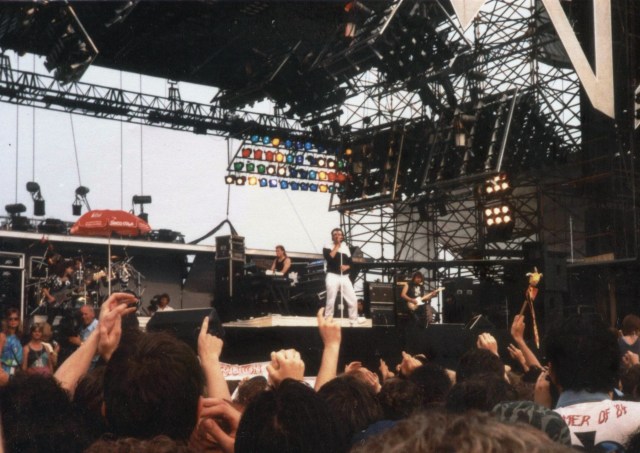
Marillion_Fish_OpenAir_Mannheim_Maimarktgelaende_1986_06_21
Source: Wikimedia

“I am a writer who can sing, rather than a singer who can write,” explains Fish, who will retire from the industry next year after a final album and tour. “I was also an arsehole and my ego was out of control at that time.”

“That time” was the sudden pop star status that the success of their third album, a number one album no less, had brought the band, which included Top of the Pops appearances for the hit singles, “Kayleigh” and “Lavender”. It was the excess of these experiences, along with the problems it brought to his own private life, that Fish channeled into Clutching at Straws.

We get a taste of life on the road with “Hotel Hobbies” and “Sugar Mice”, Fish’s ego unleashed in “Incommunicado”, and even a track that Fish describes as his resignation letter to the band in “That Time of the Night”. There is melancholy, there is melodrama and there is more than a touch of self-pity; perhaps even self-loathing in the half a dozen or so songs of the original release.

Clutching at Straws was an altogether different beast from the mercurial third album, with its haunting lyrics and sweeping melodies flowing seamlessly from one to the next. Clutching at Straws was a collection of distinct songs with a much darker, heavier theme, which exposed the problems within the band and foreshadowed their breakup the following year.

KONICA MINOLTA DIGITAL CAMERA
Source: Wikimedia

Nicknamed Fish because he apparently drank like one, it’s hard not to read autobiographically into the sad central character of “Torch”; propping up the bar, failing in his marriage and family life and insisting on “Just for the Record” that he’s going to put it down and turn his life around.

There are echoes of the poetry of the third album in tracks like “Sugar Mice” and the way the brilliantly observed “Warm Wet Circles” mourns the loss of the age of innocence, but even these tracks are bittersweet.

For all the bolshy bravado of “Slainte Mhath” and his dreaming big of “adverts for American Express cards, talk shows on prime time TV, a villa in France, my own cocktail bar”, the bitterness of hollow fame is laid bare for all to see. When the final track pronounces the band to be “terminal cases that keep talking medicine, pretending the end isn’t quite that near”, it’s clear that despite there being a four-second track listed as “Happy Ending”, there is nothing like that on the horizon for Marillion and Fish.

Unlike the previous album, we won’t be waking up to find that it was all just a bad dream. This time, the nightmare is all too real: the band of brothers split asunder by the arrival of fame and fortune.

It may have been Fish’s personal favorite of his four Marillion outings, and it may have been voted number 37 on the Rolling Stone’s 50 Greatest Prog Rock Albums of All Time, but in the end, they were always just clutching at straws.

A few months later, in a row over the way the band was being handled, Fish gave them an ultimatum to choose between their manager and him. They chose the manager. And the rest, sadly, is history.


Black Seeds of Vengeance

Nile rumbles — “The scourge of Amalek is upon you” – hardly a hyperbole. These South Carolinians construct some of the most sinister patterns known to man. 180 beats per minute, brutal growls and Middle Eastern influences — all weaved into a vicious arrangement. Channeling Florida death contemporaries, Nile crafts a truly ravishing Egyptian dissonance at an intensity unparalled. Here, these assault patterns are unique, recognizable and quite atmospheric, a rarity within this lineage.

Egyptian chants and not so poetic gruesome mythology – “Horus hammereth them. Nepthys hacketh them to bits. The eye of Ra eateth into their faces. Their carcasses will be consumed in the desert”. Guttural growls, sharp temporal variations, and ruthless bass lines – all peacefully coexisting with electrifying melodies. With these rich signatures, Karl Sanders effortlessly heaves the listener into an intricate, enchanting and extreme terrain.

Image Attribution:

By Alexandre Cardoso (originally posted to Flickr as IMG_8503) [CC BY 2.0], via Wikimedia Commons

soundstreamsunday: “Wave” by Beck

BeckWhen Beck walked a talking blues over a sample of Johnny Jenkins’s cover of Dr. John’s “I Walk on Gilded Splinters” for “Loser,” his giant 1994 hit, there was an aesthetic purpose lurking underneath its vibe of off-the-cuff spontaneity that, 25 years later, continues to infuse his work with vitality.  While “Loser” itself is marked by the wild west feel of early 90s indie rock, with all its many faces, Beck’s subsequent work shapes that freedom into something beyond any particular rock and roll era — his catalog reflects possible trajectories across time rather than a simple series of destinations.
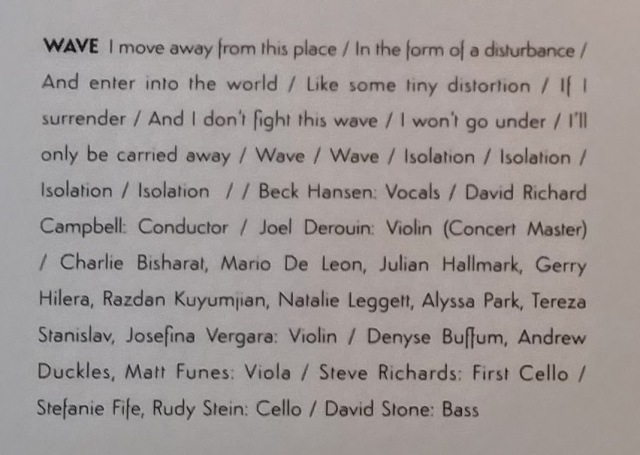
Morning Phase, released in 2014, is Beck’s ninth, an “acoustic” record that ran away with a clutch of awards and praise from critics.  All deserved.  He makes a pallet on the floor in support of his considerable vocal power and melodic finesse (things he’s not always interested in showing off), rich strings and rolling rhythms stacked beneath a lyrical prowess speaking of a talent well-nurtured:  if he’s not always successful in his endeavors, Beck is an active creator not inclined to coast.

BeckWaveLyrics

In its length, in its lyrics, “Wave” appears a slight, slip of a thing.  But in its undertow it is a song of deep release, a beautiful orchestration of removal, isolation, perspective; and so reminds me of King Crimson’s Starless and John Wetton’s treating the lyric as if he’s singing an emotionally interior “Jerusalem” — the land falls away, and you are at sea.

soundstreamsunday presents one song or live set by an artist each week, and in theory wants to be an infinite linear mix tape where the songs relate and progress as a whole. For the complete playlist, go here: soundstreamsunday archive and playlist, or check related articles by clicking on”soundstreamsunday” in the tags section.

Brave New World

Superficial differences aside, ‘Brave New World’ is quintessential Iron Maiden. Those references to English literature, sober yet deceptively dark overtones, and compositions bordering on progressive metal. Not to mention the galloping bass lines, rich melodic riffs and vocals absolutely operatic – all essential Iron Maiden signatures.

For a song named after the early 70s British horror flick, The Wicker Man might seem deceptively upbeat. But, Brave New World is straight disturbing —“Dying swans twisted wings, beauty not needed here.” — seems to mirror Aldous Huxley’s own dystopian vision. Accessible, and threateningly catchy choruses – “Nowhere to run, nowhere to hide, you’ve got to kill to stay alive” – illustrates just one of those reasons why Iron Maiden is still that dominant heavy metal life form on this planet.

How a whimsical – “Is this a new reality. Something makes me feel that I have lost my mind” – effortlessly regresses into more horrific hues – “Lost in a dream of mirrors, lost in a paradox. Lost and time is spinning, lost a nightmare I retrace” – is baffling.

Azazel — The fallen angel, sets the tone for a mercilessly melodic Out Of The Silent Planet. Lyrics are not exactly C. S. Lewis’s fiction, but it’s a blend of catchy riffs and vivid imagery. “Withered hands, withered bodies begging for salvation. Deserted by the hand of Gods of their own creation.” — anticipating an eventual apocalypse — “Nations cry underneath decaying skies above. You are guilty, the punishment is death for all who live.” Finally, leaving the listener reeling with a devastating chorus – “Out of the silent planet, dreams of desolation. Out of the silent planet, Come the demons of creation”.

A markedly refined take is reserved for the end. Actually, any civilized mind would have already pondered —“When a person turns to wrong, is it a want to be, belong? –– “But what makes a man decide, take the wrong or righteous road” — indeed “There’s a grey place between black and white.” More decisively — “But everyone does have the right to choose the path that he takes”.

The artistic sensibilities that shaped Iron Maiden are all being subtly explored here – “We all like to put the blame on society these days. But what kind of good or bad a new generation brings. Sometimes take just more than that to survive be good at heart. There is evil in some of us no matter what will never change.” Essentially, where others adopt contentious naive stands, Iron Maiden simply enlightens, illustrating that not so thin line separating the rare eminent from the mediocres.

Image Attribution:
By Raph_PH (IronMaidenO2_270517-24) [CC BY 2.0], via Wikimedia Commons


Damanek’s Debut is Literally (and Metaphorically) On Track

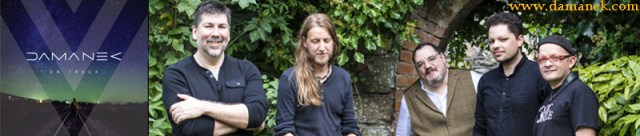
damanek-headertop

One of the most satifying things a music fan can do is make a new discovery.  That happened to me lately as I was given a review copy of Damanek’s debut album, On Track.  Lucky me.  On Track is one of the best releases I’ve heard in what has been a pretty good year for prog releases.

A little background here is in order – Damanek is the brainchild of Guy Manning, who among other things is a veteran of The Tangent.  For this release, Manning is the chief composer and lyricist.  Beyond that, there are numerous contributors to the album.  Among them, Manning borrows from his former band to tap Luke Machin on the electric guitar, Marek Arnold contributes on a number instruments (his sax figuring prominently),  and numerous other musicians play their part.

The first track, Nanabohza and the Rainbow, sets the tone for the album.  Beginning with some native-sounding beats, the song evolves into a jazzy looseness (the latter being very pervasive throughout the album).  The aforementioned saxophone makes its first appearance toward the end of the song, along with some superb piano, with the song closing on some motifs that could be described as mid-Eastern.  That’s quite a palette, and it’s only the first song.

Long Time, Shadow Falls follows next, and has a bit more of a new-agey feel to it, with some African rhythms to drive the point home.  Lyrically, the song is a commentary on poaching and preservation (or more precisely, the lack of the latter), and the music is most effective in underscoring the message.

Track three, The Cosmic Score, is largely piano driven and is the most relaxing track on the album.  Arnold’s sax makes an appearance midway through, playing off the piano, followed by a synth solo that harkens back to first golden age of prog in the 1970’s.  Lyrically, The Cosmic Score is sung on a grand scale; musically, it invites you to kick back and relax as you contemplate.

The musical palette widens even further on the next track, Believer – Redeemer.  If you have ever been looking for some funk/R&B influence in your prog, then this is the track for you.  The Santucci Horns (as they are known in the album credits) provide some brass here with trumpet and trombone to further accentuate the dominant influence here.

The following track, Oil over Arabia, begins with some jazzy piano and guitar before the saxophone once again joins in the fun.  Midway through, the pace picks up and the song begins to rock out a bit more, and eventually Arnold provides some excellent clarinet to the song as well.  Lyrically sparse, this is almost an instrumental track, and a damn good one at that.  As with all the songs, the playing is top notch, but this one really stood out to me.

The Big Parade has a somewhat Beatle-esque sound to it, and it’s not hard to imagine John Lennon circa 1968 writing or singing a song like this. The fact that it is an anti-war song makes this all the more so.  This song qualifies as the most quirky diversion on the album, and despite its protesting nature, it’s a fun listen.

The melancholy Madison Blue is up next.  This is a relatively simple track musically, primarily driven by the piano.  Here, however, what sounds like a small string section and the flute beautifully underscore the mood of the piece, which lyrically concerns the loss of someone dear.

Saving the epic for last, the album closes with the 13 minute plus Dark Sun.  The first five minutes or so feature a slow groove with Arnold’s clarinet adding some nice color at various points.  Midway through, the pace picks up dramatically, with excellent guitar work by Machin, some jazz-tinged electric piano and more of Arnold’s clarinet (come to think of it, I can’t think of many prog albums where the clarinet played such a prominent part).  Some very proggy organ is also included before the song slows down and eventually returns to the same groove with which it began.  It’s a quite-satisfying musical journey.

In closing, On Track has some of the best musicianship of any album I’ve heard in quite some time, and that’s saying quite a bit given the plethora of outstanding progressive rock releases we’ve seen this year and for several years running now.  Overall, the music is a, well-balanced mix of styles, including classic and modern prog, jazz, and various world music styles, tastefully and seamlessly combined.  As debut albums go, this one is a smashing success.

The Albums that Changed My Life: #6, Songs of Travel & On Wenlock Edge by Ralph Vaughan Williams

by Rick Krueger

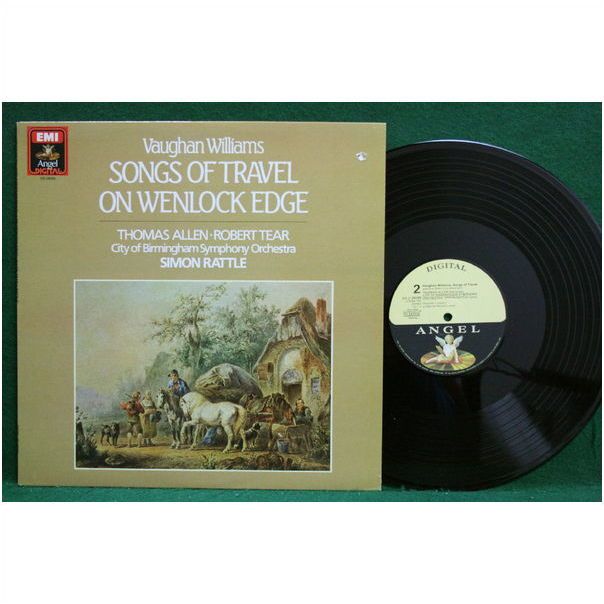
In our casually audiophile age of 96 kHz/24 bit BluRays and 180-gram virgin vinyl, it may be hard to comprehend what a difference digital recording made when it came of age in the late 1970s.   I remember cueing up Keith Jarrett’s Concerts: Bregenz, München and being blown away as much by the background silence, the clarity and depth of the piano sound, and the extended dynamic range as by Jarrett’s freewheeling improvisations.  The compact disc was still in the future — but at that point, after suffering through muddy, distorted mass-produced pressings of way too many albums, it seemed like that future was all upside.

Classical record companies were the most fervent backers of digital recording from the beginning; the prospect of “perfect sound forever” made both corporate executives and their target demographic (single men with money or credit to burn — surprise!) salivate in anticipated ecstasy.  Certainly, as I built a classical collection during graduate school, the word “Digital” on the front cover of a record always counted in its favor.

That’s one reason I picked up the album pictured above.  Another reason: I’d already heard some fine Mahler recordings by the young conductor Simon Rattle, precociously helming the scrappy City of Birmingham Symphony Orchestra.  And there was one more burning question: was Benjamin Britten right about Ralph Vaughan Williams?

Continue reading “The Albums that Changed My Life: #6, Songs of Travel & On Wenlock Edge by Ralph Vaughan Williams”

Gord Downie, 1964-2017

by Rick Krueger

In August of 2016, my wife and I vacationed in Stratford, Ontario — one of our favorite places to visit, due to its internationally acclaimed theater festival and its lovely riverside parks.  Picking up local classic rock stations as we crossed into Canada, I noticed lots of talk about The Tragically Hip’s upcoming concerts in London and Toronto.

I’d heard of The Hip, but never got into them — partially because I’d moved away from metro Detroit, where good Canadian bands could easily score airplay and well-attended shows.   I was surprised at the amount of hubbub around this tour; it was only after we returned to the States that I learned the reason for the buzz.

The Hip’s lead singer and lyricist, Gord Downie, had been diagnosed with glioblastoma multiforme, the worst kind of brain cancer, late in 2015.  After finishing the 2016 album Man Machine Poem, the band decided on one last go-round of Canada’s hockey rinks, winding up in their Ontario hometown of Kingston in front of 6,700 fans in the local arena, thousands more on the surrounding streets, and a national audience on CBC.

Honestly, the music of The Tragically Hip is little more than well-executed, basic rock — lots of Rolling Stones and John Mellencamp grooves ranging from competently shambolic to tightly locked in.  The secret sauce was Downie’s surreal, shamanistic lyrics.  Stirring together a underdog outlook, the perspective of Canadians from the “great wide open” and random streams of consciousness (sometimes improvised live as the band rocked on — sperm whales were a recurring theme), they were fascinating precisely because they were sharp yet ambiguous, complex — even openly, defiantly confused.  At their best (in my view, on the album Fully Completely and the compilation Yer Favourites) the group was pretty compelling.

Gord Downie passed away last night at the age of 53.  To say he leaves behind a grateful nation is not an exaggeration.  You can see and hear what Geddy Lee had to say about The Hip last year as the farewell tour wound down here, and read a well-wrought appreciation of Downie’s take on Canadian identity here.  Banger Films (the folks responsible for the Rush documentary Beyond the Lighted Stage) have completed a film about The Hip’s final days, Long Time Running; it’ll be streamed on Netflix starting November 26.  And check out the Yer Favourites compilation below.  I especially recommend “Fiddler’s Green,” Fifty-Mission Cap,” “Courage (for Hugh MacLennan),” “Fireworks” — and if you only have time for one track, the fierce “At the Hundredth Meridian.” 

“If I die of Vanity, promise me, promise me
That if they bury me some place I don’t want to be
That you’ll dig me up and transport me
Unceremoniously away from the swollen city breeze, garbage bag trees
Whispers of disease, and acts of enormity
And lower me slowly, sadly, and properly
Get Ry Cooder to sing my eulogy …”


THE VOID: Working on the Second Birzer Bandana Album

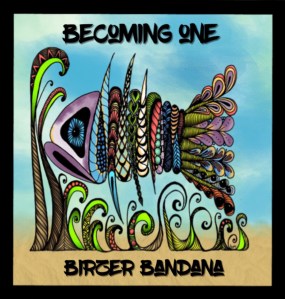
image1As some of you might remember, fellow progarchist Dave Bandanna (of the English prog band, Salander) graciously asked me a year ago to write lyrics for a new band/project, called Birzer Bandana.  We released that album, BECOMING ONE, earlier this year.

I’ve now written the lyrics for the second album–a concept album revolving around the mystery of a man trapped somewhere and in some way on a starship heading into a black hole. As with the first album, this new one explores existential questions of life, love, loss, and hope. For better or worse, these are themes I, personally, can’t escape, and, frankly, it’s really healthy for me to write them down in lyric form.

Dave just sent me a working version of the 14-minute track, “The Void.” To my mind, this is Dave’s best craftsmanship as a composer.

To write “I’m excited” would be the grand understatement of the day. Dave’s work is nothing short of brilliant.  I’ll be equally excited to share it with everyone someday. . . .

UNTOLD TALES: Glass Hammer’s Tolkienian Prog

untold tales
The latest from Glass Hammer and Sound Resources.

Pensive, deep, and resonating strings eagerly invite listeners to immerse themselves utterly, fully, and completely in the album.  From there, keyboards swirl in anthemic Emerson-esque majesty until the entire orchestra begins what is nothing less than an all-encompassing and fetching fanfare.

We the listener feel not the abstraction of the music, but its tangibility.  We might very well be able to touch it.  We are not “fans” witnessing a spectacle from afar, hoping to catch a mere glimpse from our balcony seats the smiles that pass between Susie and Fred, the nods between Aaron and Steve, or which guitar Alan is using on this or that tune. No, nothing like any of this. With UNTOLD TALES, we the listeners are members of the artistic endeavor as a whole, as much a part of the band as those on stage, and just as fundamental to the artistic success of it all.

Continue reading “UNTOLD TALES: Glass Hammer’s Tolkienian Prog”

soundstreamsunday: “Starless” by King Crimson

kingcrimsonKing Crimson appeared in 1969 as an island, on the far side of the bridge joining a tiring psychedelic scene to a studied, if no less freaky (for its age), “progressive” rock.  In its nearly fifty years the group’s membership has drifted in and out through orbits around guitarist Robert Fripp, his steady hand and heart dissolving and reforming Crimson as there is music for it to play.  As Fripp assembled the band’s third incarnation, Crimson was riding a wave of popularity the rewards of which didn’t settle entirely well with him, and in promising a more difficult, rockier terrain he was able to lure drummer Bill Bruford, looking for a similar fresh start, from megaprog juggernaut Yes.  With violinist David Cross and bassist/vocalist John Wetton, the band created three albums in quick succession, ranking among their diverse best.  1974’s Red, the last of the trio, is an able summation of Crimson to that point, before Fripp forcibly retired the band (he would let Crimson lie dormant until a brilliant, left-field return in 1981).  The music is a metallic, abrasive take on contemplating the dying of the light, its mood no doubt reflecting Fripp’s, and his band’s, growing uneasiness.

In its lyric, “Starless” is an extension of the previous album’s title, Starless and Bible Black,  but the resemblance more-or-less ends there.  It has more in common with the grandeur of Crimson’s first record, In the Court of the Crimson King, mellotrons drifting into Fripp’s signature sustained tones, with Wetton’s vocal part an overtly dramatic (such was Wetton’s m.o., but here it works) preamble to a long instrumental passage as heavy a piece of jazz metal fusion as has ever been created.  For all his professorial demeanor and seriousness, Fripp loves a good stoner riff, and the tension he can build around such beasts — harmonic, exploratory — separates him from the pack.  Brainy, yes, but beguiling, gorgeous, devastating.

soundstreamsunday presents one song or live set by an artist each week, and in theory wants to be an infinite linear mix tape where the songs relate and progress as a whole. For the complete playlist, go here: soundstreamsunday archive and playlist, or check related articles by clicking on”soundstreamsunday” in the tags section.