Is it possible that this train is unstoppable? I’m honestly not sure. I am sure—absolutely certain—that I hope it never does.
If you don’t know yet (which is unlikely), Big Big Train has just released its third release of 2017.
Unbelievable.
Let me stress this again: un-freaking-beautifully-believable.
This past week, the English prog band proved once again why they lead the current revival of the genre, with the free (yes, free) release of a 34-minute EP, entitled simply “London Song.” Yet, there’s nothing simple about the 34-minutes of music. A combination of their various songs dealing with London, this “new” track comes with all kinds of surprises and segues worthy of Rush’s Xanadu.
What a thing of beauty. If Grimspound, Second Brightest Star, and London Song have yet to convince you that there are things in this world worth preserving and cherishing, nothing will.
Since downloading it, I have listened to it almost exclusively. The new Steven Wilson is kinda neat, but it’s nothing compared to the genius of London Song. And, after all the inane debates this week on social media about vocals and politics, Big Big Train just does its own thing. And, what a thing it is!
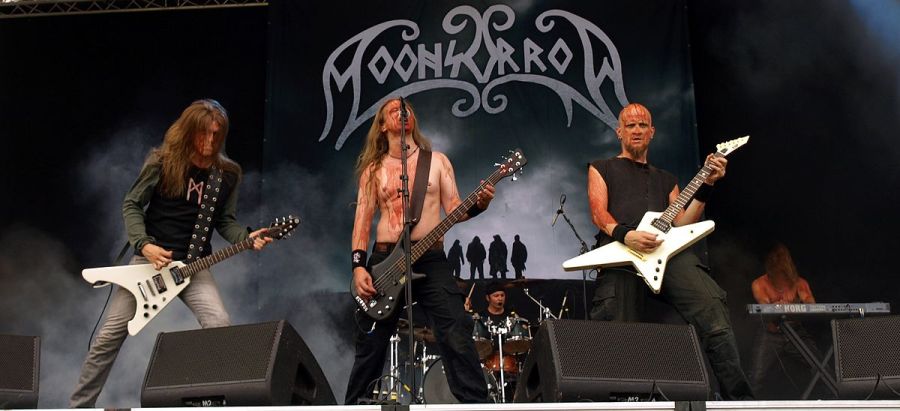
V: Hävitetty bridges folk metal with an intense dose of symphonic black sound. With songs clocking close to thirty minutes, it’s progressive. Moonsorrow elegantly layers their folk compositions with some rich symphonic keyboards. Songs do take the frequent detours down the rabid blast beat-tremolo picking passages, but consistently maintains that mythological theme. In short, listener should be ready to get teleported to the land of legends and poetry – of ancient Finnish folklores.
“Jaasta Syntynyt , Varjojen Virta” starts with the sound of scorching wood and progresses headlong into an absolute death like aggression — peaking right around the 7 minute mark. Sound of that crackling fire simply exemplifies the lull Scandinavian winter ambiance. Song leads to more folk instrumentation, but it’s always interleaved with some biting sound. Mid-paced riffs, screeching black metal vocals and that restrained sonic onslaught — all makes for a captivating thirty minutes.
“Tuleen Ajettu Maa” starts with two minutes of eerie chants and guitar strumming, but rather quickly explodes into riffs. Even here the pattern of composition remains the same – folk instrumentation building up to some aggressive passages — but finally receding back into mellow sophistication.
Scorching firewood, whistling northern winds and pagan chants — all tend to conjure up vivid mystical imagery — almost like we are reading high fantasy. Finnish lyrics, mandolin, accordion and mouth harp – all essential folk elements layered with an Emperor like symphonic artistry. A mandatory listen.
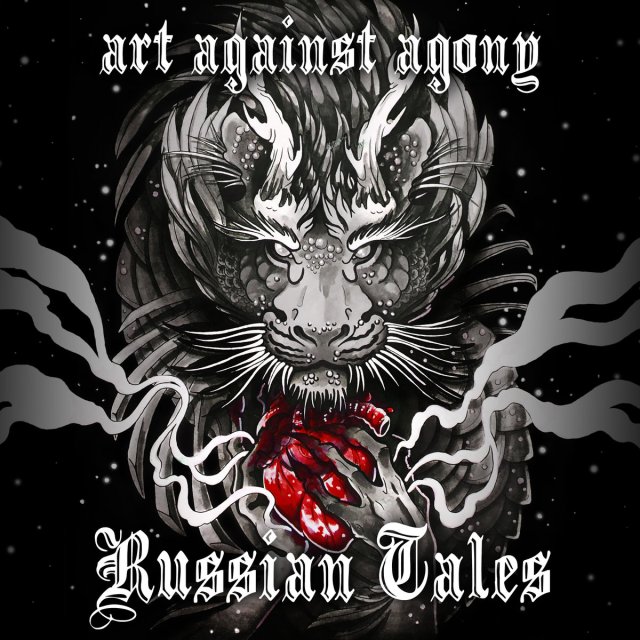
We’ve been following this Germany-based collective for quite some time now, and their brand new release — an EP titled “Russian Tales” — was conceived during the group’s tour across Russia in Winter 2016. It may be because of it that the five songs here feel a bit cold in its nature, but hey — you spend 12000km experiencing winter in Siberia, and then let’s talk. All digression aside, Art Against Agony have once again produced a mind-twisting release, something they are already known in the experimental, avant-garde and prog metal underground.
The group’s can-do attitude of mixing odd experimentation techniques into a metal state has earned them success since their 2014 debut “Three Short Stories.” The particular experiment AAA undertake is the fusion of contrasting genres, principally the extreme side of metal and fancy jazz.
For “Russian Tales” it could be said that it’s a transitional release, as it was conceived between the release of “The Difference Between a Duck and a Lobster” in February 2016 and “The Forgotten Story” EP from February this year. The production here is perfect. “Nothing to Declare” and “Tea for the Dragon” both have infectious grooves that are more riff focused rather than uncontrollable experimentation. The latter could be considered as a centrepiece of the EP. “Coffee for the Queen,” for which the band recently released a music video is another highlight here; it’s more prog metal oriented than other pieces. Throughout the album the guitars constantly build up, what gives the band, in general, both vintage and modern sound that increases the uniqueness of their soundscapes.
The closing “Saratov Incident” feels personal, and it’s by far the djentiest moment on “Russian Tales.” The band unleashes a cannonade of riffs, accompanied with lush atmospheric motif and pounding drum work.
Although a release that was written while on road and in constant motion, “Russian Tales” is very consistent in terms of its structure and material offered here. You can possibly sense how it took its form out in the wild wilderness, and for this young band it certainly stands as a huge statement. At the time when this review is posted Art Against Agony are on another tour across Russia, so who knows, maybe they will come up with “Russian Tales 2.” Highly recommended!
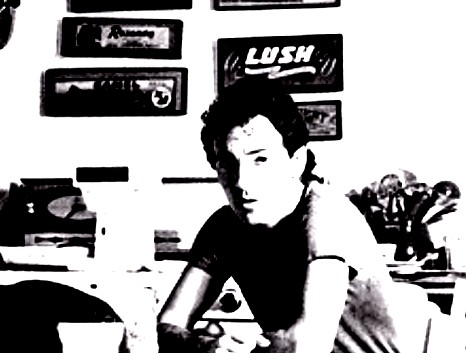
In 2014, Bruce Springsteen covered Suicide‘s “Dream Baby Dream” on his album High Hopes, revealing common roots among artists you wouldn’t normally associate, and further illustrating Springsteen’s connections to the New York art punk scene of the mid and late 70s. His association with Patti Smith, through her interpretation of “Because the Night,” cross-pollinated rock and punk in a critical cultural moment. Then in 1980 Springsteen and Alan Vega of Suicide struck up a friendship while both were recording their respective albums in NYC, and he lent Suicide much-needed support when their second album elicited nothing but stony silence from their label execs. He later likened Vega’s voice, admiringly, to an exhumed Elvis. Springsteen’s rise to bona-fide-and-sanctified rock star in the mid 80s tends to mask that his rock and roll roots were essentially punk, street, to the degree that the nickname he earned early on in his career never sat well with him. He read in Elvis and the Sun brethren an unseating of authority. He was seduced, romanced by rock’s exalting of the everyman, and he built his songs from a society of sympathetic blue collar and rural down’n’outs that appeared fully sketched on record. This was and is his art.
“State Trooper” from Springsteen’s Nebraska (1982) most immediately links his work and Suicide’s, the acoustic blues rock stutter as lean as the song’s words, here exercised in relative economy (compared to, say, “Thunder Road” or “Blinded by the Light,” or, god forbid, “Rosalita”). The lo-fi slapback echo combined with the aesthetic of the cassette multitrack Springsteen was experimenting with to make demos — which he then decided to release rather than flesh-out with his E Street partners — smacks strongly of cheap electronic processing and a reaching towards Suicide’s elemental synthesizer rock.
Both Springsteen and Vega were writing characters deeply steeped in rock’s first wave, but the innuendo is gone, so that Suicide’s Frankie Teardrop and the first person of “State Trooper” — who’s holding on to that thing that’s “been bothering me my whole life” — share a spinning endgame. “Mister State Trooper, please don’t stop me…” is a plea to limit the damage that’s grown out of control, the high-pitched yawp at the conclusion, overloading the mic and my circuits, forever linking Springsteen and Suicide in a stylistic rock’n’roll entirety consisting of a road, a car, probably a gun, and not much time.
soundstreamsunday presents one song or live set by an artist each week, and in theory wants to be an infinite linear mix tape where the songs relate and progress as a whole. For the complete playlist, go here:soundstreamsunday archive and playlist, or check related articles by clicking on”soundstreamsunday” in the tags section.
Apollo’s Fire – Slightly different lineup than the show at Ravinia
As Apollo’s Fire artistic director, conductor, and harpsichordist Jeannette Sorrell aptly pointed out in the program for last night’s concert at Ravinia, Antonia Vivaldi was the rock and roll composer of the eighteenth century. While that statement might seem odd for one of the greatest composers of the Baroque period, his melodies and use of instrumental solos share much in common with contemporary progressive rock. Indeed, I don’t believe it would be too much of a stretch to compare Vivaldi’s music with that of Dream Theater.
Apollo’s Fire was founded by Jeannette Sorrell in 1992 as an ensemble dedicated to Baroque music. Having taken their stage debut only recently in 2010, this Cleveland-based troupe are beginning to turn heads worldwide. Sorrell is well educated in music and conducting, having studied the latter under Leonard Bernstein and other great conductors. As a harpsichordist, she is masterful. Considering Vivaldi was often called “the Redhead Priest,” it is fitting that Sorrell has bright red hair.
Big Big Train is awesome. Earlier today, the band announced they are giving away a compilation of all their London-related songs, appropriately titled “London Song.” Just click the “Buy Digital Album” button on the page linked below, enter 0.00 into the box, and enter your email. Click the link in the email they send you, and enjoy the free download by following the on-screen instructions.
Via the BBT Facebook page:
All of Big Big Train’s songs with a London theme have been brought together into a song cycle for a download only EP which has been released on the 28th July. As all of the individual pieces of music which make up London Song have been previously released, there is no cost for downloading the EP. An email address is required and email addresses will be included on the Big Big Train mailing list.
(i) Turner on the Thames (Spawton)
(ii) London Plane (Spawton)
(iii) Lost Rivers of London (Spawton)
(iv) London Stone (Sjoblom / Manners)
(v) Skylon (Longdon / Spawton / Sjöblom)
(vi) Mudlarks (Spawton)
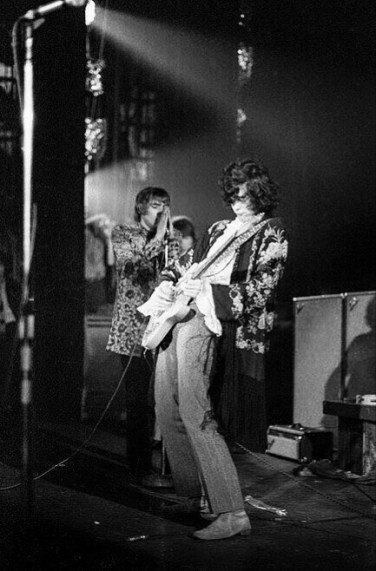
Nearing the end: Keith Relf (left) and Jimmy Page, 1968
In July 1968 an exhausted Keith Relf handed the keys to the Yardbirds to Jimmy Page, the last of the triumvirate of ground-breaking guitarists to grace the seminal rock band. Relf and drummer Jim McCarty had tired of the road and, in some measure, rock itself, and wanted to do something in a folk vein. For them the frenetic rock scene had run its course.
In October of that year Page took the New Yardbirds (himself plus John Paul Jones, Robert Plant, and John Bonham) to Olympic studios in London. Over 36 hours they hammered out Led Zeppelin, the biggest shockwave in rock history, the culmination of Chuck Berry’s rock n’ roll thunder, recaptured by Jeff Beck’s dangerous and deviant guitar a couple of years earlier, the climax of every frenzied dance ending in sweat-drenched pony-tails and bobby socks blackened by the gym floor.
Page proudly wore his old band on his paisley sleeve: “Communication Breakdown” brandished the proto-punk of Roger the Engineer; “Dazed and Confused” bore the same structure of the Yardbird’s cover of Jake Holmes’ original (credit where it’s due), including a mirror of Page’s guitar break from the BBC version of “Think About It”; “Black Mountain Side” was the Near Eastern-inspired complement to “White Summer”; and the slow burning blues tracks (“You Shook Me” and “I Can’t Quit You Baby”) harken to the Yardies’ roots.
The final Yardbirds salute, the over-powering “How Many More Times,” opens with a cocksure shuffle after the manner of Clapton-era “Smokestack Lightnin’,” then rolls through a Beck-style bolero into not one but two Samwell-Smith-inspired rave ups that bookend a surreal break: a bow drawn over Page’s heavily distorted ‘dragon’ Telecaster — the schoolgirl catching her breath and picking herself up from the dancefloor.
Oh, Rosie…
Seeing Jefferson Airplane in 1967 and hearing Jack Casady’s Homeric bass solo, Page thought to himself, “This is the end of the world.” No. Led Zeppelin was the end of everything. All rock music since January 1969 is post-Zeppelin. Even Led Zeppelin had to become post-Zeppelin to maintain its dignity. The virus exploded; the DNA of countless, nameless concert halls, honky tonks, and juke joints spread through the atmosphere, reconfiguring itself in other forms: folk rock, metal, punk, fusion, techno, roots rock, grunge, etc.
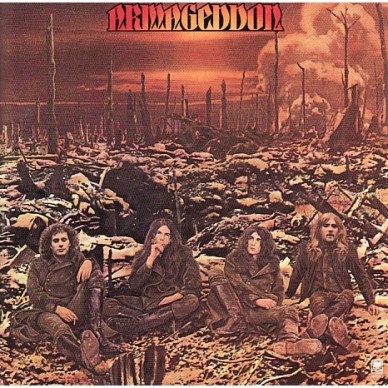
Not the least of these was progressive rock, which is where Keith Relf turned up in 1974 when he formed Armageddon. In addition to Steamhammer’s speed riffer Martin Pugh and bassist Louis Cennamo, Florida native Bobby Caldwell — veteran of stints with Johnny Winter, Rick Derringer, and the Allman Brothers (“Mountain Jam”) — took a seat at the drum kit.
Armageddon (1975) is an aptly titled foray into the post-Zeppelin musicscape. But the album isn’t a detour unto itself. It looks at the past and present musically, and to the future lyrically. Pugh’s riffs are contemporaneous with Houses of the Holy and Physical Grafitti. Prefiguring later developments in prog rock, the music pulls back from the inclusion of multiple themes and motifs, settling into a groove, often one with funk and fusion elements, and extending the passage with subtle alterations. This is particularly evident on the blistering opener, “Buzzard,” as well as “Last Stand Before.”
Relf’s voice isn’t as deep and prominent as on the old Yardbird’s tracks. A lifelong asthma sufferer (it’s painful to watch Jeff Beck mimic Relf puffing on an inhaler), Relf was basically down to one lung by this stage of his ill-fated life and career. But this didn’t thwart his signature harmonica work, and when the instrument makes its appearance toward the end of tracks it comes with the harrowing apocalyptic authority of seven trumpets blowing.
Rock and roll, moving your soul
Took a few as well
On the line, out of time
Shooting stars that all fell
Oh Lord, do something, gotta slow it down
It’s coming on too fast, can’t take it
Feel like I’m gonna drown
Gonna stand and face it, but I need you near
Through the darkest hours, I’m calling
Sometimes I think you don’t hear me calling
Hear me calling
Awareness of the consummation and transformation of all things pervades the album. From the shimmering “Silver Tightrope,”
I thought I saw the candle-bearers
On their way to the beyond
Beckon to me from the future
To come and join the throng
I stepped upon the silver tightrope
Balancing beliefs
And wings unfurling with a new hope
I left behind my griefs
Even the darker “Buzzard” includes a promise,
But the meek will stand
Understanding nature
Seeing far beyond the plan
Take their place in time
Take their place in timeless structure
The end of this present life came quickly and unexpectedly for Keith Relf in May 1975, as he was the victim of an accidental electrocution while working with ungrounded sound equipment in his basement. When the Yardbirds were inducted into the Rock n’ Roll Hall of Fame his wife and son accepted the honor on his behalf.
This post-everything world doesn’t last forever. In the meantime Armageddon occupies the already/not yet space with tight arrangements, subtle time changes, and expert chops from all its participants. And Relf proves the humblest instrument of ages past works in this context, creating a confident work one can take on a long drive — keeping an eye on the speedometer — in the direction of Proghalla.
Cosmograf, THE HAY MAN DREAMS (Cosmograf Music, 2017).
Professor Birzer’s grade: A.
Having grown up on Great Plains of North America, surrounded by grazing horses, big skies, and farms, that guy that hangs out on a big kind of crucifix in the fields of wheat was always, to me, a “Scarecrow.”
And, that really, really scary Batman villain, Dr. Jonathan Crane, is also a “Scarecrow.” He’s creepy in Bruce Timm’s animated Batman, but he’s downright demonic in Christopher Nolan’s Dark Knight Trilogy.
When I first saw the title of Robin Armstrong’s latest Cosmograf masterpiece (and, yes, this IS a masterpiece) HAY-MAN DREAMS, I had no clue what the album would be about. After all, Armstrong loves existential themes of isolation, alienation, and timelessness. When I first saw the title, I just assumed the album would be about a farmer who cultivates hay. Maybe some lonely old guy who couldn’t figure out the modern world. I knew that Armstrong would do something wild with it, but I didn’t know what. Hay man?
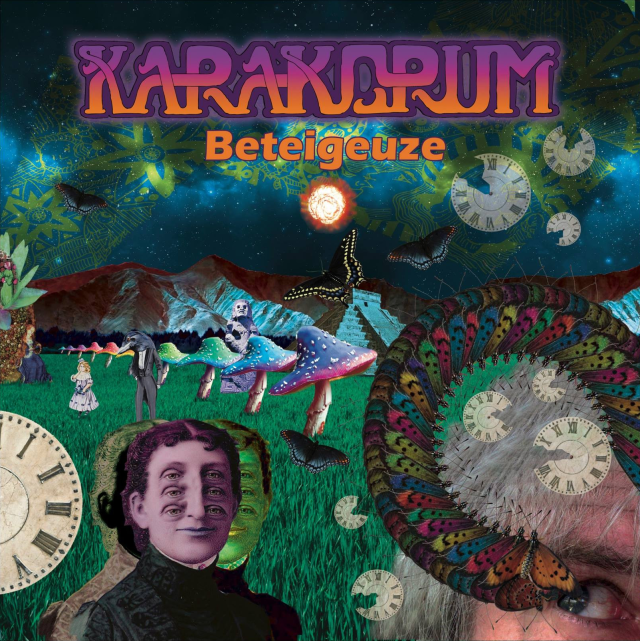
I’ve been on a German prog rock streak for some time now, and recently I was introduced to a contemporary act called Karakorum, whose sound, actually, is not that contemporary considering that they produce music which is a mixture of vintage prog, psychedelic rock and Krautrock.
“Beteigeuze” is Muhldorf quintet’s debut full length album, although the group released a self-titled demo album which included the three lengthy suites that “Beteigeuze” is made of. For the purpose of this release, which is available as a vinyl from Tonzonen Records, the band has reworked the three “Beteigeuze” tracks and offered a strong effort for everyone who is nostalgic for old-school 1970s inspired progressive rock.
The swirling organ of Axel Hackner and the smooth, melodic tone of guitarists Max Suchorghuber and Bernard Huber dominate the sound. The songs per se feature many fine melodies, and the suites are well constructed, with no unnecessary or redundant parts, and what is probably more important, they all flow and feel as one. The lengthy instrumentals between the sung pieces are pleasant, but complex.
“Beteigeuze” is an intense and impressive jam with lots of good themes and tight solo passages. This may not be an album overflowing with originality, and the band’s overall sound is similar to very many other bands of the mentioned era, but the overall good songwriting makes “Beteigeuze” a worthwhile album of great German progressive rock.
It’s not until it works its witnesses into a state of ecstatic frenzy, as if reading a preacher-inflected text so self-aware it reaches ascendancy, that New York rock satisfies itself and its audiences. It’s a city of distillations and self-regard, and so in its great contribution to rock and roll, New York puked up a revival so dazzling in its love for rock’s foundations it sometimes barely reads as the punk it became known as (or maybe a common idea of punk): there is no rejection, it is all embrace.
Suicide played rock and roll, and even as they coined the term “punk” — or at least early-adopted it from Lester Bangs to describe what they were doing — in their world that meant you visited the monuments and tore them down to find what was left in substance, not shadow. It was an intentional act of art, constraint-driven, that Martin Rev and Alan Vega followed in the rock they made. And they made it howl.
The pulsing drone riff of “Ghost Rider” leads Suicide (1977), the culmination of seven years of paring and refining and filtering the pure rock spirit. That Suicide did this as a duo with synth and drum machine was revolutionary to the point of riot-inducing, and to this day sounds outside a point in time. Suicide denied time, even to the degree that Vega claimed he was far younger than his 39 years. It was no nostalgia trip, Suicide’s rock and roll, even though that trip hung heavy in the air: this same year the retro band Sha Na Na debuted on TV, though they too had been around for a while, hocking the schlock of 50s rock, that shadow that Suicide made it their business to avoid. Both were needed but only one was important.
soundstreamsunday presents one song or live set by an artist each week, and in theory wants to be an infinite linear mix tape where the songs relate and progress as a whole. For the complete playlist, go here:soundstreamsunday archive and playlist, or check related articles by clicking on”soundstreamsunday” in the tags section.


 In 2014, Bruce Springsteen covered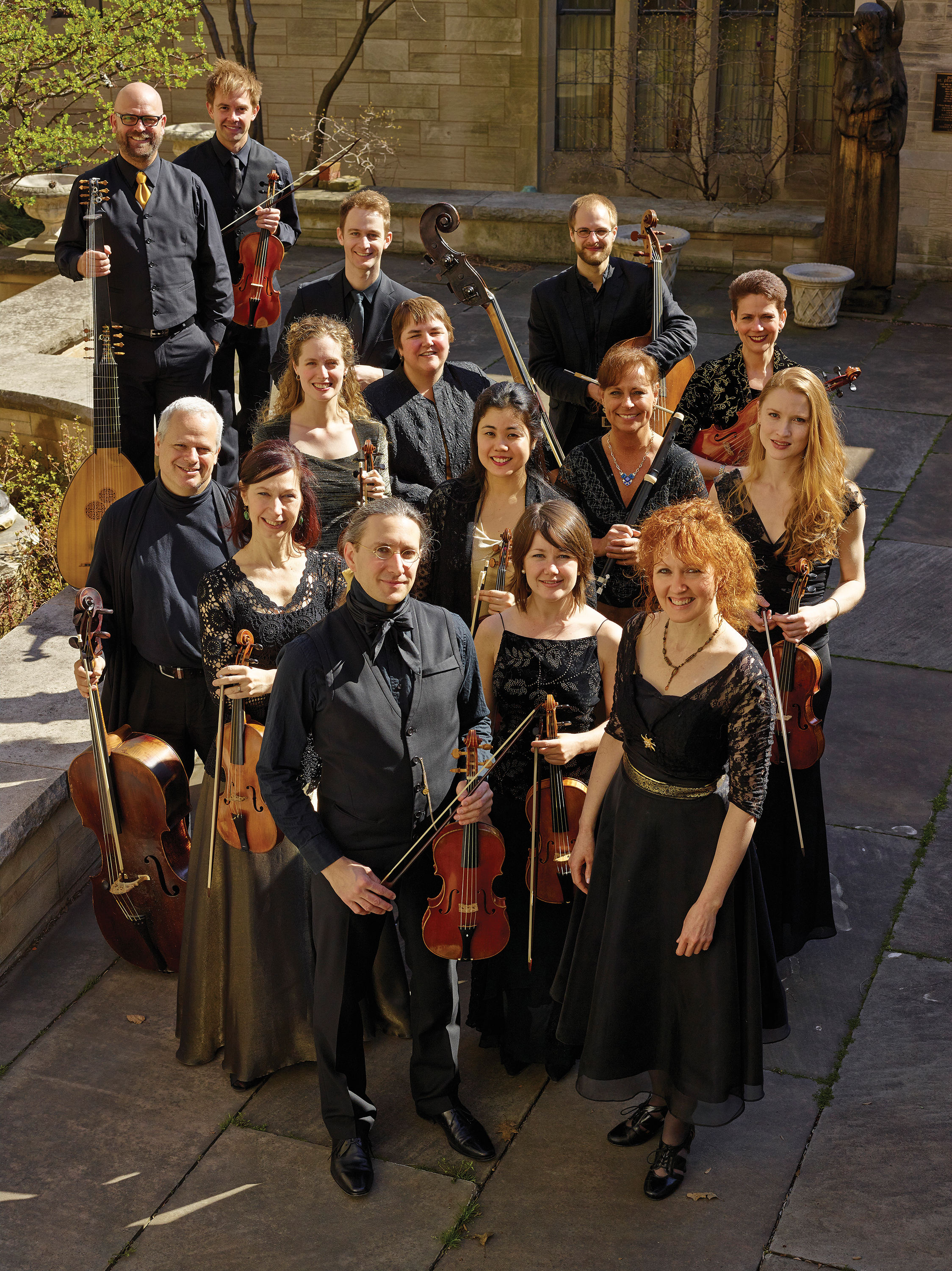
 Armageddon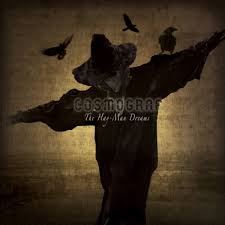
 It’s not until it works its witnesses into a state of ecstatic frenzy, as if reading a preacher-inflected text so self-aware it reaches ascendancy, that New York rock satisfies itself and its audiences. It’s a city of distillations and self-regard, and so in its great contribution to rock and roll, New York puked up a revival so dazzling in its love for rock’s foundations it sometimes barely reads as the punk it became known as (or maybe a common idea of punk): there is no rejection, it is all embrace.
 Progarchy
