
Good stuff from John Bassett’s ARCADE MESSIAH. Not sure how to label it–not that it really needs a label.
Existentialist, Crimson-esque, shoegaze prog? Regardless, enjoy.
To order the new album: https://arcademessiah.bandcamp.com/

Good stuff from John Bassett’s ARCADE MESSIAH. Not sure how to label it–not that it really needs a label.
Existentialist, Crimson-esque, shoegaze prog? Regardless, enjoy.
To order the new album: https://arcademessiah.bandcamp.com/
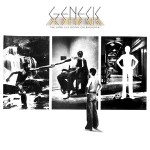 The Lamb is ONE, right? It’s a unified, singular work of art. It’s a “concept album.” There is a narrative, there are dramatis personae. It is a MANY in some sense, since there are two albums’ worth of songs (plural). But that’s secondary, is it not? It’s “beside the point,” perhaps?
But each song is ONE. There’s a richness, an inexhaustible palpability, to “The Colony of Slippermen,” or “The Lamia,” or (my favorite for richness) “Counting Out Time.” A cover of a single song can bring out nuances of the song that are not as noticeable in the original. It can  be a new Look (regard), like Tin Spirits’ new Look at “Back in NYC.”
But does it sort bother you, at least a little bit, to hear a cover of a single song from The Lamb? Do you find yourself – or better, perhaps, a part of yourself – wincing when you talk to someone familiar with “The Carpet Crawlers,” but not with the whole Lamb? Does it feel a bit like an ALL, which is in danger of dissolving into a NOTHING if it is taken apart (whatever “taken apart” might mean here)?
Back in Look #13, I suggested (with much wincing on the part of certain parts of myself) listening to The Lamb “on Shuffle.” (Did you do it? If not, it might be worth reflecting on why you didn’t.) Doing that would have been one way to “take apart” the ONEness of The Lamb, and to experience it as MANY. It might lead to finding some new ALL in that MANYness that is not NOTHING. (I like multiple negatives too much. I need to watch that.) The answer is “yes, but…” I don’t see that shuffling must lead to the “taking  apart” that matters here. The Look here is not simply equivalent to that prior Look, though they may be related.
(related – what’s not “related” – isn’t ALL ONE – is NOTHING MANY – uh oh, stop that, back to…)
That prog fan over there? He says that “Yes” after Going for the One is no longer Yes. This one over here? She says that “King Crimson” beginning with Discipline is no longer King Crimson. Even more to the point (there’s a point? ONE point?), that one way back there? I can’t tell from here whether it’s a he or she, but that one says that Genesis began to decline after Gabriel’s departure, and eventually got so bad that it somehow negated what was so good about the early stuff. It’s as if the existence of early Genesis is somehow ontologically negated, canceled out by the decline. It was a ONE that was also an ALL. It couldn’t continue to enjoy a place, even in history, when it was no longer an ALL. It became a NOTHING.
A rather extreme example, I know. But think and listen:
What if ONE and MANY are not opposites? (They’re not, you know.)
You’ve probably been told at some point: “It’s not an all-or-nothing thing.” You may already know that few things are all-or-nothing. (I suspect very few.) But what if ALL and NOTHING are not opposites either?
 A teacher of “great figures” (philosophers, for example, like Plato, Aristotle, Aquinas, Kant, Hegel) runs into a rough equivalent. Is the “thought” (how odd, when what we have are texts) of this or that author ONE? Is it somehow undermined or refuted if there is some clear, evident, obvious (to whom?) way in which some particular “part” is wrong (mistaken? bad? evil?), does that reduce its ALL to NOTHING? If it is a MANY from which we might (perhaps inexhaustibly, if it is indeed a “great” author) draw, does that mean that there cannot be a ONE there, or an ALL?
A favorite work of art, including a musical work, presents the same sort of questions.
Well, this is no complicated thing at all, one might think. Of course you can listen to The Lamb as a ONE or as a MANY. You may have already done this, listening now more as a ONE, then as more of a MANY.
 Ah, but now think about those pictures you see, often associated with “Gestalt Psychology,” where it could be seen as a rabbit or as a duck. You could see two faces, are a vase. You could see a young woman or an old one. Seeing a Gestalt, a configuration (roughly), involves something like the flick of a perceptual switch. Once you know it’s that kind of picture, you can go back and forth between the possibilities at will.
Can you see both at the same time?
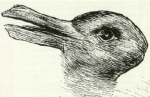 The answer would seem to be no. Surely you can be aware of both possibilities, but can both possibilities be simultaneously actual? Whether or not the latter is a real possibility, it is really, ultimately, my suggestion.
Listen to The Lamb, and try to hear both ONE and MANY, at the same time. If you find yourself realizing how hard this is, it will be a sign that you’re on the right track.
Oh, and for the bonus round: Try to hear both ALL and NOTHING. I suspect that’s part of what’s needed sometimes to get beyond
|
|||||||
|
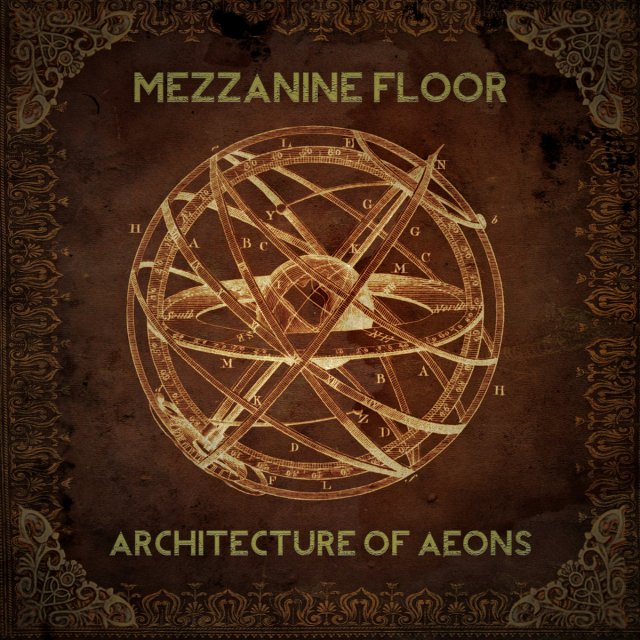
Mezzanine Floor is a South African band that has been active since 2010. They released their debut album this past September, bringing a mix of a catchy progressive metal and hard/alternative rock sound which circles around melodeath in some parts, then turns back again where it takes its roots. The album is called “Architecture Of Aeons” and it includes 11 songs. Both lyrically and musically the album is built around emotional fields covered with anger.
“Architecture Of Aeons” knows how to satisfy one’s ears. Great guitar melodies, mostly brutal vocals in a combination with cleans, lots of “anger” that helps in expressing the song vibes. This album is a great familiar tune from the very known and loved bands such as In Flames, Mastodon, Tool, and Children of Bodom.
“Architecture Of Aeons” is an interesting take on the mentioned genres; technically it is very professionally built. Hopefully we won’t wait too long for its follow-up. A must-listen of the year.
Get a copy of “Architecture Of Aeons” here.
This is a special piece of film to accompany the release of the live single ‘And Dream Of Sheep’. The vocal was performed live while filming Kate lying in the huge water tank at Pinewood Studios. This was to create a sense of realism, as the character in the song is lost at sea. However it became more realistic than Kate had imagined. She spent so long in the water during the first day of filming that she contracted mild hypothermia. She recovered after a day off and carried on filming. Everyone agreed it had added to the authenticity of the performance. This film was then projected onto a large oval screen which hung above the stage during the performances of her live show.
 The traditional folk music community — the collectors and pedagogues in the first half of the 20th century who defined the boundaries of the vernacular music fueling the folk revival of the 1950s and 1960s — probably had little use for a John Jacob Niles, scholar and singer of traditional and local songs whose work bore an imprint so unique that his interpretations took on a life of their own. Armed with giant lutes and dulcimers of his own devise, he would sing in a classically-trained impassioned vibrato whoop (Henry Miller described it as “ethereal chant which the angels carried aloft to the Glory seat”), investing in his songs a Kentuckian-by-way-of-France mondo spirit that channeled, intentionally or not — for Niles was a Modern — what Greil Marcus would later call the Old Weird America, inspiring a young Bob Dylan and echoing down the years in the work of Jeff Buckley and Devendra Banhart, and less intentionally, I suspect, but somehow powerfully in Radiohead and Gazpacho. Niles perhaps more than any other collector internalized the music he sought and found and wrote, seeing in it not a museum piece to be recited but a point of joy that deserved what he could add to it. He found what resonated with him and built a bridge forward with it, and while Led Zeppelin may have covered Fred Gerlach’s version of “Gallow’s Pole” and not Niles’s “Hangman,” Jimmy Page probably had more in common with Niles as an artist who extended a musical legacy rather than dwelt on some phantom authenticity. Here, on “Little Black Star,” Niles does the white man’s take on the “negro folk song,” complete with an affected pronunciation and an equally suspect attribution (some believe Niles might’ve just written this song himself). Through it though the piece builds a kind of magic that’s difficult to shake, and like much of the John Jacob Niles’s catalogue, is hard to forget.

Seventh episode of SexCake! DJ Mowsee and Lady K discuss the music that’s played during this episode track by track. WARNING: This show is uncensored! It contains useful (or useless) info about your favourite tracks, a DJ Mowsee on a bed (and you may guess if he’s wearing any pants), and your usual dose of Tim Bowness (which Lady K almost forgot to add to the playlist).
You will hear music from Dark New Day, Boards Of Canada, Katatonia, A Chinese Firedrill, Cog, Pride & Glory, Cocteau Twins, Stereomud, Tool, Moonbound, Twelve Foot Ninja, Stick Men, Maybe Tranquility, Puya and no-man!
You can listen to the show here:
Join SexCake on Facebook: https://www.facebook.com/groups/142378056232821/
This show was originally broadcast on ISKC Rock Radio! Join the ISKC Facebook Group and give the ISKC Radio Group a like!
http://iskc.rocks/
https://www.facebook.com/groups/1059175824092839/
https://www.facebook.com/ISKCWebradio/
via SexCake episode 7! Sick bed burrito! — Grendel HeadQuarters

Today is Local Comic Book Day in North America. Most comic shops have limited markets and can always use much bigger ones.
For what it’s worth, my kids would not be the kids they are without comic books inspiring them to read, to think imaginatively, and to emulate heroes who are not afraid to speak and act in the name of virtue. I can say the same about myself (whatever my faults).
If it helps to overcome the stigma that comics are “funny books” or juvenile, just think of comic books as intricately and nobling moving and interlocking stained glass.
Or, consider this. All modern comic book heroes are simply medieval saints and classical heroes and demigods in modern garb.
So, without hestitatiion, I encourage you to support your local comic book store today.
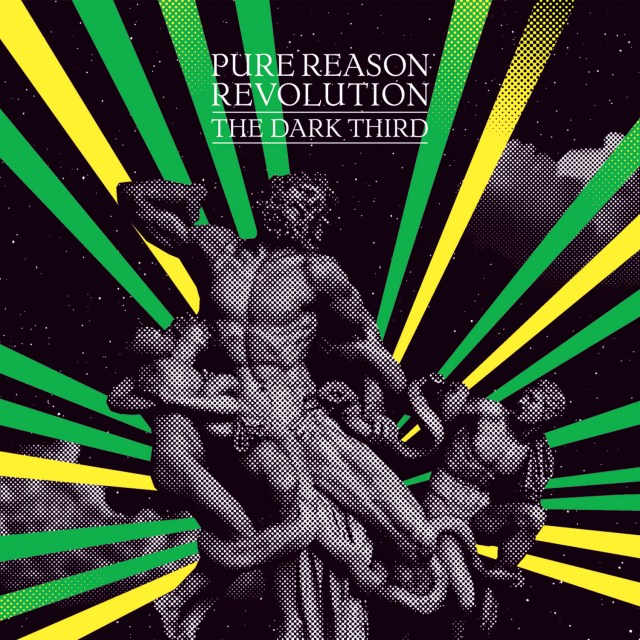
If there’s anything in the music world quite like Pure Reason Revolution’s first full album, THE DARK THIRD, I’ve never encountered it. Of course, I can think of Talk Talk, Lush, Pink Floyd, My Bloody Valentine, Porcupine Tree, Cocteau Twins, NAO, and Newspaperflyhunting. . . but PRR is still something rather altogether different.
Even upon my very first listen, I remember being just utterly dazzled. Hard to believe that has already been a decade ago. it was the first album I ever purchased as a download. Frankly, I hate downloads, and I have long since bought the actual physical CD of THE DAR THIRD, but I remember well putting my credit card number in and waiting nervously for it to appear in iTunes.

Sometimes you get the most sweetest messages from the most awesome artists! I’m near to tears! Thank you so much dear Sel Balamir of Rockosmos!
By the way, go buy your own copy of AWOOGA‘s album here: http://awooga.bandcamp.com/


 Progarchy