Kansas’ “The Prelude Implicit” is both agreeably familiar and remarkably fresh

The members of Kansas, 2016 (Photo: www.kansasband.com)
The members of Kansas, 2016 (Photo: http://www.kansasband.com)

The title of the new Kansas album—“The Prelude Implicit”—is open to some interpretation, but the intent of the cover art, which features a phoenix, seems clear enough: regeneration and rebirth. The legendary band has long been known for non-stop touring, but the past few years have seen the sort of changes that either mark the end or a new beginning (and that is, I suppose, the likely implicit message of the album’s title). Like many other groups that achieved great commercial success in the 1970s, Kansas has gone through several line-ups, as I cover in some detail in this 2013 review of a John Elefante album.

The members of Kansas, 2016 (Image: www.kansasband.com)
The members of Kansas, 2016 (Image: http://www.kansasband.com)

And there, of course, is the Big Rub, because when bands split and original members leave, fans are often faced with a dilemma: Is Kansas really Kansas without Steve Walsh singing and playing keyboards, or Kerry Livgren playing guitar and keyboards, or Robby Steinhardt on violin and vocals? (Those who like to keep track of such things can find a good chronology here.) Livgren, of course, was key to the band’s distinctive, detailed, and orchestrated sound in the first decade, writing music that was at turns melodic (“Dust in the Wind”), anthemic (“Carry On My Wayward Son”), and esoteric (“Incomudro – Hymn to the Atman”, “Cheyenne Anthem”, etc), with lyrics that were loaded with references to spiritual turmoil, seeking, and wandering. And Walsh, the bad boy of the group, proved to be one of the finest vocalists of the era, with a pure, powerful tenor that was equally muscular and soulful (until the excesses of the oft-cited “rock lifestyle” began to eat away at it). Both facts come through clearly in the excellent documentary “Miracles Out of Nowhere”, which marked the band’s 40th anniversary and, it seems, marked a certain line of demarcation. “In truth,” I wrote in my review of the documentary,

some bands are far more interesting for what they did off the stage than for what they did on the stage. And then there are bands that really are, at the end of the day, all about the music, and it seems quite clear that Kansas is in the latter camp. It is rather striking how ordinary these six musicians appear to be, with only Walsh (who retired last year) giving occasional glimpses into a more prickly, difficult side. Ehart, whose warm humor and casual self-deprecating approach make him the star of the documentary, is keen to praise his bandmates, expressing obvious awe over Walsh’s vocal prowess and Livgren’s songwriting, saying that back in the day he didn’t think of Livgren as a musical genius, but perhaps only because they ate hamburgers together. And even Livgren, who nearly died in 2009 after suffering a stroke, seems genuinely surprised at the astounding run of classic songs he produced in those years, offering up thanks to God in a somewhat “Ah, shucks” sort of way.

Watching “Miracles Out of Nowhere” three times and listening to “The Prelude Implicit” some two dozen times now, I think that while the genius of Livgren and the distinctive abilities of Walsh are essential to the classic Kansas sound (the five first albums especially), we mustn’t overlook the duo that has proven to be the glue for Kansas for so long now: guitarist Richard Williams and drummer (and manager) Phil Ehart. I have long thought that Ehart, in particular, has never received proper recognition for his drumming, which is both virtuosic and musical—just listen, say, to “Song for America” and hear how he carries the entire tune and yet does so without drawing attention to his playing. In a word, his playing is “tasteful”. Ehart is the ultimate team player, and that quality comes through in the new album, on which he co-wrote nine of the 10 cuts. There is a certain Kansas-ish structure to songs—even ballads such as “The Unsung Heroes”—that shines through, and Ehart’s playing is essential to it. Continue reading “Kansas’ “The Prelude Implicit” is both agreeably familiar and remarkably fresh” →

The Future of Riverside

From the Riverside Facebook page:

Dear Friends,

We’d like to thank you again for your friendship and support throughout this most tragic time for us and we’d like to officially announce that we have made a decision about our future.

We have decided that we are not going to do a casting for a new guitarist. Thus we have ceased to be a quartet and have become a trio. In this line-up we will prepare our new studio album. Both in the recording studio and on tour – if we get back to touring – we will be playing with session guitarists, who are our friends, whom we know and like. But the line-up of Riverside will be as shown in the picture.

Yes, we do realise that this is not going to be the same band. We know that for many of you the story of Riverside ends here, this year, and that “Eye of the Soundscape” might be the last Riverside album you’ll buy. We know that some of you can’t imagine this band without the characteristic guitar of Piotr Grudziński and for you Riverside has ceased to exist. But our story is not over yet; with a flaw, with a scar, with a wealth of new experiences, we have decided to go on.

Continue reading “The Future of Riverside” →

I Know What I Like: Fidelia and Marillion

fear-marillion
Marillion Album No. 18, FEAR.

Well, it finally arrived.

At least officially.

At exactly 7:00 this evening, I received an email from PledgeMusic notifying me that the new Marillion album, FEAR, was ready for download.  Thanks to the very kind people at BWR PR (yes, Kim!), I’ve had a review copy for a bit.  And, I’ve thoroughly enjoyed it.  Unlike a number of my allies in the prog world, I actually prefer Hogarth-era Marillion to Fish-era Marillion, though I prefer either to most other music.

As to my Marillion street cred. . . I have friends who love the band more than I do, but not many.  I proudly own all studio albums (usually the special editions) and the live albums as well, and I even have Hogarth’s two diaries.  So, I guess I’m in kind of deep when it comes to my Marillion loyalty and devotion.  No corner shrine yet.  That is still reserved for St. Rose of Lima and St. Maximillian Kolbe.  St. Hogarth?   I’ve had the privilege of writing extensively about BRAVE, AFRAID OF SUNLIGHT, and MARBLES before, but I could definitely devote a bit more of my writing time to Marillion.

Continue reading “I Know What I Like: Fidelia and Marillion” →

The First Band in Space! @TheDuchessSpace @SpaceElevatorUK

Hey, all you prog people, forget about concept albums.

How about a concept concert?

Here’s the concept:

Who will be the first rock band to rock out in space?

Well, it’s not just a dream.

Space Elevator is already making plans!

Continue reading “The First Band in Space! @TheDuchessSpace @SpaceElevatorUK” →

Top 5 Opeth albums by Iris — Grendel HeadQuarters

Opeth will be releasing their twelfth studio album named Sorceress at the end of this month. I’m very curious about the album, and I will probably write a review about it soon! In the meantime I made a top five of my most favourite Opeth albums so far…

Click here to see the complete top 5: Top 5 Opeth albums by Iris — Grendel HeadQuarters

2112: The Uncompromising Integrity of Neil Peart’s Individualism

Happy Fortieth Anniversary, 2112!

2112
The fourth studio album by Rush, 2112 (1976).

While Caress of Steel ended on an organic, open and free-spirited note, their fourth album, 2112, began with discordant and spacey computer noises and swatches of sound.  The contrast in mood and sound could not have been greater.  2112 even inverted the structure of Caress, placing the epic side-long track on side one of the album, with the shorter songs on side two.

Again, it’s worth remembering that if they were going to end, they were going to do so on their own terms.  If Rush was going “down the tubes,” they were going to go down with a serious statement and a very, very loud thud.  No whimper.  Only a bang.  “We talked about how we would rather go down fighting rather than try to make the kind of record they wanted us to make,” Lee remembers.  “We made 2112 figuring everyone would hate it, but we were going to go out in a blaze of glory.”[i]  Alex feels the same.  “2112 is all about fighting the man,” he states.  “Fortunately for us, that became a marker. That was also the first time that we really started to sound like ourselves.”[ii]  It is hard to judge whether or not this anti-authoritarian streak in Rush came from the group as a whole or from each of the three individuals who made up the band.  Perhaps the distinction is a false or a super-fine one.

Continue reading “2112: The Uncompromising Integrity of Neil Peart’s Individualism” →

Review: Make Way For Man – Evolve & Repair

make-way-for-man-evolve-repair

Australia’s Make Way For Man have crafted a well executed progressive metalcore release with Evolve & Repair that is almost inhumanly spot on for genre style points. Like notes in a wine, the band cycle through atmospheric or djent-guitars, high vocal melodies that strive to fit into the progressive metalcore club rather than stray too close to clean mall emo vocals, etc. At their best they are a blend between some of Veil Of Maya’s edgier passages with potential (evident in the amount of hard work that clearly went into this) future Periphery-sized ambitions. Much better than most metalcore by numbers and capable than many new wave of prog metal bands.

Over six varied tracks the band prove good work can be done in this sub genre of the family rock and metal tree, if without perhaps as much staying power as death metal or other forms. The future has yet to get out a verdict on that, but I’d be surprised if I am wrong.

The key track on this baby is the title, opening song in that the title summarizes that the band perhaps have too many at their disposal while also cramming in a ton of cool music within (almost) six-minutes skeleton that you’ll be amazed is as short as it was for all the places visited. “We Will Surely Drown”, the following track, is more of what I hope the band evolves into.

Looking forward to the music yet to come from this band, though this is a very capable early effort.

Grab a copy of Evolve & Repair from Bandcamp. 

Black Sabbath: The End

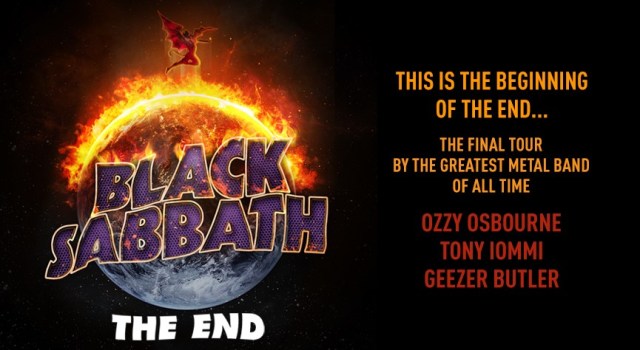
black-sabbath-the-endThe boys in black have embarked on their final tour, and I was fortunate enough to see them perform at the MGM Grand Garden Arena last night. Geezer, Tony, and Ozzy (still missing Bill Ward!) played all the hits (“Black Sabbath”, “Snowblind”, “Iron Man”, “War Pigs”, etc.) before ending the night with the classic “Paranoid.” The original members were not the only standouts, however: young drummer Tommy Clufetos rocked as hard and played as well as Geezer and Tony. His lengthy and frenetic drum solo about halfway through the show was certainly a highlight.

After Tony Iommi’s recent cancer scare, it’s good to see the group back together one last time. They will be missed, but I wish them the best in retirement.

Below: my one grainy shot, and some video from the concert. Spot the tune!

img_1061


After 15 Years, RADIOHEAD is Back!

moonshapedpool
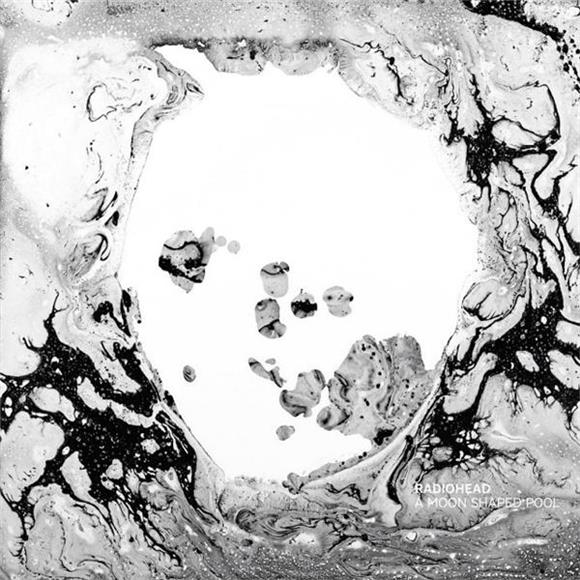
Radiohead’s best album since 2001.

I remember very well the day I bought Radiohead’s OK COMPUTER.  I was living in Helena, Montana, for the year, and I made a not atypical trip down to my favorite weirdo store, Hastings, to get some comics.  You know, the usual batch of Batman and sci-fi titles.

While there, I spotted a stack of CDs labeled something like “prog for a new era.”  Intrigued, I had to check them out.  They turned out to be the Radiohead cd, OK COMPUTER.  Money was rather tight in those days, so I decided to get the cd rather than the stack of comics (I bought just two comics on that weekly trip—such restraint!).

As with almost every other American my age, I had heard Radiohead all of the time during their “Creep” days.  Not only had American alternative radio played the G-verion of “Creep” nonstop, but then Tears for Fears did a cover of it.  It was everywhere in the early 90s, a defining song for the alternative rock movement.

Continue reading “After 15 Years, RADIOHEAD is Back!” →

soundstreamsunday: “Spanish Key” by Miles Davis

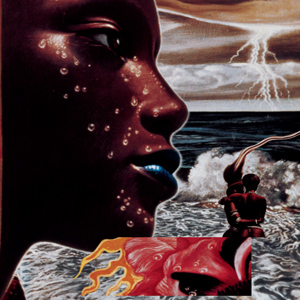
bitchesbrew_frontIt’s unavoidable.  It is impossible to speak of modern music, regardless of genre, and not take note of the critical importance of Miles Davis.  Call him what you will or what he called himself — a genius of composition, a dazzling trumpeter/performer and band leader/manipulator, an agent provocateur, a counter-racist, coke fiend, pimp, misogynist — Miles Davis was to musical art what Pablo Picasso was to visual art in the 20th century.  It’s so true it’s not even up for debate, and there’s about a kazillion hours of recorded, generous, lovely, dark, funky, bopping proof.  By natural extension Davis was the incarnation of what Ravel’s Bolero was all about — schooled freedom, the connection of craft and wild will, the fearlessness to create shit one second and be the divine and golden voice of the Spirit the next.  By the time Miles Davis released Bitches Brew in 1970, he’d been creating killer jazz for over 20 years, had broken from the pack a decade earlier with the “modal” music of Kind of Blue (1959), and had crafted blueprints for psychedelic and progressive rock in the music he created between Sketches of Spain (1960) and In A Silent Way (1969).  He was a complete musician who, difficult as he was, found sympathetic producers, promoters, and partners who fed and nurtured his bright flame.  As we find him on “Spanish Key,” Davis’s work is still melodic, free and open, but deconstruction is increasingly what he’s about — he’s using the studio as an instrument, playing less, knitting together jams, finding the overlap of blues and jazz and funk, Waters and Ellington and Brown. He was 44 years old, electric with creativity and swaggering with confidence, inspiring and inspired by rock’s reach towards jazz through Hendrix and Santana the Family Stone.  But for all the trappings of the rock band that he took with him to the stage, he never yielded, in the sheer sonic amplified power, any of jazz’s mysteries and his own mastery.  He delighted in pointing out that he could go to rock, but rock could not come to him.  It’s certainly true, to the extent that Miles Davis had a transcending vision and the untameable talent to back it up.  There is not another record in jazz or rock like Bitches Brew, and there never again will be.  It is a difficult, beautiful ride.

soundstreamsunday playlist and archive