How to Listen to Jazz, by Ted Gioia

A taste of a great book review by Paul Beston:

Gioia is so confident that newcomers can appreciate jazz in part because he believes that objective benchmarks of evaluation exist, and that, in the case of jazz, we can listen for fundamental “building blocks” such as rhythm, dynamics, pitch and timbre, and phrasing. This view puts him at odds with more theoretical critics who claim that subjectivity is the only aesthetic standard. Nonsense, says Gioia: “Understanding jazz (or any other form of artistic expression) can never be reduced to personal whim or some flamboyant deconstructive manipulation of signifiers but always builds on a humble realization that these works impose their reality on us. . . . and in this manner can be distinguished from escapism or shallow entertainment, which instead aims to adapt to the audience, to give the public exactly what it wants. We can tell that we are encountering a real work of art by the degree to which it resists our subjectivity.” In this one passage, Gioia manages to push back against both highbrow and lowbrow wrongheadedness.
When I’m not cleaning windows: the joy of being in a part-time band

This piece in the New Statesman, from Scritti Politti’s Rhodri Marsden, will resonate for prog musicians everywhere – and for prog fans too, I guess.

There’s some really good stuff in here, particularly on the idea of ‘small but sustainable’, on the economic pressures favouring “solo projects with computers and acoustic guitars”, and on the role played by fortunate personal circumstances (the “Mumford & Sons route to success”), but I was particularly taken by the following amusing quote, from Tommy Shotton, former drummer of Do Me Bad:

We were among the last crop of bands who took advantage of an industry that had money to throw around… The label seemed to think that it validated their investment if we agreed to travel around in a funny taxi with flowers and magazines in the back. There was a lot of ‘Oh, give the artists space to be artists’ – but all we were doing was sitting about, arguing about the sound of a cowbell while eating free doughnuts.

Getting Started with Big Big Train

IMG_2762
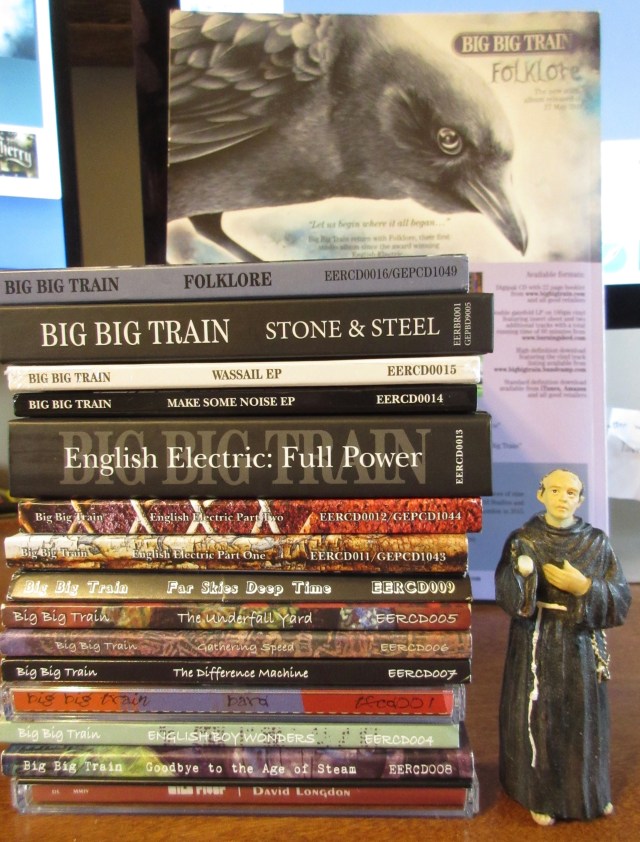
The collection.

As most of you already know, progarchy began almost four years ago as an unofficial Big Big Train-fan site.  We’re now getting to the point where our BBT offerings are looking a bit chaotic.

Here’s a helpful starting guide for those of you interested in getting to know BBT better.

Several years ago, I wrote a piece called “A Beginner’s Guide to Big Big Train.”  This is an addition to that.

Continue reading “Getting Started with Big Big Train”

The Gatefold Vinyl Glory of Big Big Train: Folklore ★★★★★

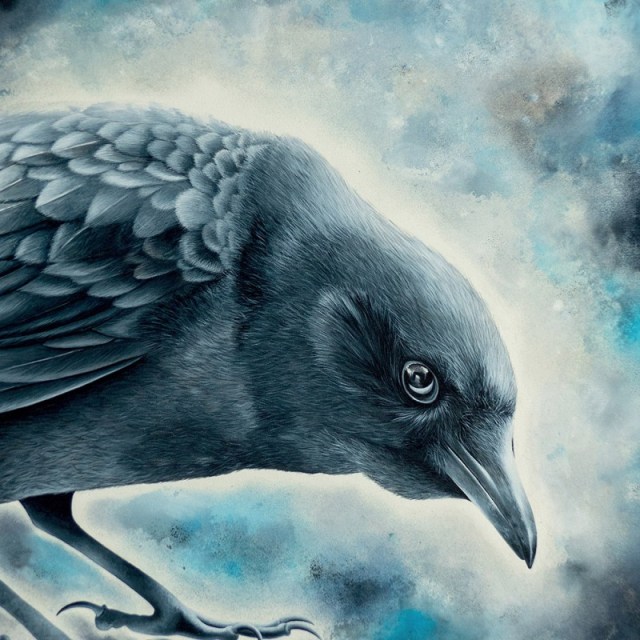
artwork

In terms of perfectly integrated, fully coherent masterpieces, I thought BBT might have peaked with The Underfall Yard. The Far Skies and Wassail EPs, and the multiple versions of English Electric (with no definitive track order), all contained fantastic music, but evinced an unmistakable prog version of ADD, as BBT and their fans were fiendishly enabled by the latest technology to “build your own” concept album, with your own favorite track order: S, M, L, XL, XXL, Full Power, whatever.

But now with Folklore, we have a stunningly coherent concept album that has absolutely perfect flow. And here’s the best part: the perfect flow is found not on the CD version (because “London Plane” works best not coming after “Folklore” but after “Salisbury Giant”) but on the glorious vinyl gatefold edition that has the definitive order for the tracks.

Continue reading “The Gatefold Vinyl Glory of Big Big Train: Folklore ★★★★★”

“There’s no record industry anymore.”—Roger Daltrey

Roger Daltrey sounds ridiculous in this interview with Rolling Stone:

Would you ever make another Who record?
We’ve talked about it, but it’s not going to be easy. There’s no record industry anymore. Why would I make a record? I would have to pay to make a record. There’s no royalties so I can’t see that ever happening. There’s no record business. How do you get the money to make the records? I don’t know. I’m certainly not going to pay money to give my music away free. I can’t afford to do that. I’ve got other things I could waste the money on.

Well, the music industry is constantly changing.
Well, it’s been stolen. The way the Internet has come about has been the biggest robbery in history, like musicians should work for nothing.

Artists get paid for streaming, but not like they did for albums.
You’re joking. You get paid for streaming, my ass. There’s no control. Musicians are getting robbed every day. And now it’s creeping into film and television, everything now. You notice, the Internet is a slowly but surely destructive thing in all ways. I don’t think it’s improved people’s lives. It’s just made them do more work and feel like they’re wanted a bit more, but it’s all bollocks. They feel like they’re wanted because they got 50,000 Facebook likes or whatever, and it’s all bollocks. It’s all rubbish [laughs]. Look up for a while. Live in the real world.

Continue reading ““There’s no record industry anymore.”—Roger Daltrey”

Moon Safari: “Have Space Suit, Will Travel”

The reason the new album from The Syn is so good is because Moon Safari plays on it.

I’m just sayin’…

P.S. Don’t they have one of the coolest band names ever?

I’m just sayin’…

I’ve always wanted to go for a moon safari, ever since I read Robert Heinlein’s “Have Space Suit, Will Travel”…


Every song on their last studio album (Himlabacken, Vol. 1) is brilliant. It begins like this…


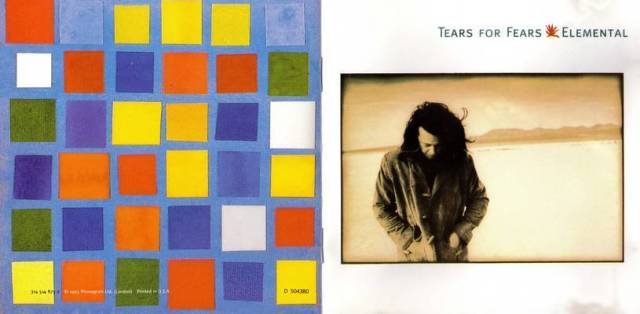
23 Years Later: ELEMENTAL by TEARS FOR FEARS

Tears-For-Fears-Elemental-Front-Cover-89109
Elemental, 1993.

I’d never lived through a summer quite that humid.  Even the two summers I’d spent in Fairfax, Virginia, seemed tame compared to that summer in Bloomington, Indiana.  I was over at a friend’s house—sans air conditioning—and we were lazily talking as sweat dripped off us.  She popped in a new CD, and I was immediately mesmerized by it, forgetting all of those pesky atmospheric woes.  I knew the voice immediately, as I’d always been rather obsessed with the singer and the song writer, but I’d had no idea that the band had recorded a new album.  The last one had been really good, but I’d not been blown away by it, at least not to the extent that the first two had captivated me.  But, after just a minute or so of listening to the new album in the summer of 1993, I grabbed the booklet of ELEMENTAL and pored over the lyrics and the liner notes.

I’d known that Curt Smith had left the band, but I knew nothing about Alan Griffiths or Tim Palmer.  Their names were all over the notes, almost as prominent as Roland Orzabal’s.

Continue reading “23 Years Later: ELEMENTAL by TEARS FOR FEARS”

Big Big Train’s Love Letters to the Proletariat: Interview with Greg Spawton

This is a very good interview from another WordPress prog blog, called Proglodytes! Read and enjoy!


Big Big Train has been enjoying some well deserved success lately. Starting with their acclaimed release The Underfall Yard in 2009, Big Big Train has only enjoyed more and more positive reception.…

Source: Big Big Train’s Love Letters to the Proletariat: Interview with Greg Spawton

Without Compare: FOLKLORE by Big Big Train

Big Big Train, FOLKLORE (Giant Electric Pea, 2016). 

The band: Greg Spawton; Andy Poole; Danny Manners; David Longdon; Dave Gregory; Rachel Hall; Nick D’Virgilio; and Rikard Sjöblom.  Engineered by Rob Aubrey.

Tracks: Folklore; London Plane; Along the Ridgeway; Salisbury Giant; The Transit of Venus Across the Sun; Wassail; Winkie; Brooklands; and Telling the Bees.

IMG_0002
By chance, the new issue of PROG arrived at the same time as FOLKLORE.  A glorious day.

The centerpiece of third-wave prog, Big Big Train, matters.  How they write music matters; how they write lyrics matters; how often they perform live matters; how they package their music matters; and how they market what they do matters.  They are a band that has evolved significantly over twenty-plus years of existence, a restless band that never quite settles on this or that, but rather keeps moving forward even as they never stop looking back.  In their art, they move forward; in their ideas, they move backward.  All to the good.

Continue reading “Without Compare: FOLKLORE by Big Big Train”