Radiant Monday Special: Rikard Sjöblom

Rikard Sjoblom

“The Unbendable Sleep”

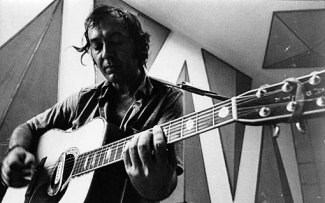
Back by popular demand we are having a sale on Rikard Sjoblom’s latest solo album,
“The Unbendable Sleep”!
For this week ONLY this AMAZING new album will be ONLY $12.99! Get your copy today and
don’t forget to grab one for a friend to help
spread the love of music around!
Thematically, “The Unbendable Sleep” goes around the usual subjects: love, life, death, and it deals a lot with self-esteem and believing in yourself. “Sounds cheesy, I know, but it’s pretty important stuff,” Rikard continues. “I found myself singing about mirrors quite a lot and that’s also referring to just that, looking into the mirror and not recognizing the person staring back at you.”
Check out this moving track from the album…
You can purchase this KILLER album HERE!

Put Me In Coach: It’s Opening Day!

reds

I know it would be hard to argue that this is a progressive rock song, but I could not resist celebrating one of the most important days on the American calendar: the Opening Day of the Major League Baseball season! And what better way to celebrate the National Pastime than by watching a ballgame and listening to John Fogerty’s classic, “Centerfield.” Enjoy!

Soundstream Sunday: “Hallucinations” by Tim Buckley

buckley4I realized last week when I featured the Sun River song “Esperanza Villanueva” that if I had a nickel for every time someone referenced Tim Buckley as a comparison (as I did in my intro) I’d be a rich man. But how many people have actually heard Tim Buckley? One of Jac Holzman’s/Elektra Records’ stable of brilliant, and troubled, artists, Buckley languished commercially while making music that thrilled his listeners and critics. He died young, a drug casualty (a tragedy echoed over two decades later by the untimely death of his equally talented son, Jeff), but left a deep, intense impression on the post-Dylan outsider folk and singer-songwriter scene he helped create. With his soaring voice and chiming twelve-string, Buckley leaned heavily into jazz, and the band you hear on this smoldering live version of “Hallucinations” — from London in 1968 — are jazzbos (not unusual in this fertile period in “folk” music, where Coltrane held as much sway as Guthrie). Where the studio version of the song feels overly-structured and baroque, here “Hallucinations” is free flowing, long form, Lee Underwood’s electric guitar, David Friedman’s vibes, and (sitting in from Pentangle) Danny Thompson’s bass creating a killer, punctuated Om. There was a time for me, glimpsed now across a thousand other Sunday mornings, when this song accompanied a drag or two off a joint and a walk across Central Park. To see the art.

Album Review: Weezer’s “White Album” ★★★★★

It’s been over twenty years since Weezer’s “Buddy Holly” temporarily entered onto your hard drive, and forever into your heart, thanks to that Windows 95 install CD. Despite a fistful of great songs and some really good albums since then, Weezer has never recreated the magical sense of joy and awe that the “Blue Album” evoked in us when we saw what a garage band could do to change the universe and blow our minds. Although 2014’s Everything Will Be Alright in the End was a surprising solidly enjoyable Weezer album from start to prog-epic finish, the “Blue Album” has never been eclipsed. Until now.

With 2016’s “White Album,” Weezer has released their finest album ever. Full stop. Every cut absolutely slays it, as the decades since the “Blue Album” yield a harvest of songwriting maturity that pairs perfect sonic sensibilities with poetically beautiful, philosopher surfer-dude lyrics.

The killer slabs of guitar, that trademark Weezer garage sound of glory, wins you over right out of the gate with “California Kids.” From there on, the abundance of non-stop outstanding tracks permits you to pick your own favorites from the panoply of richly melodic delights.

I’m partial to the fervid rap patter of “Thank God For Girls,” which reclaims stream of consciousness from the louche rap icons, to serve it up with superior musical accompaniment (drums and bass just as the California kids have ordered) and with sagely observations harkening as far back as the Sears catalogue and Adam’s rib.

“L.A. Girlz” is another favorite, thanks to that classic onslaught of the patented Weezer wall of power chords, but there are also surprising new pleasures here, like the nostalgic “(Girl We Got A) Good Thing” and the piano-driven “Jacked Up.”

Ooo-wee-hooo,  consider me pleasantly blindsided by this unexpectedly epic achievement by Weezer.  It’s a classic. Five stars!

10 Years of PARADOX HOTEL (Flower Kings)

In just two days, one of my all-time favorite albums will turn 10-years old.  Happy birthday, PARADOX HOTEL (Insideout Music, 2006).

Paradox_hotel_cover
Insideout, 2006.

I still remember well the day it arrived from amazon.com.  I had thought the previous album, ADAM AND EVE, outstanding, but I was looking for something a bit more expansive in terms of music as well as lyrical scope.  Given that this new album would be a return to a two-disk format, I’d assumed that Roine and Co. would not disappoint.

Not only did the band NOT disappoint, but they soared.

If forced to rank this cd within the Flower Kings’ discography, PARADOX HOTEL would sit very comfortably in the second best position, just below their best album, SPACE REVOLVER.

IMG_0001
Expansive.

Interestingly enough, when PARADOX HOTEL came out, Stolt expressed some concern.  Usually, a band hypes its latest album as its best (well, “hype” it too strong, as bands earnestly believe this to be true, as they should), but Stolt argued that he had thought the music of ADAM AND EVE more interesting and complex.  Yet, the fans had not responded to ADAM AND EVE as the band had hoped, so they had returned to a poppier sound with PARADOX HOTEL.

As is always the case with The Flower Kings, the band alternates between incredibly complicated and tight jazz-fusion-esque music to more loose and open progressive-pop and rock.  If ADAM AND EVE tended toward the former, PARADOX HOTEL certainly embraces the latter.

And, yet, while the complexity might not exist track by track, it does overall.  It contains some of the darkest music the band has ever written, such as track seven on the first disk, “Bavarian Skies,” but it also reveals the most expansive and joyous the band has ever been with tracks such as “End on a High Note.”

This is a fascinating album in terms of its flow and its story.  Though I do not know exactly what the album is about, I have interpreted it—from my first listen to it a decade ago—as a rather Dantesque examination of some form of purgatory.  The Paradox Hotel is not quite the Mansion with Many Rooms of Heaven, but it is certainly a way station between this world and the next.  After all, immediately upon checking in we meet monsters, men, U2 (I think, in “Hit Me With a Hit”), aviators, the young, Nazis, moms, the jealous, the violent, and the egotistical avaricious.  Yet, through all of this, hope remains.  Dreams and lights keep us centered on the end of the journey.

Disk two, by far the more experimental of the two disks, gives us even more glimpses of heaven, allowing us to touch, step toward, and dance in anticipation.  Further, we learn that life will kill us and come to the nearly penultimate doubts in asking the most theological existential question ever offered: what if God is alone?

IMG
Definitely the most theologically existential song in the history of prog.

Finally, on track eight of disk two, we meet many of the dead who have moved through the hotel from time to time (or time to eternity, more likely), and we end with the glorious “Blue Planet,” seeing what voyages yet remain as we get caught in the revolving hotel doors.

It really could get no more C.S. Lewis and The Great Divorce or J.R.R. Tolkien and “Leaf by Niggle” than this.  Indeed, if the Inklings had made prog albums, they would’ve made PARADOX HOTEL.

Or, maybe it really is a Swedish meditation on Dante’s Purgatorio.
Truly, this is some of the most satisfying, thought-provoking, and comforting music I have encountered in my own 48 years in this world.  Yet one more reason to praise Stolt and Co. for the glories they see and reveal to all of us.

Fieldwork: Alan Lomax online

alan_at_archiveWhen Alan Lomax initially envisioned his freely available Global Jukebox, a project that would bring together the recordings of vernacular music and stories he and others made around the world, it was a far off dream that the advent of the internet could only hint at.  The 17,000+ recordings he had made since the 1940s (and these, by the way, don’t include the recordings he made for the Library of Congress in the 1930s and 1940s) would need conservation work, digitization, and a robust search and delivery platform.  Recently that work has been completed by the Association for Cultural Equity, a nonprofit founded by Lomax in 1983 “to explore and preserve the world’s expressive traditions with humanistic commitment and scientific engagement.”

Progarchistas should be aware of this archive because — in addition to its contents being at the root of much rock, including progressive rock, music — the work of Lomax, probably the best known and most prolific of field collectors, represents recorded evidence of how people, in the pre-internet era and often in conditions where even a radio was a luxury, lived day-to-day with the music and dances and stories they and their ancestors created, for entertainment and for their own cultural identity.  What can this body of work mean to us, and how does it reflect, or not, constants in the way we experience and participate in music across cultures? The richness of this archive, and of Lomax’s endeavor, is endless food for such thought.

http://research.culturalequity.org/home-audio.jsp

Novembre – Ursa – Album Review

Artist: Novembre Album Title: Ursa Label: Peaceville Records Date Of Release: 1 April 2016 This album has proved to be one of the most difficult to write during 2016 so far. And the reason for this is the simple fact that this album has had me torn in two for such a long time. However, […]

https://manofmuchmetal.wordpress.com/2016/03/31/novembre-ursa-album-review/

To celebrate 40th anniversary of 2112, Rush will release full comic-book suite

http://cache.vevo.com/assets/html/embed.html?video=USUV71600543

http://cache.vevo.com/assets/html/embed.html?video=USUV71600819

Rolling Stone says:

Today marks the 40th anniversary of the release of Rush‘s prog-epic masterpiece 2112. To celebrate, the band is releasing a digital comic book telling the story of the LP’s titular rock opera. It begins with the “Overture,” which Rolling Stone is hosting exclusively. The entire 20-plus-minute suite, will then be available on Rush.com 21 hours and 12 minutes from the time of this post (Saturday at approximately 6 a.m. PST) and will be available for fans to watch for free until Monday at 6 a.m. PST.

The Incomparable Gift of Excellence: Big Big Train’s STONE AND STEEL

Big Big Train, STONE AND STEEL (GEP, 2016), blu-ray; and Big Big Train, FROM STONE AND STEEL (GEP, 2016), download.

stone_and_steel cover
The band’s first blu-ray.

Twelve stones from the water. . . .

Yesterday, thanks to the fine folks at Burning Shed, the first blu-ray release from Big Big Train, STONE AND STEEL, arrived safely on American soil.  Then, today, thanks to the crazy miracle of the internet, Bandcamp allowed me to download FROM STONE AND STEEL.

In a span of twenty-four hours, my musical world has been thrown into a bit of majestic ecstasy.

2016 might yet be the best year yet to be a fan/devotee/admirer/fanatic (oh, yeah: fan) of the band, Big Big Train.  I’ve proudly been a Passenger since Carl Olson first introduced me to the band’s music around 2009.  And, admittedly, not just A fan, but, here’s hoping, THE American fan.  At least that’s what I wanted to be moments after hearing THE UNDERFALL YARD for the first time.

Continue reading “The Incomparable Gift of Excellence: Big Big Train’s STONE AND STEEL”