

Drums. Lots of them. Lasers. Strobes and some confetti too. But beyond all the pomp and circumstance exists a message. A message of hope and love delivered the best way for King and Country knows how. The pop duo hailing from Australia, sort of, recently commenced their current world tour and brought a show that’s […]
Musings on Artists as Political Commentators and Activists
This post began with a comment on an interesting thread in respond to Craig’s post titled “The Place of an Artist”. Frankly, I enjoy that Progarchy.com usually avoids getting into various political and social debates; I spend most of my real work (as editor of Catholic World Report and writer for other outlets) addressing controversies, disputes, and dogfights over a wide range of issues. At the end of a long day of apocalyptic, to-the-death scrapping, it’s fun and far more relaxing to debate “Yes vs. Genesis” and “Jazz vs. Blues” and so forth.
That said, the topic of artists as commentators and/or activists is both compelling and important. And prog rock, which is the dominant genre discussed here, is known (overall) for lots of commentary on political, social, and even religious matters.
Anyhow, I initially wrote, off the cuff, the following:
I have to say, I nearly go nuts whenever I–being a die-hard jazz nut (with some 8,000 jazz albums)–have to listen to jazz musicians pontificate about social and political issues. I’d say that 96% of them have clearly never studied or read a lick of political philosophy or anything related to a meaningful understanding of principles, movements, issues, and such. It’s almost all group think and parroting the usual faddish nonsense. Of course, that sort of thing happens on both the left and right, but the arts tend to be dominated (and I think that’s an accurate term) by those who grovel before the altar of secular, neo-socialist, chronologically-snobbish, relativistic statism. So it goes. I say that if a musician wants to subject me to his views, then perhaps he might want to listen a CD of me singing operatic arias and Black Sabbath tunes.
(I should note that I actually only have about 5,000 jazz albums. Lost my head there.) I then decided to follow up with a more thoughtful response, which is as follows:
Continue reading “Musings on Artists as Political Commentators and Activists”
A Conversation with Haken’s Ross Jennings
 Soon after the release of The Mountain in 2013, and spotting them at the Progressive Nation at Sea cruise in 2014, Haken became one of my new favorite progressive rock bands. The British quintet, through Inside Out Music, is about to release their fourth album Affinity on April 29. I had the pleasure of speaking to Vocalist Ross Jennings a few weeks ago about the new Haken album, their upcoming tour, and what we can expect from Haken in the future.
PROGARCHY Hey, Ross. Happy St. Patrick’s Day to you!
RJ Oh haha, I’ll tell you that’s more aimed at Ray, he’s the Irish one in the band.
PROGARCHY Oh ok, so you’re not doing anything to celebrate?
RJ I’m currently not, but maybe later, we’ll see.
PROGARCHY Congratulations on the new album. It sounds really good.
RJ Thanks! It came out better than we hoped.
PROGARCHY It’s a little bit of a departure from your past albums, which I really like.
RJ Yeah, we didn’t want to make the same record again. On our last record, we tipped our hat to the 70’s- gave it a Gentle Giant approach. This time we decided to go the next decade along. At least to just try it. There are no restrictions, there’s no label telling us what to do. As creative people, we didn’t want to rest on our laurels and repeat the same thing. We just wanted to throw a few left hands in there and try something completely new and see where it took us.
PROGARCHY I understand that in the past it was Richard who mostly come up with initial song concepts, on which the rest of you guys added your flair, but for the new album it was more of a collaborate effort?
RJ Yeah, in the beginning, we all decided we’d start individually come up with our own pieces and then share them with each other, filter out the best ideas and then put them together in some sort of- it was sort of a jigsaw puzzle- picking the best moments from Ray’s piece, and let’s use Diego’s bit in there, and let’s put that together there- that sounds great.- Yeah, so that’s kind of how it worked this time.
PROGARCHY What was it like to change the way you do things?
RJ It certainty worked better this way I think, because what it showed in the end product was how much variety there is. Each track is very different and that was directly because of that process.
PROGARCHY Do you have a favorite track on the album?
RJ From the initial demos, “1985” was always my favorite. I just love it. But my favorite performance is “Bound by Gravity”. For me, it’s a beautiful piece and I felt I did it justice personally.
PROGARCHY “1985” is my favorite track. I’m a child of the eighties. There’s this one part in “1985” that reminds me of a 80’s TV show theme like Beverly Hills 90210 or something. That guitar solo has that perfect tone.
RJ Yeah, it’s the ultimate 1980’s stereo type. That was totally deliberate. It was slightly influenced by Vince DeCola, he was responsible for the Rocky 4 soundtrack and Transformers. So that’s where all those sounds sorta stem from.
PROGARCHY It had a little bit of Mike Post as well.
RJ Well we all grew up in the eighties so I guess we have that connection with film and music culture.
PROGARCHY I noticed you guys have been going “retro” lately. Like in the “Cockroach King” Video.. having the VHS-like beginning and Muppet-esque puppets throwing it back to Queen’s “Bohemian Rhapsody” video. The Restoration EP was retro-Haken, with you guys re-working songs from your 2007 demo. And now with the promotion of Affinity you had a really neat throwback to 1980 computers on your website. And of course part of the album had vintage synth, guitar, and rhythm lines. Also in your new track, “The Architect”, you also have a section of screamo, which harkens back to Haken’s early days.
RJ I guess there’s a theme developing there, huh? Perhaps we should do something original next time (laughs). Well, I guess it’s a fine line- that could come across the wrong way, but I don’t think it does this time. And the way I see it, it’s a statement to prog music. A lot of people say that prog died in the Eighties, but I personally think a lot of the bands made their best work in the Eighties. That’s obviously subjective, but there was a lot of great stuff from bands like Rush, Yes, and Genesis, came from that era. We just wanted to make that statement- Prog didn’t die. It was just different.
PROGARCHY Your website is really cool, by the way. Who designed it?
RJ Our web designer in Holland, Jeroen, but also Charlie helped come up with the concept. So a team effort between the band and people who know what they’re doing. (laughs)
(Check it out their new website: http://hakenmusic.com/haken-album-four-press-release)
PROGARCHY I love how you have that cassette tape in the teaser.
RJ Yeah, all of the PR is just drawing on that 80’s stuff. I feel like there is a lot of modern sounding stuff on this record as well, but as a novelty it was a good route to go down.
PROGARCHY I heard cassette tapes are coming back. You know Eminem announced that he’ll be releasing his “Slim Shady LP” on cassette. So I think that Affinity should be released on cassette, maybe?
RJ (With no hesitation) Yeah, well, we’re looking into it. Actually we’re thinking floppy disc.
PROGARCHY Is Affinity considered a concept album?
RJ Not strictly, no. There are themes that reoccur. There are references to technology, evolution, and human connection. It gets quite deep, but there is no narrative. It’s really just a soundtrack to a set of themes.
PROGARCHY I’ve only listened to it a couple of times, (now probably over 15) but I’m trying to follow the lyrics the best I can and see what the stories are.
RJ Sure, well we got in our minds what it all means. But I always find it’s best for the listener to take his own meaning from it.
PROGARCHY Well, that’s one of the great things about your albums. There’s so much going on- musically, lyrically. So they leave room for multiple listens.
RJ It’s always intended that way. You don’t want to overload people, but we like to have enough detail in there that it has a lasting effect, and that you can return to it and find something new each time. Even myself, I find new meanings for my own lyrics.
Check out Haken’s official video for “Initiate”:
PROGARCHY Haken’s going on tour for a month a half, in Europe. Your first show is in Bristol, May 25th?
RJ Yes, we’ll be covering a lot of Europe, plus we’ll be going to Israel for the first time as well. Also it’ll be our first headlining show up in Scandinavia. And then good news for you guys- we’ll be coming over in September to do some U.S dates.
PROGARCHY Fantastic! That was actually the answer to my next question.
RJ We’re still finalizing the details, so I don’t really have an official statement. But it’s looking good that we’ll get out there for 3-4 weeks.
PROGARCHY What do you like most about touring and what do you like the least?
RJ I love it all! I can think of a million things that are worse. I used to have a day job as a photographer, which is still quite cool, but it’s not the rock ‘n’ roll lifestyle. I just love traveling and performing to people and seeing their enjoyment. That’s a big rush for me. When they’re singing back your lyrics… yeah… it’s a good life.
PROGARCHY What are you looking forward to on this particular tour?
RJ Certainly to play the new songs- to see how we developed and what the audience is like now, compared to two years ago when we did our last headline tour in Europe. To see old faces and just to get back out there!
PROGARCHY Are you playing songs from different albums or a lot from the new one?
RJ We’re talking about this at the moment. We want to play all the new tracks, but whether we play it all in one go or spread them out, we haven’t decided yet. But there are cities we haven’t played before, so it’ll be a good idea to have a broad set of songs from all the albums in the setlist. We might have to dig up some old treasures. But the important thing is to promote the new record. And we’re so happy with all the tracks, we just want to play ’em all. We’ll see how it goes in rehearsal, I guess. (laughs)
PROGARCHY What do you like to do outside of music? You said you’re a photographer.. what else do you like to do?
RJ That pretty much consumes my life at the moment. I’m a sporty person. I like to hit the gym a lot. I’m creative in general, so I used to do a lot of painting and stuff. But music and photography has always been my two focuses.
PROGARCHY Well you’re doing really well, as far as music is concerned.
RJ I think it’s been a nice steady upward slope. I’m really happy with where we are at the moment. I just hope this new record is received as well as we hope it will be. So far, the feedback’s been positive, but some people might not dig the Eighties stuff. We’ll see.
PROGARCHY Well, I think it’s a really cool album. I think people are gonna dig it.
RJ I like to think of it as a breath of fresh air. Not entirely what you’d expect.
PROGARCHY You guys are pretty quick to come out with albums. A lot of bands these days come out with albums every 3-4 years. You guys seem to come out with a release every year or two. How are you able to get these albums out so quickly?
RJ I have no idea, we actually thought we were taking too long with this one. We initially had it planned to come out in 2015, but it took a lot longer to find the finished form. But we don’t want to be dwelling on things for too long. We want to come out with a new album every two years if possible.
PROGARCHY The round logo on the cover of the album reminds me of Sierra On-Line games, remember those? And it’s also interesting to note that the Sierra On-Line logo had a mountain in it.
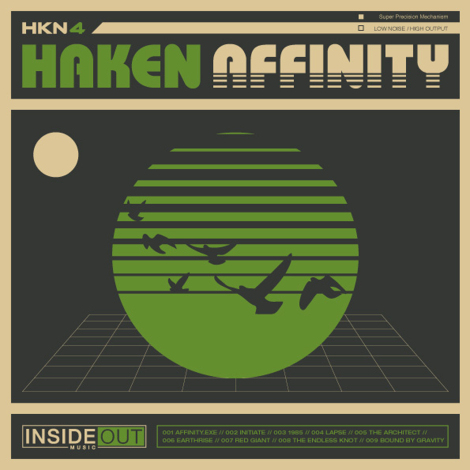

RJ Oh (laughs), I didn’t know that. Yeah, we wanted something that had a NASA-like logo as well, something with a sci-fi edge and with Eighties computing.
PROGARCHY What’s the next step for Haken?
RJ We just take things as they come I guess. We want to get a live album out there or a video of us playing live. We have our 10th anniversary coming up, so maybe we’ll do something for that. But we haven’t had a meeting to talk about what we’d like to be doing in 3-4 years time. So that needs to be done.
PROGARCHY Ah, so THAT’S the next step basically (laughs).
RJ Yeah, we want to see how well this record does. Obviously we want to progress and tour a lot more and just become a bigger household name in the genre.
PROGARCHY I’ve got one last question for ya, I heard that some of the guys in Haken like to knit, is that true?
RJ To knit? (laughs) I’ve never heard that one before.
PROGARCHY (laughs) I read it in an interview. I guess Haken means “to knit” in some language. In Dutch or something?
RJ Ah, I see where you’re coming from. Yeah, in Dutch, I guess “haken” means to crochet. We were thinking about doing a joke press photo of us all knitting, but that would’ve been lost on a lot of people I think.
PROGARCHY Anything you’d like to add for the Progarchy readers?
RJ I just hope they all enjoy it and come see us live because these songs take on another level when you hear them live, I’m sure. We’d love to see people joining us out there on the road!
Haken’s new album Affinity has a release date of April 29.
Check out Haken’s new lyric video for “The Endless Knot”
Metal Mondays: Haken — “The Endless Knot” @OktopusUK @InsideOutUSA
What to do while you’re waiting for Haken’s new album Affinity to be released?
I recommend you make good use of your time by listening to the awesome new album from Oktopus, as well as watch the online videos released in advance of the new Haken. Here’s the latest:
Taking Stock: Talk Talk 25 Years Later
A personal journey, Part I.
Twenty-five years ago this fall, progarchist editor Craig Breaden and I were in Waterloo Records, Austin, Texas. There it was on the shelves—the final Talk Talk album, LAUGHING STOCK, in all of its James Marsh-esque glory. Of course, I purchased it as quickly as possible. After all, it had just come out, and Craig and I were living in pre-internet days in northern Utah. We had a music store nearby, but however good it was—and, frankly, it was pretty good—it wouldn’t have dreamt of carrying anything by a band so strange as Talk Talk.
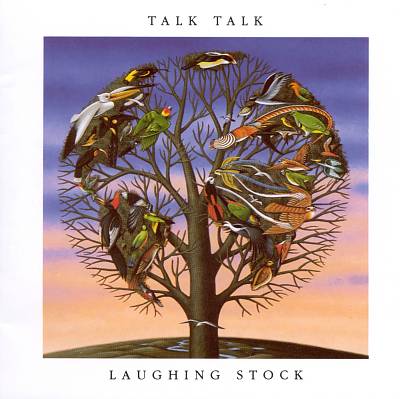
So fortunate we were at a history conference in Texas at the same moment as LAUGHING STOCK’s release.
Craig and I were not only officemates and apartment mates, but we were best friends and music mates. How many hours flew by with Craig and I devouring music—old and new—and then discussing and analyzing every bit of it. I still cherish these nights and even weekend-days as some of the best of my life. Though I’d grown up in a house that respected nearly every form of music, I had never been introduced to some of the great psychedelic and experimental rock acts of the late 1960s and early 1970s. Unless it was by Yes, Genesis, or Jethro Tull, I really didn’t know it. Craig played Procol Harum, Soft Machine, Spooky Tooth, and Traffic for me. I fell in love with each. As the time Craig and I (and another close friend, Joel) were spending so much time together, the music scene itself was going through a bit of a psychedelic revival—with World Party, Charlatans, and others—and this only added to our excitement.
As soon as we returned from Austin, I recorded the full album of LAUGHING STOCK on each side of a double-sided TDK cassette and enthusiastically played this tape over and over and over and over. . . . Even though Craig and I had shared many enthusiasms with each other, this obsession with Talk Talk seemed more than a bit too enthusiastic to Craig.
Understandably so.
By sheer force of will, I fear, Craig had to accept this or our friendship would suffer! Of course, here we are, a quarter of a century later, still very close friends and co-editors of progarchy. . . . You know the story ended well.
For nearly thirty years, I instantly answered the question of “what is your favorite band” with Talk Talk and Rush. If pushed a bit more, I would add Tears for Fears and, depending on my mood, Genesis or Yes or XTC. This rote answer became almost proudly knee-jerk on my part.
When challenged about this opinion, I rather haughtily pointed to THE COLOUR OF SPRING, SPIRIT OF EDEN, and LAUGHING STOCK. After all, who could top fourteen months a shot, recording in dark, deserted churches, challenging every single bit of corporate conformity in the music business.
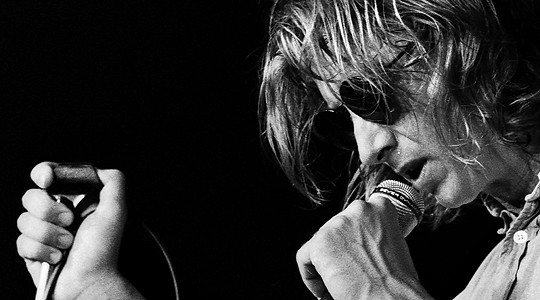
Mark Hollis, Tim-Friese-Green, and Phill Brown were not just three more musicians in the industry, they lingered as demi-gods at the very edge of Valhalla itself, ready to release Ragnoräk at any moment. And, power to them! As far as I was concerned, the music industry needed and deserved a revolution.
Recently, I’ve realized that Talk Talk no longer holds top spot in my mind when it comes to bands (Big Big Train has finally replaced Talk Talk in my mind and in my soul), but it will always be in the top three for me. For too many years, Talk Talk was my go-to band, my comfort and my first love in the world of music. To this day—and, I presume, to the end of my days—the final three albums the band made will always be the three by which I judge every other release in the music world. Few albums or bands, then or now, can measure up to such heights. But, such is my mind and soul.
Part II to come soon. . . . In the meantime, enjoy 19 minutes of Hollis talking about LAUGHING STOCK.
Riverside Teaser
Riverside just posted this on its Facebook page, about 4 hours ago. Much to look forward to.
soundstreamsunday: Sonnenblumenstahl by Ulrich Schnauss and Jonas Munk
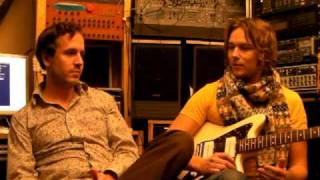 I’m continuing with my Jonas Munk kick from two weeks ago, when I posted the fabulous Sun River stream, “Esperanza Villanueva”. “Sonnenblumenstahl” is a beautiful piece of Moebius/Roedelius/Plank-style krautrock from Munk’s and Ulrich Schnauss’s highly recommended 2011 full-length collaboration. Munk the guitarist and Schnauss the keyboardist have both left their influential mark on ambient techno, and together they make music that is generous, melodic, and open, combining the best of both their musics. This song could be from Cluster’s Sowiesoso (or Zuckerzeit, OR Grosses Wasser), but has a character uniquely its own.
The Place of an Artist
 Several weeks ago Progarchy contributor Bryan Morey posted an article, Keep Your Politics Out of My Prog, regarding musicians and the commercial risks they take when speaking their minds politically. Bryan is a passionate writer and has deeply held beliefs; nonetheless, I took exception with what he said and how he said it, and made my comments in the honest and positive forum that is Progarchy. All good. But…it stayed with me, and thanks to Bryan for spurring me to further thought, and now to writing more.
I also feel compelled to write now, this evening, because a musical icon yesterday made a political statement regarding recently passed legislation in North Carolina, the state in which I live, where I was married, and where one of my children was born. What has become known as HB2 is a law destructive of not only the Civil Rights Acts but of the grassroots, everyday work that millions of people in the South have undertaken in the last 70 years, to ensure that all are equal before the law. In canceling his show in Greensboro, North Carolina tomorrow, Bruce Springsteen made the following statement:
As you, my fans, know I’m scheduled to play in Greensboro, North Carolina this Sunday. As we also know, North Carolina has just passed HB2, which the media are referring to as the “bathroom” law. HB2 — known officially as the Public Facilities Privacy and Security Act — dictates which bathrooms transgender people are permitted to use. Just as important, the law also attacks the rights of LGBT citizens to sue when their human rights are violated in the workplace. No other group of North Carolinians faces such a burden. To my mind, it’s an attempt by people who cannot stand the progress our country has made in recognizing the human rights of all of our citizens to overturn that progress. Right now, there are many groups, businesses, and individuals in North Carolina working to oppose and overcome these negative developments. Taking all of this into account, I feel that this is a time for me and the band to show solidarity for those freedom fighters. As a result, and with deepest apologies to our dedicated fans in Greensboro, we have canceled our show scheduled for Sunday, April 10th. Some things are more important than a rock show and this fight against prejudice and bigotry — which is happening as I write — is one of them. It is the strongest means I have for raising my voice in opposition to those who continue to push us backwards instead of forwards.
I think as humans and citizens we should use the voices we have to speak out for what we believe to be the truth, what we believe to be right, and I admire Springsteen (someone whose politics, admittedly, I generally agree with) for using the voice he has and sending a message that needed sending to an increasingly retrograde Southern political establishment, on whom the shadows of segregation are again creeping. It would be the poor artist who would shrink from using their total voice, to contain themselves only to their primary medium, regardless of the size of their fan base. In digging deep, artists and musicians push boundaries, often at great personal and commercial cost, and the ones who are successful are without fail also the ones who are compelled to speak their minds in all aspects of their lives. It might be messy, it might not look great on paper, it might not live up to the images they can magically conjure in their art or the idealization we, their fans, have built up around them or integrity we ascribe to them. But we don’t get to have the one without the other, and any artist worth their salt, that I can think of, would not change their point of view or what they choose to say based on the sales of albums or tickets. In taking the action he did, Bruce Springsteen showed again why his band and his fans call him the Boss and why, over his 40-odd years as a professional musician, his artistry has remained so vibrant.
Not Bauhaus but World Party: Fractal Mirror’s SLOW BURN 1
Fractal Mirror, SLOW BURN 1 (Third Contact, 2016).
Tracks: Prelude; Miracle; Numbers; V838; Floods; Mist; Enemies; Embers; Fading; Artifacts; Universal.
Mixed by Brett Kull, and mastered by Larry Fast.
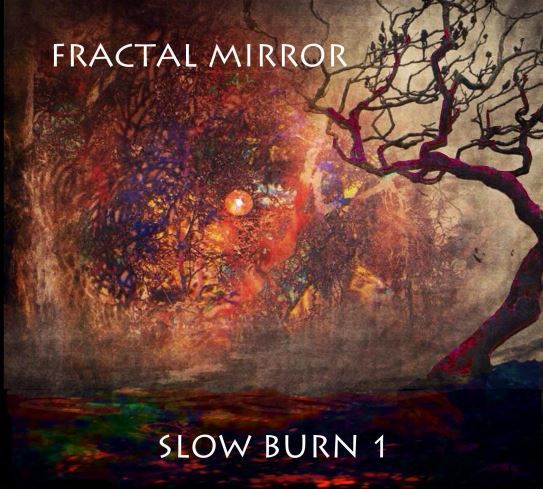
If you’re looking for some intelligent, thoughtful, and melodic rock, you’ve arrived at the perfect place. The aptly titled, SLOW BURN 1, offers 11 contemplative tracks, each flowing elegantly from one to another. While the first two Fractal Mirror albums possessed strong gothic-Prog elements, this album, as a whole, is rather Beatles-eque, especially in its vocal melodies.
Continue reading “Not Bauhaus but World Party: Fractal Mirror’s SLOW BURN 1”
Album Review: Oktopus — Worlds Apart ★★★★★ @OktopusUK

Not long ago I gave Oktopus a hard time over their name change, but now it’s time for me to report back on their new album after listening to it for a week solid. After enjoying tremendously the album’s stunning debut single, “Eyes Open,” I soon ordered a physical CD copy of Oktopus’ new album, World Apart, because the “Eyes Open” song was so awesome that I couldn’t stop listening to it.
Continue reading “Album Review: Oktopus — Worlds Apart ★★★★★ @OktopusUK”

