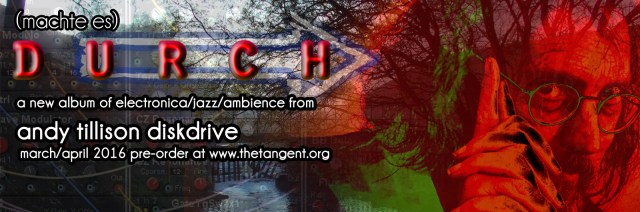
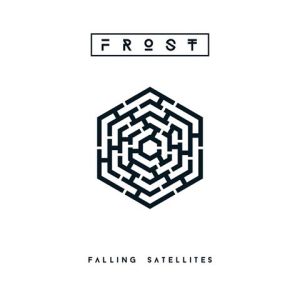
To pre-order, go here: http://www.bigbigtrain.com/main/shop/stone_and_steel

The fourth album of a Prague based art rock band calling themselves Different Light, ‘The Burden of Paradise’ is nothing, if not incredibly diverse. Taking the sounds of classic rock and a great many other styles of yesteryear, and compiling them in a twenty-one-track album, this is quite an ambitious project. Despite proving that the band is evidently very adventurous, the end result is an album that is masterfully crafted in the way it turns out, making for an inconsistently enjoyable piece of work.
Led onward by the vocals of singer Trevor Tabone, the music cycles through everything from classic progressive rock, to symphonic, to even progressive metal. Overall, while I understand that the band is testing the grounds quite a bit with this one, it does feel incredibly cohesive, and the songs as a result have very an excellent flow to them.
The songwriting is excellent here, it’s consistent. On top of the album feeling a bit too long for its own good, the album’s structure is in a state of greatness. Different Light deliver a very good impression with their newest material, and I really hope that they will embark on tour promoting it.
Buy ‘The Burden of Paradise’ from the official Different Light website.

This afternoon, I had the grand pleasure of speaking with a man whom I have admired since at least 1978, Steve Hackett. Though I called an hour earlier than scheduled (by accident) and though I mislabeled Hackett’s latest box set, PREMONITIONS, as PROGENY, Hackett was as kind, as intelligent, and as interesting as one might possibly imagine.
I have a feeling that I could’ve easily talked with him for another hour or so, but I didn’t want to take advantage of his obviously gracious and easy-going nature.
We covered a lot of ground in our conservation.
I was mostly interested in how he wrote, structured, and reworked his own music. Growing up a huge Genesis fan, I have rather happily found that Hackett’s several GENESIS REVISITED II releases (live and studio) have reminded me yet again just how very layered and nuanced everything Hackett produces is.
His latest studio album, WOLFLIGHT, is no different. After all, it almost seamlessly incorporates classical, orchestral, ELO-esque pop, carnivallesque rock, and Brazilian-style guitar into a mythological whole. The lyrics, too, pull together Greek antiquity with the Norse Volsunga and shed light on modern psychological and personal dysfunctions.
Rather than take copious notes or record our conversation, I simply asked questions, listened with great interest to Hackett’s many excellent insights, and jotted down a note here or there.
As Hackett has become more comfortable with his own views on music and now willing to reassess many of his once strongly held opinions as a young man, he has come to love much of what he had once dismissed, he tells me.
He knowingly and sagaciously laughed about his “one-time prejudices.”
Now, while a certain style of music might or might not grab him at every level, he loves listening to how various peoples from various cultures use an instrument. What if one uses the guitar, for example, as a drum or as something primarily rhythmic?
Whether one calls his music “world or progressive,” Hackett doesn’t want a label or genre to narrow his own thinking or his own creativity.
He is, he says, “always looking for a good tune and a good lyric,” no matter where it is to be found.
At the moment, he tells me, he’s working on two new tracks for his forthcoming album (no time frame yet, as Hackett wants it to come as it comes). One track is influenced by flamenco playing and the other deals with his own recent (and wondrous) visit to Iceland.
In our conservation, he also notes how very interested he is in exploring how the smallest and most easily dismissed instrument can contribute to a larger whole. Imagine, he asks out loud, what “the humble triangle” brings to an orchestra. It’s critical, he explains, to see what color the triangle or any other instrument offers to the whole. Once we understand what the least obvious can do, we are ready to allow things to develop in a right “sort of way,” letting each thing breathe.
In my own enthusiasm, I told Hackett how much his various GENESIS REVISITED II releases reminded me just how very alive the music of Genesis was and is and always will be. I mentioned that the performances elicited not nostalgia from me, but admiration.
With GENESIS REVISITED II, he answers, he never “wanted to be slavish, but” he did desire “to be authentic. A perfect reproduction would” be nothing but boring.
Still, he says, some things he felt needed to be exact—such as certain parts of “The Musical Box.” They were properly written from the beginning and need to remain as is. It’s all a matter of judgment. The notes are just as right in 2016, he says, as they were in 1971. He sees the GENESIS REVISITED II project as “dusting off the exhibits” while presenting them in new light.
What more can one state? Hackett is a gentleman and an artist. How nice it is to find that’s one’s hero is fully human, but in all the glory that it attaches itself to humanity. Thank you, Mr. Hackett. I will be listening for years to come.
Here’s the press release and dates for the forthcoming 2016 tour: https://progarchy.com/2016/02/18/steve-hackett-north-american-tour-2016/

Verona-based Italian prog metallers Fatal Destiny are a new name on the international scene. Their debut album “Palindromia” creates a convincing case that other prog bands from Italy may just have a challenger in sight for their reign as the modern metal champions of the country. Essentially, Fatal Destiny embrace a similar modern metal culture flush with melody as Fates Warning and Dream Theater do in their respective soundscapes, but with an additional touch of modern take on the genre.
The band open convincingly with “Palindromia”, immediately making it known to the listener that this is going to be a melody-driven metal album. But once we get to “Beyond Dreams”, there’s only one word appropriate to describe the track: amazing. The interaction dynamic between the vocals and the rest of the mix is superior, and the instrumentals create an intricate, yet massively melodic landscape when they aren’t busy in dynamic riffage and pummeling percussion. The chorus is something else: an uplifting, elevating clean-vocal driven passage, instantly catchy and memorable.
Later, “Leave Me Here” provides another brilliant moment with more melodic approach which leads into yet another unforgettable explosion of clean vocal melody over a heavy instrumental landscape during the chorus.
“The Gate of Time” toys with straight up melodic metal at the start of the track but quickly counters with punishing metallic riffage. Here, too, the chorus doesn’t disappoint. “Feel Alone” leans on progressive metal more, which breaks up the album’s pace somewhat for additional diversity. “Human Factory” afterwards provides yet another highlight on the record.
One thing’s for sure: there are enough great melodies on “Palindromia” to push Fatal Desitny to the forefront of modern metal bands in Italy. They should be expecting much bigger crowds at their performances as word begins to spread. A new Italian metal star has been born.
Stay in touch with Fatal Destiny on Facebook.
Jim DeRogatis and Greg Kot put out their Sound Opinions podcast weekly, and the latest episode features an in-depth interview with Geddy Lee and Alex Lifeson. It is one of the best interviews of them I’ve ever heard, primarily because -despite being professional music critics – Jim and Greg are both very big fans of Rush.
You can stream the podcast or download it here. The interview begins at 6:15 minutes in.

In the time span of just few months, Belgian prog metal band Jusska released two EP’s. After l’homme de l’ombre released in August 2015, the band is back with Tsuki — an EP which features ex-Monuments drummer Mike Malyan on the three songs it’s made of.
Tusk starts off with “Cascade,” a progressive metal number with superb djent hook. “Geisha” has it all — perfectly balanced vocals and music, it’s made of both slow and fast parts.
“Limbo” is a perfect example of the multi layered sound of Jusska. Complex drum fills courtesy of Malyan, subtle guitar riffs by Leander Verheyen, and excellent singing of Iason Passaris, and you get a winning formula.
Although short, there is so much to hear within these three songs on Tsuki. Even after hearing it more than 10 times, there is still more to be discovered.
You can get Tsuki by Jusska on Bandcamp here, and follow the band on Facebook.

Nick Beggs spoke with Progarchy today! Listen above to this exciting interview, in which The Blonde Bombshell talks in detail about the tracks on The Mute Gods album, as well as his upcoming tour with Steven Wilson, and the nature of prog rock music.
We reviewed one of his concerts with Wilson back in June 2015 when he visited us in Vancouver, Canada.
Thanks again, Nick! We can’t wait to hear whatever Sir Nicholas does next. In the meantime, all Progarchists should do nothing until they hear this excellent new album from The Mute Gods…

Here’s a video for one of the songs we talked about:
Nick is also a talented illustrator as well as being a far-from-mute prog god:
Enjoy!

Released February 12th, 2016, IV is the fourth solo release by New York based progressive rock musician Pontus Gunve, and second full band Progressive Rock release. Expanding and evolving the classic band format by including cello in the mix, IV makes Pontus as one of the most promising and impressive progressive metal bands on the scene today.
If you’re a fan of stellar guitar riffs and technical solos, IV is definitely going to interest you. The band’s sound established on those previous releases could definitely be defined as a happier kind of progressive metal, focusing on melodies in major scales. That signature sound can still be found here, but IV feels so much heavier than those other releases.
Gunve has really outdone himself with the guitar parts on this release. Tripp Dudley (drums, tabla) and Bryan Percivall form the rhythmic backbone of the EP and keep the songs on track but also have their time to shine, coming in clearly through the mix. The heavier sound of this album can definitely be attributed to the amazing mix of the album. Where this release really shines are the cello segments masterfully performed by Eric Allen. He is definitely what makes difference between IV and every other average progressive release today.
But now to talk about the music itself! IV opens up with a ten-minute piece named “Ten,” a journey through epic riffs and melodic solos and walls (courtesy of Eric Allen) that quickly touches on melodic themes similar to ones established on previous albums. “Ten” travels through some epic, technical territory, taking a brief sojourn with some classic rock-like passage towards the middle of the song, then re-exploding back into the frenetic pace of the earlier portions. What might seem like a strange combination of genres on paper turns out to be a pretty banger song when put together by the guys in the band.
Another standout track for me is the fourth song, “Red Silver.” It’s a catchy, bouncy, focused song with a great solo.
“Felix” has some massive atmosphere, with Allen absolutely killing it over some amazing groove work. Honestly, you can listen to any track off of IV and find something to enjoy. It’s an amazing release from an amazing progressive metal band.
Buy IV from Bandcamp.

The creation of an experimental album is not an easy task, as those who try to accomplish it are tasked with blending the three essential elements which define the sound of this genre (heaviness, dynamics and atmosphere) without relying one particular one too much. If it isn’t perfectly centered, the whole thing will go lopsided. In terms of experimental music, the slightest imbalance in your sound might throw off the whole album and break the listener’s immersion. Fortunately, the three New Yorkers from The Benzene Ring handled this balancing act with great sensitivity and skill in creating their gorgeous piece of experimental rock/metal, Crossing the Divide, which came out in November last year.
Clocking at almost 80 minutes, Crossing the Divide doesn’t feel long, given the genre’s usual album lengths. This album is filled to the brim with great moments within its perceived runtime. “And We Are Become As Strangers”, the opening track, kicks off the record with an almost one minute build-up, mostly comprised of piano. The track gains momentum with the addition of spoken words and a massive piano riff over the established atmosphere.
It is in the second track, “Jerks In the Obsolaire” where The Benzene Ring start introducing themselves. The song contains remarkable sections, coming all the way from soothing singing to frenetic rocking.
Other highlights are “Miles Past the Mark” with its combination of clean singing formatted in a psychedelic/indie vibe; swirling and noisy “Alarms”, which has an eerie feel to it; nothing less eerie and almost folksy “Wraits and Spectres.” “Ascension” brings back piano in the game which tirelessly goes forth and back to further explorations within the jazz and rock circles.
Mixing-wise, Crossing the Divide is really well-made as well. The guitars are crisp and clean, the drums have a lot of punch and sound roomy, the bass is actually audible, and the keyboards fit in between the other components perfectly, rather than just being layered on top of the mix. There obviously was great attention to detail involved, and the album is much better because of it. Get it from Bandcamp.

If you were considering taking the plunge into classical music but were wary of the cost, you no longer have an excuse. The Bach Guild is releasing excellent collections of classical music on Amazon at incredibly low prices. For example, you can get more than 33 hours of very fine performances of baroque music for less than $3.00. Yes, that’s right – less than 3 bucks!
Unlike iTunes tracks, these are DRM-free mp3’s. You can stream them off the cloud, download them to listen to on any mp3 player, or burn them to CD.
The Big Baroque Box, Vol. 1 features the music of Vivaldi, Dowland, Torelli, Bach and many others. 305 tracks for $.99.
The Big Baroque Box, Vol. 2 is more of a “Baroque Greatest Hits”, with Handel, Albinoni, Pachelbel, Bach, etc. 214 tracks for a whopping $.99.
The Big Baroque Box, Vol. 3 continues high quality performances of interesting selections of Rameau, Gluck, Purcell, Vivaldi, etc. 129 tracks for – you guessed it – $.99.
The Bach Guild has also released huge collections devoted to individual composers, including Bach (surprise!), Handel, Vivaldi, Haydn, Purcell, Mozart, and Beethoven, among many others. Even if you decide that a particular composer isn’t your cup of tea, you aren’t out a large investment. Take the plunge!