[Editor’s note: it is with no small amount of pleasure and pride that Stephen Humphries–well-known music journalist and accomplished author–interviewed Francis Dunnery for progarchy.com. I’m not sure what we did to deserve Stephen’s help and friendship, but I, for one, am absolutely thrilled!–Brad]
By Stephen Humphries
Francis Dunnery’s latest albums may be titled Frankenstein Monster and Vampires, but it doesn’t mean he’s going through a goth-rock phase.
At least, not yet.
The songwriter, singer, and guitarist has reveled in a variety of musical styles during his three-decade career. Since leaving the seminal British pop-prog band It Bites, his 10 solo albums have spanned progressive rock, pop, folk, jazz, and punk. That versatility accounts for why Dunnery has occasionally paused his solo career to lend his considerable guitar prowess to the likes of Robert Plant, Ian Brown of The Stone Roses, Carlos Santana, Lauryn Hill, and Chris Difford of Squeeze.
Of late, though, Dunnery has been revisiting the progressive rock sounds that inspired him to pick up a guitar when he was a young boy. Credit Dave Kerzner from Sound of Contact for renewing Dunnery’s interest in far-out, exploratory sounds. Kerzner persuaded his friend to sing on a couple of Rush cover versions by Sonic Elements, a “Fantasy Band Tribute to Rush.”
Since then, Dunnery and Kerzner’s Sonic Elements have worked up a complete rendition of Genesis’ The Lamb Lies Down on Broadway that hasn’t yet been released. You can, however, hear Dunnery’s spot-on vocal performance of “Dancing with the Moonlit Knight” on Steve Hackett’s Genesis Revisited II. (A singer of note, Dunnery contributed backing vocals to the Anderson, Bruford, Wakeman, Howe album back in 1989.) In other recent prog-related activity, Dunnery’s fiery fret fingerwork can be heard on Kerzner’s New World album and also the title track to Big Big Train’s The Underfall Yard. Dunnery also produced and played on the 2009 album Big Sky by The Syn, the reunited progressive band that was once home to Chris Squire before he joined Yes.
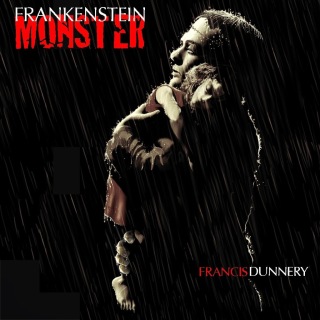
In 2013, Dunnery released Frankenstein Monster, an album of re-recorded songs by the 1970s proto-prog band Necromandus that was founded by his older brother Barry. (See the video for the title track, the one original Francis Dunnery composition on the album, below.) Dunnery’s brand new album, Vampires, also looks back at another aspect of the past. It consists of 14 re-recordings of songs by It Bites, the group that he formed in Cumbria, Britain, with John Beck (keyboards), Bob Dalton (drums), and Dick Nolan (bass). This time out, Francis recorded fresh versions of the songs with his own Sensational Francis Dunnery Band.
Available January 1st from his website, Vampires includes many of the It Bites’ signature melodic shorter songs (including their top 10 UK hit “Calling all the Heroes”) as well as versions of long-form epics such as “Old Man and the Angel” and “Once around the World.”
In a Skype interview with Francis, he explained why he decided to sink his fangs into these old songs to immortalize them on Vampires.

Humphries: You’ve re-recorded a massive batch of songs spanning your entire career. Why? What inspired you to do so and what did you set out to achieve?
Dunnery: The inspiration was quite similar to my last album, Frankenstein Monster, which was basically to complete the past. When your past is incomplete you cannot do anything new, because your past is taking up all your brain space. The idea of recording those songs were always in my mind and occupied a great deal of space in my head. I needed to get them recorded so I could free up space to do new things. The It Bites tracks are very much the same. Any unfinished projects or ideas floating around in your head will make you a prisoner of your past. You won’t have the energy to do anything new and fresh because all your energy will be focused on the incomplete projects from your past.
Humphries: Who are the musicians on the project and what did they bring to the table?
Dunnery: The musicians are the Sensational Francis Dunnery band. Tony Beard on drums, Michael Cassedy on keyboards and Jamie Bishop on bass. I think Tony’s drumming is a beautiful compromise between rock and “pocket.” Tony’s pocket is as close to a black drummer as you’ll get. Like me, he’s a massive fan of R&B, especially the stuff the kids are doing today. So this is It Bites note-for-note with a beautiful groove. Jamie is also very laid back in his bass playing so the tracks are very musical. Michael did a wonderful job playing John Beck’s parts.
Humphries: Which of the re-recordings are you most excited for fans to hear?
Dunnery: All of them. They sound amazing. There’s nothing to put anyone off listening to them. They are note-for-note and the sound is a million times better than the originals. The originals have the melancholy of people’s childhoods attached to them so you cannot hope to replace that, but the new versions are pretty damn cool in their own right.
Humphries: What was the criteria for selecting which It Bites songs to re-record?
 Dunnery: I basically picked the most important songs on the albums, the ones that I liked. The ones that I felt could be sonically updated successfully. I’m a song guy. I’m not particularly interested in how fast someone can tap an arpeggio—I’m far more interested in melody, storytelling, and lyrics. When I was 18, I was more focused on musicianship, but today’s musicians are mostly performing little tricks…which is cool but it’s not something I’m interested in today. I always loved Paul McCartney, The Beach Boys, Prefab Sprout, The Blue Nile, Laura Nyro—song people. The songs I picked were probably the best melodies.
Humphries: Were there songs that you attempted to re-record but ultimately abandoned?
Dunnery: No, we recorded all the ones I said we would record.
Humphries: Some of the original It Bites recordings sound a bit dated and very much of their time in production. Did you update them or rearrange your versions in any way?
Dunnery: Completely updated them. Instead of brass sounds and synthesizers, we used all real stuff and it sounds killer. Sonically, it sounds a bit more like early Deep Purple during “Black Night” and “Strange Kind of Woman” —basic overdriven Hammond and electric pianos played through amps.
Humphries: John Beck’s keyboards/backing vocals and the Dalton/Nolan rhythm section had a particular sound—what was your approach to those aspects of the It Bites songs in your new recordings?
Dunnery: We copied John note for note because the parts were great, but I swapped the little tinkly bell type sounds for real meaty organ and piano. We gave the keyboards a set of balls. The drums are dry and without reverb compression or EQ. Tony Beard is an amazing drummer and he’s also amazing at tuning drums. I just put a few mics in front of him and let him do his thing.
Humphries: Can you tell me about why you chose to include It Bites B-sides such as “Vampires” and “Feels like Summertime”? In retrospect, do you wish those songs had been on the It Bites albums?
Dunnery: I liked those songs a lot. I remember when we recorded the track
“Vampires” in the Townhouse studios in London and I was going beserk with the guitar solo. It was so much fun. Incredibly intense. “Feels like Summertime” is a beautiful track. I never liked the It Bites version much because the chorus was a bit telegraphed and my vocal was too effeminate. It was great to be able to have the opportunity to fullfill that track now that I have a better knowledge of songwriting.
Humphries: How much of a challenge was it to re-record complex epics such as “Old Man and the Angel,” and “Once Around the World”? Take me into the experience of tackling those pieces again.
Dunnery: It was pretty easy. I recently recorded some vocals for Dave Kerzner as we are re-recording the whole of the Lamb Lies Down on Broadway and those vocals were incredibly easy as well. I have been singing them for so long that I know exactly how to deliver the vocals so the melodies stand out. It was the same as the Steve Hackett album. I recorded “Dancing with the Moolight Knight” for him and it was easy. The It Bites tracks are the same.
Humphries: How many discs will Vampires consist of? Is there anything notable about the packaging?
Dunnery: The Vampires album will be 2 CDs as the songs are very long. There will be a special ‘muso’ package with downloads of the instrumentals. There is nothing particularly notable about the packaging other than my crack dealer’s phone number, which will be on there for anyone who would like to hear the tracks with more white angst.
Humphries: Has the Vampires project influenced where you want to go next?
Dunnery: It has influenced my next album in the fact that I don’t want to play any more electric guitar for a while. Frankenstein Monster and Vampires make a bold electric statement that I will not be able to supersede for quite some time. I hate doing the same stuff over and over.
Humphries: You’ve been writing new songs: How far along is it and what can you tell us about the musical direction of your next album?
Dunnery: I am auditioning three African-American backing vocalists in New York City. I want to make a quiet album with a bass, acoustic guitar, and three African-American backing vocalists. I have some great stories to tell and some great new melodies to sing. I need African Americans because European Africans have a different feeling, African Africans are not even in the ball park and white girls can’t deliver what I’m looking for on this album. There is a sweetness to African-American musicians in general that I really love. It’s not so much what comes out of their mouth, it’s more of the feeling and the sweetness of the timing of their expression that I love. It cannot be emulated. My new album will be sweet and quiet and probably not for anyone under 25 years of age.
Humphries: You perform dozens of House Concerts across the world every year. [Visit FrancisDunnery.com to book one.] Tell me about your recently published book House Concert Expert.
Dunnery: I wrote a book because I wanted to write a book. It hasn’t yet sold anywhere near what I thought it would but they say if you want to make God laugh, make some f***ing plans! I haven’t started promoting properly so by this time next year I may be the new Stephen King.
Vampires is available January 1, 2016, at www.francisdunnery.com. Follow Francis on Twitter: @dunnery.

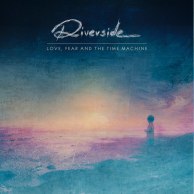 that is unmistakably Riverside. While the album still has some of their trademark moodiness, the darkness has been replaced with a mature, tempered, and realistic optimism that grows throughout. This album was quite a leap for Riverside in terms of direction, and yet they pulled it off flawlessly.
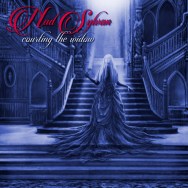 classic/symphronic prog sound of an earlier era, and yet sounds fresh and modern. It works especially well since Sylvan’s natural singing voice seems to be a perfect mix of Peter Gabriel and Phil Collins, making it no mystery as to why Steve Hackett selected him as a touring vocalist. Standout tracks on this album include the title track, Echoes of Ekwabet, and the excellent epic, To Turn The Other Side.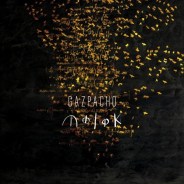
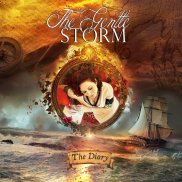 was really two albums in one, a heavy version (Storm) with all the songs “metaled up” by Arjen, and a lighter version (Gentle) which relied more heavily on acoustic instruments and folky sounds. Both are excellent and it’s tough to pick on. Shores of India seems to work best in the Gentle form, while The Storm, appropriately, seems to work best in the Storm version.
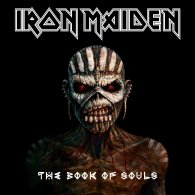 Because this album is the proggiest thing Iron Maiden has ever done, even though it retains their previous heavy metal elements. While this album is excellent from start to finish, the boys of Maiden are at their strongest here when they are on their proggiest – the 10 minutes plus title, track, the 13 minutes plus The Red and the Black, and the closing, 18 minute epic, Empire of the Clouds. For the shorter, more familiar Maiden, Speed of Light is a particularly strong track. I’ve always defended the members and the music of Iron Maiden as being more intelligent and thoughtful than that of their heavy metal peers, and this album is the best evidence yet of that. This is truly a crowning achievement on an amazing career.
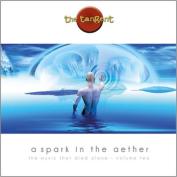 excellent release, A Spark in the Aether. One of the things that really comes through on this album (and makes it so excellent) is that is sounds like Tillison was having tongs of fun in making it. The joy really shines through on one of my favorite tracks, Codpieces and Capes, a celebration of prog’s glorious past. Even better is The Celluloid Road, Andy’s insightful look at America through the lens provided in film, i.e. movies that is. It’s the highlight of an album full of highlights. Oh, and speaking of America …
 better than I can remember in some time. For one, Echolyn returned with I Heard You Listening, which more or less picks up where they left off in 2012. There were no bad tracks on the album, but Messenger of All’s Right, Different Days, and All This Time We’re Given were especially strong.
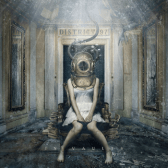 evolves into new territory. I absolutely love the leadoff track, Snow Country, and am also partial to A Lottery and On Paper. The playing is top notch throughout. But what I like best about this album is the outstanding vocal performance of Leslie Hunt, who continues to make a strong case for the title of First Lady of Prog. Whether it’s her breathy jazz phrasing, her power vocals, or something in between, she hits it perfect every time.
 I’m hoping that the Vol. 1 part of the title is an implicit stating that there will be a Vol. 2, because I definitely want more of this. A concept album that explores our relationship to technology (the digital world in particular), the lyrics are both clever and insightful. This one will be interesting to come back to five or ten years hence to examine the lyrics/concept in the context of how times will change.
 Particle. I won’t mince words here – I think Leonard is the best vocalist Spock’s Beard has ever had, and I love where they are going with him at the mike. Bennett Built a Time Machine is an excellent track, and I love Minion as well (would have liked the move Minions to have worked a little prog into their soundtrack with this one …). They musicianship is as stellar as ever, and combined with Leonard’s voice, the Beard sounds as good as ever to these ears.
 album was initially released in 2014, but after many had already compiled their year-end best-of lists. It didn’t seem fair to me that such a fine album wouldn’t make the cut simply because of the timing of its release. So I’m going to include it here as a 2015 release and put it on my list – and on the merits it most definitely belongs.