A Little More Seasonal Joy: Mike Kershaw’s WINTER

kershaw winterAs I mentioned in the previous post, there are lots of new musical offerings this Christmas season.  Of course, what a tradition!  Some of the great seasonal recording of the not so distant past: Jethro Tull, Sarah McLachlan, George Winston (remember him!).

In addition to the excellent releases by The Reasoning, Neal Morse, Leah, and Kevin McCormick, the intrepid goth progger, Mike Kershaw, has just released WINTER.  As he describes it:

This is a seasonal EP with 4 quite different songs. I decided to record this whilst writing for my next album ‘Ice Age’ as there was a track that didn’t fit exactly with the feel of the album and along with a couple of songs that referenced Xmas which I could never have put on a normal album release. Land of Gloom is a short, fun, upbeat track that at face value is Christmas standard but the lyrics suggest something else Silent, Silent Night is an altogether more serious track and the lyrics speak for themselves really Reason to Believe was the title track of my 2011 album and I thought it would fit nicely alongside these other songs. However rather than just including it in its original form I have re-recorded a good deal of it and given it a new sound. A song of hope. Snowman was a track specifically written for ‘Ice Age’ that on reflection didn’t fit with the mood of the album but was too good to discard. Basically a love song with Mellotrons!! Hope you enjoy listening.

Much enjoyment, indeed, at progarchy central.  Thanks, Mike!  Get yours at: http://mikekershaw.bandcamp.com/


Have Yourself a Merry Christmas

Well, it seems a little early to talk about Christmas.  But, not about Christmas music!  As we get close to Advent (begins this Sunday) and prepare for Christmas and the holiday season, you have a lot of wonderful offerings from the music community.  Indeed, there almost seems to be a revival of the Christmas song.  Lots and lots to choose from.

reasoning xmas

If you want a great two-track EP, get The Reasoning’s “It’s Christmas (Sing it Loud),” out today, and available from amazon.com and iTunes.  Rachel Cohen has the voice of an angel, of course, and it shows in every note she sings with one of the greatest prog/rock outfits around today.  Thank you, Matt Cohen, master of many, many things.  For those of you who shy away from prog, no worries.  This is just a wonderfully joyous song.  I think it could’ve easily been the finale to HOME ALONE.

proggychristmas-new2-2

Neal Morse, never unwilling to profess his own faith (in Christianity and in prog!) has two CDs out you might like.  The first, out last year at this time and still available, is a PROGGY CHRISTMAS–featuring just about everyone you could imagine.  As I wrote last year:

All of the members of Transatlantic (Portnoy, Trewavas, and Stolt), Steve Hackett, Steve Morse, and Randy George.  Portnoy is even “The Little Drummer Boy”!  Jerry Guidroz does his usual extraordinary mixing and engineering.

Also available–as a member of the Neal Morse Inner Circle–“Christmas 2013.”  These songs date back almost 20 years.  Very delicate as well as energetic.

leah christmas

Our own progarchist, lovely Leah, “metal maid,” has a gorgeous EP out, “Let All Mortal Flesh Keep Silence.”  Three tracks introduce the listener to our favorite Canuck rocker (that is, below the age of 60.  Sorry Geddy, Alex, and Neil) and the spirit of a metal Christmas.

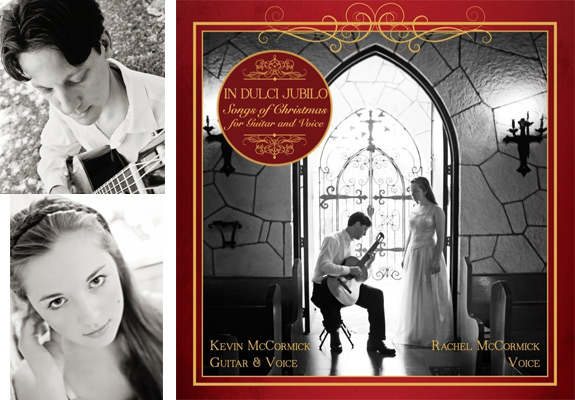
kevinmccormickandrachelm

Finally, out just since last Friday, is another progarchist album, In Dulci Jubilo.  This one comes from classical and progressive guitarist Kevin McCormick and his oldest daughter, Rachel.  My best description of this album is “immaculate.”  In Dulci Jubilo is 14 tracks long at 46 minutes.  A much more detailed review forthcoming.

Chris Wade aka Dodson and Fogg: An Interview

Chris, first I would like to thank you for sparing some time (again) from your obviously busy schedule. You’ve just released your second album this year and also written two band biographies on The Incredible String Band and Black Sabbath. This is also your third interview in less than a year by Progarchy with the other two by Craig Breaden to be found here:

https://progarchy.com/2013/02/10/steamfolk-the-derring-do-of-dodson-and-fogg/

Sounds of Day and Night by Dodson and Fogg

Image

Now I’m not normally a folk music listener but after reading a number of positive reviews of your first three albums and listening to them on numerous occasions, you’ve definitely converted me. Not only is there a special beauty to the music you write, but Craig made an important observation in an earlier interview which resonates with me deeply:
“The impulse to go long, as his folk and other prog rock predecessors might have done, is also resisted – there are few wasted notes or words. Less is more sometimes, and service here is done to Song.”

cover bigger file 2-page-001

The Call is your fourth album in a very short space of time. Your first two albums evoked classic 70s folk music but your third album, Sounds of Day and Night, developed a dreamier, slightly psychedelic sound with Eastern vibes in places. There was more use of the electric guitar and the arrangements were slightly more complex. What can we expect musically from the new album?

I’m not sure how to describe the sound, because developing from album to album is more of a natural, gut thing really. I write a song and colour it in with different sounds, and keep going until I have a set of songs, say 12 or 13, to fill an album. Then I usually carry on recording and there’s a process of elimination, where new ones come in and replace the older ones, until I am happy with it from start to finish and happy with every single note. It’s really concentrated work, and I love the mixing and producing part as well. I work on it every day. And while four albums in a year and half may seem quick, to me that year and a half has felt like forever. It literally feels like ages since I did the first CD. But this new one is by far my favourite, even though I keep saying this every time. I would say the album is full of unusual sounds blending together, it definitely has a vibe to it, quite surreal maybe and for me “songs” are very important, i.e. something with a subject, an approach, a hook, a chorus and then I think about the best way to colour the song in. I like to make interesting music that surprises and hopefully takes the listener away on a nice trip. it’s hard to describe your own work without sounding like a frilly coloured fop.

Lyrically you appear to be focus upon mellow reflections on life, love and nature. Does The Call follow this path?

My lyrics are always whatever comes to me. A phrase might come up and I elaborate on that. The lyrical content on The Call seemed to follow the same path. It’s all about awareness, being aware of your life, what’s going on around you, the people who are in your life with you and understanding what they have or have not done for you, and not forgetting that. I didn’t purposely explore this as a theme; it just seems to have developed that way. It sounds pretentious to say, but it does have a theme to it; it’s about not wasting time and appreciating the things that are here now, and may not be here in the future.

What inspires you lyrically and what comes first, the music or the lyrics?

It differs really. Many songs have been written on an acoustic guitar. I find a sound or a chord and then get a melody going, and like I say, a phrase might come into my head and it goes on from there. I love getting a different chord progression or guitar sound as a starting point and then I decide what else to do. Lyrics are becoming more important though with each album. I’m not into the idea of obvious lyrics, like openly complaining about the government or work, or the plight of the everyman, and if I do ever sing about it, it isn’t blatant. Also it’s good to write about a real issue or a feeling but not ram it down the listener’s throat. It’s good that people have their own meanings and thoughts on songs. Lou Reed once said that he didn’t like to tell people what his songs were about because it might disappoint them, and they may have attached the song to something precious in their own mind. Sorry I am waffling on now…

It’s not waffle to me Chris! – I know exactly what you mean about lyrics. Lyrics resonate with people in different ways; they become very personal and sometimes finding out the real meaning from the artist himself can disappoint.

Chris, you’ve introduced Chloe Herrington on saxophone and Ricky Romain on Sitar on the new album. Guest artists appear an important ingredient to your output. How important is the collaborative process in producing the music of Dodson and Fogg? 

It’s mostly important for me because I listen to a track and think ‘this might sound good with a sax here, or a sitar there.’ Sometimes I think if you’re a one man band (not like the fella that sung Rosie with the bass drum on his back) you do need character and colour from elsewhere. Celia Humphris of the folk band Trees (one of my favourite bands) appears on the new album again, and I feel her voice is very important. There was one song I wasn’t quite happy with and then she did her vocals and I loved it. So it can be really important. Coming up with the idea of the specific musician though can be quite random. I discovered Knifeworld on the internet a few months ago and loved the sax on a track, so got in touch with Kavus of that band to see if Chloe, his sax player, would be interested in playing on a track. It can be like hearing someone and then imagining them on my song. It’s a great part of it. But save for one trumpet part on Sounds of Day and Night, I was the only musician on it. So it’s not essential all the time, but I love the process of hearing what someone else has done and putting it into the song.

Chris, it’s a big understatement to say your multi-skilled! – you play so many instruments and write books on both music and surreal comedy. Do you have a first love?

Definitely music. I have played, or attempted to play at least, instruments from a really young age and always collected records as a boy. I used to dream of having a band, and I did have one with my brother and sister when I was younger and we did gigs for a while, but it fizzled out so I turned to writing, something I had also done since I was a kid. At first I got into the surreal fiction when I did the audiobooks of my stories with Rik Mayall and Charlie Chuck, but I soon found it too be quite limiting and turned back to music eventually last year, thank god, with the first Dodson and Fogg album. I didn’t expect the feedback to be so good, so I carried on and I’ve been learning more about music, releasing music and everything that comes with it. Music is definitely my main thing now and the main focus in my work and hobbies. With my music going reasonably successfully and with such a great response to it, this is the first time I have felt a proper direction, so it’s great. But I can’t take any of it too seriously, because it is still ridiculously fun!

The increasing production of music in vinyl format has attracted a lot of interest over the last few years. I read that the first album was to be released on vinyl but haven’t heard anything. Have you any more plans for vinyl releases or is the production cost too prohibitive?

Yes a company called Golden Pavilion is releasing the first album in a run of 500 next year and I will have around 50 copies available from my website, unsigned or signed, whichever is preferred. I should add though that a signed copy might add an extra value of 3 pence to the item, so I suggest the latter.  I would love to have the others on vinyl too one day, and it might be possible, so fingers crossed.

You appear to be at a creative peak replete with musical ideas. What’s next on the horizon for Dodson and Fogg, a live tour, another album?

I’ve been writing more songs, but then I tend to write songs all the time now and some never get finished and others get put in a scrap folder. But for now I am going to promote The Call and start work on more tracks after that. I don’t have any other projects lined up at the minute, so I’ll think about the next D and F album. I would love to do some gigs but I haven’t found the right musicians for the gigs yet.

Once again thanks for your time Chris and good luck for the future.

For those who would like to purchase the new album  “The Call” please visit Chris’s website here:

http://wisdomtwinsbooks.weebly.com/

or you can purchase from Bandcamp here:

http://wisdomtwinsbooks.bandcamp.com/album/the-call

Rush’s “Clockwork Angels Tour” Straddles The 80’s and The Now

Rush CA

Long ago, a live album from Rush was, for many of us fans, on par with a studio release from our heroes.  They followed a pattern of a live album following four studio albums, and so it was from “All The World’s A Stage” through “Different Stages.”  We’d make sure to tune into rock radio hoping to hear cuts from the new live album and we were certainly in front of the record shop on release day to snap up a copy to hear our favorite band bring it live.

Setlists aside, we remember “All The World’s A Stage” for showcasing the raw power of a young power trio on the “2112” tour, we remember “Exit…Stage Left” as being the slick, overdubbed effort chronicling the “Moving Pictures” tour (ever notice that the crowd cheer on “The Spirit Of Radio” is the same as the cheer following the song?), we remember “A Show Of Hands” capping off the synth/sequencer-heavy era of the 80’s, and we remember “Different Stages Live” as a possible swan song for the band following the “Test For Echo” tour and the well-documented tragedies in the personal life of Neil Peart.

Since reforming with “Vapor Trails,” Rush has made live albums a regular post-tour offering, and so for this fan, they’re a bit hit and miss with me as they don’t differ a ton beyond the new music and them throwing in select tunes from the past such as “Natural Science, The Camera Eye,” and others.  I own “Rush In Rio” and “R30,” but have skipped the last two just as I skipped those tours, though I *have* bought the DVD’s knowing their live show is as much to be seen as to be heard.

With “Clockwork Angels Tour,” my interest was more in the 80’s material than the new material as I was one of the few who really didn’t embrace the “Clockwork Angels” album. Producer Nick Raskulinecz, a professed Rush fanboy, has been good at coaxing great performances from a band that could go on autopilot at this point of their career, but the one trap this fan thinks he falls into is attempting to pull them all the way back their more raw, power trio days, playing up major chords and hard rock concept of Rush instead of the more epic, progressive route they took in the late 70’s and the melodic route they took during the 80’s.

“Clockwork Angels” saw Rush executing an album-length concept for the first time, and by its release, I found the concept a bit tired from the release of the first two tracks a few years before, the tour that followed those two tracks, and the companion book. I honestly gave “Clockwork Angels” a fair shake, but aside from “Caravan” and the incredible finale that was “The Garden,” the album really didn’t resonate with me, though of course, a decent Rush album is better than most bands’ best efforts, right?

“Clockwork Angels Tour” – let’s refer to it as “CAT” – kicks off with 1982’s “Subdivisions,” the leadoff track from “Signals” and a change in how Rush concerts start, followed by another album-opener in “The Big Money,” which like “Subdivisions” is a faithful reading all the way down to the synth patches, Simmons drum patches and all the keyboard “touches” found on “Power Windows.”

Rush continues its march through the 80’s leadoff tracks with “Force Ten” from 1987’s “Hold Your Fire,” which along with the previous two tracks are staples of previous tours.  With so many Rush live albums to judge “CAT” against and knowing they’re playing better than ever, it really comes down to setlists and the few ways the songs differ from the originals, for Rush rarely ventures away from the recorded versions of their songs.  With “Force Ten,” Alex Lifeson treats us to a guitar solo that’s much more involved and extended than the album version.

The 80’s theme really kicks in with “Grand Designs,” the second track off “Power Windows” and likely not played live since their 1986 tour.  Had I attended this outing, this would have been the point of the show where I’d have jumped out of my seat. “Grace Under Pressure” is next represented as “The Body Electric” continues the show’s romp through the 80’s. It doesn’t seem to hold up terribly well live until the solo section, where it’s full gallop by the band.

With a rhythm undoubtedly inspired from Frankie Goes To Hollywood’s “Two Tribes” (did I just say that?), we’re treated to “Territories,” which us old-timers know as the first track on side two of “Power Windows.”  It’s a grooving track and the band does a fine job with this reading, especially Peart, who has quite the rhythmic workout with all the percussion he triggers during the song.

From there it’s yet another 80’s favorite, “The Analog Kid,” which I believe saw it’s revival during the Test For Echo tour. The song served as a scorching counterpoint to the lush “Subdivisions” on “Signals” and, as expected, Lifeson is fierce with his solo on this one.  I’ve said this for years now, but with each tour, Rush simply get better and tighter with every outing, if that’s possible for band some 40-plus years into its career.

The band then jumps into the 90’s with what I think is one of their finest tunes in “Bravado” from “Roll The Bones.”  The high notes following the solo prove to be a strain for Geddy Lee’s voice, which is actually somewhat contrasted by his sampled background vocals, likely taken from the album.  We stay with “Roll The Bones” via “Where’s My Thing,” featuring Lee vamping a sweet bass solo before the familiar intro from Lifeson gets the band going. Midway through, Peart jumps into one of several drum solos in the show.  Though the man who my main drumming influence growing up has, IMO, long since been leapfrogged by other drummers in progressive rock, his solos are a show unto themselves.  “Far Cry” ends the set, after which the volume fades.

Signaling the start of “Clockwork Angels,” Rush dives into “Caravan” and we’re treated to band’s string ensemble, marking the first time ever the band was joined by backing musicians – if you can really call them that – for a full tour.  They help bring tracks such as “Caravan” and the album’s title track – one of my favorites – to life.  The band tears through the standout tracks from “Clockwork Angels” with fire; as is the case with many Rush tracks, they take on an additional energy when played live. Peart breaks up “Headlong Flight” with a cool drum solo break before Lifeson gives us the “By-Tor”-esque solo.

One of the highlights of any Rush tour is something new to our ears, and boy, do we get it here with “Peke’s Repose,” a lovely guitar solo from Lifeson that leads us into “Halo Effect.”  The solo is awash in effects but simply sparkles. They continue driving through “Clockwork Angels” and finally bring us to “The Garden.” Lee’s voice seems worn by this point in the show, but it’s a magnificent song, one that I think they could end their career on, though I suspect they’re not done yet.

The string section sticks around after the “Clockwork Angels” set to add flourishes to “Dreamline” from “Roll The Bones,” then we get what is arguably the most creative and melodic (!) solo of Peart’s career in “The Percussor.” Something tells me he’s got at least an EP in him of this sort of melodic drumming.

After revisiting the 80’s with “Red Sector A,” we get another highlight with the string section as they help take “YYZ” to another level, then the band finishes off the set with the trifecta of landmark tracks in “The Spirit Of Radio,” “Tom Sawyer” and the bookends of “2112.”  The album includes bonus tracks including a soundcheck recording of “Limelight” along with live takes of “Middletown Dreams” – one of my favorite tunes from the 80’s – “The Pass” and finally “Manhattan Project.”  “Power Windows” was certainly represented on this tour, huh?

If I have any criticism to make – and this is likely beyond his control – it’s that sadly, Geddy Lee’s singing is starting to morph into some sort of falsetto, likely from age and the toll of so many shows.  I started noticing this watching video of the “Time Machine” tour, but it’s all over this album.

For this Rush fan who cut his teeth on the band with “Moving Pictures,” “Clockwork Angels Tour” works beautifully for me as the band clearly wished to revisit their 80’s catalog.  The “Clockwork Angels” tracks are delivered with gusto and augmented beautifully by the strings, plus we’re treated to instrumental surprises by all three guys along the way. With this tour’s emphasis on the 80’s one wonders if the next tour – if there is one – might focus on tracks from “Presto,” “Roll The Bones,” the largely-ignored-but-fabulous “Counterparts,” and “Test For Echo.” Until then, this release with its bonus track are well worth picking up.

The Overlooked and Neglected of 2012, Part I: North Atlantic Oscillation FOG ELECTRIC

Last night, I was a bit surprised to see a Belgian friend of mine post his “Best of 2013” list.  I shouldn’t have been surprised, and, of course, I was more than eager to read his choices.  I’m also hoping he’ll let us post them here.  In fact, I’d love for him to become a full-time progarchist.  Regardless, my first instinct upon seeing that list was to play Bill Buckley, that terrible infant of the American right of the 1950s and one of the fast friends of the Beatniks, and yell “Stop!  Stand athwart history!”  It’s all happening so quickly.

Several progarchists have joked that the current moment third wave prog releases is akin to drinking water from a firehose.  So much incredible music is being discovered, sung, written, produced, released, engineered, mastered.

Of course, there’s a real and true beauty in all of this.  We’re truly blessed at the moment with so much goodness.

Still, it’s good to breath and pause.  As the that grand prophet of old, Habakkuk, would call it, it’s time for Selah, time for a rest and a bit of peace.  Or, as our English Puritan ancestors did on the shore of New England (I speak as a papist and an American), it’s time to give thanks.

One of my worries about the current state of prog is that we’ll miss something vital as we ckeep looking to the next thing to come out.  In this spirit, then—whether of Habakkuk or William Bradford or Bill Buckley or Jack Keroauc—I want to make sure we don’t forget anything important, vital, and crucial in the real historical and artistic progress of progressive rock.  Over the next several posts, I’ll offer my thoughts on albums that the we proggers (as a community) have overlooked or neglected—the best releases of 2012 that we forgot but never should’ve.  If nothing else, as a historian, I want to make sure that certain things at least make it into the record (no pun meant).

***

nao fog

So, first up, an album dismissed after listening to it two or three times, North Atlantic Oscillation’s second album, Fog Electric (Kscope, 2012).

I bought the band’s first album, Grappling Hooks, as soon as it was released in 2010.  At the time, I was pretty much ordering every single thing Kscope released (I can’t do this anymore, financially; and despite the immense love progarchy has shown Kscope, we can’t seem to attract the company’s attention when it comes to review copies—Kscope, where are you???  Regardless, we’re good Stoics.  We’ll make it!).

I liked Grappling Hooks.  Indeed, I liked it a lot, and I listened to it quite a bit.  I wasn’t quite ready to label it prog in 2010.  I thought of it more like excellent pop—in league with Talk Talk’s It’s My Life (this comparison, by the way, became extremely important to me), XTC’s The Big Express, or The Cure’s Kiss Me (x3).  Great stuff, but not really, properly, playfully prog.

For better or worse (well, better), I was so utterly immersed in The Underfall Yard at the time I was listening to Grappling Hooks, that I was using NAO’s release as a breather from the intensity of Spawton and Co.!  Call me loyal to Big Big Train or just OCD (though, probably both!)

Well, just as I never could’ve predicted a Colour of Spring, a Skylarking, or a Disintegration, I didn’t predict a Fog Electric.

The comparison is apt.  Picking Fog Electric back up this year, a year after it was released, I was—to use drug terminology of the 1960s—rather “blown away.”  It is an incredible leap forward in terms of creativity.  It’s as prog as the first album was pop.  Each is spectacular, but in very different ways.

The two three songs of Fog Electric feel very much like the majority of tunes on Grappling Hooks.  But, something profound happens in track number three, “Mirador.”  It begins very much to sound like My Bloody Valentine or Cocteau Twins as a wall of sound ploddingly assaults the listener.

Then, an explosion with track number four, “Empire Waste.”  Suddenly, the listener is in the same world as Hollis’s Colour of Spring.  Even the drumming—generally what I would dismiss as a little too electronic—resembles very much Lee Harris’s style (track six, “Interval,” even more so).  With track four, we’ve begun to trespass on holy ground.  Even the lyrics astound.  The song is a plea for us to recognize the modern post-World War II wasteland of colossal powers, each raping the earth and denigrating its inhabitants.  The vocals become deeply haunting.

In fact, I wouldn’t just equate this, musically, with the Colour of Spring.  It’s also a proper sequel, lyrically, to Thomas Dolby’s “One of Our Submarines is Missing.”  Whether the three Scots—Ben Martin, Sam Healy, and Chris Howard—intended this or not, I have no idea.

While I think the highpoint of the album is in “Empire Waste,” the remaining six tracks are simply stunning.  Each listen makes me want to listen yet again and again.  I can’t believe I went a year without this release in my listening rotation.  That won’t happen again.  I have a strong belief that this album will only age well—as well as Skylarking, Colour of Spring, and Disintegration have for me.

Fog Electric will, in some way that is beyond explanation or at least my ability to explain, become a part of me.  Isn’t this really want we want all of the things we love to do?  Not in a possessive sense, but in the sense of sharing in the beauty of it all.

Regardless, thank you Ben, Sam, and Chris.  Thank you for bringing such beauty to my soul.

No pressure, of course, but I’m waiting for release number three to be your Spirit of Eden.

Honest Affection

This music video by Kye Kye for their single “Honest Affection”—a foretaste of their upcoming LP Fantasize—is a real work of art. It’s easily one of the best music videos I have seen in a long time. And it’s an excellent fit for this very fine tune.

And check out their cover of U2’s “With or Without You” below. Clearly, this is a very talented electronic/alternative band of musicians. Keep your ears pointed in their direction. I sense great things are to come! Prepare to be dazzled.

In the meantime, why not also partake of their enjoyable disc Young Love or some of its remixes? Or another great song from the forthcoming LP, “Dreams (2AM)”?

Top 29 Prog Songs, 2008-2013

Sketch of Bassett by the wonderful and captivating Anne-Catherine de Froidmont.
Sketch of John Bassett of Kingbathmat by the wonderful and captivating Anne-Catherine de Froidmont.

A friend recently told me that nothing gets more hits on a webpage than a “top ten” list.  I had no idea.  For a brief moment, I thought, “well, let’s do a whole series, then!”  But, of course, we wouldn’t be prog lovers if we merely went for quantity.  We love quantity only when it’s full of quality.  You know, a 22-minute Big Big Train song, the kind of song that forces a non-prog friend to say to me, “Birzer, I had no idea when I started the song that I’d missed dinner.”

Ok, before I start sound like a really long refrigerator magnet. . . my top 29 prog songs of the past five years.  It’s the best I could do and still feel as though I possess some integrity.

My only rules.  1) The song had to appear in the last five years for the first time.  And, 2) I wouldn’t repeat any band’s appearance in the list.  In alphabetical order:

  • Anathema “Universal”
  • Ayreon “The Sixth Extinction”
  • Big Big Train “The Underfall Yard”
  • Cailyn “Nocturne”
  • Coheed and Cambria “In Keeping Secrets of the Silent Earth: 3”
  • Coralspin “Sons of the Sleeping Giant”
  • Cosmograph “The Man Left in Space”
  • Days Between Stations “Eggshell Man”
  • The Fierce and the Dead “Part 1”
  • Flower Kings “Tower ONE”
  • Frost* “Wonderland”
  • John Galgano, “1000”
  • Gazpacho “Tick Tock (Part II)
  • Glass Hammer “If the Stars”
  • I and Thou “Hide and Seek”
  • IZZ “Can’t Feel the Earth, Part II”
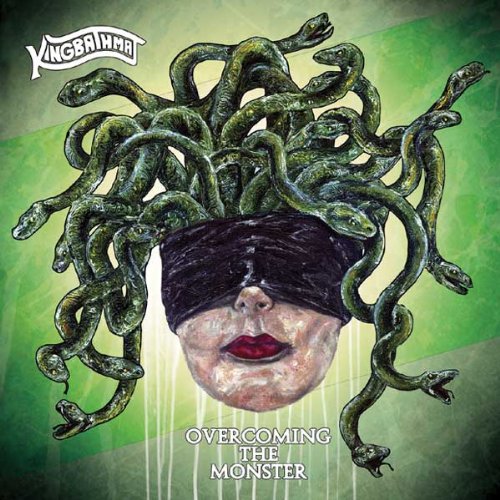
  • Kingbathmat “Kubrick Moon”
  • Leah “Northern Edge”
  • Neal Morse “Time Changer”
  • No-Man “Truenorth”
  • Nosound “Winter Will Come”
  • Oceansize “Trail of Fire”
  • Reasoning “A Musing Dream”
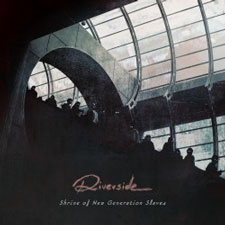
  • Riverside “Escalator Shrine”
  • Rush “Clockwork Angels”
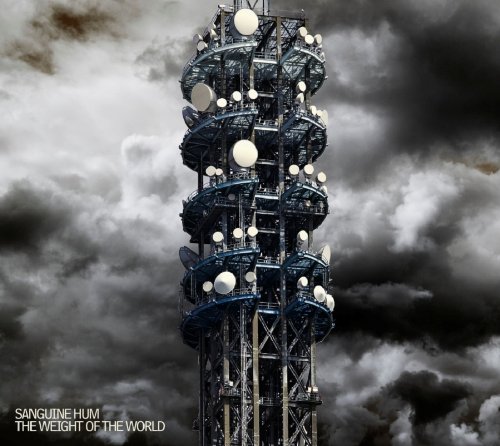
  • Sanguine Hum “The Trial”
  • The Tangent “Where are They Now” (Going Off the Two Version)
  • Tin Spirits “Broken”
  • Tori Amos “Battle of Trees”
  • 3RDegree “The Ones to Follow”

Pallas Crowdfunding!

A huge thanks to Geoff Banks for letting me know about this.  Very cool.

PallasPressRelease

The Magical, Versatile Mandolin

I like a variety of instrumentation in my music.  In addition to the usual guitar, bass, and drums, I’m quite fond of a variety of keyboards, enjoy orchestral arrangements added where appropriate, and on occasion, woodwinds and brass.  One of my favorite “unconventional” instruments is the mandolin.

However, the impetus for this piece is not itself the fact that I like the mandolin.  Rather, somewhere back in time I remember someone (I can’t remember exactly who) telling me the mandolin wasn’t a versatile instrument.  I balked at this assertion then, and I still do now.  Having a forum as I do here at Progarchy, I’m now going to debunk that assertion, using different pieces to demonstrate the versatility of this wonderful instrument.  While each of these songs feature the mandolin to one degree or another, by the time you have progressed from the beginning to the end of the list, you will have encountered several different musical styles that are markedly different from one another.  Despite that, I will have barely scratched the surface of the mandolin’s versatility.

So, let’s get to the list.

 Ian Anderson, Water Carrier

This song appears on Ian Anderson’s solo album ‘The Secret Language of Birds’.  As many know, Anderson’s main band, Jethro Tull, features the mandolin prominently on a number of songs (‘Fat Man’ is one of my favorites in that category).  This song features an uptempo mandolin front and center from start to finish.  Underneath though are some very prominent Middle Eastern motifs – not exactly the kind of music you initially think of when you think of the mandolin.  And yet, here it is, integrated perfectly.

 Led Zeppelin, The Battle of Evermore

This is one of two songs on Led Zeppelin IV featuring the mandolin (‘Going to California’ is the other).  Like our previous entry, this song has a somewhat mystical feel to it.  However, instead of the Middle Eastern influences, this piece is more folk-inspired.  Throw in Sandy Denny’s vocals, some Tolkein-esque lyrics, and you’ve got yourself a great song.

 Heart, Sylvan Song/Dream of the Archer

There are a number of songs by Heart that I like, but these two (or this one, depending on how you look at it) are by far my favorite.  This is basically one song divided into two parts each having its own title.  The first part is instrumental, the second part includes Ann Wilson’s incredible vocals.  This song remains somewhat within the realm of folk music as the previous entry, but has more of a “renaissance” feel to it, right down to the sounds of the forest at the beginning before the mandolin quietly makes its entry.  It’s quite different from our first two pieces on the list, and yet it’s probably not a stretch to say that it was influenced by ‘The Battle of Evermore’ … as witnessed by Heart’s performance of the same here.

 Drive-By Truckers, Bulldozers and Dirt

Now we make a big, big shift.  Geographically, we’re moving from the Pacific Northwest where Heart originated down to Northern Alabama, from where the Truckers originally hailed.  Genre-wise, some people call this band southern rock, others call it alt-country, and still others call it Americana.  Whatever you call it, it’s a great song.  Steel guitar appearing later in the song gives it a bit of a country feel, but the mandolin remains the dominant instrument.  The strong ties to its geographic region are evident throughout, as is the bright, upbeat tone.  From their album entitled ‘Pizza Deliverance’ (one of my favorite album titles of all time), this mandolin-driven song about what amounts to an overgrown kid that likes to play in the dirt is a gem.

 Black Oak Arkansas, Digging For Gold

Now we move from Alabama to Arkansas, and there isn’t much debate about whether or not Black Oak Arkansas or their music falls under the umbrella of Southern Rock.  The song begins with a chirping bird, an acoustic guitar, and a barking dog before Jim Dandy’s raspy voice makes an entry.  The mandolin enters at about the 0:51 mark and is persistent through the remainder of the song.  As a bit of unrelated trivia, lead vocalist Jim Dandy, he of the long, blonde locks and flamboyant presence was alleged to be the inspiration for the stage persona of David Lee Roth.  Watch any live video of these guys from the 70’s, and you’ll believe it.

 Led Zeppelin, Boogie with Stu

Now we’re taking another significant shift in musical style – from Southern rock to the blues.  Here Led Zeppelin brings us one of two blues songs from Physical Graffiti that utilize the mandolin, the other being Black Country Woman.  The mandolin is more persistent in the latter than in the song posted here (it doesn’t enter the picture until the 2:38 mark).  That’s beside the point though – in both cases, the mandolin – an instrument invented in Italy of all places – is being featured in blues songs, and fitting in as seamlessly as a harmonica.

 Arjen Anthony Luccassen, When I’m A Hundred Sixty Four

We started this list with one of the giants of the classical period of progressive rock, now we’ll end it with one of the giants of prog’s current renaissance.  Luccassen here gives us a nice little romp that includes the mandolin and acoustic guitar with some strong Celtic influences adding extra flavor.  This is a great song, possibly my favorite off of this album, ‘Lost in the New Real’, which is chock full of great songs.   And speaking of great songs, Luccassen pays homage to another song on this list by doing an excellent remake of ‘The Battle of Evermore’, which you can listen to here if you are so inclined.

So let’s recap the list a little bit here.  We started with music that had some strong Middle Eastern influences, moved to a couple of different folk songs, then took a journey down South with some Americana/Alt-Country/Southern rock, moved onto some blues, and finally to some full-blown progressive rock.  Quite a variety, and as I said predicted above, I’ve barely scratched the surface of different musical styles into which the mandolin can be easily integrated.  So does anyone still want to tell me that the mandolin is not a versatile instrument?  I didn’t think so … 🙂

My Top Favorite Fifteen Albums (from a decade ago)

As I was going through some files, I came across an annotated list of my top favorite albums of the rock era (that is, after 1955).  I broke the list into seven prog albums and eight non-prog albums.  Considering how much has changed in the last decade, my list would look quite different now.  Still, it’s fun to reminisce.  Enjoy.

[A quick addition, just to clarify.  Anyone who knows me, knows my first real love was and, to a great degree, remains Rush.  I intentionally left Rush out of this list, as it would’ve distorted it too much.–BjB, November 18, 2013]

My Top Seven Progressive Rock Albums (in no order after the first three)

Kevin McCormick, Squall (1999).  Some of the best music ever written—but tempered with very serious classical sensibilities and lacking the bombast present in even the best of progressive rock.  McCormick incorporates his profound poetry as lyrics.  Each word—and the way Kevin sings it—seemed utterly filled with Christian grace and conviction.  This is part two of trilogy (he’s working on number three).  And, it’s hard to listen to Squall without listening to its equally fine predecessor, With the Coming of Evening (1993).

Talk Talk, Colour of Spring (1986).  I could certainly regard this as either my top album of all time (though interchangeably with Squall and Spirit of Eden; depends on my mood), or close to it.  I couldn’t even count how many times I’ve listened to it.  I bought it on a whim—because I liked James Marsh’s cover.  My whim paid off, as it opened a whole new realm of music to me.  But, what’s not to like: impressionist 1950’s Jazz and 1960’s Stevie Winwood mixed with intensely Christian lyrics.

Talk Talk, Spirit of Eden (1988).  Every note and word is perfect.  Mark Hollis and Tim Friese-Greene spent 14 months in a church recording this album.  Hard to beat the 20+ minute opening to the album.  And, the lyrics—better than most hymns I hear in church, to be sure.  Side two even has a song with St. Ignatius of Loyola’s prayer asking for the grace to surrender one’s will to God.

Yes, Close to the Edge (1972).  Ok, I’m noticing a pattern as I write out these descriptions—this album, as I understand it, is about the Reformation.  Anderson and co. incorporate high-church Anglican music and choral arrangements as they sing about Christ the Word.

Genesis, Selling England by the Pound (1973).  Heavily influenced by the poetry T.S. Eliot, Peter Gabriel soars on this album.

Pink Floyd, Animals (1977).  Continuing the fantasy and science-fiction themes of their earlier albums, Roger Waters and David Gilmore seriously challenge the right of one human to exploit another in this George Orwell inspired album.

Flower Kings, Space Revolver (2000).   Lyrics range from weird to wacky, as does the music.  Pro-Christian themes abound, but placed within a rather Scandinavian pastoral setting.

My Top Seven non-Progressive Rock Albums (in no order)

Thomas Dolby, Golden Age of Wireless (1982).  This was my introduction to New Wave.  Wild arrangements and very Bradbury-esque lyrics.  It became my anthem during high school debate and forensics.

Sarah McLachlan, Fumbling Towards Ecstasy (1993).  I can’t explain why this album means so much to me, but it does.  I love McLachlan’s voice and use of organ.  And, this first album lacks the nasty anti-Christian and pro-feminist cant of her later work.  When I worked at the Organization of American Historians in graduate school, we would play this CD as we played Quake on the network (after business hours, of course).

Echo and the Bunnymen, Ocean Rain (1984).  Beautiful and bizarre—musically and lyrically.  Probably the most Doors’ inspired album of the New Wave movement.  While the lyrics don’t quite rival those of Morrissey (in the Smiths), the music surpasses anything Johnny Marr wrote.  A staple for me in college.  I’m just sorry that some of the lyrics are heretical.

Traffic, John Barleycorn Must Die (1970).  What can I say about Stevie Winwood, Jim Capaldi, and Chris Wood?  Jazz-rock with Anglo-Saxon folktales thrown in.  Lots of Traffic is excellent, but this surpasses all of their other albums.

Van Morrison, Astral Weeks.  Introspection without pure naval gazing.  And, no body writes better about the beginnings of love than Van Morrison.  Must be something in the Irish soul.  As I understand it, the album was done in one take with the jazz musicians being given the music when they entered the studio.  Perfect for a spring day.

The Cure, Disintegration (1990).  From the beginning to the end, a masterpiece.  Perfect pacing, and fascinating arrangements.  The Cure’s flaw is their tendency to write hyper, bouncy pop songs.  While Disintegration has a few of these, they remain tempered by the more serious, gothic moments on the album.  And, hey, the album begins with early medieval plainsong.

Radiohead, Kid A (2000).  Intense lyrics about the problems of post modernity and scientism.  Though Ok, Computer has better moments, Kid A has no real flaws.  The lyrics, however, remain unimportant, ultimately, as Thom Yorke’s voice serves as another instrument on the album.  The producer, Nigel Godrich, deserves credit for being an equal member of the band.  The opening track, “Everything in its right place” sums up the production.