

For those about to read, this is a summary of my visit to the Night of the Prog festival in Loreley, Germany on 13th and 14th July 2013. It’s quite long and is effectively in three parts…The Journey and Site; Day 1 and Day 2. I hope you enjoy it.
Introduction
Since I got back ‘into’ music about 10 years ago I’ve always had an urge to spread my wings, venture outside our ‘Green and Pleasant Land’ and travel to a European festival. The opportunity arose when I saw the initial line-up of Night of the Prog (8) and this was reinforced with the late addition of Amplifier (a personal favourite). The line-up announced was an unusual mix, with the classic Canterbury sound of Caravan sharing the stage with young post-rock upstarts Maybeshewill. The biggest name in Prog, Steve Wilson may have been headlining on Day 1 but we had Prog Death Metal giants Opeth from Sweden finishing proceedings on Day 2, preceded by metal specialist Devin Townsend. This interesting combination had, according to organiser Win, not helped with ticket sales. Certainly the festival was not replete with Classic Prog artists and for those who weren’t aware of the line-up, here it is:
Day 1 Day 2
Sanguine Hum Anima Mundi
Sound of Contact Maybeshewill
The Pineapple Thief Anglagard
Crippled Black Phoenix Amplifier
Magma Caravan
Steve Wilson The Devin Townsend Project
. Opeth
On day 1 we had the complex Prog sound of Sanguine Hum; the contemporary, slightly ‘commercial’ Sound of Contact; the power pop-prog of The Pineapple Thief; the ‘blended’ rock mix of CBP; Magma’s own unique ‘Zeul’ genre and the dark vision of Steve Wilson.
On day 2 Anima Mundi would kick things off with some symphonic prog; Maybeshewill would follow up with instrumental, guitar laden post-rock; Anglagard would make a rare appearance to grace us with their angular but beautifully haunting sound. Amplifier would rock us out with their heavy, spacey vision; Caravan would share their classic, playful Canterbury sound. I’m sure the DTP would try to blow our eardrums with his wall of sound metal and Opeth would hopefully surprise us with a curious mix of death metal growling (the old stuff) and the newer, more standard prog vibe.
To me a perfect mix with something for everyone. And for those ‘one dimensionauts’ (?) an opportunity to broaden their listening habits and possibly ‘acquire the taste’ for other genres.
The ‘Trip’
We left early on Friday 12th knowing the 475 mile trip would take most of the day. With all our victuals safely onboard my German car we arrived without incident at Folkestone to catch ‘Le Shuttle’. Why we were singled out for a drug inspection is beyond me. We were on a road trip, no other type. No drugs detected we safely embarked on the train and proceeded without incident to France. Trusting in Ms Sat Nav we drove through the flatlands of northern France and Belgium, passing Dunkirk and the fields of Flanders, the scene of so much carnage in two World Wars. Passing Brussels to the north and joining the A314, the Sat Nav perked up and said ‘Follow this road FOR A LONG WAY’. Yes indeed and we finally entered Germany. If I thought there was one country with a hassle free road system it would be this country famed for its efficiency. Unfortunately due to incessant road works and traffic jams we crawled into Koblenz. My co-driver was literally ‘Sleeping in Traffic’ as I listened to my favourite 35 minute track!
Everything in Germany appears big, large-scale. From the monstrous power stations we passed to the sheer scale of the river and other valleys spanned by hugely impressive engineering feats of construction. The countryside in this part of Germany is detritus fee and all the cars seem clean and new. There’s a sense of opulence. I lost count of how many large, black Mercedes passed us by effortlessly.
As we approached Koblenz the Sat Nav came into its own as we traversed a myriad of A and B roads until we found ourselves on the East bank of the Rhine (and that’s very important to get right travelling to Loreley). We climbed up the heights enveloping the river before the road bent down towards the river bank. A ten mile drive along the winding Rhine, resplendent in sunshine, we passed numerous charming villages at each bend.
Arriving at St Goarshausen, the village below the Loreley heights, we abruptly stopped and were ensnared in the ‘Muse’ traffic. The world-famous band was playing the venue that very night. There is only one way up to Loreley and we snaked our way up the steep road in a file of traffic and finally arrived at the world famous site at around 1900 hours. A long journey completed we were in definite need of succour.
The Campsite
The fact that we were only aware of Muse’s presence shortly before the event meant we didn’t have tickets and this was a major bummer. Muse gets a lot of bad press from Prog fans but I have a great admiration for them both as musicians and for their somewhat bombastic rock.
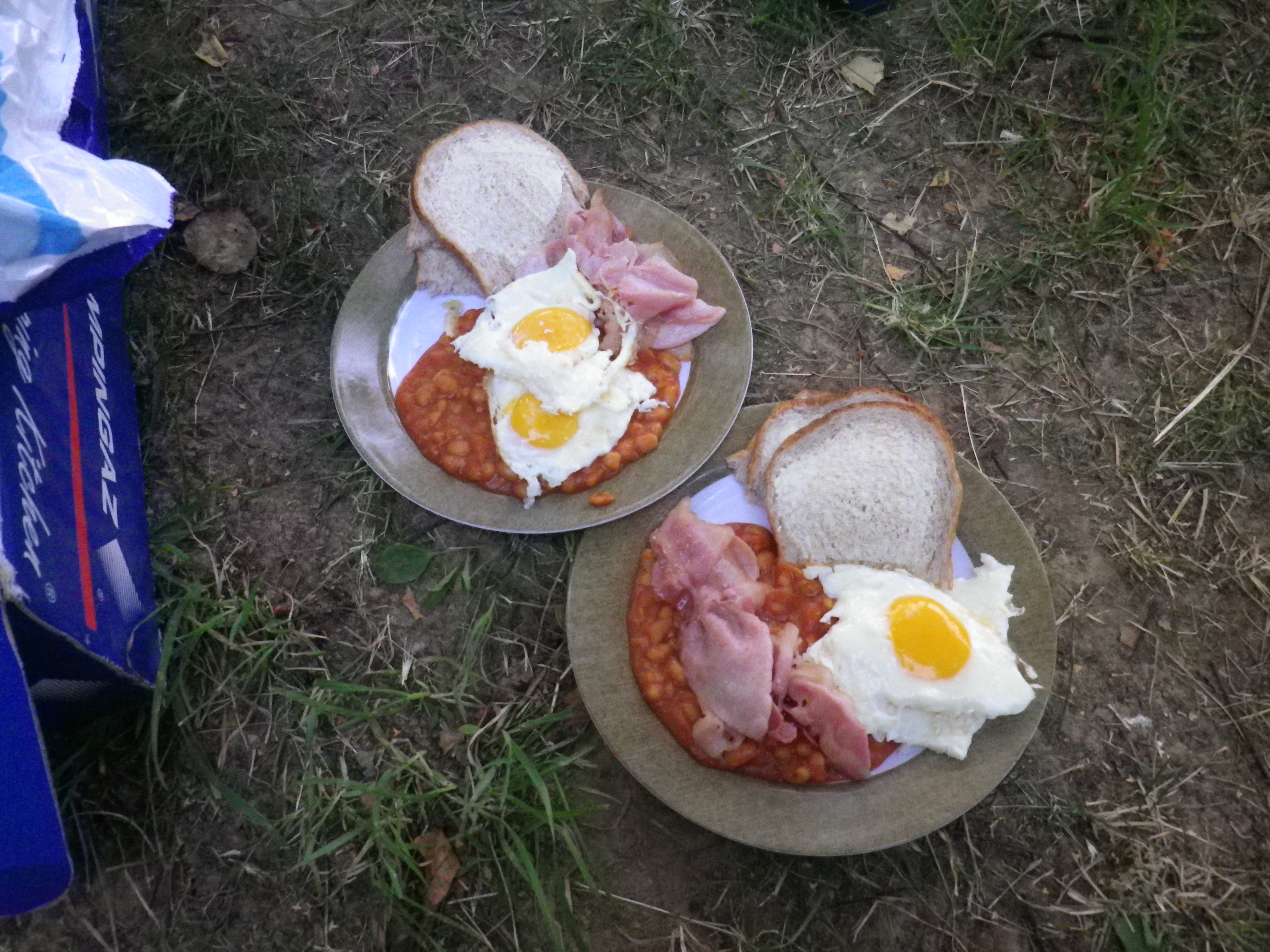
By the time we had erected our tent and had a bite to eat (a very late full English breakfast) the site had exploded into the shuddering power of Muse’s stadium rock.
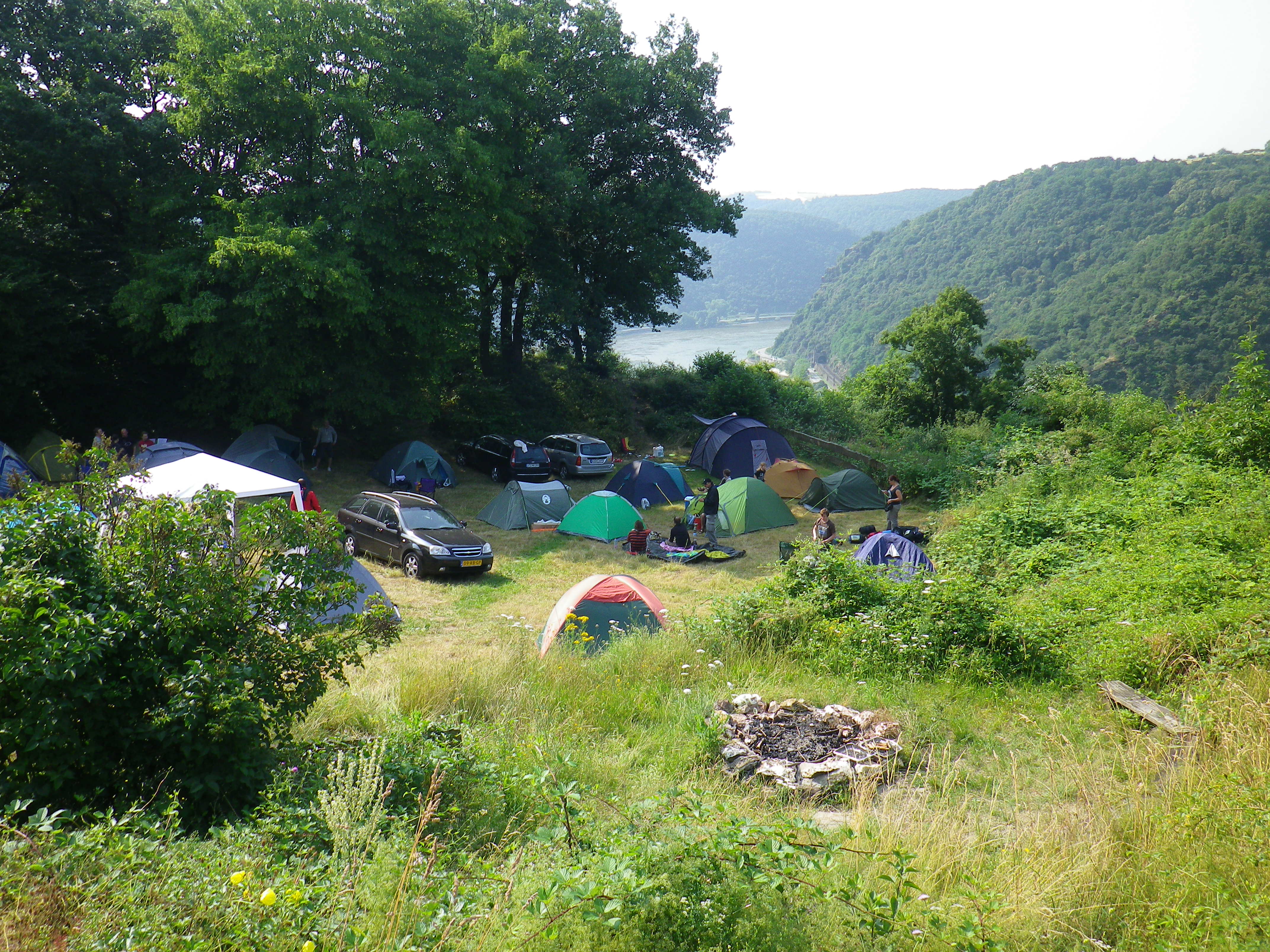
The campsite was only about 300 metres from the Amphitheatre and the acoustics are such that you almost feel you are sat watching with the paying fans. So we heard Muse perform a greatest hits collection, with a fantastic cover version of Man with a Harmonica from Sergio Leone’s Once Upon a Time in the West as an intro to Knights of Cydonia. Listening to this immense soundtrack to this classic Spaghetti Western is recommended.
Muse finished around 2300 hours and this was followed by chaotic scenes as cars, vans and tour buses tried to leave through the one narrow exit. Although I was tired, sleep was impossible so I texted Nic Dewulf, a fellow Big Big Train fan from Belgium, and we met up on the campsite. We had a good Prog chinwag with Nic and his friends. Nic is keeping the flag flying amongst the youth of today (he’s only 23…a prog babe in arms!).
The returning Muse fans were a little ‘wired’ and this coupled with Prog fans excited with the prospect of a superb weekend in glorious weather, led to a barmy late evening. However, somehow I managed to dose off only to be woken up to what seemed to be Symphonic Prog to the left of me and a Metalfest to the right of me. I have to say that in a masochistic way I enjoyed the surprisingly melodious power of a German baritone accompanied by two tenors singing an unrepeatable (i.e. very rude) chorus from a metal song I knew but just couldn’t place. Glorious stuff!
I eventually returned to slumber, awoke early at 0645 and had an early shower and shave. Generally I found the facilities pretty good at the campsite but there did seem to be a lack of toilet paper (always a camping essential) and there’s little room for modesty as the main shower block was unisex! A nice English cup of tea was imbibed followed by another as I seem to need a couple to get me going in the morning nowadays. This restored me to a semblance of health and my invigorated body felt capable of enjoying the Day 1 festivities.
The Loreley site
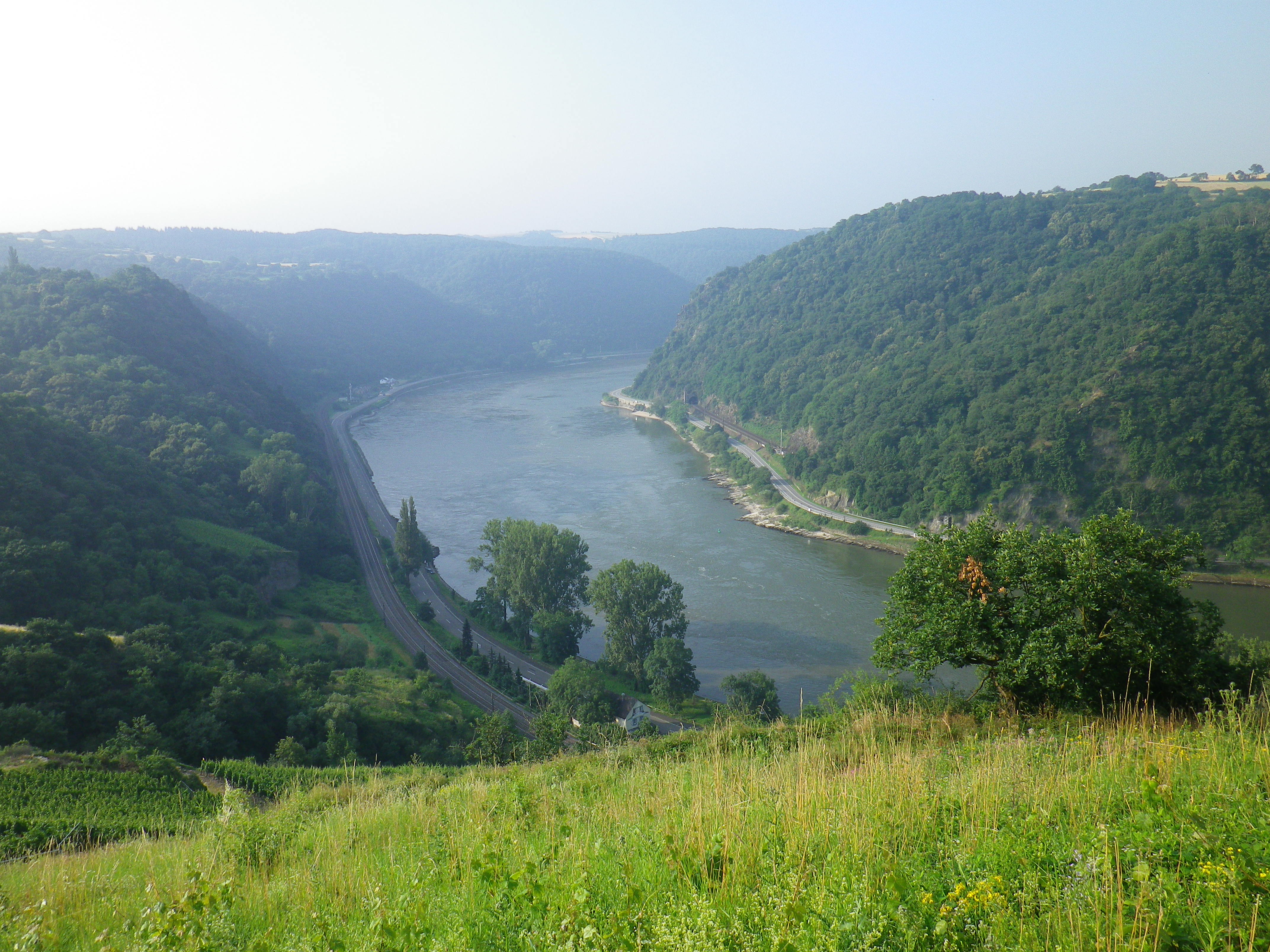
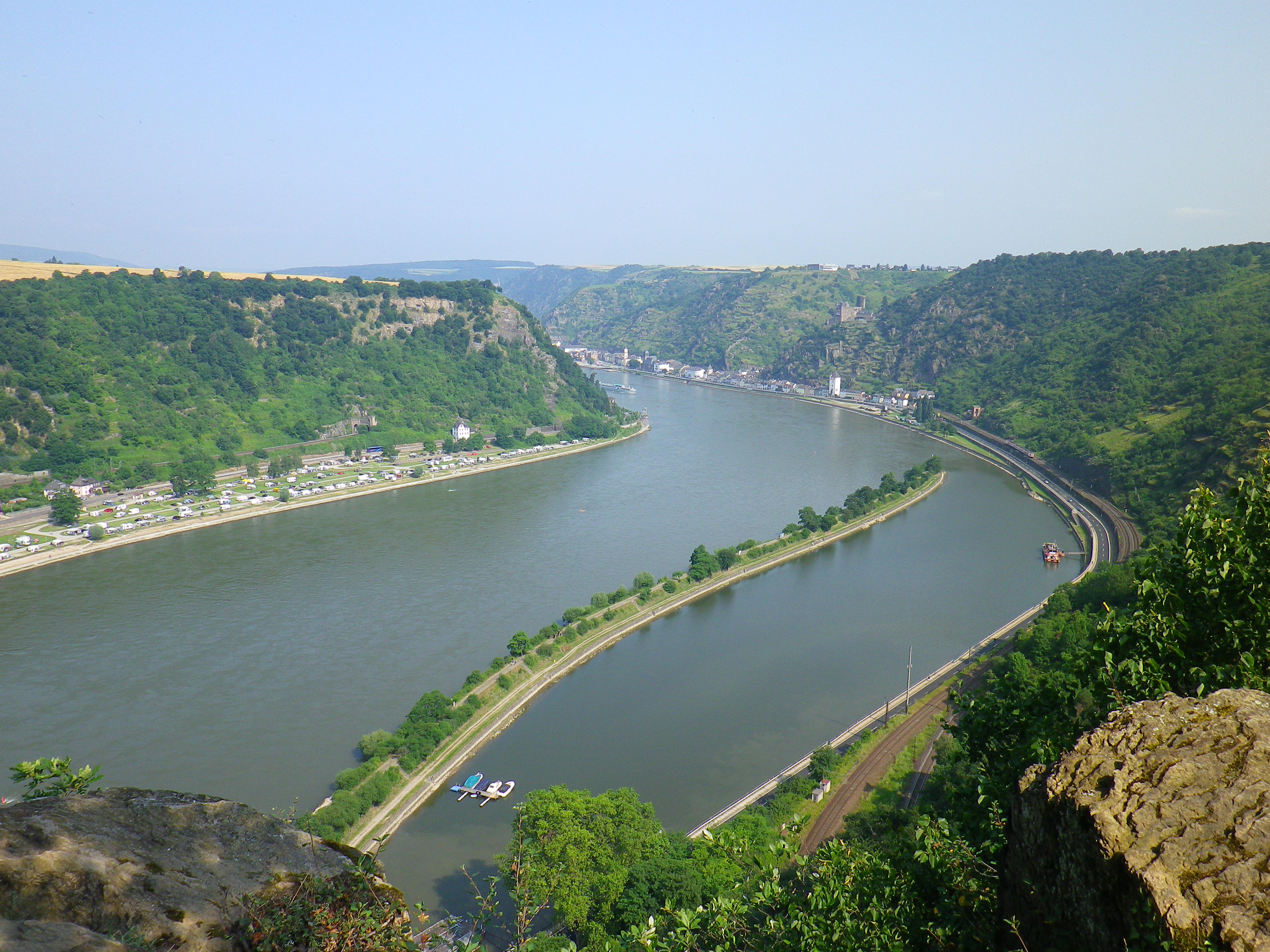
It was a beautiful morning and with proceedings not commencing until 1400 hours we decided to enjoy the world famous views. Loreley is part of a UNESCO World Heritage Site situated on the east bank of the Rhine at a sharp bend in the river. The natural cliff face is approximately 120 metres high and the sheer drop has little protection with only a few nominated viewpoints having railings. The campsite is literally on the edge of the cliff face.
The vista is stunning, clearly displaying the natural beauty of this part of the Rhine, which is a walkers’ paradise. Roads run along the edge of both sides of the river as the Rhine cuts through the natural gorge in the countryside. To the north there are beautiful views of picture postcard towns, villages and castles flanking the river. The river traffic is frequent with many huge long barges carrying various trade cargoes and sightseeing boats traversing their course. The river is fairly narrow at this point and navigation is difficult. I have attached some pictures but they cannot do justice to the impressive beauty of this area of the Rhine.
DAY 1 – The Bands
The venue itself was built in the 1930s as a Nazi ‘Thingplatze’ to host cultural events and can hold a maximum of 18,000 with 5,000 seats. Over the next two days the number of attendees was slightly disappointing with perhaps 3000-4000 people enjoying the music. From the back the Amphitheatre slopes quite steeply with the grassy banks offering shade for the weary festival goer. There were the usual official merchandise tents together with CD and vinyl stalls offering the best of European Prog music. Beer and even a cocktail tent provided refreshment. Food stalls mainly provided local cuisine with varieties of ‘Wurst’ on offer.
The stone, semi-circular seating provided both an excellent view and sore bottoms, with various innovative ways being used to provide a comfortable perch.
Sanguine Hum
First up were Sanguine Hum who have been receiving critical acclaim for their last two albums Diving Bell and The Weight of the World, the latter being played in its entirety (I think). This was the second time I have seen them and I would like to report I really like them but I’m still undecided! Their music is full of complex time signatures and lacks the sort of fluidity I like. Joff Winks’ vocals are light and a touch fragile at times. Technically demanding to play with intricate arrangements, it’s clever, inventive music that the band delivers with aplomb but whilst it’s interesting contemporary progressive music, it doesn’t press enough of my musical buttons…at the moment. I need to spend a little more time listening to their recordings, methinks.

In terms of the set, it’s always difficult being the first band and I felt they were slightly in awe of the surroundings. I think Joff Winks, who is obviously a modest chap, seemed almost apologetic to be on stage and could try to engage a bit more with the audience.
Sound of Contact
The brainchild of David Kerzner and Simon Collins (yes Phil is his dad!), Sound of Contact have been kicking up a bit of a storm with their new concept album, Dimensionaut. Once again, my second live listen, the band commenced with a short instrumental number and followed up with three tracks that I would consider almost ‘commercial’ in sound and structure (God forbid!). Simon Collins sounds very similar to his father, with similar looks and mannerisms to boot. A little AOR for my taste, particularly Pale Blue Dot, but nonetheless engaging. They finished with Mobius Slip, a classic long ‘proggy’ track with the middle section reminding me of Porcupine Tree in their heavier period. They are newcomers and I’m sure their sound will develop (and become more progressive?). They performed confidently live and were better than when I saw them at the Garage in London recently supporting Spocks Beard. Good luck to them on their extensive European and North American tour.
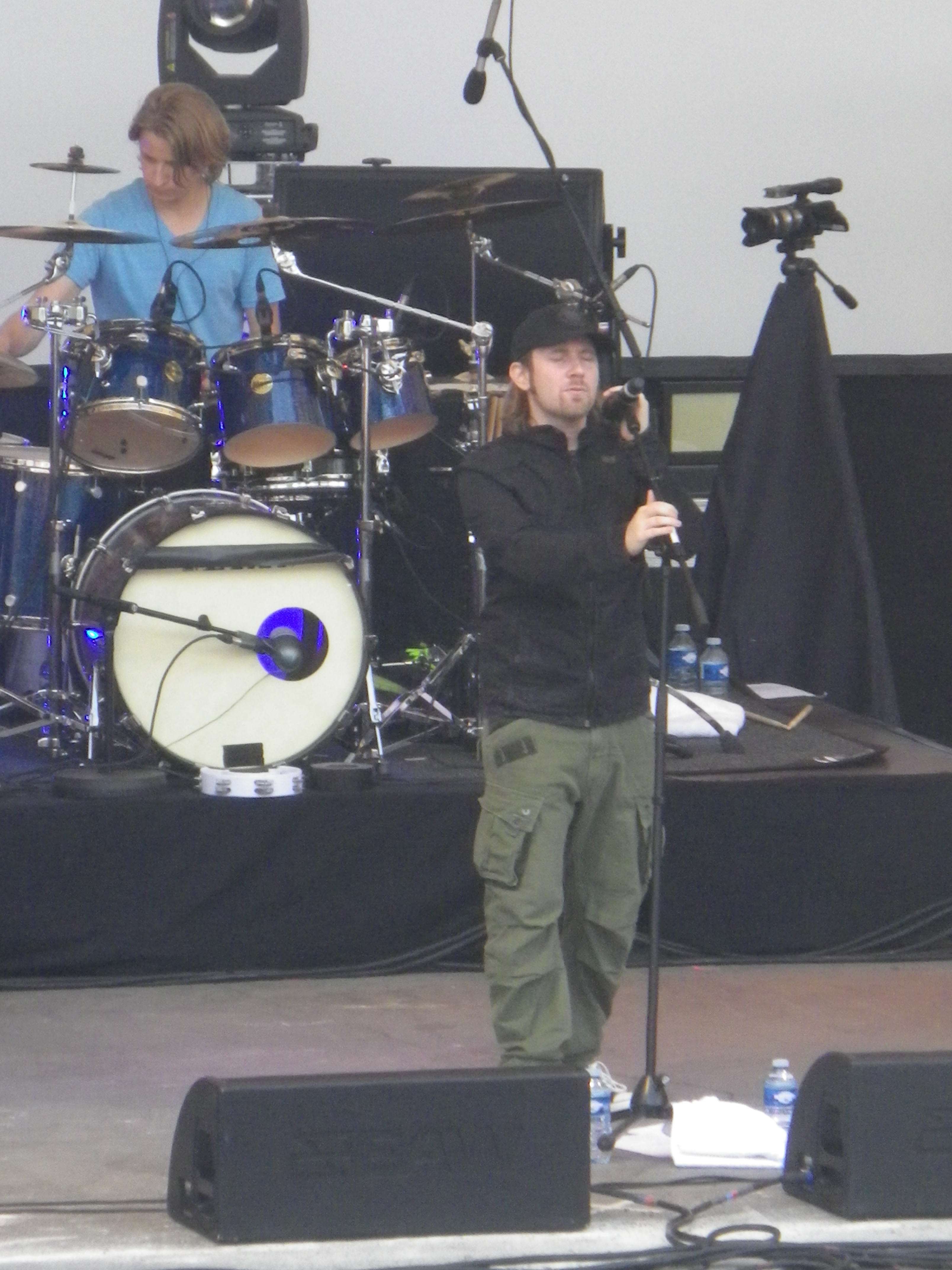
The Pineapple Thief
Third up was Bruce Soord’s vehicle, The Pineapple Thief, who were determined to add some more energy into proceedings. The crowd were, like me, beginning to flag in the heat. Bruce Soord has been around a long time and is beginning to receive the acclaim he deserves. I was interested to see how they would perform in a venue that for them was seriously large. I saw them last year at the tiny Barfly club in Camden and you could hardly swing a cat in there.
The latest output Someone Here is Missing and All the Wars is Prog-pop with simple repetitive riffs and this provided the bulk of the set. The band displayed a lot of energy on stage and the crowd responded with chorus singing, clapping in 6/8 time and some dodgy ‘swaying’ at times (or were these people hallucinating as the heat radiated off the stone seating!). I’m a great fan of TPTs output over the years and they delivered an invigorating set that revitalised me. A well deserved standing ovation and the first encore.

Crippled Black Phoenix
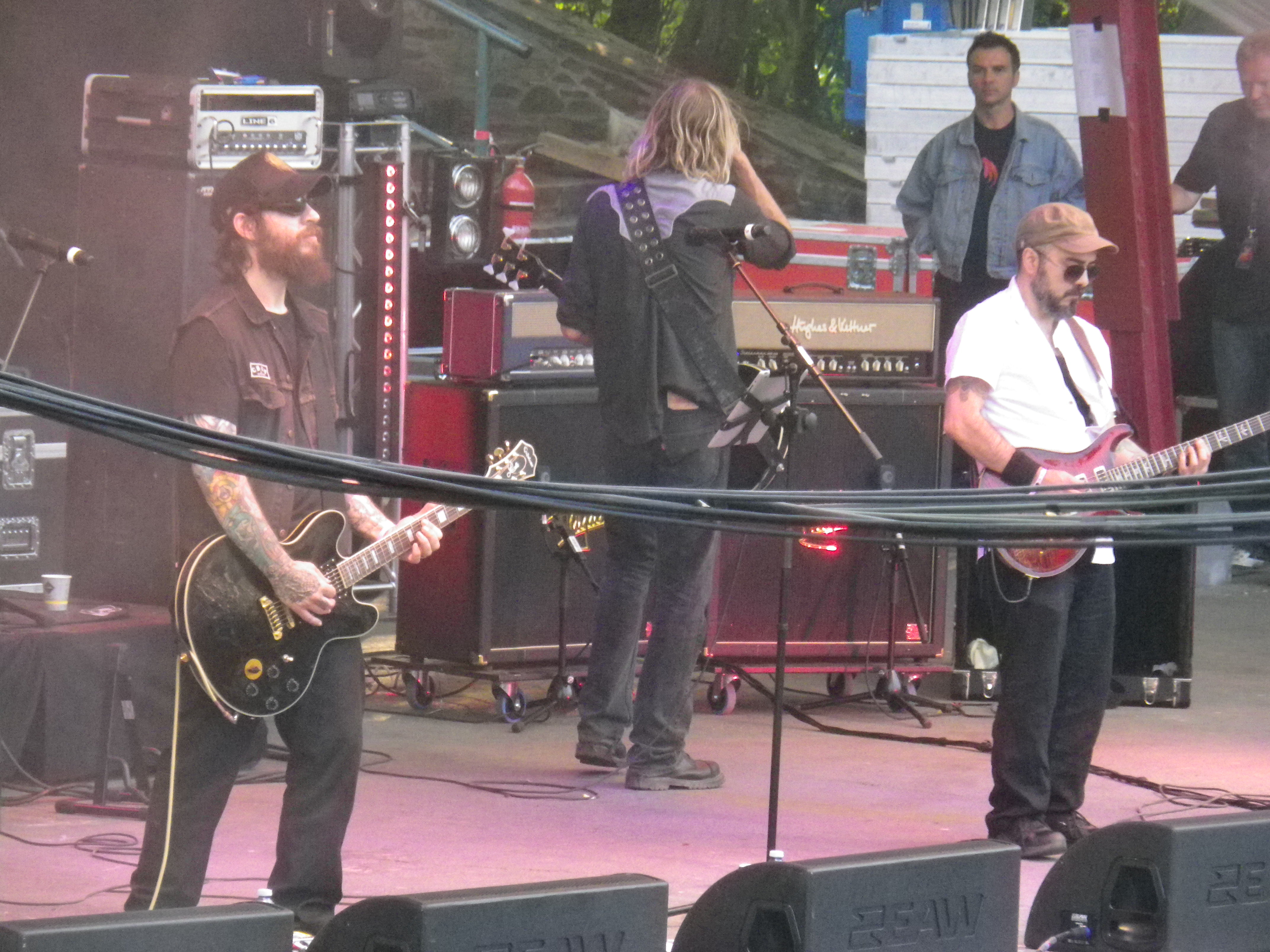
A sort of UK supergroup, CPB released their first album in 2006 and has gone through numerous line-up changes over the years. Their sound combines elements of heavy/blues based rock, post-rock and at times a ‘stoner’ sound and they mix instrumental only with standard verse, chorus tracks. I thought they were a little slow to get going at first but when they did they totally commanded the stage and produced a killer set. I particularly liked their cover of ‘Of a Lifetime’ by Journey but that was on the ‘softer’ side of things. I own a couple of their albums, one of which is quite mellow, but live, with the luxury of 7 members and notably 3 guitarists, they produced a much heavier, very powerful, almost ‘wall of sound’. It was slow, head-banging stuff to me. They finished incredibly strongly and literally rocked the amphitheatre down, receiving a prolonged standing ovation as they brought the set to a dramatic, stunning conclusion with the anthemic ‘Burnt Reynolds’. Definitely a band I would see again and one I recommend as a live act. I was so impressed I went to the ‘merch’ desk and bought one of their albums on vinyl.
Magma
Magma are the vision of Christian Vander and have been granted their own musical genre called ‘Zeuhl’ and sing in their own made-up language ‘Kobaian’. Heralding from the classic era of Prog in the 70s they sound absolutely nothing like their contemporaries. Magma deliver a truly unique musical sound, with a classical music structure, dominated by repetitive chanting. I was really looking forward to hearing them after being left intrigued by their classic ‘Mekanik Destruktiw Kommandoh’ (MDK) on vinyl recently (essential preparation I was told!). This album is part 1 of their cult sci-fi trilogy.
Let’s be honest here, the music is bizarre and you have to be a little bit weird, perhaps even insane to like this stuff. However as I can stomach, and at times like, acts such as Captain Beefhart, Zappa , Mr Bungle and The Residents I am probably ‘certified’ myself.
The set commenced with a track from a new but as yet unreleased album which was driven along nicely with a single pulse-like bass line and was even a little funky at times. Was Mr Vander going a bit soft in his old age? Certainly not, as the set took us into increasingly darker and bizarre territory, exposing us to tribal themes and culminated in the whole of MDK itself. The chanting, both unrelenting and severe, was delivered by three accomplished singers (one man, two women). It’s somewhat like Carmina Burana on drugs. The language itself sounds very Germanic and quite harsh to my ear. The music is multi-layered with a strong drum (at times tribal) and bass line throughout. Everything is quite repetitive, particularly the vocal chanting that as it increases in intensity has a hypnotic, even trance-like quality. At times I felt like a drug-induced disciple of Dionysus being whipped into a frenzied state of heightened self-awareness (it was NOT sexual ecstasy!) And, before you ask, I hadn’t imbibed in anything more than a few weak German beers.

One has to admire Mr Vander for maintaining his vision and there is no doubt that all the musicians are talented but it’s a difficult listen and comes over as quite awkward, even uncomfortable at times. If you haven’t heard Magma then I think it’s fair to say you will not have heard anything like it before…well I haven’t that’s for sure.
However, in a strangely masochistic way I actually enjoyed
it. I’ve always been intrigued by challenging music that break boundaries. It speaks volumes for Magma’s reputation that a lot of the other musicians (notably Steven Wilson and Opeth’s Mikael Akerfeldt) watched the set alongside the audience.
Steven Wilson
So we came to the headline act, the Prog God himself, Mr Steven Wilson, who was the main attraction to all the attendees I had spoken to. I had already seen the show in London earlier in the year and I know of no-one who wasn’t blown away by that evening, even some of the SW sceptics. The Raven That Refused To Sing is SW’s latest solo offering and he had assembled an array of amazing talent to support him (I won’t repeat them here). The new album shows that SW is quite willing to tinker with his previous winning formula as TRTRTS has a much more jazzy edge to it. I’m a great admirer of most of SW’s work from the early ‘psychedelic’ phase of Porcupine Tree through the ‘heavier’ years to the darker social commentary of his later work. I’m presuming most people at Loreley had not seen the show before. I was hoping for a little variation from the London set but there were only marginal changes. Basically he played the whole of TRTRTS and finished with the old Porcupine Tree favourite Radioactive Toy.
So how good was it? Technically it was almost flawless, like listening to CD quality on a high-spec hi-fi system. The show is a stunning audio and visual experience. The videos are superb, although rather unsettling, but that’s not surprising considering the album’s supernatural themes. But I was slightly disappointed with the lack of interaction with the crowd. The man himself delivered a few quips and witticisms but there was little ‘on-stage’ involvement from the rest of the band who just seemed to ‘get on with it’. There is no doubt in my mind that SW is a real ‘mover and shaker’ in the Prog world and his latest offering is a ‘tour de force’ (especially live). But for me the second offering was a little bit flat compared to my first experience. I like the uncertainties surrounding a live setting with the possibility of hearing a slightly different interpretation of songs but it seemed all very calculated to me. Having said this, the crowd absolutely loved it and they were right to do so.
A great finish to Day 1 with events closing at 1245 in the morning.
Day 2
Oh dear, that pork burger and spicy fries backfired on me the next morning. Even a quick walk, a caffeine fix and shower wouldn’t do the trick so I lay on my carry mat feeling a tad sorry for myself until gone 11am. With events commencing at midday on Sunday, 7 bands performing and a 2300 hours curfew, I shook myself out of my self-induced stupor and arrived shortly after Anima Mundi had started the festivities on day 2.
Anima Mundi
Now these guys (and gals) hail from Cuba and have being trawling a lonely furrow in their home country since for over ten years. I had purchased their latest CD titled ‘The Way’ following a taster on ‘The Prog Dog’ show, hosted by the incorrigible Geoff Banks and Jon Patrick. Anima Mundi means ‘spirit of the world’ and hailing from Cuba they evidenced the growing cosmopolitan reach of progressive music. A five piece with extra percussion and clarinet at times, they deliver a neo symphonic rock full of swathing synth and melody. They clearly loved having the opportunity to expose their craft to a wider audience and played with a refreshing passion and energy. I only recognised the last track, ‘Cosmic Man’ from ‘The Way’ but thoroughly enjoyed the whole set which was significantly heavier and rockier than I had heard on cd. A great start to the day.
Maybeshewill
I think a few eyebrows were raised when MSW were announced as an act as they are a young band delivering purely instrumental post-rock with some limited vocal sampling. Certainly their youthful looks and general attire appeared slightly out of place in the surroundings and, occasionally, they looked slightly uncomfortable. Their sound is quite straightforward with two guitars pounding out short, punchy power riffs and these dominate at the expense of the keyboards, although there were a few nice soft, usually ‘intro’, keyboard passages. Many of the riffs were very catchy, if a bit ‘samey’ and I found myself foot-tapping along. I’m a great post-rock fan with one of my favourite bands in any genre being Mogwai and I also get absorbed into the darker themes produced by Godspeed You! Black Emperor and This Will Destroy You.
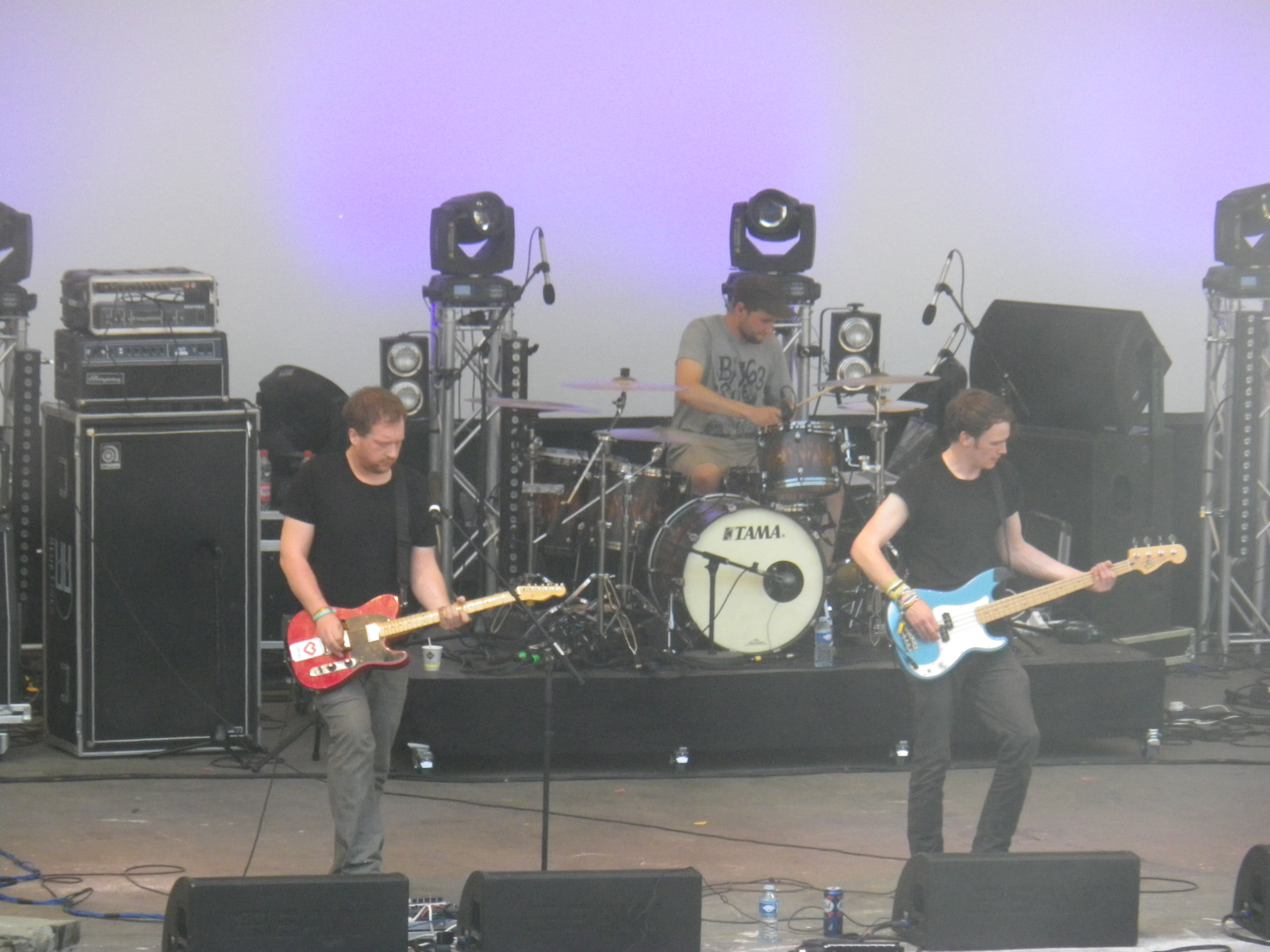
I felt that the crowd reaction, who did their best to warm to these youngsters put before them, was not helped by the polite but very taciturn nature of the lead singer. I know it’s the ‘done thing’ for youngsters to be a lit bit distant from the older generation (believe me – I have kids of 18 and 20) but music should, and indeed does, help to break down age barriers. So a piece of advice to the band, if I may be so bold… us old-timers are an accommodating, tolerant bunch and more engagement would help your performance and enhance our enjoyment. Overall , I’m glad they were invited as variety in festivals is important.
Anglagard
I think there was a huge expectation surrounding Anglagard’s appearance. Legendary in prog-circles, particularly in Scandinavia, a cult band who released two acclaimed albums in the early ‘90s before breaking up. A hugely long hiatus was broken with one of my favourite albums of last year, Viljans Oga.
Anglagard produce beautifully constructed pastoral yet angular music with an eerie, mystical feel, redolent of the deep, dark forests of their native Sweden, full of the supernatural.
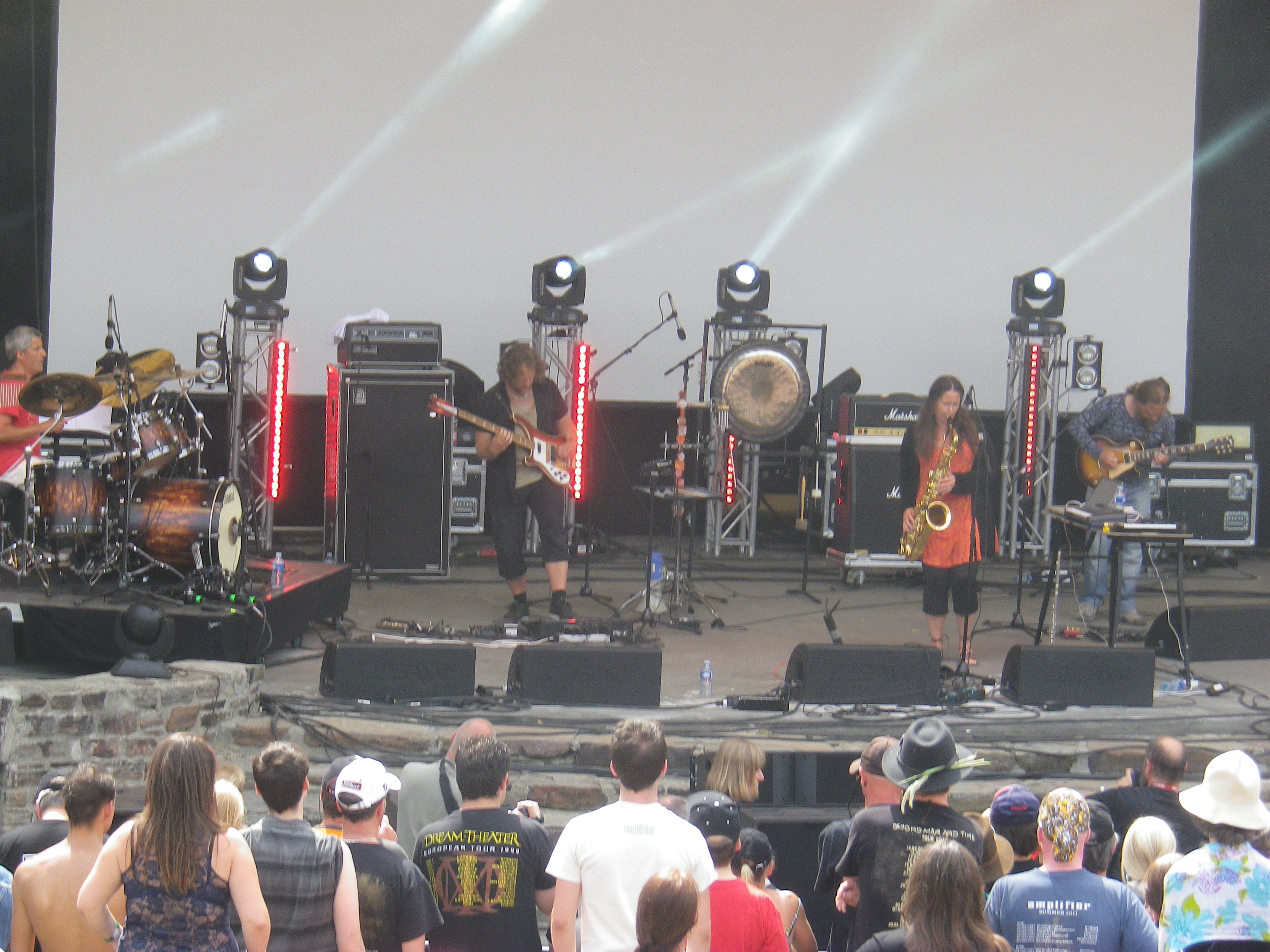
The band took a long time setting up and this was understandable considering the scarcity of their live performances. They opened with a specially arranged piece, typical of their canon. What a stark contrast between the complexity of Anglagard and the simplicity of Maybeshewill (and that’s not a criticism of ‘simple’).
The live performance lost none of the immense beauty of their haunting music. Truly sublime with excellent performances by all members of the band. The mesmeric flute playing was a highlight for me.
Amplifier
The creation of Sel Balamir, Amplifier are another band who have been around for a fair while and are now getting deserved attention. Their latest offering, the mellower ‘Echo Street’ has been nominated as Album of the Year in the Classic Prog Awards. The band came to my notice after they released (through their own endeavours after four years of hard toil) the two hour concept album, The Octopus, in 2011. The Octopus literally takes you on a trip ‘to another dimension’.
This was my fourth live gig in less than two years, so yes I like them! Amplifier gig extensively throughout Europe and are definitely more popular here than in the UK.
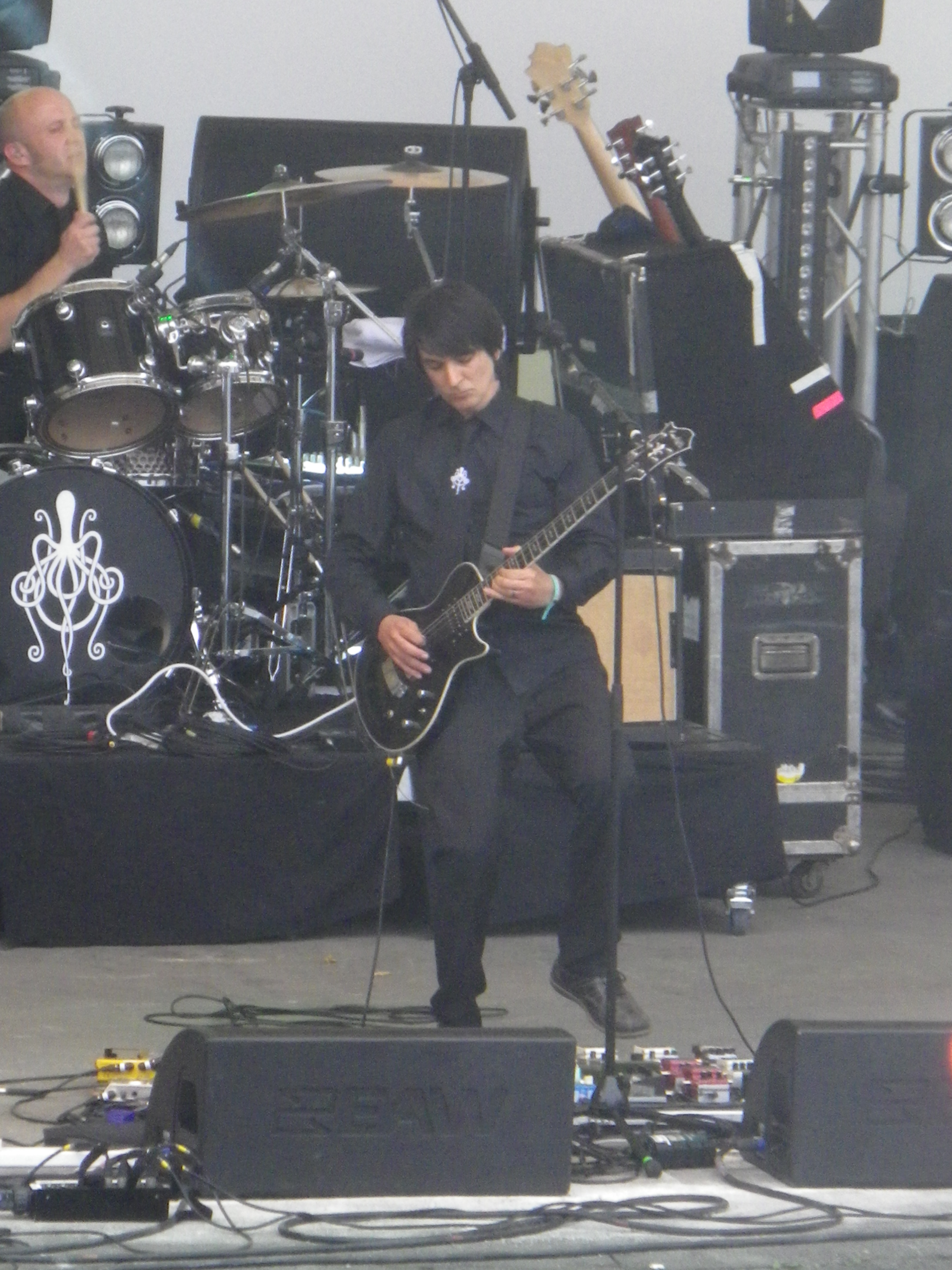
Amplifier deliver Space Rock full of heavy effects-laden guitar riffs and solos. What I’ve always liked about Amplifier’s sound is the heavy driving bass and rhythm guitar coupled with some intricate, subtle lead guitar. This combination produces a huge soundscape that fills my head in a spectacular way. However this is a difficult combination to crack when the volume of all instruments is set at LOUD. I’ve yet to hear them actually nail it totally in a live setting and a combination of sound problems, coupled with the introduction of a third guitar player and a bass on LOUD PLUS, totally drowned out all the subtlety. I’m not a fan of the third guitar and I’ve heard them better with only two. But who am I to judge.
They started with Spaceman from their recent Sunriders EP, followed by the brilliantly riffy, if slightly repetitive and overlong, The Wheel, from Echo Street. They continued with numerous fans’ favourites such as Interglacial Spell, The Wave and Interstellar (what a track that is!), all from The Octopus. As the festival was running behind schedule they had to foreshorten their appearance and finished with the anthemic Airborne from their eponymous first album. Amplifier always give it their all and are dedicated to all that is The Octopus (why always the black shirts and special logo ties?). I’m a stickler for sound so overall I was a bit disappointed but I recommend them live if you like your music at the heavier, spacey end of the prog spectrum.
Caravan
No sound problems for these old warriors of the Canterbury scene. It was pure plug and play. A greatest hits was delivered with classic tracks from For Girls who Grow Plump in the Night (Memory Lain, Hugh/Headloss, The Dog The Dog He’s At It Again) and from In The Land Of Grey and Pink we had Golf Girl and the classic Nine Feet Underground.
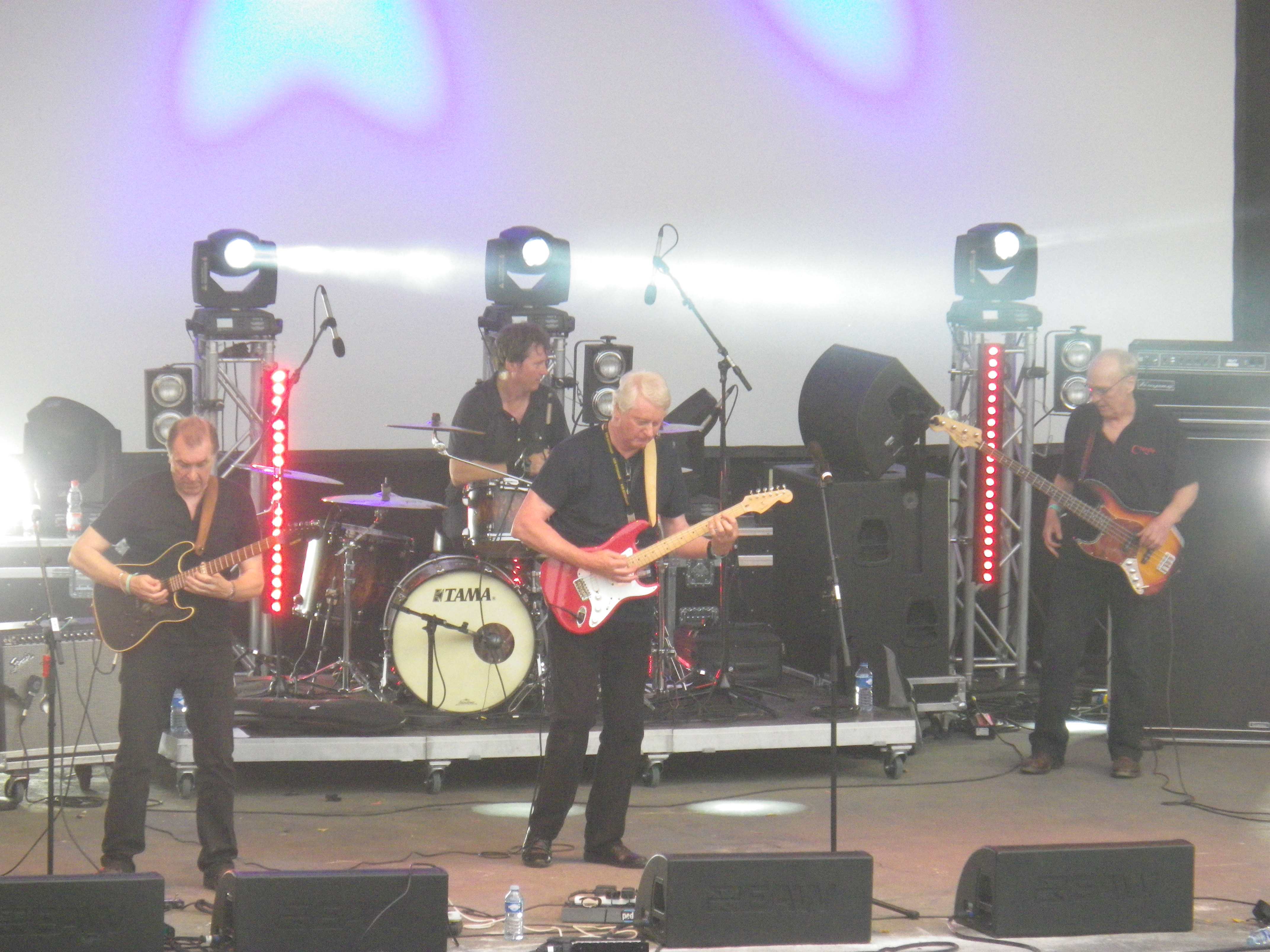
Consummate professionals, they know how to work an audience with plenty of witty banter and the entertainment included skilful playing of spoons and washboard! Always playful but with some clever social comment, I’m never sure whether to take them seriously and how can one with some of the most politically incorrect album and song titles ever put to paper. Ten out of ten; superb entertainment and the crowd loved them.
Devin Townsend Project
I know little or nothing about Mr Townsend and I missed part of the set to ’freshen up’ after another eight hours of hot sun, beer and loud music. When I returned I noticed the following:
- The band produced a huge sound for a three piece
- There was a cardboard cut-out of a band member on stage
- As a lead guitarist and vocalist, Devin Townsend didn’t seem to take himself too seriously and worked the crowd well.
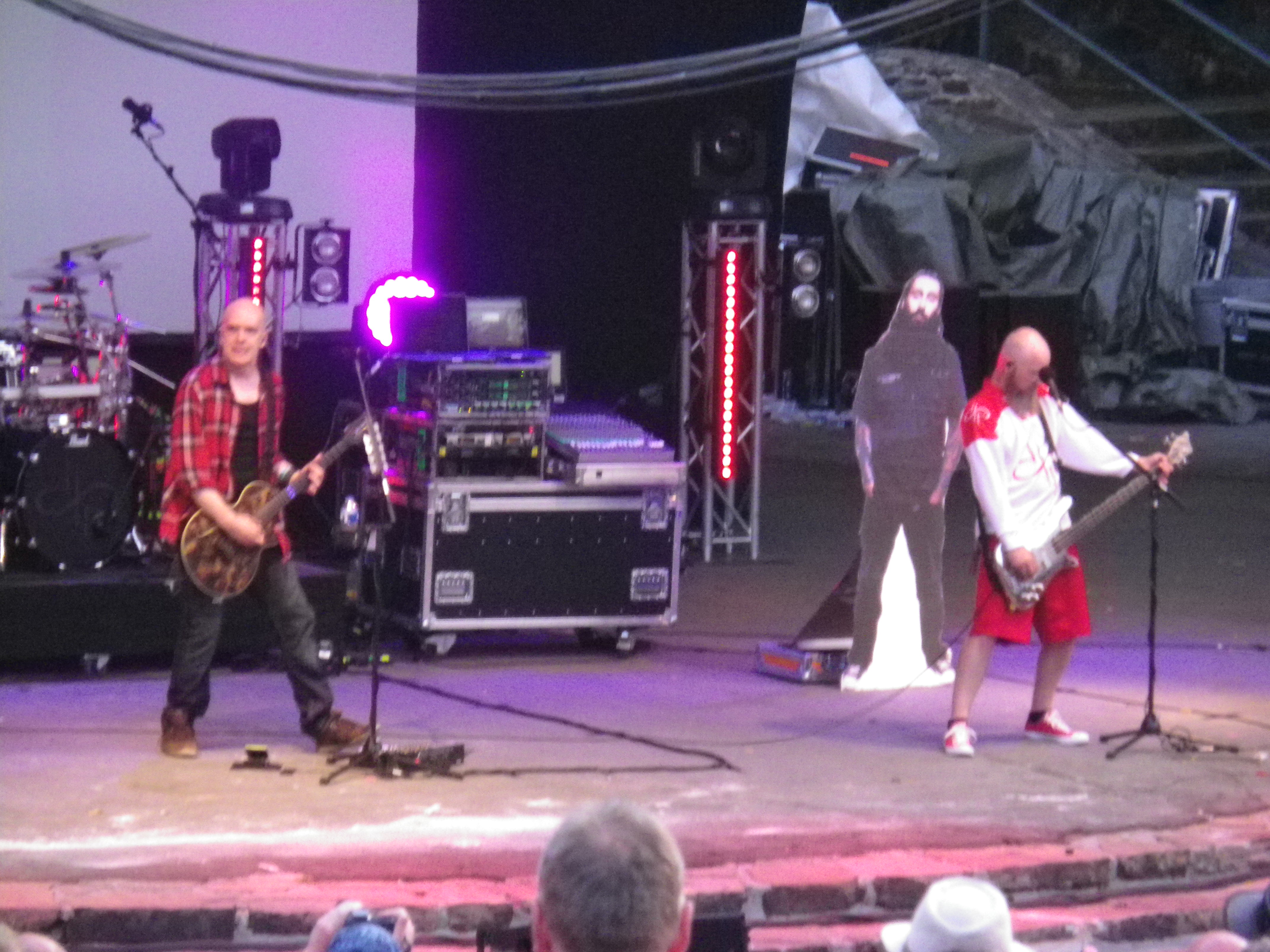
The sound was hard rock and metal; unfortunately the band were missing a guitarist (or was it a keyboard player?) and a huge amount of backing tapes were being used to the extent I didn’t know what was live and what was pre-recorded. Good fun but not really my cup of tea.
Opeth
To conclude proceedings we had Opeth. Now I like heavy rock but i’m not a death metal fan. I had been recommended the band’s last offering ‘Heritage’ which is a big departure for Opeth, leading them into more mainstream Prog territory (and apparently took a lot of their diehard fans well outside their comfort zone). Band leader Mikael Akerfeldt, on guitar and lead vocals was quick to point out that he understood that there were fans from both ‘camps’ and therefore the set would be a mix of old and new. So we could expect some death metal growling but no apologies would be offered. Mr Akerfeldt introduced each track with wit and intelligence and this was appreciated by all concerned.
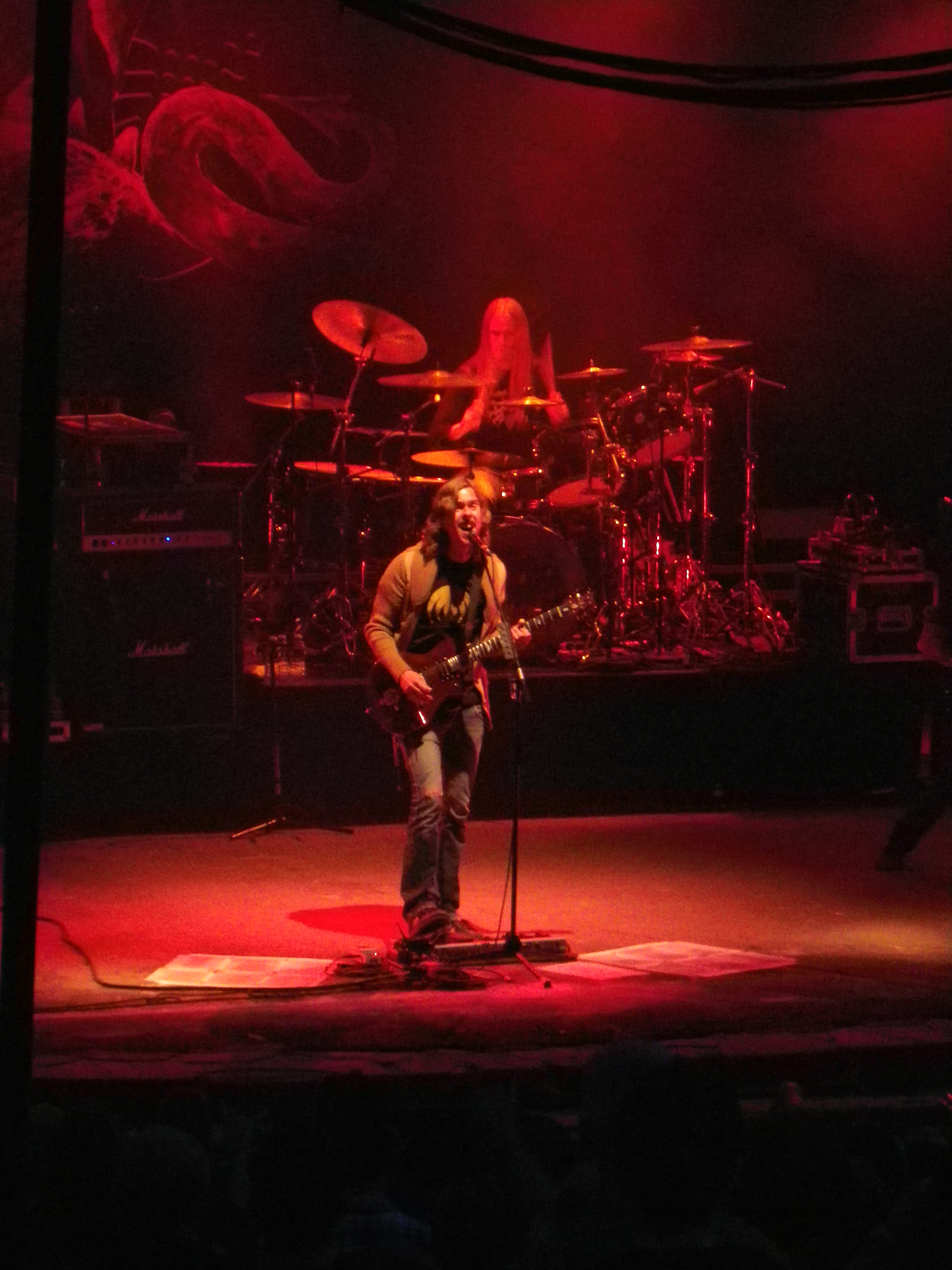
Starting with ‘The Devil’s Orchard’ from Heritage, an excellent track with a jazz fusion vibe but a dark edge, the tone was immediately changed as the band hammered out a classic death metal track from Ghost Reveries titled Ghost of Perdition. As the set continued I was intrigued by the juxtaposition of light and subtle with abrupt changes to intensely heavy within each death metal track. And it worked very well to my ears.
I was truly impressed with the quality of musicianship and the eclectic mix of death metal, prog rock, psychedelic and even folk music. Opeth delivered tracks with Oriental influences and Spanish guitar. And Mikael Akerfeldt has a tremendously versatile voice.
Opeth have obviously experimented throughout their career that spans over 20 years and 10 albums and the variety put together for this set was both inspirational and a triumph. I’m certain to re-visit some of their older stuff and would love a DVD of their performance to close Night of the Prog.
Final thoughts
So we came to the end of proceedings at 2300 hours on Sunday evening. Night of the Prog 8 had been a superb event, providing me with a perfect mix of old and new; heavy and light; simple and complex.
Highlights for me were numerous. Crippled Black Phoenix seemed infinitely better live than on cd. It was a privilege to see rare appearances from Magma and Anglagard. Witnessing the simplicity of Caravan in a world full of complex sound effects and large show pyrotechnics was refreshing. And finally the surprisingly enjoyable Opeth.
A huge thanks to Win for continuing to organise it. I doubt if any music festival is situated in such beautiful surroundings and the weather was perfect. Thanks also to Nigel Barham for being subtlety cajoled into accepting my invitation. And it was great to actually meet up with some Facebook friends in person.
Roll-on next year. If Win is reading this my request would be Big Big Train, Echolyn, Beardfish, Motorpsycho, Kraan and a re-formed Oceansize!
Here’s hoping 🙂
Oh, and finally a few tips if you are planning to go:-
Bring a cushion as those stone seats don’t half give one a sore a*se.
Take time out to view the stunning landscape
Ignore the rules about bringing food and drink into the event…food selection is limited and you need plenty of water AND ‘security’ seemed happy to allow stuff through.

 Progarchy