 I remember reading an interview with Peter Buck sometime in the late 1980s, right as R.E.M. was beginning to peak, in which he insisted it was much harder to write/play slow ballad-y songs than fast pop songs. A greater risk of dead space, more chances for messing up a tempo, less reliance on a two- or three-note riff. I thought it was funny at the time, because I was trying to learn guitar (an instrument that confounds me to this day) and thought, shit, I can’t do anything BUT slow. As I’ve thought about it over the years, though, and as I have put my mind to writing my own songs, I think what Buck was saying is that in the wider genre of guitar-based rock and roll, slower songs tend to be far more reliant on a vocal melody and therefore also the words, that is, real songcraft. And real songcraft, in performance, can’t be successful if you sound like you’re rushing it or that you’re trying too hard. Go listen to John Prine. Spin up Joe Henry. There is a lean restraint, a kind of patient heart.
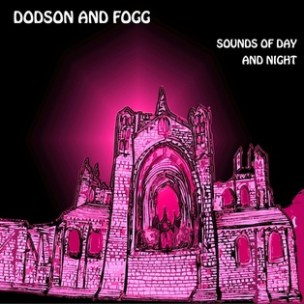
I thought again about what Buck said as I listened to the mid-tempo pleasures afforded by Sounds of Day and Night, Dodson and Fogg’s third record. The band is a project of Chris Wade, an independent artist whose second record, Derring Do, I reviewed on Progarchy earlier this year (https://progarchy.com/2013/02/10/steamfolk-the-derring-do-of-dodson-and-fogg/). Wade’s Dodson and Fogg intentionally visited early 70s British folk rock on the first two records, even drafting in bona fide players from the period to help out. The surprising thing was that a young man, working in his home studio, could so effectively evoke that period while making original music so distinctively his own. While Dodson and Fogg continues to explore these roots on Sounds of Day and Night, the new album is a more relaxed and natural, less finessed effort that may have as much in common with Iron and Wine, Devendra Banhart, and modern American/Scots/Irish singer-songwriters, as with a romanticized past inhabited by shades of Drake, Thompson, and Denny. Over the course of a year in which Wade has released three Dodson and Fogg records, his music has become increasingly limber. A mandolin picker/oldtime musician/RT-loving friend of mine describes this phenomenon as the difference between learning the song and knowing the song. I think Chris Wade increasingly knows his songs, and it’s showing.
The new album is bookended by instrumentals, parts 1 and 2 of the title track, which are only distantly related, one being an entrance and the other the door out. I have a soft spot for this approach, something not many singer-songwriters are comfortable with, and for the melodies Wade works. The outro also features a sitar, which, given the slow trajectory of the record towards the acoustic psychedelia of “Clocking Off,” makes a certain Harrison-esque sense. These instrumentals set the tone for the production of the record, which, like Derring Do before it, evokes a balance of the pastoral and the urban, with acoustic guitars to the fore but electrics winding their way down the lanes, atop smart, spare, brushy drumming. With woodwinds and brass appearing here and there, Sounds of Day and Night offers a classic folk rock listening experience within a newer framework suggesting the airier approach of the solo work of Sam Prekop or Archer Prewitt (both of Chicago’s The Sea and Cake), or the Kingsbury Manx (https://progarchy.com/tag/kingsbury-manx/). Like most great music that inhabits a cultural continuum, there are subtle hints and quotes along the way, a bass out of Green Day (“Sounds of Day and Night”), a keyboard out of the Doors (“Night Train”), and a British vibe that resists pinpointing but steers more towards the Kinks than Donovan. I think the feel of the album is best encapsulated on “Hear It In The Morning Still,” a medium tempo drift, with nice vocal hook, that builds to a relaxed electric crescendo and gently rides out with a pretty groovy trumpet.
Sounds of Day and Night is an easy record to like. It shows an independent artist building his own catalogue using his own steam, on his own schedule, doing what he wants to do without hindrance (or help, it should be noted) from a record or management company. Chris Wade is on a progress, a trajectory that I don’t think has peaked, even with three increasingly strong albums behind him. (I think he’s still finding confidence in his very capable voice — his tendency to double track his vocal is rarely necessary. Plus I’d like to hear this music live with a band, because his songs have evolved into vehicles that could sustain jamming live). But this band is in a good place: with two solid albums behind it and the current record outdoing its predecessors, Dodson and Fogg is a musican/band/project demanding attention.
I asked Chris about the new album, recording on his own, and Dodson and Fogg’s growing reputation.
Sounds of Day and Night followed closely on the heels of Derring Do — tell us about its evolution.
Well I had started this new album right after I had finished Derring Do in January I believe. With me working at home like this, I am free to go into the office and put ideas down everyday if I feel like it, so there’s no set dates for writing and recording. This album just came together over January/ February to June, more songs came, others went that weren’t really up to scratch. Also I had left them for a couple of months and gone back, listened again and decided what else needed putting in. It was a really satisfying process for this album. I really enjoyed piecing it together.
Although trumpeter Colin Jones is present, the rest of this record is just you (or is it? are you drumming?). Did this have an effect on your songwriting?
Actually it was the same because all these songs are written on an acoustic with my vocal, then I add bits and pieces in, and I usually sent them off to Celia Humphris (singer from folk rock band Trees) and the others and they normally choose which ones they fancy doing, Celia mostly. She picked them out on Derring Do and then sent them back to me when she had some ideas, which were always brilliant. This time I did send them off to her but she was quite busy and preoccupied with other things, which is cool, just a shame. Some of the other contributors that were lined up to appear didn’t really work out, so I decided to do more instrumentation myself. The light drumming is me also, but I’m not a massive drum fan so I kept it quiet and subtle, little taps and ride cymbals. I like that kind of percussion sound, and bongos, tambourines, things like that to accompany a song without blasting away all over it. Learned a bit more on the flute and used more keyboards to broaden the sound a bit. And also I had been ready to release it for a while, and didn’t fancy waiting around for longer. I like to get these albums out, and because people who are getting into the records know another one will be coming along soon, they are all ready for a new record. It’s cool getting to a stage where I know there are a loyal selection of people who are going to be interested in listening to my music, getting what I am doing and knowing what to expect to a certain degree. It’s bloody brilliant actually.
I feel like Sounds of Day and Night, while it still shows an influence of classic, early 70s British folk rock, has a more contemporary feel than Derring Do. A lot more free flowing, perhaps a deeper psychedelic strain happening. What do you think?
I think you could be right, especially about the free psychedelic elements. This must be because I handled all the instruments and was just having fun playing some weirder stuff on certain instruments, doing whatever came into my head. There were melodies coming up all the time and I was adapting them to different instruments and building full songs out of little bits of melody. It was an addictive experience, spending a day drinking coffee and shutting myself in the office all day. But there was no conscious decision at all, this was all just straight out, but it’s my personal favourite of the three records I have made so far. I also think the production is better on the new one, the mixing and the quality of it. I am very proud of the cover art that my girlfriend Linzi Napier has done. Her first exhibition is in July at Otley Togs Gallery, and the piece from this album cover is set to be the one on the main advertising banner outside the venue. Really exciting and very proud of her!
Derring Do got some attention in the British music press. How do you feel about the album’s reception?
I was overwhelmed by the reactions to it. There are publications like the CRS, a chap called James R Turner reviews my things for them and he is really complimentary to my music and a site called Pennyblack Music has a writer named Malcolm Carter and he has said some very kind things about Dodson and Fogg and he really loved Derring Do. Also Brian Watson on DPRP gave it a glowing review. For me it’s so rewarding to see how other people view my songs and how they have taken them seriously, to see what they got out of them. I like people who really get music, understand what you were doing. But I still am really surprised by all the positive reviews. I knew I had made a good album though, otherwise I wouldn’t have dared release it three months after the debut, but still I was overwhelmed by some of the comments.
What are you listening too lately?
Lately I’ve been listening to Caravan a lot, a band called Skin Alley (one of their members, Ksrysztof, played accordion on my first album), Jethro Tull, especially the Thick as a Brick album, Beatles, Black Sabbath’s Sabbath Bloody Sabbath album (one of my favourites since I was about 9) and also some Tom Petty.
Are you performing live?
Not yet no. I haven’t managed to get any like minded musicians from Leeds together for shows and I definitely don’t really want to do a solo acoustic gig, There’s too much stuff on the albums that adds character that I think a solo acoustic thing would be dull. I’d probably fall asleep on stage. But I do want to get a band together for shows one day because people keep asking me if I am playing live soon.
Last time we talked to you, we asked you about the business of getting to listeners, as an independent musician who records and markets his own music. Have your thoughts on this changed much at all? Any label interest since the release of Derring Do?
I’ve had no label interest because I don’t think it is too common these days. An obscure cult band like this isn’t going to attract a big label and the genres people tag on it like prog folk and acid folk, don’t make it sound very commercial, not that i am interested at all in being commercial but you know what I mean. Besides I love doing it myself, all the business and promo side as well, and setting up distribution deals for abroad and sending the discs all over the place to those familiar names, it’s like living a dream, I love it. I think if someone else was in charge of my artwork, my royalties, my PRS, the promotional side, I would be a bit nervous. I like to have it all in front of me. I’ve recently discovered a band called The Tangent, when I met the band leader Andy Tillison and his partner Sally Collyer at an art gallery and got on with them. I think he is great to his fans and he and Sally have a great relationship with them, and look how big that band is. Their new record has been a massive event to many people all over the world, so you can only admire them both. I think a lot of artists could learn from that approach. People are parting with money to get your music, which is an honour, so I always email back and forth with people who are buying my albums, and have a laugh with them, because being friendly and open is so much better, and more fun, than being up your own bottom and unapproachable. Saying that, I’m not well known at all so maybe I see it from a different side than to someone who is famous.
It’s been less than six months since I reviewed Derring Do. Can I expect another one in October? What’s next for you?
Definitely not October, haha. I’d be knackered. Got to get some fresh air and not breathe in jostick fumes all day… for a while at least. I think that will be it for the year, I want to take a little break from recording, get some fresh ideas and take a step back. I’ve got loads more ideas, some of them are acoustic like the first album, and some are more of a full band sound. But I want to take my time as well, get Celia back in for the next one and hopefully some other guests. Next up will be another Dodson and Fogg album, and the first album is also getting a vinyl release by a US company which I am excited about. It’s been a dream all my life to have an album on vinyl and I can’t believe I’ll be getting it. I am basically just loving this music project. I have done other stuff, audiobooks and non fiction books, but i have never had a reaction like this. it’s always moving forward and is so positive.
Is there a link to a sample/YouTube vid for readers?
This is my youtube channel: http://www.youtube.com/user/sofaguard
There’s some free tracks up there from each of the 3 albums and a couple of videos too, one starring my father in law as odd ball cretin roaming through the woods.
[Also check out Dodson and Fogg’s webpage: http://wisdomtwinsbooks.weebly.com/dodson-and-fogg.html]



 Considering castration, a certain strange displacement occurred. It didn’t really strike me until after writing the fifth look, but it was indeed a displacement, and as I think about it since, it seems stranger and stranger. Death is what is displaced, and the reason why its displacement is so strange is because it is normally simultaneously final and transitional.
 Here is a figure of death unlike the skeletal Death of Tarot, or the darkly robed Grim Reaper. This guy sounds like someone you might like to get to know, or perhaps someone who would like to get to know you. Think of Joe Black (Brad Pitt). Or think of the bubbly and alluring Death of the Endless, from Neil Gaiman’s Sandman series. This may be the better association, as “Anyway” voices the expectation that “she” is supposed to be riding a pale horse. The anaesthetist merely “puffs,” presumably delivering a gaseous sort of sleep-inducing substance. And dancing? Why would he be a fine dancer? Perhaps because (as in The Sandman) the delivery, though dark, is welcome and pleasant.
 Is it even clear whose death has this unassuming harbinger? Of course, the most natural reading is that it’s Rael’s death. But the real death that soon follows is that of the Lamia. I’m reminded of the Tarot reading at the end of The Gunslinger, the first volume of Stephen King’s The Dark Tower, when the man in black draws that ominous card and speaks to Roland:
 This may be no more than the obverse of the previous look. I’ve urged you to listen to the ways in which the (in)scisions mark the liminal sites, the thresholds. The cutting is so much more significant, more to be feared than death. Death dances, and nonchalantly puffs.


 Progarchy