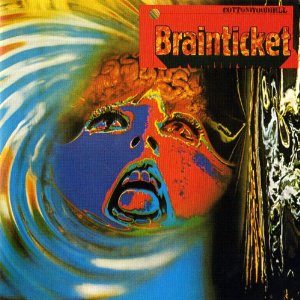
Cottonwoodhill by Brainticket

ImageBrainticket’s Cottonwoodhill (1971) has been re-released again, this time by Cleopatra, that venerable house of psych and goth back-catalogues.  Roughly lumped in with German rock of the period, Cottonwoodhill was one of the many ambitious brainchildren of Joel Vandroogenbroeck, the Swiss musical polymath behind Brainticket who later went on to create music libraries for TV and film. (Knowing this, Cottonwoodhill makes a lot of sense, its jazz-funk amalgam suggesting less the communal freakouts of its European contemporaries as the soundtrack to Bullitt or Dirty Harry, where Hollywood finally caught on that something weird was happening in San Francisco but couldn’t bring itself to actually use a ballroom jam to back up the car chases or bar scenes.)

When I first heard Cottonwoodhill in the mid-90s, it struck me then as it does again now:  a very pleasant, well-produced, rhythmically cohesive psychedelic jam, heavy on the organ, with some trippy spoken word passages by Dawn Muir, who intones in a posh English accent, suggestive to me of the White Witch out of C.S. Lewis, the impressions of a woman seriously stoned out and orgasming.  So where Brainticket’s contemporaries, like Amon Duul and Tangerine Dream, pushed their music to live outside of their own era, Brainticket’s music solidly inhabits early 70s European psychedelia, more akin to Out of Focus or Krokodil.  With some interesting polyrhythms running underneath and a kitchen-sink approach to layering found sounds and treated tracks, there is an argument here for seeing Vandroogenbroeck as divining a thread or two of Eno/Byrne’s My Life in the Bush of Ghosts.  But that’s perhaps a bit optimistic and trying too hard to bring a different respectability to what is, in the end, a really fine example of art gallery soundtracking of the late 60s and early 70s (something documented most effectively on Virgin Records three-CD Unknown Deutschland/Krautrock Archive), which is where Brainticket probably really belongs.  Still, I think it’s appropriate to think of Vandroogenbroeck as being in the same group of individualists, including Chris Karrer, Christian Burchard, Hans Joachim Roedelius, Florian Fricke, and Klaus Schulze,  who drove “krautrock” forward with no consideration of worldly reward.

Get thee to an excellent 2012 interview with Joel Vandroogenbroeck:

http://www.redbullmusicacademy.com/magazine/joel-vandroogenbroeck-interview
Prog-Bluegrass

ChessBoxer’s jazz/rock/bluegrass rocks the Belcourte Theater:

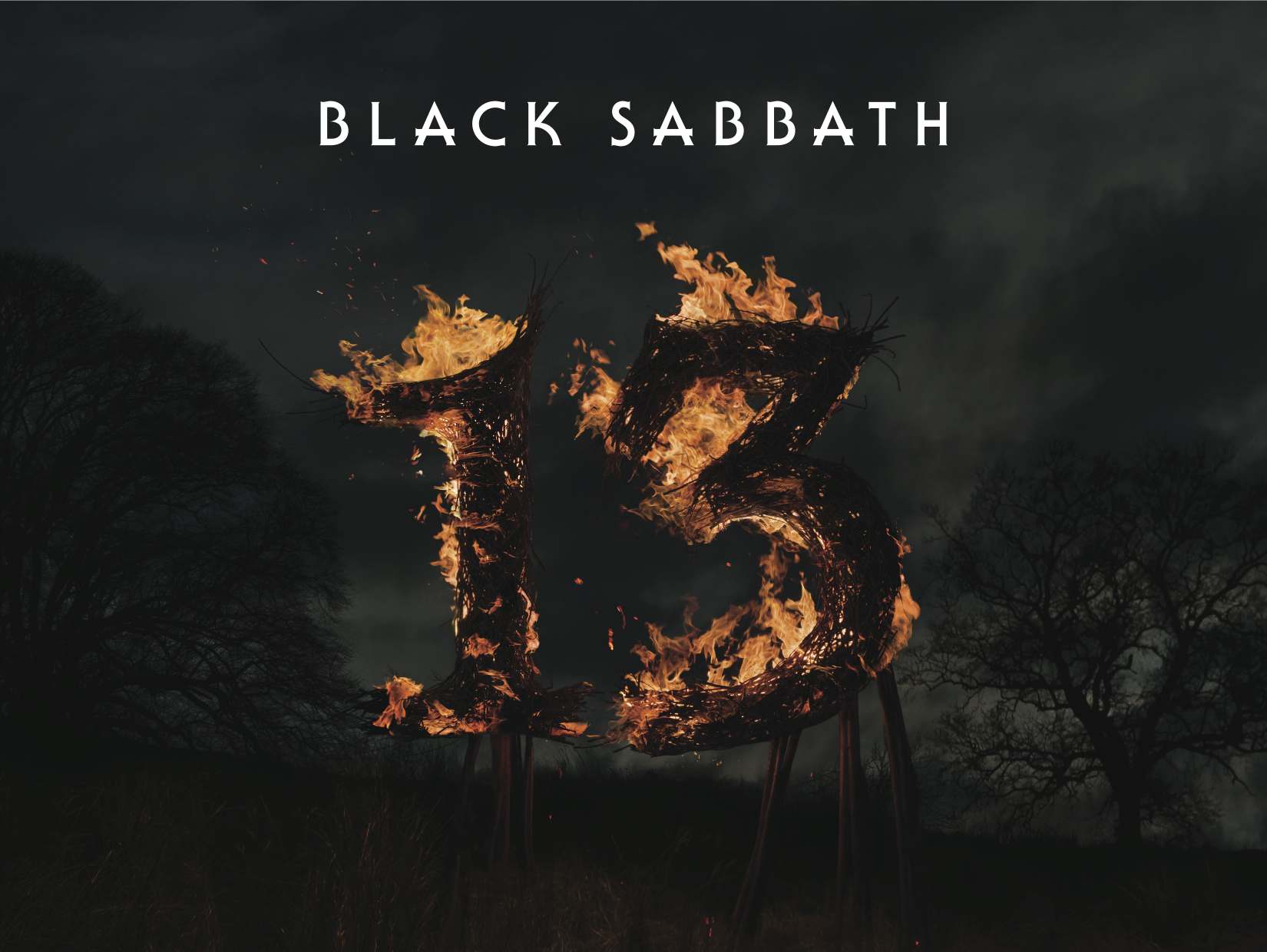
13 by Black Sabbath

ImageEvery year for the past three years my wife takes our boys to see family in New Jersey and New York.  I’m tasked with various projects: painting, fixing up stuff — things I can get kind of lost in.  The sound track for the work is almost invariably Black Sabbath, cranked loud.  Of the bands I loved when I was a teenage metalhead, Sabbath is one of the very few that I can still listen to regularly and never tire of.  My boys often request “Iron Man” on the way to school, oblivious to the fact it has nothing to do with Tony Stark, or “The Wizard,” believing it to be straight out of Harry Potter land.  I oblige, for it is Art, and it is good.

There is a grayscale of Black Sabbaths.  The original band responsible for inventing heavy metal in the early 70s:  Ozzy Osbourne, Tony Iommi, Geezer Butler, and Bill Ward (it’s important to note this same incarnation was responsible for then dragging that reputation through the murk); the band lifted from its Ozzy-less decline by the horns-flashing Ronnie James Dio, who led them through two classic albums of pop metal renaissance in the early 80s (as well as a stunning modern metal record recorded under the name Heaven and Hell — the title of the first Dio-led Sab record — released shortly before Dio passed away at the age of, yes, 67).  Then there are the one-offs, like the Sabbath of Born Again, which, while it may have afforded the oddly too-dedicated fan moments of pleasure, never really could come close to the considerably prolific glory days of the Sabbath of the 70s.  And of course, the countless reunion tours and shows that, while cool in their own way, haven’t much new to say.

So it’s with some interest that we see, in the last week, the release of the first Black Sabbath album with Ozzy Osbourne — of all original material — since 1978.  This was a much-hyped record, complete with some major drama.  It’s remarkable that all the original band members are still with us, and had the original band actually made this record, I would have pre-ordered the complete deluxe whatzit with vinyl and booklets and stickers and all that jazz.  But, for whatever (probably lawyerly) reason, drummer Bill Ward declined to participate, after initially agreeing.  His replacement is Brad Wilk, of Audioslave and Rage Against the Machine.  Not a bad choice, but not making things right with Ward reflects poorly on the band and its legacy.  While Ozzy and Iommi got most of the attention, Ward and bassist Geezer Butler were the heart of the original band, creating the rhythmic punch that propelled Iommi’s epic riffs and Ozzy’s wail.  Imagine John Bonham living and Led Zeppelin doing its reunion show a few years back without him, and you get an idea of the scale of Sabbath’s mistake.  (Seriously, revisit “The Wizard” from Sabbath’s first record, for an idea how important Ward’s drumming was to this band.) Drama number two, an even more serious problem:  Tony Iommi battled lymphoma during the making of the record, and without Iommi there is no Sabbath.

That the king of the metal riff was laid low, though, doesn’t seem to have made much of a difference, nor would I expect it to:  of the small handful of British rock guitarists who have wielded real and lasting influence over the years, only Iommi is still creating the quality of work he first hammered out in the youth of his career.  And, in Iommi’s hands, this semi-reunion works.  Aided by Butler’s big bass, which has always been able fill the holes for the band live and thicken the sludge in the studio, 13 manages a number of feats.  It is sonically the successor to Iommi/Butler’s last record, the aforementioned excellent album they made in 2009 with Dio, The Devil You Know.  13 is also a welcome reminder that Black Sabbath started out as heavy blues band that knew how to swing, something not many of their metal peers take terribly seriously anymore, much to the detriment of the genre.  While Wilk has come under criticism for not having Bill Ward’s loose and woolly approach, his roots are in bands that borrowed heavily, heavily from Sabbath and Zeppelin, and to these ears he holds up his end admirably.  Lastly, I’m probably not alone in thinking Ozzy would be the ruin of this project.  His bandmates rarely coasted, as he has been known to do over the years (reaching a cartoonish nadir with his reality show several years ago).  I’d even argue that Ozzy was really sapped artistically after the tragic death of Randy Rhoads, the esteemed guitarist of his first two solo records.  He lost his voice, or rather, since his intonation is notoriously iffy, the character of his delivery.  At its best a frightened and frightening illustration of Geezer Butler’s lyrics — which tend towards ruminations on existential anxieties, and which, for rock song lyrics, were truly revolutionary when Sabbath debuted in 1970 — Ozzy’s voice has the ability to deliver the perspective of an innocent man observing a nightmare.  His voice is back on 13:  if Butler and Iommi threw down the gauntlet, Ozzy picked it up with energy to spare.

The songs are long, they take as long as they need to unfold, and riffs and themes from other albums revisited (a stock-in-trade of the band’s since its beginning).  I get the sense producer Rick Rubin knew that the band’s fans don’t care, never cared, about hits or brevity (“Paranoid” notwithstanding) but about dynamics, tension and release, being trapped with Ozzy inside the riffs.  Being in the middle of a classic Sabbath record is to be far from the fringes of pop fashion or postmodern punk irony: that this version of Sabbath has again achieved its hallmark effect when its players are in their 60s further demonstrates that to be metal is to be a true believer in music’s transportive powers.

Riffing with Perseus: Kingbathmat Challenges the Gorgon

Overcoming The Monster Album CoverJust as we started progarchy last fall, I received a note from Chris of Stereohead Records in the U.K. asking me if we’d be interested in reviewing a cd by a band named, amazingly enough, Kingbathmat.  Well, of course, we would.  Who could resist checking out a band with such a name?  These guys MUST be interesting, I thought.  And, I was right.  “Truth Button” proved to be an excellent release.

Last week, while doing some work in Minnesota, I received another email from Chris. A new Kingbathmat is coming out on July 22–would I be interested in reviewing, and would I like it as a download or as a CD?  Well, of course, my rational side wants the CD.  I’m rather proud of my collection, and “Truth Button” has pride of place in it.  But, my greedier side wanted the immediate gratification.  So, I downloaded it.

Oh, boy–it’s good.  Really, really good.  “Truth Button” was excellent, but this is “Truth Button” with even more excellence and more confidence and more adventure.  Yes, it goes to 11.

Please don’t consider this a full review–that’s still coming.  But, I do want progarchy readers to know that if they preorder this CD, they will not be disappointed.  These guys can play.  I mean really, really play.  And, so very tight without being overly produced.

I generally hate labels, and I’m not sure what I’d label this–but the label that keeps popping into my fuzzy little head is this: “funkadelic prog.”  Of recent releases, it might most easily compare to the work of Astra.  But, Kingbathmat is far more subtle–without losing any of its energy–than Astra.  Whereas Astra drives, Kingbathmat lingers, toys, and plays with its music.

Listening to Astra is akin to driving from Kansas City to Denver as quickly as possible, windows down, hoping to get to the majesty of the mountains .  Listening to Kingbathmat is like exploring the wild, untamed, and unpopulated backroads and Great Plains of Kansas and eastern Colorado en route, knowing there are little known charms and forgotten mysteries worth discovering in that undulating land.

KingBathmat Publicity Photo 2In the tradition of music over the last fifty years, I most hear the influence of Rush (heavily), later Traffic, and Soundgarden.

The masterpiece of the album is the sixth and final track, “Kubrick Moon.”  Holy schnikees.  I have no idea how to describe this, except it’s confirmed me as a serious and unrelenting Kingbathmat devotee.  John, David, Rob, and Bernie–slay the gorgon with all the might that is in you!

To preorder (and I give it my highest recommendation), go here.

Robert John Godfrey’s Sad News

Robert John Godfrey, maestro of The Enid, has written to members of fan club The Enidi confirming the sad news that he is suffering from Alzheimer’s disease. He writes

I suppose I had “known” that I was ill for maybe a year. I began to notice changes with the way I perceived my surroundings and with my day to day activities. I felt there was something wrong and I suspected it might be dementia (or worse).

My diagnosis has come as no surprise. It is just my very short term memory that is different and my ability to recall the names of people I know well. I still have all my long term memories – I probably will have right up to the end. My intellect still seems as good as ever, though that will probably not last. I have not noticed any changes with regard to my creative abilities and so far nothing has changed with regard to playing the piano.

The search now begins for a successor. Robert hopes he will have two or three years in which to get this new band member settled in the role:

He will need to be young and have a good piano technique with a background in classical/romantic music rather than jazz; a knowledge of music technology; a talent for finding a good tune and a thorough understanding of harmony. Above all he will need to be generous in spirit and willing to collaborate with those who have different but nevertheless just as valuable abilities as his own.

Robert signs off with characteristic grace and dignity:

I have had a great life doing nothing but music – I have wonderful friends within the band and the Enidi. I feel very much loved and appreciated – I lost any fear of death many years ago and the story of my life will come full circle as indeed it must. A symphony with a silence at either end.

God bless you, sir.

The Sound of Sound of Contact

Simon Collins (SC) and Dave Kerzner (DK) explain the sound of Sound of Contact in their latest interview:

How would you describe your music to those that are yet to hear your work?

SC: We create mental atmospheres spanning a wide spectrum of sonic territory from ambient sci-fi infused Space Rock to vintage Classic and modern Progressive Rock. That said we all have a pop sensibility that really shows in our songwriting. Most importantly when all is said and done, the song is king. There’s a variety of moods and mental atmospheres here that we wish we could find more of these days, but there seems to be a void in music today. In a way, we’ve sub-consciously ended up creating the kind of music we would want to buy and love to listen to ourselves.

DK: Yeah, if you were to think of classic rock bands from the 70’s and bring forward some of the styles of songwriting such as dramatic chord changes, wide dynamic range and picturesque soundscapes fused in with a modern alt rock or even somewhat futuristic film score type sound you’d get an idea of what to expect from Sound of Contact.

You can also listen to Dave having a chat over at Epic Prog: [Part 1] [Part 2]

Dave really knows his prog. Watch him in action below on keys (and with Nick D’Virgilio on drums) at Progfest ’94:
 

Progarchist Journal, June 18, 2013

Spawton bass
BBT bassist, lyricist, and composer extraordinaire, Greg Spawton. Photo by Willem Klopper.

What more can one write than: 2013 has already proven to be one of the finest years in prog history.

We’re not even quite halfway done with the year, and just consider the number of quality (an understatement) releases: Big Big Train’s English Electric, Vol. 2; Cosmograf’s The Man Left in Space; Nosound’s Afterthoughts; The Tangent’s The Rite of Work (translated!); Shineback’s Rise Up Forgotten; Days Between Stations’s In Extremis; Majestic’s V.O.Z.; Riverside’s Shrine of New Generation Slaves; Sanguine Hum’s The Weight of the World; and Lifesigns’ Lifesigns.  Additionally, BBT, Matt Cohen, Matt Stevens, Leah McHenry, IZZ, Heliopolis, Arjen Lucassen, Glass Hammer, The Advent, Kevin McCormick, Transatlantic, The Flower Kings, and Gazpacho are working on new material.

If I forgot anyone, please forgive me.  So much greatness is emerging, that it’s hard to keep track of it all.

When I see comments on the web to the effect of “sure, there’s lots of stuff coming out, but it doesn’t live up to the past,” I just scratch my head.

Are you kidding me?  Name another time when so much intensity, diversity, meaning, and beauty has sprung forth from the prog community?  There are several recent releases that I would argue beat (though, of course, they build upon) any thing that’s come before.  But, why compare?  Let’s enjoy what we have and give some thanks.

Consider other developments in the prog world:

  • David Elliott has founded Bad Elephant Music
  • Kev Feazy of The Fierce and the Dead is a dad.
  • Prog fan, Richard Thresh, is a father yet again, as well
  • Billy James of Glass Onyon is promoting prog like a wonderful mad man
  • First lady of Prog, Alison Henderson, is one of the three winners of Playtex’s Ageless Generation competition to find women who are fabulous and over 50
  • Brian Watson has created much of the art for the forthcoming The Tangent release
  • Willem Klopper, Captain Redbeard, Craig Farham, and Nick Efford reveal prog-inspired art and photography by the week
  • Russell Clarke also gives us prog-inspired photos of his Norwegian Forrest Cats (well, ok, this is not quite as proggy as I’m suggesting)
  • Back to a serious note, 3RDegree and John Galgano are touring in the U.S.

. . . . and the list of accomplishments go on and on. . . . Bravo!

We’re truly sad to have lost Ray Manzarek to the ravages of time, and Chris Thompson of Radiant Records to another profession.  But, of course, we recognize this is life.  And, we wish all well.

Progarchy.com

On the Progarchy.com front, the progarchists remain unified in their vision of attempting to match our writing quality and thoughts with the excellence of the music being made and created, past, present, and future.  Our site is not even a year old, and we have 760 of you who receive every single post via email, and anywhere from 100 to 1,000 visit the website on a daily basis.  Folks as profound as Greg Spawton, Matt Stevens, Giancarlo Erra, and Andy Tillison have offered their kind thoughts about the site.  A huge thanks to all who have supported us.

A few interesting additional notes

for Brad
Our own progarchist, John Deasey, and Matt Stevens.
prog demi god Robin
Master of Prog and Chronometry, Robin Armstrong.

Matt Stevens has started a video series on Youtube, answering questions presented to him.  In this one video–https://www.youtube.com/watch?v=bcmmj5YtRdY–you’ll get a sense of Matt’s integrity and genius.  In under three minutes, he demonstrates more confidence and virtue about art and humanity than a myriad of academic books have done over the last 30 years.  Atheist or theist, I say, “God bless you, Matt!”

Also, as we all well know, most proggers can’t afford to live only on the profits of their releases.  Such, of course,  is a rueful comment on modern life, but it’s also simply a reality.  So, for this journal entry, let me praise the other business/pursuit of Cosmograf’s Robin Armstrong.  We all know the kind of professionalism and artful sense Robin brings to music.  He does the same as an entrepreneur.  Just check out his website, http://poshtime.com/wordpress/about/, a witness to his mastery of all things chronometric!

Please support Robin not only in his music, but in his excellence as a businessman as well.

Thanks for reading all of this.  Rising pizza dough beckons me. . . .

20 Looks at The Lamb, 5: Two Doktors, How Many Blades?

Translating Sigmund Freud’s writings into English has left a formidable heap of wreckage strewn across the twentieth century.  We’re used to saying “Ego” and “Id” when he simply used ordinary German words for “I” and “It.”  Most relevant for this look at The Lamb, we’re used to hearing (if we hear this part of Freud at all anymore) about “castration” or the fear of it.  Castration means the removal of the testicles, but that’s not what Freud was talking about.  He was concerned about the removal of the penis, or the fear of its removal, or the child’s suspicion that it has been removed in the case of the female.  The association with the idea of cutting is always strong, and of course blades (swords) may be phallic.  A blade may shave as well as cut.  Incision by a blade is a cousin of biting, some teeth being known as incisors.  Here I want to call attention to the chain of associations in The Lamb that includes shaving, biting, and cutting.

Now, bringing up Doktor Freud seems (to continue speaking Freudian language) hopelessly “overdetermined” by the violent contests that comprise the history of psychoanalytic thought.  It is so often assumed that the legacy of Freud is somehow “settled” or finalized, that he has been refuted, or subsumed, or otherwise tamed by subsequent inquiry, whether that inquiry bears the honorific adjective ‘scientific,’ or rests upon some other authoritative revelation.  I take for granted here, without providing any explicit argument, that it is still worth paying heed to Freud, and that doing so still evokes insight that is not negated by the countless ways in which viewpoints associated with his name have been criticized.  I ask to be allowed to invoke his name only provisionally, not simplistically as an infallible authority.  I do not expect acceptance of any view according to which “biology is destiny,” noting in passing that even Freud himself arguably did not hold this as a dogma.  I take up a Freudian gaze here not so much as what we usually think of as explanatory theory, but more as a hermeneutic lens.  Try it.  I’m not looking for unqualified commitment.

One of the most important things to realize about shaving, biting, and cutting in The Lamb is that it is clearly not associated with death.  The images that accompany death are very different, suggesting the violence of an impact at first (“Fly on a Windshield”), but having much more to do with breath, with wind, with blowing or sucking in of air, and of course with transformation of one kind or another, with throwing into question the borders of the real (Rael).  More on that soon.  Shaving, biting and cutting, on the other hand, are all focused upon the bodily loci of love and sex.

The heart (also “the porcupine”) is shaved.  Flesh is bitten by the (snake-like) Lamia, and they in turn are eaten by Rael (whose blood has killed them).  And then there’s the visit to Doktor Dyper.  “Don’t delay! Dock the dick!”  This cutting is presumably some sort of treatment (“cure”?) for the curse of being a Slipperman (which came from having “tasted love”). The preservation of the member in a yellow plastic tube (“honey-pouch”) promises “safety” of some sort, safety which brother John is unwilling to risk when Rael’s is lost to the raven, and into the ravine.

Think of how all of this involves severing.  What (or who) is severed from what (or whom)?  It seems as though the severings (including that of John from Rael) are essential in leading to Rael’s ultimate experience of seeing his own face where John’s should be.

Shaving, biting, cutting, severing, removing, preserving (“pickling”).  And if Docktor Freud is taken at least as a reliable cultural iconographer, also borrowing two or four cents from Jacques Lacan, may we conclude that the forms of sexual severing (alienation?) in The Lamb are part of what clears the way for the Other as mirror?

I do not present this as a conclusion.  In order to understand why, think about how “It” is not a conclusion either.  “It” has always been my least favorite song on the album musically.  (See?  I am not WHOLLY uncritical of the album.)  “It” seems to act like a grandiose finale, and I’ve never thought it was really a successful one.  But as I’ve thought with Freud a bit here, it has occurred to me how completely apt this may be.

No conclusion, but suddenly a director shouts, “CUT!!”

<—- Previous Look     Prologue     Next Look —->

BillyNews: Sons of Hippies

sons of hippies rose coverLos Angeles, CA – In anticipation of their brand new full length album, Florida-based psychedelic space rock trio Sons Of Hippies will premiere a new single and video “Rose” on the music & culture website MXDWN.com this Monday, June 17th. “Rose” is the second single from the Hippies’ new album, Griffons At The Gates Of Heaven, mixed by Jack Endino (Nirvana, L7) and mastered at Abbey Road Studios, to be released July 16th on Cleopatra Records.

Directed by James Herrholz, “Rose” stars SOH vocalist/guitarist Katherine Kelly, drummer Jonas Canales and bassist David Daly out for a drive in their classic, cherry red Mustang on a sun soaked Florida afternoon when they encounter a seductive trio of car washing vixens. Much sudsy fun and playful teasing ensues. But things are not all what they seem and soon enough the story takes a shocking turn you’ll have to see to believe!

Watch the video here: http://www.mxdwn.com/2013/06/17/news/mxdwn-premiere-sons-of-hippies-releases-new-nsfw-video-for-song-rose/

iTunes single: http://georiot.co/2cph

Sons Of Hippies was conceived high in the mountains of Tennessee amid fellow music lovers at a festival on a 700-acre farm. Their name originated when Brazilian native Jonas Canales and Florida-bred Katherine Kelly probed familial bonds to discover they were, indeed, children of hippy parents. The duo’s dreamy, melodic but complexly synthesized music struck a chord with audiences and earned the band a critic’s choice award from Tampa’s popular Creative Loafing magazine for “Best Modern-Sounding Record” in 2009. Bassist David Daly joined the group in 2011 and in December of the following year, the band signed with Cleopatra Records. The resulting album is the group’s strongest and most ambitious set of recordings to date, and earned these young upstarts a spot on a summer tour with two giants of classic and progressive rock.

For more info on the tour, visit the band’s official website: http://www.sonsofhippies.net

To pre-order the album on iTunes: http://georiot.co/2GFl

To pre-order the CD on Amazon: http://www.amazon.com/Griffons-At-The-Gates-Heaven/dp/B00CQ51JXO

Press inquiries: Glass Onyon PR, PH: 828-350-8158glassonyonpr@gmail.com